







Footage shows male senior swiftly strike ball in attempt to make goal, inadvertently hitting female player directly in mouth. A female high school lacrosse player [more…]

What does it actually mean to be an American?
This question sits at the center of the right and left’s diametric opposition on matters of immigration and citizenship. But the divide wasn’t always this sharp. For decades, says BlazeTV host Nick Freitas, the idea of an “American” was essentially “creedal.”
“It’s the idea that ‘well, if you kind of believe in the general idea of what America is, well, then you too can be every bit as much an American as anyone else,’” he explains.
But as the country becomes increasingly ideologically divided on national identity, the question of “what is an American?” demands a real answer.
On this episode of “Making the Argument,” Freitas provides exactly that by outlining the three things that decide who is an American — and how that differs from a true countryman.
“This is going to be controversial,” he warns.
Freitas highlights JD Vance’s recent speech, in which he argued that a creedal definition (i.e. “agreeing with the principles, let’s say, of the Declaration of Independence”) is an insufficient standard because it’s both “over-inclusive and under-inclusive.”
Freitas agrees. New York City Mayor Zohran Mamdani (D) doesn’t share the founding principles of the Declaration, he points out, and the Democratic Socialists of America aim to “overthrow the United States Constitution as it currently exists,” but that doesn’t mean their candidates and voters are not technically Americans. At the same time, there are foreigners who genuinely support America’s creed, but that also does not make them Americans.
So what does? Freitas highlights three determining tests.
1. “Legally, you’re an American if you have U.S. citizenship.”
2. “Historically, you’re an American if you’ve actually been in this country for any period of time and you can actually draw roots back to it, which actually signifies some sort of continuity within the same place and the same traditions.”
3. “Creedally or culturally, you’re an American if you actually appreciate the various social, political, economic, and theological underpinnings of what created the United States and what has sustained it.”
Combined, these standards, Freitas argues, determine if someone is “comprehensively American” — but it’s the third that ultimately determines who true “countrymen” are.
“The people that I really see as my countrymen are the ones that have come to fully understand what it means to be an American, loves the principles and the philosophies and the traditions, and wants to advance them into the future,” he says. “That’s my countryman — whether you came here yesterday or your family came here 250 years ago.”
“Making the Argument with Nick Freitas” is available on BlazeTV+, YouTube, and major podcast platforms.
Start watching Nick Freitas NOW at blazetv.com and use the promo code NICK40 for $40 off your BlazeTV+ subscription.
Nick freitas, Citizenship, Immigration, Blazetv host
You can have very low interest rates, and you can have debt-driven inflation. You just can’t have both at the same time. That is the reality President Trump refuses to recognize.
At the core of the president’s half-baked plan to resuscitate the economy is a return to the good old days of near-zero interest rates.
The Federal Reserve can set the short-term rates as low as it wants, but the bond markets will continue to rebel and reflect reality.
“We should have the lowest interest rates anywhere in the world,” Trump said last week in response to a reporter’s question in the Oval Office.
“In the old days … if we announced good numbers, interest rates went down. Now, if you announce good numbers, interest rates go up because they’re so afraid of inflation.”
It’s hard to make sense of that statement, but it reflects a grievance Trump has voiced consistently. He wants endless spending for his projects, he doesn’t want the inflation it causes, and he wants to pay near-zero interest on the resulting record debt. Don’t we all?
Perhaps in another lifetime, God will create such an innovative world. In this one, when you have protracted inflation and must sell endless Treasuries to service the debt, you cannot offer near-zero interest to buyers of that debt — especially at a rate below inflation.
We had multiple periods of near-zero interest rates this century, including during COVID. We also spent trillions of dollars we did not have during Trump’s first term and Biden’s presidency. That helped fuel the inflation surge of 2021-22. Prices have continued rising even as the inflation rate slowed, while the debt keeps exploding. Year-over-year inflation has now remained above the Fed’s 2% target for 65 consecutive months, with most months above 3%.
Far from being “artificially high,” as Trump contends, rates have been held artificially low. After the federal funds rate peaked at 5.5% during the inflation fight — a historically unremarkable level — the Fed cut rates six times beginning in 2024. The effective rate now stands at 3.63%, below the long-run average.
So what did the bond market do? The 10-year Treasury yield is roughly as high as it was when the federal funds rate peaked in 2024, and the 30-year yield is at levels not seen since 2007.
The Federal Reserve can set short-term rates as low as it wants, but the bond market will still reflect fiscal reality. There is no way around crushing debt other than cutting spending.
RELATED: The government would like to discuss your allowance
Love Employee/iStock/Getty Images
That was on vivid display late last month when Treasury Secretary Scott Bessent instituted a “twist” operation: The government bought back more long-dated Treasuries while relying more heavily on cheaper short-term bills and notes to finance the deficit and the purchases themselves. The goal was to reduce the supply of long-duration debt, support bond prices, lower long-term yields, and exploit the fact that short-term rates remain below 10- and 30-year yields.
The response from the bond market?
After a few hours of lower yields, by the next morning they were back near their pre-announcement baseline.
The 10-year yield is now around 4.75%, higher than at any point since April 2007. Back then, the effective federal funds rate was 5.25% — 162 basis points above today’s rate. The bond market is telling us that long-term rates are not high because the Fed forgot how to cut. They are high because investors demand compensation for inflation, deficits, and debt risk.
There is a simple reason the Fed can no longer wave a magic wand, return rates to near zero, and service the debt on the cheap as it did from the post-9/11 recession through COVID. On September 11, 2001, gross federal debt was about $5.77 trillion, roughly 55% of GDP. In April 2007, before the financial crisis, it was about $8.84 trillion, or 63% of GDP. Today it exceeds $40 trillion and is roughly 123% of GDP.
RELATED: Democrats want amnesia on inflation
wildpixel/iStock/Getty Images
The long-term trajectory is even worse, because faster debt growth creates a vicious cycle: Treasury needs more buyers, inflation and fiscal risk force yields higher, and more existing debt rolls over at those higher rates.
After an election fought in part against Bidenflation, nearly $4 trillion in new debt has been added since January 2025. Across Trump’s two terms, roughly $11.7 trillion of gross federal debt has accumulated. There are still more than two years left in his term, and there is no serious plan to bend the trajectory.
Naturally, all this new debt is being accumulated at higher interest rates. But the sheer magnitude of the debt also makes Trump’s dream of permanently cheap money impossible.
We all share Trump’s desire to service the debt on the cheap. He probably should have thought harder about that desire when he pressured Republicans in March 2020 to shut down the country and then pass trillions in new spending. Unfortunately for him and his delayed second term, what goes around in debt comes back around as inflation and higher interest rates.
Bidenflation, Federal reserve, Inflation, Opinion & analysis, Spending, Treasuries, Interest rates, Debt, Joe biden, Donald trump
If you use an Android phone, your device could be in line to get a privacy upgrade. Google’s bringing a new web standard to its mobile operating system to protect your web traffic from potential spies. However, only a small number of devices will have access to it at launch, and there is a caveat that could slow down the rollout indefinitely.
Unless you have a trusted VPN installed on your device, your web traffic is openly visible to a number of third-party groups, namely your internet service provider and your network administrator (if you’re using a public network). On top of that, every website you visit can see your IP address, device type, browser type, and more.
Google’s new tools are meant to make your phone and your apps safer, more secure, and private.
Even as websites have adopted HTTPS encryption to protect the data exchanged within your favorite sites, your ISP still knows every online spot you visit in a given day, month, or year. This allows outside sources to track your activity, both for innocuous and nefarious reasons.
Google’s new privacy upgrade aims to change that.
The new standard, dubbed Encrypted Client Hello, hides your web traffic from outside sources by encrypting destination websites, thus obscuring your browsing habits and making them harder to track. It’s not just the web either. ECH can also protect web traffic within your favorite apps. Furthermore, apps will be subject to Local Network Protection, another new feature that blocks the apps on your phone from scanning your Wi-Fi network for other connected devices without your permission.
Together, Google’s new tools are meant to make your phone and your apps safer, more secure, and private, but how do you enable it? To get ECH up and running on your Android phone, there are several things you’ll need before you’re protected.
First, ECH is only available on devices that run Android 17, which is a relatively small pool of candidates at the time this was published. Users that own a Google Pixel 6 and newer, or a Samsung Galaxy S23 and newer, either already have Android 17 or will get access very soon. To check the Android version on your device, open the Settings app, find the “About phone” section, and you’ll see your Android version under “device details” on Pixel or “Software information” on Galaxy.
RELATED: New malware is crippling Android phones, but not yours if you do this
Jutharat Pinpan/Getty Images
Second – and this one is the big caveat – many of those same groups that can currently track your web activity have to enable ECH before it will work. That means websites, app developers, and internet service providers all have to implement ECH, otherwise your traffic will remain visible, just as it is today. Even worse, these same groups can actively opt out of supporting ECH, rendering the new standard completely useless.
For what it’s worth, Google claims that it’s lobbying “industry leaders, service providers, and app developers to accelerate ECH adoption,” but it faces a difficult road ahead. Since the standard isn’t mandatory, plenty of groups will likely ignore Google’s attempts to make ECH a mainstream part of Android. In truth, the groups that implement it will be the ones that had no interest in tracking users’ browser activity in the first place, while the groups that are monitoring activity will simply ignore ECH altogether.
In this way, ECH is unlikely to offer much privacy to users in the Android ecosystem, at least not anytime soon. If you really want to protect your internet traffic, you’re better off with a trusted VPN instead.
Like Blaze News? Bypass the censors, sign up for our newsletters, and get stories like this direct to your inbox. Sign up here!
Android, Google, Privacy, Internet, Internet privacy, Tech

(NaturalNews) Researchers at Karolinska Institutet in Sweden reported on August 23, 2026, that gut microbes can transform nitrate and non-heme iron from plant-based…

(NaturalNews) A recent narrative review published in Frontiers in Nutrition reports that the health benefits of fermented foods stem from a complex network of bioac…
(NaturalNews) A peer-reviewed study conducted by scientists at Sichuan University has found that lipid nanoparticles (LNPs) used as delivery vehicles in mRNA vaccin…

(NaturalNews) British Prime Minister Andy Burnhamâs recent decision to authorize defense manufacturer MBDA to share classified information about SCALP missile com…

(NaturalNews) Letter Sent to Treasury, CongressA coalition of 14 free-market energy groups, led by Consumer Action for a Strong Economy, has sent a letter to Trea…

(NaturalNews) An algal bloom in the eastern Mediterranean Sea has forced the shutdown of five of Israelâs six desalination plants, disrupting more than 80% of the…

(NaturalNews) Russian armed forces have taken control of the settlement of Kurtovka in the Donetsk People’s Republic (DPR), the Russian Defense Ministry said on Sat…
Vice President JD Vance recently drew criticism for questioning the benefits of the dollar’s reserve currency status. In a 2023 interview, he argued that it encourages Americans to consume too much, describing it as a “resource curse.”
If you’ve followed Vance during his time in Congress, these comments are not particularly surprising. He has been one of the biggest proponents of rebalancing America’s relationship with the global economy through targeted industrial policy, much to the chagrin of the GOP establishment.
Sufficient industrial capacity gives a nation options in a crisis; dependence on foreign powers — especially China, our main adversary — is a path to decline and ruin.
Naturally, the response from Vance’s free-trade critics was immediate and severe. They argued that cheap imports increase consumers’ purchasing power, while an economy organized around offering high-value services is not necessarily a sign of economic weakness. In their eyes, what Vance proposed amounts to a command-and-control economy, snuffing out economic opportunity and raising prices at a time when families can least afford it.
Contrary to his critics, Vance had the right general diagnosis, even if his prescription risks creating problems of its own.
The dollar’s reserve-currency status means that every country on earth wants to hold dollars, mainly to facilitate international commerce and to buy Treasury bonds as a safe place to store its money. That demand keeps the dollar’s value higher than it would be otherwise. A stronger dollar, in turn, means cheaper imported goods for Americans, but it makes U.S.-made goods less competitive, both at home and abroad. This is one of the major reasons America stopped making so many things.
it’s also why Donald Trump’s long-standing emphasis on targeted tariffs and reindustrialization remains crucial today. An economy too dependent on foreign products can threaten national security and a country’s long-term health.
As demonstrated by the vehemence of Vance’s critics, the Trump administration’s economic refocus has elicited strong pushback. Libertarian dogma has dominated the Republican Party since the Reagan era, elevating consumer choice and being “free to choose” as the highest economic goods. The dominant theory before Trump’s 2016 presidential candidacy was that greater economic freedom broadly spreads prosperity and raises living standards.
But that view captures only part of what an economy is supposed to accomplish. Economic freedom ultimately depends on the prudent use of national power. A nation that lacks the capacity to build ships, aircraft, energy infrastructure, and advanced technology — a nation that can easily have its supply chains interrupted, as we saw during COVID — cannot maintain freedom for itself or adequately protect its allies.
Sufficient industrial capacity gives a nation options in a crisis; dependence on foreign powers — especially China, our main adversary — is a path to decline and ruin.
History shows this to be the case.
For almost 200 years, Great Britain protected its shipping and textile industries before becoming one of the world’s leading advocates of free trade. It dropped its own tariffs in 1846 only after it became the most powerful industrial and naval power on earth. By then, British manufacturers were in a far stronger position to compete in an increasingly global market.
The United States followed the same path. In his “Report on Manufactures,” Alexander Hamilton pushed the nation to industrialize rapidly rather than remain dependent on European powers for goods. Had the country followed Thomas Jefferson’s vision of a more agrarian-based economy, America would likely have become a vassal state of a far stronger country for the foreseeable future.
For nearly two centuries after the founding, tariffs were a key component of America’s industrial growth, alongside plentiful natural resources, geographic advantages, hemispheric hegemony, and a rapidly expanding population. Only after two world wars left American factories standing while much of the rest of the world lay in ruins did Washington establish the framework for a global free-market economy, backed by a military and an industrial base nobody else could match.
RELATED: Trump’s next tax cut should make Americans owners
Jim WATSON/AFP/Getty Images
Free trade became a key Cold War strategy. Lower trade barriers let the U.S. pull more nations into its orbit than the Soviet Union ever managed. But Washington paid a price, accepting a hit to its own industrial base to win the fight against communism.
A persistently strong dollar tends to make foreign goods cheaper for Americans to buy while making American exports more expensive for everyone else. Following that playbook for four decades, even after the Soviet Union’s defeat, led to exactly the economic problem that Trump and Vance now have to contend with: the decline of domestic manufacturing and the hollowing out of the American heartland. The result is a service-based economy heavily dependent on consumption, with a much-diminished industrial capacity and a working class that has borne the brunt of American economic statecraft.
The consequences are clear in shipbuilding, as the United States produces fewer than a dozen commercial ships a year while China turns out more than a thousand. China controls around 60% of the world’s shipbuilding market, with a total capacity more than 200 times ours.
China isn’t the second-most powerful country in the world because it practices free trade. It has rapidly developed industries that strengthen its national power while taking advantage of the United States’ determination that more open trade would encourage political liberalization in Beijing. China is a blatant currency manipulator, artificially lowering the price of its exports while maintaining state control over its economy. For these reasons, the Trump administration was right in principle to begin imposing tariffs on China to counter its blatant abuses while reinvigorating U.S. domestic manufacturing.
The United States must maintain demand for our $40 trillion in debt, and there is no reason to risk that demand drying up, forcing us to pay higher interest rates or, in the worst-case scenario, default.
But America should take the core of JD Vance’s prescription seriously. Invest deliberately in building real, finished goods again. Use targeted tariffs to encourage that rebuilding. And yes, let the dollar’s value come down some as a result.
Editor’s note: This article was originally published at the American Mind.
Alexander hamilton, American heartland, China, Dollars reserve currency, Economic weakness, Free trade, Global economy, Great britain, Industrial policy, National security, Soviet union, Vice president jd vance, Economic opportunity, Cold war, Trump, Opinion & analysis
As thousands of women continue their support of Lindsay Clancy, and after Luigi Mangione’s guilty plea failed to stop female supporters from romanticizing him as a hero, Conservateur editor Bethany Miller has one question: “What is the state of American women today?”
This was the central question that underpinned her recent article “Lindsay Clancy, Luigi Mangione, and the State of American Women.”
On a recent episode of “The Glenn Beck Program,” Miller joined the Blaze Media co-founder to unpack her theory about what’s causing a growing number of women to support confessed killers.
Miller explains that women’s disturbing advocacy surrounding people who have admitted to killing innocents is multifaceted and long-simmering.
“From the Millennial movement of the #MeToo and the therapeutic culture and ‘my truth is the only truth’ — this has been brewing for some time,” she tells Glenn.
These movements, Miller says, are the result of the divinely fashioned female psyche — with its bend toward empathy and relationality — being “weaponized” by “secular politics.”
“The left is capitalizing on [female instincts], manipulating women’s lenses of empathy and of relation and using that to get them to respond empathetically in a weaponized empathy to what’s happening with Lindsay Clancy,” she says.
“So instead of going, ‘Hey, what’s black and white here? This woman killed her children, therefore justice must be served,’ they’re saying, ‘Hey, actually, she struggled with postpartum depression, and she was anxious, and so let’s blame the man,’ or, ‘I can see myself in her; therefore me condemning her is condemning myself.”’
Glenn was particularly struck by Miller’s argument in her article that women have been conditioned to allow their instinctual empathy to lead them to dark outcomes. In the piece, she wrote, “I see her becomes I understand her. I understand her becomes I cannot judge her.”
“The blurring of that line, I mean, that’s what has … women holding newborns and posting “Same, Lindsay” or pushing a stroller outside of her trial, chanting that she’s innocent,” he sighs.
People must be able to tell the difference between understanding someone’s pain and agreeing with how they handle it, Glenn urges.
“Mental illness is real, and I can understand [Clancy] because my mother went through really bad mental illness … but that doesn’t mean I agree with her,” he says.
“Luigi Mangione — that is terrifying to me that they’re practically throwing themselves at this [alleged] murderer because they’re like, ‘Yeah, well, he’s been abused by the system, and I’ve been abused by the system.’”
Another factor playing into this issue, says Miller, is women’s obsession with true crime and fantasy.
“This is the type of entertainment and narratives that they inherit and consume on a daily basis and that we’ve seen … weaponize the way that they’re thinking about these things,” she says.
Add to that social media and the dawning of the AI age, where what’s real is quickly becoming impossible to know, and it’s no wonder, says Miller, so many young people especially are struggling to differentiate between genuine reality and “digital reality.”
“Beyond just the gender wars, discernment is something we’re losing as the American public,” she warns.
To hear more, watch the video above.
To enjoy more of Glenn’s masterful storytelling, thought-provoking analysis, and uncanny ability to make sense of the chaos, subscribe to BlazeTV — the largest multi-platform network of voices who love America, defend the Constitution, and live the American dream.
Lindsay clancy, Luigi mangione, Mental illness, Glenn beck, Social media, Artificial intelligence, True crime, Blazetv show, Women
In 1976, Frank Sinatra walked on stage with a couple of folded pieces of paper and handed them to Jerry Lewis.
They were both checks. Lewis thank Sinatra with a comical kiss on the cheek, causing the singer to joke: “You do that one more time, we’re gonna buy the furniture.”
But there was another surprise.
‘You’ll never walk alone.’
The annual Labor Day Telethon hosted by Lewis started in 1966 and lasted all the way until 2010. From age 40 until his mid-80s, Lewis performed, joked, and raised millions for the Muscular Dystrophy Association.
It was a charitable tradition that often attracted unexpected celebrities.
That 1976 iteration was not special just because it featured Sinatra, but because Sinatra had a special guest. After 20 years and a very public professional breakup, Dean Martin walked onto center stage and embraced Lewis.
This was billed as the first public appearance by “Martin and Lewis” since their 10-year run from 1946 to 1956, and they picked up right where they left off. They sang, tripped over each other, and made Jewish-Italian jokes that couldn’t air today. This was just one of many star-studded moments on the program.
Year after year, Lewis racked donation numbers on the big board that remain impressive, even when adjusted for inflation.
A board in 1980 touted over $31 million in donations that came from entertained Americans who had called in, having their heartstrings pulled by a message from one of Jerry’s Kids — the children with muscular dystrophy featured on the broadcast.
RELATED: Jerry Lewis: Curious, risk-taking craftsman
In 1987, $39 million more poured in as special guest Sammy Davis Jr. made one of his many appearances.
Other appearances included the likes of John Lennon (1972), the Jackson 5 (1974), Aretha Franklin (1980), and Elton John (2004). Yes, the audience didn’t know how good they had it. Or perhaps they did.
As the years flew by, the telethon lost some steam, but still broke records in 2008 with a monstrous $65 million in donations.
This was not enough to keep Lewis on the airwaves, though.
Behind the scenes, Lewis and the MDA butted heads butted heads over the show’s content and length
When the Muscular Dystrophy Association announced plans to slash the marathon broadcast from 21.5 hours to a pre-recorded six-hour Sunday special, Lewis initially agreed to host the shortened 2011 event one last time. However, a fierce clash over control soon followed. Lewis insisted his final sign-off be entirely live, while the MDA demanded a pre-taped segment.
Combined with Lewis’ public criticism of modern reality TV shows, this battle over the broadcast’s format pushed the relationship past its breaking point. Just weeks before the broadcast, the MDA abruptly ousted the 85-year-old entertainment icon, forcing him to step down as national chairman and making his 2010 appearance — in which he cried as he sang the signature classic “You’ll Never Walk Alone” — his unexpected final telethon.
After the 2014 telethon, the MDA announced it was pulling the plug on the nearly 60-year-old tradition.
RELATED: Jimmy Kimmel: It’s not ‘my job’ to make you laugh
The end came after decades of Lewis parrying criticisms that he was too mean in his approach and used too much “pity” to garner donations.
In 2007, he caught heat for making a joke using the words “illiterate fag.”
Even one of Jerry’s Kids eventually wrote that he felt demeaned by the whole focus of the show in the 1960s, when he and his sister were featured.
Through it all, the fundraiser managed to raise an estimated $2 billion.
Lewis died August 20, 2017, at age 91 in Las Vegas, Nevada.
Like Blaze News? Bypass the censors, sign up for our newsletters, and get stories like this direct to your inbox. Sign up here!
Jerry lewis, Frank sinatra, Dean martin, Jerry lewis telethon, Labor day, Entertainment

(NaturalNews) Chapter 9 focused on an “Algae Alliance” of chlorella and spirulina, presenting the two microalgae as complementary nutritional tools within Adams…

(NaturalNews) Faraday bags block all incoming and outgoing signals, protecting your devices from hacking, tracking and destruction by an EMP or solar flare. The…

(NaturalNews) The Institute for Natural Medicine has issued a new report recommending a range of natural remedies for bloating, a condition that affects a significa…
(NaturalNews) Investigation LaunchedThe Trump administration is investigating whether Wuhan coronavirus (COVID-19) vaccines contributed to the deaths of U.S. serv…

(NaturalNews) Indian professionals seeking U.S. permanent residency through employment-based green cards now face an estimated 179-year wait, according to a report …

(NaturalNews) Retail diesel prices in the United States reached a record $5.85 per gallon on Friday, Sept. 4 â surpassing the previous all-time high from June 202…
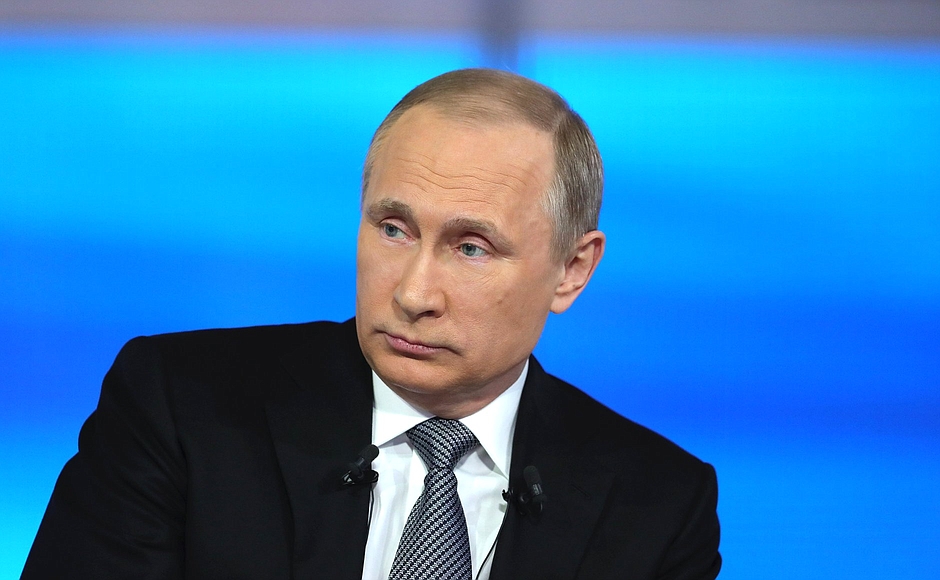
(NaturalNews) Andrew Napolitano, a former New Jersey Superior Court judge, said in an interview with Russia Today (RT) that Russian President Vladimir Putin has dem…

Footage shows male senior swiftly strike ball in attempt to make goal, inadvertently hitting female player directly in mouth. A female high school lacrosse player [more…]

Use promo code “ALEX” when you sign up on Mug Club to get one month FREE of the network’s exclusive broadcasts, investigative reports, comedy specials [more…]

Suspect in black Lamborghini attempts rob man at Erewhon Market before shooting him in street, police say A man was shot during an attempted robbery [more…]

Watch & share this massive LIVE broadcast to get the latest on America’s border invasion, Mideast war, the NWO depopulation agenda & SO MUCH MORE! [more…]

Is this just another cycle, or is it the END? Martin Armstrong of Armstrong Economics published an article this week about the so-called Socrates program and how [more…]

“I assure you all options are open on the southern front. They can be adopted anytime.” Summary recap: Hezbollah Secretary-General Hassan Nasrallah’s speech went for [more…]

Putin orders planeloads of humanitarian aid to be sent to Egypt The Russian Ministry Emergency Situations said on Friday that it would send two aircraft [more…]

It is Tunisia’s duty to stand with the Palestinians, its president has said The Tunisian parliament on Thursday began discussing a bill that would define [more…]