





Footage shows male senior swiftly strike ball in attempt to make goal, inadvertently hitting female player directly in mouth. A female high school lacrosse player [more…]

For two decades, California treated the physical world like an irritating inconvenience, confident that America would forever run on ad clicks and overpriced software. That bet paid off handsomely, until the servers running those digital empires required more power than the local electric utility could deliver without accidentally starting a forest fire.
Now the ground is moving. Silicon Valley didn’t get outsmarted, but it did get outpowered. Corporate headquarters, engineering talent, and investment capital are heading for the Gulf South, a heavy-duty industrial coastline running from Texas through Louisiana, Mississippi, and Alabama over to Florida. This regional migration is a much bigger story than the search for lower taxes. It marks a fundamental shift in how the nation generates real economic value.
The Silicon Valley aristocracy spent years viewing the Gulf Coast as beneath them.
Since the early 2000s, investors have poured billions into abstract code. Softbank threw massive fortunes at apps that delivered cold coffee to apartments, operating on the theory that physical assets were something of a nuisance. The Gulf South boom is the physical world taking its revenge.
Call it a blue-collar tech realignment. In places like Houston, Mobile, and Pensacola, state regulators, chemical plants, and shipbuilders work together. They prioritize tangible output over corporate mission statements. Silicon Valley created digital tools that let consumers distract themselves on smartphones. The Gulf South, on the other hand, concerns itself with the steel, fuel, micro-turbines, and continuous high-voltage power required to keep a modern nation operating day in and day out.
Geopolitics forced this shift into high gear. Silicon Valley looked west across the Pacific, tying itself to shaky Asian supply chains. The Gulf South sits at a completely different strategic crossroads. Take Corpus Christi, Texas, for example, where massive deepwater terminals pump millions of tons of liquefied natural gas directly to European cities facing energy crises. Or look at Mobile, Alabama, where industrial shipyards like Austal USA are expanding, busy building the next generation of U.S. Navy warships and submarine modules. Moving high-tech operations to the Gulf Coast isn’t just about finding cheaper land for factory floors. We are witnessing the emergence of a dense defense and energy corridor that links American tech capacity directly to global security needs. When international conflict erupts, mere code can’t defend trade routes. Wars still run on steel, ammunition, and fuel.
AI has delivered a similar reality check. For all the talk of a digital future, AI ultimately depends on a very physical world. California’s temperamental power grid, hamstrung by strict regulations and a total rejection of nuclear power, can’t supply the constant voltage these massive installations need. Data center developers face years of bureaucratic delays and environmental lawsuits before they can pull a single watt from the grid.
The Gulf South operates under a different set of economic priorities altogether.
RELATED: Regulators just slapped these top companies with an invasive new ultimatum
Jean-Christophe VERHAEGEN/AFP/Getty Images
Consider Richland Parish, Louisiana, a rural community now home to a multibillion-dollar Meta AI data center campus. Texas and Louisiana possess massive natural gas reserves, functional nuclear plants, and heavy industrial electrical grids built to run chemical refineries 24 hours a day without interruption. Tech companies are setting up massive compute hubs in the region because the high-capacity energy infrastructure already exists on the ground, ready to burn. Even the silicon itself has migrated. Samsung’s massive $17 billion semiconductor facility in Taylor, Texas, proves that even the physical chips powering the digital revolution rely on the Gulf’s natural resources and industrial capacity.
The way technology was financed had to change, too. Traditional Sand Hill Road venture capital was structured around quick five-year exit strategies for software apps. A small team of engineers could build an app in a rented office. They could scale online and cash out before anyone asked whether the business actually turned a profit.
Building defense hardware, aerospace infrastructure, rocket engines, and liquid gas export terminals requires a completely different financial model. Hardware demands patient capital, acres of cheap industrial land, heavy machinery, and long-term state partnerships. Industrial private equity, federal defense grants, and serious manufacturing capital are replacing short-term venture bets.
The Silicon Valley aristocracy spent years viewing the Gulf Coast as beneath them, little more than a flat expanse of hurricane zones, chemical plants, and oil refineries. That arrogance blinded them: Software might optimize a supply chain well enough, but it can’t build a ship or even power an AI supercomputer. Code might write the rules of the new economy, but physical infrastructure determines who actually gets to build it.
That’s why the economic center of gravity has shifted, and it’s locking into place far away from the Bay Area. Workers are following the factories. Capital is following the power lines, and national security planners are following the industrial capacity. Silicon Valley gets to keep the trendy social apps and the questionable marketing campaigns. But the Gulf South takes the large-scale machinery and the energy grid. Most importantly, it wrests control of the real power back to America’s heartland.
Tech, Silicon valley
Employees of the Chase bank in Cedar Hill, Texas, are likely thankful that a customer decided to carry his gun after another man tried to rob them with a knife.
Officers were called to the bank on North U.S. Highway 67 Service Road at about 9 a.m. Monday morning after a report of a robbery in progress, according to Cedar Hill Police.
‘No significant injuries to bank employees, customers, witnesses, or officers have been reported.’
When police arrived at the parking lot of the bank, they found a man with an apparent gunshot wound.
Despite police applying lifesaving measures, the man was later declared dead after being transported to a hospital.
The man had walked into the bank and threatened employees with a knife to give him money, according to investigators.
The armed customer intervened and shot the attempted burglar.
The injured man ran out of the bank and was located by the arriving police.
“No shots were fired by police officers,” read the police statement. “No significant injuries to bank employees, customers, witnesses, or officers have been reported at this time.”
Police said the investigation is ongoing and detectives with the Criminal Investigations Unit are questioning witnesses and reviewing security video.
RELATED: Calif. man finds intruder allegedly firing shotgun at his wife — and ends threat permanently
It is unclear whether the customer will be charged, but police said he was cooperating with the investigation.
Cedar Hill is a suburb of Dallas that includes about 49,000 residents.
Like Blaze News? Bypass the censors, sign up for our newsletters, and get stories like this direct to your inbox. Sign up here!
Bank robbery, Shooting, Second amendment, Texas, Crime
As the saying goes, “if you’re catching flak, you’re over the target.” That line has followed President Trump for years, and it now fits Attorney General Todd Blanche.
Before joining the administration, Blanche spent years as one of Trump’s defense attorneys as the former president faced civil suits and criminal prosecutions brought by deranged accusers, state officials, and the federal government itself.
Blanche will be judged by whether he stays within the law. He should be. But he should not be expected to govern as though the election never happened.
Blanche then served as deputy attorney general for more than a year. After Pam Bondi’s dismissal in April, he became acting attorney general and was confirmed by the Senate on August 8, 50-49, with two Republicans voting against him.
He had already made himself a target.
In June 2025, following a Trump executive order, Blanche issued guidance narrowing enforcement of the Foreign Corrupt Practices Act and directing prosecutors to focus on cases tied to U.S. interests and national security, including competition with China.
He has also pushed for prosecution of former FBI Director James Comey over his infamous “8647” Instagram post, prioritized the arrest of illegal immigrants with criminal records, and defended aggressive federal enforcement during Operation Metro Surge in Minnesota.
Once Blanche became attorney general, reporters pressed him to promise “independence” from the president. He refused to perform the ritual.
RELATED: Enough with the Justice Department ‘independence’ myth
Al Drago/Bloomberg/Getty Images
That refusal triggered the familiar argument that Republican attorneys general must prove their distance from Republican presidents before they can be treated as legitimate. Democrat attorneys general rarely face the same presumption.
The pattern has continued. Blanche’s support for allowing certain nonviolent felons to petition for restoration of gun rights brought the label “Trump goon” from the left. His refusal to embrace the media’s preferred definition of “independence” led to accusations that he was attacking the department itself. ABC’s coverage of his handling of Epstein-related questions turned moral compromise by association into another dishonest line of attack.
The common thread is not that every Blanche decision is beyond criticism. It is that vigorous service to Trump is itself somehow disqualifying.
That standard reflects the old arrangement Republicans were expected to accept: Democrats and the media set the norms, Republicans prove their respectability by obeying them, and any serious use of lawful power is presumed corrupt unless the left approves.
Blanche does not appear interested in that arrangement.
In his time at the Justice Department, Blanche has shown a willingness to use the department’s lawful authority in pursuit of the administration’s agenda without apologizing for the fact that the president won an election and appointed him to do exactly that.
RELATED: The Justice Department finally has a grown-up in charge
Alex Wong/Getty Images
That’s why the attacks will only intensify.
Other Trump officials draw plenty of criticism, but Blanche is increasingly being treated like Vice President JD Vance, War Secretary Pete Hegseth, or Trump himself: not merely as an opponent, but as someone whose refusal to play by the old rules is seen as a threat.
The left insists it fears politicized justice. What it appears to fear more is a Republican attorney general who will not accept a one-way definition of restraint.
Blanche will be judged by whether he stays within the law. He should be. But he should not be expected to govern as though the election never happened.
That is the real fight: whether a Republican administration is allowed to use lawful power without first asking permission from the people who opposed it.
Federal government, Justice department, Media coverage, Pam bondi, President trump, Vice president jd vance, Illegal immigrants, Todd blanche, Fbi, James comey, Opinion & analysis
U.S. Rep. Alexandria Ocasio-Cortez (D-N.Y.) is trying to remain the darling of the Democratic Party while keeping one foot in the socialist movement that made her famous. If the rumors of a 2028 presidential run are real, that balancing act is about to get much harder.
The Democratic Socialists of America draw the fault line. The word “socialism” still repels plenty of mainstream voters, and recent candidates have discovered how quickly old radical rhetoric can become a liability. Wisconsin gubernatorial candidate Francesca Hong lost after her old “Cancel Thanksgiving” post resurfaced. In Minneapolis, Omar Fateh’s mayoral campaign took heat over a video in which he appeared to pledge loyalty to Somalia.
For years, Ocasio-Cortez made socialism look glamorous to young progressives. Now the socialists are asking whether she is still socialist enough.
The DSA’s celebrity ecosystem is not helping. Hasan Piker, the radical-left streamer, went viral again for saying “America deserved 9/11” and calling himself a “terrorist supporter.” Senate candidate Abdul El-Sayed, once friendly with Piker, has since tried to downplay that relationship.
AOC is trying to hold onto the movement without letting it dictate the terms of a national campaign. That is becoming difficult because the DSA itself keeps moving left.
Its new platform calls for abolishing the presidency, the Senate, and the Supreme Court, along with police and prisons. Last month, the organization celebrated Fidel Castro as an “organizer,” a “fighter,” and “a stalwart symbol of anti-imperialist struggle and self-determination.” DSA co-chair Ashik Siddique was unable to offer much of a defense when CNN asked how the Castro tribute would play with Florida voters.
The tension burst into the open after a recent interview in which Ocasio-Cortez emphasized her membership in New York City DSA rather than the national organization and brushed aside questions about why she had not endorsed other DSA candidates such as Hong.
The DSA’s Liberation Caucus, which openly embraces Marxist-Leninist-Maoist politics, fired back. It withdrew support for a hypothetical AOC presidential run, accusing her of a “retreat from socialist politics,” insufficient solidarity with Palestine, and failure to participate in the group’s “Federal Socialists in Office” work. It warned that a presidential campaign would bring “even more capitulations to the imperialists.”
That is AOC’s problem in miniature. The politician most responsible for making democratic socialism fashionable now risks becoming too mainstream for the people who helped build her brand.
RELATED: Sorry, socialists: The internet saved your homework
Sarah Rice/Bloomberg/Getty Images
The DSA has grown quickly. Membership doubled from roughly 50,000 in 2020 to more than 100,000 by 2026 and reached about 120,000 by July. Growth, however, has exposed factions: a national organization, local chapters with different political incentives, and ideological caucuses competing to define what socialism is supposed to mean.
That makes national politics awkward. The DSA wants influence without compromise, but influence in a coalition party requires compromise almost by definition. The more successful one of its politicians becomes, the more likely activists are to accuse that politician of betrayal.
AOC is now caught in the trap she helped build. To become a plausible national Democrat, she must reassure voters who recoil from communism, Castro nostalgia, police abolition, and revolutionary theater. To keep the DSA left happy, she must prove she has not been domesticated by Washington.
For years, Ocasio-Cortez made socialism look glamorous to young progressives. Now the socialists are asking whether she is still socialist enough.
Democratic party, Democratic socialists of america, Fidel castro, Francesca hong, Omar fateh, Opinion & analysis, Hasan piker, Alexandria ocasio-cortez, 2028 presidential election, Abdul el-sayed, Abolish police, New york
Athletes pay tribute to their heroes all the time, but BlazeTV host Jason Whitlock doesn’t believe Naomi Osaka’s Allen Iverson-inspired appearance at the U.S. Open was authentic.
“She walked into Arthur Ashe Stadium on Monday night in cornrows, a headband, a shooting sleeve, and an elbow pad. She beat some foreign player in two tie breaks, and the press sold it as an homage,” Whitlock says.
“The night before, she wore Iverson’s face on a shirt and called him a trailblazer,” he adds. Osaka spoke in a press conference following the match.
“Obviously the inspiration is Allen Iverson. I think, you know, for me, he’s a trailblazer. He’s someone that was able to merge culture and sport. And he’s very famous for that. And also I just really appreciate his style,” Osaka said.
“That’s kind of like what I tried to embody, and obviously, I had a lot of fun with that design process and just coming up with the creative for it. So overall it was cool. I think it fit New York really well, and I’m just excited to continue,” she added.
Iverson wrote in a post on Instagram in response, “Wow, what a[n] honor!! BIG FAN can’t wait to meet you.”
“Iverson had never even spoken to her,” Whitlock comments.
“The costume needed a co-signer.”
Whitlock points out that Osaka was “born in Japan to a Haitian father and a Japanese mother.”
“Alan Iverson is not and has never been her role model. This is a mixed-race superstar using the U.S. Open to buy good credibility she did not grow up in,” he says.
“A 28-year-old woman cosplaying as a black man on the biggest tennis stage in the country. And we pretend the crossdressing is inspiration,” he continues.
“We call it progress and tell young girls and boys this is fashion. This is courage. This is who they should admire,” he adds.
To enjoy more fearless conversations at the crossroads of culture, faith, sports, and comedy with Jason Whitlock, subscribe to BlazeTV — the largest multi-platform network of voices who love America, defend the Constitution, and live the American dream.
Jason whitlock, Us open, Crossdressing, Naomi osaka, Allen iverson, Tennis, Nba, Blazetv show

(NaturalNews) A study published in Geophysical Research Letters on Aug. 29, 2026, reported the detection of 362 glacial seismic events in Antarctica between 2010 an…

(NaturalNews) Metabolism is not a fixed fate. Groundbreaking insights reveal that metabolism remains stable from age 20 to 60 and can be actively controlled thr…

(NaturalNews) Leaders Gather in Bishkek for SCO SummitThe Shanghai Cooperation Organization (SCO) summit convened in Bishkek on Sept. 2, bringing together leaders…
(NaturalNews) A Gallup poll released Wednesday, Sept. 2, found that 89% of U.S. adults believe corruption is widespread in the federal government, according to the …

(NaturalNews) Putin welcomed Indonesian President Prabowo Subianto to the 2026 Eastern Economic Forum in Vladivostok. Bilateral trade grew over 12 percent la…

(NaturalNews) A 3,300-year-old Egyptian papyrus (Anastasi I) describes encountering tall “Shosu” people in Canaan, estimated between 6’8″ and 8’4″ tall, which s…

(NaturalNews) A new peer-reviewed study has found that single-use paper cups, which are often perceived as a more environmentally friendly alternative to plastic, r…

(NaturalNews) Regularly consuming fermented foods like yogurt and kimchi is linked to improved heart health markers, including higher “good” HDL cholesterol and…

(NaturalNews) OverviewWheatgrass juice, pressed from the young shoots of the wheat plant (Triticum aestivum), contains chlorophyll, vitamins, minerals, and variou…
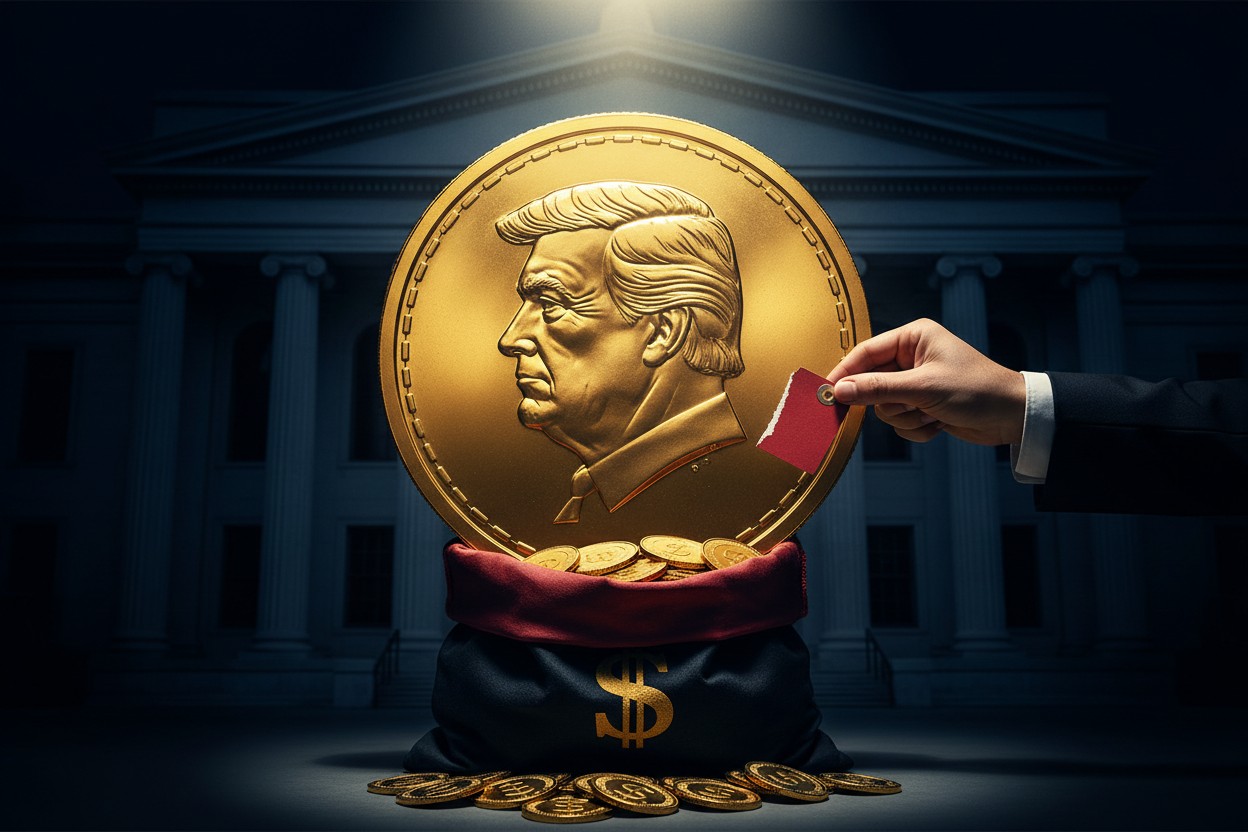
(NaturalNews) The U.S. Mint began accepting orders on Wednesday, Sept. 2, at 12 p.m. Eastern Time for newly issued $1 coins bearing the likeness of President Donald…

(NaturalNews) Army Secretary Dan Driscoll resigned Monday, Aug. 31, after months of clashes with Secretary of War Pete Hegseth, according to officials familiar with…

(NaturalNews) As the world looks away, Israel is waging a silent war on truth itself, grinding the concrete and bones of Gaza into dust and carting the evidence acr…

(NaturalNews) Nearly half of the world’s 934 million farmers are poisoned by pesticides annually, with an estimated 402 to 433 million cases each year. Devel…
Ryan Reynolds may have a point, but no one is hearing it.
Reynolds was talking about an upcoming film that focuses heavily on American culture in the 1980s when he described what he thinks the decade was really about.
‘Sociopolitical tensions everywhere.’
Speaking to a reporter from the red carpet, Reynolds said that looking back at the 1980s now, the decade tends to be seen through rose-colored glasses and not for how it actually was.
“What’s interesting about when you get far enough away from a time period that’s quite distinct, I think there’s always a lovely feeling associated with it. It’s almost like you pave over all the trauma with, like, puppy dogs and ice cream,” the actor began. “The ’80s was a brutal, brutal time for people. It was a f**king mess.”
Reynolds was born in Vancouver, Canada, in 1976 and grew up in the province. Now 49, he described the American 1980s as being filled with political tensions.
“It was a tremendous strife,” he told Variety. “Sociopolitical tensions everywhere. We were still pretty fresh off a Cuban missile crisis, which was only like 15-20 years before. It’s a tumultuous period, but you look back at it now and you’re like, ‘Oh, yeah. “Top Gun.” Cocaine!’ Like, no! It was really scary.”
RELATED: Mark Ruffalo writes endless progressive letters — gets called racist anyways
Manhattan, 1984. Barbara Alper/Getty Images
A significant number of notable accounts disagreed with the younger actor’s take, with women’s sports advocate Jennifer Sey commenting, “Literally no one was talking or worrying about the Cuban Missile Crisis. What is he talking about?!”
“I was born in 1972 and grew up in the 80s. I have no idea what he’s talking about. The 80s were awesome,” novelist Mathew Betley wrote on X.
Author Sarah Adams added, “The 80s were amazing, what the hell is this revisionist history.”
At least one reader agreed with Reynolds, though, pointing to ’80s issues like peer pressure and divorce.
“It was everyone for themselves,” he wrote. “Teflon Reagan shining through the sooty shadow of Vietnam and overthrowing democracies in Central America. Quadrupled national debt. Even as a teen I knew it was a bulls**t decade.”
While the majority of comments strongly disagreed with Reynolds, perhaps the latter reaction was closer to what the “Deadpool” star was referring to.
Reynolds reportedly said that modern popular projects like “Stranger Things” paint a different picture of how society was. Particularly, he said the threat of nuclear war between the U.S. and Soviet Union was surging and the exodus of American manufacturing was devastating the working class.
This, along with AIDS, serves as the true reality of the time, Reynolds explained.
“I think when you look back at 2026 and this era, I think they’re going to pick on the big-ticket items that don’t really leave the footprint culturally that you would think it would. I don’t know. … I wonder what it’s going to be. Is going to be like, ‘Oh, the COVID era’ or something. I have no idea,” Reynolds concluded.
Like Blaze News? Bypass the censors, sign up for our newsletters, and get stories like this direct to your inbox. Sign up here!
1980s, Ryan reynolds, Entertainment
A podcaster based in Los Angeles called repeatedly for the president to be assassinated and told his followers to harass the president’s personal lawyer and his family, prosecutors say.
40-year-old Benjamin Azariah Southworth was arrested Thursday and charged with one count of threats against the president, one count of cyberstalking, and one count of harassing telephone calls in interstate communications.
‘Kill Donald Trump. Kill that motherf**king pedophile in the White House.’
Southworth allegedly made the comments on several social media platforms including TikTok, Instagram, YouTube, and his own website from January through May this year.
Court documents said one of the posts was made at Instagram on March 31.
“Since the Supreme Court has ruled today that psychological, spiritual, emotional and physical torture known as gay conversion therapy is free speech, I want to practice my free speech as a survivor of conversion therapy for five years,” the message read.
“Kill Donald Trump. Kill that motherf**king pedophile in the White House,” the message continued.
“I have been vocal in calling for the execution of Donald Trump” read another message documented in the court filing. “This government is illegitimate and out of control. It’s time for course correction. Kill Donald Trump.”
In addition to calling for Trump’s death several times, he posted the personal information of his attorney Jay Sekulow in order to have his followers harass him.
“No peace for traitors,” Southworth allegedly stated at the time.
Southworth described himself as a “GLAAD-award-nominated artivist” on his website, which also said he used his platform to challenge “Christian nationalism, anti‑LGBTQIA+ bigotry, and Zionism.”
A Blaze News request for comment to Sekulow was not immediately returned.
RELATED: ‘We’re gonna hang him from the Statue of Liberty’: Man allegedly threatened to kill Trump
First Assistant U.S. Attorney Bill Essayli said in a statement that there would be “zero tolerance” for such threats, especially against the president.
“Threatening an elected official with violence is a serious offense, and you will be arrested and charged, as Mr. Southworth found out this morning.”
Like Blaze News? Bypass the censors, sign up for our newsletters, and get stories like this direct to your inbox. Sign up here!
Christian nationalism, Death threats, Los angeles, Zionism, Politics

Footage shows male senior swiftly strike ball in attempt to make goal, inadvertently hitting female player directly in mouth. A female high school lacrosse player [more…]

Use promo code “ALEX” when you sign up on Mug Club to get one month FREE of the network’s exclusive broadcasts, investigative reports, comedy specials [more…]

Suspect in black Lamborghini attempts rob man at Erewhon Market before shooting him in street, police say A man was shot during an attempted robbery [more…]

Watch & share this massive LIVE broadcast to get the latest on America’s border invasion, Mideast war, the NWO depopulation agenda & SO MUCH MORE! [more…]

Is this just another cycle, or is it the END? Martin Armstrong of Armstrong Economics published an article this week about the so-called Socrates program and how [more…]

“I assure you all options are open on the southern front. They can be adopted anytime.” Summary recap: Hezbollah Secretary-General Hassan Nasrallah’s speech went for [more…]

Putin orders planeloads of humanitarian aid to be sent to Egypt The Russian Ministry Emergency Situations said on Friday that it would send two aircraft [more…]

It is Tunisia’s duty to stand with the Palestinians, its president has said The Tunisian parliament on Thursday began discussing a bill that would define [more…]