






Is this just another cycle, or is it the END? Martin Armstrong of Armstrong Economics published an article this week about the so-called Socrates program and how [more…]

Voters in Kentucky may be vindicated for sending Gov. Matt Bevin (R) packing after just one term, now that his personal life appears to be in disarray.
Bevin, a Republican who served as Kentucky governor from 2015 until 2019, was arrested Thursday and ordered to spend 60 days in jail and pay a $500 fine in connection with divorce proceedings and child support.
‘If he would do what’s right, like I require every other person that comes in here, then I will happily rescind that bench warrant.’
Records from Jefferson County Jail in Louisville show that Bevin, 59, was arrested for contempt of court.
Bevin’s wife, Glenna Bevin, filed for divorce in 2023 and seems to have submitted the required financial documents. Bevin, however, allegedly has not.
Jonah Bevin, one of the estranged couple’s four adopted children from Ethiopia, has also intervened and is seeking financial support, claiming his parents abandoned him at a facility in Jamaica. Glenna and Matt Bevin have five biological children as well.
In March, Jefferson Family Court Judge Angela Johnson held Bevin in contempt of court, determining that he had not submitted the necessary records, including bank statements and tax returns. Bevin argued he does not have a typical income stream and instead lives on interest and investments.
“You didn’t do what you were supposed to do when you were supposed to do it,” Judge Johnson ruled at the time, according to the Lexington Herald-Leader.
RELATED: Democratic Kentucky governor demands McConnell RESIGN if he can’t PROVE his capacity to serve
John Sommers II/Getty Images
Bevin was ordered to attend a hearing in May in person, but attempted to attend via Zoom instead, claiming he could not appear in person because a boulder had fallen on a house he owns in Maine.
Judge Johnson then ordered Bevin to submit the documents by June 5 or she would issue a bench warrant. That deadline came and went, and Bevin’s attorney requested further clarification on the documents needed.
Johnson rejected that request and kept the bench warrant in place. “This is not rocket science. … Counsel knows what is required to establish child support, so it’s not like the court has to guide you as if you’re still in law school on what is required,” she said in June, according to the Herald-Leader.
“If he would do what’s right, like I require every other person that comes in here, then I will happily rescind that bench warrant, but he needs to do what’s right.”
In July, Bevin allegedly tried to attend yet another hearing via Zoom but was denied. “Mr. Bevin made that decision not to be here, but you know, he’s going to pay for it in that he doesn’t get to go under oath and present his side of the story,” Judge Johnson said.
The bench warrant remained in place, leading to his arrest this week.
The respective attorneys for Matt and Jonah Bevin did not respond to a request for comment from Blaze News.
Bevin was elected in 2015 and narrowly lost re-election to current Democrat Gov. Andy Beshear. In 2019, Beshear defeated Bevin 49.2% to 48.8%, a difference of about 5,000 votes.
On his way out the door, Bevin issued a flurry of controversial pardons, including of a child rapist. Micah Schoettle was convicted in 2018 of raping a 9-year-old girl and sentenced to 23 years behind bars, but the pardon from Bevin allowed him to walk out of prison after less than 18 months.
When asked about the shocking pardon, Bevin claimed that evidence showed the girl’s hymen was still intact.
“This is perhaps more specific than people would want, but trust me, if you have been repeatedly sexually violated as a small child by an adult, there are going to be repercussions of that physically and medically,” Bevin said in December 2019.
Like Blaze News? Bypass the censors, sign up for our newsletters, and get stories like this direct to your inbox. Sign up here!
Andy beshear, Child support, Kentucky, Politics
The Lindsay Clancy murder trial has just hit a huge speed bump.
The deadlocked Massachusetts jury of nine women and three men on Friday morning — its seventh day of deliberations — delivered a note to Judge William Sullivan in the Plymouth courtroom.
‘I would go so far as to reluctantly say that the individual has made a false statement under oath to this court.’
Sullivan read the note aloud, which said, “It is with a heavy heart that we report we are unable to come to a unanimous decision and will not be able to.”
The jury has twice before indicated that it was deadlocked regarding the fate of Clancy — a 36-year-old former labor and delivery nurse — whom the prosecution and defense agreed killed her three young children in 2023. The issue has been whether she is criminally responsible for their deaths due to her mental state, the Associated Press said.
Sullivan asked the prosecution and defense for their thoughts. The prosecution said the jury note would “require a mistrial at this point.” The defense disagreed and said the judge should send the jury back to deliberate further.
The judge then stated, “Over the defendant’s objection, I’m going to declare a mistrial at this point.”
But before the jury could be brought back in, Clancy’s defense attorney Kevin Reddington asked Judge Sullivan for a chance to file an emergency appeal to the state supreme court.
Sullivan told Reddington that he’d give him an hour to file a stay for the declaration of the mistrial before the jury is brought back in. The AP said the clock began ticking at 11:30 a.m.
A major issue that surfaced amid Thursday’s deliberations was, according to Reddington, that the jury foreperson said, “There is one juror who refuses to listen to the law that you have given him or her on reasonable doubt.” Reddington then told the judge he wanted that juror removed.
The AP in an earlier story reported that Reddington, after the jury was dismissed Thursday, indicated that Judge Sullivan would question that juror on Friday morning. However, Sullivan on Friday morning first asked the prosecution and defense how they wanted him to deal with the juror issue.
While the prosecution told Sullivan it doesn’t want him to question the juror, Reddington pushed back hard.
“This person will not apply reasonable doubt to the evidence to return a not-guilty verdict. He is not being honest with you at the sidebar. I would go so far as to reluctantly say that the individual has made a false statement under oath to this court,” Reddington told the judge before adding that “the individual is refusing to apply your instructions on proof beyond a reasonable doubt to allow that jury a verdict of not-guilty.”
With that, the prosecution maintained that “we’re in no position to judge whether the 11 are right or the one is right.”
Sullivan then ruled that he won’t question the juror, telling both attorneys there’s “no need for inquiry.”
That’s when things got heated between the defense attorney and the judge.
Reddington told Sullivan, “I would ask that you not just give them, as I described it yesterday, a soft inquiry, will you listen to my instruction. I would ask that you specifically direct their attention to proof beyond a reasonable doubt and reinstruct them on that forcefully.”
The judge replied, “I did that yesterday, didn’t I?”
Reddington, in a clipped tone, told Sullivan that “you did it yesterday, you did it soft, you didn’t do it forcefully.”
The now-annoyed judge shot back, “What do you want me to do, get a brass band? I read the instruction as written by the [Massachusetts Supreme Judicial Court]. The fact that I perhaps didn’t give it my full inflection, I’m sorry about that, but I’m not an actor. I’ve just given the instructions.”
Reddington argued back: “My point, judge, simply is that you’re kind of glossing over the issue. The issue is this juror will not, according to that note, apply the law of reasonable doubt.”
Sullivan, more annoyed, replied that “I am specifically not glossing over this issue. I have thought about this issue long and hard. I know the defendant objects, but the characterization that I’m glossing over it … trust me, that’s not the situation. I’ve been thinking about this for quite a while. I’m going to just give that instruction that they have to follow my instructions. I’m not going to reiterate the reasonable doubt at this point. It may come to that again as we go through it.”
The judge concluded his remarks to Reddington with some more humor: “And I’ll try and give this with more pizzazz than I gave yesterday, I suppose.”
With that, the judge brought the deadlocked jury back into the courtroom and told them no future notes to the court should indicate how the panel stands numerically. In addition, Sullivan told the jury, “I wanted to remind you, as I instructed you earlier, it’s you’re duty as jurors to accept the law as I stated to you … you must follow the law as I give it to you, whether you agree with it or not.”
He then sent the jury back to further deliberate.
The jury twice told Judge William Sullivan that it couldn’t reach a verdict, but Sullivan in both instances told the jury to go back and keep deliberating.
Sullivan told the jurors not to abandon their own convictions just to reach a verdict but also to seriously consider opposing views and reassess their positions if appropriate, the AP said.
The jury was brought back into the courtroom Thursday afternoon, and the judge told the jurors, “I want to remind you that you are required to follow my instructions on the law as I gave you,” the AP noted.
The outlet said the judge added that “it is not enough for prosecutors to show a probability, or even a strong probability, of guilt.” The judge also told the jury that proof beyond a reasonable doubt does not mean proof beyond all possible doubt, according to the AP.
The judge then sent the jury back to continue deliberations — and some in the audience gasped, the outlet said.
The attorney for Clancy argued that postpartum psychosis led to his client’s actions; prosecutors said Clancy knew what she was doing when she strangled 5-year-old Cora, 3-year-old Dawson, and 8-month-old Callan Clancy in the basement of their home, the AP said.
After Clancy strangled the children with exercise bands, she jumped from a second-floor window and remains paralyzed from the waist down, the outlet said. Her lawyers said Clancy heard a voice telling her to kill the children so she could end her own life and also had bipolar disorder and postpartum psychosis, a rare mental illness, the AP added. Postpartum psychosis is linked to the stress, sleep deprivation, and hormonal changes that follow childbirth, the outlet noted.
Jurors have heard testimony from relatives and doctors about how Clancy’s mental health declined in the months before the killings and how her treatment included several medications and a short stay in a psychiatric hospital, the AP said, adding that the prosecution’s and defense’s medical experts reached sharply different conclusions regarding Clancy’s psychiatric state.
The prosecution argued that Clancy deliberately sent her then-husband on errands to get him out of the house on the day of the killings, and prosecutors also have questioned the seriousness of her suicide attempt, the AP reported. Patrick Clancy has said in interviews that he forgives his ex-wife, whom he views as ill rather than evil, the outlet also said.
However, prosecutor Jennifer Sprague emphasized to the jury how horrific and cruel the killings were, the AP said: “She left them discarded on the basement floor like broken toys because she was done playing the game. You know to a moral certainty she is guilty.”
A number of sideshows also have captured the spotlight amid the courtroom proceedings.
A 56-year-old woman was arrested Tuesday afternoon outside Plymouth Superior Court and charged with one count of intimidation of a witness, jurors, or person furnishing information in connection with criminal proceedings.
Assistant District Attorney Nicole Piacentini stated at Dawn Light’s arraignment Wednesday that it was confirmed she recorded videos that included Clancy jurors exiting the courthouse.
Light, a retired nurse and Clancy supporter, told reporters she was there “to see Lindsay. And I did see her. She was getting picked up by the van,” the AP reported, adding that Light’s lawyer Jennifer White called it a “misunderstanding.” A not-guilty plea was entered on Light’s behalf, the outlet said.
Light was ordered to stay away from the courthouse grounds, avoid contact with jurors or potential witnesses in the Clancy trial, and refrain from disseminating any photos related to the incident.
The arrest prompted the judge to ask each juror Wednesday if they saw anything that would affect their impartiality, Clancy’s attorney Kevin Reddington told the AP. The judge also opened the day’s proceedings with a warning not to film, follow, contact, or tamper with jurors, the outlet said.
What’s more, hundreds of women rallied outside the courthouse earlier in the trial in support of Clancy. Many of her supporters were dressed in pink and lifted up their hands in the shape of hearts.
“I think that every one of us women believe that it could be any one of us,” said Renee Kimball, who organized the event. “Any one of us who have dealt with mental health, anxiety, depression, postpartum — I think we just know that any one of us could be sitting in her chair.”
Even one of the jurors donned a pink dress, according to a Friday story by Mama the Magazine.
If a mistrial is declared, prosecutors would then have to decide whether to put Clancy on trial again, drop the charges, or try to negotiate a plea deal with her lawyer, the outlet said.
If the jury decides Clancy was criminally responsible for her actions, it could convict her of either murder or manslaughter, the AP said. If she is acquitted, a judge could still order her confined to a mental health facility if an evaluation determines that she poses a danger to the public.
Like Blaze News? Bypass the censors, sign up for our newsletters, and get stories like this direct to your inbox. Sign up here!
Jury, Massachusetts, Mother kills children, Murder charges, Postpartum psychosis, Lindsay clancy, Verdict, Deadlocked, Crime
All the big names in AI are sounding the alarm, proclaiming that AI-enabled cyber attacks are becoming more prevalent. The fix? They want corporations, cybersecurity firms, and the government to mitigate the damage before it spirals out of control. The only problem is that Big AI created this mess in the first place, and so far, no one’s holding it accountable.
This message was shared through a joint letter published directly to OpenAI’s website. On the list of signatories, you’ll find familiar names, such as OpenAI, Anthropic, Google, Microsoft, Perplexity, and many other big brands in tech. The letter serves as a warning for what is positioned as impending doom, unless powerful groups work together.
These companies created the AI that is now poised to wreak havoc on our systems.
The first several paragraphs clearly lay out the danger ahead with a bit of hope on the horizon sprinkled in:
We have a limited window to strengthen cyber defenses.
In the coming months, AI-enabled cyber attacks will become far more widespread and sophisticated as models around the world become increasingly capable. The companies and public services our communities depend on — from hospitals to water treatment plants to the infrastructure that powers the internet — are at risk.
Today’s AI advances are already giving defenders new ways to fix weaknesses that have accumulated for years. If we act decisively, we can use the defenders’ window to make our digital world much more secure.
On one hand, the warning is a good thing. Any company that knows about a potential widespread cyber threat has a moral obligation to tell the people and the government so that protections can be put in place.
On the other hand, many of the companies that signed the letter created the AI that is now poised to wreak havoc on our systems. At least in some part, they should be held responsible for creating the thing that can automatically break into websites without any human purview or knowledge. As for the other signers, many of them are tech organizations that will suffer because of the latest AI models on the market.
RELATED: Automated cyberattacks are here — careless techies and well-funded foreigners are getting the blame
Moor Studio/Getty Images
The good news is that Big Tech has a solution, regardless of how self-unaware it seems to be about the whole issue:
Each of us can reduce risk now. All organizations, cybersecurity companies, technology partners, governments, and AI frontier companies have an important role: accelerate defenders’ priorities with tools, funding, and hands-on support, especially for critical infrastructure organizations with limited budgets.
Big Tech goes on to shuck responsibility onto everyone else before itself. To fix the problem, we need corporations to improve their internal security standards, cyber security firms to offer assistance against AI attacks, the government to provide defensive resources to local institutions and utilities, and lastly, frontier developers to provide early access and support for their models that will inevitably break things. All of these solutions, of course, will require a lot of time, money, and possibly even more government regulation or intervention.
Blaze Media reached out to Jon Stokes, creator of symbolic.ai, for comment. He said:
I do think they should make their best models, both internal and external, available to government agencies and maybe a select few private groups (vetted, probably with clearances) to harden infra on an ongoing basis. They should at the very least do this at cost, but probably they should be on the hook for significant support of these efforts via subsidized inference.
Plenty of questions remain: Are any of these Big AI companies on the hook for creating platforms that can hack into websites without human supervision? Are there any grounds for class action lawsuits that hold them accountable for breaking the internet as we knew it?
With state and federal lawmakers scrambling in a contentious free-for-all, we may find out a lot more very soon.
Like Blaze News? Bypass the censors, sign up for our newsletters, and get stories like this direct to your inbox. Sign up here!
Artificial intelligence, Openai, Anthropic, Microsoft, Chatgpt, Claude, Big tech, Tech
Democrat lawmakers recently demanded that the Department of Veterans Affairs restore dedicated LGBTQ+ veteran care coordinators and identity-based programs, putting the fight over gender policy at the VA back in the spotlight. The VA has instead redesignated those positions simply as “care coordinators” serving all veterans and restricted the use of VA resources to promote gender ideology.
As the VA moves away from identity-based programs, the Veterans of Foreign Wars organization has taken a different path.
The VFW’s principles are broad enough to unite veterans across the political spectrum. Abortion and gender ideology do not.
A veterans’ organization should support every veteran. That does not require endorsing every political or ideological position associated with a veteran’s identity. Yet this summer, the VFW again declared “Happy Pride Month” and celebrated veterans specifically on the basis of sexual orientation and “gender identity.”
The VFW has a long and distinguished history. It traces its roots to veterans of the Spanish-American War and helped shape the modern federal veterans system. But in recent years, the organization has also embraced positions on abortion and gender policy that go well beyond its core mission.
The VFW claims it has honored LGBTQ+ veterans during Pride Month since President Bill Clinton’s first proclamation in 1999. In 2019, then-National Commander B.J. Lawrence supported additional VA resources for LGBTQ+ veterans in congressional testimony.
The shift is also visible on abortion. In 2020, the VFW argued that the VA should provide certain abortion-related care. In 2022, it testified in support of H.R. 345, legislation that would have required the VA to provide information and counseling about abortion to veterans facing unwanted pregnancies.
On gender policy, the VFW has continued publishing Pride Month statements. One VFW leader learned how contentious that issue had become after criticizing Pride Month publicly.
The organization’s advocacy deserves scrutiny because policy requests framed simply as “health care” can include deeply contested medical interventions. In past testimony, the VFW demanded expanded resources for transgender veterans. The debate over those treatments has intensified as critics point to the risks of puberty blockers and cross-sex hormones and irreversible surgical interventions.
RELATED: The VFW’s political stunt backfired
Robert Alexander/Getty Images
Detransitioners have also brought malpractice claims, including one case that reportedly ended in a $3.5 million settlement. Whatever one thinks of the broader policy debate, these developments make it harder to treat every disputed intervention as politically neutral veterans’ care.
The VFW’s advocacy also now conflicts with the direction of federal policy. The VA has reinstated a ban on abortion and abortion counseling in its medical benefits package, while the Trump administration has issued executive orders directing federal agencies and the military to recognize biological sex.
That does not mean the VFW should exclude gay or transgender veterans, or deny that they served honorably. It means the organization should distinguish between serving veterans and endorsing contested ideological programs in their name.
The VFW’s own mission is to “advocate on behalf of all veterans.” Its core values include honoring military service, caring for veterans and their families, and respecting “the diversity of veteran opinions.” Those principles are broad enough to unite veterans across the political spectrum.
Abortion and gender ideology do not. When the VFW takes sides in some of the country’s most divisive moral and political disputes, it risks alienating veterans it is supposed to represent.
The better course is simpler: Fight for veterans’ benefits, health, dignity, and families. Leave woke social causes to the organizations created to fight those battles.
Veterans need a VFW that puts veterans first.
Biological sex, Culture war, Democrats, Department of veterans affairs, Gender identity, Military service, Pride month, Puberty blockers, Sexual orientation, Abortion, Transgender, Veterans, Opinion & analysis
A pattern has emerged on the left that’s become impossible to ignore: Criminals are increasingly portrayed as victims of circumstance, while the innocent people they harm are forgotten.
“We saw it with Luigi Mangione. We saw it with Charlie Kirk. We see this thing where they constantly paint killers, just like cold-blooded killers, as being either victims or heroes,” BlazeTV host Sara Gonzales says.
And one recent case is extra disturbing.
“This obviously deranged woman, Pamela Cisneros, went on a stabbing spree in Times Square. She killed one person and injured another,” Gonzales says.
In footage of the incident, Cisneros is holding the knives she used to stab innocent passersby, before charging at police officers with the knives out. The police initially attempted to taze her, but when that didn’t work, they shot and killed her.
“They did their best. Now remember, I just said she had already killed someone and injured another. So she had already taken someone’s life. They knew that she meant business, and they showed remarkable restraint,” Gonzales comments.
However, the left is now claiming the police went too far by shooting her.
“I just don’t understand the world that I’m living in right now. What do you mean you didn’t have to shoot her?” Gonzales asks.
And Cisneros’ mother has also chimed in, asking why the cops couldn’t “grab her” instead of shooting her.
“I guess insanity runs in the family,” Gonzales says. “Maybe that’s what it is.”
“And of course, because this woman’s last name happened to be Cisneros, and she has more melanin in her skin, and she was shot and killed by the police,” she continues, “the media want to pounce on her and figure out … why would such a good person, a wonderful member, contributing member of society do something like this?”
One “puff piece” by the Gothamist even dives into her “long mental health struggle.”
“It’s so strange,” Gonzales says, “that I didn’t actually see a write-up from this very same outlet about the victim who was stabbed by this person.”
Instead, Gonzales is seeing hate-filled comments directed at the woman, Erin Piacenti, murdered by Cisneros.
“She is now the villain in the story,” she says, reading a post on X that says, “’You’re not going to get me to feel bad for the vice president of Bank of America lmao.’”
“Never mind she’s a class hero,” another post read.
“The fact that anyone would even remotely glorify the killing of an innocent woman who was just going home to her newborn child because of what her occupation was and where she worked is just beyond disturbing,” Gonzales says.
To enjoy more of Sara’s no-holds-barred takes on news and culture, subscribe to BlazeTV — the largest multi-platform network of voices who love America, defend the Constitution, and live the American dream.
Stabbing spree, Times square, Police officers, Pamela cisneros, Erin piacenti, Murder, Leftism, Blazetv show
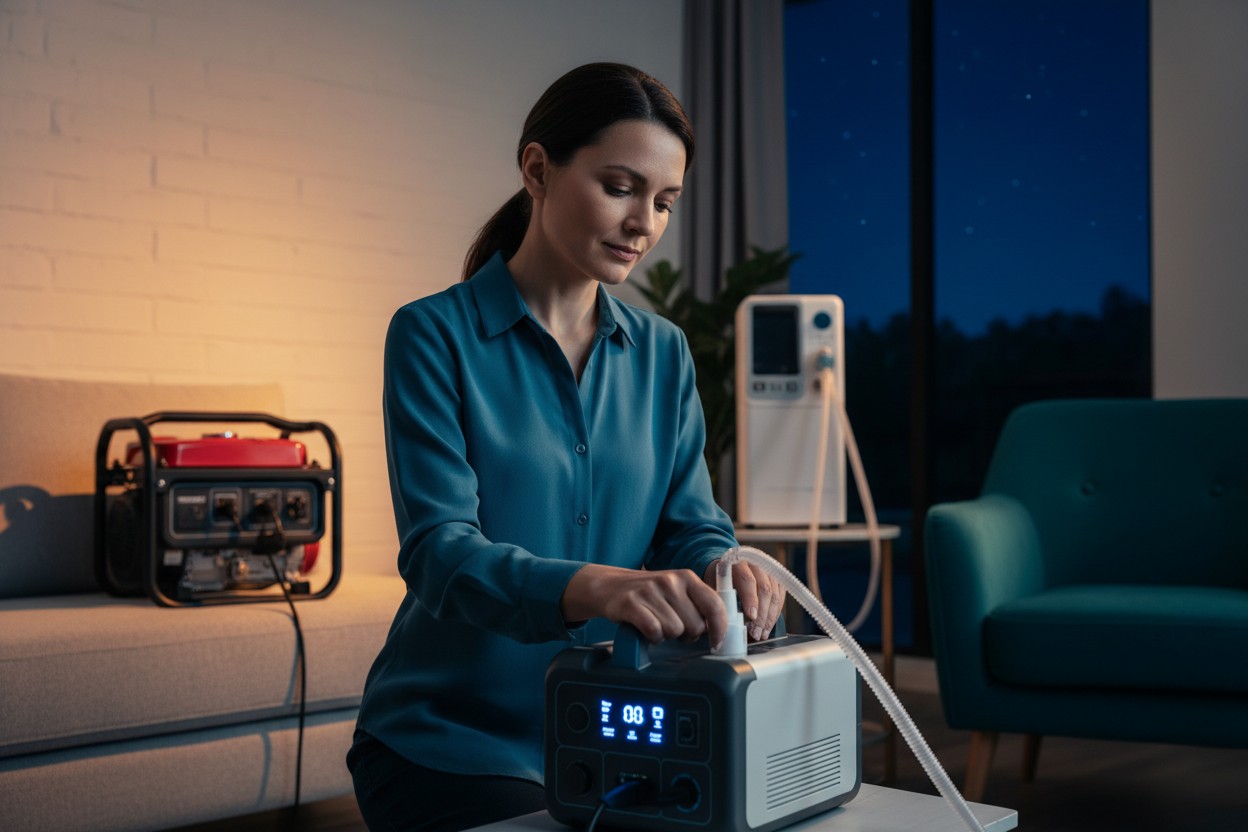
(NaturalNews) Power outages lasting beyond 72 hours create operational risks for households that depend on electrically powered medical devices such as CPAP machine…

(NaturalNews) Adding specific vegetables to the diet is associated with lowering cholesterol levels, according to nutrition researchers. Spinach, tomatoes, okra, pu…

(NaturalNews) Chapter 6 of “UNBREAKABLE” argued that routine exposure to products such as shampoo, perfume, cosmetics, deodorant, detergents and lotions may pla…

(NaturalNews) A dark-web service advertised on Aug. 31 is offering over 153 million scans of driver’s licenses, more than 10 million other identity cards, over thre…
(NaturalNews) The Department of Justice’s (DOJ) Office of Legal Counsel (OLC) issued a Sept. 1 opinion requiring all states to report undocumented immigrants known …

(NaturalNews) President Donald Trump posted a graphic on social media referencing a 2010 study on autism rates among Amish children, claiming that no unvaccinated A…

(NaturalNews) Excess iron accumulation in the brain triggers oxidative stress that destroys neurons and accelerates Alzheimer’s disease, with people who have Do…

(NaturalNews) In a brazen act, Norwegian authorities seized the Russian research vessel Professor Molchanov from its dock in the Arctic archipelago of Svalbard, act…

(NaturalNews) Why I’m Not Surprised by the Chaos in West AsiaThe chaos engulfing West Asia isn’t a tragic accident of diplomacy. It is the inevitable result of a …

(NaturalNews) The Diesel Time Bomb Is Already ExplodingMonths ago, I warned that diesel would hit $8 to $10 a gallon. Back then, many uninformed people dismissed …
Cities and states are moving quickly in response to concerns about governments’ expanding use of public surveillance cameras, automated license plate readers, audio detection devices, and similar tools. That is healthy. The country needs a serious debate over when crime prevention becomes pervasive surveillance.
Flock Safety says its AI-assisted network includes more than 120,000 cameras in 49 states and processes some 20 billion license plates each month, along with other vehicle characteristics. Public resistance has grown just as quickly.
The debate is overdue. Voters should decide how much surveillance they are willing to tolerate before the cameras decide for them.
On Monday, the Douglas, Massachusetts, Police Department announced it was discontinuing Flock cameras and immediately deactivated its monitoring accounts, citing a “divisive atmosphere” around the technology, Boston 25 News reported.
Other communities have restricted, suspended, or removed the cameras in Arizona, Florida, Kentucky, Massachusetts, and Wisconsin. Similar fights are under way in Louisiana, Michigan, Minnesota, and New York.
Congress has joined the fight. “Flock cameras are emerging as a rare area of bipartisan agreement on Capitol Hill,” Axios reports. Rep. Tim Burchett (R-Tenn.) and two other House Republicans introduced a bill last month to bar the federal government from buying Flock cameras or similar technology.
Flock emphasizes that its customers own the data, control access, and choose whom to share it with. Those customers are governments. That places responsibility where it belongs: on public officials who deploy the systems, and ultimately on voters who elect them.
Critics are right to worry that mass license-plate collection can become a surveillance system for people who have not been accused of any crime. AI dramatically expands what authorities can infer from otherwise ordinary observations by making huge quantities of location data searchable, sortable, and easy to combine.
Promises about retention limits deserve skepticism. Americans have already seen the National Security Agency spy on the American people under programs justified in the name of national security. The problem is not that every surveillance tool will be abused. It is that centralized databases make abuse much easier when safeguards fail.
RELATED: Cities are kicking out Flock. The surveillance might be here to stay.
Scharfsinn86/Getty Images
Recent cases give the public reason to be wary. Officers or other government personnel have faced allegations or charges involving misuse of camera systems in Texas, Missouri, Wisconsin, Florida, Georgia, and Kentucky. Some cases involved thousands of searches for personal purposes. The Institute for Justice has found 170 cases involving alleged misuse of automated license plate reader data and related systems.
The legal question is not simple. In principle, a camera that records a license plate visible on a public road resembles an officer observing the same plate while walking a beat. Police plainly may watch public places. Courts have long held that people generally have less privacy in public than at home, although the Supreme Court has recognized some limits when technology allows government to reconstruct a person’s movements in extraordinary detail.
That distinction is crucial. The constitutional permission to observe something in public does not automatically justify collecting every observation, storing it, cross-referencing it, and making years of movement searchable at the touch of a button. Scale can change the character of a government power.
Nor does constitutionality settle whether a policy is wise. States and local communities are entitled to decide that the risks outweigh the benefits. Voters should force officials to say clearly what information will be collected, how long it will be kept, who may search it, and for what purpose.
RELATED: When did we agree to be watched?
Justin Sullivan/Getty Images
My preference is stricter: Government personnel should not be able to search historical surveillance data without a warrant signed by a judge and tied to a specific suspected crime. Ideally, access would be limited to serious crimes rather than routine traffic enforcement. These systems should not become automated revenue machines.
That approach would preserve a useful investigative tool while protecting the ordinary citizen’s ability to travel public roads without creating a government dossier of his movements.
The backlash against Flock cameras is not irrational fear of technology. It is citizens recognizing that a power capable of helping police catch criminals is also capable of tracking the innocent.
That debate is overdue. Voters should decide how much surveillance they are willing to tolerate before the cameras decide for them.
Crime prevention, Federal government, Flock cameras, License plates, Surveillance technology, Ai, Congress, Public safety, Data, Privacy, Technology, Opinion & analysis
Democrats in the toughest midterm races can’t put enough distance between themselves and former Vice President Kamala Harris.
A string of Democratic candidates campaigning in red states have rejected Harris’ support both before and after it was offered. From Alaska to Kansas, Harris’ king-making ability appears nonexistent.
‘Having someone from California come in and try to tell Kansans who they should vote for is a pretty bad idea.’
“It’s all good,” Harris spokesman Eduardo Negron told Politico. “Vice President Harris will continue to raise money and travel on behalf of candidates in races where she can help make a difference.”
Harris might not be doing much traveling.
Alaska’s Mary Peltola went out of her way to snub a fundraising assistance offer from Harris in August.
“Mary isn’t seeking endorsements from anyone from the Lower 48 — her focus is and always will be Alaska,” a Peltola spokesperson told local outlet KTUU.
The former congresswoman also refused to endorse Harris in 2024, though she clarified in a social media post at the time that she wasn’t voting for President Donald Trump.
RELATED: Is the DSA about to scalp another establishment Democrat?
Rep. Mary Peltola (D). Ellen Schmidt/Las Vegas Review-Journal/Tribune News Service/Getty Images
“Mary Peltola stood by as Kamala Harris restricted Alaska’s energy production, including ANWR, and she’d shutter Alaskan energy and jeopardize jobs once again if elected,” National Republican Senate Committee press secretary Bernadette Breslin told Blaze News when asked about Peltola’s move.
Harris isn’t finding takers across the Midwest either.
“I received 9,000 more votes than Harris in 2024,” Democrat candidate for Wisconsin’s 3rd Congressional District Rebecca Cooke said in a statement to Politico. “I don’t need anyone to come and campaign with me in my district. I do the work of building relationships — including across the aisle — on my own.”
Though Cooke is distancing herself from Harris now, she was an outspoken supporter during the 2024 presidential election.
Cooke previously and unsuccessfully ran for the same congressional seat in 2022 and 2024.
Iowa Democratic Senate nominee Josh Turek gave a flat “no” when asked if he wanted the former vice president’s help on the campaign trail. Rob Sand, the Democrat running for governor of Iowa, provided Politico a similarly unenthusiastic response.
“Nope,” Sand said. “Let’s move on.”
Kansas Democrat Adam Hamilton, who is also running for the U.S. Senate, shooed the former vice president away from his race a bit more diplomatically.
“Having somebody from California come in and try to tell Kansans who they should vote for is a pretty bad idea,” the Methodist pastor told Politico.
Hamilton’s campaign is widely considered a long shot. Kansas hasn’t sent a Democrat to the Senate since 1932, and he’s lagging several points behind Sen. Roger Marshall (R), even in Democrat-leaning polls.
Though Hamilton may be trying to draw a line between Harris’ West Coast wokeness and his Midwest moderation, his track record suggests there isn’t much daylight between the two. The Methodist pastor admonished his congregation and called on them to scrutinize their white privilege in 2020.
Hamilton’s Resurrection church also touts extensive LGBTQ+ programming, and he has repeatedly landed in hot water for his unorthodox theological views.
Though she’s striking out in the heartland, Harris is finding some purchase with Southern Democrats.
Former North Carolina Gov. Roy Cooper, now running for Senate, accepted a Harris endorsement in October 2025 and previously called the former vice president as “my friend Kamala.”
Georgia Sen. Jon Ossoff is also quietly embracing Harris as he tries to win another term. The pair held a closed-door “Women for Ossoff” tele-rally in August, which was quickly slammed by his Republican challenger, Rep. Mike Collins.
Harris faces uneven terrain looking ahead to a 2028 run. Many in her own party would like her to just go away already, but a few stalwart supporters could make it to the Senate this November.
Either way, Democrats’ tumultuous rebrand isn’t over yet.
Like Blaze News? Bypass the censors, sign up for our newsletters, and get stories like this direct to your inbox. Sign up here!
California, Democrats, Endorsements, Kamala harris, Midterms, Politics
For two decades, California treated the physical world like an irritating inconvenience, confident that America would forever run on ad clicks and overpriced software. That bet paid off handsomely, until the servers running those digital empires required more power than the local electric utility could deliver without accidentally starting a forest fire.
Now the ground is moving. Silicon Valley didn’t get outsmarted, but it did get outpowered. Corporate headquarters, engineering talent, and investment capital are heading for the Gulf South, a heavy-duty industrial coastline running from Texas through Louisiana, Mississippi, and Alabama over to Florida. This regional migration is a much bigger story than the search for lower taxes. It marks a fundamental shift in how the nation generates real economic value.
The Silicon Valley aristocracy spent years viewing the Gulf Coast as beneath them.
Since the early 2000s, investors have poured billions into abstract code. Softbank threw massive fortunes at apps that delivered cold coffee to apartments, operating on the theory that physical assets were something of a nuisance. The Gulf South boom is the physical world taking its revenge.
Call it a blue-collar tech realignment. In places like Houston, Mobile, and Pensacola, state regulators, chemical plants, and shipbuilders work together. They prioritize tangible output over corporate mission statements. Silicon Valley created digital tools that let consumers distract themselves on smartphones. The Gulf South, on the other hand, concerns itself with the steel, fuel, micro-turbines, and continuous high-voltage power required to keep a modern nation operating day in and day out.
Geopolitics forced this shift into high gear. Silicon Valley looked west across the Pacific, tying itself to shaky Asian supply chains. The Gulf South sits at a completely different strategic crossroads. Take Corpus Christi, Texas, for example, where massive deepwater terminals pump millions of tons of liquefied natural gas directly to European cities facing energy crises. Or look at Mobile, Alabama, where industrial shipyards like Austal USA are expanding, busy building the next generation of U.S. Navy warships and submarine modules. Moving high-tech operations to the Gulf Coast isn’t just about finding cheaper land for factory floors. We are witnessing the emergence of a dense defense and energy corridor that links American tech capacity directly to global security needs. When international conflict erupts, mere code can’t defend trade routes. Wars still run on steel, ammunition, and fuel.
AI has delivered a similar reality check. For all the talk of a digital future, AI ultimately depends on a very physical world. California’s temperamental power grid, hamstrung by strict regulations and a total rejection of nuclear power, can’t supply the constant voltage these massive installations need. Data center developers face years of bureaucratic delays and environmental lawsuits before they can pull a single watt from the grid.
The Gulf South operates under a different set of economic priorities altogether.
RELATED: Regulators just slapped these top companies with an invasive new ultimatum
Jean-Christophe VERHAEGEN/AFP/Getty Images
Consider Richland Parish, Louisiana, a rural community now home to a multibillion-dollar Meta AI data center campus. Texas and Louisiana possess massive natural gas reserves, functional nuclear plants, and heavy industrial electrical grids built to run chemical refineries 24 hours a day without interruption. Tech companies are setting up massive compute hubs in the region because the high-capacity energy infrastructure already exists on the ground, ready to burn. Even the silicon itself has migrated. Samsung’s massive $17 billion semiconductor facility in Taylor, Texas, proves that even the physical chips powering the digital revolution rely on the Gulf’s natural resources and industrial capacity.
The way technology was financed had to change, too. Traditional Sand Hill Road venture capital was structured around quick five-year exit strategies for software apps. A small team of engineers could build an app in a rented office. They could scale online and cash out before anyone asked whether the business actually turned a profit.
Building defense hardware, aerospace infrastructure, rocket engines, and liquid gas export terminals requires a completely different financial model. Hardware demands patient capital, acres of cheap industrial land, heavy machinery, and long-term state partnerships. Industrial private equity, federal defense grants, and serious manufacturing capital are replacing short-term venture bets.
The Silicon Valley aristocracy spent years viewing the Gulf Coast as beneath them, little more than a flat expanse of hurricane zones, chemical plants, and oil refineries. That arrogance blinded them: Software might optimize a supply chain well enough, but it can’t build a ship or even power an AI supercomputer. Code might write the rules of the new economy, but physical infrastructure determines who actually gets to build it.
That’s why the economic center of gravity has shifted, and it’s locking into place far away from the Bay Area. Workers are following the factories. Capital is following the power lines, and national security planners are following the industrial capacity. Silicon Valley gets to keep the trendy social apps and the questionable marketing campaigns. But the Gulf South takes the large-scale machinery and the energy grid. Most importantly, it wrests control of the real power back to America’s heartland.
Tech, Silicon valley
Employees of the Chase bank in Cedar Hill, Texas, are likely thankful that a customer decided to carry his gun after another man tried to rob them with a knife.
Officers were called to the bank on North U.S. Highway 67 Service Road at about 9 a.m. Monday morning after a report of a robbery in progress, according to Cedar Hill Police.
‘No significant injuries to bank employees, customers, witnesses, or officers have been reported.’
When police arrived at the parking lot of the bank, they found a man with an apparent gunshot wound.
Despite police applying lifesaving measures, the man was later declared dead after being transported to a hospital.
The man had walked into the bank and threatened employees with a knife to give him money, according to investigators.
The armed customer intervened and shot the attempted burglar.
The injured man ran out of the bank and was located by the arriving police.
“No shots were fired by police officers,” read the police statement. “No significant injuries to bank employees, customers, witnesses, or officers have been reported at this time.”
Police said the investigation is ongoing and detectives with the Criminal Investigations Unit are questioning witnesses and reviewing security video.
RELATED: Calif. man finds intruder allegedly firing shotgun at his wife — and ends threat permanently
It is unclear whether the customer will be charged, but police said he was cooperating with the investigation.
Cedar Hill is a suburb of Dallas that includes about 49,000 residents.
Like Blaze News? Bypass the censors, sign up for our newsletters, and get stories like this direct to your inbox. Sign up here!
Bank robbery, Shooting, Second amendment, Texas, Crime
As the saying goes, “if you’re catching flak, you’re over the target.” That line has followed President Trump for years, and it now fits Attorney General Todd Blanche.
Before joining the administration, Blanche spent years as one of Trump’s defense attorneys as the former president faced civil suits and criminal prosecutions brought by deranged accusers, state officials, and the federal government itself.
Blanche will be judged by whether he stays within the law. He should be. But he should not be expected to govern as though the election never happened.
Blanche then served as deputy attorney general for more than a year. After Pam Bondi’s dismissal in April, he became acting attorney general and was confirmed by the Senate on August 8, 50-49, with two Republicans voting against him.
He had already made himself a target.
In June 2025, following a Trump executive order, Blanche issued guidance narrowing enforcement of the Foreign Corrupt Practices Act and directing prosecutors to focus on cases tied to U.S. interests and national security, including competition with China.
He has also pushed for prosecution of former FBI Director James Comey over his infamous “8647” Instagram post, prioritized the arrest of illegal immigrants with criminal records, and defended aggressive federal enforcement during Operation Metro Surge in Minnesota.
Once Blanche became attorney general, reporters pressed him to promise “independence” from the president. He refused to perform the ritual.
RELATED: Enough with the Justice Department ‘independence’ myth
Al Drago/Bloomberg/Getty Images
That refusal triggered the familiar argument that Republican attorneys general must prove their distance from Republican presidents before they can be treated as legitimate. Democrat attorneys general rarely face the same presumption.
The pattern has continued. Blanche’s support for allowing certain nonviolent felons to petition for restoration of gun rights brought the label “Trump goon” from the left. His refusal to embrace the media’s preferred definition of “independence” led to accusations that he was attacking the department itself. ABC’s coverage of his handling of Epstein-related questions turned moral compromise by association into another dishonest line of attack.
The common thread is not that every Blanche decision is beyond criticism. It is that vigorous service to Trump is itself somehow disqualifying.
That standard reflects the old arrangement Republicans were expected to accept: Democrats and the media set the norms, Republicans prove their respectability by obeying them, and any serious use of lawful power is presumed corrupt unless the left approves.
Blanche does not appear interested in that arrangement.
In his time at the Justice Department, Blanche has shown a willingness to use the department’s lawful authority in pursuit of the administration’s agenda without apologizing for the fact that the president won an election and appointed him to do exactly that.
RELATED: The Justice Department finally has a grown-up in charge
Alex Wong/Getty Images
That’s why the attacks will only intensify.
Other Trump officials draw plenty of criticism, but Blanche is increasingly being treated like Vice President JD Vance, War Secretary Pete Hegseth, or Trump himself: not merely as an opponent, but as someone whose refusal to play by the old rules is seen as a threat.
The left insists it fears politicized justice. What it appears to fear more is a Republican attorney general who will not accept a one-way definition of restraint.
Blanche will be judged by whether he stays within the law. He should be. But he should not be expected to govern as though the election never happened.
That is the real fight: whether a Republican administration is allowed to use lawful power without first asking permission from the people who opposed it.
Federal government, Justice department, Media coverage, Pam bondi, President trump, Vice president jd vance, Illegal immigrants, Todd blanche, Fbi, James comey, Opinion & analysis

Is this just another cycle, or is it the END? Martin Armstrong of Armstrong Economics published an article this week about the so-called Socrates program and how [more…]

“I assure you all options are open on the southern front. They can be adopted anytime.” Summary recap: Hezbollah Secretary-General Hassan Nasrallah’s speech went for [more…]

Putin orders planeloads of humanitarian aid to be sent to Egypt The Russian Ministry Emergency Situations said on Friday that it would send two aircraft [more…]

It is Tunisia’s duty to stand with the Palestinians, its president has said The Tunisian parliament on Thursday began discussing a bill that would define [more…]
Suspected provocateur specifically stated, ‘We’re here to storm the capitol. I’m not kidding.’ In a new mini-documentary diving into Jan. 6, investigative journalist Lara Logan [more…]

Mainstream media claims Obama-Biden partnership has only been happening for 5 months. Former President Barack Obama has been secretly advising the Biden administration for several [more…]

“This case could completely wipe out the ATF’s ability to create law and subvert congress, which would be a massive win for the Second Amendment.” [more…]

Elon Musk chimed in to question ‘how common’ this type of illegal activity is during American elections Bridgeport, Connecticut, the largest city in the state, [more…]