






“This case could completely wipe out the ATF’s ability to create law and subvert congress, which would be a massive win for the Second Amendment.” [more…]

My wife and I were in Italy when we found out she was pregnant with our first. We were so happy.
Then the nausea came. And it was bad. Real bad. It turns out my wife experiences something called hyperemesis gravidarum during her first trimester.
I remember standing in the bedroom telling her in quite forceful language, ‘You have to eat. There is no other option. You need to eat to survive.’
Basically it’s extraordinarily terrible morning sickness. We didn’t know it was a thing at the time. It was only years later and another kid later that we realized there was a name for it and that what she experiences isn’t just normal morning sickness.
The technical jargon doesn’t really matter, though. That there is some designated medical term to describe her grueling morning sickness isn’t really relevant to any of this. The point is that she gets it bad, real bad. And we had no idea what we were in for when we found out we were going to be parents.
It was February. We were staying at an Airbnb in a small town named Loiano about 40 kilometers from Bologna. We were there for three weeks. Every day I would walk to the little grocery store in search of anything my wife could stomach. She felt like she was going to vomit constantly. All day, all night. That’s how it is for her during the first trimester. All she wanted was a bagel, but there are no bagels in Loiano. The closest bagel was probably somewhere in Paris.
I walked to the pharmacy a couple of times to try to get her some medicine to alleviate the sickness. Pitifully fighting through the Italian language, I tried to communicate to the pharmacist what we needed. He gave me some stuff a couple of times, but it never seemed to work for my wife.
She didn’t want to eat at all. I remember standing in the bedroom telling her in quite forceful language, “You have to eat. There is no other option. You need to eat to survive.”
She didn’t leave the Airbnb for 10 days. My job was basically running around town trying to find food she could eat, medicine that might make her feel better, returning the rental car to Bologna, working, cleaning, and trying to figure out some way to make her anything other than miserable.
Everything was melting down. I remember one night her telling me that she didn’t know if she could handle a plane ride because she felt so terrible. We sat there trying to brainstorm any kind of solution. “How are we going to get back home?”
I think about that trip a lot. It was a turning point in our relationship. It was the last trip we took as people without kids and the first trip we took as people with kids. It was the first time we had to really work together in a different, more adult kind of way.
We had to solve these problems together in a way that we never had to before. It was the first time I really saw her in a bad state. Really worried. Really just not herself.
It was our first introduction into what your life is like as a parent. You are part of a team in a way you never were before. You’ve got to get the job done, and your feelings matter less than they used to.
We have different feelings about that time. My wife hates thinking about Loiano. When I dare utter the name, she winces in pain. All she remembers is being sick. I have different memories. It was hard, of course. I was busy doing everything I could on my end to try to help her while also getting my work done. Someone needs to pay the bills. But I wasn’t suffering like she was.
I have fond memories of walking in town to get more groceries in hopes of finding something she could stomach. The low winter sun. Long shadows. The brown grass and bare branches. The quiet streets in this small Italian town.
Standing on the balcony at 2:30 a.m. after I had finally finished my work, drinking bourbon, watching the lights of a car heading down the small country road far in the distance. The big, bright moon overhead.
That was six years ago. I’ve grown a lot since then. I feel like a different person in a lot of ways, because I kind of am. I said that time was hard, but it wasn’t really. It only felt hard because I was pretty weak. I wasn’t used to solving real problems. Now, after having a couple of kids and managing a lot worse stuff, Loiano would be child’s play for us.
But we can’t go back and live life again with the knowledge we have today. To look back and see our past worries as simple or our old stress as quaint is a good thing. It’s a blessing to remember and realize that we were different then from what we are today. We’ve grown, learned, lived, and aged. What wonderful gifts those are.
O.w. root, Men’s style, Men’s life, Lifestyle, Fatherhood, Italy, Pregnancy, Morning sickness, The root of the matter
I will spare you the argument against smartphones and go directly to the part where you redesign your life and your engagement with tech by switching to a dumbphone.
You’re going to come to a place and time when, as with the redeemed crackhead, the Spirit compels you to turn from your addiction and drop the pipe and the rock for good because all the myriad justifications have worn thin and have shown themselves to be empty.
There are innumerable manuals, studies, and paths related to dropping addiction. Or, if you prefer a gentler euphemism, building new habits.
Or you won’t — and, in the best-case scenario, your life will be characterized by an internal war you wage against your better self as directed by a set of parasitic algorithms.
So here’s a list of suggestions about how to get into the dumbphone.
If you want to go full cabin-in-the-woods, there are ways and means. Good luck out there, and meet me at the tree line. However, if you decide that staying in phone (voice and text) contact with the world of men is necessary or wise, then you’re likely looking at what we lovingly refer to as the dumbphone. We are stepping back into 2004.
We all know the Nokia stands out. (No one is sponsoring this article.) They are cheap and rugged, and the plans are flexible. Get one.
Employers, loved ones, and almost everyone else expect you to have a phone and everything that comes with it. Cut them off at the proverbial pass by building in some alternatives to those few features of the phone that are (sort of) useful.
Get a small flashlight. Buy a dumbphone with a half-decent camera.
Pick up an atlas or “Thomas Guide.” If that’s not enough, perhaps it is worthwhile to retain or install some equivalent navigational aid or app in your vehicle.
Advice: Once the dopamine circuits in your brain have been stabilized, you can go back and refine your replacements. Escape need not be perfect. You’re going to find yourself on the outside; the world is now weird. Just keep refining your alternative methods.
As you design your way out of the smartphone trap, what’s frustrating is that almost no one is going to sympathize or know how to help. You’re on your own.
It’s quite a world where you need to justify your choice not to participate in something so strongly correlated with depression, dissatisfaction, isolation, and lifestyle choices generally at odds with those proven over huge stretches of time. (You don’t need the studies if you lived through 2008 … or 2016 … or 2020 … or …)
Pick a long weekend or vacation to make the initial change. This at least gives you some leeway to flop around and bemoan flagging levels of dopamine and do the interior work of shoring yourself up to carry through the operation.
As with the above, it’s wise to tell your loved ones — especially your spouse — that your communications situation is changing. There are mixed reports regarding the value of “accountability partners” (individuals to whom you report your progress in some difficult personal change), but again, if you’re going all in, why not throw everything you’ve got at it? No doubt, husband and wife picking up the dumbphone together is only sensible.
It is always best to keep that “Thomas Guide,” those comforting snacks, and the other considerations mentioned above close to hand and mind, but there are other problems to address, too. For example, there are decisions to be made about whether to keep sundry smartphone apps and resources and, if so, which ones.
The big question for many potential dumbphone users will be about social media use. As it stands, the vast majority of users are stuck to their phones for their X or Instagram fix. Both of these and probably many similar platforms are available in a desktop version. Getting used to the differences in the interfaces (assuming you’re keeping some tether to them at all) is a worthwhile preparatory step.
The situation extends, of course, to crypto wallets and apps and any other phone-based software you care to hold on to — it may be easier to let go of the smartphone if much of its supposed utility can simply be stored on a laptop or a desktop.
There are innumerable manuals, studies, and paths related to dropping addiction. Or, if you prefer a gentler euphemism, building new habits. The issue, of course, is that the modern mind, when pressed, excels at justification.
The truth of our predicament is likely that the smartphone is a symptom of a much deeper, more subtle malaise. Will reverting to a dumbphone make it feel worse? In the short term, it’s quite common in situations like these for our lives to feel even emptier without whatever was sustaining the illusion of having a genuine experience of being.
For many of us, we’ve already run the gamut of self-improvement and hacks. Dropping the phone is a choice near the tail end of that progression. It’s easy to play the aforementioned game of justification with respect to order of tasks. But it may also be necessary to address other issues before taking up the path of the dumbphone …
Tech, Dumbphone, Thomas guide, X, Social media, Self improvement, Technology criticism, Technology addiction
“I am an immigrant, I am undocumented, unafraid, queer, and unashamed!” illegal states at anti-Trump rally.
“It may be another coronavirus…It could be another flu,” says Biden Covid czar.
St. Paul offered a powerful message of unity in his letter to the church in Galatia: “There is neither Jew nor Gentile, neither slave nor free, nor is there male or female, for you are all one in Christ Jesus” (Galatians 3:28).
That truth still resonates.
Let’s be honest: No one is actually the color white. Everyone falls somewhere along the spectrum.
What does it mean to be unified across our human differences? How can that kind of unity offer hope for peace and shared blessings? And how does dividing people by skin color undermine that harmony?
This verse reminded me of the familiar box of crayons many of us used as children — and that children and grandchildren around the world still use today. Each crayon is different, but together, they create something beautiful.
Crayola has made a fortune creating countless color combinations for its crayon boxes — including a tub with 240 crayons.
In exploring one of its more popular sets, which includes 64 colors, I noticed something interesting: The collection contains a white crayon. That makes sense. White is a color — and in some ways, it’s a blend of all colors.
Think about how a prism works. When white light passes through it, the light breaks into a spectrum of primary colors, which combine to form secondary colors. A video from Study.com explains it this way: “White light is defined as the complete mixture of all of the wavelengths of the visible spectrum. … The combination of all of the colors will result in a beam of white light.”
But here’s a question. If science tells us that white is a mix of all colors, why do we often hear from the left that society is divided into “white” and “people of color”? Doesn’t that imply white isn’t a color at all?
Is it possible that the left’s framing is flawed? Could its prevailing narrative be missing something?
Let’s be honest: No one is actually the color white. Most so-called white people are really more off-white — maybe with a hint of pink, tan, yellow, or red mixed in. In other words, they’re still a color. So by that logic, wouldn’t that technically qualify them as “people of color,” too?
And black people? They’re not crayon-box black, either. Skin tones range from light brown (off-white, even?) to deep, rich shades of brown. Everyone falls somewhere along the spectrum.
If Crayola wanted to lean into this and go all-in on political correctness — or, let’s say, full woke mode — it could just rebrand its boxes. How about calling the big one “239 plus white” and the classic set “63 plus white”? Problem solved.
Fun fact: Crayola used to have a crayon named “Flesh.” It was this pale pink color that, for most kids, didn’t match anyone they knew. I remember noticing that as a kid — none of my friends looked like that crayon. Eventually, Crayola got the memo. Some say the company made the change in the early ’60s, others say it was later (Reddit, of course, has opinions).
I also remember seeing an ad where a little girl picked a crayon and said she could finally draw herself. That stuck with me — and maybe shows just how powerful (and personal) a box of crayons can be.
Here’s one last point to consider in the “white is a color” discussion:
Have you painted a room in your house lately? Sherwin-Williams offers dozens upon dozens of shades it classifies as white. If white isn’t considered an acceptable color — at least by some on the left — why are there so many variations of it for walls?
And if white carries such problematic connotations, why do people choose to paint their living rooms or bedrooms in shades of it? Especially bedrooms — the one place you’d hope to escape the chaos of modern life.
Also, while we’re on the topic: What’s with the name Sherwin-Williams? It sounds suspiciously like a Civil War general. (Yet another shade of controversy?)
Now that we’ve sorted out the color confusion, maybe we can shift to the next hot-button issue on the list: What exactly are we supposed to do with the growing catalog of 92 genders and counting?
Editor’s note: A version of this article appeared originally at American Thinker.
Racism, Diversity, Color, Crayola, St. paul, Galatians, Children, Crayons, White people, People of color, Opinion & analysis
Netflix’s new show “Adolescence” tells the story of a 13-year-old boy who murders one of his female classmates after being radicalized online by the likes of Andrew Tate — a man whose influence had an episode of the mini-series devoted to it.
“The best thing you can say about this is that it is addressing a legitimate concern that you and I frankly have about who is discipling this generation of young men,” Steve Deace of the “Steve Deace Show” comments.
“The best thing you can say is it has stumbled upon a legitimate concern our worldview has, but it lacks the worldview to adequately address it, and so therefore is entangled in its own idolatries that contradict its own message,” he continues.
The first glaring point Deace makes is that the show is “based on a story that undermines the premise of the entire show.”
The show is in part based on the real and recent story of a black teenager in Britain named Hassan who brutally murders a girl for no reason. However, the series blames white men, masculinity, and right-wing influencers for the violence instead of what clearly is a deeper problem.
“This reinforces our lament about how the church has largely left young men behind in the last generation,” Deace says, “They’re not getting the proper discipleship at home.”
And in order to get the proper discipleship, they need proper parenting.
“This is why we need good dads to help us exercise and navigate this tension, and this is why dads need to be connected to their heavenly father who experiences the exact same tension with them, right out of the womb,” Deace says. “Look at this beautiful creation of mine, I’ve counted all the hairs on his head, and yet, in the not too distant future, he’s going to look at me and say, ‘I think I could be like God, I’ll call my own shots, make my own decisions.’”
“We used to societally understand these things. These things used to get preached and taught from our pulpits by men worthy of such teachings and preachings,” he continues.
“If we don’t tackle these dilemmas amongst ourselves within a biblical worldview, the culture will do it for us.”
To enjoy more of Steve’s take on national politics, Christian worldview, and principled conservatism with a snarky twist, subscribe to BlazeTV — the largest multi-platform network of voices who love America, defend the Constitution, and live the American dream.
Upload, Camera phone, Free, Video phone, Video, Sharing, Youtube.com, Steve deace show, Steve deace, The blaze, Blazetv, Blaze news, Blaze podcasts, Blaze podcast network, Blaze media, Blaze online, War on masculinity, Toxic masculinity, Biblical manhood, Biblical masculinity, Adolescence, Netflix, Racialism
‘Bank juggers’ stalk victims making cash withdrawals at banks and then rob them
There are many far-left (so-called) scholars who distort scripture to argue for open national borders, extrapolating the biblical concept of compassion entirely out of context.
These same pseudo-scholars mistakenly invoke the 50-year Jubilee (Leviticus 25) — a law that forgave debt and returned property to the original covenant-keeping Jewish owners — to promote state largesse and universal grants, including property rights for all, whether people reside in a nation legally or are squatting illegally.
What you wouldn’t risk in the personal space of your own household, you shouldn’t demand of a nation.
What these left-leaning scholars consistently ignore is that Yahweh established the Jubilee and other Mosaic laws in the Torah to protect the inheritance of covenant-keeping (circumcised) Jews who lived within the framework of biblical law — functioning as a nation with divinely appointed boundaries. When people take scripture out of context to prop up their worldview, we must discern their biases and reject their flawed applications to modern public policy.
We also need to distinguish between how the church ministers to people and how the civil government administers justice. As a pastor, I will welcome anyone, documented or not, offering care, food, and material help for their families. But if I were elected as a civic leader, my responsibility would be to secure the borders and uphold the law of the land.
Unfortunately, too many well-meaning but uninformed pastors conflate the role of the church with that of civil government, failing to grasp the biblical concept of separate jurisdictions — personal, family, business, civic, and church.
In this brief article, I will focus on correcting the misuse of scripture to justify open borders in the name of compassion. Here are 10 reasons why open borders are not biblically sound:
“And he made from one man every nation of mankind to live on all the face of the earth, having determined allotted periods and the boundaries of their dwelling place” (Acts 17:26).
According to St. Paul, God sovereignly determines nations and their boundaries to preserve various ethnic people groups, showing His design for national distinction and order.
I’ve heard people claim, “If Jesus were president, He would support open borders.” But what biblical foundation do they have for such a bold assertion? In reality, scripture gives us clear insight into what Jesus will do when He governs a geographical kingdom — and it’s the opposite of what many assume.
“But nothing unclean will ever enter it, nor anyone who does what is detestable or false, but only those who are written in the Lamb’s book of life” (Revelation 21:27).
Even in God’s perfect eternal kingdom, there is restricted access. “Only those who are written” in God’s membership book shows that borders and boundaries are part of God’s righteous order.
“You are to have the same law for the foreigner and the native-born. I am the Lord your God” (Leviticus 24:22).
“The foreigner residing among you must be treated as your native-born. Love them as yourself, for you were foreigners in Egypt” (Leviticus 19:34).
While Israel showed kindness to foreigners, they were expected to respect and live under the laws of the land.
“But if anyone does not provide for his relatives, and especially for members of his household, he has denied the faith and is worse than an unbeliever” (1 Timothy 5:8).
This principle shows prioritized responsibility — just as families manage their homes with discernment, so too must nations guard their sovereignty and stewardship.
Most people who advocate for open borders would never apply that same logic to their homes. How many would welcome total strangers — unvetted and unknown — into their house, especially if they have small children to protect? If you lock your doors at night, you already believe in secure borders. A home is a microcosm of a nation: families living together under a shared roof, protected by clear boundaries.
What you wouldn’t risk in the personal space of your own household, you shouldn’t demand of a nation.
“If a house is divided against itself, that house cannot stand” (Mark 3:25).
No unity or stability can exist without a defined identity, which includes recognized borders and laws that protect them.
Even the United Nations and key international charters — like the Montevideo Convention — recognize that clearly defined borders are essential to a nation’s legitimacy. Without recognized boundaries, there is no nation to govern or protect. The same principle applies when you buy a home: Banks require a survey to establish your property lines, ensuring your legal rights and protecting what belongs to you.
If borders matter at the individual level, how much more at the national level?
“For the mystery of lawlessness is already at work” (2 Thessalonians 2:7).
Lawlessness is tied to the spirit of rebellion. Open borders without lawful vetting and due process laws regarding regulation, contrary to biblical teaching, at times foster disorder, crime, and rebellion against lawful authority.
“After this I looked, and behold, a great multitude that no one could number, from every nation, from all tribes and peoples and languages” (Revelation 7:9).
God honors the diversity of nations. Erasing national distinctions through borderless ideologies undermines the divine order He has set for the flourishing of different peoples.
“For he is God’s servant for your good. But if you do wrong, be afraid, for he does not bear the sword in vain. For he is the servant of God, an avenger who carries out God’s wrath on the wrongdoer” (Romans 13:4).
Government leaders are called to protect their people. Failing to enforce borders can expose citizens to danger and injustice, violating their God-given duty.
“You shall not move your neighbor’s boundary mark, which the ancestors have set” (Deuteronomy 19:14).
The respect for borders and property lines is deeply embedded in biblical law. National borders are an extension of this principle on a larger scale.
“And the Lord said, ‘Behold, they are one people, and they all have the same language. … Come, let Us go down and there confuse their language, so that they will not understand one another’s speech’” (Genesis 11:6-7).
God divided nations at Babel to prevent global tyranny and man’s rebellion. Open-border ideology often leads toward a one-world government, contrary to God’s intention for separate nations.
This article was originally published on Joseph Mattera’s website.
Immigration, Bible, Christianity, Christians, Open borders, Jesus, God, Faith
Do parents live in hell?
On a recent episode of the “Call Her Daddy” podcast, pop singer Chappell Roan explained whether she will ever become a mother.
“All of my friends who have kids are in hell,” Roan said. “I actually don’t know anyone who is happy and has children at this age. Like, a 1-year-old, like 3-year old — 4 and under, 5 and under. I literally have not met anyone who is happy, anyone who has light in their eyes, anyone who has slept.”
Predictably, Roan’s comments lit a fire of controversy online. It’s easy, after all, for an unmarried, childless, famous multimillionaire to criticize one of life’s most difficult vocations: parenthood.
But here’s the thing: I’m actually thankful she said it.
Not because I agree with her on principle, but because it gave me, a 29-year-old father of an 8-month-old son, the opportunity to reflect on parenthood. And she’s right: By the world’s standards, parents aren’t “happy” — but that says more about the standards than about parenthood.
Roan’s feelings about parenthood reveal a deep assumption about the purpose of life.
On some level, she believes the goal of life is happiness, and she’s not alone. It’s a value that our “me-first” culture holds tight.
But what does it mean to be “happy”?
The “me-first” culture believes that true happiness is freedom. To be truly “happy” means you are free from outside constraints on your desires. Free from obligations. Free from discomfort. Free from anyone else’s needs. The happiness our culture celebrates is the temporary feeling you get when you are free to “live your best life” right now. And, of course, it happens on your own terms. No interruptions. No compromises. Good vibes only.
It’s a selfish life focused inward on número uno.
Parenthood is hard. Demanding. Exhausting. Inconvenient. Discomforting. But that’s the point.
Parenthood not only runs afoul of these rules for a “happy life” — it’s the exact opposite.
Parenthood demands sacrifice. It costs time, money, comfort, and sleep. It requires you to look beyond yourself and to put the needs of others before your own. As a parent, I don’t get to do whatever I want, whenever I want. On the contrary, I serve my family, and that requires me to consider their needs, wants, and desires before my own.
So yes, by Roan’s definition of happiness, I am not “happy.”
But I am deeply fulfilled, joyful, and content. Anchored to something truly good.
There is nothing better than seeing my son light up with laughter. The joy of watching him grow is a joy I did not know before he was born.
I am not a parent for myself. I am not doing this for a return on investment. I know that I may never “get back” everything that I am pouring out and will pour out for my family. But that is the point: I am building a future — for my wife, my children, and my children’s children — not for
me.
This is what Roan doesn’t understand. She thinks parenthood is “hell” because it doesn’t serve
her.
But parenthood isn’t about me — it’s about
them.
Parenthood is hard. Demanding. Exhausting. Inconvenient. Discomforting.
But that’s the point.
The “hell” that Roan speaks of is actually a forge in which your selfish desires and constant need for freedom are burned away. When you embrace the fire, you come out transformed — refined, seasoned, and mature. The final product is infinitely better.
Parenthood teaches you discipline. You learn the value of sacrifice. You learn how to be others-first, putting their burdens before your own needs — not out of begrudging obligation — but out of love. Parenthood teaches you that true love endures.
The rewards of parenthood cannot be found in sex, money, fame, or attention. They’re not found on Instagram, on TikTok, or in the next dopamine rush.
Roan calls this “hell.” On some level, I agree with her. Parenthood is a severe mercy that demands suffering. But it’s beautiful. It gives you purpose and meaning. It deeply transforms you out of selfishness and into maturity. And in the end, it gives you a legacy.
Just ask the patriarch or matriarch surrounded by the multigenerational legacy they sacrificed time, money, and comfort for. That’s not hell. That’s heaven breaking through.
I’m not mad or offended by Roan’s comments. I feel sad for her.
Right now, she gets to enjoy the freedom of fame, money, and a child-free life. She can do whatever she wants. If parenthood is “hell,” then Roan is seizing life to craft heaven as it is good in her own eyes.
But eventually, the tables will turn.
If Roan chooses never to accept life’s greatest vocation and step into parenthood, she will end up sad, empty, full of regret, and on her deathbed, alone. Not only do
studies show that married parents are happiest, but we all know someone who avoided commitment, choosing not to get married or have kids.
Their lives are sad and hollow. They bought the lie that the good life is about maximizing pleasure and minimizing responsibility. Tragically, they learn it’s a scam when it’s too late.
Life rewards the labor of parenting with cherished memories, deep and meaningful relationships, and generational impact. Life also rewards the labor of selfishness: In the end, there is nothing. All of that “freedom” locks you into the confinement of solitude.
That’s the real hell.
Don’t buy into the happy scam. Embrace the “hell” of parenthood. Joy, purpose, and fulfillment are waiting for you on the other side.
Chappell roan, Parenthood, Children, Family
Israeli soldiers ambushed and killed 15 emergency rescue workers in Gaza last month
Flynn Asks, ‘WHEN WILL THE ARRESTS BEGIN?!’
Former president attacks protectionist economic policies, attempts to tackle federal spending, clampdown on immigration, and treatment of mainstream media
Despite dark-money efforts to gin up national resistance against Trump, he is more popular now than before he sent the global markets into a frenzy [more…]
President has urged Paris to “free” the convicted former leader of the right wing National Rally party
Now you know why Democrats hate DOGE. The entire scam has been exposed.
IRS to begin laying off about 20,000 staffers this week
(NaturalNews) TIME Magazine is facing backlash for declaring that the conviction of French populist politician Marine Le Pen on a trumped up bureaucratic charge…
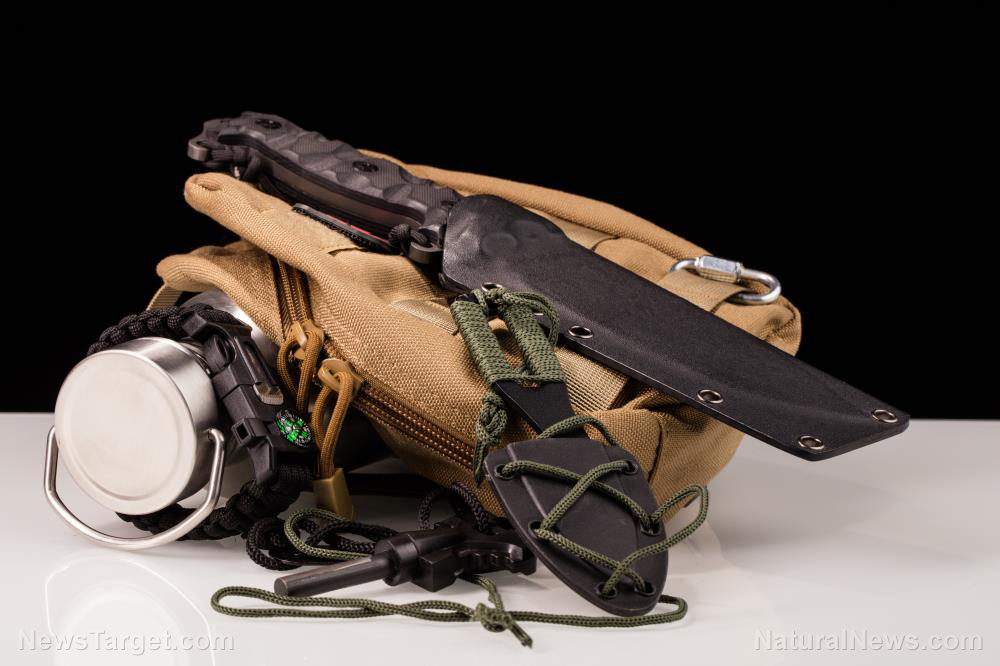
(NaturalNews) The Swiss Army knife, once the go-to survival tool, is now outdated compared to newer, smarter and more versatile options designed for…

(NaturalNews) Elana Freeland’s book explores theories that chemtrails (airplane trails laden with metals, polymers and pathogens) and HAARP (a program…
(NaturalNews) Meta allegedly trained its AI model, Llama 3, using millions of pirated books from shadow libraries like LibGen and Anna’s Archive without…

“This case could completely wipe out the ATF’s ability to create law and subvert congress, which would be a massive win for the Second Amendment.” [more…]

Elon Musk chimed in to question ‘how common’ this type of illegal activity is during American elections Bridgeport, Connecticut, the largest city in the state, [more…]

Chinese woman evades warrant for vehicular manslaughter after horror wreck caught on camera A Chinese woman fled back to her homeland after allegedly killing her [more…]

Downdetector has reported that several US banks are facing service disruptions on Friday morning. Update (1315ET): Fed Reserve Says ACH Error Impacting Customers Bitcoin literally [more…]
Footage shows male senior swiftly strike ball in attempt to make goal, inadvertently hitting female player directly in mouth. A female high school lacrosse player [more…]

Use promo code “ALEX” when you sign up on Mug Club to get one month FREE of the network’s exclusive broadcasts, investigative reports, comedy specials [more…]

Suspect in black Lamborghini attempts rob man at Erewhon Market before shooting him in street, police say A man was shot during an attempted robbery [more…]

Watch & share this massive LIVE broadcast to get the latest on America’s border invasion, Mideast war, the NWO depopulation agenda & SO MUCH MORE! [more…]