






“This case could completely wipe out the ATF’s ability to create law and subvert congress, which would be a massive win for the Second Amendment.” [more…]

Nine people, including three children, were injured in downtown Los Angeles on Sunday when a car plowed into shoppers at an outdoor venue
The New World Order’s mouthpieces are being told to panic into pure hysteria because their world of fraud and deception is disintegrating rapidly!
(NaturalNews) Defense Secretary Pete Hegseth mandated that all U.S. military combat roles enforce gender-neutral physical fitness standards, ensuring men and…
(NaturalNews) Department of Health and Human Services (HHS) Secretary Robert F. Kennedy Jr. criticized California’s sex education program for teaching children…

(NaturalNews) Health Secretary Robert F. Kennedy Jr. unveiled sweeping changes, including a new CDC unit for vaccine injuries and a workforce reduction of…

(NaturalNews) The Trump administration is dissolving USAID and integrating it fully under the State Department, to streamline foreign aid and align it with…

(NaturalNews) Things are looking dire in the world of financial assets. Trump’s tariffs have set off a wave of defaults and margin calls that may be far beyond…
(NaturalNews) President Donald Trump’s 25 percent tariffs on imported vehicles and parts are expected to disrupt the global auto industry, raising U.S. vehicle…

(NaturalNews) U.S. President Donald Trump warned Canada and the EU of “large scale” tariffs if they retaliate against his new 25 percent auto import tariffs,…
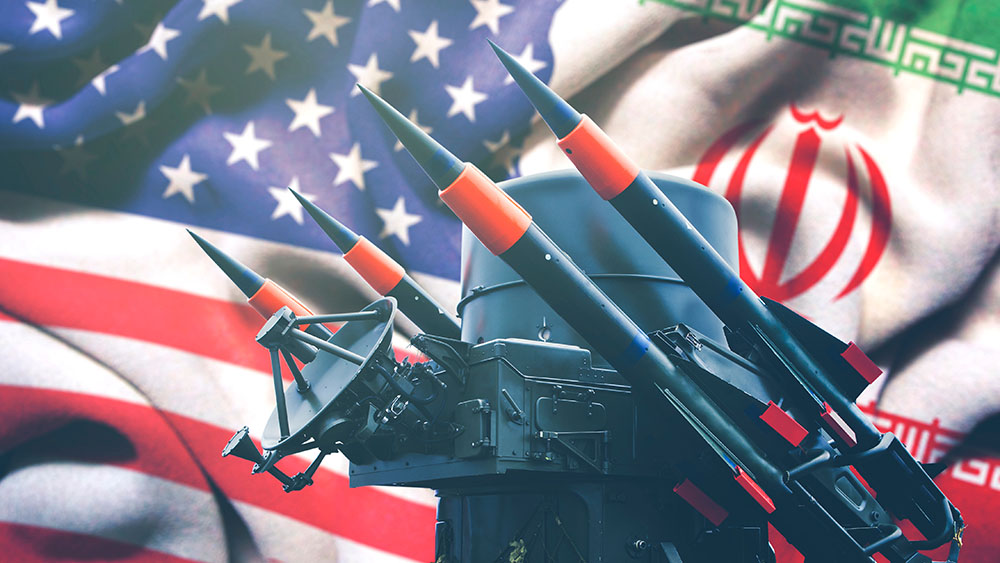
(NaturalNews) The White House announced that ongoing U.S. military operations have significantly weakened Iran, with President Trump authorizing renewed…

(NaturalNews) The U.S. militaryâs decade-long climate programs, such as the Navyâs costly “Great Green Fleet” biofuel project and Air Forceâs reliance on…
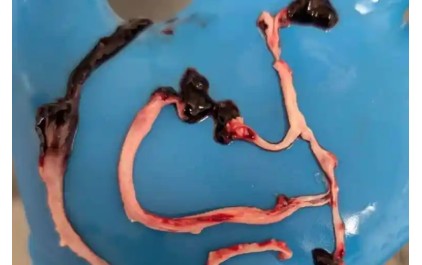
(NaturalNews) Embalmers continue to find unusual white, rubbery clots in 27% of corpses in 2024, suggesting a persistent issue linked to COVID-19 mRNA…

(NaturalNews) Tamara Lich and Chris Barber, key organizers of the 2022 anti-lockdown “Freedom Convoy,” were convicted on mischief charges for blocking roads…
The First Amendment is clear: “Congress shall make no law … abridging the freedom of speech.” No qualifiers. No exceptions. Just liberty.
Forged in rebellion, the First Amendment protects the unsavory as much as the noble. Yet Americans in 2025 — left, right, and center — still can’t stomach it. We’re too emotional, too fragile, and too quick to clutch pearls or pitchforks when words sting.
Absolute free speech demands that we ditch the training wheels and face the chaos.
Historically, liberals owned the free speech mantle. Think of the ’60s counterculture, railing against establishment censors. However, that legacy began to crumble when Tipper Gore pushed for “Parental Advisory” stickers, and it outright shattered during the 2020 election and COVID-19 pandemic.
The left became the “script enforcers.” Dissenters questioning lockdowns or vaccine effectiveness were branded “misinformation” spreaders and booted from Twitter and Facebook. Big Tech, egged on by progressive lawmakers, didn’t just moderate — it silenced. The party of free expression revealed its censorious streak, proving that power trumps principle every time.
Conservatives took up the free speech mantle — so they say. Elon Musk’s 2022 purchase of Twitter promised a free speech renaissance. He called it a platform for unfiltered truth — a digital town square — and it felt like that for a while. Users could breathe easier, tossing out hot takes without instant banishment. But the honeymoon’s over. X still throttles visibility on certain topics: any post with the word “trannies,” questioning foreign aid to Israel, or disputing the timing of a push for more H-1B visas, to name a few.
Even the champions of “absolute free speech” have limits they won’t admit.
The First Amendment doesn’t care about your feelings — or mine. That’s the hard truth. It protects the speech we all hate — slurs, rants, provocations. The Supreme Court has carved out narrow exceptions: You can’t defame with reckless lies (New York Times v. Sullivan, 1964) or incite imminent violence (Brandenburg v. Ohio, 1969).
However, today’s content getting axed — even on so-called “free speech bastions” like X — rarely crosses those lines. It’s just “uncomfortable.”
“Hate speech,” a term so elastic that it’s meaningless, gets slapped on anything from locker-room trash talk to policy critiques. Thankfully, the Constitution doesn’t bend for hurt feelings. It’s absolute until a court says otherwise — and courts have historically leaned hard toward liberty.
Take Cohen v. California (1971). A guy wore a jacket saying “F**k the Draft” into a courthouse. Though his jacket was certainly offensive, the Supreme Court ruled that it was protected speech, noting that “one man’s vulgarity is another’s lyric.”
Similarly, in Snyder v. Phelps (2011), the Supreme Court ruled 8-1 that Westboro Baptist protesters, who picketed soldiers’ funerals with vile signs, were protected under the First Amendment. The pattern is clear: The framers of the Constitution established a system in which words can be expressed freely, and judges sort the mess later — not moderators, not mobs, not you.
So why can’t we handle free speech? Liberals want safe spaces; conservatives want certain topics off-limits. During COVID-19, the left cried “public health” to justify silencing skeptics. Now, some on the right clutch their chests over critiques of the American Israel Public Affairs Committee influence or aid to Israel — topics that deserve debate, not gag orders.
Both sides claim they’re protecting society, but they’re really protecting their feelings. Absolute free speech demands that we ditch the training wheels and face the chaos. Americans on both sides, however, keep reaching for the mute button.
The X experiment proves it. Musk handed us the keys to a more unrestrained platform, but users — left and right — still howl when they see something they hate. Visibility limits persist, not because Musk is a fraud but because the consumer base demands it.
We’re not a society built for unfiltered truth; we’re too hooked on comfort. The First Amendment promises a brawl of ideas. Until we grow thicker skin, we’ll keep begging someone — government, tech lords, or whoever — to play referee.
Absolute free speech isn’t a fantasy; it’s the law. Courts have defended it for decades, but we fail to actually live it. Conservatives might lead the charge, but even they flinch at speech they hate.
First amendment, Free speech, Censorship, Twitter censorship, Elon musk, Supreme court, New york times v sullivan, Brandenburg v ohio, Incitement, Fighting words, Snyder v phelps, Cohen v california, Westboro baptist church, Covid-19 tyranny, Constitution, Opinion & analysis
How bad did “Snow White” flop? Bad enough to get hammered by run-of-the-mill Jason Statham flick “A Working Man” in its second weekend in theaters.
Another title also lapped the Disney dud, except it’s not a movie but part of a long-running TV show.
‘This fan base … they are incredible. They love to gather communally, and they’re all very loyal.’
“The Chosen: Last Supper Part 1” earned a per-screen average of $4,743 last weekend, a thousand-plus more than “Snow White” attracted by the same metric. The show, detailing the life and times of Jesus Christ, has been a sensation from the jump eight years ago.
“Last Supper Part 1,” the beginning of the show’s fifth season, will be available to stream in June on Prime Video and, at a date to be determined, for free via the official “Chosen” app.
Audiences, apparently, couldn’t wait that long.
It shouldn’t be shocking to see “The Chosen” stand tall against Hollywood’s biggest films. “The Chosen” is a consistent moneymaker in theaters courtesy of Fathom Entertainment.
The Colorado-based company first brought the story to the big screen via “Christmas with the Chosen: The Messengers.” That 2021 title earned an impressive $13.7 million in select theaters, and a new tradition was born.
The latest theatrical release in the series, “The Chosen: Last Supper Part 1” became the best-selling installment in less than a week with $15 million from U.S. theaters … and counting. One difference this time? IMAX theaters shared “The Chosen” with fans.
Ray Nutt, chief executive officer of Fathom Entertainment, says the show’s theatrical success started as the global pandemic started to recede in 2021.
“People were looking for some hope, some faith, and to gather communally,” says Nutt, who previously served as senior vice president of business relations at Regal Entertainment Group.
Fathom Entertainment quickly learned this wasn’t just another faith-based property.
“This fan base … they are incredible. They love to gather communally, and they’re all very loyal,” Nutt said.
Fathom offers an alternative to big studio films and franchises. The company serves up reissues of classic films — think this year’s 50th anniversary rerelease of “Monty Python and the Holy Grail” — to indie fare and faith-friendly films like the upcoming “Carlo Acutis: Roadmap to Reality.” That film, detailing the journey of the first Millennial saint, hits theaters April 27.
The company regularly reaches out to faith-based audiences, a group sometimes ignored by traditional Hollywood. The company’s loyalty to faith-friendly titles comes from deep research into that sprawling demographic, Nutt said.
And of course, results.
“We’ve had a lot of luck with Catholic content,” he said, adding that “Mother Teresa: No Greater Love” performed particularly well in 2022. “We’ve drilled down into certain categories where we know there are audiences, and we communicate with them.”
Nutt isn’t surprised to see mainstream Hollywood companies expand their faith-friendly content in recent years. Netflix is currently prepping an update on “The Chronicles of Narnia” by Oscar-nominee Greta Gerwig. Prime Video has found success with the recent “House of David,” already greenlit for a second season.
“Hollywood will follow the money … we’re very proud we’ve been able to pioneer this space,” he said.
Nutt says Fathom is constantly evaluating its business model to address consumer craving.
One example? This year, Fathom will allow audiences to catch up with recent “Chosen” installments, giving them the chance to “binge” all three season five updates, even if they missed “Last Supper Part 1,” for example.
Part of the Fathom Entertainment model is that films stay in theaters for a limited time. The “Monty Python” rerelease, for example, will be shown on just two nights — May 4 and 7.
The theatrical landscape is undergoing seismic shifts of late. Theatrical windows — the time between a film’s release and its debut on home-streaming platforms — are shrinking. Box office numbers have yet to recover from their pre-pandemic levels. The 2025 box office receipts have been troubling, above and beyond Disney’s disappointing “Snow White” tally.
Nutt remains bullish on the theatrical experience in 2025 and beyond.
“It’s a very resilient industry and somewhat recession proof,” he said, recalling how often observers predicted the theatrical model’s death in the past. Some said the advent of television would strike that mortal blow. Others predicted the dawn of cable television options like HBO would do the same.
Innovation matters on the theatrical level, and we’re seeing that across the industry. Some mainstream theaters are toying with 4DX experiences, where the consumer’s chair moves along with the action on screen, among other enhancements.
For Fathom, it might be as simple as having film historian Leonard Maltin greet audiences with trivia about a beloved film. Nutt compares it to an MLB giveaway, where attendees get a free T-shirt or similar souvenir.
“Our research tells us that’s really working for us,” he said. “If you do something that might be extra, like Fathom does all the time, you’ll get that person no matter what the window is, off the couch and into the movie theater.”
“The Chosen: Last Supper Part 2” (episodes 3-5) debuts April 4, with the third installment (episodes 6-8) arriving April 11. Show fans can choose the “binge-fest” option mid-April.
Christian toto, Movies, Box office, Cinema, The chosen, Snow white, Fathom entertainment, Ray nutt, Disney, Culture
Chase Geiser is LIVE right now taking YOUR calls & delivering full-spectrum coverage of breaking news and exclusive information!
Growing up in a home of overly competitive board gamers, it isn’t surprising that I am now a board-game nerd with an acquired taste for overly complicated Euro-style board games. But there is a charm to the simple games of yesteryear — such as Would You Rather? — that you can find on the shelves of big-box retail stores. In this game, the reader reveals a card presenting two horrendously icky, painful, or terrifying actions, and then the other players try to guess which one the reader would choose.
I thought about this game recently when I was asked to review
the new “Snow White” film and what horrendous things I would rather do than sit through all one hour and forty-nine minutes of Disney’s latest live-action flop. Since I don’t own a brutally honest magic mirror, I consulted the closest alternative I could find: my wife.
My dear, my dear, of blunt wherewithal
What is fairer than watching “Snow White,” wall to wall?
To this, she answered:
Eating pizza topped with cicada husks.
Scratching upon chalkboard, from dawn to dusk.
Tightrope walking between two skyscrapers.
Trapped on the toilet with only sandpaper.
Across the land, these and countless terrors —
Are yet, my love, a thousand times fairer.
I was satisfied with this answer, for I knew my dear spoke truth. But like the royal huntsman, I was required to shoulder this grim duty. And while like the huntsman, I was tempted repeatedly to flee the theater and feign completion of my analytical task, I forced myself to complete the grisly vivisection.
But before dissecting the new “Snow White,” let us first recall the various ways in which the original story (and, in some respects, the 1937 animated classic) was quickened by deeply biblical and Christian themes and imagery.
In the original story from the Brothers Grimm, a queen prays for a child “white as snow, red as blood, black as ebony,” which she is granted, but the queen dies. The king remarries a beautiful woman who, in her pride and arrogance, can brook no rival to her beauty and obsessively seeks affirmation of it. The queen is revealed to be “godless”: a satanic figure who manifests a particular form of disordered self-love. She does not see her physical beauty as a gift to be offered to the glory of God and the good of others but as her
possession by which she demands the praise of others as a sort of goddess, a worldly renown that is telescoped into the magic mirror’s words.
The new ‘Snow White’ film abandons or obscures most of the biblical and Christian themes and imagery that made the original story great.
The fairy tale explores how the capital or deadly sins feed off one another. After the mirror tells the queen that Snow White is fairer, her pride is said to grow together with envy “like a weed in her heart.” The queen’s pride, as we have seen, is a kind of excessive self-love in which she ascribes to herself excellence above her station — i.e., not under God.
Snow White can thus be seen as an Eve-like figure, who is created in innocence and radiant beauty and outshines the Luciferian one who misused the beauty God first gave her. Hence, Snow White’s creation stirs
envy in the heart of the queen, which is a sorrow for the good God has bestowed upon another. And this is followed by wrath: a hateful desire of vengeance to be visited upon the girl and the God who gave the gift of surpassing beauty to another. And this is followed by gluttony, for the evil queen proceeds to eat what she believes to be Snow White’s lungs and liver. After learning that she has been tricked, the queen repeatedly tries to infiltrate the dwarves’ domicile to tempt and kill her, like the demon with designs upon the wayfarer’s soul.
That the queen is a demonic figure is underscored by her use of witchcraft to ensnare Snow White.
The story even subtly evokes specifically Catholic themes. The number seven is repeated throughout: Snow White’s beauty fully manifests at seven years old, seven dwarves live across the seven mountains, and their house is furnished for seven. And notably, in contrast with the animated film, Snow White finds the dwarves’ house
orderly, “so neat and clean that no one could say otherwise.”
The numerical motif not only hints at how the queen embodies the seven deadly sins and Snow White the seven cardinal virtues, but it is also suggestive of the Catholic priesthood. The Catholic priesthood fulfills the Levitical priesthood, whose consecration and ritual duties are rife with the number seven (e.g., Exodus 29:35-37; Leviticus 4:6, 8:33). The Catholic priesthood embodies the seven gifts of the Holy Spirit and guards and administers the seven sacraments, to succor the wayfarer.
The seven dwarves — who are not named for emotional states in the original story — can thus be seen as a metaphor for the priesthood. When Snow White arrives beleaguered and exhausted, she eats “a little bread from each little plate, and from each mug she drank a drop of wine,” after which she “entrusted herself to God” before falling asleep. The dwarves return and discover the young maiden. As the Catholic priests provide the Eucharistic nourishment to the Christian in the refuge of the Church, so the dwarves promise the continued nourishment of bread and wine and the protection of their cottage from the wilderness.
And, like a pastor who exercises his teaching office to guide the spiritual life of his flock, the priestly dwarves also offer counsel to Snow White about how to guard against “the godless queen” when they are away.
Like Satan’s temptation of Eve, the queen offers Snow White a poisonous apple to which, despite the dwarves’ warnings, Snow White succumbs. Even the wayfarer quickened by the sacraments — the soul made beautiful by God, white as snow — is frail and can be deceived. And only the coming of a man — of a loving prince — can ultimately save all who have fallen asleep under the curse. The dwarves prepare and adorn the sleeping maiden with a funeral rite to await the lover who can resurrect her.
Unsurprisingly, the new “Snow White” film abandons or obscures most of the biblical and Christian themes and imagery that made the original story great. It is apparent that the backlash to leaks from the set and the woke gaffes from the actress portraying Snow White (Rachel Zegler) led Disney to rewrite and rework parts of the film.
The original remake apparently had a sharper “modern edge”: a girlboss plot of a plucky young heroine who dreams not of Prince Charming but of leading a political revolt against a tyrant at the head of her crew of diverse “magical creatures.” Disney brought back the dwarves and forest animals through CGI (which now seems to mean Cringey Grotesque Images). And the filmmakers shoehorned a semi-romance back into the story.
The result is a messy combination of identity politics aimed at late modern audiences with some quasi-traditional elements sprinkled in. We are left with something akin to when small children mash together different colored chunks of Play-Doh.
Snow White is now waiting until she has the strength to make her own girlboss wishes come true.
In an astonishingly wooden performance, Gal Gadot plays the evil queen. While the vices of pride and envy are certainly present, they seem to take a back seat to chiefly political vices such as over-taxation, conscription, and imposing cruel and unusual punishments. And Snow White’s virtues — fearlessness, bravery, fairness — are keyed on political justice. Rachel Zegler’s performance is serviceable — she clearly is a talented singer — but there is only so much the actress can do with such a poorly written script.
Snow White defies the queen by freeing the handsome, roguish bandit Jonathan — who claims to fight for the mysteriously disappeared king, Snow White’s father — from a cruel punishment. It is
this act that changes the mind of the magic mirror that Snow White is the fairest. Huh?
If the mirror — which proclaims to be bound only by what is “true” — is the arbiter of fairness in the sense of beautiful moral character, how did Snow White’s quiet and humble service as an unjustly enslaved scullery maid not garner the mirror’s notice? How is it that Snow White’s assistance to the resistance is a sufficient act of political virtue to make her fairest, but the queen’s tyranny was insufficient to make her morally ugly in the mirror’s eyes?
This is just one example of the incoherencies generated by transforming Snow White’s virtues into those of a political revolutionary.
If the original story is at least in part a metaphor for the dramatic contest between the divine lover and demonic hater of the soul, the animated film cloaks the metaphor behind the veil of romantic love, particularly in the tunes “I’m Wishing,” “One Song,” and “Someday My Prince Will Come.” On the level of romantic love, the traditional Snow White sees herself as radically incomplete without a husband — and when read in light of the spiritual economy and the plane of divine love, her soul longs for God.
This acknowledgement of the need of marital and divine friendship is characteristic of traditional Snow White’s humility.
The late modern “Snow White” cuts all of this out. The main theme song of the film is “Waiting on a Wish.” No longer is the beloved waiting on her lover. Snow White is now waiting until she has the strength to make her own girlboss wishes come true.
Will she lead or just be led? …
Someone who could finally start
Start speaking with a fearless heart
Someone who just might be brave
Someone no one needs to save
The implication is that a different sort of pride
is good — a self-sufficient political pride in which the oppressed scullery maid rises up against the tyrant and takes the throne.
True, Snow White promises to undo the evil queen’s tyrannical policies, and “fairness” is not merely the queen’s diktat. But the guise of “fairness,” which seems to actually be a kind of sentimentality, only obscures Woke Snow White’s own disordered self-love.
Hence, Snow White practically has to be forced to stay with the dwarves, who are largely relegated to charmless and feckless appendages to Snow White’s path to self-empowerment. She leaves the dwarves’ cottage after just one day to seek out the resistance fighters, whose story arcs we neither know nor care about and who are largely background figures to Jonathan.
While he is also mostly irrelevant to Snow White’s arc, the screenwriter deigned to give Jonathan the job of waking Snow White up from the apple’s poison with an awkward kiss laid partly on her cheek and partly on the corner of her lips. Doubtless, Woke Snow White had mixed feelings about being kissed without her signed and notarized consent. No profession of love is made — no desire or plans for marriage expressed. Instead, the not-prince quickly disappears from the screen so that the climactic final confrontation can take place, in which the empowered Snow White defeats the evil queen and assumes the throne.
Thankfully, Disney does not go so far as to turn Princess Snow White into Mulan, a warrior assassin.
So how does she effect the revolution? With a
deus ex machina march to the palace, a protest speech, and a bloodless coup so implausible that it should make even the writers of “Superman: The Movie” blush. (That was the one where Superman flew around the earth really fast to reverse time.)
The final scene — an utterly cringeworthy mass dance scene in which everyone is dressed in white for no apparent reason — is not the celebration of a marriage but of the girlboss who asserted herself, made her own wishes come true, and didn’t need saving (except, of course, for that nonconsensual kiss).
With such inane and incoherent storytelling, is it any surprise that “Snow White”
has been a disastrous flop at the box office?
In all honesty, I wasn’t as strong as I implied earlier. I took a couple of my daughters with me so that I wouldn’t have to suffer through the film completely alone.
Afterward, I asked them:
My dears, my dears, hearken my call,
Would you say this movie was fair, or not?
They replied:
The movie itself was decidedly not,
But it was fair to have a date with our pa.
I was satisfied with this answer — in any “either/or” that involves a date with my daughters, one choice is always a thousand times fairer.
This article first appeared on Word on Fire’s Evangelization & Culture Online.
Disney, Snow white, Christianity, Christian, Rachel zegler, Faith
Just a couple dudes dominating women’s sports.
The sin of empathy.
When you write a book with that title, you need to be prepared to explain it. And sometimes a picture is worth a thousand words.
A friend recently sent me an image from the Mexico side of the southern border. It shows the word “Empathy” graffitied on the border wall. Presumably, the person responsible views the border wall as an affront to the modern virtue of empathy. In doing so, the person communicates the fundamental argument of my book.
For years, empathy has been pitched as sympathy 2.0. It’s compassion — but upgraded. In a famous viral YouTube video, Brené Brown describes the way that sympathy is cold and judgmental, standing aloof from suffering. Empathy, on the other hand, is a sacred space that fuels connection by staying out of judgment.
But pay attention to the fine print. What sounds like a simple call for human decency and kindness actually masks emotional blackmail. For, as the artist in Mexico said so clearly, empathy means no borders, no walls, no boundaries.
This was the warning issued in the early 2000s by Edwin Friedman, a rabbi and family systems counselor.
“Our focus on empathy is one of the major factors that has everybody stuck,” Friedman said. “The concept of empathy has wound up encouraging everyone to lose their own boundaries, so it works against the very self-regulation that is necessary for it to be employed objectively.”
In other words, empathy frequently becomes untethered from what is true and good, and it becomes a power tool in the hands of the sensitive. It elevates a person’s immediate feelings over healthy boundaries and thereby becomes a means of emotional manipulation.
Anyone who has ever been on the receiving end of a guilt trip knows how easily we can be steered by our empathy and compassion. In fact, if we’re honest, we’ve likely put those we love on a guilt trip ourselves. It’s easy to throw a pity party or to adopt a martyr complex to influence and steer those we love.
And of course, emotional blackmail is not new. I’m sure that Adam and Eve (and Cain and Abel) engaged in their share of emotional manipulation. One hundred years ago, G.K. Chesterton asserted that the modern world is full of the old Christian virtues gone mad. They “have gone mad because they have been isolated from each other and are wandering alone. Thus some scientists care for truth, and their truth is pitiless. Thus some humanitarians only care for pity, and their pity (I am sorry to say) is often untruthful.”
Forty years later, C.S. Lewis warned that “Mercy, detached from Justice, grows unmerciful,” describing this noble virtue as a man-eating weed when it is transplanted from the rocky crags of justice to the swamp of humanitarianism.
In a world that demands all empathy and no borders, choose a better way.
But modern society has institutionalized this ancient human impulse, buttressing it with ideologies like critical theory and intersectionality.
The result? The Victimhood Olympics that we witnessed over the last decade, in which various “oppressed” groups competed to see who was the most oppressed.
In a society flooded by untethered empathy, victimhood confers invulnerability. Victims (real or imagined) cannot be questioned or challenged but must be affirmed, validated, and permitted to set the agenda for everyone else. What’s more, they are absolved from all responsibility for their actions, and they can count on the members of society to excuse all manner of behavior out of misguided compassion.
Of course, the man-eating weed of untethered empathy is very willing to selectively adopt the tenets of justice when it wants.
For example, the Biden administration facilitated the invasion of our country, abusing programs like Temporary Protected Status and expanding programs for asylum-seekers to flood the country with millions of migrants. And now, as the Trump administration seeks to undo this invasion, all of a sudden it’s vital that every illegal migrant receive an individual trial. Thus we see not only a corruption of compassion, but a corruption of justice and a bureaucratic and judicial tyranny that usurps the role of the nation’s duly elected officials.
This is the challenge for us as individuals and as a society: How can we actually be compassionate without giving in to the empathetic manipulation that dishonors God, destroys lives, and smothers justice? Because it is amazing how much cruelty can be done in the name of empathy. You can murder the unborn. You can castrate and mutilate children. You can facilitate an invasion. All in the name of empathy.
Resist any of these efforts and you will be called heartless, cruel, and ungodly, as Sunny Hostin did on “The View.”
But true compassion, the kind that Christ calls us to, is not steered by false accusations and labels. True compassion weeps with those who weep while seeking their ultimate good. Because it is tethered to truth, goodness, and reality, it refuses to lie to appease the manipulators who would steer us by our kindness. It always reserves the right not to blaspheme.
So in a world that demands all empathy and no borders, choose a better way. Good fences make good neighbors. Firm boundaries enable true compassion.
Empathy, Christianity, Emotional manipulation, Emotional blackmail, Sin, God, Christians, Faith
Alex Jones is LIVE right now taking YOUR calls & delivering full-spectrum coverage of breaking news and exclusive information!

“This case could completely wipe out the ATF’s ability to create law and subvert congress, which would be a massive win for the Second Amendment.” [more…]

Elon Musk chimed in to question ‘how common’ this type of illegal activity is during American elections Bridgeport, Connecticut, the largest city in the state, [more…]

Chinese woman evades warrant for vehicular manslaughter after horror wreck caught on camera A Chinese woman fled back to her homeland after allegedly killing her [more…]

Downdetector has reported that several US banks are facing service disruptions on Friday morning. Update (1315ET): Fed Reserve Says ACH Error Impacting Customers Bitcoin literally [more…]
Footage shows male senior swiftly strike ball in attempt to make goal, inadvertently hitting female player directly in mouth. A female high school lacrosse player [more…]

Use promo code “ALEX” when you sign up on Mug Club to get one month FREE of the network’s exclusive broadcasts, investigative reports, comedy specials [more…]

Suspect in black Lamborghini attempts rob man at Erewhon Market before shooting him in street, police say A man was shot during an attempted robbery [more…]

Watch & share this massive LIVE broadcast to get the latest on America’s border invasion, Mideast war, the NWO depopulation agenda & SO MUCH MORE! [more…]