







Is this just another cycle, or is it the END? Martin Armstrong of Armstrong Economics published an article this week about the so-called Socrates program and how [more…]


(NaturalNews) The GOP Will Learn Nothing From DefeatThe midterm elections are just weeks away, and the Republican Party is barreling toward a devastating defeat. …

(NaturalNews) The Real Cost of Oil: How War and Deception Are Fueling a Global Energy CrisisThe price of oil is no longer just a market signal. It is a confession…

(NaturalNews) The Hidden Miracle of NaturopathyI recently reconnected with Razi Berry, the founder of the Journal of Applied Natural Medicine, and our conversatio…
Critics of the Trump administration expressed their outrage after War Department Secretary Pete Hegseth said that the Fort Hood killer will be publicly executed.
Major Nidal Hasan killed 13 people and wounded more than 30 others during the 2009 attack at the Army base. He later said he wanted to prevent more deaths of Muslims in the Middle East. He was convicted in 2013.
‘We’ll make sure that people are able to watch it, that it’s public, because people need to understand there’s serious consequences for these types of things.’
Hegseth said in an interview Thursday that the execution, conducted by the Army, will be public, as a throwback to previous times.
“No-brainer. Execution by firing squad. Army major betrays his country; radical Islamist kills a bunch of Americans at Fort Hood. Of course we’re going to do it at Fort Hood,” he said.
“And do it on a Thursday; we’re going to do it at 1 o’clock, which is when he did it. And it’s going to be soldiers with rifles, executing the firing squad,” he added.
Hegseth pointed out that there has been no such military execution since World War II.
“Well, I kind of like the mentality we had in World War II, which was win,” he added. “Which was understand when the enemy attacks you, you need to stand your ground.”
He went on to criticize former President Barack Obama for calling the attack “workplace violence.”
“That’s the worldview we’re up against is workplace violence,” he added.
“We know what it is: It was a radical Islamist attack in uniform inside the ranks. And so he’s going to get a firing squad of soldiers, as it should be,” Hegseth said. “And we’ll make sure that people are able to watch it, that it’s public, because people need to understand that there’s serious consequences for these types of things.”
While many on the left objected to the announcement, even Republican Sen. Thom Tillis of North Carolina expressed his displeasure with the plan.
“Hasan should face the death penalty, but making his execution public and streaming it? Beyond disgusting,” he wrote. “Public executions are what oppressive dictatorships like Iran and Afghanistan do. It should not be happening in America.”
RELATED: VIDEO: CRAZED Democrat warns Hegseth could face EXECUTION over alleged war crimes
Democrat Sen. Patty Murray of Washington state agreed.
“We can seek justice in this country without glorifying violence and turning an execution into a grotesque public spectacle. What this criminal did was abhorrent and must be punished — but we as a country cannot condone livestreaming a man’s death for entertainment,” she wrote.
“We are long past the days of public hangings in the town square. Kids watch what our leaders do and say, is this kind of bloodshed really what we want them seeing?” she added.
Hasan is scheduled to be executed on Dec. 3.
His will be the first execution of an American military member since 1961.
Like Blaze News? Bypass the censors, sign up for our newsletters, and get stories like this direct to your inbox. Sign up here!
Pete hegseth, Fort hood, Terrorist attack, Politics
Google Chromebooks initially launched in Spring 2011. They’ve since become a mainstay of public education, thanks to their affordability, simple security, and ease of use. However, Google just announced a successor, and if Google has its way, it will be the thing to kill Chromebooks once and for all.
The somewhat clumsily named Googlebook is a hybrid device built to bridge the gap between Chromebooks and more capable machines like Windows PCs and Macs. It’s powered by Googlebook OS, a version of Android tuned specifically for desktop. It also borrows some features from Chromebooks, helping the platform feel familiar to anyone already in Google’s ecosystem.
Googlebooks aren’t quite as mature as their Chromebook siblings, but that isn’t stopping Google from officially killing the latter anyway.
Just like a Windows or Mac computer, you can connect a mouse and keyboard, drag and drop files to your desktop, enjoy a full desktop browser experience, complete with extensions, and use apps to get work done.
It has full access to the Google Play Store library, where some apps like the photo editor Luminar and the calendar app Fantastical already have desktop-class versions on the platform, in addition to the mobile Android counterparts.
Googlebooks also have a Debian Linux command-line environment that can be accessed through the Terminal. According to Google, “You can install and run developer tools, code environments, and access other Linux applications.”
One of the cooler features, though, is that Googlebooks offer better interoperability between the new laptop and some existing Android phones. With Continue On, you can start a task on your phone and easily pick up that same task in the same spot on your Googlebook. Your files from your phone also automatically show up in the files app in Googlebook. You can cast an app from your phone to your laptop for easy use. You can even sync your phone notifications to your laptop.
Ultimately, Googlebooks are a huge upgrade from Chromebooks with premium materials, powerful chips, and a more capable operating system.
RELATED: How the laptop revolution destroyed public education
Blaze Media illustration
Unfortunately, there are also some clear drawbacks, at least at launch. Now that these machines are out in the wild, reviewers have found some serious flaws.
For instance, some Progressive Web Apps, or apps that you can download from the web when a native app isn’t available, don’t work on Googlebooks like they did on Chromebooks. Broader support is coming soon, but for now, it’s limited.
The interoperability features between Android and Googlebook require Android 17, which means many Android users will be left behind. These features also don’t work on Samsung devices yet, which account for most of the Android devices in the United States.
There are five Googlebooks available from different OEMs at launch — two of them have an ARM-based chip, similar to the ones in virtually all smartphones today, and three of them have x86 chips, like those found in most Windows laptops. Android works on both architectures, but some Google Play apps aren’t compatible with x86, creating potential fragmentation.
Needless to say, Googlebooks aren’t quite as mature as their Chromebook siblings, but that isn’t stopping Google from officially killing the latter anyway.
When Googlebooks were first unveiled in May, Google made it clear that this new brand targeted the premium hardware market, while Chromebooks were meant to represent the affordable segment. Although Google didn’t divulge official details, there were rumors that both platforms would exist together, catering to different groups in their respective categories. After all, a $300 Chromebook is easier to give to a 3rd grader than a $999 Googlebook.
Unfortunately, that’s not the case. Google confirmed that it will phase out support for ChromeOS — the operating system that runs on Chromebooks — by 2034. Existing Chromebooks will continue to receive updates until that time.
On the bright side, Google said that, “Many newer commercial Chromebook models will be capable of upgrading to Googlebook OS. Details on migration paths and device eligibility will be shared at a later date.”
So newer Chromebooks will get a new lease on life with Googlebook OS, while older models will no longer be supported. That doesn’t mean the devices will cease to operate, but they will no longer receive security patches, potentially leaving your data open to hackers if you continue to use a Chromebook past 2034.
The long lead time is meant to give users and educators time to switch platforms over the coming decade, but the elephant in the room remains. Googlebooks are much more expensive than their Chromebook counterparts, and while Google is sure to iron out the bugs discussed above, the laptops that launched this month are more akin to test devices than full-fledged products.
If you own a Chromebook, it might be best to hold onto it for now. For those on Windows or Mac who are thinking about switching, just know that there are still some early hiccups that must get sorted out.
Like Blaze News? Bypass the censors, sign up for our newsletters, and get stories like this direct to your inbox. Sign up here!
Chromebooks, Google, Tech, Googlebooks, Schools
Armando Garza Lira was arrested on Wednesday for allegedly overstaying his visa, according to the Zavala County Sheriff’s Office.
Sources told NewsNation that Lira is the husband of Jose Angel Cerda, the mayor of Crystal City.
Lira was ‘unlawfully present in the United States in violation of state and federal law.’
The sheriff’s office said it received complaints that someone was living unlawfully in Crystal City.
Deputies made contact with two people in a vehicle at about 7:46 p.m. and determined that one of the men was Lira.
They were advised by U.S. Immigration and Customs Enforcement that Lira was “unlawfully present in the United States in violation of state and federal law.”
Lira was arrested and transported to the Zavala County Jail to await enforcement action from federal law officials.
The sheriff’s office identified the other man in the car as Jose Angel Cerda and said he was released without further incident.
That name matches the name of the town’s mayor. Images on social media purportedly show the two men together.
A profile for Cerda on the official Texas directory indicates that he was first elected to office in May 2025 and that his term ends in 2028.
A Blaze News request for comment from the mayor’s office was not returned in time for publication.
CHARLY TRIBALLEAU/AFP/Getty Images
“The Zavala County Sheriff’s Office is committed to complying with Texas law regarding cooperation with federal immigration authorities,” the office added.
Crystal City is located about 100 miles southwest of San Antonio and calls itself the “Spinach Capital of the World,” though Alma, Arkansas, contests that title.
Like Blaze News? Bypass the censors, sign up for our newsletters, and get stories like this direct to your inbox. Sign up here!
Immigration and customs enforcement, Illegal alien, Texas, Politics
Apple’s iPhone offers plenty of tools to encrypt users’ data and keep it safe. If you’re law enforcement looking to investigate a crime, however, some of these tools can get in the way. That’s why they have Graykey, a device that disables some of iPhone’s safety features to make the data inside more accessible.
Graykey has been around for years. But like most powerful tech, it keeps evolving. A new report reveals Graykey received a fresh enhancement last year that goes above and beyond anything seen before from the tool. Here’s what it can and can’t do.
Graykey Preserve keeps the phone on and active to ensure prolonged AFU data access.
When it comes to securing data, iPhones have two function states: Before First Unlock and After First Unlock.
Before First Unlock is the state an iPhone defaults to when it loses power, either if the battery dies or if it’s turned off manually. In this state, all internal files are protected by hardware encryption via the Secure Enclave, and the only way to access the data inside is to input the passcode and unlock the phone. Most user data — including network information, files, and location — is very hard to extract in this instance.
After First Unlock is an iPhone’s typical operating state enabled once the passcode has been entered and the user has reached the home screen. In this condition, the Secure Enclave permits access to data that was locked tight in BFU mode. While you may need a passcode to reach this information, law enforcement can use various tools to extract what they need, assuming your phone is in their possession.
In AFU mode, law enforcement can access:
iPhone model and iOS versionIdentifiers, like the serial number and UDIDPairing recordsNetwork configurations down to your Wi-Fi network and VPN statusConnected Bluetooth devicesInformation stored in KeychainFiles, photos, contacts, and moreLocation information
With iOS 18, Apple added an extra safety measure to protect users if they’re separated from their devices. Inactivity Reboot checks to see how much time has passed since an iPhone was unlocked and used. If the passcode hasn’t been inputted for 72 hours, it automatically reboots, forcing the phone into BFU mode.
This, of course, causes plenty of problems for police when they seize a device and put it into lockup. If they don’t access the files they need on the phone within the first three days, it will lock them out, and they’ll have a much harder time finding evidence.
Until now.
According to 404 Media, a company called Magnet Forensics makes a device for law enforcement dubbed Graykey Preserve, which virtually disables Inactivity Reboot.
Instead of allowing an iPhone to shut down and default to BFU mode, Graykey Preserve keeps the phone on and active to ensure prolonged AFU data access. This extends the time that law enforcement can scan through files on a seized device to find what they’re looking for.
The report noted that Graykey Preserve showed up in educational materials dating back to early 2025, so the device has been around for at least more than a year, if not longer.
RELATED: New spyware targets iPhones. Are you at risk?
rawat yapathanasap/Getty Images
It’s unclear exactly how Graykey Preserve keeps an iPhone in AFU mode, or if the hardware uses an unknown exploit within iPhone to get it done. Either way, it’s always a good idea to update the software on your phone regularly to ensure you have the best security and protection available.
While Graykey can prevent a powered-on device from reaching BFU mode through Inactivity Reboot, so far, there are no indications that it can bypass BFU if the device is already powered down. That means if a user turns his iPhone off before it’s seized, there is less of a chance that law enforcement can brute force their way in.
Graykey has been around for several years with reports of its AFU-data-scraping capabilities dating back to 2024. In addition to iPhone, Graykey hardware can extract data from many Android handsets in AFU mode as well, so no platform is particularly off-limits for the law.
Like Blaze News? Bypass the censors, sign up for our newsletters, and get stories like this direct to your inbox. Sign up here!
Data security, Iphone, Security, Law enforcement, Tech
Americans can’t afford to be complacent about our election security. The right to vote is one of the most indispensable civil rights in a constitutional republic, but it is not self-executing. Laws must protect that right, ensure its proper administration, and defend it against error, fraud, and foreign influence.
Citizenship must be verified when voters register. States must maintain accurate voter rolls and give federal authorities the data to which they’re legally entitled. They must also have reliable proof-of-eligibility requirements and prosecute election-law violations.
Americans have fought too long and sacrificed too much to surrender sovereignty to administrative negligence and foreign influence.
This is ultimately not merely an election-administration issue — it is a matter of sovereignty.
The proposition that only American citizens may vote in elections is a cornerstone of our republic. The citizenship requirement preserves self-government and ensures that those who decide our elections are members of the American political community. If these basic rules are treated as mere aspiration rather than an enforceable legal requirement, then American sovereignty is at risk.
The vote — and the machinery that receives, records, verifies, counts, and reports it — is how the American people confer legitimate authority on public officials.
The size of the illegal immigrant population in the country underscores the point. The Department of Homeland Security estimated that roughly 11 million unauthorized immigrants — or 3.3% of the U.S. population — resided in the country in January 2022. The Federation for American Immigration Reform’s March 2025 estimate puts this population at approximately 18.6 million at the beginning of 2025.
Whatever the precise number, the practical consequence is the same: A large non-citizen population resides in communities served by state voter-registration systems.
The cost of waiting to verify eligibility until after an election is too high, because even one unlawful vote dilutes a lawful citizen’s vote and undermines confidence in the electoral process.
RELATED: 11 years later, Trump’s immigration promises still aren’t law
Aaron Schwartz/Getty Images
Recent reports only reinforce the need for scrutiny. DHS has found that preliminary reviews identified more than 250,000 potential non-citizens on voter rolls in four states and asked those states to work with the department on election security. Some state officials and election experts have disputed that claim. Fine. Then investigate it thoroughly, transparently, and promptly. The answer to a serious allegation is verification, not indifference.
Though Congress began requiring states to offer voter registration when people apply for or renew driver’s licenses through the National Voter Registration Act of 1993, convenience is not the enemy of integrity. The NVRA did not relieve states of their duty to maintain accurate voter rolls. States must ensure that illegal aliens and other ineligible persons do not vote in elections.
History supplies ample warning on this score. A review of Department of Motor Vehicles records revealed that Philadelphia mistakenly allowed non-citizens to register to vote around 2016. State officials later revised the system, but the episode demonstrates why citizenship verification cannot be left to bureaucratic happenstance.
And the problem isn’t limited to administrative error.
In the Eastern District of North Carolina, federal prosecutors charged 19 foreign nationals with voting in the 2016 election. In the Southern District of Florida, three non-citizens pleaded guilty to illegally voting in federal elections and committing related election offenses.
These numbers may not be large in isolation, but that misses the point. Election crimes are crimes against public trust. They injure every lawful voter whose ballot is entitled to equal weight under law.
RELATED: George Washington’s advice for the midterms
Universal History Archive/Universal Images Group/Getty Images
To combat this, states and municipalities should require reliable proof of citizenship and verification before an ineligible registration can result in a ballot being cast. State election officials should coordinate with federal authorities to obtain accurate citizenship and immigration-status information, consistent with law. The Department of Justice should continue to prosecute those who breach the system.
Encouragingly, some states have begun to act. The National Conference of State Legislatures reports that four states enacted documentary-proof-of-citizenship requirements in 2026. Thirteen states now have such laws at some point in the registration process, though litigation and court decisions have prevented some provisions from taking effect.
Other states have adopted bifurcated systems that allow voters who have not provided documentary proof of citizenship to vote in state elections, while still requiring verification for federal elections. These reforms reflect a necessary shift toward verifying citizenship rather than relying solely on a voter’s word.
The reason is obvious. If election safeguards are weak enough to allow non-citizens to register, vote, or otherwise influence elections, public policy could be shaped by individuals who have not assumed the duties of American citizenship or pledged allegiance to the constitutional order. That is a clear breach of the social compact.
The federal government already recognizes the critical nature of citizenship when public trust and national interest are at stake. For example, many national security positions require U.S. citizenship because they involve access to sensitive government information.
Though voting is different from government employment, it is still an exercise of sovereign authority. Through the ballot, citizens choose who will make law, set policy, spend public money, appoint officials, and direct the machinery of government. Sovereignty is preserved not by slogans but by laws faithfully enforced, passed by representatives chosen by American citizens.
State legislators must give election officials the tools to reinforce safeguards, confirm citizenship, maintain accurate voter rolls, and protect citizen self-government. Americans have fought too long and sacrificed too much to surrender sovereignty to administrative negligence and foreign influence.
The rule is simple, just, and essential: American citizens — and only American citizens — must decide American elections.
Editor’s note: This article was originally published at the American Mind.
American citizens, Department of justice, Election security, Illegal aliens, National security, Noncitizens, Proof of citizenship, Voter rolls, Opinion & analysis
Two massive gatherings took place recently in France: an 800,000-strong Mass on September 26 hosted by Pope Leo XIV at Place de la Concorde and a nationwide student protest on October 6 over school funding that drew roughly 256,000 people across France and 56,000 in Paris.
The latter gathering escalated to violence in some areas.
“Schools set on fire. Teachers, principals attacked. Around 2,000 arrests in Marseille. Reports say the flags were in the streets. They were Algeria, Hamas’, Palestinian,” Glenn Beck says.
“One crowd, almost a million people come out to kneel. The other crowd comes to burn the buildings where children learn to read. France is not having a bad week. France doesn’t exist anymore,” he declares.
“I think there’s two Frances, and they’ve been fighting over the same house for more than 200 years,” Glenn continues.
He recounts the way the nation split after King Louis XVI was executed in 1793 during the French Revolution.
“Across the front of Notre Dame stands a row of 28 stone kings with crowns on their head. The revolution orders them down. … So the workmen haul them off the cathedral with ropes and then smash their heads off in the square. … But those kings were not kings of France. They were kings of Judah, the ancestors of Christ,” Glenn says.
Meanwhile, the revolutionaries turned Notre Dame into a “Temple of Reason”; an opera singer was put on a constructed altar as the Goddess of Reason, standing in for the Christian worship they had just banned.
“They’re having sex on the altar. It’s horrific what is happening there. … After that falls apart, the cathedral is used as a storehouse. That’s one France,” Glenn says.
The other France, he says, was “watching.”
“Somebody gathered up those broken stone heads, the faces smashed, the noses gone, and they buried them under a courtyard across town. No speech, no protest. We don’t even know who did it,” Glenn recounts.
Eight years after the Festival of Reason, Napoleon cut a deal with Pope Pius VII that allowed priests back into the churches and restored public Catholic worship.
“The most powerful man in Europe looked at his country and conceded, ‘We need God.’ You can smash the statues, but you can’t smash what people bury to keep,” Glenn summarizes.
“That’s what showed up last week [in France]. … Every expert had declared Christianity and Catholicism in France dead. I’m not sure. I think it was buried underground, waiting.”
But the statue-smashers are back with their guillotines, too, he warns.
“Many of the kids in the street have no idea what they’re tearing down any more than the mob did in 1793,” he says. “They didn’t know whose faces they were breaking, but whoever is organizing them knows exactly whose faces those are.”
For too long, France has kept its Christian roots quiet, he says. It’s why “Islam is so active over there.”
“You cannot just leave a vacuum. … It doesn’t stay empty. Whatever you refuse to pass down, somebody else will gladly pick it up. In Marseille last week, somebody did. And he was waving a different flag,” Glenn warns.
To hear his take on how America is facing the same predicament, watch the video above.
To enjoy more of Glenn’s masterful storytelling, thought-provoking analysis, and uncanny ability to make sense of the chaos, subscribe to BlazeTV — the largest multi-platform network of voices who love America, defend the Constitution, and live the American dream.
Catholicism, France, Glenn beck, Palestinian, Pope leo xiv, Student protest, Blazetv show

(NaturalNews) Egypt’s Ministry of Tourism and Antiquities (MTA) announced the discovery of a Roman-era pyramid-shaped limestone tomb at the Bir al-Shughala necropo…

(NaturalNews) The National Aeronautics and Space Administration (NASA) has selected the Geophysical Instruments for Marius Lunar Pit Investigation (GIMLI) project t…
(NaturalNews) The administration of New York City (NYC) Mayor Zohran Mamdani has entered into two contracts totaling $8.9 million to provide “gender-affirming” sex …
(NaturalNews) Germany’s Federal Office for Family Affairs and Civil Society Functions (BAFzA) received 12,102 conscientious objection applications between January …

(NaturalNews) Urine samples from 187 U.S. infants and young children contained residues of 215 different pesticides. Individual children averaged 31 pesticid…

(NaturalNews) Six Leafy Greens With More Vitamin K Than KaleOne cup of cooked kale provides 493 micrograms of vitamin K, or 410.8% of the Daily Value (DV), accord…

(NaturalNews) The research was conducted at Shinshu University in Japan, according to a report on the findings [1].The study examined pterostilbene, a polypheno…

(NaturalNews) Water is the best beverage to drink after dinner for kidney health, according to three registered dietitians cited in an article published by Health.c…
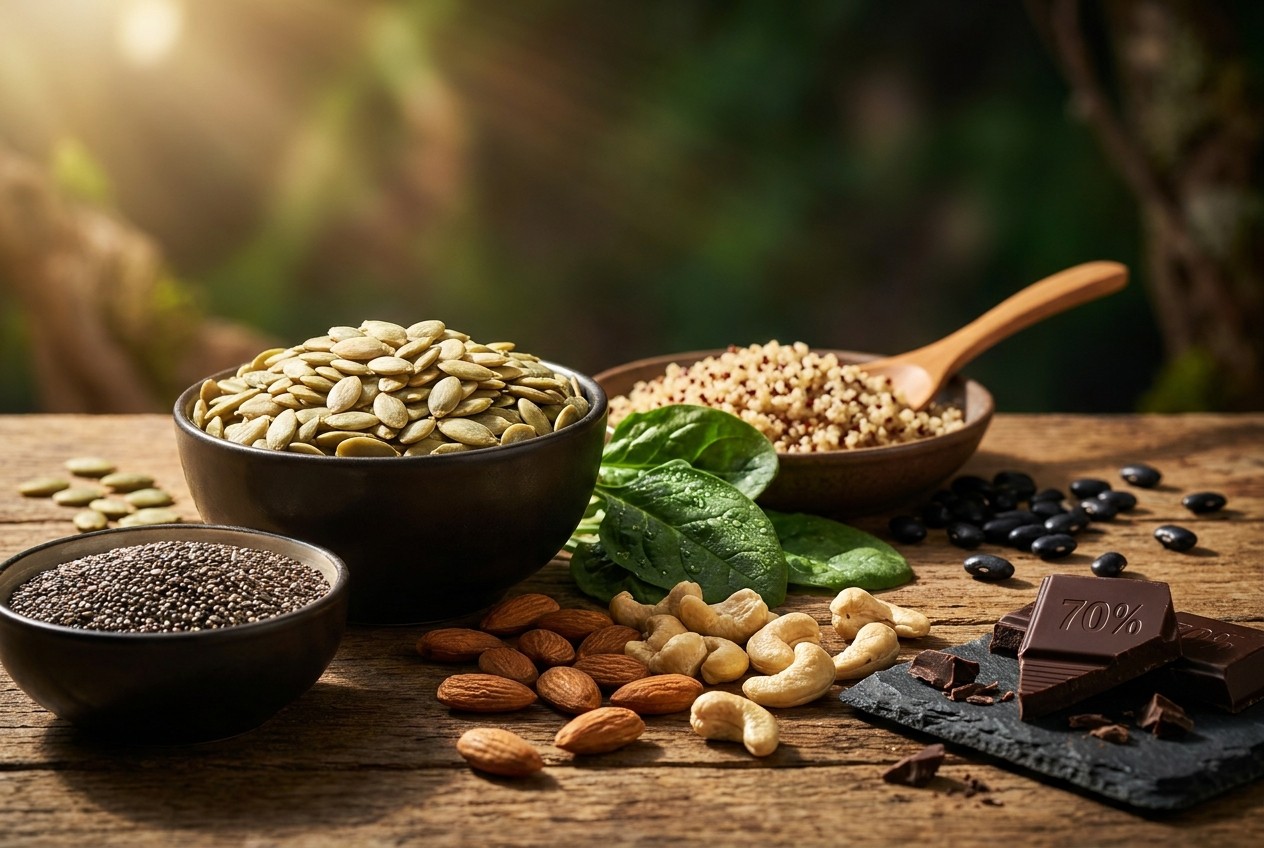
(NaturalNews) Spinach is a well-known source of magnesium, a mineral used in muscle contraction, nerve signaling, bone strength, energy conversion and sleep support…

(NaturalNews) Artificial intelligence (AI) company Anthropic has expanded its Cyber Verification Program (CVP), opening restricted AI access to more security groups…
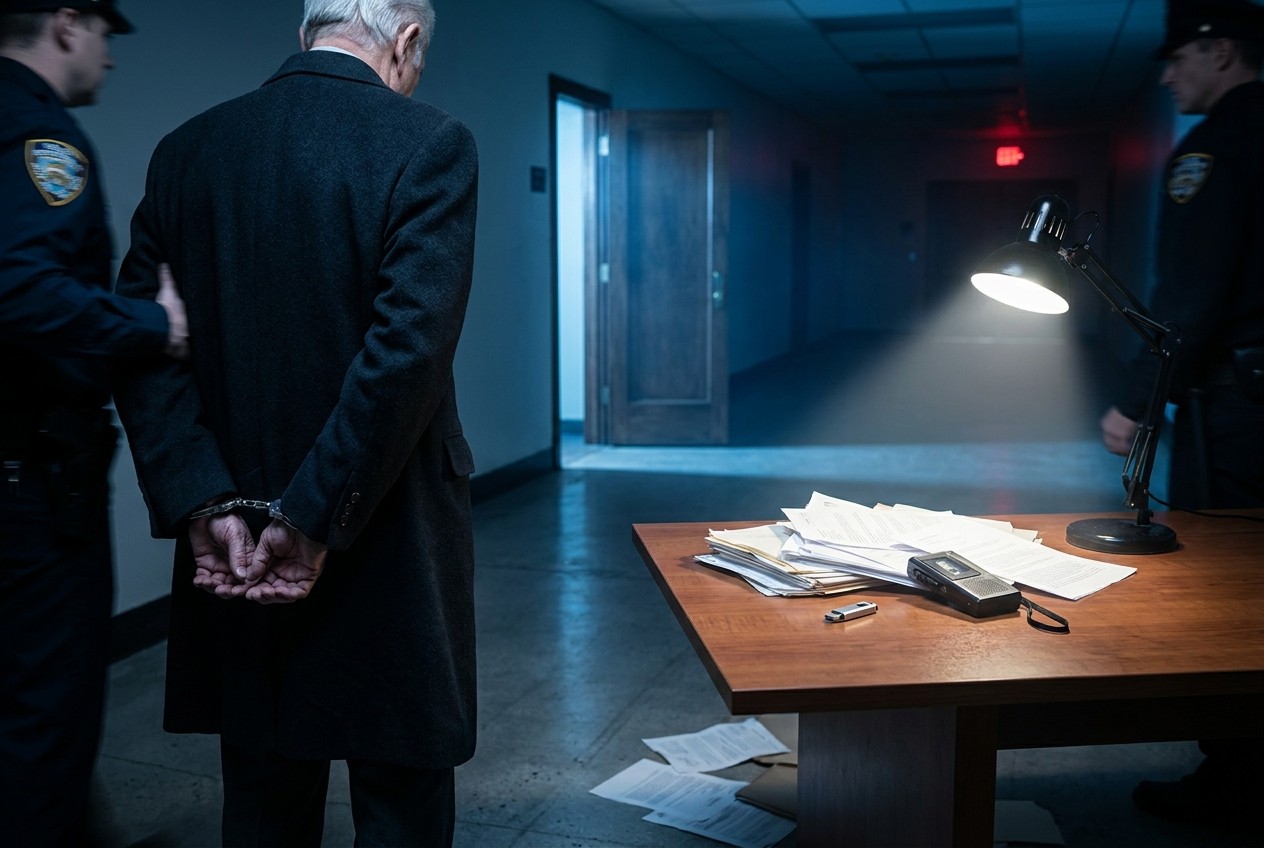
(NaturalNews) August Hanning, 80, the former president of Germany’s Federal Intelligence Service (BND), was arrested Tuesday morning, Oct. 6, at his home in Steinfu…

Is this just another cycle, or is it the END? Martin Armstrong of Armstrong Economics published an article this week about the so-called Socrates program and how [more…]

“I assure you all options are open on the southern front. They can be adopted anytime.” Summary recap: Hezbollah Secretary-General Hassan Nasrallah’s speech went for [more…]

Putin orders planeloads of humanitarian aid to be sent to Egypt The Russian Ministry Emergency Situations said on Friday that it would send two aircraft [more…]

It is Tunisia’s duty to stand with the Palestinians, its president has said The Tunisian parliament on Thursday began discussing a bill that would define [more…]

Suspected provocateur specifically stated, ‘We’re here to storm the capitol. I’m not kidding.’ In a new mini-documentary diving into Jan. 6, investigative journalist Lara Logan [more…]

Mainstream media claims Obama-Biden partnership has only been happening for 5 months. Former President Barack Obama has been secretly advising the Biden administration for several [more…]

“This case could completely wipe out the ATF’s ability to create law and subvert congress, which would be a massive win for the Second Amendment.” [more…]

Elon Musk chimed in to question ‘how common’ this type of illegal activity is during American elections Bridgeport, Connecticut, the largest city in the state, [more…]