





Suspected provocateur specifically stated, ‘We’re here to storm the capitol. I’m not kidding.’ In a new mini-documentary diving into Jan. 6, investigative journalist Lara Logan [more…]

The Democratic Party’s propaganda machine, desperately searching for the next narrative after the optically displeasing Somali-linked daycare fraud scandal, was quick to deploy a new [more…]
A 37-year-old Colorado native was fatally shot in Minneapolis on Wednesday while apparently attempting to ram a federal agent with an SUV.
Renee Nicole Macklin Good’s death and the moments leading up to it were captured on video from multiple angles. Footage clearly shows Good, whose SUV appears to have been strategically stopped to block traffic amid a federal immigration operation, disobeying repeated orders from law enforcement to exit her vehicle, then driving in the direction of the federal agent, who ultimately drew his sidearm and opened fire.
‘You can accept that this woman’s death is a tragedy while acknowledging it’s a tragedy of her own making.’
The liberal media that rushed five years ago to vilify Ashli Babbitt following her fatal shooting by Michael Byrd at the U.S. Capitol was quick on Wednesday to pen hagiographies about Good, portraying her as a blameless victim of a callous federal agent.
The Associated Press — a publication whose relationship with the truth has shown significant signs of strain in recent years — helped bolster this narrative with an article titled, “Woman killed by ICE agent in Minneapolis was a mother of 3, poet and new to the city.”
The article doesn’t bother mentioning that Good tried to ram a federal agent until the eighth paragraph, and even then it insinuates that was how “Trump administration officials painted” the incident.
Prior to getting to why the woman may have been killed in front of her lesbian partner, the AP noted:
“She was a U.S. citizen born in Colorado and appears to never have been charged with anything involving law enforcement beyond a traffic ticket.”“In social media accounts, Macklin Good described herself as a ‘poet and writer and wife and mom.’ She said she was currently ‘experiencing Minneapolis,’ displaying a pride flag emoji on her Instagram account.”“A profile picture posted to Pinterest shows her smiling and holding a young child against her cheek, along with posts about tattoos, hairstyles and home decorating.”
After both suggesting Good had simply “pulled forward” when a U.S. Immigration and Customs Enforcement agent shot her and casting doubt on the Trump administration’s characterization of her as a domestic terrorist, the AP made sure that readers knew Good was a “devoted Christian” who “loved to sing.”
RELATED: Tim Walz says Minnesota is ‘at war’ with the federal government after fatal ICE shooting
Photo by Stephen Maturen/Getty Images
The same publication took a markedly different approach when writing about the death of Air Force veteran Ashli Babbitt in January 2021, accusing Babbitt of amplifying “false allegations” on social media in the opening sentence of its write-up.
While Babbitt may not have been a “poet” like Good, she bravely served her country in Afghanistan and Iraq. The AP glossed over that fact. Instead, the AP focused on Babbitt’s social media posts, claiming they were “profane” and contained “unsubstantiated views.”
The AP is hardly the only publication now painting Good as a martyr after painting Babbitt as a kook or a radical.
The difference in approach at NBC News is particularly striking.
The title for the network’s Jan. 7, 2021, article about Babbitt is “Woman killed in Capitol was Trump supporter who embraced conspiracy theories.” The title for its Wednesday article about Good is “Woman fatally shot by ICE agent identified as resident ‘out caring for her neighbors.'”
Vice President JD Vance said of Good’s death on Wednesday, “You can accept that this woman’s death is a tragedy while acknowledging it’s a tragedy of her own making. Don’t illegally interfere in federal law enforcement operations and try to run over our officers with your car. It’s really that simple.”
While Democrats joined the liberal media in ignoring the vice president’s advice and characterizing Good as the victim of a malevolent federal agency, President Donald Trump, Vance, and other Republicans defended ICE.
“I have just viewed the clip of the event which took place in Minneapolis, Minnesota. It is a horrible thing to watch,” Trump wrote on Truth Social, “The woman screaming was, obviously, a professional agitator, and the woman driving the car was very disorderly, obstructing and resisting, who then violently, willfully, and viciously ran over the ICE Officer, who seems to have shot her in self defense.”
Like Blaze News? Bypass the censors, sign up for our newsletters, and get stories like this direct to your inbox. Sign up here!
Macklin, Renee, Good, Ice, Immigration and customs enforcement, Federal law enforcement, Law enforcement, Minneapolis, Minnesota, Renee nicole good, Fake news, Liberal, Liberal news, News, Media, Politics
A Louisiana woman has been charged with murder after police said she fatally shot her 1-year-old daughter on New Year’s Day.
The Sulphur Police Department said a shooting was reported around 8:21 p.m. at a home on Quelqueshue Street. Sulphur is a little over three hours west of New Orleans.
‘I almost lost two babies. I lost one because her mama wanted to send her to God.’
Police said a 1-year-old girl “had been shot and killed.”
The investigation revealed that the girl was “shot and killed by her mother, Kristin Bass,” police said.
Officers arrested the 28-year-old mother, and she was charged with first-degree murder. Her bond was set at $10 million.
KPLC-TV reported that the slain child’s father, Bradley Moss, told investigators he heard a boom and ran into a room to find their 1-year-old daughter shot and Bass holding a gun.
Meanwhile, the couple’s 2-year-old child was crying for help, according to the station.
The father of two reportedly said, “I almost lost two babies. I lost one because her mama wanted to send her to God.”
Moss added, “[My older daughter] said, ‘Help me, daddy.’ And Kristin said, ‘I just sent our baby to God.'”
Moss said Bass then uttered, “Now I gotta get her.”
Moss identified the shooting victim as Acelynn Moss, according to KPLC.
The Louisiana Department of Children and Family Services took custody of the surviving toddler, according to Moss.
Police are asking anyone with information regarding the case to contact Sgt. Jeremy Cain at 337-527-4558.
Police did not immediately respond to Blaze News‘ request for comment.
Like Blaze News? Bypass the censors, sign up for our newsletters, and get stories like this direct to your inbox. Sign up here!
True crime, True crime news, Louisiana, Louisiana crime, Crime, Murder charge, Sulphur, Mother, Daughter, Father, Arrest, New year’s day
We have recently seen a renaissance of the terminal, a return to a mode we thought we had left behind.
Tech is associated with perpetual progress. What explains this seeming regression?
In computing, the new is usually synonymous with the sleek and the visual. The resurgence of the command-line interface, the text-based terminal with its blinking cursor on a monochrome screen, is therefore a development both unexpected and revealing. Developers who spent decades in the comfortable, pixelated embrace of graphical user interfaces are turning to minimalism. This turn is not merely a retreat into nostalgia or a quirk of programmer preference; it is a shift in the cognitive geography between human and machine under the influence of AI.
We find ourselves in a ‘man-computer symbiosis.’
The heart of this revival is the emergence of CLI-based AI agents. These are harnesses for large-language models capable of processing language, writing code, and executing tasks. They have transformed the terminal from a niche tool for the specialist into a versatile assistant for the layman.
The CLI is quite a different medium from the GUI. While a GUI is spatial and image-driven, the terminal is rooted in language and sequence. We issue commands to achieve practical ends, a mode of thought that encourages a logical, sequential engagement with the world. We find ourselves in a “man-computer symbiosis,” as J.C.R. Licklider imagined in the 1960s, a partnership where the computer frees human intelligence from the drudgery of mundane tasks. The new AI agents handle the keystrokes and complex syntax, allowing a user to manipulate data as if using a “second brain” integrated directly into his workflow.
The dream of the automated servant is as old as myth. In the “Iliad,” Homer describes the “golden handmaidens” of Hephaestus, endowed with movement and perception, who assisted the god at his forge. Aristotle speculated on a world in which the shuttle might weave without a hand to guide it, eliminating the need for human servitude. For most of history, these possibilities remained fantasies. When computers finally arrived in the mid-20th century, they were indeed programmable servants but esoteric ones, requiring punch cards or green-and-black text terminals.
By the late 1980s, the mouse-and-icons paradigm of Apple’s Macintosh and Microsoft Windows increased the accessibility of computing. The GUI was more intuitive, an interface that did not require you to memorize arcane commands. The general public grew accustomed to clicking buttons, and the terminal was relegated to the realm of system administrators and developers. The comeback of the terminal in the mid-2020s is therefore significant. The terminal has become the stage where an AI that writes and runs code could operate with freedom. We are returning to Aristotle’s vision: Every user now potentially has a digital apprentice.
LLMs are designed to handle text, and the terminal presents the computer’s functions in exactly that form. The CLI is a universal interface, a lingua franca that allows an AI to interact with digital tools without the difficulty of navigating pixel-based GUIs meant for human eyes. Command-line tools possess a Lego-like composability; they can be chained and piped together in ways that GUI applications rarely allow.
An AI agent residing in the terminal benefits from a unified environment with low friction, with no need to hunt through menus; it calculates, types, and executes. Developers are moving away from previously dominant integrated development environments to these command-line agents. Whether OpenAI’s Codex CLI, Anthropic’s Claude Code, or community-driven projects like OpenCode, these platforms share a core mechanism: a conversational command-line where the AI interprets instructions and takes actions on the user’s behalf.
RELATED: Digital BFF? These top chatbots are HUNGRIER for your affection
peshkov / Getty Images
The effects are immediate and striking. Tasks that once required specialized training, such as querying databases, deploying websites, and analyzing logs, are now performed by marketing teams and graphic designers who simply ask the agent to do it. Natural language has become a new programming language for the many. There is a rise in “conversational computing” with a “text-first” ethos, a digital minimalism that values the intentionality of a text window over the cacophony of apps and notifications. The terminal also becomes a learning environment: Because the AI explains the commands it generates, a novice can pick up understanding that a closed GUI would hide.
Yet this shift brings its own set of concerns. When AI tools handle the details, what do we lose? We face the risk of simulated competence in which people “seem to know much, while for the most part they know nothing,” as Socrates described those reliant on writing. Just as writing externalized memory, these agents externalize problem-solving. There is the danger of de-skilling, of losing the ability to troubleshoot or understand underlying concepts, if the AI always mediates the complexity.
The hope, of course, is that these tools will let us transcend previous limitations. By automating the drudgery, they might unleash more creativity. The terminal is less anthropomorphic than a voice assistant; it remains a text-based workspace in which the human and the computer engage in a loop of iterative help. The CLI renaissance suggests that looking back to older paradigms, such as text over graphics, can better move us forward. Language is the universal interface of knowledge and may now become the universal interface for action. Whether we use this return to cultivate deeper skills or merely as a productivity hack will shape the society we make. We are left to decide whether we will be sedated by convenience or inspired by new frontiers of art and knowledge.
Tech, Computers, Ai
Obamacare was written to raise prices and bankrupt the system.

(NaturalNews) Common causes of holiday digestive issues include overeating, contaminated food (E. coli, norovirus), cold foods (disrupting yang qi), irregular m…
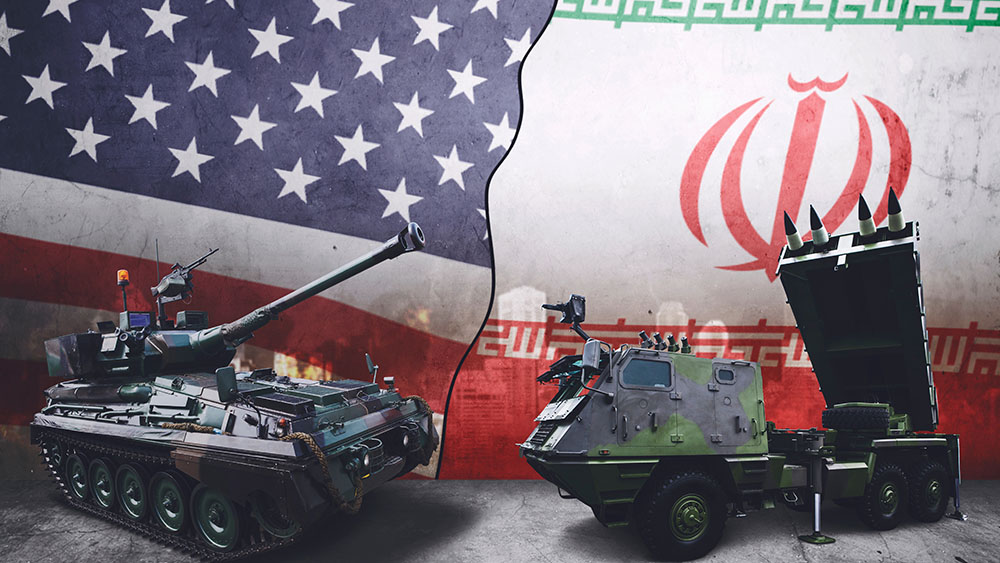
(NaturalNews) The U.S. is shifting focus toward potential military action in Iran, following a recent intervention in Venezuela. Critics argue that the move is …
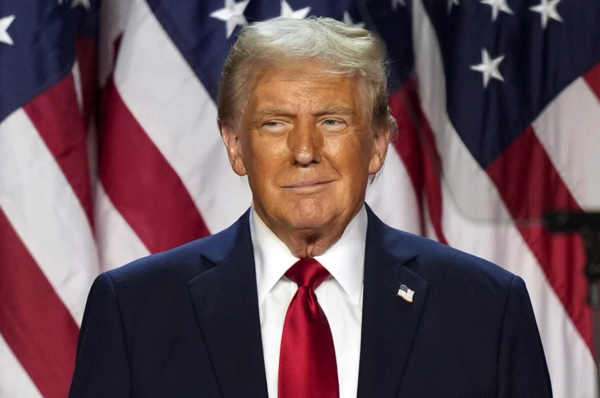
(NaturalNews) President Donald Trump announced a fraud investigation targeting California, linking it to widespread fraud uncovered in Minnesota. Trump claim…

(NaturalNews) The U.S. dollar’s global dominance is collapsing due to reckless money printing, sanctions abuse and corruption. BRICS nations (Brazil, Russia, In…

(NaturalNews) Choose lasting health over quick fixes. Success comes from intentional, sustainable habits and clean products, not temporary solutions like crash …

(NaturalNews) On Day 3 of “Absolute Healing,” Jonathan Otto emphasized that a surge in sudden cardiac events, particularly among young athletes, was a serious …

(NaturalNews) Researchers have identified Pteropine orthoreoviruses (PRVs), bat-borne viruses, as the cause of severe illness in five patients in Bangladesh who…
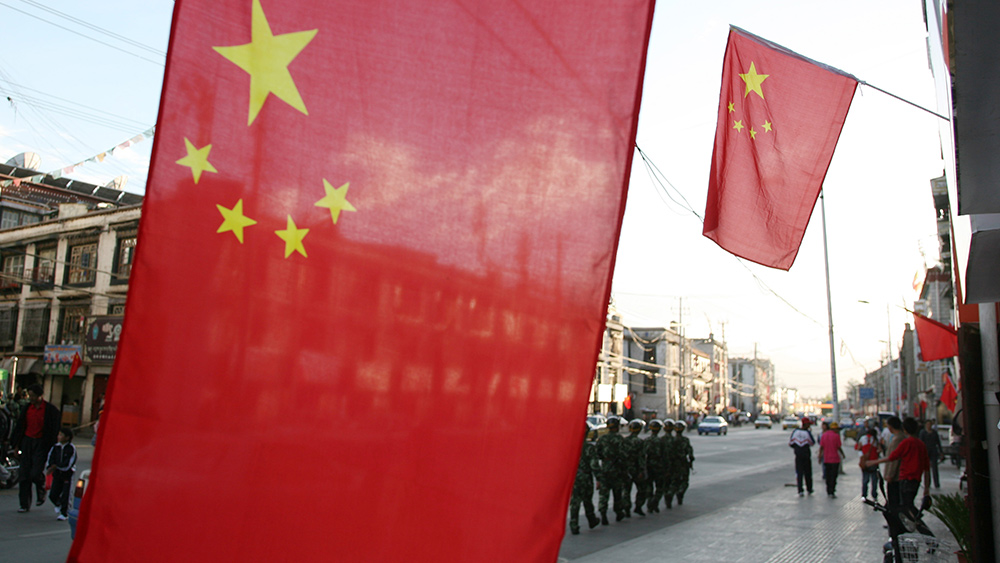
(NaturalNews) A Chinese businessman with ties to the Communist Party’s intelligence apparatus owns two golf courses flanking the Louisiana headquarters of U.S. …
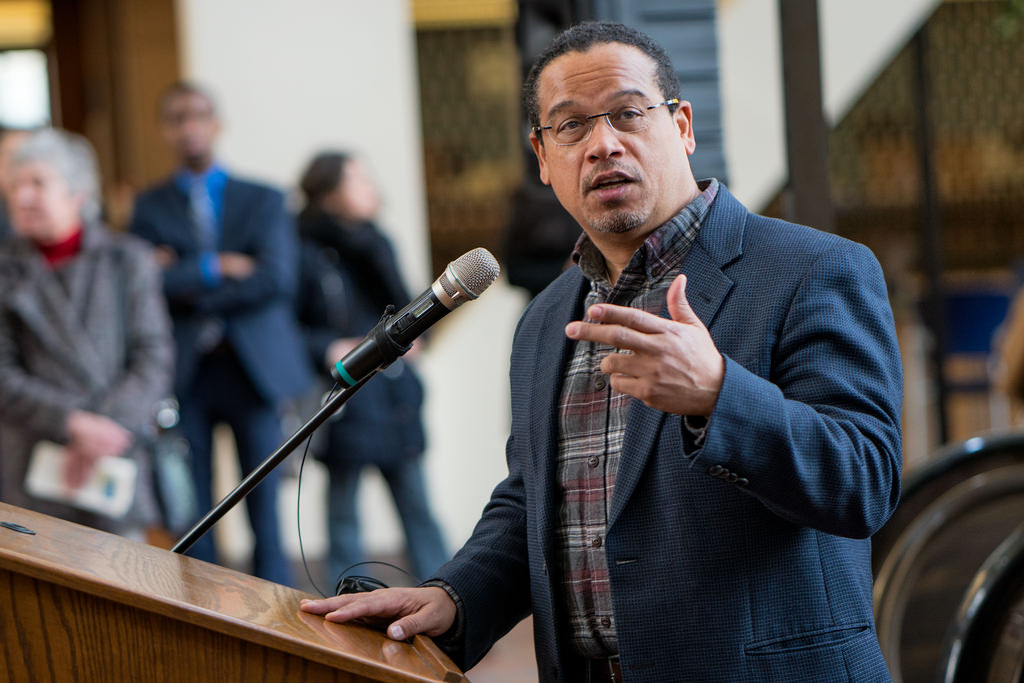
(NaturalNews) Leaked audio from December 2021 captures Minnesota Attorney General Keith Ellison pledging support to a group that included individuals later conv…
A top police official confirms an elderly woman lost her life due to the massive blackout.
Farmers plan to deploy new tractor-based roadblocks—echoing the December 18th protests in Brussels.
Last weekend’s Caribbean live-fire exercise in and around the suburbs of Caracas delivered a steady stream of tactical messages to the Western Hemisphere. We don’t like narco-terrorists, wannabe communists, bloated dictators, or people who supply oil to our adversaries.
But that wasn’t the real message.
Message to Xi: There’s a new sheriff in town. He isn’t ‘Sleepy Joe.’ And his call sign is FAFO.
The love note was addressed to China, and it read: We are awake now. Our game is FAFO.
America’s 36-year slumber on the Monroe Doctrine — “Stay out of the Western Hemisphere or else” — began after Panama in 1990. The Gulf War and the Global War on Terrorism followed, and Washington became dangerously myopic about threats in America’s own backyard.
Then came the turning point. When Bill Clinton signed off on communist China’s entry into the World Trade Organization in 2000, Beijing rapidly surged into a world-class economic power. Along with that rise came a succession of Chinese leaders who openly advanced the idea of global Chinese hegemony.
Oddly enough, many of those ideas came from an American — my late friend Alvin Toffler.
Toffler’s book “The Third Wave” so impressed Deng Xiaoping and Zhao Ziyang in 1984 that millions of bootleg Chinese translations were distributed — without royalties — throughout the People’s Liberation Army. The same thing happened after Toffler published “War and Anti-War.” Once again, millions of pirated copies circulated, and Beijing began integrating his ideas into military doctrine.
In the late 1990s, PLA Major General Qiao Liang and Colonel Wang Xiangsui wrote “Unrestricted Warfare,” borrowing heavily from Toffler while laying out a strategy to defeat the United States.
In hindsight, it should have been titled “Slow Motion War.”
The book focuses on perceived weaknesses in American character and American war-making. The United States remains a nation of quarterly earnings reports and election cycles. We change political leadership every two or four years. The Chinese think in generational time frames.
From their perspective, Americans only go to war when facing a “clear and present danger.”
The genius of “Unrestricted Warfare” lies in exploiting what happens when a threat is clear but not present — like cancer from long-term smoking — or present but not clear, like the slow poisons Lucrezia Borgia allegedly used on her enemies.
Qiao and Wang proposed a slow, steady pressure campaign against the four pillars of American national power: diplomatic, information, military, and economic — the DIME.
Examples abound. Diplomatic and economic leverage through the Belt and Road Initiative. Tight control of information inside China paired with aggressive information warfare abroad through platforms such as TikTok. A decades-long military buildup aimed at surpassing U.S. power. And a long trail of currency manipulation.
(And then there’s this gem from page 191 of “Unrestricted Warfare”: “Can special funds be set up to exert greater influence on another country’s government and legislature through lobbying?” Eric Swalwell might find that line interesting.)
RELATED: From Monroe to ‘Donroe’: America enforces its back yard again
Photo by Tasos Katopodis/Getty Images
While America fixated on the Middle East, China quietly embedded itself throughout Latin America. In Panama, Beijing gained control of port management at both ends of the Panama Canal and began upgrading the system. In Costa Rica — which has no army — China donated 3,500 police cars and built a national stadium in San José, free of charge. It also cut sweetheart deals involving hundreds of Chinese fishing trawlers. Colombia saw similar treatment.
Then came Orange Man Bad.
Donald Trump is the first president to grasp that China isn’t a Red Godzilla stomping cities with napalm breath and a scything tail. China is more like the Blob — and Trump is Steve McQueen.
Venezuela, Maduro, oil, and narco-terrorism were all subsets.
China was the target. Xi Jinping was the bullseye.
Zero hour wasn’t set by the weather. It was set by the departure of Chinese envoy Qiu Xiaoqi, who had just wrapped up discussions on future ties with Venezuela. Unfortunately for Beijing, Delta Force snagged and bagged Nicolás Maduro and his wife and had them sitting in a Brooklyn jail before the envoy even made it home.
Message to Xi: There’s a new sheriff in town. He isn’t “Sleepy Joe.” And his call sign is FAFO.
Any questions?
Usa, Venezuela, China, Oil, Drug trafficking, Monroe doctrine, Opinion & analysis, Dime, Diplomacy, Information warfare, Military, Economy, Trade, Donald trump, Nicolas maduro, Xi jinping, Unrestricted warfare, Belt and road initiative (bri), Tiktok, Qiao liang, Wang xiangsui, Alvin toffler, Donroe doctrine
Alex Jones & Constitutional Lawyer Robert Barnes break down how the Left is already trying to use this tragic event to trigger a national uprising [more…]
The grocery aisles have become testing grounds for corporate biometric surveillance.
For years, Dave Chappelle has been treated as a kind of honorary dissident on the right. Not because he ever pledged allegiance, but because he irritated the correct people. He mocked pronouns, needled sanctimony, and refused to bow. That was enough. In a culture addicted to easy binaries, irritation became endorsement. Chappelle was recast as the anti-woke jester, the last free man in a room full of rules.
“The Unstoppable…” puts an end to that fantasy.
The right’s long flirtation with Chappelle rested on a misunderstanding. He was never an ally. He was a contrarian whose targets briefly overlapped with conservative concerns.
As the Netflix special begins, Chappelle emerges on stage wearing a jacket emblazoned with Colin Kaepernick’s name across the back, a symbol doing more work than most monologues. It is declarative. Kaepernick, a distinctly mediocre quarterback who parlayed a declining football career into a lucrative role as a full-time political brand, has long functioned more as an abstraction than as an athlete. His protest became performative, his grievance a commodity, his kneel a credential. Before a word is spoken, the audience is told where power, sympathy, and grievance will be placed. Identity is not the backdrop. Quite the opposite. It’s the billboard.
From there, the special settles into a familiar groove. Race becomes the organizing principle, the master key, the lens through which every topic is filtered and fixed. America is again framed as a racist hellscape, a uniquely cruel experiment, a place where whiteness looms as a near-mythical menace.
This is not observation so much as obsession. The fixation risks alienating white viewers almost immediately. Some in the audience likely sense it. Others — liberal self-flagellators by instinct — laugh along anyway, even as they become the punch line of nearly every joke.
Chappelle takes aim at Elon Musk, at Trump, at the culture of DOGE-era absurdity, but the jokes rarely travel. They circle. Musk becomes less a human eccentric and more a symbol of tech-bro whiteness run amok. Trump is reduced to a prop, wheeled on whenever the set needs a familiar villain. That might be forgivable — useful, even — if the material pushed somewhere unexpected. It doesn’t. For a comedian of Chappelle’s ability, too much of the set feels curiously unambitious.
The most telling moment comes in Chappelle’s account of Jack Johnson. Johnson, the first black heavyweight champion, endured explicit racism. That history is real. That is not in dispute. What is striking is how Chappelle treats that history. Johnson becomes less a man of his time and more a stand-in for black people in the present, besieged by the same “demonic white man.”
And so Chappelle conflates Johnson’s struggles with with the lives of rappers T.I. and the late Nipsey Hussle — and celebrates all three heroes for opposing white America.
As BlazeTV host Jason Whitlock recently posted on X:
This comedy special exposes [Chappelle] as highly controlled opposition, the ultimate plant, a fraud. He pretends to be a fearless speaker of truth to power. It’s laughable. No one with a brain can witness the Charlie Kirk assassination and then argue/suggest that Nipsey Hussle, T.I., and Jack Johnson were/are the real rebels, the real threats to American hegemony. Dave quoted Jack Johnson as saying his life was dedicated to the pursuit of pleasure. He was a boxer with the worldview of a modern gangsta rapper.
And then comes Chappelle’s praise of Saudi Arabia.
Not cautiously. Not ironically. He recounts performing at a comedy festival in Riyadh, openly boasting about the size of the paycheck. He describes feeling freer speaking there than in the United States. Freer. In a society where speech is monitored, dissent is criminalized, and punishment still includes public canings and amputations.
The audience laughs on schedule, applauding with the enthusiasm of trained sea lions. I found myself wondering why.
There is something almost surreal about hearing a man who has spent years describing America as uniquely oppressive extol the virtues of a monarchy where speech is tolerated only when it is toothless. The contradiction is never addressed. It simply floats past, buoyed by bravado and bank balance.
This isn’t hypocrisy in the cheap sense. It is something more revealing — and easier to miss because Chappelle is such a gifted orator. His moral compass isn’t anchored to freedom, but to grievance. America is condemned because it fails to live up to an ideal. Saudi Arabia is praised because it pays well and demands little beyond discretion.
It would be easier if “The Unstoppable…” were simply bad. It is not. Chappelle remains a master of timing. His cadence still carries. The problem is less talent than trajectory.
RELATED: Dave Chappelle faces fierce backlash over criticism of US while performing in Saudi Arabia
Photo by Arturo Holmes/Getty Images
What once felt dangerous now feels dutiful. What once cut across power now reinforces a different orthodoxy. Chappelle no longer punches up or down so much as inward, tightening his world until everything is interpreted through race alone.
The right’s long flirtation with Chappelle rested on a misunderstanding. He was never an ally. He was a contrarian whose targets briefly overlapped with conservative concerns. When he mocked trans men in women’s sports, it landed during a moment of peak absurdity, when the subject was everywhere and ripe for satire. It was easy. It was funny. But it was never a statement of allegiance.
“The Unstoppable…” makes that clear. The jacket, the Johnson parable, the Saudi sermon, the relentless racial framing — all of it points in the same direction.
Comedy, at its best, unsettles everyone. It exposes what our certainties conceal. In this special, Chappelle appears more interested in confirming his own.
Unstoppable, perhaps. But no longer subversive.
Entertainment, Culture, Dave chappelle, Comedy, Netflix, Saudi arabia, Jack johnson, Nipsey hussle, T.i., Racism, Review

Suspected provocateur specifically stated, ‘We’re here to storm the capitol. I’m not kidding.’ In a new mini-documentary diving into Jan. 6, investigative journalist Lara Logan [more…]

Mainstream media claims Obama-Biden partnership has only been happening for 5 months. Former President Barack Obama has been secretly advising the Biden administration for several [more…]

“This case could completely wipe out the ATF’s ability to create law and subvert congress, which would be a massive win for the Second Amendment.” [more…]

Elon Musk chimed in to question ‘how common’ this type of illegal activity is during American elections Bridgeport, Connecticut, the largest city in the state, [more…]

Chinese woman evades warrant for vehicular manslaughter after horror wreck caught on camera A Chinese woman fled back to her homeland after allegedly killing her [more…]

Downdetector has reported that several US banks are facing service disruptions on Friday morning. Update (1315ET): Fed Reserve Says ACH Error Impacting Customers Bitcoin literally [more…]
Footage shows male senior swiftly strike ball in attempt to make goal, inadvertently hitting female player directly in mouth. A female high school lacrosse player [more…]

Use promo code “ALEX” when you sign up on Mug Club to get one month FREE of the network’s exclusive broadcasts, investigative reports, comedy specials [more…]