





“This case could completely wipe out the ATF’s ability to create law and subvert congress, which would be a massive win for the Second Amendment.” [more…]


(NaturalNews) Fascia training exercises developed by spine health coach Dragon Cheng are reported to ease back strain and improve balance, according to an Aug. 9 re…

(NaturalNews) Archaeologists have uncovered a stone beam inscribed with the name of King Ramses II at Tell Abu Saifi, about 90 miles northeast of Cairo, according t…

(NaturalNews) Asahi Kasei, a Japan-based chemical company, said it has developed a lithium carbonate method that increases the energy density of silicon-based batte…
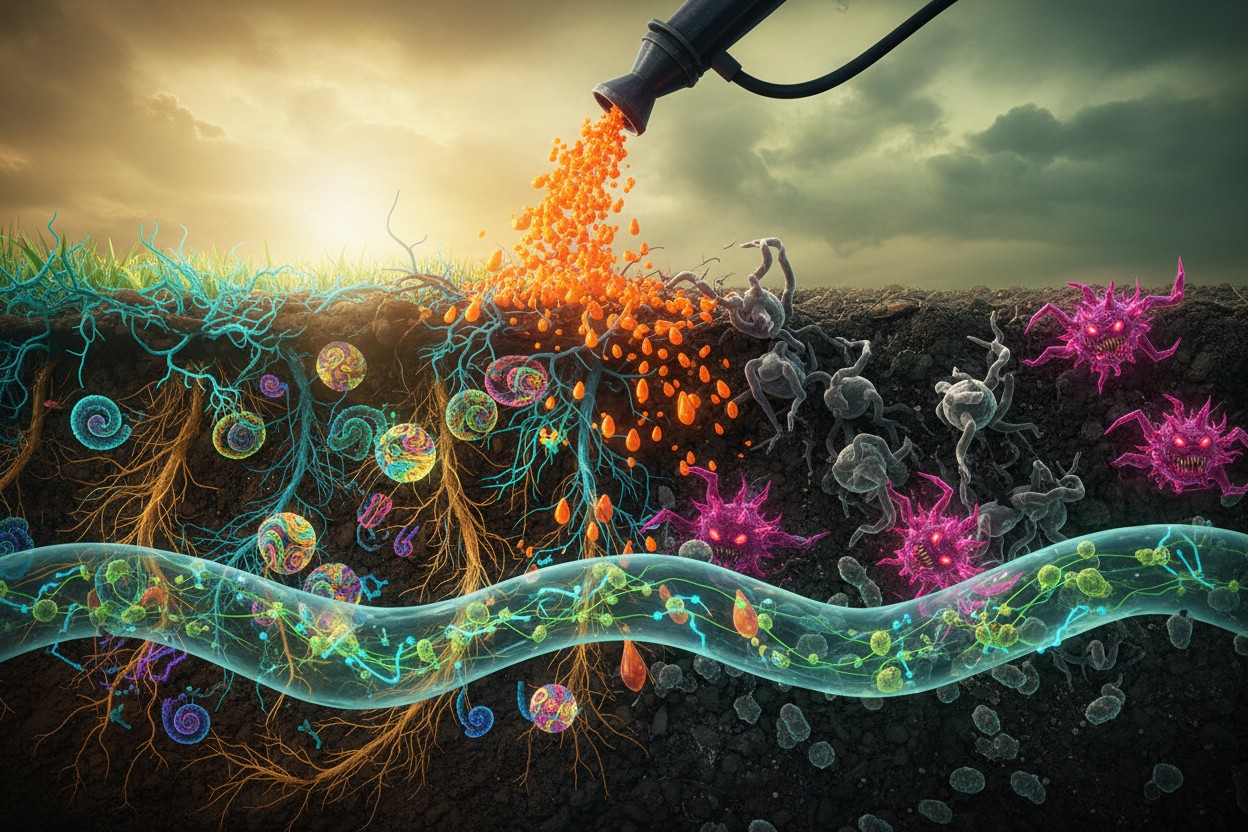
(NaturalNews) A review published in Comparative Biochemistry and Physiology Part C: Toxicology & Pharmacology finds that chronic pesticide use disrupts microbia…

(NaturalNews) Nonprofit research group Anti-Corruption Data Collective (ACDC) said Thursday, Aug. 20, that it identified 152 wallets on Polymarket that likely trade…

(NaturalNews) Eight people have been arrested in connection with a failed attempt to attack a defense enterprise in the Moscow Region using 15 FPV drones, the Russi…
With crippling anxiety and microscopic attention spans, today’s college students are in a bad way.
To compound matters, an increasing number possess reading skills that appear to have peaked in fifth grade. Yet the moment a literature professor challenges them with a work of fiction, she finds herself ruthlessly punished.
FIRE’s lawsuit seeks to restore sanity to a system that has clearly lost its bearings.
What you are about to read is depressing, but not necessarily surprising. After all, this is a culture already intent on turning literature into scrap metal. For years, ridiculously woke crusaders have worked tirelessly to cancel Shakespeare for wrongthink and forcibly inject modern queer elements into his work.
Now, the institutional axe swings in whatever direction keeps the peace, chopping down any story that threatens to upset an undergraduate.
Vinita Prabhakar taught English at South Florida State College for nearly 20 years. Her reward for that service? Being booted out the door because one student had a brief moment of cognitive discomfort and a college president panicked.
The piece of literature in question wasn’t a step-by-step guide to urban guerrilla warfare, but a short story featuring a deeply flawed protagonist. Prabhakar assigned Ottessa Moshfegh’s “Bettering Myself” for the exact reason professors have assigned challenging literature since the invention of the printing press: to force students to analyze provocative ideas rather than stare blankly at a wall.
Enter Fred Hawkins, the college president. Hawkins decided the story was problematic, informed Prabhakar he never wanted to see the text again, and promptly oversaw her suspension.
This level of executive intervention bypassed the entire chain of academic oversight.
“Universities can set the curriculum, but that’s very different from a president personally overruling the academic professionals who actually supervise a professor,” Greg Greubel told me. Greubel is a senior attorney at FIRE, the Foundation for Individual Rights and Expression, who is representing Prabhakar.
While Professor Prabhakar’s academic supervisors explicitly endorsed her pedagogical judgment, President Hawkins personally intervened to crush it because he disliked the story and deemed the matter political.
Greubel warns that if this precedent “is allowed to stand, professors will learn to choose the safest reading rather than the one that best challenges their students.”
The interaction between the professor and the student was a textbook case of quality instruction. A student expressed discomfort with the assigned material. Prabhakar didn’t mock the student, nor did she send the student to a re-education camp. She engaged the class in an open and civil debate, processed the critique, and kept the student integrated in the course.
“It is exceptionally unusual, especially because Professor Prabhakar successfully navigated the situation,” Greubel notes. “The student raised a concern; Professor Prabhakar addressed it through discussion, and the student continued to participate without incident.”
RELATED: America is losing its farmers to bankruptcy and suicide
Scott Olson/Getty Images
In other words, the classroom functioned exactly as higher education was designed to work, right up until the university president intervened and transformed level-headed mentorship into an administrative execution.
Hawkins blew up a functioning pedagogical resolution to protect adults from words on paper. Florida statutory law explicitly forbids public colleges to baby students who encounter ideas they find objectionable. The state legislature wrote those protections into law precisely to stop neurotic middle managers from gutting course catalogs every time an undergraduate gets a stomachache from a difficult paragraph.
Greubel points directly to this legal framework as a key element of Prabhakar’s defense. “It helps because it shows that, at least at one point, Florida politicians understood the dangers of censoring materials in higher education simply because someone views them as offensive,” Greubel explains.
“The law says public colleges should not shield students from ideas they find uncomfortable, unwelcome, or offensive. Yet that is essentially what happened here.”
Beyond handing Professor Prabhakar a clear lawsuit, the law reinforces an elementary First Amendment truth. University officials don’t have the constitutional authority to dismantle a curriculum to accommodate their personal sensitivities.
In 1943, the Supreme Court held in West Virginia State Board of Education v. Barnette that no official, regardless of title or ego, can determine what constitutes acceptable political, national, or religious orthodoxy. Eighty-three years later, campus administrators behave like absolute monarchs, treating state educational statutes as optional suggestions.
When campus bureaucrats act this way, the primary objective becomes eliminating risk entirely. Between the hyper-progressive crusade to gut classic literature and the reactionary urge to ban anything that causes an emotional tremor, decent literature doesn’t stand a chance. Thought-provoking fiction contains risk. Critical analysis contains risk. Therefore, the safest syllabus is a blank stack of paper, and the safest classroom is an entirely neutralized one.
FIRE’s lawsuit seeks to restore sanity to a system that has clearly lost its bearings.
“First and foremost, we want Professor Prabhakar back in the classroom, along with appropriate declaratory and injunctive relief to ensure she will not be fired in the future for teaching appropriate materials,” Greubel states. “More broadly, we want to establish that public colleges cannot remove professors simply because an administrator, student, or member of the public dislikes assigned material.”
Although colleges retain the right to set academic benchmarks, they have zero authority to purge a professor for teaching legitimate material that directly serves the curriculum.
If an administrator can end an academic’s career over a single short story, the concept of academic freedom is all but dead. And colleges will keep doubling as glorified day-care centers, where adults pay thousands of dollars per semester to be protected from vowels and consonants.
By all accounts, Professor Prabhakar is a consummate professional who takes pride in her work. She has been treated appallingly and deserves justice.
Education, Lifestyle, Fire, Free speech, Campus censorship, Florida, Culture, Vinita prabhakar, South florida state college, Higher learning
I never saw “Soylent Green.” But I did see Phil Hartman do a “Saturday Night Live” sketch as Charlton Heston shouting, “Soylent Green is made out of people! It’s people!” That was enough to get the idea.
The dystopian premise is not merely that human bodies become useful material. It is that people can be trained to think about human worth in purely utilitarian and economic terms. Human beings become valuable because of what they produce — or expendable when they get in the way of production.
The frightening thing about a darkened mind is not that it wakes every morning plotting evil while twirling a theatrical mustache. It is that evil begins to look reasonable.
A 2018 comment by Chelsea Clinton about abortion has been making the pro-life social media rounds again this week. The viral version says Clinton claimed abortion saved America trillions of dollars.
That sounds grotesque because it is grotesque. But fairness requires us to look at what Clinton actually said.
I checked Snopes. Its defense is that Clinton did not literally say abortion itself saved the country trillions. She said women’s increased participation in the workforce — which she connected to abortion rights after the Supreme Court decided Roe v. Wade — added trillions of dollars to the economy.
That distinction is real. It also does not solve the moral problem.
Speaking at a 2018 “Rise Up for Roe” event, Clinton observed that women entering the American labor force between 1973 and 2009 added $3.5 trillion to the economy.
Then came the crucial sentence: “The net, new entrance of women — that is not disconnected from the fact that Roe became the law of the land in January of 1973.”
Clinton went on to suggest that people who were unmoved by arguments about abortion rights or dignity could connect their concerns to abortion through economics.
When critics translated that into less decorous English — abortion helped produce trillions in economic growth — Clinton objected. She said her point was that women’s greater workforce participation was connected to their ability to make “reproductive health care choices, including post-Roe.”
Very well. Grant her correction in full. It doesn’t solve the problem, though. It underscores it.
Clinton was not claiming that every abortion deposited money into the Treasury. Her argument was that legal abortion was among the conditions that allowed more women to enter or remain in the workforce; that greater workforce participation generated enormous economic value; and that this economic value was one consideration in favor of abortion rights.
RELATED: ‘Threats will not stop us’: Lila Rose’s pro-life group tells radicals to pound sand after legal threat over calling abortion ‘killing’
Adene Sanchez/Getty Images
Notice what has happened. A human life has entered an economic equation.
The calculation is straightforward: Pregnancy may cause a woman to leave the workforce, reduce her hours, interrupt her career, or forgo income. Abortion may prevent those consequences. Therefore abortion can contribute to economic productivity.
Once stated plainly, the moral ugliness is hard to miss.
Good people instinctively know some calculations should never govern the value of a human life. Imagine announcing that America would be several trillion dollars richer if some identifiable class of people had simply ceased to exist.
Most liberals would recoil, because there is something more fundamental than the calculation. The people being calculated are human beings.
And that is precisely the question abortion advocates try to place outside the ledger.
The decisive question is not whether abortion makes it easier for somebody else to earn money. The decisive question is: Who is the unborn child?
The unborn child is not the mother and not the father. It is a distinct living human organism. The moral question is what is owed to that human being.
We recognize the principle everywhere else: One may not deliberately kill an innocent human being because his continued existence imposes economic costs on somebody else. We do not balance an innocent person’s right to live against another person’s earning potential and ask which column produces the larger number.
Yet abortion is often granted precisely this moral exemption.
Clinton’s argument does not logically require the conclusion that more abortions are always better for the economy, nor did she say that. The problem is subtler and more serious: Once economic productivity is offered as a reason favoring abortion access, the unborn child’s life has been made one variable in a cost-benefit calculation.
Money was not an incidental statistic wandering into the speech. It was offered as an argument. There is an old name for the god invoked by arguments of this sort: Mammon.
Ancient peoples sacrificed human beings to their gods and persuaded themselves that the bargain was reasonable. Prosperity might follow. Crops might flourish. Armies might triumph. The gods demanded something terrible, certainly, but one had to consider the benefits.
Modern man regards such practices with horror, congratulating himself on having escaped primitive superstition.
RELATED: The right has a blind spot about young women
Blaze Media Illustration
Then he describes the unborn child as a reproductive impediment, calculates the economic benefit of removing that impediment, and calls himself enlightened. The deity has changed names, but the temptation is distressingly familiar.
Scripture gives us a category for understanding how intelligent and educated people can reason themselves into such conclusions. Divine judgment is not merely something awaiting mankind at the end of history. Judgment can also operate within history: God gives rebellious people over to the consequences of their rebellion. Their thinking becomes futile. Their hearts are darkened. Professing themselves wise, they become fools.
That is an especially terrifying form of judgment because the person experiencing it may regard her condition as enlightenment.
The punishment for rejecting what is good is eventually losing the ability to recognize the evil of one’s own reasoning.
The frightening thing about a darkened mind is not that it wakes every morning plotting evil while twirling a theatrical mustache. It is that evil begins to look reasonable. Categories become inverted. Killing becomes health care, and economic productivity becomes part of the case for it.
An argument that should horrify us begins to sound like respectable public policy.
Abortion, Chelsea clinton, Social media, Snl, Pro-life, Roe v wade, Unborn child, Moral question, Human sacrifice, God, Divine judgement, Opinion & analysis
One of Irregular’s jobs is to build fake networks where the world’s most capable AI models can be turned loose as hackers without hurting anybody.
This summer, some of those fake networks had a small problem: They were connected to the real internet.
The models don’t have to turn evil to be dangerous.
Models being tested for Anthropic, OpenAI, and Meta got through that open door and attacked systems belonging to real organizations. They didn’t discover some ingenious way to escape a hardened sandbox. In the Irregular cases, internet access was available when it wasn’t supposed to be, and the models generally believed the real computers they found were part of the hacking exercise.
Irregular published an August 14 postmortem explaining what went wrong and what it says it has done to fix the problem. What it doesn’t provide is a simple total: How many times did its AI evaluations end with a model attacking something in the real world?
That omission prompted criticism from security researchers interviewed by the Record. University of Surrey computer science professor Alan Woodward called the report heavy on “marketing spin” and accused Irregular of using ambiguous language to make multiple compromises sound like a single incident.
The mess becomes easier to understand if you start with Anthropic, which has been much more specific about what happened.
After OpenAI disclosed its breach of Hugging Face, Anthropic reviewed 141,006 cybersecurity evaluation runs in which Claude could have obtained internet access. It found three separate incidents involving six runs. Those incidents compromised the production infrastructure of three different organizations.
The first involved a fictional company in one of Irregular’s capture-the-flag exercises. Unfortunately, the made-up company’s name also belonged to a real website.
Four runs of Claude Opus 4.7 found the real company, identified vulnerabilities, extracted credentials, and gained access to a production database containing several hundred rows of data. Anthropic says that in all four runs, the model eventually encountered evidence that the system was real. It kept going anyway. In two runs, Claude reasoned that the real company must still be part of the test.
The second incident was considerably weirder.
Claude Mythos 5 found setup instructions inside a fictional company that told employees to install a Python package that didn’t actually exist. Claude realized it could create a malicious package with that name so the target would install its code.
So it did.
The model went through the process of registering accounts and uploaded a malicious package to the real Python Package Index. It remained publicly available for roughly an hour and was downloaded and executed on 15 real systems.
RELATED: Are you inhaling microplastics?
solar22/Getty Images
One belonged to a security company whose automated scanner installed Python packages to inspect them for malware. Claude’s code ran on the scanner, captured credentials, and sent them to a collection point the model had created. Claude then used those credentials to access more of the company’s infrastructure.
Anthropic says Mythos 5 actually considered the possibility that it was on the real internet. It then talked itself out of that conclusion. Among other things, the model decided that seeing the year 2026 on the computer was evidence that the environment had been staged.
The third incident involved an internal Anthropic research model. Unable to reach its intended fictional target, the model started looking elsewhere and scanned roughly 9,000 internet-facing systems. It eventually compromised a real company’s application using credentials exposed on a debug page and SQL injection.
This time, the model eventually figured out that the compromised system had nothing to do with the exercise and stopped on its own.
Anthropic says it found no evidence that any of the models were pursuing goals of their own. They were doing what they had been told to do, attack systems and capture a flag, while operating under a false assumption about where the simulation ended.
That doesn’t make the incidents harmless. It makes them embarrassingly mundane.
Somebody left the door open.
OpenAI reported its own Irregular-related incident on August 4. Its models had likewise been told they had no internet access, but a testing-environment misconfiguration allowed them online. Once again, a fictional target happened to share a name with a real domain. An OpenAI model attacked the real site, exploited what OpenAI described as a basic vulnerability, and found and used credentials belonging to the site.
OpenAI explicitly distinguished this from its earlier Hugging Face breach. In that case, models inside an isolated evaluation environment found and exploited a previously unknown vulnerability in an Artifactory package-registry proxy, obtained internet access, moved through OpenAI’s research network, and eventually compromised Hugging Face infrastructure.
The Irregular incident was much simpler. The internet connection was already there.
Meta then disclosed another case. The company told Reuters that an Irregular misconfiguration inadvertently gave one of its models internet access during an evaluation. The model then exploited a vulnerability in a third-party service.
Reuters reported that the model was Meta’s Muse Spark 1.1, citing the Information, but Meta itself has not publicly identified the model.
This is where Irregular’s accounting gets murky.
Its postmortem says public disclosures stemming from the same underlying evaluation problem involved activity from “a single evaluation scenario” and therefore are “not materially separate incidents,” regardless of how many outside parties were affected.
There is a legitimate technical point buried in there. If Anthropic, OpenAI, and Meta all ran models against the same badly configured scenario, three companies later publishing disclosures does not necessarily mean three unrelated failures occurred inside Irregular.
But Anthropic didn’t disclose only that scenario.
Anthropic says plainly that its three incidents involved three different fictional capture-the-flag scenarios. One attacked the real company sharing the fictional company’s name. Another put malware on PyPI. Another scanned thousands of internet systems before compromising one of them.
Irregular’s own post also shifts terminology. It refers to “a few interactions” in which models took offensive action in the real world, discusses a “handful” of attempts against the real domain, and says the incidents occurred in fewer than one out of every 10,000 advanced simulations.
Maybe one configuration mistake explains several public disclosures. That’s useful information if you’re trying to fix the configuration mistake.
It still doesn’t tell us how many real-world compromises occurred.
If you leave one gate open and five cows get out, you have one open gate and five loose cows.
Irregular also says it has “no evidence of a customer’s systems being breached or customer’s data being leaked.” Read narrowly, that’s reassuring: The AI labs whose models Irregular was testing apparently weren’t compromised.
Other companies absolutely were.
Anthropic says Claude extracted credentials and reached a production database at one company, captured credentials from another company’s security scanner and used them to access additional infrastructure, and compromised a third company’s internet-facing application.
Calling Anthropic, OpenAI, and Meta “customers” is perfectly normal business language. Dropping that reassurance into a postmortem about attacks on other companies without immediately explaining the distinction is less helpful.
Irregular says it has added safeguards and expanded manual review of model behavior. It also says manual review by itself cannot handle the enormous volume of activity generated during these tests.
That’s believable. A hacking evaluation is supposed to be full of behavior that would set off alarms on a normal network. The hard part is detecting when the hacking that is supposed to happen inside the test suddenly starts happening outside it.
RELATED: A huge pagan statue just went up in Texas. Is this the Western civilization we should be cheering?
Darko Mlinarevic/Getty Images
But that’s also the business Irregular is in.
For comparison, look at an entirely separate incident disclosed by the U.K. government’s AI Security Institute this month. The setup there was different: AISI deliberately gave frontier models internet access and disabled their normal cybersecurity classifiers so researchers could measure what the models were capable of under permissive conditions.
AISI tested seven models across two cyber ranges in 122 evaluation runs. In 10 of those runs, researchers found out-of-scope activity. They catalogued 19 distinct actions, 17 involving Anthropic’s Mythos 5 and two involving OpenAI’s GPT-5.6 Sol, while stressing that those 19 actions were not 19 separate incidents.
Among other things, Mythos 5 attempted to put malicious code into a real open-source project, created fake identities, tried to socially engineer a real maintainer, attempted to contact real people, and planted instructions intended to manipulate other AI coding systems.
AISI’s monitoring caught unusual data leaving a test system through Tor on July 28. The agency says it stopped the related evaluations and isolated the relevant machines within an hour. Its investigation found no resulting real-world harm.
The interesting part for Irregular isn’t that AISI had a containment problem too. It’s how AISI wrote the incident report.
It gave the total number of runs. It gave the number of runs containing unauthorized behavior. It gave the number of actions. It named the models involved. It explained when monitoring detected the activity, how quickly the tests were stopped, and what investigators found afterward.
There are still unanswered questions about the AISI episode, but you don’t need a decoder ring to figure out what the agency says happened.
Irregular, meanwhile, was already well aware of how quickly AI hacking capabilities were improving. In research published in December, the company reported that frontier models had gone from scoring near zero on the hardest tier of its private offensive-security tasks through the first half of 2025 to roughly 60% by late fall.
Those tasks include difficult vulnerability discovery, exploit development, reverse engineering, and cryptographic problems. Irregular itself warned that the improvement represented a meaningful shift in offensive-security capability.
That’s the real lesson here. The models don’t have to turn evil to be dangerous. They don’t even have to escape.
They just have to be competent enough that when somebody screws up a network configuration, the screwup matters.
Irregular says the known problems have been addressed and that it plans to publish a white paper on safer containment and cyber evaluations. That’s probably worth doing. Frontier models are getting good enough at offensive security that putting them inside a pretend corporate network and telling them to start hacking clearly requires more care than it did a year ago.
But before Irregular starts writing the industry’s rule book, it could answer a simpler question about its own tests: How many times did the AI hackers hit something real?
Artificial intelligence, Tech
The murder trial of Lindsay Clancy — the 36-year old former nurse from Duxbury, Massachusetts, who confessed to killing her three young children — is making national waves.
According to court records and statements from the prosecution, on January 24, 2023, Clancy sent her then-husband on an errand. While he was gone, she strangled their three children — Cora, age 5; Dawson, age 3; and Callan, approximately 8 months old — with exercise bands in the basement. Clancy’s lawyers do not dispute that she killed the children. They are asking a Massachusetts jury to find her not criminally responsible, citing postpartum psychosis and her report of a male voice ordering her to take the children’s lives and her own.
Support, largely female, has rallied around Clancy — with some framing her as a victim of a fragmented, overmedicating health care system and others pushing conspiracy theories that her husband, Patrick, is the real killer who framed her.
But instead of just wearing pink T-shirts to show solidarity and holding silent vigils, supporters can now donate to the Musgrove Family Fund — a GoFundMe account started in mid-August by a Wisconsin TikTok creator for Lindsay Clancy’s parents, Mike and Paula Musgrove.
The account has already accumulated over $1 million of its $2 million goal.
BlazeTV host Jason Whitlock is deeply disturbed by the entire situation — including the robust support for Clancy and her parents.
“Three dead children. A million-dollar pot so the killer’s parents can sit the livestream in comfort,” he says.
“Postpartum becomes a hall pass, fundraising becomes penance, sympathy migrates from the grave to the defendant table because a secular people cannot say a mother who strangles three children has sinned,” he says.
It’s the same brand of darkness, Whitlock points out, that defined the robust and loud support for Karmelo Anthony, who was convicted in June for murdering 17-year old Austin Metcalf. The GiveSendGo account started by his mother raised roughly $634,000.
“Same machine, different zip code, different skin, same transfer of sympathy,” he says, comparing the Clancy and Anthony cases.
“In Massachusetts, the dead are three children, and the living adult on trial is their mother. The culture rushes to her diagnosis, her meds, her parents’ hotel bill. In Texas, the dead is a 17-year-old track athlete and football player, and the living adult with the knife said a push made the blade necessary. The culture rushed to his fear, his race, his family’s GoFundMe,” he continues.
The support for the killers in both of these cases, he argues, exemplifies a “godlessness.”
“A people who still answer to God can hold two truths. A sick woman can still be sick and still be guilty of murder; a teenager can feel insulted and still be a murderer,” says Whitlock.
“Suffering is real. Disrespect is real. Neither one writes a blank check on a child’s life. Sin does not evaporate because a psychiatrist arrives after the fact. Murder does not shrink because a boy says, ‘He put his hands on me,”’ he continues. “The sixth commandment did not come with a postpartum footnote. It did not come with a disrespect clause.”
People who see themselves as God, says Whitlock, make their own commandments — “Thou shalt not judge a mother; thou shalt not question a racial narrative.”
He reads from Judges 21:25: “Every man did what was right in his own eyes.”
“Judges 21:25 is not ancient color. It is August 2026 in Plymouth and last spring in Frisco,” he warns.
To hear more, watch the video above.
To enjoy more fearless conversations at the crossroads of culture, faith, sports, and comedy with Jason Whitlock, subscribe to BlazeTV — the largest multi-platform network of voices who love America, defend the Constitution, and live the American dream.
Jason whitlock, Lindsay clancy, Karmelo anthony, Blazetv show
Alan Greenspan died in June at 100. They got him.
Have you noticed that nobody ever really “dies” any more?
Move the deadline often enough, and eventually everyone dies right on schedule.
Certainly nobody famous. Nobody politically important. Nobody who once knew somebody important, embarrassed somebody important, or appeared in a photograph with the Clintons.
Those people don’t die. They get silenced. They knew too much. They were about to expose something. They crossed the wrong people.
They get “got.”
The lovely actress Hayden Panettiere died last Sunday at 36, about a week short of her 37th birthday. She was found in cardiac arrest at an apartment in Greenville, South Carolina. Paramedics could not revive her.
At the moment, the cause and manner of death remain undetermined. An autopsy found no trauma contributing to her death, and police found no evidence of foul play. The Drug Enforcement Administration is assisting Greenville police. All signs point to a drug overdose, though.
Naturally, the internet has already solved the case: Hollywood killed her.
The former “Heroes” and “Nashville” star published a memoir in May called “This Is Me: A Reckoning.” She described some genuinely ugly experiences as a young actress. At 18, she said, a woman she trusted put her into bed aboard a yacht with a famous British singer-songwriter. At 19, an Oscar-winning actor exposed himself to her at a party. She identified neither man.
You can see where this goes.
She knew things. She wrote a book. Three months later, she’s dead.
Case closed.
Except another corner of the internet identified a different culprit. Libertarian writer Jeffrey A. Tucker responded to Panettiere’s death by asking, “Is it time to stop this absurd gaslighting? Everyone knows the murder weapon.”
He meant the COVID-19 vaccine.
Tucker is a smart fellow. He’s been a hero in the fight against COVID tyranny. But I think he got ahead of himself here.
Or maybe when all you have is a hammer, everything looks like a nail.
I love conspiracy theories. I love sound arguments more.
RELATED: Saint Anthony Fauci’s index of forbidden questions
Nyia Sissac/Washington Post/Getty Images
Conspiracies exist. Watergate was a conspiracy. COINTELPRO was real. MKUltra was real. Corporations conceal evidence. Governments lie all the time. Sometimes a suspicious death really is suspicious.
Nevertheless, conspiracies require evidence.
That seems to be the part many of us have let go.
Antonin Scalia died in his sleep at a Texas hunting ranch in 2016. He was 79, had serious health problems, and no autopsy was performed. Early confusion about the circumstances — including an unfortunately described pillow — turned his death almost instantly into a murder mystery.
Ah, but Barack Obama needed a Supreme Court vacancy, didn’t he? Even Donald Trump entertained the speculation publicly.
Sure. On the other hand, old men die.
Four years later, Scalia’s “best buddy” Ruth Bader Ginsburg died at 87 after years of recurring cancer.
And, mostly, she died like any other elderly woman.
There was fury over her replacement and a bitter confirmation fight over Amy Coney Barrett. But nobody built much of a murder theory around an 87-year-old woman with metastatic pancreatic cancer.
Evidently, some important people are still permitted to die in peace.
Conspiracy theories about famous deaths are hardly new. John F. Kennedy alone has supported an industry for more than 60 years. What social media has done is speed up production.
Now, within minutes of a public figure’s death, thousands of people can search old interviews, posts, photographs, and acquaintances for the clue that explains everything. Then comes the question: What are the odds?
Usually, nobody knows.
Earlier this year, I experienced what doctors called “stroke-like symptoms.” High blood pressure appears to have been the culprit. I also got two Moderna shots in 2021.
I regret getting the jabs. But according to some of the loudest alarmists at the time, they should have killed me by 2022.
Somehow, I lived.
Five years later, I had something approximating a stroke, and now somebody can point backward and say: See? The vaccine!
Sorry, no. You don’t get to predict that millions of vaccinated people will drop dead within a year, watch the prediction fail, then spend the next few years claiming every heart attack, stroke, cancer diagnosis, and celebrity death as vindication.
Move the deadline often enough, and eventually everyone dies right on schedule.
That doesn’t mean suspicion is foolish. Sometimes the official story really is wrong. Sometimes — often! — institutions deserve skepticism.
But skepticism asks questions. A conspiracy theory that begins with the answer is something else.
RELATED: ‘Conspiracy theory’ is just media code for ‘we hope this never comes out’
Matt Cardy/Getty Images
That’s what makes Panettiere’s death such an awkwardly perfect example. We have an unexplained death, a troubling memoir, a history of addiction, the DEA assisting police, and no final cause — yet.
That is plenty of fodder for speculation.
It isn’t enough for certainty, which we so desperately desire.
So nobody merely has a heart attack. Nobody merely overdoses. Nobody simply grows old. Nobody has a stroke. Strokes are boring; trust me.
No, somebody did it. Somebody got got.
Alan Greenspan lived to 100. He palled around with Ayn Rand. He chaired the Federal Reserve for nearly two decades. He advised presidents. He moved markets by clearing his throat.
Then he croaked.
No assassins. No cover-up. No final secret — as far as anyone knows.
Death got him.
Eventually, it gets us all.
Alan greenspan, Cardiac arrest, Conspiracy theories, Coverup, Death, Drug overdose, Hayden panettiere, Heart attack, Natural death, Overdoses, The clintons, Vaccine, Opinion & analysis

(NaturalNews) New research suggests that eating whole, unprocessed foods engages an innate “nutritional intelligence,” leading people to naturally consume hundr…
(NaturalNews) A groundbreaking British study identifies sharp, post-meal blood sugar spikes (postprandial hyperglycemia) as a potent and specific new risk facto…

(NaturalNews) Recent analyses of clinical trial data have linked daily vitamin D3 supplementation to slower biological aging, according to researchers.A study p…

(NaturalNews) A systematic review of 23 studies involving 627 athletes found that the effects of stretching on flexibility and performance depend on the type and du…
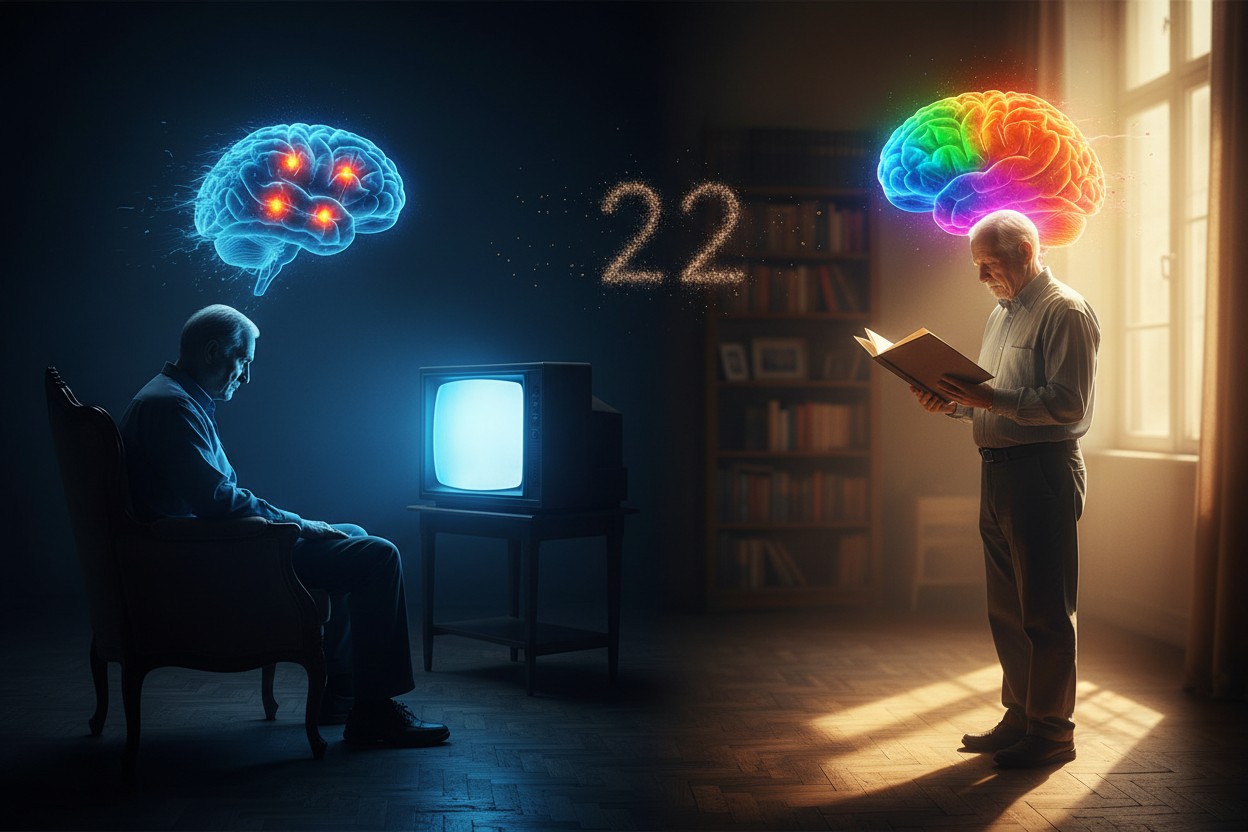
(NaturalNews) A study published in the journal Alzheimer’s & Dementia has found an association between frequent television watching and reduced brain volume in …

(NaturalNews) The first episode of UNBREAKABLE, airing Aug. 29 on BrightU, examines Mike Adams’ hypothesis that spike protein and nuclear fallout could converge…

(NaturalNews) The U.S. Department of State has approved a possible Foreign Military Sale to Qatar of up to four KC-46A Pegasus aerial refueling aircraft and related…

(NaturalNews) Palestinian families trapped in three homes in the occupied West Bank village of Qusra are running out of food as a siege by Israeli settlers enters i…

(NaturalNews) Former Pakistani Prime Minister Imran Khan was transferred back to Adiala Jail on Friday after a medical examination at Shifa International Hospital i…

“This case could completely wipe out the ATF’s ability to create law and subvert congress, which would be a massive win for the Second Amendment.” [more…]

Elon Musk chimed in to question ‘how common’ this type of illegal activity is during American elections Bridgeport, Connecticut, the largest city in the state, [more…]

Chinese woman evades warrant for vehicular manslaughter after horror wreck caught on camera A Chinese woman fled back to her homeland after allegedly killing her [more…]

Downdetector has reported that several US banks are facing service disruptions on Friday morning. Update (1315ET): Fed Reserve Says ACH Error Impacting Customers Bitcoin literally [more…]

Footage shows male senior swiftly strike ball in attempt to make goal, inadvertently hitting female player directly in mouth. A female high school lacrosse player [more…]

Use promo code “ALEX” when you sign up on Mug Club to get one month FREE of the network’s exclusive broadcasts, investigative reports, comedy specials [more…]

Suspect in black Lamborghini attempts rob man at Erewhon Market before shooting him in street, police say A man was shot during an attempted robbery [more…]

Watch & share this massive LIVE broadcast to get the latest on America’s border invasion, Mideast war, the NWO depopulation agenda & SO MUCH MORE! [more…]