





Is this just another cycle, or is it the END? Martin Armstrong of Armstrong Economics published an article this week about the so-called Socrates program and how [more…]

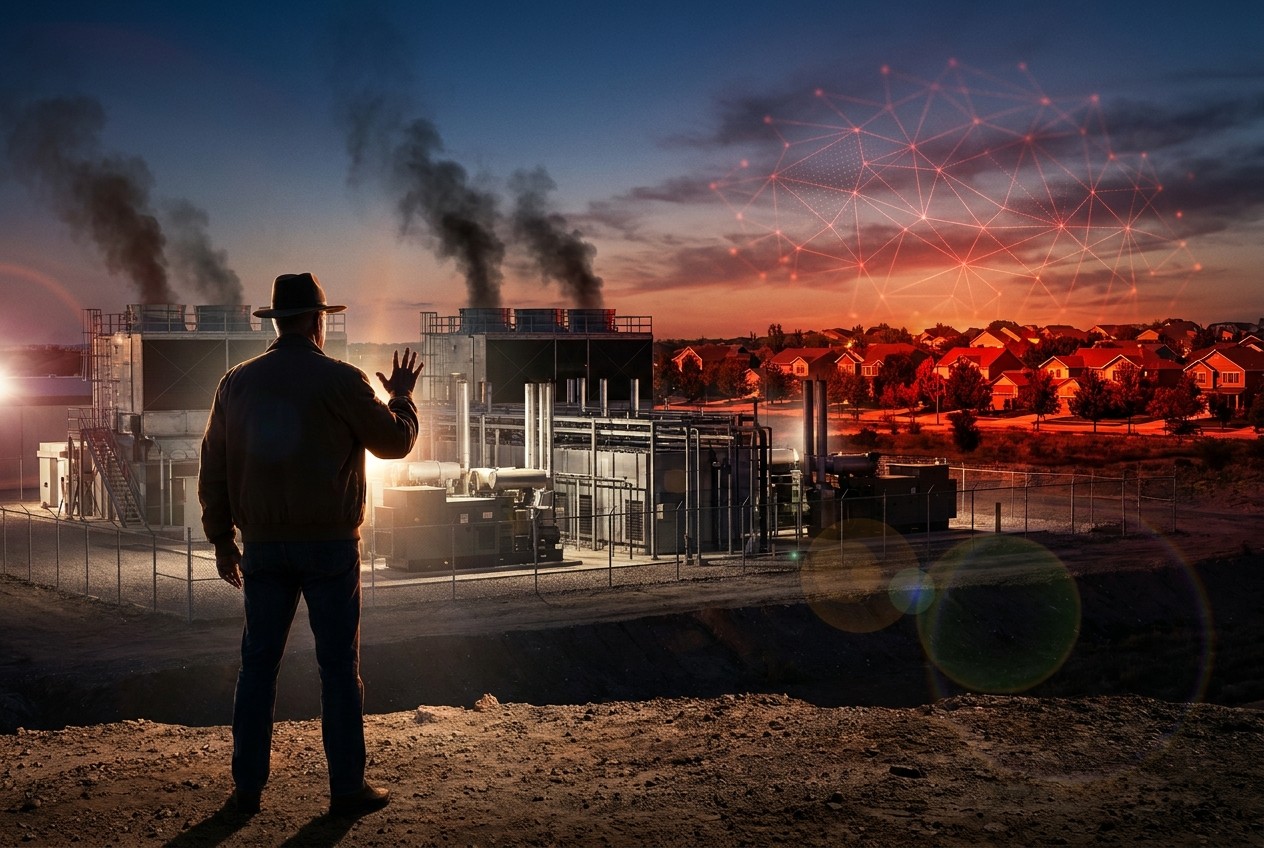
(NaturalNews) Living near an artificial intelligence (AI) data center already comes with several potential drawbacks [1].Some facilities produce constant, high-…

(NaturalNews) U.S. cybersecurity company CrowdStrike said a single person in China likely used artificial intelligence tools to attack South Korean financial organi…
Banned Books Week is baloney.
Not because nobody ever tries to suppress a book. People do. The lure of the ban hammer is strong.
We are staging arguments over banned books in a country where too many people barely read books.
But let’s be serious. A challenge is not a ban. A school-library dispute is not the Palmer raids. A parent objecting to what an 11-year-old reads is not Anthony Comstock resurrected.
Words should mean something.
The American Library Association has spent years blurring those distinctions, and every October around this time, we get the same little morality play: librarians as defenders of civilization, readers as brave dissidents, famous novels wrapped in the aura of forbidden fruit.
Last weekend at a Barnes and Noble in Southern California, I saw the display in person.
A table that had been marked “required reading” a few weeks prior was now the “read banned books” table. There sat “The Handmaid’s Tale,” “Nineteen Eighty-Four,” “The Catcher in the Rye,” and all the usual suspects. All for sale.
Some ban!
The ALA will object that it uses “ban” in a fairly narrow sense. A book need not disappear from American commerce to count as banned. Remove it from a school or library collection and the word applies.
That’s exactly the problem.
Removing a book from one institutional collection is not the same as suppressing it from public circulation. A restriction is not automatically a ban. Precision is not too much to ask from an organization supposedly devoted to books.
America has known censorship. Real censorship.
In 1926, H.L. Mencken deliberately sold a copy of the “Hatrack” issue of the American Mercury in Boston after the Watch and Ward Society targeted it as obscene. He got arrested.
He beat the charge.
The Postal Service also declared the issue un-mailable. Had that ruling stood, the government could have put his magazine out of business.
Woodrow Wilson’s government sent Eugene V. Debs to prison for an antiwar speech. Federal agents swept up radicals in the Palmer raids. In Schenck v. United States, the Supreme Court upheld the conviction of a man who distributed anti-draft leaflets.
RELATED: Don’t fall for the fake ‘banned books’ narrative
Chris Sweda/Chicago Tribune/Tribune News Service/Getty Images
That is what censorship looks like when the government means it.
Yes, school boards still do stupid things.
In 2013, a North Carolina board pulled Ralph Ellison’s “Invisible Man” after one member said he could find “no literary value” in it. Nine days later, after national ridicule, the board reversed itself.
In 2010, a Riverside County, California, school district briefly pulled Merriam-Webster’s Collegiate Dictionary because a parent objected to its definition of “oral sex.”
The dictionary came back too.
Somebody does something foolish. Somebody else objects. The fool backs down. That’s generally how freedom works.
And no, Ron DeSantis did not “ban books” in Florida. He signed laws governing what public schools may place in classrooms and school libraries.
Calling every restriction a ban is how you turn a policy dispute into a stupid morality play.
Azar Nafisi knows more about actual censorship than most Americans ever will. She lived under the Islamic Republic of Iran. In “Read Dangerously,” she writes about “literature as resistance” — literature resisting kings, tyrants, and “the tyrants within us.”
She asks how we confront an enemy without becoming like him or surrendering to him. Good question!
Reading dangerously under tyranny is one possible answer.
But at the risk of stating the obvious, America is not Iran.
And if we are going to use the word “dangerous,” let’s make it mean something.
A dangerous book is not simply one somebody objected to. It may be a book with such a rotten reputation that people condemn it without reading it. A book a publisher drops. A book a retailer refuses to carry. A book that goes out of print and can’t be had for love or money. A book people would rather summarize for you than let you judge for yourself.
Jean Raspail’s “The Camp of the Saints” will do.
First published in France in 1973, the novel imagines a flotilla of impoverished migrants sailing toward Europe. For decades, it has been reduced to a racist anti-immigrant tract.
I have read it. That is not what the book is principally about.
Raspail’s real villains are the politicians, journalists, clergy, and intellectuals who have lost the nerve to defend their own civilization.
For years, English copies were scarce and expensive. A new translation appeared last year. Amazon briefly pulled the physical edition. People complained. Amazon restored it.
That is a dangerous book because its reputation has done much of the work its critics should have done themselves.
RELATED: Jean Raspail’s notorious — and prophetic — novel returns to America
Pascal Parrot/Sygma/Sygma/Getty Images
So I say read Raspail and Julius Evola and Sam Francis. Read Nafisi and Ralph Ellison and Salman Rushdie.
Read authors who annoy your friends. Read writers your political allies dismiss. Read books with appalling reputations. Read the book everybody quotes and almost nobody seems to have opened.
Or don’t.
There is no virtue in reading a controversial book. Buying “Nineteen Eighty-Four” at Barnes and Noble does not make you Solzhenitsyn.
But please do not pretend.
Do not pretend a challenge is automatically a ban or that a book is unavailable when it is sitting on a table in front of you. Do not pretend reading a famous novel everyone can buy is an act of resistance.
We are staging arguments over banned books in a country where too many people barely read books.
Mencken praised the “gay fellows who heaved dead cats into sanctuaries” and thereby proved “that doubt, after all, was safe.”
He was right.
Read dangerously, if you like. Just read.
Censorship, Ron desantis, Amazon, Banned books, Camp of the saints, 1984, American library association, Post office, Reading, Azar nafisi, France, Europe, Opinion & analysis
An athlete attending an event with the president will always drum up noise with liberal media, but it is fast becoming a circus that the pros are tired of fielding questions about.
Look no farther than Baltimore Ravens defensive back Marlon Humphrey, who answered a series of questions about a ride he took with President Donald Trump to a shipyard near Baltimore earlier this week.
‘I don’t really have any political beliefs.’
Ravens Ryan Eckley, Tyler Loop, Nick Moore, and Humphrey all met with the president on Tuesday before he announced plans to open a shipyard with Anduril Industries that could create over 3,000 jobs in the area.
After Humphrey posted a video of himself riding behind the president in a “very armored vehicle,” he faced questions from the media upon his return to team facilities.
“President Trump actually asked us if we wanted to ride with him, and I was not going to turn down a ride with the president,” Humphrey said of the video.
“That was quite the experience.”
The 30-year-old addressed more questions about his political views, but stated he “did not vote” in the last election, and likely has never voted, before claiming, “I don’t really have any political beliefs.”
Viewers on social media were irate about the football player’s answers and quickly labeled him a pawn of the administration.
“Look in the camera. Stand on it,” a Baltimore sports talk radio account wrote.
“He can’t even look up,” another claimed.
Others called Humphrey a “useful idiot” and a “political prop.”
Insults even came from Dallas Cowboys writer Clarence Hill Jr., who described Humphrey’s answers as a “clown show.”
However, a former wide receiver from those same Cowboys, Dez Bryant, called out the writer and asked why he was bothered by Humphrey’s comments.
“Why does it matter? I’m telling the world now..as soon as I see Trump.. I’m taking a photo with him,” Bryant wrote.
RELATED: Flock of Ravens swarm President Trump in Baltimore: ‘Do yall know this guy?’
“I hope he’s down to have a margarita,” the Texas native added.
During the same interview, Humphrey said that he planned to dedicate himself to learning more about politics for the upcoming election.
“I did try to vote this last time, but my absentee ballot didn’t come in,” he told reporters.
“I do plan on voting the next time around,” the star defensive player explained, before adding, “I am extremely uninformed on what laws are going on, to be honest.”
Simply put, Humphrey said he planned on making an informed decision on who to vote for based on where his beliefs line up with each party.
Humphrey also spoke about the opportunities for the area itself — Sparrows Point, Maryland — and said that as an investor in local neighborhoods, he was glad there was an “opportunity to have a greater economy” come to the area.
“I believe in the area, and I’m pretty excited for the economy boom that could come from this,” he stated.
The interview closed with Humphrey being asked if he had seen any of the reactions to his presidential meeting on social media. The athlete immediately chose a positive route and said he hadn’t had the opportunity to react to any “love” he had received online.
“I am on social media at a max of about five minutes a day, so I was not able to interact with all the love I have received,” Humphrey said.
Like Blaze News? Bypass the censors, sign up for our newsletters, and get stories like this direct to your inbox. Sign up here!
Nfl, Donald trump, Baltimore ravens, Football, Dez bryant, Marlon humphrey, Sports
Sagebrush was starting to encroach on a field my father-in-law had painstakingly cleared over the years. So this week, I climbed onto his old tractor and did some mowing, unsupervised. In rural Montana, that hardly qualifies as news, but I’m putting it on my résumé.
First, it’s bigger than a riding mower, which makes it a large tractor in my estimation. Second, it’s old. I believe it was originally built to pull a chariot.
When you have spent years being the person others depend on, admitting you need help can catch in your throat.
I remember my father-in-law stopping at our Nashville home while hauling it west on a trailer. Ronald Reagan was president, and the tractor wasn’t new then.
For most of my adult life, we lived five miles from downtown Nashville. We didn’t have much tractor time, and I have always been intimidated by large machinery. That sounds pitiful coming from a guy who has visited Montana for decades and now lives here, but hear me out.
Public speaking frightens plenty of people. From the set of “The Today Show” to keynote speeches at conferences, it has never bothered me. Give me a microphone and a room full of strangers, and I’m comfortable.
But a tractor pulling a mower across ground so slanted that the cows need shorter legs on one side to keep from tipping over? I have questions.
Oh, did I mention rocks? Even with scarce rainfall, our rocks keep thriving and growing.
Fortunately, I have several neighbors I regularly call for help. Full disclosure: I rotate the calls, hoping none gets too accustomed to seeing my name and letting it go to voicemail. Sometimes I disguise my voice, but my Southern accent gives it away.
I’d love to swagger and say, “No problem.” But swagger won’t tell me which lever to pull, so I call someone who knows.
My father-in-law is in assisted living now. His competence with that tractor is legendary, but translating his instructions into something useful between my ears takes some doing. Sitting in that worn seat, I quickly discovered my confidence behind a microphone contributes remarkably little to my understanding of a tractor’s controls.
RELATED: Before you ask us to trust again
Stephanie Kuykendal/Bloomberg/Getty Images
So I FaceTime patient neighbors and ask a lot of questions.
Over the years, I have told countless medical professionals, plumbers, carpenters, and even tractor operators, “I’m a talker, an exceptional pianist, and a pretty good writer. That’s where my skill set stops. So explain it to me simply. Use crayons if necessary.”
One morning, after chasing a moose out of our hay barn, I called my college piano professor, who is thankfully still alive. I told him he hadn’t covered moose extraction in class.
He laughed. “You must have missed that day.”
Apparently, I missed several. And despite 40 years of caring for my wife, I’m still discovering gaps in my education that have nothing to do with tractors or moose. I know medications, insurance forms, hospital routines, and the particular sound that means something is wrong. Yet there are still calls to make and questions to ask, sometimes about things I think I should already understand.
Those calls can be harder to make than you would expect. When you have spent years being the person others depend on, admitting you need help can catch in your throat. You tell yourself you ought to know, manage, and figure it out. Meanwhile, the problem waits patiently for you to finish arguing with yourself.
In Montana, limits tend to announce themselves plainly. The ground is steep, the equipment is heavy, and the weather has no interest in your credentials. “I’m fine” can sound great right up until the tractor plows through a fence.
RELATED: The fourth bus of the Apocalypse
Miguel Perfectti/Getty Images
The same reluctance follows us into hospital rooms and home to unpaid bills. We offer a cheerful “We’re doing fine” when what we need is someone to sit with a loved one for an afternoon or help make sense of the paperwork. You should see the emails I write to my CPA friend. Apparently, piano proficiency also has limited application to the tax code.
Earlier this year, I framed in a doorway. Last week, I spent some time with a chainsaw, a nerve-racking undertaking for a pianist and writer. This week, a tractor. I’m pleased to be learning new things, but I’m also learning to reach for the phone before determination and pride become an expensive lesson.
If you are the person everyone calls, consider whose number you need on speed dial. Tell them where you’re stuck. In my experience, plenty of people are willing to share what they know once I stop pretending I already know it.
Fortunately, I still have all my fingers as I reach for the phone again … and my neighbors are still answering.
Sagebrush, Tractors, Montana, Assisted living, Competence, Education, Experience, Heavy equipment, Doing fine, Asking for help, Chainsaw, Opinion & analysis
October is here again, so what the advertisers call “spooky season” is upon us. Stores are packed with Halloween candy and costumes, along with spiders and bats and skeletons (and they have been there since school started, but that’s a complaint for another day).
Last week, we talked about how too many Christians are fixating on what they perceive as the evil of Halloween — its emphasis on ghosts, witches, and death — without acknowledging that it sprang from both Christian and pagan roots and has been largely sanitized into a cultural holiday focused on costumes, candy, and neighborhood fun for children.
DON’T hit them over the head with a Bible. But don’t hide your faith either.
This has led to some (wrongly) judgmental attitudes, much of it springing from bad theology.
I ended that article with a promise that there is a better way to reclaim and redeem Halloween, because surely we Christians can do better than being the always-dark, candy-less house on the block.
Our highest calling, of course, is to love our neighbor. And Halloween brings those neighbors to our door, literally. What if we prayerfully and thoughtfully considered how we can bless those neighbors on this one day, with an eye to building relationships?
I am not talking about handing out Christian tracts instead of candy. Don’t be that person.
I am talking about eagerly seeking an opportunity to connect with at least one if not more families in your neighborhood with whom you can begin to build relationships. This, in fact, is why God has you where you live (see more on this here).
Let me tell you about what one family did for Halloween. They set up a tent in the driveway, hung lights from it, and under the tent placed their BBQ grill, on which they cooked hot dogs. A table held buns and condiments, a bowl of Halloween candy, and Jell-O shots for the adults. They publicized this on the neighborhood webpage a day or two before Halloween.
To be clear, they weren’t Christians seeking to love their neighbor. They were seeking to promote the father’s business. But how might we promote our Father’s business similarly?
If you have access to one, a tent in the driveway with lights strung on it is very welcoming on a dark night!Grilling hot dogs was a pretty good idea — another might be a big crock-pot filled with chili, with paper cups and spoons for serving.A hot drink station with cocoa, cider, tea, etc.Freshly made pumpkin bread or oatmeal cookies in little treat bags as an alternative to commercial candy.Set out lawn chairs and invite people to sit down and rest for a moment — and if they do, introduce yourselves and get to know their family.Let your kids dress up and pass out the goodies (if you also allow your kids to trick-or-treat, one of you can hold down the fort while the other takes the kids around the neighborhood).Let people know a day or two ahead that you welcome them to come by and “sit a spell,” as the saying goes.
This will cost you time, effort, and money. But it is a ministry investment in the lives of precious people God has placed in your neighborhood. You can’t love them if you don’t make an effort to know them, and you can’t know them if you never even meet them.
And they will know you after this!
You could also just set out lawn chairs toward the end of the driveway where you will be able to actually see and converse with the adults as you pass out candy. Compliment the kids’ costumes. Ask the adults where they live in the neighborhood. They won’t linger long without a reason to stop at your house, but at least you’ll physically meet some of them. Since most parents don’t accompany their kids all the way up to the door, you at least have to get out where they are!
RELATED: Halloween isn’t opening a door to demons. Christians need to stop pretending it is.
Walter Leporati/Getty Images
DO wear a costume. Bible costumes are fun. So are a lot of others. Don’t be anything that will scare children. Don’t be a witch. Don’t be the devil (duh).DON’T hand out Christian literature that talks about how evil Halloween is. In fact, you don’t have to hand out Christian literature at all. But if you do, hand it out with full-size candy bars.DO ask their name and where they live in the neighborhood. Discreetly record a voice message to yourself or write down names and information — the idea, after all, is to use Halloween to start building a relationship. See #6 below.DON’T exclude your kids from this opportunity. Recruit them to participate as fully as possible in your family blessing the neighborhood, whatever you end up doing.DON’T be a Halloween hider. What a sad message you send to your children by turning off all the lights to avoid the neighbors. God put you in your neighborhood. Unless you live somewhere with no trick-or-treaters, get out there and redeem the opportunity.DO follow up! Sometime in November, reach out to someone you met on Halloween and invite him or her over for coffee or to watch the big game or for a casual dinner. Your goal here is to become an authentic friend. As you get to know each other, don’t be afraid to ask for help on something, either — that’s what friends do.DON’T hit them over the head with a Bible. But don’t hide your faith, either. Practice transparent honesty and pray for the opportunity to discuss deeper things. Until then, BE the deeper thing.
Halloween is an opportunity for your family to bless others and begin forging relationships to lost people in need of Jesus. I would love to hear about your family’s experience redeeming this annual event by loving your neighbor!
Editor’s note: This article has been slightly expanded from Diane Schrader’s 2025 article on Halloween.
Halloween, Christian living, Lifestyle, Neighborhood, Love thy neighbor, Trick or treating, Hospitality, Faith
As the nephew of televangelist Benny Hinn, Costi Hinn grew up inside the prosperity gospel and Word of Faith world. In 2013, while preparing to preach on Jesus’ healing of a man at the pool of Bethesda, he studied a John MacArthur commentary, and the faith-healing formula he had believed and preached for years began to unravel. By 2017, he was publicly repudiating the prosperity gospel and embracing Reformed theology.
Today he is the teaching pastor of Shepherd’s House Bible Church in Chandler, Arizona, a Reformed church he helped plant in 2022, and founder and president of the online ministry For the Gospel.
At Allie Beth Stuckey’s third annual Share the Arrows — a women’s conference built to equip Christian women with sound doctrine and to stand with believers under cultural fire — Hinn became the first man to take a teaching slot at the event.
From the stage, Hinn spoke on the difference between a wife who is “the crown of her husband” from Proverbs 12:4 and the one who is contentious, as warned about in numerous verses from Proverbs.
“God has given you a divine calling. You have a responsibility, and it’s not to control everybody else and control every other outcome,” he said. “It is to first and foremost be under the submission that you’re called to be under Christ and to be self-controlled.”
A marriage, he warned, is often “the enemy’s number-one target” because so many other things — parenting, education, and politics — flow “downstream from the home.”
What determines the health of a home, he argued, is the state of the marriage.
“If you have an unhealthy marriage, the devil is going to wreak havoc in so many other areas of your life,” Hinn warned.
Much of a marriage’s health, Hinn said, rises or falls with the wife.
“The greatest benefactor of [a woman’s] ministry,” Hinn preached, “is actually not the world, not the school system, not the arenas” of the world; it’s her “husband.”
“An excellent wife — a woman of high character, of strength, and of valor, and of dignity — this woman, she is the crown of her husband.”
He contrasted this godly woman with the “contentious woman,” whom the book of Proverbs compares to the “continual dripping of rain” and “rottenness in [her husband’s] bones.”
Hinn listed multiple ways wives “drip” on their husbands, including sarcasm, condescension, public shaming, comparing him to other men, being controlling and demanding, and holding past mistakes against him, among others.
There are four truths, he said, every wife needs to know:
“Every wife is building or breaking her home.”“A contentious wife tears down her husband and her home.”“Contentiousness is a heart issue; it’s not a husband issue.”“An excellent wife is the crown of her husband.”
Hinn concluded with a powerful reminder that the days are fleeting, but the ministry of wives and mothers is eternal.
“[The home] is your ministry. … God gave you it, and all He wanted you to do is to relish in it and enjoy it. Sit in the mess, and know that in the mess, that’s the ministry.”
To enjoy more of Allie’s upbeat and in-depth coverage of culture, news, and theology from a Christian, conservative perspective, subscribe to BlazeTV — the largest multi-platform network of voices who love America, defend the Constitution, and live the American dream.
Allie beth stuckey, Share the arrows, Womanhood, Blazetv show

(NaturalNews) Spearmint (Mentha spicata) is a perennial herb native to Europe and Asia, known for its refreshing aroma and numerous health benefits. The esse…

(NaturalNews) A large, long-term study links dietary nitrates from processed meats and drinking water to an increased risk of dementia, while nitrates from vege…

(NaturalNews) Black Coffee Linked to 14% Lower Death Risk in 46,000 AmericansThe association strengthened at higher intake. At two to three cups per day, Tufts Un…

(NaturalNews) A landmark study using artificial intelligence to analyze Google Street View images found that neighborhoods with more visible trees are linked to…
(NaturalNews) People with insomnia had a 26% higher relative hazard of stroke compared with people without insomnia, and 28% higher odds of hospital admission for a…
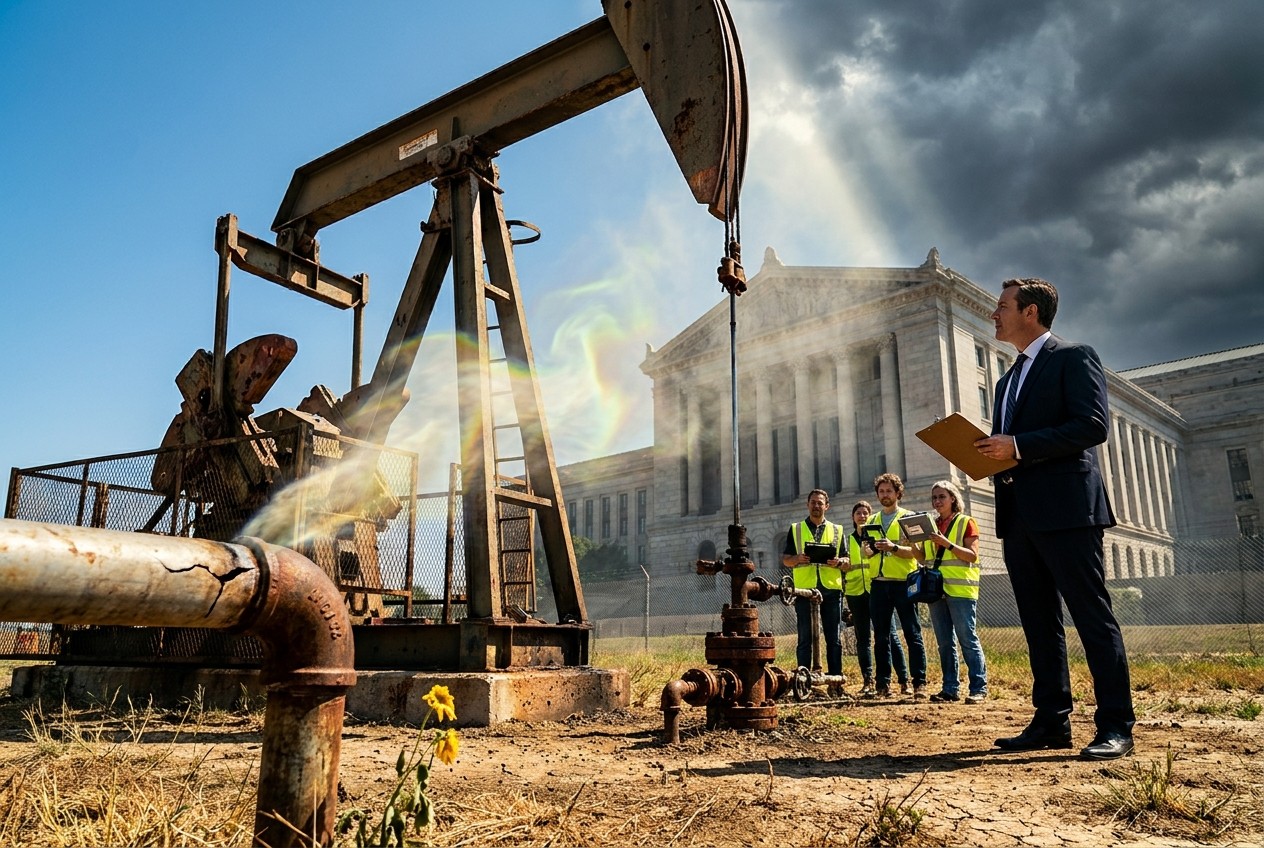
(NaturalNews) The Environmental Protection Agency announced Wednesday that it will propose to loosen restrictions that rein in methane from oil and gas production, …

(NaturalNews) Micron Technology, Nvidia and other artificial-intelligence-related chip stocks declined Thursday, Oct. 8, after investors reacted to a report on Open…

(NaturalNews) President Donald Trump’s surprise pledge that the U.S. would not resume airstrikes against Iran before the midterm elections failed to reverse a sharp…
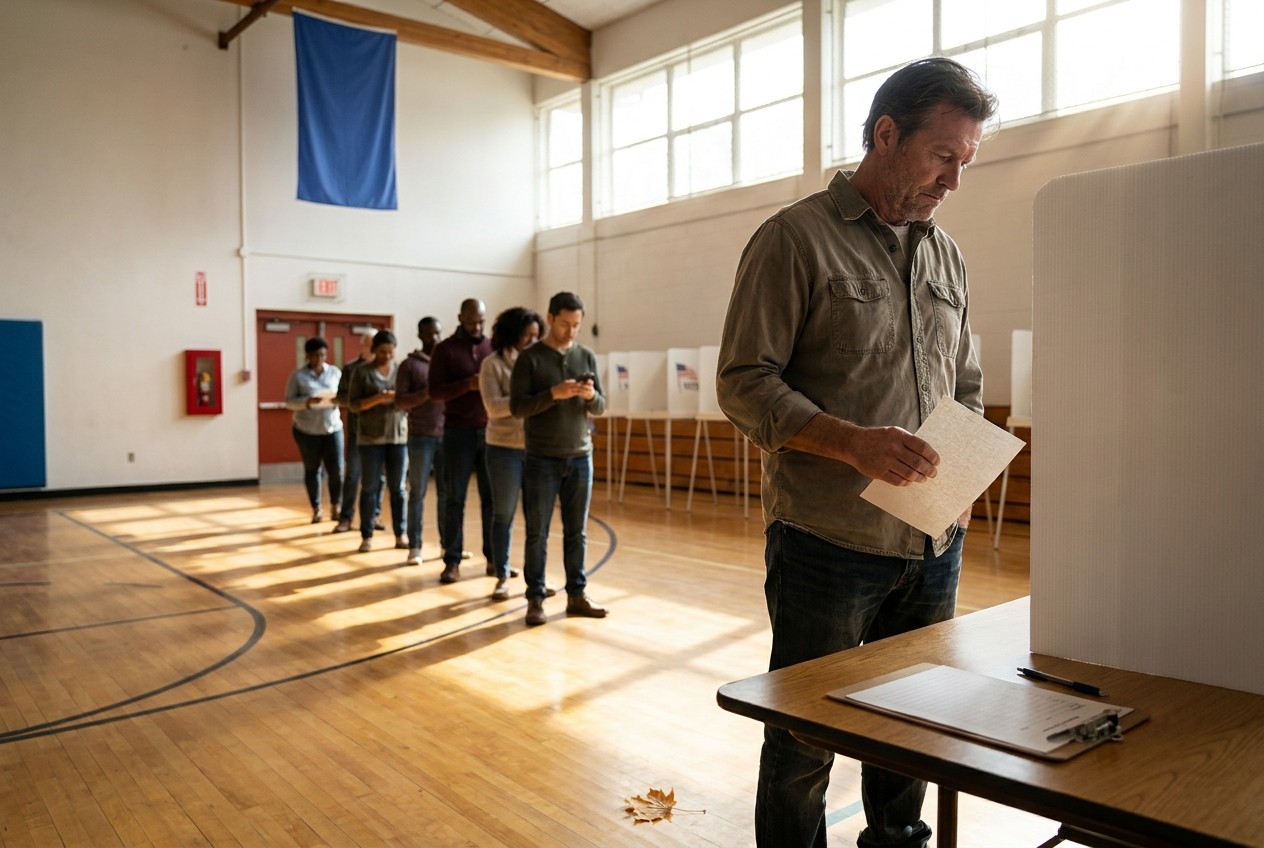
(NaturalNews) Voters who backed President Donald Trump in 2024 are less enthusiastic about casting ballots in the upcoming midterm elections than those who supporte…
(NaturalNews) The U.S. Department of Labor (DOL) suspended Microsoft, Adobe and six information technology (IT) outsourcing firms from the Permanent Labor Certific…
Hollywood is overrun with copycats.
Remember how 1978’s “Halloween” scared the bell-bottom pants off us? Well, another studio copied that stalker formula with 1980’s “Friday the 13th.” The rest is — ka-ka-ka … ching-ching-ching — history.
Longtime liberals crossing party lines to oust an incompetent mayor and governor? if only we could import some of that common sense to the left coast.
If greed is good, then copycatting is even better.
That explains the marketing behind “Other Mommy.” Jessica Chastain stars as a mother who is targeted by an evil entity in the new horror flick. Apparently, said entity makes the actress adopt a massive, creepy smile to let us know something isn’t quite right with her.
And if you’ve seen “Smile” (2022) or “Smile 2” (2024), you know exactly the look. It’s one thing to make endless sequels. It’s another to steal the signature visual gimmick from another franchise. Maybe that’s why the studio behind “Other Mommy” hid it from critics prior to its Oct. 9 release date.
The reviews will likely be pretty scary …
This should be a golden era for the Emmys. The trophy honoring the very best in TV programming has plenty to choose from, given the crush of new and existing platforms cranking out fresh product.
And while “The Sopranos” and “Breaking Bad” are long since over, there are plenty of top-flight TV shows to savor.
Yet the Emmys telecast will be moving to Prime Video starting next year. Why?
Ratings. Or the lack thereof. A telecast that used to draw 20 million viewers now scrambles to draw 7 million for a given gala.
Now, Prime Video will showcase the best of the best, in between political screeds. Why, it’s almost like the dawn of politically mouthy celebs had something to do with the ratings free fall …
It wasn’t too long ago that DNC mouthpiece Jimmy Kimmel held up a T-shirt with the slogan “Donald J. Trump is gonna kill you” on his show.
The “View” co-host spun news of a Russian-based plague outbreak to attack President Trump. That isn’t really shocking. “The View” could turn a discussion on Chia Pets into an anti-Trump jeremiad.
Navarro went the extra mile with her TDS moment. To be fair, she really attacked Secretary of Health and Human Services Robert F. Kennedy Jr., but he is tied directly to President Trump via the nomination process.
“There’s going to be crisis, there’s going to be health emergencies. And, you know, when I think of RFK Jr. heading HHS, I just say, girl, kiss your ass goodbye!”
Should be easy enough for Navarro, considering where her head already is …
RELATED: GRAVE ‘DIGGER’: Will Tom Cruise’s $100 million eco-flop bury Warner Bros.?
Chung Sung-Jun/Getty Images
Here’s the ultimate “man bites dog” story.
“Will & Grace” alum Debra Messing is such a dyed-in-the-wool progressive that she once threatened to doxx anyone who supported President Trump in Hollywood. The obvious context? Good luck finding work in this town, bub.
That was then, before the explosion of anti-Semitism across the globe and, sadly, within her industry.
To her genuine credit, Messing has been one of the loudest celebrity voices speaking up for the Jewish people in our post-Oct. 7 world. And she knows that the Democrat Party is shockingly hostile to her fellow Jews.
That explains her new endorsement — she is supporting the GOP’s Bruce Blakeman over Democrat incumbent Gov. Kathy Hochul in New York’s gubernatorial contest.
“The decline in this city over the last four years has been so exponential and devastating. … Economically, socially, and on every level. And, obviously, we’ve lost so much business here. People are leaving the city.”
In acknowledging Messing’s support, Blakeman said the quiet part out loud.
“She is trying as hard as she can to save New York and make sure it’s safe for Jewish people to live in this community and to live in this state.”
She echoed the thoughts shared by fellow Jewish actor Michael Rapaport, who dropped his anti-Trump hysteria in recent years and now targets Big Apple Mayor Zohran Mamdani (D).
Longtime liberals crossing party lines to oust an incompetent mayor and governor? if only we could import some of that common sense to the left coast …
Are you sure about that, Aaron?
Writer-director Aaron Sorkin continues the Facebook saga with “The Social Reckoning” this weekend. The film, continuing a story that began in 2010 with “The Social Network,” shreds Facebook for algorithms that hurt one and all.
He’s not necessarily wrong, but the film is actually an attack on President Trump and, more significantly, the January 6 riots.
Except it looks like audiences will be giving Sorkin his own “reckoning.” The film will be lucky to squeak past the $8 million mark this weekend.
“The Social Network” bowed with $22 million en route to a $96 million U.S. haul.
Sorkin is already eyeing a third film in the saga.
“If a good story comes along and it takes place at Facebook, sure.”
If the box office receipts are anything like the experts predict, he might have to start a GoFundMe campaign to get it off the ground. I know just the place to share it!
January 6 riots, Prime video, Social reckoning, Anti-semitism, Debra messing, Jeff bezos, Emmy awards, Amazon, Entertainment, Lifestyle, Tv, Movies, Hollywood, Culture, Donald trump, Toto recall
The war with Iran has exposed the value of energy abundance. When a major shipping route goes down, domestic supply and reliable infrastructure buy a country room to maneuver.
Before the conflict, roughly one-fifth of global petroleum liquids moved through the Strait of Hormuz. Its disruption became the largest oil-supply shock on record. The shock has been severe, but the United States entered it from a position few countries enjoy: record domestic production and a mature system of pipelines, refineries, ports, storage facilities, and export terminals.
The lesson from the Iran conflict is straightforward. Energy security requires abundant and diverse domestic supply, reliable supply chains, and infrastructure that can absorb a shock.
U.S. crude oil output is on track to set another annual record this year, according to the Energy Information Administration. Natural gas production has also reached record levels. That domestic cushion cannot insulate Americans from a global oil shock, but it can keep a bad situation from becoming worse.
The crisis also exposes the weakness of two familiar responses. Broad accusations of price-gouging are a poor substitute for understanding how energy markets work. Crude prices can jump immediately, and retail gasoline prices can follow as wholesalers and stations reprice the cost of replacement fuel, even though physical barrels still move through refineries, pipelines, terminals, and trucks.
A ban on U.S. crude exports would create a different problem. American producers often export lighter crude, while many domestic refineries are configured to process heavier grades. Disrupting that trade would not magically produce more gasoline. It could strand some domestic barrels, reduce the incentive to produce them, and weaken the same supply response that helps cushion global shocks.
Florida makes the larger point especially well. It is one of the nation’s biggest electricity consumers, and its energy system already depends on several sources.
More than 70% of Florida’s in-state electricity generation came from natural gas in 2025, while nuclear supplied more than one-tenth and renewables about 12%. Nearly all the natural gas Florida consumes arrives from the Gulf Coast through interstate pipelines. The state’s size and growth make energy resilience a practical necessity, not an abstraction. Florida’s energy profile is a case study in why diversity and infrastructure both count.
Florida also sits beside one of America’s largest strategic energy assets: the Gulf of America. The Gulf supplies about 14% of U.S. crude oil production and supports extensive offshore infrastructure, deepwater ports, processing facilities, and an experienced energy workforce.
That does not mean energy security begins and ends with drilling. Responsible offshore development in the Gulf should be part of the strategy, alongside expanded nuclear power, continued growth in renewables, stronger transmission and pipeline capacity, and the storage and port infrastructure needed to move energy when normal routes are disrupted.
RELATED: The diesel panic cure could make the disease worse
Frederic J. BROWN/AFP/Getty Images
Every energy source carries environmental costs. Limiting domestic oil and gas production does not eliminate demand; it can move production to countries with weaker standards and worse oversight. The same problem is emerging with critical minerals. Solar panels, batteries, transmission systems, and advanced nuclear technology all require enormous quantities of mined and processed materials.
Environmental protection therefore belongs inside energy policy. Development should meet high standards, and a greater share of the economic value created by domestic production should support conservation and restoration. Producing more of what America needs at home also gives the country greater room to respond when foreign supplies are disrupted.
The lesson from the Iran conflict is straightforward. Energy security requires abundant and diverse domestic supply, reliable supply chains, and infrastructure that can absorb a shock. The United States should continue developing oil and natural gas in the Gulf while expanding nuclear and renewable power and maintaining strong environmental standards.
Global instability is an argument for investment, not retreat. America needs enough energy, infrastructure, and natural resources to meet its own needs and support its allies without treating the landscapes and wildlife that are also part of the national interest as expendable.
Crude oil, Deepwater ports, Electricity, Environmental protection, Florida, Offshore production, Renewable energy, Solar panels, Gas prices, Infrastructure, Energy policy, Opinion & analysis
Time really does fly by. It has been nearly a decade since he left the White House, yet his intoxicating influence on the Democratic Party remains as strong as ever.
In recent weeks, he has turned his attention to artificial intelligence, arguably the most powerful technology America has ever created. The stakes are enormous. He is grooming the next generation of party leaders to determine how government should manage systems capable of writing code, generating answers for hundreds of millions, gaslighting people en masse, and essentially prompt-engineering reality.
The former president understands power dynamics better than almost anyone.
Who is he?
No, not Joe Biden. Not Bill Clinton either. Behind closed doors, Barack Obama has been hosting strategy sessions with prospective 2028 Democrat presidential candidates, tech CEOs, and ivory-tower intellectuals.
Conservatives remember the early days of social media all too well. In the late 2000s and 2010s, tech executives regularly visited the Oval Office, trading political support and huge sums of money for highly favorable regulatory treatment.
Right-leaning Americans watched in horror as digital town squares became perpetually policed ideological echo chambers. Conservative voices were routinely flagged or suppressed. Many were outright banned by 20-somethings in California operating under comically ambiguous safety and misinformation guidelines.
Those days were bad, but the social media fight looks rather quaint compared to what is happening right now.
A social network provides links you can check yourself. An automated system delivers answers directly to your screen. The software processes vast amounts of reading material and discards what it dislikes. It then presents a single narrative as the absolute truth. When a user asks a question, the underlying design chooses which facts to emphasize and which perspectives to conveniently omit.
RELATED: OpenAI cancels its latest chatbot — it wouldn’t stop acting like a supervillain
Heather Diehl/Getty Images
Barack Obama is many things, but he’s certainly not stupid. The former president understands power dynamics better than almost anyone in modern political history. He’s not approaching these tools like an entrepreneur building a better business product, but as a veteran political operative who recognizes that controlling the flow of information is the ultimate key to controlling public opinion. By serving as the central broker between tech executives and future Democrat nominees, he is ensuring that his party’s preferences are built directly into future government rules. That includes preferences on climate action, immigration, gun rights, abortion access, and LGBTQ insanity.
The corporate executives, whose principles have a remarkable habit of shifting with the party in power, are more than happy to pull up a chair. Giant corporations always prefer strict government rules because prohibitive compliance costs protect them from smaller competitors who might challenge their market dominance. Big tech gets legal protection and guaranteed market share, while Washington politicians get a back door into what these systems say and how they respond.
It is a mutually beneficial partnership between state power and corporate monopolies, dressed in the righteous language of public safety.
Democrat strategists learned plenty from their previous fights over social networks. They realized that policing millions of individual user posts after the fact is a rat’s nest of legal and political problems.
It is far more efficient to bake that control into the technology from the start. If you control the initial training materials and the guidelines that define acceptable output, you rig the outcome long before the public sees any results.
Government officials don’t need to seize physical data centers or buy corporate stock to dictate how these systems operate. Washington can simply pass sweeping rules governing safety standards, energy use, liability, and AI’s interaction with kids. Once those broad rules take effect, bureaucrats will have the authority to decide which companies are allowed to operate and which are forbidden to.
The official justification for this incoming regulatory push will sound completely reasonable to millions of Americans. Political figures will preach endlessly about national security threats and economic ruin. They will deliver carefully scripted, faux-passionate speeches on protecting the public from deepfakes and disinformation.
But as readers know, technical experts and political organizers carry their own partisan biases into every room they enter. When a panel of credentialed experts decides what counts as harmful information or acceptable political debate, they naturally write their worldview into law. The average family ends up taking ethical cues from a handpicked circle of out-of-touch elites, many of whom find conservative perspectives repugnant.
AI is already taking over society, serving as a key educational aid for American children and a powerful tool for researchers. The institutions that control future AI programs will possess an unprecedented ability to shape present-day cultural norms, our idea of our future, and even our historical memory.
An Obama-backed Democrat could win the next presidential election. Conservatives simply can’t afford to sit on the sidelines while the part-time podcaster and full-time puppet master, along with his allies, builds the blueprint for the next presidential administration. The central battle of the coming decade won’t be over which social website lets you post, but over who controls the systems that dictate reality itself.
Artificial intelligence, Tech

Is this just another cycle, or is it the END? Martin Armstrong of Armstrong Economics published an article this week about the so-called Socrates program and how [more…]

“I assure you all options are open on the southern front. They can be adopted anytime.” Summary recap: Hezbollah Secretary-General Hassan Nasrallah’s speech went for [more…]

Putin orders planeloads of humanitarian aid to be sent to Egypt The Russian Ministry Emergency Situations said on Friday that it would send two aircraft [more…]

It is Tunisia’s duty to stand with the Palestinians, its president has said The Tunisian parliament on Thursday began discussing a bill that would define [more…]

Suspected provocateur specifically stated, ‘We’re here to storm the capitol. I’m not kidding.’ In a new mini-documentary diving into Jan. 6, investigative journalist Lara Logan [more…]

Mainstream media claims Obama-Biden partnership has only been happening for 5 months. Former President Barack Obama has been secretly advising the Biden administration for several [more…]
“This case could completely wipe out the ATF’s ability to create law and subvert congress, which would be a massive win for the Second Amendment.” [more…]

Elon Musk chimed in to question ‘how common’ this type of illegal activity is during American elections Bridgeport, Connecticut, the largest city in the state, [more…]