



Suspected provocateur specifically stated, ‘We’re here to storm the capitol. I’m not kidding.’ In a new mini-documentary diving into Jan. 6, investigative journalist Lara Logan [more…]

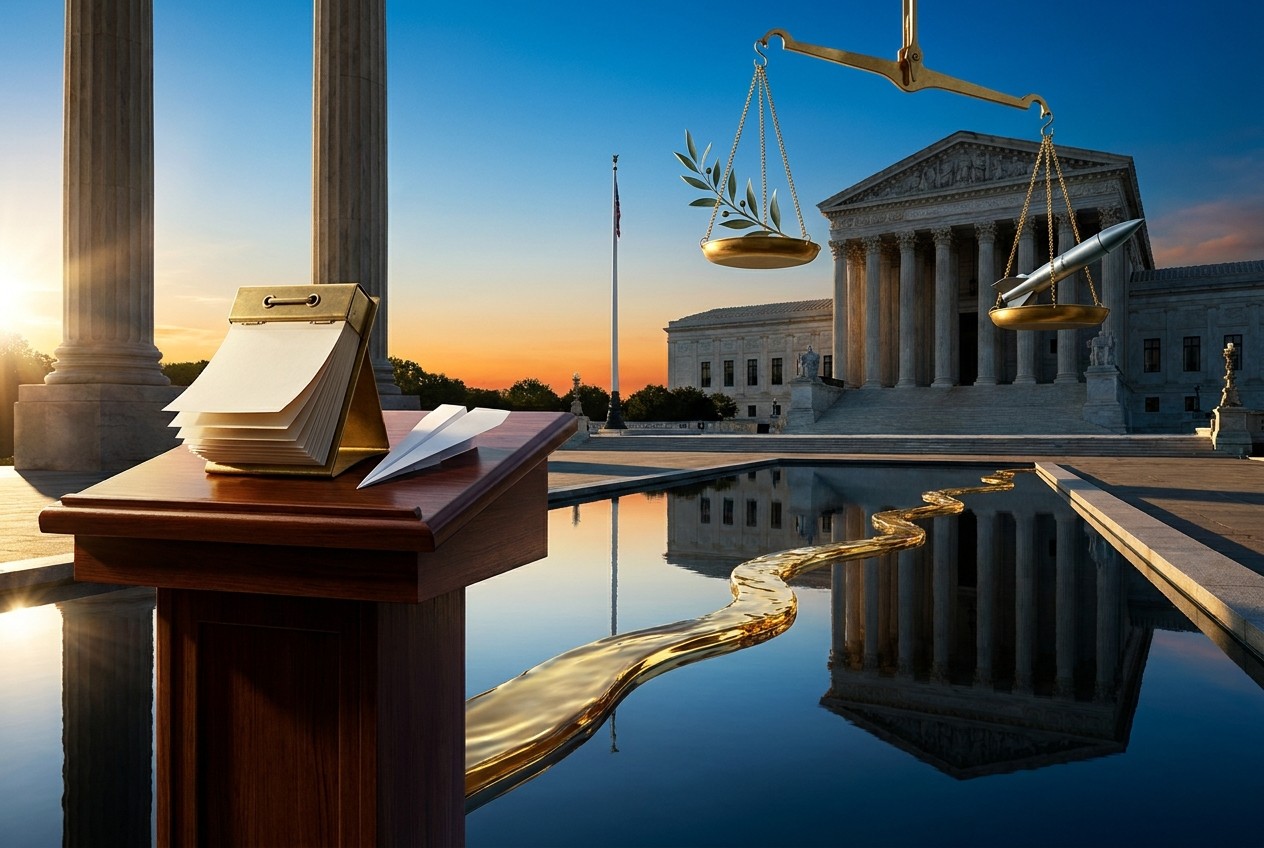
(NaturalNews) U.S. President Donald Trump had a one-word answer on Monday, Nov. 2, when journalists asked whether he would resume attacks on Iran after the midterm …
A growing number of young conservative men are taking beloved pop-culture characters and reclaiming them on their own terms — and unsurprisingly liberals are not taking it well.
The first was Anakin Skywalker, the famous good guy turned super villain who young men on the right are beginning to align with based on the world’s rejection of young white men in favor of third-world immigrants.
The latest example is “Malfoid,” a female reimagining of Draco Malfoy that was deliberately created to appeal to traditional masculinity rather than progressive identity politics.
“Over the last several months, we’ve seen this very strange kind of happening online where some of the biggest franchises in entertainment, whether it’s ‘Star Wars,’ ‘Harry Potter,’ other franchises,” BlazeTV host John Doyle explains.
“These are now being reimagined by young guys on the right who are taking characters once celebrated by liberals and turning them into symbols of something completely opposed to the values of just contemporary society,” he continues.
“Naturally, this has made a lot of people very angry because in their mind, only they get to reimagine what these characters were supposed to be for, what these franchises are supposed to be about, the new DEI sequels and revamps and so on,” he adds.
This, Doyle explains, begins with the artist who “spawned Malfoid,” a reimagined female version of Harry Potter’s Draco Malfoy.
“People were asking this [artist] to make a version of Malfoy that was trans or lesbian, and the artist completely refused, and they were like, ‘I drew this to make guys yearn again,’” Doyle says.
This “Malfoid” is meant to appeal to “the sensitive young man.”
“And so, those who stand in opposition to the young men … they absolutely despise all of this stuff,” Doyle says, noting that now young men are the ones who want a family and are embracing “traditional attitudes.”
“You can kind of see this with both the ‘Harry Potter’ and the Anakin stuff that, you know, even though on one side you have this guy who fights against the dark lord and then with Anakin, you know, he becomes the dark lord, central to both is literally just having a wife that loves and supports them and having a family,” he explains.
“And all of this is in the wake of literally decades of the young, straight, white male being demonized, being talked about as a threat, something to be dealt with,” he adds.
To enjoy more of the truth about America and join the fight to restore a country that has been betrayed by its own leaders, subscribe to BlazeTV — the largest multi-platform network of voices who love America, defend the Constitution, and live the American dream.
Anakin skywalker, Draco malfoy, Harry potter, Malfoid, John doyle, Young men, Blazetv show
European countries are facing another suspected cyberattack — this time affecting dozens of grocery stores in a hit to the EU’s food supply.
Concerns have continued to grow as another cyberattack affected the cooling units in a number of grocery stores across multiple countries in Europe.
‘They are a deliberate attempt to disrupt our food supply chain and undermine consumers’ confidence in it — a warning that we must take seriously.’
The attacks, which hit stores on Monday, affected a number of supermarkets in Sweden, Belgium, Luxembourg, Estonia, and Ireland, according to multiple sources.
The affected stores include Ahold Delhaize and Colruyt in Belgium and Luxembourg and ICA and Coop in Sweden. IKEA also had one store affected in the attack, according to CNBC.
The attack caused temperatures to rise in refrigerator and freezer units, forcing some stores to dispose of spoiled food.
An ICA sales manager reportedly told Reuters that all of her store’s freezers reached 50 degrees Celsius — over 120 degrees Fahrenheit — as a result of the attack.
RELATED: 11 MILLION accounts breached as new cyberattack rocks this popular gaming company
Wiktor Dabkowski/Bloomberg via Getty Images
The European Commission has reportedly shown increased concern about the digital threats, which have proved to be extremely disruptive.
“They are a deliberate attempt to disrupt our food supply chain and undermine consumers’ confidence in it — a warning that we must take seriously,” EU commissioner for agriculture Christophe Hansen told CNBC. “The repeated occurrence of these cyberattacks is deeply concerning.”
According to ABC News, a spokesperson for the Delhaize chain told reporters that an “IT incident” had affected a number of stores primarily in Belgium but also in Luxembourg.
“In the affected stores, the range of fresh and frozen products is temporarily somewhat limited. Our distribution centers are operating normally, and there has been no disruption to deliveries to our stores,” spokesperson Sarah De Meester told ABC.
The attack follows a similar cybersecurity incident in France last month in which around 700 of the country’s roughly 10,000 supermarkets — including leading chains like Intermarché, Carrefour, Coopérative U, E.Leclerc, and Monoprix — were affected, according to Cyber Breaches.
The investigation into the nature of the attack and the suspected perpetrators is ongoing.
Like Blaze News? Bypass the censors, sign up for our newsletters, and get stories like this direct to your inbox. Sign up here!
Food supply chain, Grocery stores, Tech
Someone could use their iPhone to eavesdrop on your real-life conversations. A little-known feature called Live Listen makes it possible for anyone to leave their phone in a room and stream whatever you say to a pair of AirPods. You can disable this feature on your iPhone now, but thwarting others is more complicated.
Live Listen isn’t a new feature in iOS. In fact, it’s been on your iPhone since 2014, at least in some form. When it launched, it only worked in tandem with a pair of hearing aids wirelessly connected to the host iPhone. Compatibility was limited by design, but then again, Apple didn’t yet have wireless earbuds of its own to make it more accessible, so hearing aids were the target device for the first several years.
Even though Live Listen is disabled on your iPhone, that doesn’t stop somebody else from using Live Listen on their iPhone.
Live Listen is simple. Meant to help the hearing impaired, it uses the connected iPhone as a remote microphone to relay the sound it captures to a connected pair of hearing aids on the other end. The hearing aids then receive that sound and relay it directly to the wearer’s ears to help them hear better.
So instead of forcing someone with a hearing impairment to get closer to what they want to hear — the TV, a radio, another person — they can sit their phone down beside the sound and let it pump audio back to the hearing aids for easy listening.
Apple eventually brought this technology to its wireless earbuds after it launched the AirPod series in 2016. Since then, Live Listen hasn’t received much more attention, but it’s always been there, ready to stream a conversation to a connected listening device on demand.
Like any helpful feature, Live Listen can be used for good, and it can also be abused. For instance, someone could leave their phone in a room where an important conversation is taking place and listen in from a distance through a pair of connected AirPods.
AirPods have a Bluetooth range of 30 to 100 feet, depending on who you ask. That means someone could potentially listen to a conversation from up to 33 yards away, turning it into a long-range spy tool that is hard to detect. Live Listen can even generate transcripts of the conversations it hears, making it even more dangerous.
RELATED: This new iPhone update can warn you if you’re about to get scammed
tolgart/Getty Images
Live Listen is buried deep in the Settings app, relegated to a place where few would find it, unless they know where to look. Even now, it could be enabled, ready to start listening at the push of a button. That doesn’t mean it will start to record on its own though. There are a couple of requirements that must be met before Live Listen hears conversations.
The first thing you need is a pair of connected hearing aids, AirPods, or compatible Beats wireless headphones. Live Listen will not work with other third-party hardware. Second, you have to add the Live Listen icon to your Control Center setup and press it to activate. Without that, you can’t start a listening session.
Ultimately, without these two things, Live Listen is rendered useless and harmless. Still, for extra peace of mind, you might want to disable Live Listen to make sure it doesn’t run amok, either from a bug or some unknown exploit.
To disable Live Listen, open the Settings app on your iPhone and tap “Accessibility.” Choose “Audio & Visual” in the “Hearing” section, followed by “Live Listen.” Turn the “Remote Control” option off so that the toggle is grayed out. Now Live Listen can’t be activated from Control Center or through any other method.
Live Listen Settings on iOS 27.2/Zach Laidlaw
Keep in mind that even though Live Listen is disabled on your iPhone, that doesn’t stop somebody else from using it on their iPhone. Theoretically, someone could still leave their device behind and listen to your conversations, and since there isn’t a notification or alert to indicate when Live Listen is active, you won’t even know when it’s happening.
The best you can do is be aware of your surroundings. Take note of any iPhones you find unattended in places where important conversations are conducted — an office, bedroom, church, etc. The microphone on an iPhone needs to be relatively close to a speaker — within three to 15 feet — to clearly pick up what someone says, but it can capture muddled audio that’s good enough for a recording from even farther away.
Live Listen is similar to another audio detection feature coming to some Apple Watch models soon. Part of Apple’s growing Apple Intelligence suite, Audio Intelligence, includes Siri Recap, which monitors your surroundings for conversations that it can turn into “high-level notes” you read on Apple Watch or iPhone. Unlike Live Listen, Siri Recap doesn’t keep a recording to replay later, but it will write a summary of the conversation it heard, all transcribed with Apple’s Private Cloud Compute AI platform.
Like Blaze News? Bypass the censors, sign up for our newsletters, and get stories like this direct to your inbox. Sign up here!
Privacy concerns, Spying, Iphone, Apple, Privacy, Privacy and security, Tech
On the latest episode of “The Drive,” my co-host Karl Brauer and I discussed something that should concern anyone who has ever climbed into a driverless car.
Waymo, the autonomous ride-hailing company owned by Google’s parent company, Alphabet, is putting Chinese-built vehicles on American streets.
Regulators should be able to explain exactly why Waymo’s Chinese-built vehicles are different — and what testing supports that conclusion.
These aren’t experimental cars hidden away on a test track. Waymo’s new Ojai robotaxi, built on a platform supplied by Chinese automaker Zeekr, is already carrying passengers.
Now, there’s nothing inherently wrong with a car being built overseas. Americans have been buying foreign-made vehicles for decades.
But China presents a different set of concerns. Washington has spent years warning about the national security risks associated with Chinese connected-vehicle technology. And that raises a question: If Chinese automotive technology is considered dangerous enough to restrict, why are we allowing Chinese-built vehicles into America’s growing driverless fleets?
Karl put it rather bluntly. “How about a Chinese computer driving you?”
Well, there’s an important distinction. The vehicle may be built in China, but Waymo says the computer doing the driving is American. Whether that is enough to settle the security question is another matter.
Waymo’s Ojai is based on a vehicle manufactured by Zeekr, which belongs to China’s Geely Holding Group. Zeekr supplies the underlying electric vehicle. Waymo installs its own autonomous driving technology, including the cameras, sensors, computing equipment, and software that allow the car to navigate without a human driver.
According to Waymo, the vehicles arrive from China without connectivity hardware or autonomous-driving sensors. The company installs its own equipment in Mesa, Arizona.
Waymo says it does not share American passenger data, vehicle information, or autonomous driving technology with Zeekr. Nor, according to the company, does Zeekr receive Waymo’s source code, algorithms, or artificial intelligence models.
Those are significant assurances, but they leave an obvious question: Who independently verifies that the entire vehicle, including its underlying electronic components, is secure?
Consider what happened to Polestar.
In June, the U.S. Commerce Department’s Bureau of Industry and Security denied the electric vehicle maker authorization to sell vehicles in the United States beginning with the 2027 model year.
Polestar can continue selling its remaining earlier-model inventory and servicing the vehicles of existing customers. But under the current ruling, it cannot introduce new 2027-model-year vehicles into the American market.
Why? Federal restrictions on connected vehicle technology associated with countries considered national security threats.
Polestar is headquartered in Sweden, but it is controlled by interests associated with China’s Geely group and its founder, Li Shufu. And Geely also owns Zeekr, the company supplying Waymo’s robotaxis.
Think about that. One Geely-linked automaker has been blocked from selling future models in America over connected vehicle security concerns. Another is supplying cars for Waymo’s growing robotaxi fleet.
There is an important difference between the two. Polestar uses connected technology that falls under federal restrictions. Waymo says it replaces the relevant systems with American-developed hardware and software.
But a modern car is more than its navigation system or the computer that drives it. Electronic control units manage everything from braking to battery performance, and those components communicate with one another. Securing the autonomous driving system is one thing. Making sure the underlying vehicle is secure is another.
That is why independent inspection of the complete vehicle matters.
During our discussion, I recalled an experience at an international automotive test event.
I was preparing to drive a Chinese-made vehicle when a representative from Volvo approached and asked to ride along. Before we started, he told me to turn off my phone’s Wi-Fi and Bluetooth.
I asked why.
He explained that the vehicle could automatically attempt to connect with my phone, making it easier to access features such as contacts, messages, and navigation.
Sure enough, when we started the car, a notification appeared indicating that it couldn’t connect to my phone.
Now, automatic phone connectivity isn’t unique to Chinese vehicles. American, European, Japanese, and Korean cars offer similar conveniences. But the experience reminded me just how easily we allow our cars access to information that once stayed on our phones.
Think about what a connected vehicle may know: where you travel, when you leave home, where you work, and which destinations you visit regularly. Depending on the vehicle and the permissions you grant, it may also interact with your contacts, messages, and other personal information.
Most of us barely think about these permissions any more. We just want the navigation to work and our music to play.
But an autonomous vehicle adds another layer of complexity. It depends on sophisticated cameras, sensors, computers, and communications systems to operate. Who controls that information? Where does it go? And who can access it? Those questions deserve answers regardless of which country manufactured the vehicle.
Washington has already taken steps to restrict connected vehicle technology linked to China and Russia.
In January 2025, the Commerce Department finalized rules restricting certain connected vehicle systems and components. The restrictions begin applying to certain software in model-year 2027 vehicles, with additional hardware restrictions scheduled for model year 2030.
But two senators from opposite parties believe those protections don’t go far enough. Michigan Democrat Elissa Slotkin and Ohio Republican Bernie Moreno introduced the Connected Vehicle Security Act of 2026, which would go farther by restricting vehicles manufactured in China, rather than focusing only on Chinese-controlled connected technology.
The bill passed the Senate Commerce Committee in July and has attracted broad bipartisan support. But an effort to fast-track it through the full Senate stalled in September over an objection from Kentucky Republican Rand Paul.
The sticking point is a provision that would restrict automakers with more than 15% Chinese ownership. Mercedes-Benz, despite being a German company with American factories, has nearly 20% Chinese ownership through passive investors. Paul argued that the bill could unfairly prevent Mercedes from selling cars in the United States.
Moreno has acknowledged the problem and said he is working on changes to protect companies such as Mercedes-Benz and Volvo. With no agreement reached before the Senate’s election recess, the legislation will have to wait until lawmakers return in November, according to the Associated Press.
For Waymo, the existing rules remain in place. Its Chinese-built robotaxis can continue operating provided they comply with federal connected vehicle requirements.
Politicians aren’t the only ones concerned by this. Missy Cummings, an autonomous vehicle researcher at George Mason University, has called for independent examination of the vehicles to establish what equipment is actually inside them.
In an October 29 report by Phoenix-based television news outlet Arizona’s Family, Waymo said its finished robotaxis contain no Chinese software or connectivity and that Zeekr cannot communicate remotely with the vehicles or send software updates. The company also said its vehicle platforms undergo rigorous security audits.
But the report did not establish whether the complete Chinese-built vehicle had undergone independent hardware security testing or whether the results of any such examination had been made public. That seems like a question worth answering. If the vehicles are as secure as Waymo says, independent verification would offer additional reassurance.
RELATED: 6 modern car technologies that make driving worse
Bill Pugliano/Getty Images
I understand the attraction of autonomous cars. For someone who can’t drive because of age, disability, or some other limitation, a reliable robotaxi could provide tremendous independence. For everyone else, there is the convenience of getting where you need to go without worrying about parking or finding a designated driver. Those are real benefits.
And this isn’t exclusively a China problem. American automakers and technology companies also collect enormous amounts of vehicle and driver data. Consumers deserve clear explanations of what is collected, how long it is retained, and who can access it.
But when vehicle components have connections to a country the U.S. government considers a national security threat, the questions become more serious. I’m not suggesting that Waymo has been caught sending Americans’ personal information to China. There is no evidence presented here establishing that.
What worries me is whether the safeguards are sufficient — and whether anyone independent of Waymo has thoroughly verified them.
If Washington considers Polestar’s Chinese connections serious enough to block its future vehicle sales, it owes American drivers a clear explanation of why Waymo’s Chinese-built robotaxis meet the government’s security standards.
Maybe Waymo has solved the problem by installing its own technology. But shouldn’t we verify that before putting thousands more of these vehicles on American streets?
Because when you climb into a driverless car, you’re trusting more than the computer behind the wheel. You’re trusting everyone who helped build it.
Alphabet company, Autonomous vehicles, Data privacy, Driverless cars, Federal regulations, National security, Waymo robotaxi, Chinese automaker, Lifestyle, Waymo, Polestar, Zeekr, China, Russia, Auto industry, Consumer data, Geely holding group, Automotive
Companies that worked with the Trump administration may soon find themselves squeezed between Congress and the White House. Democrats preparing for possible control of the House have discussed investigations into businesses and other organizations connected to the administration. A lawful contract, permit, or grant could still become the subject of a hearing.
The pressure goes both ways. The Trump administration will still control federal contracts, permits, and grants. An executive who tries to appease a Democrat committee chairman could wind up the subject of a scathing Truth Social post — or in court fighting to preserve a government agreement.
For a large contractor, losing one department’s business is painful. For a small company that depends on a single federal customer, it could be fatal.
CEOs who see themselves in the line of fire should use the weeks before the new Congress convenes on January 3 to prepare. Forget the holiday lull. Strengthen the balance sheet, map the legal risks, protect the brand, and make sure core stakeholders hear from you.
Here are four ways to do it.
A CEO’s job includes looking around corners. That means insurance, cash reserves, and operational backups. It also means getting legal counsel, government affairs, and communications executives in the same room before an angry lawmaker makes the company a national story.
Ask four questions:
What can we say publicly, and what must we leave to counsel?Who is likely to chair the committees that oversee our industry, and are we on their radar? Update that assessment weekly through January 3 and daily thereafter.Which audiences most need to hear from us — and through which channels?Who can speak credibly about our record? Executives and lobbyists count, but so do employees, customers, and community leaders who have known the organization for years.
Then rehearse the answers. Don’t let an improvised post or a stupid brand mistake become Exhibit A.
Money solves a lot of problems. A healthy balance sheet can help a company weather a canceled contract, a consumer boycott, or a years-long fight with a regulator that suddenly isn’t friendly.
Consider Booz Allen Hamilton. In January, the Treasury Department canceled all 31 of its contracts with the consulting firm, citing the theft and disclosure of confidential taxpayer information by a former Booz Allen employee. The IRS said the breach affected approximately 406,000 taxpayers, including Donald Trump. Booz Allen’s shares plunged on the news.
For a large contractor, losing one department’s business is painful. For a small company that depends on a single federal customer, it could be fatal.
Diversify revenue now, favoring work rooted in continuing public needs rather than a politician’s goodwill. Governments still move troops, review drugs, and approve mergers when party control changes. Nonprofits should broaden their base of individual donors, foundations, and earned income so that one canceled grant does not sink the mission.
RELATED: Congress had the receipts. Katherine Maher had amnesia.
Horacio Villalobos#Corbis/Getty Images
For the next 90 days, much about the coming Congress will remain unsettled. Don’t pretend otherwise in public. Stick to what you know on podcasts and social media, and think twice before accepting an interview without understanding the journalist’s subject and approach.
Instead, speak regularly with the people who depend on your organization: customers, employees, investors, donors, and partners. Use the channels you already have. If you speak to the press, trade and regional outlets may reach those audiences more effectively than a national political shouting match.
Trade editors want expertise and practical answers. Your stakeholders want to know what you provide, how you treat them, and whether you have a plan. Give them more of that and less punditry on subjects outside your expertise.
The big open secret about congressional hearings is that they are designed to showcase the lawmakers, not the witnesses. Members want clips for their voters and donors, and they will hammer the table until someone gives them one.
In 2023, the presidents of Harvard and the University of Pennsylvania gave careful, lawyerly answers to questions about calls for the genocide of Jews on their campuses. Their evasiveness became the story. Anyone facing a hostile committee should remember that the most technically cautious answer may be the most politically disastrous.
Know the facts cold. Practice being grilled. Prepare for everything from your opening statement to hostile follow-ups, facial expressions, and the moment you leave the hearing room. You are walking onto someone else’s battlefield.
RELATED: Andrew Cathy gave NBC the Chick-fil-A apology tour nobody asked for
Paras Griffin/Getty Images
Candor can help, too. At a 2008 hearing on aid for Detroit automakers, lawmakers asked whether executives would work for $1 a year. Ford’s Alan Mulally replied, “I think I’m OK where I am.” Scott Monty, Ford’s digital director at the time, told me on my show that the communications team initially panicked — until it saw the public’s reaction to Mulally’s plain speaking. Mulally later agreed to the $1 salary if Ford accepted federal aid.
Washington has changed hands before. No need to hyperventilate. Companies that were close to one administration have come under scrutiny from the next. The political temperature may fall after the midterms, but another presidential race is only two years away.
You cannot control whether Congress targets your organization. You can control whether your records are in order, whether your finances can take a hit, and whether the people who count on you still trust you.
Remember the advice about outrunning a bear. You don’t have to be the fastest. You just have to be better prepared than the witness sweating — sorry, sitting — beside you.
Congressional hearings, Government grants, Public trust, Trump administration, Public relations, Ceo, Legal risks, Democrats, Lawmakers, Harvard, University of pennsylvania, Washington, Businesses, Opinion & analysis
President Donald Trump revealed on Tuesday that the U.S. will end roughly $4 billion in aid to Israel by year-end.
According to the president, “they don’t need it” and he doesn’t need the grief from Democrats such as Abdul El-Sayed in Michigan who have attempted to use American aid to Israel as a wedge issue.
‘We give them more than anybody else.’
Since World War II, Israel has been the largest recipient of U.S. foreign aid. According to a 2025 Congressional Research Service report, the U.S. has provided Israel with $174 billion — in non-inflation-adjusted dollars — in aid and military defense funding.
Although America and Israel do not have a mutual defense pact, the Obama administration signed a 10-year Memorandum of Understanding in September 2016 committing the U.S. to annually providing Israel with $3.8 billion in security funding.
Extra to the pledged amount, the U.S. committed plenty of additional funds to Israel following the Oct.7, 2023, Hamas terror attacks.
For example, Congress passed and former President Joe Biden signed an emergency aid package in April 2024 that carved out $3.5 billion in foreign military financing for Israel; $1.2 billion for Israel’s laser defense system, Iron Beam; and $4 billion in defense appropriations for missile defense through Iron Dome and David’s Sling.
RELATED: ‘Fire will rise’: Muslim pundit promises ‘reckoning’ if Abdul El-Sayed loses — and also if he wins
Kent NISHIMURA/AFP/Getty Images
Trump told “Fox & Friends” on Tuesday that “we were giving them $4 billion, we are, but it gets cut off at the end of the year.”
“Why? Because they don’t need it,” said Trump.
The president added, “Why should we suffer the slings from lunatics like an El-Sayed when [Israelis] don’t need it?”
An Associated Press-NORC Center for Public Affairs Research poll published in July found that 58% of Democrats and 51% of Jewish Democrats believe the U.S. is “too supportive of the Israelis.” Roughly two in 10 Republicans said the same.
The Pew Research Center revealed the same month that American views of the Israeli people and the Israeli government have grown more negative in recent years. As of July, 42% of U.S. adults held a negative view of Israelis and 62% held a negative view of the Israeli government.
El-Sayed and other radicals in the Democratic Party have attempted to exploit this growing animus on the campaign trail.
“It’s a bad talking point because you can say, ‘Why don’t we give everyone $4 billion?'” said Trump. “Israel’s our number one. We give them more than anybody else, and they no longer need it. We’ve been doing it for years. I’ve been doing it. But Israel is a very thriving country. They don’t need it.”
The president credited Israeli Prime Minister Benjamin Netanyahu with the defunding idea and claimed that the two of them agreed to terminate the yearly sum “months ago.”
The White House did not immediately respond to Blaze News’ request for comment.
It’s unclear if Trump was referencing the annual $3.8 billion pledged in the MOU — which expires in fiscal year 2028 that starts on Oct. 1, 2027 — for the U.S. federal government. He suggested, however, that the $4 billion figure was in reference to “military aid or cash.”
Trump emphasized, however, that Israel can still “buy whatever they want” from the United States.
Like Blaze News? Bypass the censors, sign up for our newsletters, and get stories like this direct to your inbox. Sign up here!
Israel, Donald trump, Benjamin netanyahu, Foreign aid, Military aid, Politics
A young internet prankster thought it would be funny to trick a hardworking father into believing he’d stolen money from him. Instead the stunt backfired — and the father, who was in his Red Baron employee uniform, won.
BlazeTV host Sara Gonzales believes that thanks to the internet, the cruel attempt to humiliate an ordinary working dad turned into a major win for the victim, with strangers donating more than $500,000 to help his family.
Even his employer, Red Baron, has joined in celebrating him.
“I understand the pitfalls of the internet. Like the internet is great for a lot. Social media is great for a lot, but it also is just like a cesspool,” Gonzales says.
“And you know, I think that we have to take the good and the bad with it, especially with some of the things that the younger generation is putting out there for clicks,” she adds, noting that the “bad” of the internet are these “stupid TikTok trends” where people prank strangers.
Among those trending pranks is approaching a stranger and tricking them into pulling out their phone. When they succeed, they play the Apple Pay sound to “make it sound like they just took money from their Apple Cash, their Apple Wallet.”
“And then it’s like, ‘Haha, that’s so funny that I just tricked you into thinking that I just stole money from you.’ And um, it’s just really gross. I just think it’s really gross to do to people. And there was this one that went viral,” she explains.
In the viral exchange, the father yelled at the young internet prankster, explaining that he “can’t even pay [his] mortgage” and has “four kids at home.”
“You never know what someone is going through. And I think pranks are funny, but to pretend you stole money from someone is just not funny. It’s just objectively not funny, especially to do a stranger who you don’t know,” Gonzales says.
However, while the intent was to embarrass the Red Baron worker, those who’ve seen the viral video have been “greatly moved.”
“A hard worker, part of the working class. He’s just trying to pay his bills for his family, and he’s sacrificing a lot to do that. He’s sacrificing time with his kids to do that. He’s going through a hard time,” Gonzales says.
“I mentioned the internet is sometimes a cesspool, but the internet is also sometimes really, really awesome because someone created a GoFundMe for this gentleman, and he’s now raised over half a million dollars,” she continues.
“I donated to it,” she adds, pointing out that even Red Baron, his employer, is “leaning into it.”
Red Baron posted on social media: “He’s still here. He’s got a fan club. Including us,” alongside a graphic that reads, “Employee of the month nominations are closed. You know why.”
“I hope he can use that money to spend a little bit more time with his kids and his family,” Gonzales says.
To enjoy more of Sara’s no-holds-barred takes on news and culture, subscribe to BlazeTV — the largest multi-platform network of voices who love America, defend the Constitution, and live the American dream.
Blazetv show, Red baron, Tiktok, Prank, Gofundme

(NaturalNews) A portable shower for camping is a simple, low-tech tool. A basic camping shower uses a black plastic bag to absorb sunlight and heat water, provi…

(NaturalNews) Older adults who more closely followed the MIND diet tended to score higher on cognitive screening tests than those who did not, according to findings…

(NaturalNews) Major U.S. stock indexes dropped in a broad selloff on Friday, with technology and artificial intelligence-related shares leading the declines, accord…

(NaturalNews) Russian President Vladimir Putin said at a Kremlin press conference on Thursday that he welcomed a Tuesday phone call with Finnish President Alexander…

(NaturalNews) The United States has declassified a full-resolution image of China’s Shenlong space plane in orbit, publishing the photograph in a new Pentagon repor…

(NaturalNews) Iraqi authorities closed the Sheeb border crossing with Iran on Wednesday, Oct. 21, according to sources cited by Western media outlets. The closure o…
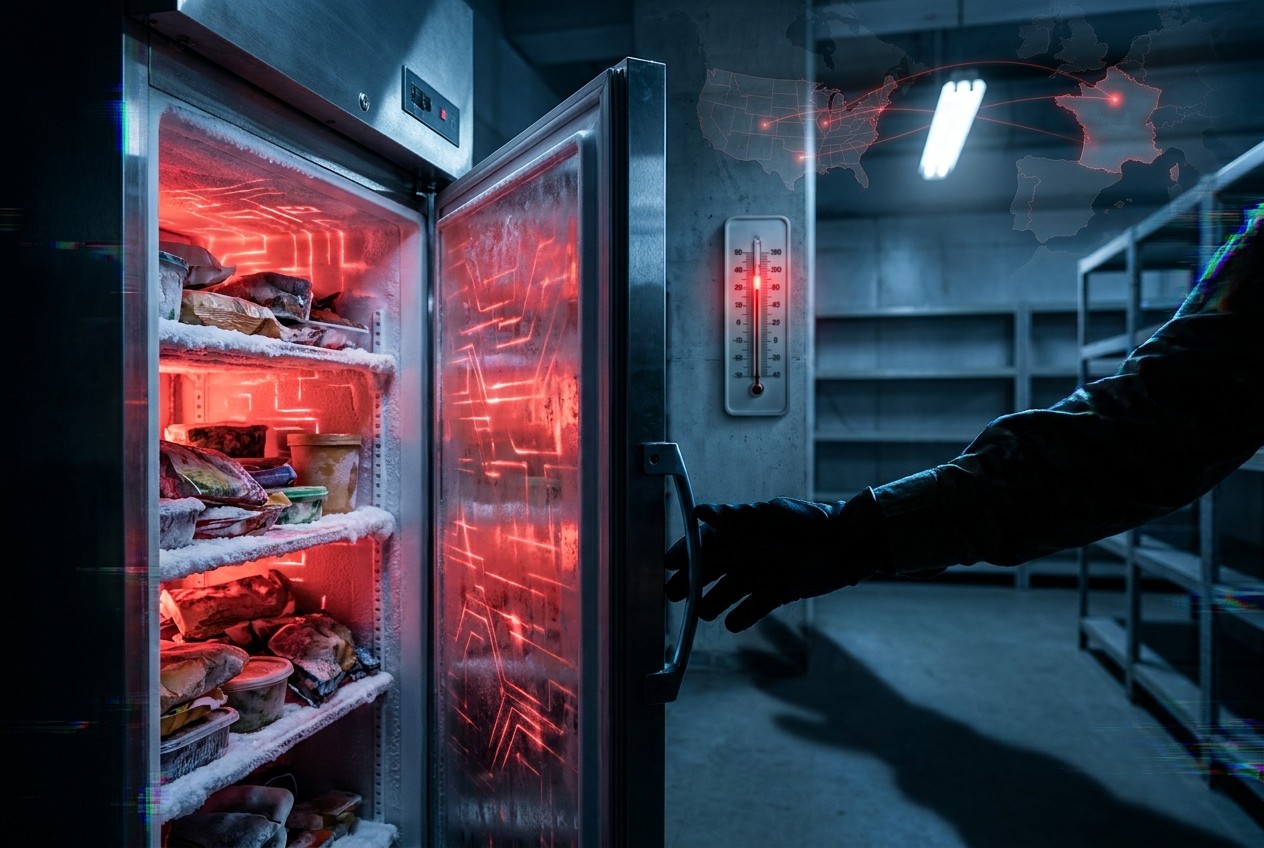
(NaturalNews) The Pentagon is treating a series of freezer malfunctions that spoiled food at U.S. military bases in August as a suspected cyberattack, according to …

(NaturalNews) October 2026 saw $2 trillion erased from Nasdaq-100 values as Big Tech earnings disappointed investors. Alphabet suffered worst single-day drop…

(NaturalNews) The Survival Skill You’re Probably NeglectingWalk through any preparedness forum or gun show and you’ll hear the same conversations: which rifle, wh…

(NaturalNews) We Built Brighteon for Free SpeechI founded Brighteon because I was deplatformed by Big Tech, and I believe free speech is worth fighting for even w…
An awkward moment in the Oval Office on October 20 illustrated an unresolved question about the political right. President Donald Trump declined a reporter’s invitation to endorse Vice President JD Vance for the 2028 Republican presidential nomination while Vance stood behind him.
Trump said it was too early to discuss 2028. He gave no indication that his hesitation concerned economic policy. Still, the episode raises a question about what sort of conservatism Vance would bring to the presidency.
Myriad laws at all levels of government have severely damaged families, faith, and other institutions that Vance and the national conservatives want to restore and strengthen.
Vance’s lukewarm support for free markets is evident in his criticisms of the late free-market economist Milton Friedman, his sympathy for certain economic positions associated with the Democratic Socialists of America, and his calls for raising the minimum wage. His economic outlook is a departure from the free-market consensus that once dominated the Republican Party.
Vance’s ambivalence toward economic freedom is especially clear in his prominent association with the National Conservatism movement and its common-good vision of government action to promote traditional values and ways of life.
“Natcons” regularly advocate interventions that free-marketers like me reject outright: a national industrial policy, government subsidies for favored industries, and taxpayer-funded incentives for having children.
Although Trump’s economic policies are hardly free-market orthodoxy, the president frequently argues that he is trying to undo government practices that have created a “rigged” economic system. I agree with the premise that America’s economic system is badly distorted and that government made it so.
Vance and the national conservatives, by contrast, seem too willing to trust government to direct economic and social life. Socialists place a still greater faith in government management, but the temptation to use centralized power for ostensibly benevolent ends is one the American founders understood.
The United States was established to limit the power of government, not merely redirect it toward other ends. Our founding documents reflect this fact. What one administration builds, another can repurpose.
The founders’ solution was ingenious: separation of powers horizontally, among the branches of the federal government, and vertically, among the central government, the states, and the people. The latter is federalism. Subsidiarity, a related but broader principle, holds that decisions should be made at the social level closest to the people they affect.
Subsidiarity is crucial to a free society. Institutions of different sizes vary greatly in the problems they can address. The federal welfare state, for example, has undermined the family by penalizing marriage and discouraging family formation, even subsidizing childbirth outside of marriage.
However well-meaning, a distant government cannot manage tens of millions of households in accordance with their individual needs.
RELATED: Would you trust this politician with your wallet?
Sonmez karakurt/Getty Images
States have likewise weakened marriage by adopting no-fault divorce, beginning with California in 1969, instead of fulfilling their duty to enforce valid contracts and protect both parties from abandonment. Nearly one-third of Americans born between 1988 and 1993 experienced their parents’ divorce before adulthood, according to the U.S. Census Bureau. Divorce was far more common among children from lower-income families.
The damage has been catastrophic. Census Bureau researchers found that, compared with siblings whose parents divorced after they reached adulthood, children who experienced divorce in early childhood had roughly 60% higher teen birth rates, a 45% greater mortality risk at age 25, a 40% greater likelihood of incarceration, and lower incomes as adults.
These and other government-caused disasters are why the term “nanny state” is such an insult. Fostering families is the job of parents, other relatives, churches, and community members, not governments. Government’s job is to protect people from force and fraud, enforce valid contracts, and provide strictly necessary public works. Those duties often prove far beyond its capabilities.
The belief that a comprehensive national industrial policy will restore jobs and industries is likewise misguided. Industrial policy invites an increase in the already ungodly amount of crony capitalism in the United States and allows gigantic multinational corporations to misuse government to hamstring competitors, especially smaller American businesses.
The surest way to increase productive jobs and boost workers’ pay is for government to get out of the way. Freeing people to work, invest, and enjoy the fruits of their endeavors maximizes a nation’s economic vitality by allowing resources to find their most productive uses.
Myriad laws at all levels of government have severely damaged families, faith, and other institutions that Vance and the national conservatives want to restore and strengthen. Government action of the magnitude they advocate, however, would founder on the realities of scale and invite political capture by powerful interest groups.
RELATED: The 1776 immigration fight America forgot — and why it matters now
Imagedepotpro/Getty Images
To be fair, National Conservatism’s own statement of principles endorses federalism and calls for a strong but limited state. The disagreement is over how far government power should extend in pursuit of its goals. I believe the interventions national conservatives favor would undermine the freedoms they want to protect.
Subsidiarity, by contrast, builds on respect for individual rights, the limits of federal and state authority, freedom of association and enterprise, and the natural hierarchies of talent and character that freedom allows to form. A return to that vision is the best way to achieve the national conservatives’ goal of restoring “the traditional beliefs, institutions, and liberties underpinning life in the countries we love.”
Subsidiarity has long been an important element of Catholic political thought, and Catholics are a prominent contingent of the National Conservatism movement. Vance is a Catholic convert. Their efforts to cultivate a fairer economy, stronger families, and better government would benefit from a renewed appreciation for this principle in their own tradition.
To strengthen families, churches, small businesses, and other traditional institutions, Vance and other national conservatives should join the liberty movement in trying to push government power as far away from them as possible.
Jd vance, Milton friedman, Catholicism, Conservatives, National conservatism, Government, Federalism, Opinion & analysis, Republican party
Heavy rain and severe flash flooding have prompted changes to numerous polling locations in the Sunshine State.
Citing potentially dangerous weather conditions, Florida Gov. Ron DeSantis (R) issued an executive order on Monday declaring an emergency in Brevard, DeSoto, Hardee, Highlands, Indian River, Martin, and St. Lucie Counties.
The Florida Department of State’s Elections Division has so far listed 19 polling place changes for Election Day.
In all but Palm Beach County, where Kamala Harris eked out a lead, President Donald Trump won all of these counties by massive margins in 2024.
Rep. Byron Donalds, the Republican running to succeed DeSantis as governor, emphasized to Floridians affected by the rainfall and flooding: “Above all else, stay safe.”
The Florida Department of State’s Elections Division has so far listed 19 polling place changes for Election Day.
The polling location for voters in:
Precincts 307, 512, and 525 has been moved from Max K. Rodes Park Community Center in West Melbourne to the New Shiloh Christian Center at 3900 Sarno Road, Melbourne, Fla., 32934;Precinct 309 has been moved from the Veterans Memorial Complex in West Melbourne to the New Shiloh Christian Center at 3900 Sarno Road, Melbourne, Fla., 32934;Precinct 306 has been moved from the Eddie Lee Taylor, Sr. Community Center in Melbourne to the Joseph N. Davis Community Center at 2547 Bruce D. Buggs St., Melbourne, Fla., 32901;Precinct 320 has been moved from Eastern Florida State College’s Palm Bay Campus to the Franklin T. DeGroodt Memorial Library at 6475 Minton Rd SE, Palm Bay, Fla., 32909;Precincts 323 and 509 have been moved from the Front Street Civic Center in Melbourne to the Joseph N. Davis Community Center at 2547 Bruce D. Buggs St., Melbourne, Fla., 32901;Precinct 517 has been moved from Faith Baptist Church of Palm Bay to the Palm Bay City Hall Council Chambers at 120 Malabar Rd SE, Palm Bay, Fla., 32907.
RELATED: Tantrums galore! Democrats crash out over Rep. Haley Stevens’ last-minute ‘betrayal’
Alex Wong/Getty Images
The polling location for voters in:
Precinct 20 has been moved from the Springlake Community Center in Sebring to the Penny Ogg Operations Center at 4504 Kenilworth Blvd, Sebring, Fla., 33870.
The polling location for voters in:
Precinct 7 has been moved from the Sebastian Church of God to the Sebastian Elks Lodge No. 2714 at 731 South Fleming Street, Sebastian, Fla., 32958. This new location is also apparently serving Precinct 8.
The polling location for voters in:
Precinct 2, which was set to be Grace Presbyterian Church in Stuart, is now the Martin County Supervisor of Elections Office at 135 SE Martin Luther King, Jr. Blvd, Stuart, Fla., 34994.
The polling location for voters in:
Precinct 10 has been moved from the Fort Drum Community Church in Okeechobee to High Point Church at 4550 N HWY 441, Okeechobee, Fla., 34972.
The polling location for voters who were set to vote at the:
Casa Rio Clubhouse in Riviera Beach is now RB Preparatory and Achievement Academy at 7071 Garden Rd, Riviera Beach, Fla., 33404;Ironhorse Country Club in West Palm Beach to the North County Senior Center at 5217 Northlake Blvd, Palm Beach Gardens, Fla., 33418.
The polling location for voters in:
Precinct 12 has been moved from the Fort Pierce Masonic Lodge in Fort Pierce to the Days Inn Midtown at 3224 S US Hwy 1, Fort Pierce, Fla., 34982;Precincts 49 and 71 have been moved from Oak Hammock K-8 School in Port St. Lucie to the Port St. Lucie Community Center at 2195 SE Airoso Blvd, Port St. Lucie, Fla., 34984;Precinct 51 has been moved from the Disabled American Veterans Hall in Port St. Lucie to the Port St. Lucie Community Center at 2195 SE Airoso Blvd, Port St. Lucie, Fla., 34984;Precincts 67 and 86 have been moved from St. Lucie West Centennial High School in Port St. Lucie to the MidFlorida Credit Union Event Center at 9221 S.E. Event Center Place, Port St. Lucie, Fla., 34952;Precinct 92 has been moved from the Brennity at Tradition Senior Living in Port St. Lucie to Tradition Town Hall at 10799 SW Civic Ln, Port St. Lucie, Fla., 34987;Precincts 85 and 95 have been moved from the Indian River State College Veterans Center of Excellence in Port St. Lucie to the MIDFLORIDA Credit Union Event Center at 9221 S.E. Event Center Place, Port St. Lucie, Fla., 34952;Precincts 6 and 28 have been moved from the Renaissance Business Park in Fort Pierce to the Havert L. Fenn Center at 2000 Virginia Ave, Fort Pierce, Fla., 34982.
Polls opened at 7 a.m. and will remain open until 7 p.m.
In addition to voting on a new governor, four other statewide offices, and in 28 congressional races, Floridians are voting on whether to keep Republican Ashley Moody as their U.S. senator or to replace her with the radical socialist Angela Nixon (D).
Like Blaze News? Bypass the censors, sign up for our newsletters, and get stories like this direct to your inbox. Sign up here!
Election day, Florida, Ron desantis, Donald trump, Byron donalds, Politics
Suspected provocateur specifically stated, ‘We’re here to storm the capitol. I’m not kidding.’ In a new mini-documentary diving into Jan. 6, investigative journalist Lara Logan [more…]

Mainstream media claims Obama-Biden partnership has only been happening for 5 months. Former President Barack Obama has been secretly advising the Biden administration for several [more…]

“This case could completely wipe out the ATF’s ability to create law and subvert congress, which would be a massive win for the Second Amendment.” [more…]

Elon Musk chimed in to question ‘how common’ this type of illegal activity is during American elections Bridgeport, Connecticut, the largest city in the state, [more…]

Chinese woman evades warrant for vehicular manslaughter after horror wreck caught on camera A Chinese woman fled back to her homeland after allegedly killing her [more…]

Downdetector has reported that several US banks are facing service disruptions on Friday morning. Update (1315ET): Fed Reserve Says ACH Error Impacting Customers Bitcoin literally [more…]

Footage shows male senior swiftly strike ball in attempt to make goal, inadvertently hitting female player directly in mouth. A female high school lacrosse player [more…]

Use promo code “ALEX” when you sign up on Mug Club to get one month FREE of the network’s exclusive broadcasts, investigative reports, comedy specials [more…]