





Suspected provocateur specifically stated, ‘We’re here to storm the capitol. I’m not kidding.’ In a new mini-documentary diving into Jan. 6, investigative journalist Lara Logan [more…]

We’re hearing a lot of noise right now about the federal gas tax.
Some believe President Trump already eliminated it. Others are convinced an executive order is about to slash prices at the pump.
Americans are asking why drivers in some states consistently pay dramatically more than drivers elsewhere.
The reality is more complicated.
Even if Congress suspended the federal gas tax tomorrow, fuel prices would remain far higher than many drivers expect. That’s because the federal tax has become one of the smaller pieces of a much larger pricing puzzle.
And that’s the part of the debate most headlines miss.
Sen. Josh Hawley (R-Mo.) has announced plans to introduce legislation suspending the federal gas tax, which today adds 18.4 cents per gallon to gasoline and 24.4 cents per gallon to diesel fuel. Sen. Mike Lee (R-Utah) has argued that the tax has largely outlived its original purpose, since the interstate highway system it helped fund is mostly complete.
The proposals immediately sparked headlines suggesting relief could be coming for drivers.
Even if Congress approved a suspension tomorrow, however, the savings would likely be smaller than many consumers expect. Most estimates suggest drivers might see roughly 15 cents per gallon in actual savings.
That’s real money, particularly for families with long commutes and businesses that rely on transportation. But it wouldn’t suddenly make fuel inexpensive again.
Because federal taxes are only part of the equation.
The bigger story is what many states continue adding on top.
California remains the clearest example. While the national average for regular gasoline recently hovered around $4.17 per gallon, California drivers were paying nearly $6 per gallon on average, with some regions approaching $7. Diesel prices climbed even higher.
That gap isn’t an accident.
California drivers face some of the highest fuel taxes and regulatory costs in the country. State excise taxes, special fuel-blend requirements, low-carbon fuel programs, cap-and-trade costs, environmental fees, and refinery regulations all contribute to higher prices.
Those costs become permanent parts of the system, and consumers pay them every time they fill up.
RELATED: Cheap Chinese cars: Trojan horse built to undermine US security?
Jade Gao/Bettmann/Getty Images
That’s why Rep. Kevin Kiley (I-Calif.) introduced the Gas Tax Reduction Act, which would reduce certain federal transportation funding to states imposing gasoline taxes above 50 cents per gallon.
Whether the bill advances or not, it highlights a reality many drivers already recognize: Policy choices can have a significant impact on fuel prices.
Drivers are often told that fuel prices are primarily the result of global events or market conditions. What receives far less attention is the role government policy plays in determining the final price consumers see at the pump.
Taxes, refinery capacity, fuel mandates, and transportation policy all play a role in determining what consumers ultimately pay at the pump.
Most consumers don’t follow every detail of energy policy, but they understand what happens when they fill up their vehicles. Higher fuel costs ripple through nearly every part of the economy.
Higher diesel prices increase shipping costs. Grocery prices rise. Contractors, delivery companies, farmers, and small businesses all face higher operating expenses that eventually get passed on to consumers.
The gas-tax debate is resonating because many Americans are beginning to connect fuel prices to broader policy decisions. They’re asking why drivers in some states consistently pay dramatically more than drivers elsewhere. They’re questioning why taxes and fees continue rising while road quality often fails to improve at the same pace.
Those are reasonable questions.
The federal gas tax was originally created to help build and maintain the interstate highway system. Today, many motorists feel they are paying more while receiving less in return. Roads remain in poor condition in many areas despite billions collected annually from drivers.
At the same time, governments are already looking for new sources of transportation revenue.
As electric vehicles and hybrids become more common, many states are experimenting with replacement taxes, including EV registration fees, mileage-based taxes, and road-usage charges. Officials understand that gasoline-tax revenue eventually declines when fewer people buy fuel.
Transportation taxes aren’t disappearing. They’re evolving.
Which brings us back to the current debate.
The real issue isn’t whether Congress temporarily suspends the federal gas tax and saves drivers a few cents per gallon.
The bigger question is how much of today’s fuel pricing structure is driven by decades of taxes, regulations, mandates, and policy decisions layered onto the cost of energy.
That’s the part many headlines overlook.
Americans don’t need more political theater. They need honest conversations about energy policy, infrastructure spending, refinery capacity, and the real factors driving transportation costs.
Because drivers don’t care about talking points when they’re standing at the pump.
They care about affordability.
And right now, many Americans feel they’re paying more every year while getting fewer answers about where all that money is going.
Electric vehicles, Fuel prices, High gas prices, Gas prices, Federal gas tax, California, Gavin newsom, Lifestyle, Mike lee, Josh hawley

(NaturalNews) Magnesiumâs Role in Sleep and Stress ManagementMagnesium is a mineral involved in hundreds of biochemical reactions in the human body, including t…

(NaturalNews) On Day 5 of “Breaking the Chains: Decentralize Your Life” rerun, Jeremy Cordon and Mike Adams talk about how the average prepper makes a fatal mis…

(NaturalNews) The Trump administration on June 4, 2026, announced $850 million in federal funding to modernize existing coal-fired power plants, build two new coal …

(NaturalNews) Iran issued a four-stage proposal for a deal with the United States on Wednesday through state media outlet Fars, according to reports, as the most in…
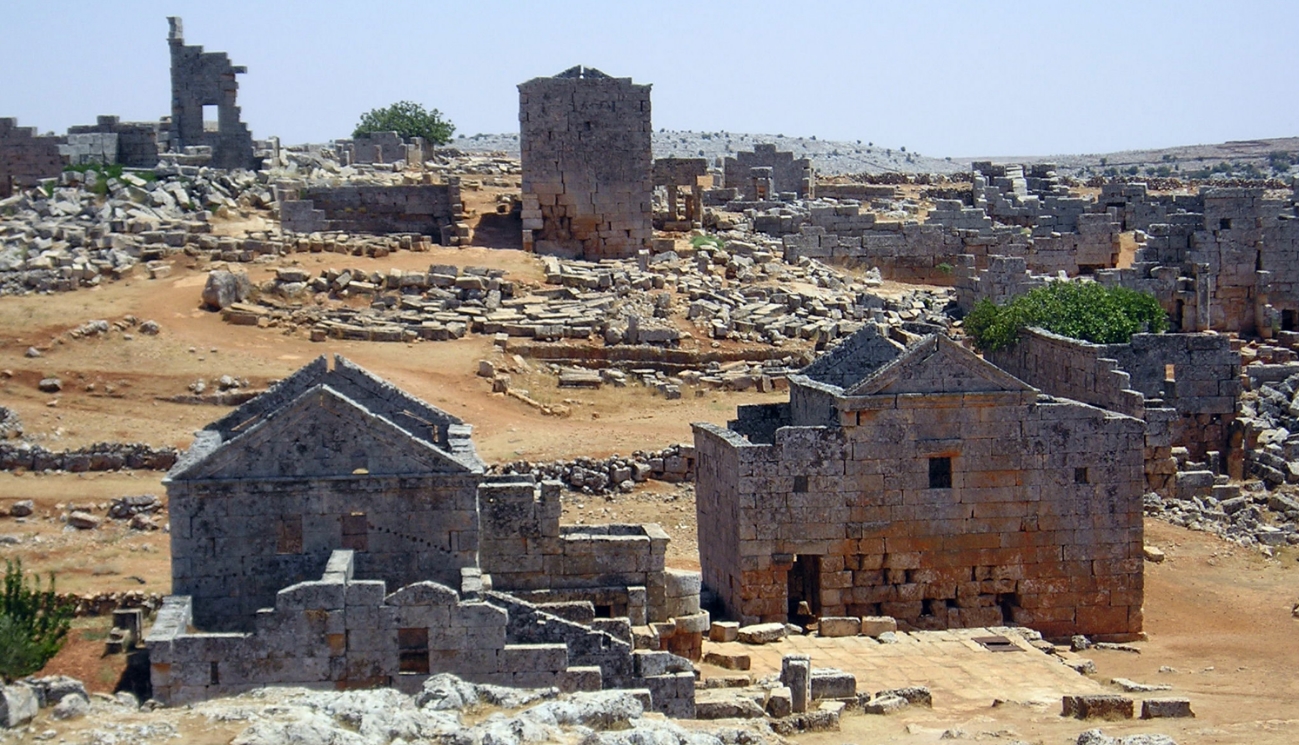
(NaturalNews) The U.S. launched over 125 precision-guided munitions against 85 targets in Syria, but the operation is described as political theater rather than…

(NaturalNews) Iran Strikes Israeli Positions in Unprecedented AttackIran launched ballistic missiles at Israeli military positions on June 7, 2026, in what analys…

(NaturalNews) A Delaware Superior Court judge has dismissed an American Civil Liberties Union (ACLU) lawsuit seeking to prevent nonhuman entities from voting in Fen…

(NaturalNews) “Garland” asserts that China has already surpassed the United States in technology, innovation and industrial production (e.g., AI, drones, electr…
(NaturalNews) The global artificial intelligence race just accelerated in a quiet corner of Seoul, where Nvidia CEO Jensen Huang and South Koreaâs most powerful c…
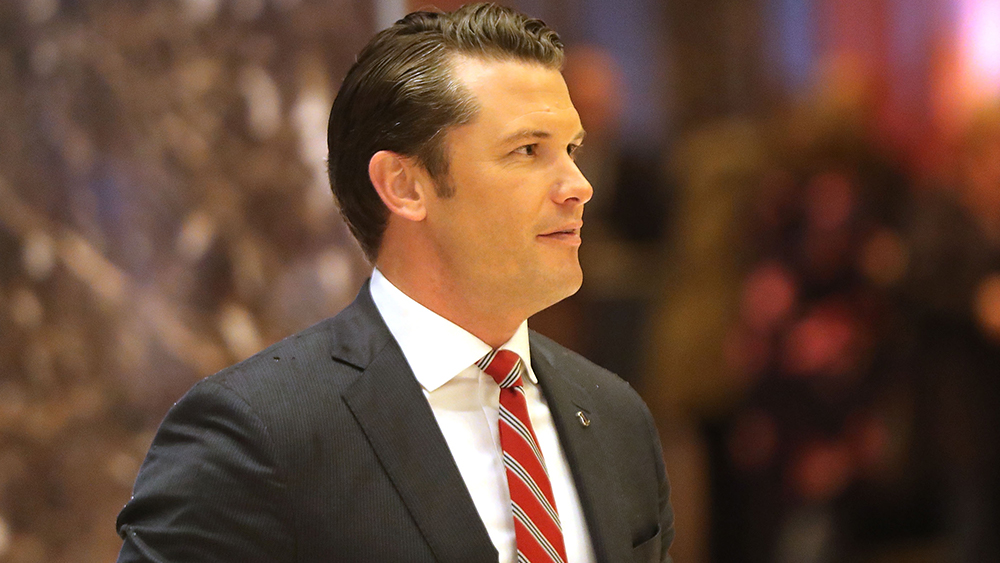
(NaturalNews) U.S. Secretary of War Pete Hegseth, speaking at D-Day anniversary ceremonies in Normandy, described migrant arrivals on European beaches as an “in…

(NaturalNews) The IPO Illusion: A Game Rigged for InsidersI’ve been watching the latest wave of tech IPOs with a sense of dread, not excitement. Companies like Sp…

(NaturalNews) The Looming Blackouts Nobody Is Talking AboutI have been warning for years that Americaâs power grid is teetering on the edge, and now the evidenc…
An actor who has long been rumored as the next James Bond has finally put his cards on the table.
During an interview in GQ, Idris Elba stopped talking about how hates interviews long enough to discuss the future of the iconic franchise.
‘In realistic terms, some markets just don’t go for that.’
The 53-year-old Brit began by addressing the more than a decade of speculation that he would take over the role from Daniel Craig — making him the first-ever black 007.
“It was never legit. It was always just a rumor,” Elba told the outlet.
The London-born Elba, whose mother and father hail from Ghana and Sierra Leone, respectively, said that fans simply took the rumor and ran with it.
“I’ve always felt that it’s not a realistic thing,” Elba continued. “James Bond was written how he was written for a reason. But I was complimented by it.”
Elba suggested that for many fans, Bond’s white, Anglo-Saxon ancestry is part of what makes him Bond.
“[S]ome markets just don’t go for that,” he said. “Bond is big all over the world. And [audiences] won’t [all] go for a black male, an African male, playing Bond. That’s not what they like in their culture. Period.”
While Elba — whose full legal name is Idrissa Akuna Elba — said he was not opposed to other attempts to revamp Bond to appeal to modern audiences, he said he would draw the line at anything “woke.”
RELATED: Iconic actress tells ‘James Bond’ star to his face: ‘James Bond has to be a guy’
Mike Marsland/Getty Images/Omega
“Bond is so unrealistic, so a hint of reality is good, but let’s not try and make it woke,” Elba told the magazine. “I think you’ve got to be pure to what it is: escapism. Don’t try and answer the world’s taste. Just be Bond.”
Elba is far from the only A-lister to come to Bond’s defense. Last year, while doing press for “The Thursday Murder Club” with former Bond actor Pierce Brosnan, Helen Mirren shut down his musing that it was time for a woman to take on the role. “I’m such a feminist, but James Bond has to be a guy. You can’t have a woman. It just doesn’t work,” said Mirren.
Brosnan, who played the spy in four films from 1995 to 2002, had previously suggested the recasting in September 2019. “Get out of the way, guys, and put a woman up there,” Brosnan said at the time.
RELATED: Top 5 women who fought back when coming face-to-face with crooks
Keith Hamshere/Getty Images
Much of the impetus to change Bond’s sex or ethnicity seems to come from the white males who have played him.
In 2008, just two years into his tenure as Bond, Daniel Craig opined that the next actor to play the spy should be black.
“If we can have a black U.S. president, we can have a black James Bond,” Craig said after Barack Obama’s election, per the Daily Mail.
Craig, who went on to play Bond for another 13 years, presumably meant when he was finished with the role.
The most recent actor to portray James Bond was Irishman Patrick Gibson, who portrayed and voiced the video game character of Bond in 007 First Light (2026).
Like Blaze News? Bypass the censors, sign up for our newsletters, and get stories like this direct to your inbox. Sign up here!
News, James bond, 007, Idris elba, Woke, Movies, Entertainment
A U.S. Army AH-64 Apache helicopter crashed near the coast of Oman while patrolling regional waters on Monday as the war in Iran has now crested the 100-day mark.
According to U.S. Central Command, the two pilots were rescued at 7:33 p.m. ET — within approximately two hours of the crash — and are in “stable condition.” CENTCOM spokesman Capt. Timothy Hawkins said that a U.S. Navy surface drone “found and rescued the crew from the water.”
‘I call all the shots.’
The rescue operation was led by U.S. Naval Forces Central Command and the 82nd Airborne Division and aided by U.S. Air Force and Navy units, including U.S. 5th Fleet’s Task Force 59.
After attending Game 3 of the NBA Finals in New York City, President Donald Trump confirmed to reporters that “the pilots are fine” and said that nobody was injured in the crash. He would not specify what prompted the crash.
CENTCOM noted that an investigation into the cause of the crash is underway.
The Apache is hardly the first American aircraft lost during the conflict with Iran.
RELATED: Trump boxes Netanyahu’s ears over Lebanon offensive, calls him ‘f**king crazy’: Report
Joe Raedle/Getty Images
According to a May 13 report from the Congressional Research Service, 42 fixed-wing or rotary-wing aircraft, including drones, have reportedly been lost or damaged during Operation Epic Fury. The lost or damaged aircraft include:
three F-15E Strike Eagle fighter aircraft shot down by friendly fire over Kuwait early in the conflict and the F-15E shot down during combat operations over Iran;one F-35A Lightning II fighter aircraft damaged by Iranian ground fire;one A-10 Thunderbolt II ground-attack aircraft, which crashed after sustaining enemy fire over Iran; andseven KC-135 Stratotanker aerial refueling aircraft, five of which were damaged on the ground at Prince Sultan Air Base in Saudi Arabia during an Iranian missile and drone attack, and two of which were involved in an accident over friendly airspace.
The aircrew of all of the lost or damaged aircrew mentioned above survived with the exception of the six service members killed in the March 12 Stratotanker crash.
In his remarks to the press on Monday evening, Trump said that a deal to end the war is imminent.
Late last month, negotiators representing the U.S. and Iran appeared poised to advance the cause of peace between their respective nations, extend the fragile ceasefire that first went into effect in April, and open the Strait of Hormuz again to trade.
The peace talks quickly began to unravel, however, following Prime Minister Benjamin Netanyahu’s June 1 announcement that Israel was going to ramp up attacks in Lebanon and conduct a new round of strikes in Beirut.
Iranian officials subsequently indicated that Tehran was backing out of the talks, citing Israel’s offensive in Lebanon.
Trump responded to the apparent sabotage of his deal by boxing Netanyahu’s ears, calling him “f**king crazy” and insisting upon greater restraint. The American president managed to salvage the talks in part by securing a tentative truce between Israel and Lebanon.
This truce would not, however, hold.
Late last week, Hezbollah leader Naim Qassem characterized the ceasefire plan agreed by Israel and Lebanon as a “roadmap to annihilate part of the Lebanese people” and said that “as long as the occupation exists, the resistance will continue.”
On Sunday, Israel attacked Beirut — an attack that Netanyahu’s office said was “in response to Hezbollah’s firing at Israeli territory.” Iran responded by firing missiles at Israel. Israel, in turn, attacked “military and economic targets throughout Iran,” Netanyahu said.
As things were cooling off, Trump told reporters on Monday that Iran and Israel are “going to just leave each other alone for another week or something. It’s been going on for a long time — you could say about 3,000 years if you really want, but certainly it’s been going on for 47 years.”
“We’re in the final throes of what will be a very, very good deal that will not allow in any way, shape, or form nuclear weapons, et cetera, and the strait will open up right away,” said Trump. “It’ll open up immediately upon signing, which could be in two or three days.”
Earlier in the day, Trump noted that the negotiations were proceeding, “subject to ignorance or stupidity getting in its way.”
When asked by the Financial Times (U.K.) over the weekend whether Netanyahu would ultimately have to accept a deal with Iran, Trump said, “He won’t have a choice.”
The president emphasized, “I call the shots. I call all the shots. [Netanyahu] doesn’t call the shots.”
Like Blaze News? Bypass the censors, sign up for our newsletters, and get stories like this direct to your inbox. Sign up here!
Iran, Us air force, War, Operation epic fury, Donald trump, Benjamin netanyahu, Tehran, Conflict, Lebanon, Hezbollah, Politics
The Department of Justice has now launched an investigation into Arizona State University over its “diversity, equity, and inclusion” practices. The probe will examine whether ASU has subjected students to illegal discrimination on the basis of race, color, or national origin through its DEI policies in admissions, recruitment, scholarships, tutoring, and educational support.
That news did not surprise me.
Universities constantly speak the language of ‘inclusion,’ but they do not want disagreement. They want compliance.
For years, many of us who work inside higher education have watched American universities become captive to a worldview that divides human beings into permanent categories of oppressor and oppressed. These ideologies present themselves as enlightened and compassionate, but underneath the slogans is something much uglier.
They claim to fight racism, in effect, by being racist.
That is not rhetorical excess. It is the actual logic of these programs. If you are told that your moral standing is shaped by your race, if students are sorted into categories of guilt and grievance based on ancestry, if “equity” means treating people differently because of their race, then the old evil has simply been repackaged in new academic language.
I know this from experience.
The Arizona Supreme Court has now agreed to hear my case against Arizona State University and the Arizona Board of Regents over ASU’s required DEI training. My challenge began because ASU forced employees to take its “inclusive communities” training.
The training, in some cases produced by Starbucks (I kid you not), told employees how to think about race, guilt, power, and identity, and it required assent to predetermined “correct” answers. I could not in good conscience affirm teachings that judged people by skin color, ethnic identity, gender, religion, and geography.
The Arizona Supreme Court’s decision to hear my case goes to the heart of whether state universities can force employees into ideological training that violates state law and basic principles of equal treatment. Arizona law prohibits public schools, including universities, from using curriculum that engages in race blame.
The issue is technical in legal form, but simple in moral substance: When a public university imposes unlawful race-based ideology, does anyone have the right to challenge it?
RELATED: The left doesn’t like it when minorities think for themselves
Jemal Countess/Getty Images for MoveOn
That question should never have had to be asked. But that is where our universities are.
The takeover has been so comprehensive that many campuses no longer even recognize dissent as legitimate. Faculty culture is overwhelmingly leftist (97% at ASU identify as left-wing). The ideological imbalance among professors is staggering. Conservatives, Christians, and others who reject the reigning orthodoxy are rarely hired, and when they are hired, they are often isolated or pressured into silence.
Universities constantly speak the language of “inclusion,” but they do not want disagreement. They want compliance.
When someone objects, the mask slips. The same faculty and administrators who preach compassion suddenly become contemptuous when the dissenter is someone outside the progressive fold. The slogans about empathy disappear and the sneering begins.
That is because DEI is not really about inclusion. It is about power.
Its basic framework is the old Marxist oppressor-oppressed dialectic, merely translated into race, gender, and sexuality categories. Students are taught to see the world through this lens from their first days on campus. The university no longer helps students pursue truth. It trains them to become activists for a ready-made ideology.
The ugly irony at the center of it all is that students are charged tens of thousands of dollars in tuition to sit in classrooms where they are instructed by self-appointed champions of the oppressed, many of whom enjoy comfortable salaries and taxpayer support while lecturing others about systems of injustice.
The university administrator or professor who denounces oppression does so while cashing a government-backed paycheck and enforcing ideological conformity inside a vast institutional bureaucracy.
That is not liberation. It is a racket.
The federal investigation into ASU is important not only for Arizona but for the whole country. The era of automatic deference to DEI bureaucracies may be ending.
If government investigators are asking whether ASU’s programs have crossed the line into unlawful discrimination, then other universities should be asking themselves the same question. How many scholarships, support programs, admissions initiatives, and training sessions around the country are doing precisely what civil-rights law was supposed to forbid?
The answer, I suspect, is many.
American universities have largely abandoned the idea that education is the pursuit of truth, beauty, and goodness. In its place they have installed a therapeutic political religion in which redemption comes through identity confession, public denunciation, and endless activism.
The categories of the system are fixed: Someone must be blamed, someone must be oppressed, and the institution itself must always pose as the righteous mediator.
RELATED: The answer to university decline is hiding in plain sight
Jeffrey Greenberg/Universal Images Group/Getty Images
The ideology has spread far beyond the office door. It lives in the curriculum, in hiring, in faculty trainings, and in the language administrators use to describe their mission. It is the very institutionalized bigotry that it claims to oppose.
What is needed now is moral reform and clarity.
Public universities should not be in the business of teaching students or employees to judge one another by race. They should not use tax dollars to promote theories that blame individuals for the sins of categories. And they certainly should not punish or marginalize those who object.
The Justice Department’s investigation into ASU and the Arizona Supreme Court’s decision to hear my case are both signs that resistance is possible. But much more is needed.
Americans must recover the courage to say plainly what too many in higher education have forgotten: Racism does not become justice when wrapped in the language of equity, and discrimination does not become virtue when blessed by a university bureaucracy.
Arizona state university, Department of justice, Higher education, Dei, Arizona supreme court, Arizona, Marxism, American universities, State universities, Opinion & analysis, Diversity equity inclusion, Lawsuit, Donald trump, Wokeness
Section 702 of the Foreign Intelligence Surveillance Act — the law that allows the government to spy on foreign targets overseas, including their communications with Americans — has a looming deadline.
Supporters call it essential to national security. Critics call it “Big Brother.”
‘FISA needs serious reform. Full stop.’
The House Freedom Caucus launched a #DontSpyOnMe campaign, demanding, in accordance with the Fourth Amendment, a warrant before the government can query Americans’ data in Section 702 collection.
Rep. Keith Self (R-Texas), one of the effort’s loudest voices, was blunt on X: “The government has no right to your private communications without a warrant. FISA needs serious reform. Full stop.”
“The Freedom Caucus is America First more than anyone else, as far as I’m concerned,” Self added.
RELATED: The FBI should get a warrant before reading your messages
Al Drago/Bloomberg/Getty Images
For most Democrats, the objection isn’t about the law itself — it’s about who Trump tapped to oversee the intelligence agencies involved with it.
On June 2, Trump named Bill Pulte as acting director of national intelligence — the official who oversees all 18 U.S. intelligence agencies. Pulte replaces Tulsi Gabbard, who announced she was resigning effective June 30. Confirmed as Federal Housing Finance Agency director in March 2025, Pulte will hold both roles simultaneously.
When pressed on Pulte’s lack of any intelligence or national security experience, Trump was unfazed. “I think he does, actually, because he’s smart,” he said. “I wasn’t greatly experienced in national security, and I think I’ve done a really great job with it.”
At the FHFA, Pulte referred several anti-Trump Democrats and government officials — including New York Attorney General Letitia James (D), Sen. Adam Schiff (D-Calif.), former Rep. Eric Swalwell (D-Calif.), and Federal Reserve Gov. Lisa Cook — to the Justice Department for alleged fraud.
The Government Accountability Office opened an investigation into whether Pulte misused federal authority to do so. As DNI, critics argue, he would have far more power to continue targeting Democrats.
The backlash to his appointment was swift and bipartisan. Senate Majority Leader John Thune (R-S.D.) put it plainly: “We don’t need a weaponized DNI. We need professionals there,” and the Senate voted 47-52 against a motion to proceed on the FISA extension, with six Republicans crossing the aisle to kill it.
Punchbowl News reported that Sen. Mark Warner (D-Va.) privately warned Thune: no Pulte withdrawal, no Democratic votes for FISA.
Trump, for his part, has pushed for a clean extension — but finds himself boxed in on all sides.
Congress has already passed two short-term extensions of the surveillance program this spring — the last one, in April, bought just 45 days.
Something has to give before June 12 — the White House blinks on Pulte, the Freedom Caucus gets its warrant requirement, or Congress slaps on another emergency patch.
Like Blaze News? Bypass the censors, sign up for our newsletters, and get stories like this direct to your inbox. Sign up here!
Bill pulte, Congress, Democrats, Fourth amendment, Freedom caucus, Government accountability office, Intelligence agencies, John thune, Justice department, National security, New york attorney general, Senate, Trump, Tulsi gabbard, White house, Politics, Fisa
Google is trying to make Gemini as ubiquitous as possible. From AI Mode in Search to Gemini Intelligence in Android, and even the Gemini app on iPhone, the company is betting big that you’ll encounter its AI bot somewhere on your devices and fall so in love that you can’t live without it. One of these new features is Daily Brief, a digital corkboard that scans through all of your Google services to write a custom agenda for the day that is as cool as it is creepy. But is it useful? Let’s take a look.
Every morning, I wake up to a new Gemini notification on my Pixel phone waiting to be unraveled. The Daily Brief is an automatically generated itinerary for the day ahead. It can include just about anything — a reminder about an important event you have coming up next week, a nudge to talk to your boss about that email you sent before you clocked out the day before, maybe even a prompt to follow up on that question you Googled earlier in the week.
You are giving Gemini permission to scour your Google account, and it will find a lot.
Google calls it “your personalized overview of today’s priorities.”
That’s not exactly true. We’ll get to why in a bit. The important part for now is that Daily Brief is a constantly evolving to-do list that changes based on your activity in Google’s apps and services.
For Daily Brief to work, it needs complete access to your Google account through Gemini’s Personal Intelligence feature. Once enabled, Gemini can look through the entire treasure trove of information saved in your Google apps and services and use all of it in its responses to your queries.
Before you panic over privacy, Google claims that it “built Personal Intelligence with privacy at the center.” Take that with whatever heaping mountain of salt you like. As for me, Google already knows more than enough, thanks to my dependence on its services, and it turns out that Google knows quite a bit.
I was a bit stunned when my first Daily Brief showed up in my notification shade. At the time, I was writing my article about prediction markets with Stu Burguiere. Daily Brief knew that, because it saw the article saved in my Google Docs and it spotted the ongoing email chain with Stu to lock in his responses to my questions. It reminded me that I still needed to gather his answers before I could submit the piece to my editor.
Cool, right? I thought it was pretty neat at first, and then I realized what it meant — that Gemini knew everything I was doing in Google’s ecosystem and could serve it back to me, even when I least expected the results.
RELATED: Google is about to overhaul the Android. You’ll either love it or hate it.
lixu/Getty Images
This went on for a few more days. It reminded me about pending emails with my editors that still needed responses. It looked at my Chrome browser history and urged me to dig deeper on another set of stories I was researching for Blaze Media. It even recalled from a previous Gemini chat that I write for a living and suggested stories to add to my writing portfolio saved in Google Drive.
With Daily Brief, I was suddenly more knowledgeable, more astute, more capable — or at least I appeared that way, as Gemini pinged me reminders for things that were postponed or had completely fallen off my radar.
It knew everything about me. Too much, in fact. But I suppose that level of insight is what you get when you give Google a front-row seat to your digital life.
Cool? Yes. Creepy? Double yes.
For the first couple of days, Daily Brief was useful. I’m not sure it was ever a necessity, but on a few mornings, I woke up intrigued to find what it had in store for the day. Some agenda items were spot-on, like the reminders to follow up on my emails and articles. Eventually, though, Daily Brief started to slip, especially when it came to tasks that it couldn’t see.
For instance, I write my stories in Google Docs, but I submit most of them to my editor through a third-party messaging service. In a week, Daily Brief had no idea which stories I was working on or what was still pending approval, despite the fact that my Google Docs are all dated and have activity history that shows when they’re finished or not. It didn’t prompt me for updates on these at all, because it didn’t know when I sent them off for editing. The brief would have been different if I emailed my drafts, but that’s simply not my workflow, so no briefs for me.
Just like that, Daily Brief went from creepily useful to oddly empty. All that remained were notes telling me to research article topics that were now outdated because those articles were already in my editor’s hands.
Then the following week, Daily Brief did something useful again, reminding me about a paint recycling event coming up next week that I completely forgot about. (I really do need to get those old paint cans out of my storage closet.)
So to answer definitively if Daily Brief is useful, I can only say “sometimes.” If you actively participate in Google’s digital ecosystem, it can be extremely helpful. If you use Google services sparingly or not at all, however, Daily Brief will be completely useless. Your mileage depends entirely on how much you rely on Google.
If you’re interested in seeing how useful Daily Brief is all for yourself, you can test it out now. Daily Brief is already available to the public, and it lives directly inside the Gemini app and webpage, so you can access it on Android devices, iPhone, iPad, Mac, and PCs.
Screenshots by Zach Laidlaw/Google Gemini app
To enable it, you’ll need to activate Personal Intelligence in the Gemini app or webpage by clicking on the Settings icon, then Personal Intelligence, and switch the toggles beside “Memory” and “Daily Brief” to the on position. Note that by doing this, you are giving Gemini permission to scour your Google account for any bit of information that it finds useful, and it will find a lot.
Tech, Google
Every parent knows the moment. The phone call. The ultrasound. The doctor walking back into the room. The uncertainty.
We all tell some version of the same joke: “I just hope the baby has 10 fingers and 10 toes.” We spend nine months praying for a healthy baby. We celebrate reassuring scans. We cling to every piece of good news.
Some decisions are so intimate and consequential that they do not belong in the marketplace of clicks and comments.
But over those nine months, we learn the ultimate lesson of parenthood and life: We are not in control.
Last week, the country got a front-row seat to one family’s struggle with that lesson. Jesse Ridgway, a YouTuber known as “McJuggerNuggets” with more than 4 million subscribers, took to X to update followers on a pregnancy he and his wife had documented for months.
“This week, my wife and I made the very difficult decision to terminate the pregnancy due to Trisomy 21,” Ridgway wrote. He added that he had not realized the child would be “fully dependent on others for the rest of their life.” He concluded, “We made a difficult decision that we believe in the long run will be beneficial for our family.”
I suppose the baby was not yet considered part of the family.
I do not doubt that the Ridgways were scared. Every parent can sympathize with fear. Every parent can sympathize with grief over shattered expectations. But what happened next was not merely a story about fear. It was a story about what we do with fear.
The entire enterprise of parenthood is uncertainty.
Healthy babies develop cancer. Healthy babies lose their sight. Healthy babies suffer traumatic brain injuries. Healthy babies develop learning disabilities. Healthy babies struggle with addiction. The moment you become a parent, you sign a contract with uncertainty.
Parenthood does not give you guarantees. It gives you responsibility.
We do not love our children because of the outcomes they produce. We love them because they are ours. If a child develops a disability at age 6, do we decide his life no longer has value? Of course not.
RELATED: Euthanasia and the lie of the ‘good death’
Mininyx Doodle via iStock/Getty Images
Then why would we decide that at 6 months in the womb?
What is so unique about Down syndrome? It involves suffering, imperfection, and uncertainty. But so does every human life. Down syndrome simply makes those realities visible sooner.
The question is not whether this child would face challenges. The question is why challenges suddenly make a life disposable.
If Down syndrome is enough to make a life disposable before birth, what other conditions qualify? Blindness? Autism? Cerebral palsy? A missing limb? A learning disability?
Where exactly is the line?
I will make this personal. Our second child faced a possible cystic fibrosis diagnosis. The meeting with the specialist was dark. She was preparing us for devastating news. I remember sitting in my car afterward, calling my dad, and bawling my eyes out.
But the conversation was never, “Should this child live?” The conversation was, “How do we prepare to raise this child?”
That distinction matters.
Fast-forward to our fourth child, now 5 months old. Her scans showed what doctors believed was a significant kidney defect that would require either in-utero surgery or surgery immediately after birth. Again, my wife and I were terrified. Again, we began preparing.
And again, it was all for nothing.
In both cases, the doctors were wrong.
Doctors are incredibly skilled. They are not prophets. A probability is not a person.
Ridgway mentioned that doctors told him and his wife that up to 90% of women terminate after learning their child has Trisomy 21. That statistic is often cited as evidence of how difficult these diagnoses can be.
I see it differently.
I see it as evidence of how quickly our culture has confused hardship with hopelessness.
This hit me on another personal level. I volunteer at a special-needs ministry. Some of the happiest people I know have Down syndrome. Through all their challenges, they radiate a level of joy, affection, and sincerity that our country desperately needs.
After reading Ridgway’s announcement, I could not stop wondering what one of them would think if he read it. Imagine opening your phone and discovering that people are publicly discussing whether lives like yours are worth living. Imagine being told that your diagnosis makes your existence negotiable.
Parenthood can never be reduced to consumer choice. Children are not products we order. They are gifts we receive.
RELATED: What ‘fur babies,’ 2D boyfriends, and ‘sharenting’ tell us about the West’s future
lchumpitaz via iStock/Getty Images
The deepest moments of parenthood often arrive when life refuses to follow the script. A parent’s love is measured by what remains after expectations disappear.
The decision itself was not the only thing that struck me. So did the need to announce it.
Some moments should produce reflection, not engagement. Some decisions are so intimate and consequential that they do not belong in the marketplace of clicks and comments. Have we reached the point where even the death of a child becomes content?
As of this writing, Ridgway’s post has more than 24 million views.
He has faced a mountain of criticism online, much of it hateful and cruel. As a Christian, I am taught to hate the sin and not the sinner. I will leave judgment to God.
But I hope this tragic and very public episode forces us to think carefully about what parenthood requires.
A child does not earn the right to live by meeting our expectations.
Parenthood begins when we decide to love a child even when life does not unfold the way we hoped. The measure of parenthood is not how we respond when life follows the script.
It is how we respond when it does not.
Opinion & analysis, Parenthood, Pregnancy, Down syndrome, Youtube, Content, Trisomy 21, Abortion, Clickbait, Children, Family
Last week, a jury was seated in the Karmelo Anthony murder trial in Collin County, Texas. Despite a Batson challenge from the defense, no black jurors were selected.
Anthony was charged with first-degree murder in April 2025 when he allegedly stabbed 17-year-old high school student Austin Metcalf in the chest after a verbal confrontation. Anthony pleaded not guilty to the charges, claiming he acted in self defense, despite the victim being unarmed.
BlazeTV host Jason Whitlock was “overjoyed” when he heard the news that all prospective black jurors were struck, believing that true justice is only possible if black bias is not a factor.
But now that the trial is underway, there’s a new concern that’s making some Texans worried: What if a guilty verdict sparks mass riots?
Former Infowars host turned independent media entrepreneur Owen Shroyer, who lives in Austin, Texas, is one of those cautionary voices.
On June 4, he tweeted:
But Whitlock disagrees.
“I think all the emotion around this trial, the support of Karmelo Anthony, I think it’s all bought and paid for and fake,” he counters. “I don’t think there are real people in support of Karmelo Anthony.”
While Shroyer agrees that a guilty verdict is unlikely to culminate in “Black Lives Matter-style riots,” he does believe there will be consequences at the “local” level.
“Based off of what I saw outside of that courtroom, I do believe there is going to be a local community … issue,” he says. “I don’t know if it’ll get to the level of Ferguson with buildings on fire, but I do anticipate there’ll be some stress and strife if Karmelo Anthony gets a long sentence.”
Supporters of Karmelo Anthony have gathered daily outside the Collin County Courthouse in McKinney, Texas, wearing matching “We Declare He Will Walk Free” T-shirts and chanting slogans like, “Self-defense is not a crime,” while protesting the lack of black jurors. One protester has gone viral for repeatedly shouting, “The only good cracker is a dead cracker!” directly in front of police officers.
“Once you get a group like that that truly believes that they’re fighting racism, and that’s a cause that they’re going to get out in the streets for, sometimes these things can tend to grow and get some gravity,” says Shroyer.
But Whitlock has sources in the Frisco area who have led him to believe that much of the hype is manufactured.
“I know a few people in Frisco, Texas. I spent some time a year ago talking to a woman whose daughter went to high school with Karmelo Anthony. I just think the people on the ground know like Karmelo Anthony was a troublemaker, and this story is BS,” he says.
Shroyer, however, believes our highly racialized time has produced people who “are not logical” and “don’t care about the facts.”
He recounts how during the Michael Brown trial in 2014, Obama’s Attorney General Eric Holder, a black man, concluded that Brown never said, “Hands up, don’t shoot.” But despite this verdict and copious forensic evidence and credible witnesses supporting Officer Darren Wilson’s account, protesters “didn’t change their minds” and even continued to protest.
“These people, unfortunately, they’re very emotional-based,” says Shroyer.
To hear more, watch the episode above.
To enjoy more fearless conversations at the crossroads of culture, faith, sports, and comedy with Jason Whitlock, subscribe to BlazeTV — the largest multi-platform network of voices who love America, defend the Constitution, and live the American dream.
Jason whitlock harmony, Jason whitlock, Karmelo anthony, Austin metcalf, Owen shroyer, Texas
Suspected provocateur specifically stated, ‘We’re here to storm the capitol. I’m not kidding.’ In a new mini-documentary diving into Jan. 6, investigative journalist Lara Logan [more…]

Mainstream media claims Obama-Biden partnership has only been happening for 5 months. Former President Barack Obama has been secretly advising the Biden administration for several [more…]

“This case could completely wipe out the ATF’s ability to create law and subvert congress, which would be a massive win for the Second Amendment.” [more…]

Elon Musk chimed in to question ‘how common’ this type of illegal activity is during American elections Bridgeport, Connecticut, the largest city in the state, [more…]

Chinese woman evades warrant for vehicular manslaughter after horror wreck caught on camera A Chinese woman fled back to her homeland after allegedly killing her [more…]

Downdetector has reported that several US banks are facing service disruptions on Friday morning. Update (1315ET): Fed Reserve Says ACH Error Impacting Customers Bitcoin literally [more…]

Footage shows male senior swiftly strike ball in attempt to make goal, inadvertently hitting female player directly in mouth. A female high school lacrosse player [more…]

Use promo code “ALEX” when you sign up on Mug Club to get one month FREE of the network’s exclusive broadcasts, investigative reports, comedy specials [more…]