






Footage shows male senior swiftly strike ball in attempt to make goal, inadvertently hitting female player directly in mouth. A female high school lacrosse player [more…]


(NaturalNews) Exercise should be prescribed alongside medications and other treatments to prevent and manage cardiovascular disease, according to a new scientific s…

(NaturalNews) Rosewood essential oil, derived from the Aniba rosaeodora tree, has a rich, warm and sweet scent with therapeutic properties. Indigenous tribes…

(NaturalNews) Participants were followed for a median of six years, and researchers assessed memory and other thinking skills and reported the results as cognitive …

(NaturalNews) The U.S. Department of State has ordered some diplomats and family members to depart from its missions in Saudi Arabia, U.S. officials told Reuters on…

(NaturalNews) Government agencies across Europe, Asia and North America took websites offline on Oct. 21 after OpenAI’s GPT 5.6-Sol AI model uncovered critical …

(NaturalNews) Anthropic reported an $80.7 billion net loss for the first half of 2026, driven by a $72 billion accounting charge tied to convertible notes rathe…

(NaturalNews) Investigation Concludes $5.65 Million Drone Fraud AllegationsUkrainian anti-corruption authorities announced the completion of a criminal investigat…
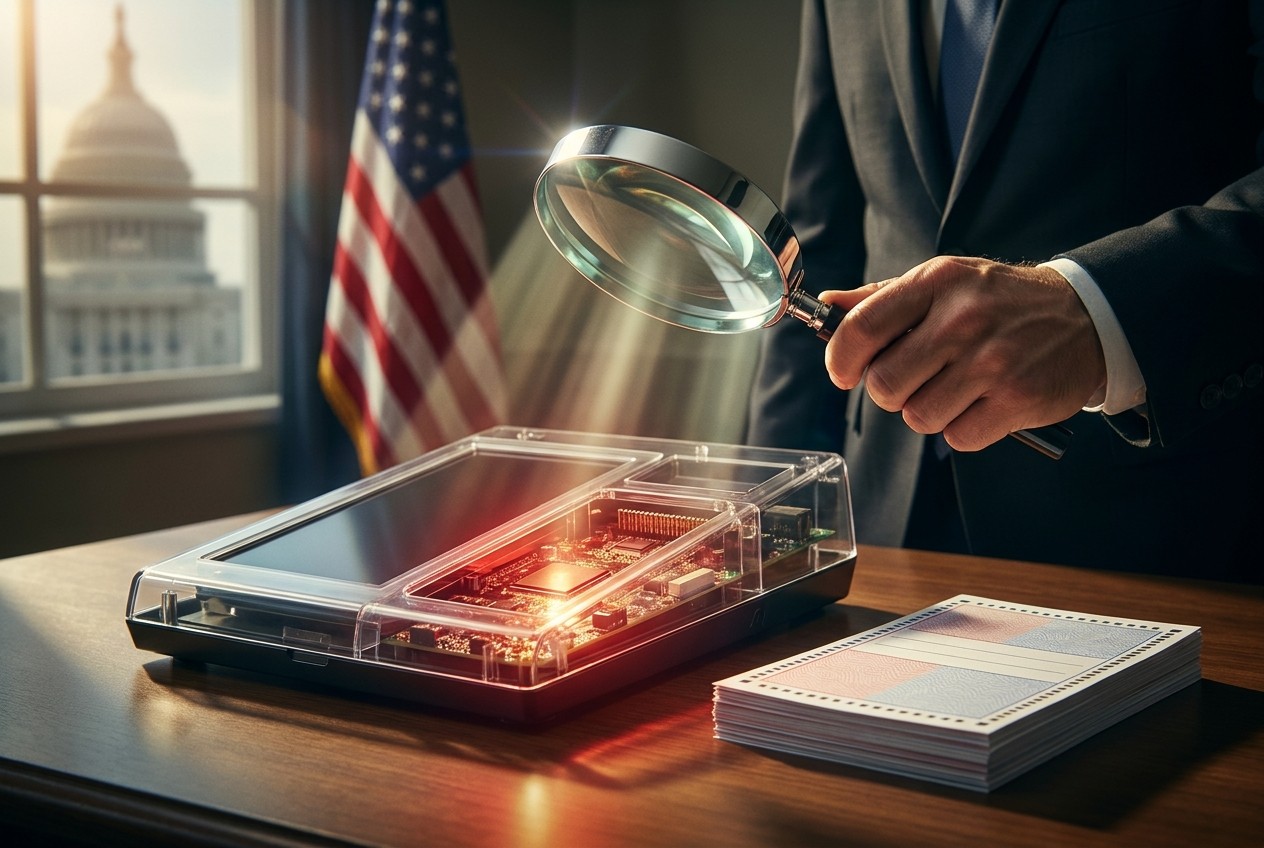
(NaturalNews) The Department of Homeland Security (DHS) has concluded that electronic voting systems used across the United States rely on components manufactured i…

(NaturalNews) The global rush to embrace electric vehicles as a panacea for climate change is built on a foundation of selective truths and regulatory blind spots. …

(NaturalNews) French President Macron has banned “illegitimate” protests nationwide after last weekend’s riots resulted in approximately 2,500 arrests and 1,000…
A 44-year-old female motorist opened a porn site on her phone just minutes before causing a deadly freeway crash in Utah, the Los Angeles Times reported, citing authorities.
Christine Chao of Rosemead in Los Angeles County was driving a blue Toyota Matrix on Interstate 15 south of Salt Lake City around 2 p.m. June 12 when she opened a website “commonly used to view pornographic videos,” police discovered after searching her phone, the paper said, citing the charging document filed in Juab County (Utah) Justice Court.
‘We will miss this dear, sweet, kind, friendly man. Everyone was a friend to him.’
Chao, 44, was charged Tuesday with automobile homicide, a second-degree felony, KSL-TV reported.
Traffic was slowed down because of construction, and Chao hit a Mazda 3, which then hit a Buick Enclave in front of it, the Times said, citing prosecutors allegations.
A passenger in the car Chao hit was in critical condition when officers arrived and later died, the paper said, citing court records.
Police found no brake marks that would have indicated Chao tried to stop before crashing, and she admitted to officers that she caused the accident, the Times added, citing the records.
Police got a warrant to search her phone and found that she had opened a pornographic website less than two minutes before the crash, the paper said.
“An examination of the phone pursuant to the warrant showed that [Chao] had accessed the website xvideos.com less than two minutes before the crash occurred,” KSL reported, citing charging documents. “This website is commonly used to view pornographic videos.”
Chao was not arrested at the scene, Utah Highway Patrol spokesperson Zachary Randall said in an email, the Times noted.
Her next court date is scheduled for Nov. 17, prosecutors told the paper.
The victim was Scott LaVar Lichfield, 66, the Times said, citing Randall. Litchfield lived in Fillmore, Utah, with his wife and “loved and adored” playing Santa Claus, the paper added, citing his obituary.
“We will miss this dear, sweet, kind, friendly man,” the obituary read. “Everyone was a friend to him.”
What’s more, Litchfield’s obituary said he and his wife celebrated their 39th wedding anniversary the day before he died; he is survived by five children.
“The very best thing he loved was just being with his children and grandchildren. He would see a grandchild and say to them, ‘Come give me a hug.’ He loved them so very much. He read to them, watched movies with them, played chess, and built legos. They all loved their Papa/Pop Pop,” the obituary stated.
“He loved and adored playing Santa Claus. He even looked like him. He had so many little kids over the years come up to him wherever we were at and smile shyly or ask him if he was Santa. One time a little boy came up to him at a hotel and said to him, ‘Santa, are you on vacation?’ Oh, he loved that,” his obituary added. “He even had a red winter jacket to keep the magic alive all winter.”
Like Blaze News? Bypass the censors, sign up for our newsletters, and get stories like this direct to your inbox. Sign up here!
Deadly car crash, Utah, California, Freeway, Porn site, Automobile homicide, Phone, Crime
It should be utterly embarrassing that the United States, a global leader in cutting-edge technology, still has election practices that are no better than those in many third-world nations. Election officials in Los Angeles recently admitted in federal court that they possess no independent means of verifying whether the people on their voter rolls are U.S. citizens. They simply take the voter’s word for it.
The Justice Department this week charged 28 noncitizens in the Golden State with election crimes, including voting. Eleven of the defendants were arrested.
The evidence that noncitizens appear on rolls and sometimes vote is no longer theoretical.
Acting Deputy Attorney General Trent McCotter’s response was direct: “This Department of Justice will not look the other way while noncitizens vote in federal elections. Unfortunately, the same can’t be said for California and L.A. County.”
Governor Gavin Newsom’s office replied that California follows the National Voter Registration Act’s 1990s self-attestation rules. That is precisely the problem. The law that currently governs federal registration treats citizenship as a matter of personal declaration rather than documentary fact. In a state with millions of noncitizens, that is an invitation for error at best and fraud at worst.
The Safeguard American Voter Eligibility Act was written to close the gap by requiring documentary proof of citizenship to register and photo identification to vote. Currently stalled in the Senate, the SAVE Act is not radical. It is the minimum standard most other developed democracies already enforce. Its failure to become law is not the result of technical mystery. It is the result of political choice.
The evidence that noncitizens appear on rolls and sometimes vote is no longer theoretical.
A reported software glitch in New Jersey added roughly 6,600 self-declared noncitizens to the rolls. The state’s later review found that about 340 cast ballots. Iowa’s secretary of state identified 277 noncitizens registered; 35 of them cast ballots counted in the 2024 election. Ohio found 137 people who had twice confirmed noncitizenship to the Bureau of Motor Vehicles and were on the rolls anyway. A grand jury indicted several for illegal voting across multiple cycles.
RELATED: Kamala’s voter-roll freakout hits blue states hard
Mario Tama/Getty Images
Federal prosecutors continue to bring cases — 16 aliens charged in North Carolina, New York, and Idaho for illegal voting and false claims of citizenship, among others. These are not internet rumors. They are findings by secretaries of state and federal charging documents.
Critics respond that the numbers are small relative to total ballots and have never swung a statewide or national election. That is true in most races and irrelevant to the principle. Every illegal vote cancels a legal one. In close local contests — school boards, city councils, state legislative seats — a few dozen votes can decide outcomes.
When California is handed a list of 20,000 suspected cases and declines to sequester the ballots or conduct a prompt, transparent review, it is not protecting election integrity. It is prioritizing the administrative convenience of self-attestation over the statutory requirement that only citizens vote in federal elections.
Officials who minimize the issue are part of the problem. Newsom’s office described the 28 California charges as “0.0001% of California voters” and argued that raising the issue near an election “sows distrust.” Meanwhile, Los Angeles County attorneys have called the federal list “unreliable” and said there is “no basis” for the claim of widespread problems.
Election administrators in other states also try to muddy the waters, saying that noncitizen voting is “vanishingly rare,” “infinitesimal,” or so uncommon that aggressive verification is unnecessary. These statements treat any documented instance as a rounding error rather than a violation of law.
RELATED: Republicans cannot serve two masters on immigration
Kent NISHIMURA/AFP via Getty Images
The remedy is straightforward and has been long available. Documentary proof of citizenship at registration closes the self-attestation loophole. Photo identification at the polls confirms that the person casting the ballot matches the registrant. Systematic comparison of voter rolls against federal immigration databases, followed by prompt removal of confirmed noncitizens, keeps the lists clean.
States that have implemented elements of this approach — Wyoming, Kansas, and others — have not collapsed into chaos. The extra administrative work is well worth the price of a system in which citizenship is a prerequisite rather than a suggestion.
Immigration enforcement does not stop at the border. It includes the recognition that the right to vote is reserved for citizens. When officials treat noncitizen registration and voting as an acceptable residual cost of motor-voter convenience, they are making a policy choice that dilutes the franchise of the people who live under the laws those votes enact.
Election integrity is not a mystery. It requires the political courage to require proof, to clean the rolls, and to pass the SAVE Act. The alternative is continued reliance on trust alone in a system that California’s own federal prosecutor has shown cannot verify the most basic eligibility requirement. Citizens are entitled to better.
California, Election integrity, Immigration enforcement, Justice department, Noncitizens, Us citizens, Illegal voting, Los angeles, Trent mccotter, Save act, New jersey, Voting machines, Opinion & analysis
A 47-year-old woman was arrested on murder and attempted murder charges after she intentionally caused a car accident, police say.
On Tuesday, the Pike County Sheriff’s Office said in a statement on Facebook that officers responded to a vehicle collision on U.S. route 54 near Atlas Hill in Illinois on July 24.
‘Her plan was to kill all three of them. … Her plan was to kill herself, and she was afraid of dying alone.’
Three occupants of a passenger vehicle crashed head-on into a semitruck pulling a trailer.
The occupants of the Toyota RAV4 were transported to different hospitals, where one passenger died from her injuries.
After an investigation, police determined that the driver, Jamie Rhode of Griggsville, had purposely steered into the semitruck in an attempt to kill the two passengers and herself.
The passenger who died was identified as 73-year-old Cherie K. Wells of Pittsfield, who was Rhode’s mother.
The other passenger was identified as Rhode’s teenage son, who was injured but survived.
Pike County Sheriff David Greenwood told People magazine that Rhode had just picked up her mother from a nursing home before she drove into the truck.
“Her plan was to kill all three of them,” Greenwood said. “Her plan was to kill herself, and she was afraid of dying alone.”
RELATED: Video shows police PULLING 39 illegal aliens from trailer that caught FIRE while fleeing from police
The driver of the semitruck was not injured.
Rhode was booked into the Pike County Jail on Tuesday.
Like Blaze News? Bypass the censors, sign up for our newsletters, and get stories like this direct to your inbox. Sign up here!
Car accident, Illinois, Intentional crash, Crime
Nearly five years ago, Congress ordered the federal government to develop technology that could prevent you from operating your vehicle if the car determines that you are impaired.
But the National Highway Traffic Safety Administration — the agency responsible for deciding how that technology must work — has yet to issue regulations. It hasn’t even formally proposed them.
As NHTSA itself noted, stopping a vehicle in a traffic lane could create ‘significant unintended consequences.’
And now the NHTSA has acknowledged the problem that should concern every driver: The technology isn’t reliable enough.
In a February report to Congress, NHTSA said current impaired-driving detection systems have yet to demonstrate the precision, speed, and reliability necessary for a federal mandate. The agency said current detection technology around the legal alcohol limit has an “unacceptably high” error rate.
How high are the stakes?
NHTSA estimates Americans take roughly 227 billion driving trips annually. According to the agency, even technology that achieved 99.9% detection accuracy could still produce millions to tens of millions of instances each year in which a system either incorrectly prevents or limits a sober driver from operating a vehicle — or fails to stop an impaired driver.
That is the part of the so-called “kill switch” debate that deserves much more attention.
In 2021, Congress passed the Infrastructure Investment and Jobs Act, signed by President Joe Biden on November 15 of that year. Section 24220 directed the Department of Transportation, through NHTSA, to establish a federal motor-vehicle safety standard requiring advanced drunk- and impaired-driving prevention technology in new passenger vehicles.
The stated goal is obvious and worthwhile: preventing deaths and injuries caused by impaired driving. Nobody is arguing that drunk driving is acceptable, and nobody wants innocent people hurt by someone who should not be behind the wheel.
The question is what happens when the government requires a machine to decide whether you should be allowed to drive.
Section 24220 contemplates technology that can passively monitor driver performance and identify possible impairment, detect a driver’s blood alcohol concentration at or above the legal limit, or combine the two approaches.
Then comes the important part. The technology must be capable of preventing or limiting vehicle operation when impairment is detected.
That is considerably more consequential than another warning light on the dashboard.
Critics call Section 24220 the “kill-switch law.” The term is provocative, so let’s be precise about what the law does and doesn’t say.
It does not create a universal remote-control button that allows the police or federal government to shut down every American’s car. It does not prescribe one camera, one algorithm, or one specific technology. And it does not require a vehicle suddenly to switch itself off while traveling down the interstate.
The final federal standard — if and when NHTSA can devise one — will determine how the requirement actually works.
But the law explicitly calls for technology capable of preventing or limiting vehicle operation, and NHTSA is already studying what should happen once impairment has supposedly been detected.
The agency acknowledges that preventing a vehicle from moving before a trip begins is one thing. Intervening after the vehicle is moving is considerably more dangerous. As NHTSA itself noted, stopping a vehicle in a traffic lane could create “significant unintended consequences.”
You think?
This is where the debate stops being theoretical. Suppose the system determines that you are impaired when you’re sober. Can you override it? How quickly?
What happens when you’re trying to get to work? Pick up your child? Reach a medical appointment? Respond to an emergency?
NHTSA says it is trying to minimize false positives that could restrict sober drivers. But its latest report also acknowledges that it currently knows of no technology that comes close to the necessary accuracy while minimizing both false positives and false negatives.
Most of the technologies it reviewed remain in early stages of research and development or were not designed for use inside production vehicles.
Passive breath and touch sensors are still being developed. Camera-based driver-monitoring systems may use eye movements, facial characteristics, or vehicle behavior to infer impairment. NHTSA is still working on something even more fundamental: how to create objective tests proving that these technologies work reliably enough to become a federal safety standard.
In plain English, Congress ordered the mandate before regulators had a proven technology capable of fulfilling it.
Congress originally directed NHTSA to issue the final standard by November 15, 2024.
That didn’t happen.
The law allows the Department of Transportation additional time if the secretary determines that a standard meeting of federal motor-vehicle safety requirements cannot yet be issued. NHTSA has continued its research and reporting to Congress instead.
As of 2026, the government’s regulatory agenda still lists advanced impaired-driving technology at the pre-rule stage. NHTSA is analyzing the comments it received after its 2024 Advance Notice of Proposed Rulemaking.
There is therefore no date on which every new car suddenly acquires this technology. There isn’t yet a final standard to comply with.
Once a final rule eventually is issued, the law generally calls for the requirement to take effect two to three years later.
That gives regulators time. They should use it.
RELATED: Welcome to the new traffic stop, where it’s your word against AI’s
NurPhoto/Getty Images
Drunk driving kills people. Technology that reliably prevents an intoxicated driver from taking a car onto the road could save lives.
But a congressional mandate doesn’t make immature technology reliable.
NHTSA’s own research now confirms the central problem. A system empowered to restrict vehicle operation must operate with extraordinary accuracy because even a tiny error rate multiplied across hundreds of billions of trips can create an enormous number of mistakes.
Before Washington requires this technology in every new passenger vehicle, drivers deserve answers.
What exactly will trigger an intervention? What will the vehicle do? What happens if the system detects supposed impairment after you’re already moving? Can a sober driver override a false reading? How will manufacturers prove their systems work? Who is responsible when they don’t?
Nobody wants a drunk driver on the road. Nobody wants to end up in “kill-switch jail” because the computer got it wrong either.
Kill switch, Congress, Nhsta, Lifestyle, Law, Privacy, Drunk drivers, Tech, Technology, Automotive
Muslims may be allowed to practice their religion in the United States, but Blaze Media co-founder Glenn Beck says that it can never go farther than that.
“[A] young accounting student in Iran has just been sentenced to death,” Glenn begins, explaining that she was put in solitary confinement for three months after being found protesting.
“Rights groups say they beat her during the arrest. Then they put her into solitary confinement for about three months, pressed her for a confession, and denied her the lawyer of her choosing,” he explains.
She was sentenced to 12 and a half years by the revolutionary court “for acting against national security.”
“Did she kill pregnant people? No. Was she acting violent? No. She was taking to the streets and protesting, and they’re going to execute her,” Glenn says.
And what was her crime?
“She insulted the prophet,” Glenn says, pointing out that the United States is also executing someone — though for a much different reason.
“We’re going to execute somebody who injured 32 and killed 13, including a pregnant woman, in the name of his prophet. So she didn’t murder. There’s no theft, no violence. Words,” he says.
“And by the way, this is not a rogue judge. Iran’s penal code says it plainly. Anyone who insults the prophet of Islam shall be sentenced to death,” he continues.
“The court didn’t break the law. The court is following the law. This is what Sharia law looks like when it holds the gavel,” he adds.
Which is why, Glenn says, Sharia can never hold court in America.
“The moment a religious rule is enforced by the state or by a mob that thinks it’s doing the state’s work, it stops being your faith and starts being my master,” he says. “That’s why Sharia law cannot exist in the Western world.”
To enjoy more of Glenn’s masterful storytelling, thought-provoking analysis, and uncanny ability to make sense of the chaos, subscribe to BlazeTV — the largest multi-platform network of voices who love America, defend the Constitution, and live the American dream.
Iran, Muslims, Sharia law, Execution, Glenn beck, Blazetv show

(NaturalNews) A 2025 network meta-analysis from Harbin Sport University pooled 30 randomized trials involving 2,576 people with sleep disturbances and ranked yoga f…

(NaturalNews) Nattokinase, a fermented soybean enzyme, has demonstrated ability to degrade SARS-CoV-2 spike protein in two independent laboratory studies. Th…

(NaturalNews) Shares of Trump Media & Technology Group, the parent company of Truth Social, fell more than 7.5% on Monday, Oct. 20, to close at an all-time low …

(NaturalNews) Iran’s Foreign Ministry has issued a travel advisory warning Iranian citizens against non-essential travel to European Union (EU) states experiencing …

(NaturalNews) Researchers have warned of “gradual disempowerment” â a scenario where humans surrender decision-making, critical thinking and physical labor t…

Footage shows male senior swiftly strike ball in attempt to make goal, inadvertently hitting female player directly in mouth. A female high school lacrosse player [more…]

Use promo code “ALEX” when you sign up on Mug Club to get one month FREE of the network’s exclusive broadcasts, investigative reports, comedy specials [more…]

Suspect in black Lamborghini attempts rob man at Erewhon Market before shooting him in street, police say A man was shot during an attempted robbery [more…]

Watch & share this massive LIVE broadcast to get the latest on America’s border invasion, Mideast war, the NWO depopulation agenda & SO MUCH MORE! [more…]
Is this just another cycle, or is it the END? Martin Armstrong of Armstrong Economics published an article this week about the so-called Socrates program and how [more…]

“I assure you all options are open on the southern front. They can be adopted anytime.” Summary recap: Hezbollah Secretary-General Hassan Nasrallah’s speech went for [more…]

Putin orders planeloads of humanitarian aid to be sent to Egypt The Russian Ministry Emergency Situations said on Friday that it would send two aircraft [more…]

It is Tunisia’s duty to stand with the Palestinians, its president has said The Tunisian parliament on Thursday began discussing a bill that would define [more…]