





Suspected provocateur specifically stated, ‘We’re here to storm the capitol. I’m not kidding.’ In a new mini-documentary diving into Jan. 6, investigative journalist Lara Logan [more…]

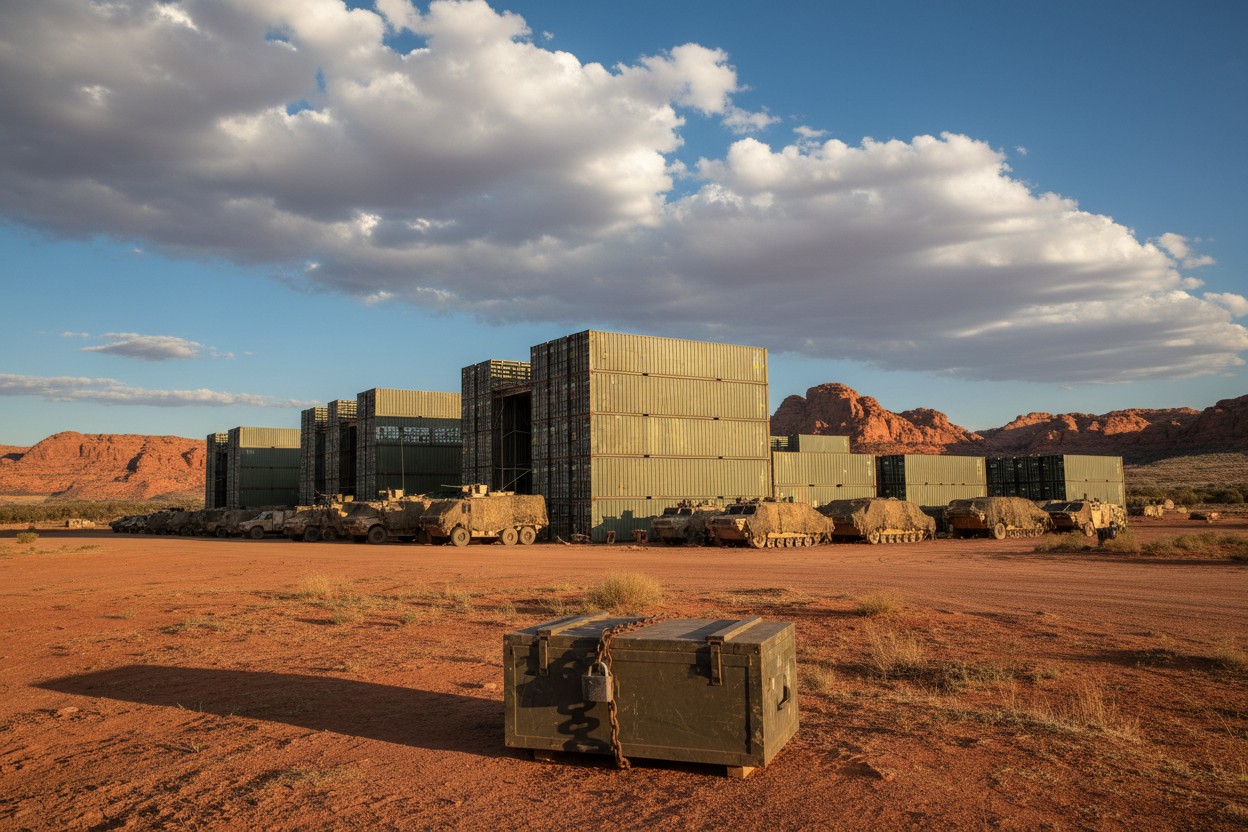
(NaturalNews) The United States is establishing a permanent stockpile of battle-ready arms for its Marine Corps in Australia, according to tender documents reviewed…

(NaturalNews) Brent crude futures fell 0.1% to $77.18 a barrel on Thursday, June 18, 2026, according to market data [1]. West Texas Intermediate crude slid 0.3% to …
Every summer, we get to celebrate the first love of every girl: her father. Before she knows what love is, before she has language for it, a daughter is learning it from him. The way he looks at her. The way he stays. The way he shows up on the hard days and the ordinary ones.
Long before she sits in a pew and hears about a God who is steadfast and faithful, she has already been given a picture of what that looks like — or she hasn’t. The difference between those two things will follow her for the rest of her life.
That steady, faithful presence inspired something in me that his illness could not take from him.
The role of fatherhood, particularly to daughters, is one of the weightiest callings a man has. A father is his daughter’s first introduction to unconditional love, her first model of strength and gentleness working together. The world provides little girls with countless stories about knights in shining armor and perfectly orchestrated Hollywood romance. It is easy for those fictional portraits to slowly become the standard by which real love gets measured.
But a dad has a more powerful opportunity than any fairytale can offer. He can step into his daughter’s life as the living standard, the real man who shows her what it means to be fully known and fully cherished.
When she is old enough to hear that God loves her as a Father, she will reach for the nearest frame of reference she has. For better or worse, that frame is you, Dad.
I often think about my own dad, Norm Haverkos, who spent more than 40 years living with multiple sclerosis. By the time I was in grade school, he couldn’t walk without falling. Eventually, he couldn’t walk at all.
What he could do, and chose to do, every single day was show up. Growing up, I followed my dad around just to be near him. My sister would tease me about it and call me “Dad’s darling.” I never denied it. I was his love, and he was mine.
Despite his illness, my father never made it an excuse to step back from his duties to his children. Confined to a wheelchair, he still found ways to be present: in our garage workshop as we refinished antiques on winter afternoons, in the stands at whatever event we were part of, in the confusing seasons when I simply needed him nearby.
He refused to let his limitations hold him back. He was a tender shepherd to our family, guiding us not in the typical way the world portrays strength, but in a way that demonstrated faithfulness. A shepherd doesn’t lead from the front because he’s the strongest. He leads because he refuses to leave. That was Norm Haverkos. He led us, carried us, and loved us, despite his fleeting mortality.
RELATED: Bruce Willis, dementia, and my father
Jim Spellman/WireImage/Getty Images
That steady, faithful presence inspired something in me that his illness could not take from him. He helped me understand a God who does not abandon His children when life gets difficult. Like any father, my dad was not perfect, but he was present. And in his presence, I found my worth. Eventually, I found my way to the One whose love my father’s had been pointing toward all along.
The weight of the calling each father carries is heavy. But each dad can be equipped with the grace to carry it. You do not have to be a perfect man to be a faithful one. You do not have to have all the answers or feel whole. If you haven’t given it your best yet, there is mercy and forgiveness to start fresh, and start today.
Norm Haverkos was not flawless — not physically, not always emotionally — and yet the mark he left on my life ultimately shaped tens of thousands of girls I would go on to serve. That is the math of faithful fatherhood. It multiplies in ways you will never fully see.
To every father reading this: Your daughter is watching. She is learning who God is by watching who you are. She is building her worldview on the foundation of your presence in her life. That is a sacred calling, and it is not too late to honor it.
Be the kind of man she can’t help but follow around. Be the kind of man who makes her a darling, not of her father only, but of her Father in heaven.
First-person, Faith, Family, God, Christian living, Multiple sclerosis, Christianity, Daughter, Father’s day
To some in our modern society, the holiday celebrated on the third Sunday in June may seem archaic. Father’s Day may even invite calls to downplay or mock the role fathers play in our culture.
But the holiday provides important lessons in honor, respect, sacrifice, and long-term responsibility — lessons our 21st-century world badly needs to recover.
Father’s Day gives us an opportunity not only to recognize the imperfections of our earthly fathers, but also to honor and bless them in whatever small ways we can.
Consider the parable of the prodigal son, as Jesus recounts it in Luke’s Gospel. The younger son asks his father for his share of the inheritance, effectively seeking to end his relationship with the man who gave him life. Upon receiving his portion, he journeys to a foreign land and promptly squanders it in debauchery.
Our world provides far more opportunities for temptation than existed in the time of Christ, and many of them now sit in the palms of our hands. Social media, online gambling, pornography, and endless distraction are instantly available with a few clicks. Little wonder Western society seems more individualized and more alienated than ever.
Fathers, when they embrace their proper role, can stand against those prevailing currents. With God’s help, fathers can model upright living for their children and give them an example to follow.
As the head of a business founded by my parents half a century ago, I cannot thank my father enough for the lessons he gave my brothers and me. The Christmas I turned 13, he gave me a pocket-sized Bible. His note inside included these words: “The solutions to any problem are in this great book. Try to read a chapter each day of your life, and you will be happy.”
My father did not merely surrender his own life to Christ’s will. In his own way, he taught me to do the same — to pursue a personal relationship with God and try to align my life with God’s word. The way my father loved my mother and lived his faith helped shape me into the man, husband, father, and business leader I am today.
A culture that devalues fathers threatens to leave future generations without the broader perspective and discipline they need to flourish — inside the family home and in daily life with neighbors, friends, and co-workers.
In his letter to the early church in Ephesus, the apostle Paul reminds children to “honor your father and mother so that you may live long in the land.” By their nature, honor, respect, and obedience require sacrifice, traits our popular culture rarely celebrates.
RELATED: Want to leave a legacy for your kids? Focus on living like this.
martin-dm/iStock/Getty Images
But I would not have done as well in my roles as a husband, father, and business leader without the discipline and values my father helped instill in me. Those life lessons extended far beyond the four walls of our family’s home and business.
Father’s Day gives us an opportunity not only to recognize the imperfections of our earthly fathers, but also to honor and bless them in whatever small ways we can. And for those of us who are fathers and grandfathers, it offers a chance to pass on the values our fathers — earthly and heavenly — have given us.
That may be the greatest inheritance we leave our children.
Father’s day, Fatherhood, Family, Honor, Faith, Christianity, Opinion & analysis
BlazeTV host Allie Beth Stuckey is celebrating a new chapter with the announcement that baby No. 4 is on the way — but alongside the exciting news, she has a message for Christian women who believe they need to live up to certain “myths” in order to fulfill their roles as women.
“One of the biggest myths in Christian womanhood,” she says is the “idea that one, biblical womanhood and so-called traditional womanhood or being a so-called tradwife are completely synonymous.”
The idea of a tradwife has been perpetuated endlessly on social media, where women portray themselves in long floral dresses and baking sourdough loaves.
“We’ve kind of conflated the trad-aesthetic — which is a social media trend for some people, I’m not saying it’s not genuine for many people — with being a biblical woman. And it’s not always the same thing,” Stuckey says.
Another myth of Christian womanhood is that your life does not begin as a woman until you get married and have children.
“My argument is not that those things cannot bring a level of fulfillment because they absolutely do. They’re good and wonderful blessings. The biggest earthly blessings I have in this life are my family, my husband, and my children,” she says.
“However, they are not the pinnacle of your fulfillment and satisfaction. Christ is, which means you can have that right now if you are a Christian, no matter what stage of life you’re in,” she says, pointing out that you can faithfully serve God from anywhere.
Another myth Stuckey sees infiltrating modern Christian women is what she calls “therapy culture,” which is essentially self-help language, self-affirmation messaging, inner-child therapy concepts, and therapeutic frameworks.
“Ultimately, I think all of these psychological ideas elevate the God of self rather than leading us to Christ and encouraging us towards self-denial,” she says.
While this modern therapy messaging encourages looking inward for happiness, Christianity says to look to Christ.
“Of course, that is true,” Stuckey says.
To enjoy more of Allie’s upbeat and in-depth coverage of culture, news, and theology from a Christian, conservative perspective, subscribe to BlazeTV — the largest multi-platform network of voices who love America, defend the Constitution, and live the American dream.
Allie beth stuckey, Children, Christianity, Family, Husband, Marriage, Relatable, The bible, Tradwife, Relatable with allie beth stuckey
In September 2025, Toyota officially opened Woven City at the foot of Mount Fuji: a development of streets and residents, robots and cameras, inventors and ordinary people arranged on land formerly occupied by a car factory. The company calls it a “living laboratory.” What Toyota has built is not quite a city and not quite an experiment. The city is a model, staged in domestic architecture, demonstrating that the most important question in technology right now is not whether artificial intelligence can write a poem or pass an examination, but whether it can carry a parcel, assist a frail body, and navigate a loading dock without killing anyone.
This arrangement is an example of what Japan has begun calling “physical AI.” The term has spread quickly. Two years ago, it appeared mainly in specialist papers. Today it is found in strategy documents, industrial policy, parliamentary testimony, and semiconductor planning. The government has formally pledged, through its Basic Policy on Economic and Fiscal Management, to formulate a strategy for robots equipped with AI and advanced semiconductors. The Ministry of Economy, Trade and Industry illustrates the concept with a warehouse robot that maps its environment, chooses routes dynamically, avoids obstacles, and coordinates with other machines in real time. The Japan Science and Technology Agency’s research arm organizes the field around three directions: stronger task execution, better adaptability to diverse environments, and coexistence with humans.
Making machines more like bodies may be more consequential than making them more like minds.
There is a history to the choice of the word “coexistence.” Japan has been making robots for decades, and it has been making stories about robots for even longer. The mechanical dolls of the Edo period, the karakuri ningyo, were clockwork figures that concealed their mechanisms inside appealing social surfaces: a doll that served tea, another that fired an arrow. Japan has long cultivated a public culture in which mechanism and social performance are not antagonists. That inheritance runs through Astro Boy and Waseda University’s decades of humanoid research, through every official document that describes robots as a component of public welfare. When METI describes image sensors as the human eye of physical AI, it is drawing on a vocabulary assembled over centuries. Japan keeps remaking a robotics culture, and today’s discussion of physical AI is the latest round of creation.
The urgency, however, is contemporary and specific. Japan is aging at a rapid rate. Caregivers are scarce. Logistics workers are scarce. Regions outside the major cities are emptying. METI launched its RING Project in 2025 to eliminate regional labor shortages through robot deployment. A 2024 revision of government guidelines on long-term care technologies was framed around reducing caregiver burden and supporting elderly self-reliance. The delivery robots now permitted on public roads, under a 2023 legal change, are presented as a practical response to a known shortage.
The technical challenges are not simple. Robot foundation models cannot train on the open internet the way large language models do. Bodies encounter a world that resists transcription. NEDO, the government’s technology-development agency, notes that what is overwhelmingly lacking is data collected in the physical field. The AIROA consortium, established in December 2024, exists largely to build the data infrastructure for generative AI foundation models to work in robots at scale.
RELATED: Shadowy companies are selling access to your smart TV — and its data
JDawnInk/Getty Images
The stack that makes physical AI possible includes multimodal perception, state estimation, planning, control, feedback, safety, edge computing, and digital twins. Kajima and Preferred Networks’ navigation system for construction sites combines cameras, lidar, and inertial measurement to build maps of an environment that never stays the same from one shift to the next. Mujin’s architecture employs a digital twin running in continuous feedback with a physical warehouse, updating state, re-optimizing motion, and coordinating execution in something close to real time. Getting intelligence into bodies and those bodies into the world is a data-engineering problem of considerable difficulty.
Japan’s Moonshot Goal 3 sets a target of AI robots that allow more than 90% of people to feel comfortable with them by 2030. The target acknowledges that physical AI is, among other things, a social legitimacy problem. Waseda’s AIREC project, developing a care robot for household, welfare, and medical settings, is pointed at the hardest version of this problem: safe bodily interaction with vulnerable humans. The researchers describe tactile sensing, dressing assistance, attention mechanisms, and predictive learning for physical contact. Journalists who have visited the lab tend to describe the same scene: a robot trying to put a shirt on an elderly person without hurting him. That image is instructive; physical AI is most sensitive in close human interaction.
The rhetoric of Japan’s push rests on a claim of human augmentation rather than replacement, technology that reduces burden while preserving self-reliance. Nevertheless, the demographic crisis that makes robots attractive also makes the economics of replacement compelling. One-third of Japanese companies were already using or actively considering AI-powered robots by 2026, while researchers and trade journalists noted the intensifying competition from the United States and China in more autonomous, AI-enabled systems. Japan can use the language of augmentation for now. Whether it can continue to do so through demographic free fall and international competition is a different question.
The Japan Science and Technology Agency has noted that physical AI may address limits inherent in purely software-based intelligence. The assumption is that intelligence without a body is a specific and limited kind of intelligence. Once a system has to carry something, or navigate a construction site, or change an elderly person’s clothing, the problem of being in the world arises. Perception becomes active. Error has weight. Meaning is inseparable from situation. The Japanese know this. What is new is that the country is now wagering its industrial future on the proposition that making machines more like bodies may be more consequential than making them more like minds. At the foot of Mount Fuji, a living laboratory works to settle the bet.
Tech
Just because something sounds Christian doesn’t mean it necessarily is. Sometimes demonic forces masquerade as light and lurk unnoticed among believers.
On this episode of “Strange Encounters,” Rick Burgess warns Christians against a “spiritual counterfeit” that has already taken root in many modern churches: the Passion Translation.
The Passion Translation is a modern English paraphrase of the Bible created by former missionary Brian Simmons starting around 2012, with completion plans set for 2029. It aims to convey the “fiery passion” and emotional heart of God through dynamic, readable, heart-level language.
Rick argues that it is a dangerous pitfall.
“The more we researched this labor of love by Brian Simmons, the more my spirit was grieved and the more concern I began to have,” he says. “Here on ‘Strange Encounters,’ we absolutely believe with zero hesitation that the Passion Translation of the Bible is not of God. You need to get it out of your house if it’s in your house.”
His first qualm is that the Passion Translation calls itself a translation when it’s really a paraphrase. “It’s already being deceitful,” he warns.
His second issue is that “Brian Simmons has an egalitarian view of men and women in ministry and marriage,” meaning “he believes that men and women are interchangeable in the church and in marriage.”
Further, the Passion Translation, he argues, uses “hyper-charismatic” language that has “never been in Scripture.”
It was also not written by teams of scholars who can “check each other.” “Brian seems to be the sole translator here. He tries to act like there may be other people, but he never tells us who they are,” Rick says.
He accuses Simmons of being “deceitful” by using a later Syriac Bible version from 500 years after the Greek New Testament and falsely calling it the “original Aramaic,” making the Passion Translation “pure speculation” rather than a real translation.
But Rick’s number one issue with the Passion Translation is that it was supposedly inspired by a divine encounter. In 2009, Simmons claims that Jesus appeared to him and personally commissioned him to create the Passion Translation, promising to help him unlock secrets of the Hebrew language and give him supernatural downloads of revelation for the project, which supposedly included visits from an angel.
“We’re to believe that all those who translated the Bible into English correctly — none of them got it right? And some guy named Brian Simmons was deemed so valuable by God that Jesus went to visit him, touched his forehead, enlarged his brain so he could translate the Bible correctly for us?” Rick asks skeptically.
“He might have been visited by a supernatural being, but it wasn’t Jesus and it wasn’t an angel, and I have zero problem saying that and saying that boldly,” he declares.
What Simmons has done, Rick argues, is create a faulty version of Scripture that is appealing because it “makes people feel good.” But this is “incredibly dangerous” because “the Scriptures itself tells us never trust your feelings,” he says.
“This is why it’s so dangerous.”
To hear more, watch the episode above.
To enjoy more bold talk and big laughs, subscribe to BlazeTV — the largest multi-platform network of voices who love America, defend the Constitution, and live the American dream.
Strange encounters, Rick burgess, Spiritual warfare, Christianity

(NaturalNews) A study published in the American Journal of Public Health found that older adults who consume higher amounts of ultraprocessed foods (UPFs) face an i…

(NaturalNews) A new study published Monday in JAMA Pediatrics found that the majority of parents and their young children use electronic devices during dinner, a ha…

(NaturalNews) Men who can complete 40 or more push-ups have a 96% lower risk of cardiovascular disease events compared to those who can do fewer than 10, according …

(NaturalNews) A report from mindbodygreen described a study published in Scientific Reports that tracked adults for nearly 30 years and found that higher aerobic fi…

(NaturalNews) Eleven companies control most consumer goods through “brand proliferation” (creating fake competition). The authors argue that weakened antitrust …

(NaturalNews) State-sponsored factories in Southeast Asia are mass-producing convincing counterfeit “junk silver” coins made of base metals, designed to collaps…

(NaturalNews) Goldman Sachs reduced its year-end 2026 gold price forecast by $500 to $4,900 per ounce, according to a bank note on Friday. The revision reflects an …

(NaturalNews) The California Public Utilities Commission (CPUC) in 2022 announced a target of allocating 1.5 percent of utility contract spending â an estimated $…

(NaturalNews) Ukraine launched what Russian officials described as the largest drone attack on Moscow since the start of the full-scale war on Thursday, June 18 �…

(NaturalNews) Waymo has voluntarily recalled 3,871 vehicles after 13 documented incidents of driverless cars entering active freeway construction zones at speed…
Citing “alarming violence,” a New Jersey community has decided to cancel its Fourth of July celebration ahead of America’s 250th anniversary, KYW-TV reported.
The township of Mount Holly and its police department released a joint announcement earlier this week about the cancellation, the station said.
‘We understand the disappointment this decision may cause.’
“We regret to announce the cancellation of the 2026 Mount Holly Township Independence Day Celebration,” the announcement said, according to KYW. “This decision was not made lightly — over the past few months, we have been meticulously monitoring local and regional events throughout New Jersey, assessing which events have been canceled due to alarming violence, as well as those communities that have continued their events with significantly increased security measures and protocol put into place.”
Mount Holly is about 45 minutes east of Philadelphia.
KYW said the announcement indicated the township couldn’t create an “actionable solution in such a short period of time to alleviate our security concerns without incurring additional, significant costs to the township and our residents.”
“We understand the disappointment this decision may cause and extend our heartfelt thanks and gratitude to all who have supported this event over the years,” the announcement also said, according to the station.
While Mount Holly didn’t get into specifics regarding the “alarming violence” the announcement cites, KYW reported that numerous carnivals recently have been canceled. In May, the Roebling Carnival in Florence Township was canceled after the first night when crowds became unruly, the station said, adding that a police officer was injured amid numerous fights. Florence is about 20 minutes north of Mount Holly.
WTXF-TV noted that several recent area events have been “impacted by violence, including large fights involving teenagers.”
Indeed, a rash of “teen takeovers” have plagued various communities around the country over the last several months:
With one culprit claiming that “we was bored!” hundreds of teens rampaged a Bronx mall and even fought with police in a planned “takeover” on Presidents’ Day in February.A violent Florida teen takeover in May led to the arrests of 22 suspects as young as 12, officials said, adding that it resulted in “significant disruptions, fights, and other issues in the park.”A teen brawl in a Washington, D.C., Chipotle restaurant last month saw combatants using chairs as weapons — and occurred just one day after U.S. Attorney for the District of Columbia Jeanine Pirro announced she would prosecute parents of youths taking part in teen takeovers.In contrast, Chicago aldermen this week rejected a proposed ordinance that would have held parents of teen takeover participants financially accountable for their children’s actions.
Like Blaze News? Bypass the censors, sign up for our newsletters, and get stories like this direct to your inbox. Sign up here!
America’s 250th anniversary, Canceled, Fourth of july celebration, Mount holly, New jersey, Security concerns, Violence, Teen takeovers, Crime
In his new book “Communion: Finding My Way Back to Faith,” Vice President JD Vance unveils the story of his spiritual journey — straying from the Christianity of his youth, periods of atheism, and his eventual conversion to Catholicism in 2019.
In a recent interview with BlazeTV’s Allie Beth Stuckey, Vance opened up about his turbulent faith journey, the pain of losing his anchor in Christianity, and what ultimately led him back to God through Catholicism.
Raised primarily by his Baptist “Mamaw,” Vance’s childhood was defined by Scripture readings, televised Billy Graham revivals, and occasional church visits — an upbringing he describes as devout but “unchurched.”
When Mamaw passed away when Vance was 20 years old, the faith she had raised him with fizzled quickly.
“I was an atheist two years later … Christianity to me was Mamaw, and when that was gone … I just didn’t really have any anchor to Christianity anymore,” he says.
But there was another factor in his falling away from faith: the evangelical church’s heavy emphasis on culture wars, especially the Terri Schiavo case, which he felt distanced from in light of his impending Iraq deployment, loss of his grandmother, and his mother’s severe drug addiction.
“Why are we talking so much about [Terri Schiavo] when I saw so much that was going wrong in my own community that it felt like the church wasn’t speaking to,” he recounts, emphasizing the importance of Christians caring about both public policy and the individual issues impacting communities.
“There was this sense of almost betrayal that there was a total chaotic situation in my own life, and the faith didn’t speak to it in the same way. And again, was that totally fair? No, but it’s certainly part of the story of why I lost my faith,” he confesses.
As a born-and-raised Southern Baptist, Allie has a different perspective on evangelicalism.
“Something I really appreciate about evangelicals is not only, you know, doctrinal fidelity and being consistent on that, but the willingness to take that and take those doctrines into the culture and to say, ‘Look, if God is the creator and the authority of all things, then that has to dictate what we think about life … [and] all of these other other issues as well,” she explains, “and when Christians don’t do that, especially if evangelicals didn’t do that, we’d be in a really bad spot.”
Despite these strengths, Vance ultimately found his way back to faith through a different tradition.
After achieving much worldly success, he found himself feeling empty and uninspired despite being surrounded by fellow high achievers at Yale Law School.
“These Christians in my life, they’re actually the ones who seem to have it figured out. Like they’re much happier, they’re much healthier, they’re much more well-adjusted,” Vance recalls.
“So that got me on the pathway of like, well, if they’re right about virtue and they’re right about character and they’re right about the things that actually matter, maybe they’re right about Jesus. Maybe this actually comes from some inner truth that radiates outward.”
This intellectual and personal reckoning eventually led Vance to Catholicism in 2019.
To hear more about his spiritual journey — including what ultimately drew him to Catholicism rather than the evangelical faith of his youth — watch the full interview above.
To enjoy more of Allie’s upbeat and in-depth coverage of culture, news, and theology from a Christian, conservative perspective, subscribe to BlazeTV — the largest multi-platform network of voices who love America, defend the Constitution, and live the American dream.
Relatable, Allie beth stuckey, Jd vance, Catholicism
Father’s Day can be complicated.
For some, it is a day of gratitude. For others, it is a day of grief, anger, regret, or longing. Some remember fathers they dearly loved. Others struggle to remember a father at all.
The best fathers point toward a greater Voice. The worst fathers cannot eclipse it.
Thinking about Father’s Day recently, a friend sighed and said, “I guess I’ll have to figure out a way to honor my father.”
The hesitation said more than the sentence.
Years ago, a caller to my radio program spoke of caring for his aging father, an abusive alcoholic who at that point required assistance. The caller was 52 years old, yet he confessed that whenever he was around his father, he felt 11 again.
The years had passed. The wounds had not.
Another friend put it more bluntly: “My father was a pedophile.”
No explanation followed. No attempt softened it. Just the stark reality of a life marked by a father’s betrayal.
I once heard a well-known minister recount standing at his father’s grave at 16, feeling as though he were losing his mind. Looking at the headstone, he cried through his tears, “You can’t leave. You didn’t tell me what you think of me.”
He was not grieving the loss of money, advice, or even protection. He was grieving the loss of a verdict.
For all our confusion about identity, one truth remains stubborn: People know when something essential is missing. Despite endless debates about who we are, millions spend their lives searching for the same thing — a father.
Men sire children every day. Being a father is something else.
A father forms. He blesses. He corrects. He protects. He teaches. He commissions. With a word, he can instill courage or fear. He can strengthen a child for the journey ahead or leave wounds that linger for decades.
A father’s voice can penetrate places explanations never reach.
Forty-three years ago, my wife awoke from a three-week coma following a catastrophic automobile accident. Broken, disoriented, and in unimaginable pain, she did not know where she was. She did not understand what had happened. She could not comprehend what lay ahead.
The first words she heard were spoken by her father.
RELATED: NIGHTMARE as 3-year-old winds up in crocodile pit — suspect is already back on the street
Krishan Kariyawasam/NurPhoto/Getty Images
“Daddy’s here, Gracie. Daddy’s here.”
She did not know where “here” was. But she knew her father’s voice.
Years later, one of our sons fell on a playground and split his chin open. I rushed him to his pediatrician, where he needed stitches. As I held him while the doctor sewed him up, he looked at me with fear, confusion, and the unspoken question every hurting child eventually asks: Why are you letting this happen?
He knew nothing about infection, wound care, or why stitches mattered. No explanation I offered could bridge the gap between what he experienced and what I understood. So I kept repeating the only thing I knew to say.
“It’s OK. Daddy’s here.”
The explanation would have meant nothing to him. Presence meant everything.
There are fathers who leave too soon. Fathers who abandon. Fathers who wound. Fathers who spend a lifetime trying to repair the damage they have done. There are fathers whose voices still comfort decades later and fathers whose words still wound.
Many spend years trying to wipe their father’s face off God.
But Scripture does not ask us to measure God by our fathers. It asks us to measure our fathers by God.
Even when his only begotten Son cried out, “My God, my God, why have you forsaken me?” the Father had not surrendered his authority, abandoned his purpose, or ceased loving his Son. The darkness was real. The suffering was real. But the cross was not chaos. It was the predetermined plan of God for the redemption of his people.
Life eventually leads all of us into terrifying places we do not understand: hospital rooms, funeral homes, gravesides, cancer centers, long nights, and hard diagnoses. In those moments, we want explanations. Yet faith does not require complete understanding.
The older I get, the more I understand how my son felt lying on that examination table. He was too small to grasp what was happening to him. He could not understand why I allowed it. He only knew I was there.
Living in Montana, I am reminded daily of how small we all are. The mountains were here long before any of us arrived. The rivers carved their courses before our names were spoken. The wind that sweeps across this valley pays little attention to our plans, fears, or accomplishments.
We are smaller than we imagine.
RELATED: Want to leave a legacy for your kids? Focus on living like this.
Boonyachoat/Getty Images
Yet older than the mountains, older than the rivers, older than the wind itself, is a Voice that has never fallen silent.
When Gracie’s father sat beside her hospital bed and whispered, “Daddy’s here,” he gave a frightened young woman waking to a world she could not understand a gift beyond explanation.
But even that voice was only an echo.
Every good father is.
The best fathers point toward a greater Voice. The worst fathers cannot eclipse it.
When explanations fail, that Voice still calls to his children.
Perhaps that is why those words still move me after all these years.
“Daddy’s here, Gracie. Daddy’s here.”
In a frightened world, they remind me of a greater promise.
Father’s day, Family, Trauma, Fatherhood, Scripture, Parents, Opinion & analysis

Suspected provocateur specifically stated, ‘We’re here to storm the capitol. I’m not kidding.’ In a new mini-documentary diving into Jan. 6, investigative journalist Lara Logan [more…]

Mainstream media claims Obama-Biden partnership has only been happening for 5 months. Former President Barack Obama has been secretly advising the Biden administration for several [more…]

“This case could completely wipe out the ATF’s ability to create law and subvert congress, which would be a massive win for the Second Amendment.” [more…]

Elon Musk chimed in to question ‘how common’ this type of illegal activity is during American elections Bridgeport, Connecticut, the largest city in the state, [more…]

Chinese woman evades warrant for vehicular manslaughter after horror wreck caught on camera A Chinese woman fled back to her homeland after allegedly killing her [more…]

Downdetector has reported that several US banks are facing service disruptions on Friday morning. Update (1315ET): Fed Reserve Says ACH Error Impacting Customers Bitcoin literally [more…]
Footage shows male senior swiftly strike ball in attempt to make goal, inadvertently hitting female player directly in mouth. A female high school lacrosse player [more…]

Use promo code “ALEX” when you sign up on Mug Club to get one month FREE of the network’s exclusive broadcasts, investigative reports, comedy specials [more…]