







“This case could completely wipe out the ATF’s ability to create law and subvert congress, which would be a massive win for the Second Amendment.” [more…]


(NaturalNews) Seasoned journalist and geopolitical analyst Michael Yon highlighted the interconnected nature of global crises, such as the deindustrialization…

(NaturalNews) Former Meta global policy director Sarah Wynn-Williams filed a 78-page complaint with the SEC, alleging that Meta developed a censorship system…

(NaturalNews) In 2020, Australiaâs elderly population faced a grim reality as public health authorities and medical systems implemented policies that not only…

(NaturalNews) The Biden administration’s $20 billion “green bank” initiative, officially known as the Greenhouse Gas Reduction Fund, is under scrutiny for…
Political theorist and sociologist Vilfredo Pareto identified two main personality types among ruling elites: foxes and lions. Foxes govern through manipulation and innovation, while lions rely on tradition and force. In a healthy civilization, power circulates between these two types, allowing a balance that meets the needs of society at any given time.
For decades, Western nations have been dominated by foxes, who favor manipulation over force. However, as populist movements began challenging their grip on power, the ruling class attempted to pivot to hard power. The American left responded with riots, imprisonment of political opponents, and even an assassination attempt on the populist presidential candidate. Yet these efforts failed, and Donald Trump won office with a decisive mandate.
Now that the attempt to transition to brute force has failed, the left is in disarray.
Now, after their failed shift toward coercion, progressives find themselves disoriented and divided. Their system of information control has been disrupted, and their attempts at brute force have backfired, leaving them uncertain about their next move.
In “The Mind and Society,” Pareto explained that every civilization has a ruling class, which can generally be divided into two groups. The first, type one residues or foxes, manipulates information and adapts quickly to shifting social dynamics. The second, type two residues or lions, is patriotic, courageous, and committed to preserving identity and tradition. Lions excel in physical defense and thrive in times when societies must carve out territory, settle new lands, or defend borders from external threats.
Lions typically rule through hierarchical structures and strategic applications of force, maintaining stability through a sense of duty and order. In contrast, foxes rely on deception and social engineering to achieve their ends. When either group dominates for too long without the other’s influence, societies risk stagnation, corruption, or collapse.
Foxes are intelligent and adaptable, skilled at manipulating ideas and combining concepts. They are not bound by tradition, which allows them to envision and implement radical changes. As societies grow more complex, they often turn to foxes, as the challenges faced by elites in advanced civilizations require abstract thinking and innovation. Foxes typically rule through soft power, using information control and bureaucratic systems to shape society.
Pareto argued that functional societies must maintain a balance between these two elite types. When a country overwhelmingly favors one over the other, it eventually declines. For decades, Western nations have prioritized foxes while marginalizing lions in elite institutions. Patriotic, strong, and tradition-oriented individuals have been pushed aside, while cunning and manipulative figures have been elevated.
This imbalance has led to an elite class that excludes many of its most capable potential leaders while embracing mediocrity or even corruption — simply because those in power share a similar mindset.
Foxes rule through manipulation and soft power, relying on information control and propaganda. Their preferred tactics involve getting political opponents fired, freezing their bank accounts, or using public shaming rather than resorting to direct force. News media, entertainment, and academia serve as their primary tools, while public humiliation remains their most effective weapon.
By carefully adjusting algorithmic information delivery and forging partnerships between corporations and intelligence agencies, fox-style elites can censor dissent without technically violating civil rights protected by Western constitutions.
Soft power allows elites to establish totalitarian practices without provoking the direct resistance that comes with brute force. But it depends on the credibility and prestige of the institutions enforcing it. People comply with these institutions because defying them can mean social and professional ruin — losing jobs, friendships, and status in polite society. To maintain control, foxes rely on institutions that command respect and influence.
These institutions can manipulate narratives and even push absurd claims occasionally, but overreach threatens their credibility. This became most evident during the pandemic lockdowns, when scientific, medical, and government authorities were caught lying so frequently that much of the public stopped trusting them. At a certain point, the cost of compliance with these institutions’ demands outweighed the social penalties of defiance. Faced with growing dissent, the foxes began to panic.
As their grip on power weakened, the foxes turned to new tactics to reassert control. First came the violence of Black Lives Matter and Antifa, groups that effectively served as the Democratic Party’s paramilitary arms. This mob violence, cloaked in plausible deniability, aimed to intimidate those who had abandoned institutional authority back into compliance. Once the election was secured, Democrats shifted to more overt hard-power tactics, deploying the FBI to monitor church services and intimidate parents at school board meetings. Fearful of losing control, the fox-style elite attempted to rule like lions.
Nowhere was this desperation more evident than in the left’s relentless attempts to stop Donald Trump. The real estate tycoon provoked such an unhinged response that progressives sought to bankrupt him, remove him from the ballot, imprison him, and even assassinate him. These blatant displays of force resembled tactics used by third-world dictators. But a wounded animal is the most dangerous, and the foxes were willing to do anything to hold on to power.
Despite their efforts, both soft-power censorship and hard-power crackdowns failed. Trump secured a resounding mandate in both the popular vote and the Electoral College. At that point, Democrats faced a stark choice: embrace full-scale authoritarian repression or allow the duly elected Republican to take office. Their manipulation of information had collapsed. Their attempts to jail or kill Trump had backfired.
In the end, foxes lack both the skill and the resolve for violence. They are neither suited for nor adept at wielding force, and their sudden shift toward hard-power tactics only underscores their desperation. Now that the attempt to transition to brute force has failed, the left is in disarray. The American people rejected both manipulation and coercion — so what options remain?
For now, progressives seem trapped in a state of confusion, waging an internal battle between radical activists pushing for even more extreme measures and an establishment scrambling to rein in the movement they unleashed. Their failure to shift from soft power to hard power has left them demoralized. Let’s hope it stays that way.
Vilfredo pareto, Democrats, Elites, Coercion, Censorship, Authoritarianism, Soft power, Deception, Donald trump, Force, Propaganda, Republicans, Opinion & analysis
America is the most generous country on Earth. We open our doors, offer opportunities, and welcome those who seek a better life. But make no mistake — this country is a home, not a doormat. If you, as a guest, start trashing the place, don’t be surprised when we show you the door.
Mahmoud Khalil is exactly that — a guest. He’s a green-card holder who led violent, anti-Semitic protests at Columbia University. Labeling what he did as mere “protests” softens the outright hate against the Jewish people and Western civilization that he espoused during his weeks-long standoff.
Green-card holders are not entitled to the same protections as citizens.
The left is accusing President Trump’s decision to revoke Khalil’s green-card status as a violation of his rights while dismissing the critical fact that Khalil is not a citizen — and as such, actions have consequences.
A green card is not a birthright; it is a privilege. It’s a golden ticket invitation to live and work in the United States. But as in Willy Wonka’s chocolate factory, that ticket comes with terms and conditions. If you break the rules, you’re out. It’s not a passport. It’s not citizenship. It’s more like a revocable lease.
Imagine you’re handed the keys to a grand estate. The owners invite you to sit at their table, pour you a glass of wine, and say, “Stay as long as you like. Just honor the house rules.” And yet, rather than showing gratitude, you start smashing windows, tearing down walls, and whispering to others, “This place is awful. It must be destroyed.”
How long before the owner snatches those keys from your hand? And who in their right mind would object? If you threatened to burn down the guest wing, you would be thrown out, and the owner would be right to do so.
Today, we are watching green-card holders — guests in our home — sow chaos, spew hatred, and threaten the foundations of the very country that took them in.
The left is wringing its hands, insisting that these guests have a “right” to do all of those things — which is simply not true. Green-card holders are legal permanent residents, not citizens. In fact, back in 1893, the Supreme Court ruled that Congress could deport noncitizens at will. National sovereignty means we have the power to determine who comes into our house. If someone isn’t a respectful guest, the Supreme Court ruled we can kick them out.
Let’s be clear: Deporting Mahmoud Khalil is not a violation of his rights. He doesn’t have the same protections as U.S. citizens. We have opened our doors, allowing millions to chase their dreams in America. But that welcome comes with an expectation: Don’t destroy what you were invited into. You don’t come into my house and start swinging a hammer at the foundation. You don’t set fire to the roof. And you surely don’t get to claim victimhood when you’re shown the exit.
Want more from Glenn Beck? Get Glenn’s FREE email newsletter with his latest insights, top stories, show prep, and more delivered to your inbox.
Mahmoud khalil, Hamas, Columbia university, Israel hamas war, First amendment, Pro-palestinian protests on campus, Protests, Violent protests, Occupation, Students, Green cards, Citizenship, Supreme court, Ice, Donald trump, Deportations, Freedom of speech, Opinion & analysis

(NaturalNews) Columbia University student and legal US resident, Mahmoud Khalil, was arrested last week by federal agents. Although Khalil is a legal resident with…

(NaturalNews) “Healing Spices” by Dr. Bharat Aggarwal and Deborah Yost provides readers with an in-depth look at 50 spices, their health benefits, culinary…
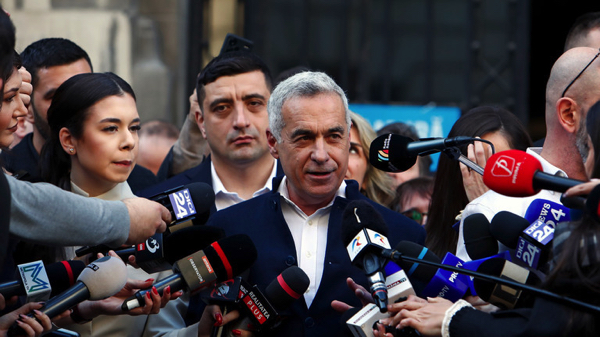
(NaturalNews) Calin Georgescu, the leading candidate in Romaniaâs presidential election rerun, was disqualified by the Central Electoral Bureau (BEC) for…

(NaturalNews) The CDC has introduced a new webpage listing conflicts of interest among members of its Advisory Committee on Immunization Practices (ACIP) since…

(NaturalNews) On March 7, the U.S. Office of the Comptroller of the Currency (OCC) announced that banks can now engage in cryptocurrency-related activities,…

(NaturalNews) In a shocking revelation, USAID-funded Ukrainian groups have been exposed for using American taxpayer dollars to defame U.S. Vice President J.D….
A mother and her 17-year-old daughter boarded an Indianapolis-area middle school bus last week and starting hitting an 8th-grade boy, according to WXIN-TV.
Warren Township School Police said in a report that officers were called just before 9 a.m. March 6 for a “simple assault disturbance” and trespassing at the intersection of East 35th Street and North Richardt Avenue, the station said.
‘You wanna put your hands on my brother? If I have to get back on this bus, I’m gonna kill you.’
WXIN said the “media narrative written in the police report” reads “parent and sister board brother’s school bus to fight.”
The station reported that a video of the fight was posted on Facebook. However, the video now appears to have been taken down.
WXIN, however, reported that the clip appears to show a student in a gray hoodie punching another student in a dark gray T-shirt. The student in the gray hoodie throws least six punches, the station said, adding that two females then walk toward the fight.
WXIN said the females grab at the student in the gray hoodie, and one of the females is seen standing atop a school bus seat and ripping the gray hoodie off him.
“Stop jumping him! Hey, don’t jump him!” a bystander yells at the two females.
But the two females begin throwing multiple punches at the gray hoodie-wearing student, and the punches appear to land on the student’s head, chest, and stomach, WXIN reported.
The station added that before delivering more punches, one of the females in the video asks the hoodie-wearing student, “You wanna put your hands on my brother? If I have to get back on this bus, I’m gonna kill you.” However, those outbursts aren’t audible on WXIN’s video report.
The station said the other female yelled at the person recording the incident, “I’m sick of you b***h-a** kids at this school. Yeah, record it!”
The video ends before the two females leave the bus, WXIN said.
You can view the station’s video report here about the incident; it includes some clips from the now-deleted video of the physical attack.
The police report states that three people were arrested on the following preliminary charges, WXIN said:
A 36-year-old Indianapolis woman was charged with battery (a Class A misdemeanor), disorderly conduct (fighting) (a Class B misdemeanor), intimidation (a Class A misdemeanor), and criminal trespass/refuse to leave (a Class A misdemeanor).A 17-year-old Indianapolis female was charged with battery (a Class A misdemeanor) and disorderly conduct (fighting) (a Class B misdemeanor).A 13-year-old Indianapolis male was charged with battery (a Class A misdemeanor) and disorderly conduct (fighting) (a Class B misdemeanor).
The station said no other information is provided in the police report or in the school’s statement.
Officials from Warren Township — which is about 20 minutes east of Indianapolis — told WXIN the district is taking “all necessary steps to address the situation” and asking witnesses to provide further information.
The station added that since “all charges listed in the police report are preliminary misdemeanors,” it’s not naming any of the individuals who were arrested.
Like Blaze News? Bypass the censors, sign up for our newsletters, and get stories like this direct to your inbox. Sign up here!
Physical attack, Indiana, Indianapolis metro area, Middle school bus, Mother, Daughter, Attack on 8th-grade boy, Arrests, Battery, Intimidation, Disorderly conduct, Warren township, Crime
Think of that joke meme from “The Simpsons,” the one in which a character asks, “Won’t somebody please think of the children?”
It pokes fun at the kind of people we modern Americans call “pearl-clutchers.” Whenever someone asks the question honestly — what is the effect of this music, this culture, on children? — our impulse is to smack it down with snarky comedy. After all, people who worry about what we’re doing to children are all prudes who really want to spoil our adult fun.
‘The Children We Left Behind’ includes enough of Coleman’s personal experience to connect the reader to a real person, a real child, who lived out the dysfunction the book identifies in society as a whole.
And anyway, what’s the big deal with obscene lyrics in rap and rock? That meddling old Tipper Gore was just a fuddy-duddy. Besides, it’s no big deal — kids are resilient!
No, they’re not. Children are not resilient; they are plastic, they are moldable, and they are vulnerable.
“Kids are resilient” is what self-centered adults tell themselves to justify their carousel of spouses and boyfriends, their quick divorces, their abandonment of their offspring to smartphones and the addiction of the internet.
Won’t somebody please think of the children? In his forthcoming book “The Children We Left Behind,” Adam B. Coleman asks us to take this question seriously — and to answer it like the grown-ups we purport to be. As Coleman’s book shows, modern parents are handicapping their children for life through their solipsistic obsession with their own adult wants while leaving their children’s genuine needs neglected.
“As an abandoned child, I’ve watched the adults in the West make the family unit about themselves, solely hinging on the relationship success or failure with their spouse rather than being motivated for the betterment of their children,” he writes.
As unwelcome as that statement may be to many parents, it is quite obviously true. “Divorce him — your kids need to see that their mother is happy,” we say to bolster our friends. Or, “You need to live your best life, and it’s great for your kids to see a working mom in action!”
Adam B. Coleman
“The Children We Left Behind” is part memoir, part social commentary. Coleman’s father walked out on him, his mother, and his sister in the 1980s before Coleman was old enough to go to school. As his mother took the small family from town to town and state to state, they found themselves homeless more than once. A family member or friend would sometimes offer them a room to stay in while they got on their feet, but sometimes, what seemed to be a kindly gesture turned into a trap when their hosts revealed themselves to be unstable, cruel, or dangerous.
Coleman’s mother tried to keep a steady job while Coleman and his sister tried to make new friends at a new school, over and over, as they went from one drab apartment to another with little hope of stability.
He notes that America has swung from demonizing single mothers 40 years ago to another, even more unhelpful extreme. Today, we make them into heroines. We say that single moms are superheroes and put them on a cultural pedestal so that any criticism of divorce and its effects on children are characterized as “attacking single mothers.”
But Coleman’s mom could not be both mother and father no matter how hard she tried. No mother, no father, can be both parents. Wives need husbands, husbands need wives, and children need a mother and a father.
The family’s peripatetic and unstable life led to a crisis in young Adam’s life that even jaded readers will find shocking. At 8 years old, Adam Coleman wanted to kill himself.
In the fourth chapter of his book, “Alone and Abandoned in Hell,” Coleman tells of how he ended up committed to a mental institution at age 8, punished for his inability to bear up under the weight of abandonment and inadequate parenting.
Neglected and abused children usually pay the price for the sins, and sometimes the crimes, of their parents. When children act out in distress because of unstable or abusive home lives, they get sent to institutions — child prisons — not their parents.
Tell me again how we prize children’s welfare above all other concerns.
Eight-year-old Coleman could not bear up under the strain any longer and had what we call a “nervous breakdown.” In one of the most affecting remembrances in the book, he tells us what happened that landed him in a psychiatric institution surrounded by other troubled children.
“‘If you love me, you’ll help me die,’ I implored my mother. I had verbalized to my mother my wish for me to crawl under my bed and pray for my bed to crush me to death so I could end the anguish I was experiencing. Even my sister remembers her broken little brother lying underneath the kitchen table, crying hysterically and seemingly inconsolable.”
Coleman spent months in this institution, and the only thing he learned was how to better hide his despair so that he never ended up behind bars or a locked door again. “I’m fine,” became his standard answer when someone would ask why he was so quiet.
“The Children We Left Behind” includes enough of Coleman’s personal experience to connect the reader to a real person, a real child, who lived out the dysfunction the book identifies in society as a whole.
Sadly, there is no happy ending for the relationship with his father. Aside from occasional visits to town, maybe once every few years, Coleman’s father never evinced any interest in the welfare of his son. “Visits” were really about his father making business connections and bunking down in a room that his son happened to be in at the same time.
Like most children from such broken homes, Coleman didn’t have a role model to peg his own behavior to when he became a father himself in young adulthood. After a year of dithering over whether to try for a career several states away (in hopes of giving his son a higher quality of life), Coleman finally decided that his son needed his father in the flesh now, not sometime later after everything else was put in place. He got in his car and drove back up north to be with his son and find his way to a better job with the boy at his side.
Coleman enacted what this reviewer sees as the book’s primary message: He made a choice to do the right thing. He made the choice his father should have made.
Twenty-first-century Americans don’t want to hear this, but it all comes down to individual moral choices. We like to let ourselves off the hook by complaining about how bad the job market is, how many “systemic forces” make it hard or impossible for us to do the right thing by our families and children. But these are just excuses, and no excuse will fill the hole left in a child’s soul by a parent who doesn’t care enough to put his offspring first.
The book’s final chapters offer the reader Coleman’s prescription for bringing up whole, healthy, secure children. Like most good advice, it’s simple and straightforward, a reminder of what we all really know already. The chapter titles are self-explanatory:
“Put Your Children Before Yourself and Don’t Be a Selfish Parent”
“Love Your Children More Than You Hate Your Ex”
And for the reader who was abandoned or neglected, the very last chapter speaks to them: “If You’ve Been Left Behind, Don’t Lose Hope.”
For anyone who came from neglect, abandonment, or abuse, that can be a tall order. Early childhood mistreatment changes a person permanently, and no children from such a background will have an easy time emotionally or spiritually. Re-raising yourself in adulthood, gaining the skills and perspective that you should have grown into naturally under your parents’ guidance, is damned hard work.
But it can be done, and Coleman did it.
Not because he “turned out fine.” He didn’t turn out fine. He became a stronger man and a good father in spite of his childhood, not because of it. No reader should look at Adam’s current success — a grown adult son, a happy marriage, and burgeoning career as an author and podcaster — as a kind of permission to leave one’s children to figure it out on their own. The book’s subtitle warns against that default thinking: “How Western Culture Rationalizes Family Separation and Ignores the Pain of Child Neglect.”
Will we stop joking and ask ourselves seriously, finally, if anyone will think of the children?
“The Children We Left Behind” will be released on April 1, 2025.
Lifestyle, Josh slocum, Adam b. coleman, Books, The children we left behind, Divorce, Family matters
A Tennessee man is accused of killing a teenager whom he found in bed with his wife. After the wife’s alleged lover was purportedly killed, detectives asked the homicide suspect what he was concerned about, and he said “his marriage.”
On Saturday, 41-year-old Jonathan Belk allegedly returned to his home in Dunlap, Tennessee, roughly 40 miles north of Chattanooga. Upon his arrival, Belk reportedly found a man in bed with his wife.
‘He enjoyed hunting, fishing, four wheelers, and working on everything.’
Police suspect that Belk stabbed Billy Jean Floyd to death.
Floyd, whose 18th birthday was just three days before his death, was found dead in the fetal position, stuffed in a garbage can.
When police arrived, they found Belk “standing in his doorway covered in blood,” with cuts on his hands, according to an affidavit.
Belk’s wife, 31-year-old Jada Gholston, also suffered several stab wounds that required her to be hospitalized at the Erlanger Sequatchie Valley Emergency Department in Dunlap, according to WTVC. Gholston’s stab wounds are said to be non-life-threatening, according to WDEF-TV.
The wife initially told law enforcement that a “man had jumped on her boyfriend while they were in bed,” police wrote in an affidavit.
Belk was arrested and jailed on criminal homicide charges.
Detectives allegedly asked Belk if he was concerned about any major issues other than his legal woes.
“I am worried about my relationship with my wife due to the fact that I offed him,” Belk allegedly responded.
Floyd, of Jasper, Tennessee, went by the nickname “Lil Bill,” according to his obituary.
“He enjoyed hunting, fishing, four wheelers, and working on everything,” the obituary reads. “He mostly enjoyed spending time with his family and friends.”
A family friend launched a GoFundMe campaign to raise money for Floyd’s funeral expenses.
Belk remains detained at the Sequatchie County Jail.
Belk is scheduled for his bond hearing on March 21.
Like Blaze News? Bypass the censors, sign up for our newsletters, and get stories like this direct to your inbox. Sign up here!
Murder, Crimes of passion, Cheating, Cheating wife, True crime, Homicide, Crime
While Americans struggle to afford life-changing medications, the Food and Drug Administration has effectively forced U.S. patients to subsidize Denmark’s booming economy. The agency’s recent declaration that the semaglutide shortage is “over” represents a staggering policy failure that benefits foreign pharmaceutical giants at the expense of American patients and health care innovation. Semaglutide, a GLP-1 receptor agonist, is the key ingredient in weight loss and diabetes medications that are reducing obesity nationwide.
The numbers tell the story: Novo Nordisk, the Danish pharmaceutical giant behind Ozempic and Wegovy, became the largest company in Europe at the end of 2023 after demand for Ozempic skyrocketed. This meteoric rise has transformed not just the company but an entire nation. Novo Nordisk was responsible for more than half of Denmark’s private sector job growth, which now boasts one of Europe’s fastest-growing economies. Pharmaceutical exports are driving half of the country’s 2.5% GDP growth in 2023, with anticipated growth of 3% in 2024 and 2.9% this year.
Americans pay the highest prices in the world for medications that fuel another nation’s economic boom.
The tiny Danish port town of Kalundborg, home to fewer than 17,000 residents, has become an unlikely boomtown. Novo Nordisk is investing an eye-watering $8.6 billion in expanding its facilities there. While Danes enjoy lower interest rates, expanded public amenities, and a robust job market thanks to the influx of American dollars, Americans face impossible choices about whether they can afford medication at all.
Novo Nordisk relies heavily on the American market, with more than half of its sales coming from the United States. This dominance helped sustain Denmark’s economy, preventing a recession.
The company’s dependence on U.S. consumers is reflected in its steep pricing. Ozempic costs $900 per month, while Wegovy is priced at $1,300 — a prohibitive expense for many Americans. For a time, an affordable alternative existed. When the federal government declared a semaglutide shortage, compounding pharmacies were allowed to produce lower-cost versions, offering them for hundreds of dollars less than the brand-name drugs.
That changed in February. Holdovers from the Biden administration declared the shortage over and set a deadline for compounding pharmacies to stop selling semaglutide alternatives. This move effectively drove the drug’s cost from under $200 back to more than $1,000.
The FDA’s decision carries devastating consequences for Americans who depend on these medications. Rural and underserved communities, which often relied on telehealth and compounding pharmacies when brand-name options were unavailable or inaccessible, will be disproportionately affected. Countless patients will be forced to abandon treatment due to cost barriers, leading to worsening health conditions and higher long-term health care costs.
The FDA’s decision represents a profound failure of regulatory policy. Rather than protecting American interests, it has sacrificed affordable access to critical medications to boost a foreign pharmaceutical giant’s profits and another country’s economic growth.
A better approach would balance legitimate safety concerns with the need for market competition to control prices. The FDA should immediately reassess its shortage determination and restore the ability of American compounding pharmacies to produce affordable alternatives. Insurance reforms should expand coverage for these medications, and policies need to ensure Americans aren’t paying premium prices that subsidize European health care systems.
Regulatory agencies must prioritize the health and financial well-being of American patients over the economic interests of foreign corporations and governments. Americans already pay the highest drug prices in the world, and their money should not be fueling another nation’s economic growth.
Policymakers must take action. Americans deserve access to affordable, life-changing medications without being forced to bankroll Denmark’s economic success. The FDA’s decision on semaglutide is more than bad health care policy — it is a failure to protect American consumers in favor of subsidizing foreign prosperity.
Fda, Ozempic, Food and drug administration, Novo nordisk, Big pharma, Drug prices, Denmark, Semaglutide, Exports, America first, Opinion & analysis
Former head of the Defense Intelligence Agency warns plotters their operation has been EXPOSED from the inside & they will face justice!
Watch & share this exclusive interview with Infowars writer Jamie White that was captured by Vivian Kubrick, daughter of the visionary Stanley Kubrick.

“This case could completely wipe out the ATF’s ability to create law and subvert congress, which would be a massive win for the Second Amendment.” [more…]

Elon Musk chimed in to question ‘how common’ this type of illegal activity is during American elections Bridgeport, Connecticut, the largest city in the state, [more…]

Chinese woman evades warrant for vehicular manslaughter after horror wreck caught on camera A Chinese woman fled back to her homeland after allegedly killing her [more…]

Downdetector has reported that several US banks are facing service disruptions on Friday morning. Update (1315ET): Fed Reserve Says ACH Error Impacting Customers Bitcoin literally [more…]
Footage shows male senior swiftly strike ball in attempt to make goal, inadvertently hitting female player directly in mouth. A female high school lacrosse player [more…]

Use promo code “ALEX” when you sign up on Mug Club to get one month FREE of the network’s exclusive broadcasts, investigative reports, comedy specials [more…]

Suspect in black Lamborghini attempts rob man at Erewhon Market before shooting him in street, police say A man was shot during an attempted robbery [more…]

Watch & share this massive LIVE broadcast to get the latest on America’s border invasion, Mideast war, the NWO depopulation agenda & SO MUCH MORE! [more…]