







“This case could completely wipe out the ATF’s ability to create law and subvert congress, which would be a massive win for the Second Amendment.” [more…]

I know what you’re probably thinking – there’s a catch. Well, there IS. But it’s not some special promo rate or a first-year deal. The [more…]
FOIA requests target Treasury, FBI, and DHS over alleged financial surveillance of conservatives and coordination with private organizations.

(NaturalNews) Europa, Jupiterâs icy moon, has a subsurface ocean containing twice the volume of Earthâs oceans, kept liquid by tidal heating. This, along…

(NaturalNews) Russian forces executed a daring and unconventional military operation, codenamed Operation Potok, in the Kursk Region. The mission involved 800…
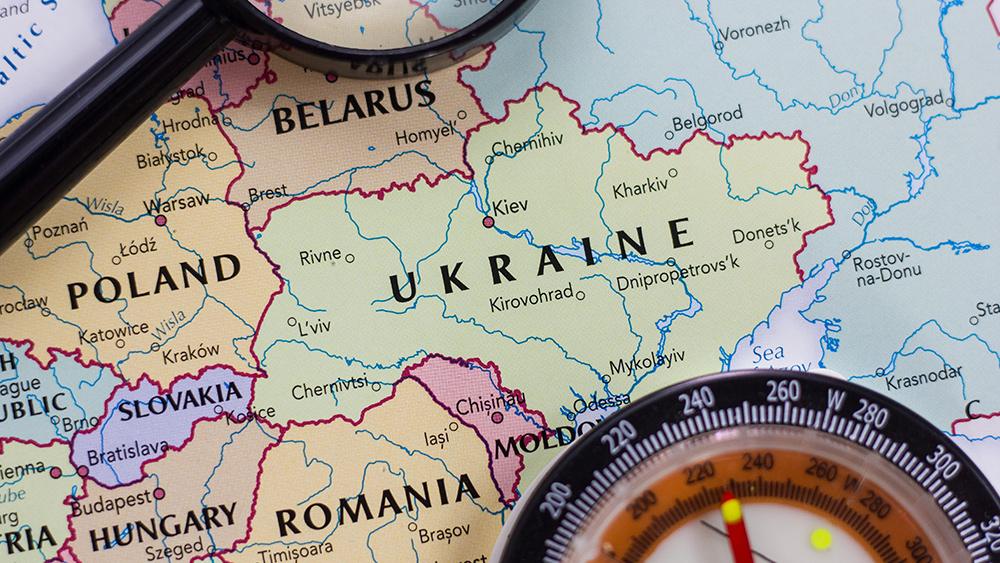
(NaturalNews) Ukraine has lost access to critical satellite imagery and intelligence-sharing services provided by U.S. companies and agencies, including Maxar…

(NaturalNews) ⢠Columbia University student and legal U.S. resident Mahmoud Khalil was arrested by federal agents without being charged with any crime.⢅

(NaturalNews) Throughout the years I have written about the traditional national media quite often, from trust issues, to news outlets acting like the propaganda…

(NaturalNews) Start spring cleaning by decluttering your home room by room. Sort items into “Keep,” “Donate,” and “Toss” piles to free up space and create…

(NaturalNews) The poll indicates the lowest level of American sympathy for Israel since 1998, with only 46 percent of U.S. adults expressing support, a…

(NaturalNews) Rep. Michael Cloud (R-TX) highlights the stark ideological divide in America, contrasting the Republican Party’s alignment with constitutional…

(NaturalNews) The “Truth Virus” is reshaping global media consumption, as independent news sources gain traction and challenge mainstream narratives,…

(NaturalNews) Jamie White, a prominent Infowars journalist, was brutally murdered at his Austin home, with no arrests made nearly 36 hours later. Alex Jones…

(NaturalNews) Beware of the Chicken Flu, also known as âBird Flu,â that only happens in America because the chickens donât have passports to travel to Canada…
The U.S. Supreme Court recently let the world know that it has the power to force presidential administrations to pay billions of dollars to dubious organizations, regardless of the case’s merits. If a judge sides with a nongovernmental organization that demands automatic payment for its alleged “work,” the Trump administration simply must hand over the money pronto.
From one angle, this may seem like an unfortunate speed bump on the way to eliminating waste and fraud in the government. However, from another angle, this may serve as a needed wake-up call to the world about what’s really holding back reform efforts.
Compared to the debt crisis, concerns about disregarding a dubious Supreme Court ruling seem insignificant.
John Daniel Davidson provided a clear summary of an otherwise complex case filled with legal jargon, contradictory rulings, and vague claims.
The case began when the Trump administration attempted to halt payments to USAID after uncovering evidence of waste and fraud. In response, several NGOs that received USAID funds objected and demanded the payments continue. A district court judge in Washington, D.C., Amir Ali, issued a temporary restraining order to override the pause. He later issued a second order requiring the government to distribute about $2 billion in grant funds within 36 hours.
The Trump administration challenged these rulings, taking the case to the U.S. Supreme Court. The Court then intervened, blocking the lower court’s decision and allowing the administration to argue that Judge Ali’s orders should be overturned. The administration maintained that the original pause should stand, especially since the NGOs had yet to justify their entitlement to the $2 billion. If they believe they have a valid claim, they can present their case in a federal claims court, the proper venue for such disputes.
Rather than affirm the constitutional authority of the executive to manage his own budget, Chief Justice John Roberts, Justice Amy Coney Barrett, and the three liberal justices sided with Ali and the NGOs, demanding that the Trump administration quit stalling and pay up.
Justice Samuel Alito’s blistering dissent sums up the matter succinctly: “The Government must apparently pay the $2 billion posthaste — not because the law requires it, but simply because a District Judge so ordered.”
To clarify the situation, consider this analogy:
A man buys a restaurant and reviews the budget left by the previous owner. He notices questionable purchases and realizes the staff has been dishonest. Concerned about financial mismanagement, he halts payments and reassesses the budget. But the staff, afraid he’ll uncover deeper corruption, enlists a crooked cop to block his efforts. When the new owner challenges this interference in court, the judge sides with the corrupt staff and officer.
In both this scenario and the Trump administration’s case, two paths forward exist. One option, echoing the absurdity in Franz Kafka’s “The Trial,” is to accept an irrational ruling and move on, assuming that legal chaos is inevitable. With over 100 injunctions still under appeal, the administration could hope for a more favorable decision in the future — but there’s no guarantee.
The other way would be to ignore this ruling and get to work. And before corporate media pundits cry “constitutional crisis,” they should consider the bigger issue: The government wastes trillions of taxpayer dollars on programs no one asked for, while the country drowns in debt. Compared to that crisis, concerns about disregarding a dubious Supreme Court ruling seem insignificant.
Yet, most justices refuse to acknowledge this reality. Instead, they insist on upholding a system that cannot sustain itself. As economist Jeffrey Tucker recently noted, when unlimited money flows through a system without accountability, and no one is incentivized to ensure it is spent wisely, bankruptcy is practically inevitable.
A fitting analogy would be the scholars of Constantinople debating how many angels could dance on the head of a pin while a horde of Ottoman Turks prepared to sack the city. Today, our judiciary engages in similar frivolities — deliberating over payments to ineffective NGOs while the federal government careens toward insolvency.
Will ignoring the ruling upset those who cling to the sanctity of the courts and the bureaucrats who exploit that deference? Of course. But when the alternative is national bankruptcy, Americans have no other choice.
Supreme court, Doge, Ngos, Usaid, Corruption, National debt, Bankruptcy, John roberts, Amy coney barrett, Samuel alito, Donald trump, Nullify orders, Nullification, Constitutional crisis, Opinion & analysis
Wendy Sachs wasn’t shocked to see Hollywood ignore the anti-Semitism spike in the wake of the Oct. 7 attacks.
The author and filmmaker learned firsthand how the industry recoiled at that bitter truth.
‘It’s not a political film. … This is truly about how anti-Semitism has mutated over time. It’s about Islamic extremism vs. democracy.’
Sachs, whose previous films include the feminist political documentary “Surge,” pitched agencies on a film capturing anti-Jewish hate over the last year-plus.
“Everyone passed,” Sachs told Align. “There’s an allergic reaction in Hollywood to this kind of film. Anything adjacent to Israel or Jews, unless it’s anti-Israel or an attack on the Israeli government … anything at all sympathetic to Oct. 7 is radioactive.”
Case in point: The pro-Palestinian film “No Other Land” won the Academy Award for Best Documentary Feature Film earlier this month.
The indie film scene is no better, Sachs claims.
“It’s absolutely nuclear when it comes to any kind of sympathy for Oct. 7,” Sachs says.
She told herself she’d never make another independent film again, knowing how arduous that process can be.
Sachs saw video of pro-Palestinian protesters celebrating Hamas and the terror attacks and had a change of heart. When 31 student groups at Harvard University blamed the assault on Israel, not Hamas, she “felt like the world had lost its mind.”
“We had never experienced anything like this before, a modern-day Kristallnacht,” says Sachs, recalling the Nazis’ brazen attack on Jewish neighborhoods in November 1938.
Sachs’ “October 8,” opening nationwide tomorrow, shows how swiftly the anti-Israel protests erupted following Hamas’ terror attack that killed 1,200 citizens and took 251 hostages.
The title, sadly, says it all.
The donor-funded “October 8” features Jewish student leaders, who were harassed and hunted in the weeks following the attacks. We also see endless protests that quickly turned violent and a stunning silence from human rights groups.
We also meet two exceptions to the Hollywood rule regarding anti-Semitism.
“I felt completely betrayed by Hollywood,” “Will & Grace” alum Debra Messing, an executive producer on the film, says in the documentary. Actor and comedian Michael Rapaport weighs in, too.
“Hollywood celebrities speak out about so many differing things … you should be ashamed of yourself for not saying anything about the [Israeli] hostages,” Rapaport shares mid-film.
Stars like Messing, Rapaport, Patricia Heaton, and John Ondrasik are the rare celebrities to speak out on these matters. Sachs thinks she knows why an industry addicted to addressing societal ills has gone virtually silent on anti-Semitism.
“People are afraid their careers will take a hit. They don’t want to be canceled or lose work over this,” she says. “The risk they feel is too great.”
The documentary could have taken a partisan slant. Consider how the Biden administration did little to confront anti-Jewish hate flowering nationwide.
Sachs took a different path.
“It’s not a political film. … This is truly about how anti-Semitism has mutated over time,” she says. “It’s about Islamic extremism vs. democracy.”
The documentary explores the media’s entrenched, anti-Israel’s bias, perfectly captured by the New York Times. The Gray Lady rushed to blame Israel for a 2023 Gaza hospital bombing, taking Hamas’ word in the process.
“The New York Times, NPR, and the BBC … criticize Israel in a way they don’t with any other country,” says Sachs, a self-described New York Times’ subscriber since her college days. The hospital incident highlights “how much rot there is the media,” she adds.
Sachs has shown her film at several college campuses, screenings that required more than just the usual audio/video gear.
“I don’t think other films have to worry about security,” she says of the heavy police presence required to screen “October 8” on campuses.
Sachs’ film may strain for an apolitical spirit, but she approved of the Trump administration’s recent crackdown on Columbia University for failing to protect Jewish students.
“If it were any other group like African American students being harassed or targeted … there would be outrage, and there would be action,” she says.
Sachs sees some hope moving forward, including the brave Jewish students highlighted in the film, who fought back against the hate.
“The Jewish community is not alone … we worked hand in hand with the African-American community in the past,” she says. “We need to do it again.”
Other groups can help, as well.
“The Iranian and Persian communities really understand what extremism looks like,” she adds. “[Jews are] the minority of the minority here in America, less than 3% of the population. We can’t do it alone.”
October 7, October 8, Movies, Wendy sachs, Antisemitism, Hamas, Israel, Christian toto, Culture

(NaturalNews) Democratic senators, Gary Peters, Tina Smith, and Jean Shaheen, will not seek re-election due to a corruption scandal involving USAID funding…

(NaturalNews) Mike Adams, alias the Health Ranger, exposes potential fraud in PCR testing due to lack of certified reference materials for isolating SARS-Cov-2…

(NaturalNews) The U.S. Space Force has launched a prototype payload (LDPE-3A) to detect when American satellites are being observed, tracked, or targeted by…

(NaturalNews) The Environmental Protection Agency (EPA) under Biden prioritized DEI initiatives, including gender-neutral restrooms and pronoun policies, over…

“This case could completely wipe out the ATF’s ability to create law and subvert congress, which would be a massive win for the Second Amendment.” [more…]

Elon Musk chimed in to question ‘how common’ this type of illegal activity is during American elections Bridgeport, Connecticut, the largest city in the state, [more…]

Chinese woman evades warrant for vehicular manslaughter after horror wreck caught on camera A Chinese woman fled back to her homeland after allegedly killing her [more…]

Downdetector has reported that several US banks are facing service disruptions on Friday morning. Update (1315ET): Fed Reserve Says ACH Error Impacting Customers Bitcoin literally [more…]
Footage shows male senior swiftly strike ball in attempt to make goal, inadvertently hitting female player directly in mouth. A female high school lacrosse player [more…]

Use promo code “ALEX” when you sign up on Mug Club to get one month FREE of the network’s exclusive broadcasts, investigative reports, comedy specials [more…]

Suspect in black Lamborghini attempts rob man at Erewhon Market before shooting him in street, police say A man was shot during an attempted robbery [more…]

Watch & share this massive LIVE broadcast to get the latest on America’s border invasion, Mideast war, the NWO depopulation agenda & SO MUCH MORE! [more…]