





Footage shows male senior swiftly strike ball in attempt to make goal, inadvertently hitting female player directly in mouth. A female high school lacrosse player [more…]

The sharp drop in abortions in Florida in 2024 are the result of the heartbeat law that went into effect that year, which unfortunately does [more…]
A digital ID meant to unify access across government instead exposed a blueprint for bureaucratic negligence, highlighting the dangers of the push towards digital ID.
The move marks progress after years of pressure, but its limited scope and political fragility raise doubts about lasting impact.
Policing transparency collides with digital exposure as Garda leadership eyes curbs on citizen journalism.
The conservative think tank is constantly attacked by diversity-preaching radical leftist groups, irritated by the views that it formulates and promotes in the self-proclaimed capital [more…]
Ahead of the promised abolition of refugee resettlement programs, the final days of the left-wing coalition in Germany will see hundreds of migrants flown in [more…]

(NaturalNews) Track food using the “first in, first out” (FIFO) method. Place new groceries behind older ones to avoid spoilage. Plan weekly meals, shop with…
(NaturalNews) Omega-3 fatty acids are crucial for brain health, supporting development, memory and mood. A study published in Pediatric Endocrinology,…

(NaturalNews) Commercial pumpkin spice lattes are high in sugar and saturated fat due to sugary syrups, whole milk and dairy-based creamers. If consumed…

(NaturalNews) Arizona counties are partnering with the Department of Homeland Security (DHS) to verify voter citizenship status, removing non-citizens from…

(NaturalNews) NASAâs James Webb Space Telescope revealed TOI-270 d, a rocky super-Earth 73 light-years away, with a thick, scorching atmosphere (~1,000°F),…

(NaturalNews) Optimal heart health requires aligning all seven sleep dimensions â duration, continuity, timing, regularity, alertness, architecture, and…

(NaturalNews) Yellowstoneâs upper magma chamber is just 2.3 miles deep, closer than previously thought, raising new questions about eruption risks….
(NaturalNews) Two organizations funded by George Sorosâ Open Society Foundations successfully halted President Trumpâs plan to deport over 500,000 migrants…
Someone just sent me a Passover greeting that traced the arc of tyranny from the ancient pharaohs to our current “dictator” in the White House. The message left little to the imagination: Donald Trump, apparently, is the modern-day pharaoh.
The sender works, unsurprisingly, in our state bureaucracy in Harrisburg. She was happy as a lark during Joe Biden’s “compassionate” presidency, but now seethes at his swamp-draining successor.
This isn’t a debate over rights. It’s a collision between incompatible worldviews.
In the past, I might have written her back. I might have reminded her who actually weaponized the federal government against political opponents. I might have pointed to the sweeping executive orders, the censorship collusion, and the criminalization of dissent that flourished under the true despotism of President Joe.
Unlike Biden and his handlers, Trump has made his intentions clear — and he’s doing what he promised. Transparency used to matter in politics. Apparently not any more.
I might also have noted the waste, incompetence, and embedded corruption in the federal bureaucracy, including the office that cuts her checks. The Department of Government Efficiency was not a stunt. It was a necessary start. And its housecleaning is long overdue.
I’ve come to realize that trying to debate this acquaintance would be pointless. We’d only talk past each other. Words don’t mean the same thing to both of us. It’s not that I believe in “freedom” or “constitutional government” and she doesn’t. It’s that the definitions we assign to those words are so radically different that even if we used the same language, we wouldn’t truly agree.
This insight came into focus while reading A. James Gregor’s “The Ideology of Fascism,” a book that sheds valuable light on political semantics. Gregor notes that fascists and communists genuinely believed in their own concepts of “democracy” and “freedom.” They weren’t just twisting the language — they inhabited entirely different ideological universes. And so, certain political divisions can’t be bridged. The terms are familiar, but the meanings diverge.
To the woke left, for instance, it seems entirely reasonable to remove children from parents who “misgender” them or who insist on using biologically accurate pronouns. In their framework, punishing such offenses against identity isn’t oppressive — it’s the fulfillment of authentic freedom. The law, they argue, is merely shielding the vulnerable from unnecessary psychological harm.
This isn’t a debate over rights. It’s a collision between incompatible worldviews.
It’s apparently ignorant — or worse — to define “fascism” narrowly, as something confined to the interwar European dictatorships. According to today’s progressive orthodoxy, fascism now flourishes wherever LGBTQ guidelines aren’t strictly followed or wherever anyone dares to advocate for a less “compassionate” form of government — say, one that distinguishes between citizens and undocumented migrants.
The logic, such as it is, goes something like this: Germany once drew sharp legal lines, and look where that led — tyranny and genocide. Ergo, any policy that establishes firm national boundaries or citizenship norms must be a step toward fascism.
Meanwhile, “oligarch” no longer refers to the mega-wealthy class in general. As I’ve gathered from watching MSNBC, an oligarch is now anyone who donates to MAGA Republicans or refuses to get rid of a Tesla after learning that Elon Musk is a “fascist.”
Likewise, the label “white nationalist” has been repurposed to apply to any MAGA-aligned Republican who fails to support the Democrats’ latest campaign against “white nationalism.” Trump’s support for voter ID laws or efforts to deport criminal illegal aliens? Those too, we’re told, reek of white nationalism — never mind that many of the ICE agents enforcing those policies have dark skin. That detail is irrelevant because it doesn’t fit the narrative.
What many on my side view as a sprawling, wasteful, and unconstitutional bureaucracy, our political opponents treat as the very embodiment of constitutional government. The Constitution they revere is not the one written in Philadelphia. It is a “living document” — one that demands a constantly expanding class of civil servants to fulfill the goals of “democracy,” which now include identity politics, lifestyle diversity, and environmental dogma.
Trump, in their view, is a modern pharaoh not because he consolidates power but because he makes life harder for the benevolent bureaucracy. He obstructs the compassionate machinery of the state. Worse, he sows “chaos” — unlike the Democrats, who have dutifully welcomed millions of illegal migrants to enrich America with fresh waves of sanctioned diversity.
None of this is to say that millions don’t cynically exploit these twisted definitions of political virtue. Nor am I suggesting a moral relativism. I know where I stand. But it’s clear that large numbers of voters have swallowed these ideological rebrandings whole. And when basic political terms no longer mean the same thing to both sides, meaningful debate becomes nearly impossible.
Western Europe now offers a sobering example. Countries across the continent have begun curtailing freedom of expression — not in spite of democracy but in its name. To those driving this trend in what we still, somewhat naively, call the “free world,” there is no contradiction between repression and the preservation of liberty.
Even European governments that our own vice president has scolded for their illiberal tendencies insist they are safeguarding democracy and freedom. Against what? Against such “reactionary” threats as national sovereignty, religious conviction, and traditional gender norms.
Even worse, a growing number of voters in both Europe and the United States agree. The language of liberty has been hijacked to justify its opposite. And for now, the hijackers have no shortage of passengers willing to go along for the ride.
Fascism, Donald trump, Democracy, Elon musk, Administrative state, Dictator, Bureaucracy, Liberty, Language manipulation, Narrative, Civic institutions, Illegal aliens, Oligarchy, Opinion & analysis
Last spring’s “Civil War” treated audiences to the spectacle of America finally quelling a MAGA-coded revolt that had split it in two.
The movie’s Trump-like villain played on fears that the defeated president’s comeback bid — at the time building momentum — might actually work. His cowardly, ignominious death at the end offered reassurance that we would soon witness Donald J. Trump’s permanent exit from the political scene.
‘She’s the Mamala of all Mamalas,’ gushes Daily Beast film critic Nick Schager.
Who knew that a scant few months later, reality would hew so literally to fantasy? Unlike his fictional counterpart, of course, Trump survived — and he did so with a stirring display of courage that arguably clinched his victory that November.
By now, the country has more or less accepted Trump 2.0. Yes, there is still a “resistance,” but it lacks energy and focus; all but the most recalcitrant Democrats have started to turn their gaze inward.
Under the circumstances, a movie featuring a Kamala Harris-like president kicking butt and saving the world might be considered in poor taste. In fact, Harris’ campaign was such a disaster that one would expect Amazon Prime to shelve the movie entirely, just as any cinematic depictions of skyscrapers toppling were pulled following 9/11.
Nevertheless, “G20” persists in trying to entertain a weary nation.
“G20” began production in January 2024, six months before Harris became the official Democratic candidate. Still, one can’t help but sense a certain confident political prognostication in the setup. If so, the filmmakers were widely off the mark, and now the film must be enjoyed as a bittersweet, Quentin Tarantino-esque exercise in alternate history: What if Orange Hitler had been taken out?
The critics seem to have taken the bait. “She’s the Mamala of all Mamalas,” gushes Daily Beast film critic Nick Schager.
“[Viola Davis is] Kamala Harris via John McClane, John Wick, Rambo, and Harrison Ford’s ‘Air Force One’ leader. … Part ‘Die Hard,’ part wish-fulfillment saga for a post-2024 present that didn’t come to pass, it’s a fantasy of feminist and U.S. might that’s chockablock with implausibilities.”
“G20” follows President Danielle Sutton attempting to solve world hunger in third-world countries through an ambitious digital currency project. Due to her perceived weakness in diplomatic skills and a rowdy partying daughter running around embarrassing her, Sutton is struggling to get her plans taken seriously.
Attempting to sell the plan at the annual G20 Summit, she finds the event attacked by terrorists looking to enrich themselves through a global cryptocurrency pump-and-dump scheme. Having escaped the attack, Sutton is now locked in the building as the last hope to save the global economy by using her latent skills as a former soldier to fight back and sneak through the massive compound.
In other words, what we have here is indeed another version of Bruce Willis’ John McClane. Not a problem in itself; many perfectly decent movies have emerged from the basic premise: “Under Siege,” “Speed,” “The Rock,” “Run Hide Fight,” as well as the rah-rah pro-Obama actioner “White House Down” — to which this film feels eerily similar.
But like all movies in the genre, what it does with the setup is what sets “G20” apart, especially given that it wears its politics on its sleeve.
Star Viola Davis (“Woman King,” “Suicide Squad”) has downplayed any overt comparison to Harris in her interviews, stressing that we never find out which party her character belongs to. She’s been content to note with some melancholy that, “I do not think it’s a suspension of disbelief to imagine someone who looks like me as the president,” while stating that she just wants the film “to reach people.”
And yet her president Sutton parallels Kamala Harris to such an extent — from her fashion and haircut to the criticisms she endures — that it’s impossible not to make the comparison. And while it’s a modestly entertaining actioner, the end product feels distracting and flawed.
For an action flick, it spends too much of its precious screen time dialoguing about the global monetary system and the perceived weakness of the dollar. As RogerEbert.com’s Daniel Roberts puts it, “the script is so issues-based that it strangles the film’s mood.”
Wonkiness aside, at its core “G20” is the story of a strong woman of color triumphing over misogyny and racism to earn her place as the most powerful leader in the world. She’s doubted by everybody from the U.K. prime minister to the press, but slowly earns their respect until even her rebellious daughter is calling her a “badass.”
By the end of the movie, President Sutton can do no wrong. While we’re never told her approval rating, we can only imagine she’s putting up first-term Obama numbers. And so “G20” offers an escapist fantasy for anyone traumatized by Trump’s relentless efforts to make good on his promises.
Remember the old protest sign — “If Hillary won we’d be at brunch right now”? It still holds true. Imagine if the media-generated cult of Kamala had had actual popular support. Instead of immigration and tariffs, our table talk would mostly concern the failure of Republicans to take the first black woman president seriously.
Another round of mimosas! Come to think of it, “G20” may be the scariest horror movie you’ve seen in years.
Culture, G20, Tyler hummel, Kamala harris, Die hard, Movies, Entertainment, Movie review
(NaturalNews) Olive oil, particularly extra-virgin (EVOO), is high in monounsaturated fats (oleic acid) and polyphenols that can reduce inflammation, improve…
(NaturalNews) Endrulat argues that government is an artificial system of control, contrary to the natural order of the universe, which operates through…
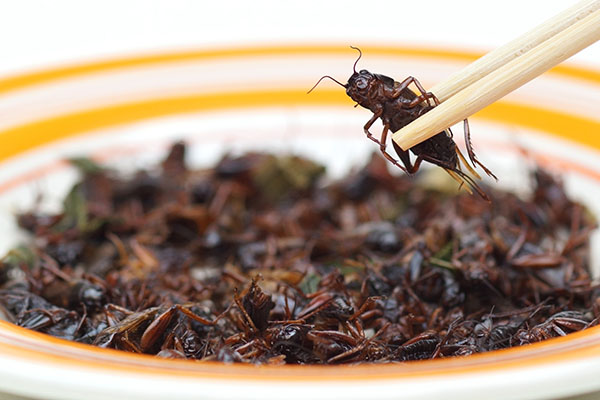
(NaturalNews) The University of Delaware (UDel) offers a course called “Insects as Food,” taught by entomology professor Michael Crossley, where students learn…

(NaturalNews) Scientists discovered bizarre new sea creatures in the Southern Ocean, including sea pigs, giant sea spiders, and sea butterflies. Sea pigs…

Footage shows male senior swiftly strike ball in attempt to make goal, inadvertently hitting female player directly in mouth. A female high school lacrosse player [more…]

Use promo code “ALEX” when you sign up on Mug Club to get one month FREE of the network’s exclusive broadcasts, investigative reports, comedy specials [more…]

Suspect in black Lamborghini attempts rob man at Erewhon Market before shooting him in street, police say A man was shot during an attempted robbery [more…]

Watch & share this massive LIVE broadcast to get the latest on America’s border invasion, Mideast war, the NWO depopulation agenda & SO MUCH MORE! [more…]

Is this just another cycle, or is it the END? Martin Armstrong of Armstrong Economics published an article this week about the so-called Socrates program and how [more…]

“I assure you all options are open on the southern front. They can be adopted anytime.” Summary recap: Hezbollah Secretary-General Hassan Nasrallah’s speech went for [more…]

Putin orders planeloads of humanitarian aid to be sent to Egypt The Russian Ministry Emergency Situations said on Friday that it would send two aircraft [more…]

It is Tunisia’s duty to stand with the Palestinians, its president has said The Tunisian parliament on Thursday began discussing a bill that would define [more…]