






“This case could completely wipe out the ATF’s ability to create law and subvert congress, which would be a massive win for the Second Amendment.” [more…]


(NaturalNews) Astronomers found potential biosignatures of life on exoplanet K2-18b using the James Webb Space Telescope. Dimethyl sulfide (DMS), a molecule…
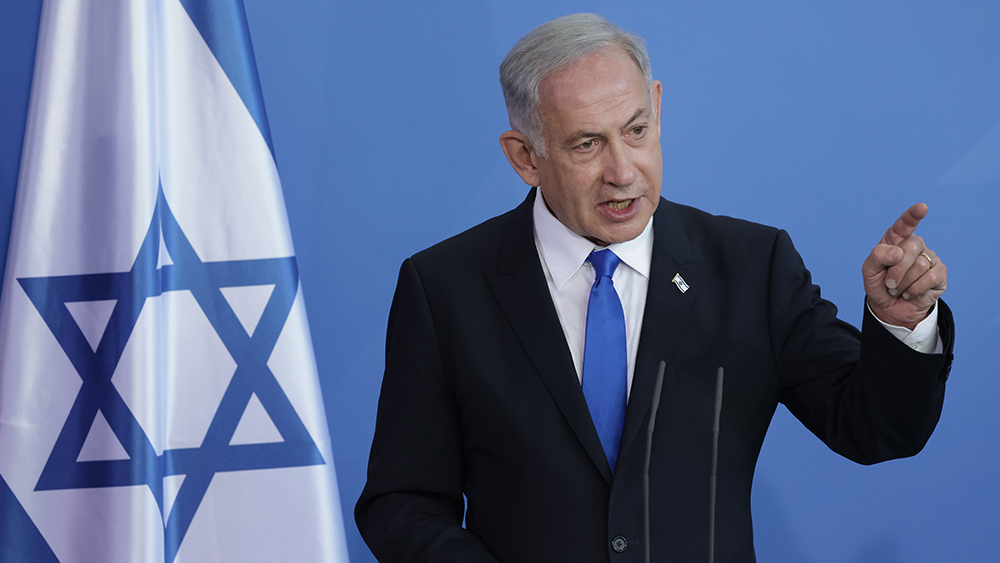
(NaturalNews) Trump rejects Netanyahu’s push for a U.S.-backed military strike on Iran, opting for diplomacy instead. Israeli plans included commando raids…
(NaturalNews) The March 22, 2024, terrorist attack at Moscowâs Crocus City Hall â linked to Tajik suspects â killed 144 people, triggering a surge in…
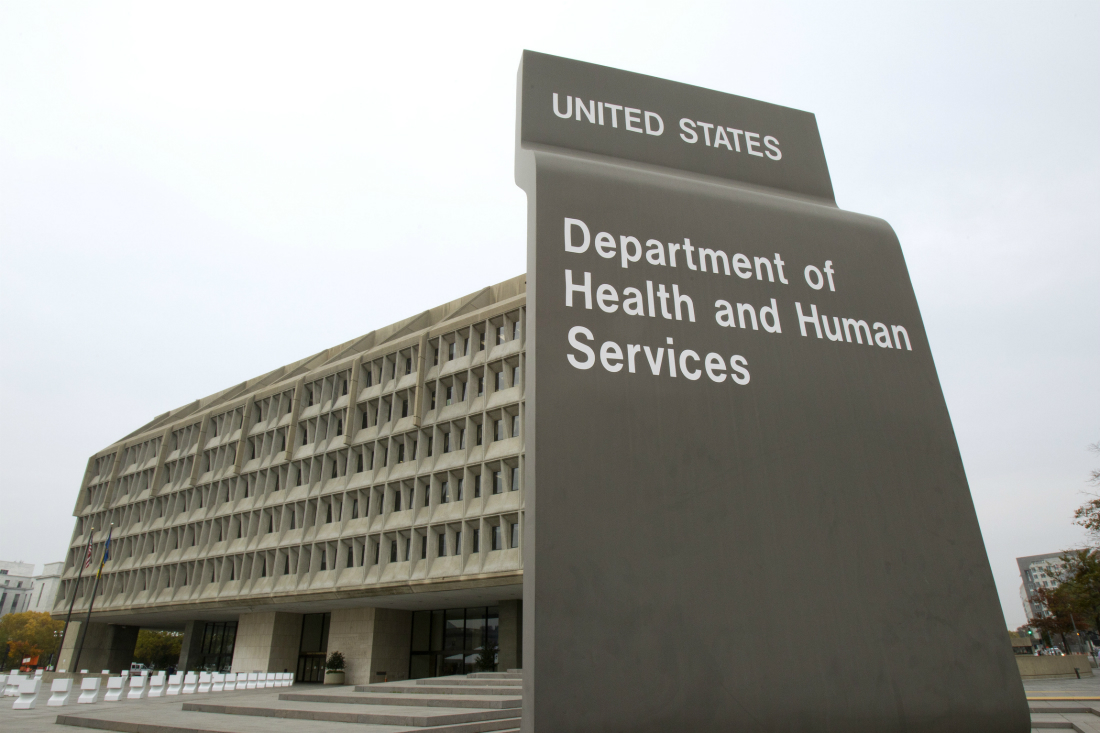
(NaturalNews) HHS Secretary Robert F. Kennedy Jr. has called for an end to “epidemic denialism” so that issues of public health importance (like the autism…

(NaturalNews) President Trump emphasizes his “fair trade” agenda, using tariffs as leverage in negotiations with Japan, the EU and Mexico, aiming to reduce…
One of the Midwest’s more popular microbreweries is showing its support for the Second Amendment with the release of its first India Pale Ale — 2nd Amendment New England IPA.
Illinois native Jeff Alcorn and his sons Trevor and Cameron started Tridentine Brewing Co. as a hobby, naming it in honor of their strong Catholic faith.
Not wanting their beer to get lost in a sea of IPAs, Tridentine went with a style focusing on ‘more traditional and maltier expressions.’
When their home brews proved popular, the family partnered with Madison, Wisconsin-based Karben4 Brewery to launch their first commercially available beer in October 2024. Since then, the company has surged in popularity, building a fan base of 20,700 X followers and 6,400 Instagram followers and landing a major Forbes profile in November.
Trevor describes 2nd Amendment as a refreshing, mellow, and juicy New England-style IPA that is more approachable than contemporary IPA products. Its patriotic and pro-gun-rights branding reflects the company’s stances on these issues.
“We actually canned the batch on Tuesday, April 1, and it started to hit some stores, but it wasn’t widespread across all the locations we’re at in Wisconsin,” says Trevor. “I didn’t get the social media stuff up until late Saturday, but it’s getting out there more and it’s pretty well received. People loved the artwork even before we brought the beer to share, and now that people have had the beer, the reception is pretty good.”
2nd Amendment is the brewery’s fourth release. Like its predecessors, it tells a story through its packaging — an eye-catching can designed by Catholic illustrator Chris Lewis.
Tridentine’s Quartermaster Jerry Blonde Ale pays tribute to late family patriarch Jerry Alcorn, who served in the U.S. Navy, while Cristeros Mexican Lager honors Catholics martryed by Mexico’s socialist government in the 1920s. Dies Irae Imperial Stout alludes to the final judgment at the end of time. The company expects to launch a fifth beer this summer.
While 2nd Amendment may seem more explicitly topical than the other beers, Trevor says the message is ultimately timeless.
“The timing didn’t have to do with politics per se, with what’s going on. This is just our strong belief in the God-given rights we have as Americans and supporting those. That’s the driving force behind it, and it ties into the patriotic theme. We want to drive home the message that being patriotic is not just a holiday thing. For us, honoring and saluting our veterans and our country is something we want to do year-round.”
Trevor also wanted the can’s artwork to stress that the Second Amendment applies to all Americans, not just those in the military.
“We wanted to show … a regular farmer,” he says. “Someone who wasn’t in a Continental Army uniform [so we could] highlight the reason for the Second Amendment: for our right to firearms to defend ourselves and our community if needed.”
Tridentine Brewery Co.
As for making it an IPA, Trevor says it just made sense. Given that IPAs control a 46% share of the craft beer industry, demand has been high for the company to branch out of lagers, stouts, and blonde ales.
Not wanting their beer to get lost in a sea of IPAs, Tridentine went with a style focusing on “more traditional and maltier expressions” seen in IPAs from New England — a perfect fit for the patriotic theme.
Tridentine Brewing Co.’s motto is “Brewing beer for the greater glory of God,” and this is reflected at all levels of the company’s work. Its social media presence is outspokenly Catholic, the family prays before brewing sessions, and the brewery was even blessed by a priest.
Tridentine beers are currently only available in Wisconsin. The company’s contract with Karben4 and state liquor laws have slowed the rollout to other states. Still, the company hopes to expand distribution, starting with the Alcorns’ home state of Illinois and eventually to other states. Given the passionate evangelization the beer inspires online, Tridentine seems well equipped to hit the target.
Abide, Faith, Beer, Brewery, Tridentine brewing co, Catholic, Lifestyle, Provisions
President Donald Trump has moved faster than anyone expected to secure the U.S.-Mexico border. His latest action — deploying the U.S. military to the Roosevelt Reservation, a 60-foot-wide strip of federal land spanning the border in California, Arizona, and New Mexico — is a necessary step to defend American sovereignty.
A White House memorandum issued April 11 authorizes the military to take temporary control of the corridor, detain individuals attempting illegal entry, and support key security operations, including barrier construction and surveillance. With drug cartels, human traffickers, and other criminal threats exploiting the southern border, this deployment offers a direct, long-overdue response to a crisis the political class has allowed to fester for years.
The military brings what civilian authorities can’t: logistical power, surveillance, and manpower. We’ve seen it work before.
Established in 1907 by President Theodore Roosevelt to safeguard the border, the Roosevelt Reservation provides the ideal legal framework for President Trump’s latest deployment. By designating the strip as a “National Defense Area,” Trump has empowered the military to act decisively within a clearly defined legal perimeter.
This renewed focus on border security comes none too soon. Under President Biden, the situation along the reservation deteriorated. In 2022, frustrated by the White House’s inaction, Arizona Gov. Doug Ducey (R) ordered shipping containers stacked along the reservation to block illegal crossings. His successor, open-borders Democrat Katie Hobbs, wasted no time removing them.
The Trump memorandum directs the Departments of Defense, Interior, Agriculture, and Homeland Security to transfer jurisdiction of the Roosevelt Reservation to the Pentagon. This move allows U.S. troops to detain border trespassers until Border Patrol can process them.
This isn’t “militarizing” the homeland — it’s using federal authority to defend it. The chaos Biden unleashed now demands real action. Trump’s strategy puts American citizens, not politics, first.
The need for this action is clear. Even with reports of fewer illegal crossings, the southern border remains a pipeline for deadly drugs like fentanyl — which killed more than 70,000 Americans in 2023. Cartels continue to exploit weak enforcement, using remote corridors like the Roosevelt Reservation to move narcotics and human trafficking victims deeper into the country.
Critics rushed to label Trump’s deployment an overreach, but their objections don’t hold up. Some claim the move violates the Posse Comitatus Act, the 1878 law restricting military involvement in domestic law enforcement. One activist even called the strategy a “crazy” attempt to skirt the law by labeling illegal aliens as trespassers on military land.
That argument is nonsense. The Posse Comitatus Act allows exceptions during national emergencies, and Trump’s declaration of a border emergency provides that authority.
What’s more, the military’s role under the April 11 memorandum is narrow and lawful. It simply detains border trespassers on federal land until civilian authorities take over. This mirrors past deployments under both Republican and Democratic presidents. The Pentagon isn’t rounding up citizens or patrolling cities. It is securing a narrow federal corridor explicitly designated for border protection.
Some Democrats and activist groups claim that deploying the military escalates tensions unnecessarily, especially since illegal border crossings have declined since Trump took office. But that argument misses the point. Crossings dropped because of Trump’s tough policies — not because the threat disappeared.
Cartels are opportunistic and fast-moving. They seize on any lapse in enforcement. The Roosevelt Reservation’s rugged terrain and rumored smuggling tunnels make it a prime target. A military presence deters those operations before they escalate.
Waiting for the next crisis — like the 2022 surge that saw more than 2.5 million migrant encounters — isn’t strategy. It’s surrender.
Open-border activists argue that Border Patrol or local law enforcement should secure the border alone. But that ignores reality. Of the border’s 1,954 miles, more than 700 run through rugged, hard-to-patrol terrain. Civilian agencies are already overwhelmed.
The military brings what civilian authorities can’t: logistical power, surveillance technology, and manpower. This isn’t theoretical. We’ve seen it work before. In 2018, during Trump’s first term, Operation Faithful Patriot provided vital support for wall construction in high-traffic zones — reducing illegal crossings where they were most severe.
Extending this strategy to the Roosevelt Reservation isn’t radical. It’s obvious.
Trump’s order rests on a simple truth: A nation without borders is not a nation at all. The new memorandum isn’t just defensible. It’s essential. Anyone who doesn’t see the military’s role in this crisis is clinging to the same mindset that let things spiral out of control in the first place.
Border crisis, New mexico, Arizona, Roosevelt reservation, California, Border patrol, Military, Donald trump, Border security, National defense, Doug ducey, Katie hobbs, Cartels, Drug trafficking, Human trafficking, Posse comitatus, National emergency at border, Opinion & analysis
President Donald Trump released a photograph of the gang tattoos on the hand of Kilmar Abrego Garcia, the “Maryland Man” whose deportation to his native [more…]
Confidence in the leadership has fallen to 25%, down nine points from the previous low of 34%, recorded in 2023
Renaud Camus was due to speak in the UK at a conference this week when his visa was revoked by the UK government, which said [more…]
The Supreme Court has temporarily blocked the Trump administration from deporting an unspecified number of Venezuelan men from the US under the 1798 Alien Enemies [more…]
The Food and Drug Administration (FDA) will remove representatives of pharmaceutical companies from its advisory committees
Deputies bust illegals fleeing scene of Famous Footwear burglary in Carson City

(NaturalNews) Only 9.5 percent of the 400 million tons of plastic produced globally in 2022 came from recycled materials, with 98 percent of the rest still…
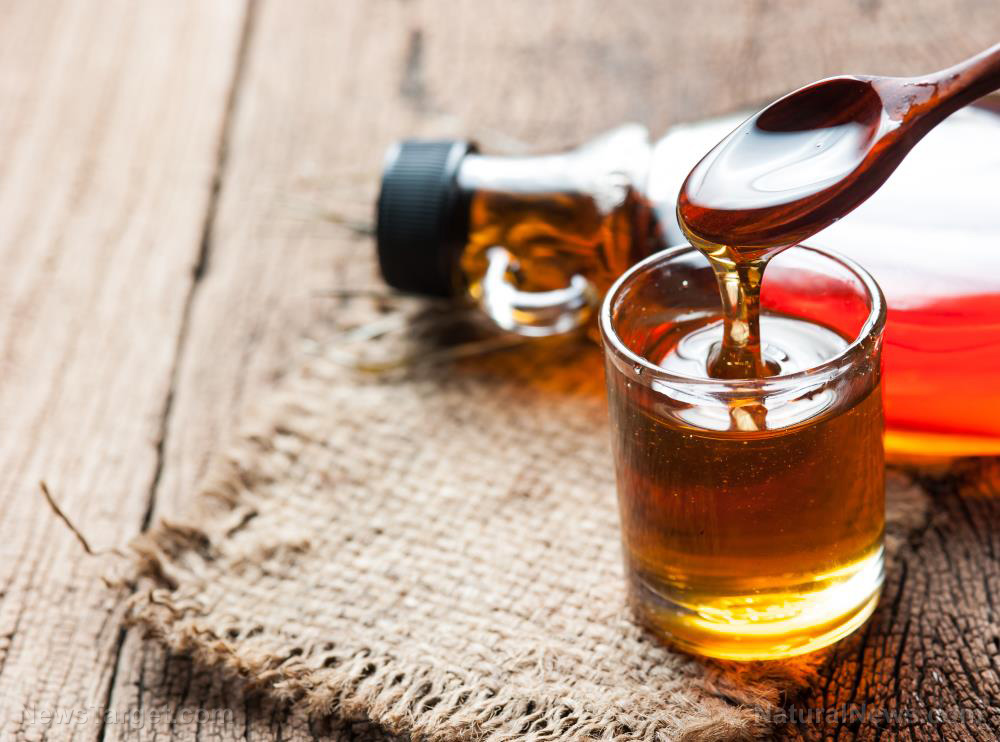
(NaturalNews) Maple syrup is packed with essential minerals and antioxidants, supporting energy production, bone health and immune function. With a glycemic…
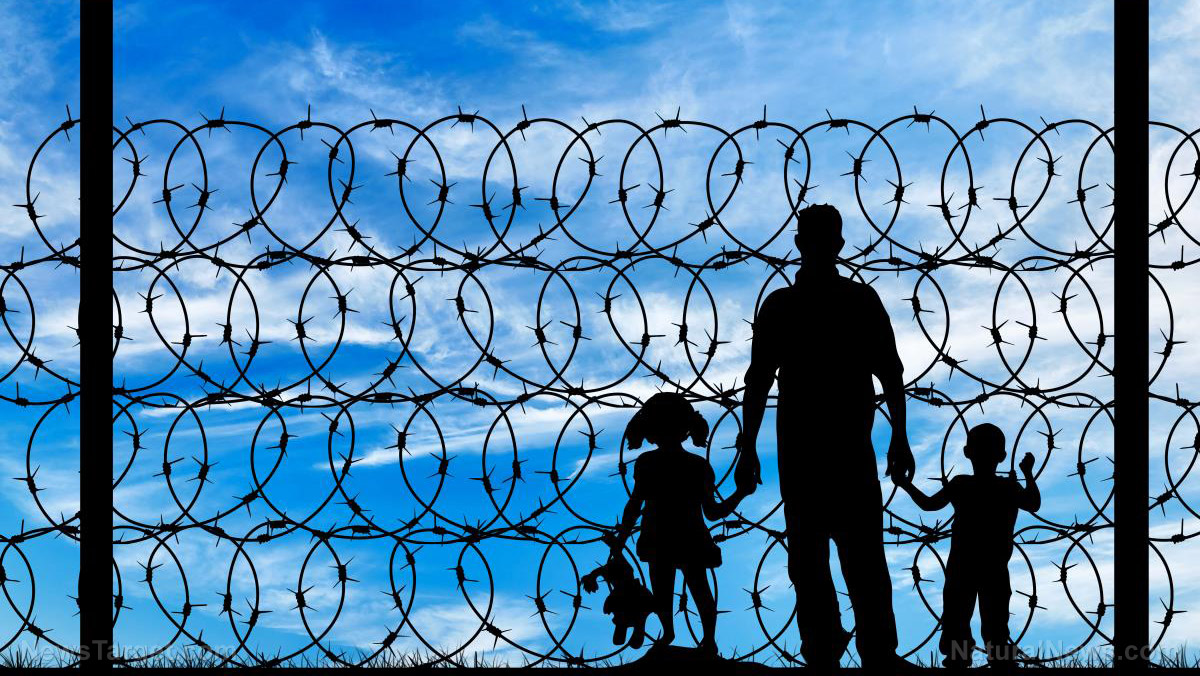
(NaturalNews) The movie “17 Miles,” directed by Bob Denney and produced by Brighteon Films, challenges prevailing narratives on illegal immigration and human…
(NaturalNews) SpaceX, Palantir, and Anduril are frontrunners to develop Trump’s Golden Dome missile defense shield. The consortium proposes launching up to…
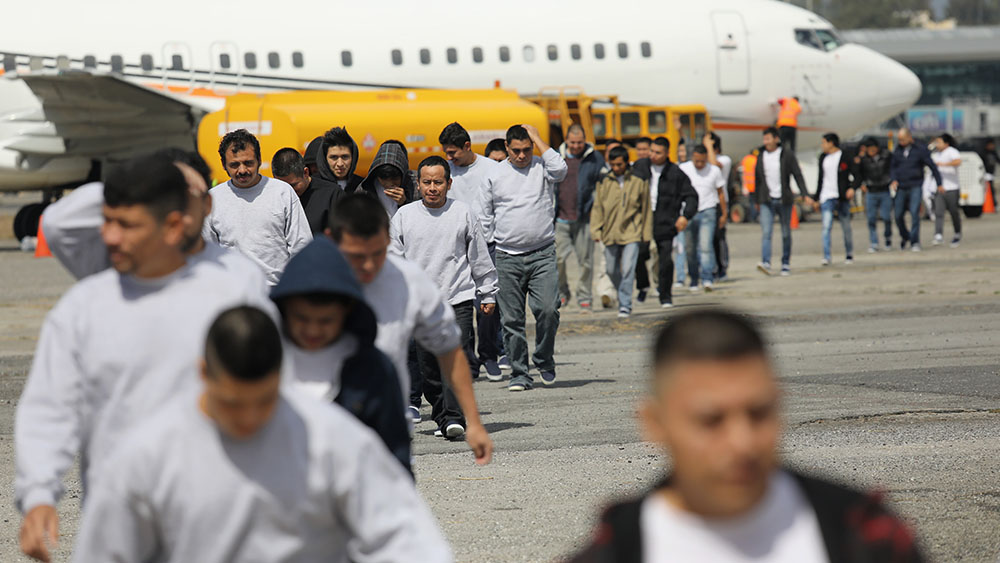
(NaturalNews) A new Washington Post/CNN poll shows 56% of Americans now support deporting all 11 million undocumented immigrants â a significant increase…

(NaturalNews) In a bold move that could reshape the landscape of public health, U.S. Health and Human Services (HHS) Secretary Robert F. Kennedy Jr. has announced…
(NaturalNews) President Trumpâs tariff-driven strategy has boosted U.S. factory output, with a 5.1% annualized gain in Q1 2025 and 10,000 new manufacturing…

“This case could completely wipe out the ATF’s ability to create law and subvert congress, which would be a massive win for the Second Amendment.” [more…]

Elon Musk chimed in to question ‘how common’ this type of illegal activity is during American elections Bridgeport, Connecticut, the largest city in the state, [more…]

Chinese woman evades warrant for vehicular manslaughter after horror wreck caught on camera A Chinese woman fled back to her homeland after allegedly killing her [more…]

Downdetector has reported that several US banks are facing service disruptions on Friday morning. Update (1315ET): Fed Reserve Says ACH Error Impacting Customers Bitcoin literally [more…]
Footage shows male senior swiftly strike ball in attempt to make goal, inadvertently hitting female player directly in mouth. A female high school lacrosse player [more…]

Use promo code “ALEX” when you sign up on Mug Club to get one month FREE of the network’s exclusive broadcasts, investigative reports, comedy specials [more…]

Suspect in black Lamborghini attempts rob man at Erewhon Market before shooting him in street, police say A man was shot during an attempted robbery [more…]

Watch & share this massive LIVE broadcast to get the latest on America’s border invasion, Mideast war, the NWO depopulation agenda & SO MUCH MORE! [more…]