






“This case could completely wipe out the ATF’s ability to create law and subvert congress, which would be a massive win for the Second Amendment.” [more…]


(NaturalNews) Amino acids are critical to brain function and have been linked to Autism Spectrum Disorder (ASD), with imbalances potentially affecting…

(NaturalNews) Randall Fitzgerald proposes that humanity may have extraterrestrial origins or a deep cosmic connection, suggesting UFO encounters could reflect…

(NaturalNews) Assembly Bill A7788, introduced by Assemblyman Clyde Vanel, would allow New York state agencies to accept Bitcoin, Ether, Litecoin and Bitcoin…

(NaturalNews) The U.K. Ministry of Justice is developing an algorithm to predict which individuals â some with no criminal records â might commit murder,…

(NaturalNews) All 15 Arizona counties agreed to verify and remove nearly 50,000 voters who failed to provide proof of U.S. citizenship after a lawsuit by…
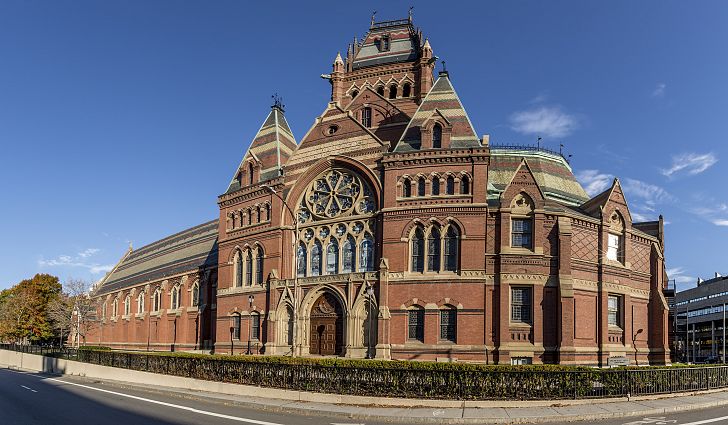
(NaturalNews) Harvard refuses to comply with a December 2019 executive order allowing federal funding cuts for colleges deemed to tolerate antisemitism, which…

(NaturalNews) Scientists confirm that time travel is theoretically possible, with minute real-world examples already in existence. The Trump Administration…
(NaturalNews) The Trump administration plans to slash nearly one-third of HHS funding ($40 billion), targeting agencies like the CDC (44% cut) and NIH (42%…
Every nation has a story. Recently, the Washington Post described the Smithsonian Institution, with its 21 museums and 14 educational and research centers, as “the official keeper of the American Story.” What kind of story have the Smithsonian museums been telling about our country?
On March 27, President Trump issued an executive order arguing that there has been a “concerted and widespread effort to rewrite our Nation’s history” and promote a “distorted narrative driven by ideology rather than truth.” This “revisionist movement” casts American “founding principles and historical milestones in a negative light.” A White House fact sheet calls for “revitalizing key cultural institutions and reversing the spread of divisive ideology.” Vice President JD Vance, a member of the Smithsonian Board of Regents, will lead the administration’s efforts.
The debate over the Smithsonian is only one front in a wide-ranging, ongoing conflict over first principles and concepts of justice (equality versus equity).
Critics of the executive order responded quickly. They maintain that the Trump administration wants to “whitewash the past and suppress discussion of systemic racism.” The Smithsonian, the critics contend, is led by nonpartisan professionals whose aim is to be truthful and inclusive and tell the whole story of America, including groups that have been neglected in the past. Professor David W. Blight of Yale, president of the Organization of American Historians, complained that the executive order is a “laughable thing until you realize what their intent actually is and what they’re doing is trying to erode and then obliterate what we have been writing for a century.”
Is there a divisive ideology being taught, as the Trump administration maintains, and if so, what is it? What have university professors been writing about America, if not “for a century,” for at least the past decade? Professor Blight’s OAH revealed its ideology by embracing the New York Times’ 1619 Project, declaring:
The 1619 Project’s approach to understanding the American past and connecting it to newly urgent movements for racial justice and systemic reform point to … the ways in which slavery and racial injustice have and continue to profoundly shape our nation. Critical race theory provides a lens through which we can examine and understand systemic racism and its many consequences.
What do we call the ideology that, as the OAH explains, “acknowledges and interrogates systems of oppression — racial, ethnic, gender, class — and openly addresses the myriad injustices that these systems have perpetuated through the past and into the present”?
As most are aware, the ideology expressed by the OAH is dominant in universities today. It views American history negatively through the lens of “oppressors” (white males) versus “oppressed” and “marginalized groups.” This ideology has been variously called political correctness, identity politics, social justice, and wokeness. We could use Wesley Yang’s term “successor ideology,” meaning it is the new, radical, left-wing ideological successor to the old patriotic liberalism of politicians like Walter Mondale and historians like Arthur Schlesinger Jr.
Not surprisingly, given its pre-eminence in America’s universities, this divisive “successor ideology” is at the heart of the worldview propounded by the leaders of the Smithsonian.
The current secretary of the Smithsonian is Lonnie G. Bunch III, who is adept at dealing with donors, stakeholders, and Republican congressional appropriators. His language is mostly measured and reasonable. He talks in terms of truth, nuance, complexity, and nonpartisanship. But in reality, Bunch is a partisan progressive, a skilled cultural warrior, and a promoter of the leftist “successor ideology.”
Bunch partnered with and promoted the biased 1619 Project, which asserts that slavery is the alpha and omega of the American story and that maintaining slavery was a primary motivation for some American colonists who joined the revolutionary cause. The architect of the 1619 Project, Nikole Hannah-Jones, bragged that it “decenters whiteness,” and she denounced her liberal academic critics as “old white male historians.”
Nevertheless, Bunch proclaimed, “I want the Smithsonian to legitimize important issues, whether it’s 1619 or climate change.” Of the Smithsonian’s participation in the 1619 Project, he declared, “I was very pleased with it.” Bunch proudly noted that people “saw that the Smithsonian had fingerprints on [the 1619 Project]. And that to me was a great victory.”
Bunch pictures America as a nation in which systemic racism is pervasive. During the George Floyd riots, Bunch told the Atlantic, “It is really about systemic racism throughout, not just the police department, but many parts of the American system.”
Further, he made excuses for the violence in the summer of 2020, which resulted in more than a dozen Americans killed and between $1 and $2 billion worth of property damage:
How dare they loot. Well, that kind of protest is really one of the few ways the voiceless feel they have power. And while I am opposed to violent protests personally, I understand that frustration sometimes pushes you over the edge. I think what’s important for us to recognize is, let us not turn attention towards looting in a way that takes away what is the power of these protests.
Three years ago, the Smithsonian assisted in the creation of a new College Board AP course on African American Studies. Ethics and Public Policy Center scholar Stanley Kurtz has revealed how APAAS is a radical neo-Marxist, anti-American project that calls for the socialist transformation of the United States. APAAS is soaked in the tenets of critical race theory, flirts with supporting violence, and implicitly advocates dismantling the American way of life, including free-market capitalism. It is a curriculum where students learn from Frantz Fanon that America is a “monster” and from Aimé Césaire that Stalin’s Soviet Union was a model society. Nevertheless, the APAAS curriculum is promoted on the Smithsonian’s Learning Lab.
Under the leadership of Gov. Ron DeSantis, the Florida legislature passed the Stop Woke Act that bars APAAS from the state’s K-12 schools because it promotes the divisive concepts manifest in CRT. Lonnie Bunch and his close ideological ally Elizabeth Alexander, president of the Mellon Foundation, falsely accused DeSantis of ignoring African-American history. On the contrary, DeSantis created a new black history curriculum based on serious and accurate scholarship. In response to DeSantis’ opposition to APAAS, Bunch complained to Alexander:
I am upset because you know we were involved in helping [APAAS] and the notion that somehow simply having a course that forces us to understand complexity, nuance, and ambiguity is a problem, that’s a problem for all of America.
In truth, there is very little “complexity” and “nuance” in the Smithsonian-promoted APAAS. It is one-sided, partisan propaganda. Kurtz notes that APAAS is not in fact inclusive, ignoring the work of black conservatives “like Glenn Loury, Shelby Steele, or Robert Woodson” or even “liberal black intellectuals, like Randall Kennedy or John McWhorter.”
Bunch often talks in terms of “nonpartisanship” and promoting the best of historical and cultural scholarship. But at the same time, he promotes the progressive left agenda, stating that the “job” of the National Museum of African American History and Culture is “really to create new generations of activists,” and “for me it really is about how … museums play a social justice role.”
To use one of Lonnie Bunch’s favorite terms, what is the “context” in which President Trump issued his executive order? It recognizes that a left-progressive cultural revolution (the “successor ideology”) has marched through our universities, schools, foundations, and museums, transforming the story of America into a tale of oppression and exploitation. The woke revolutionaries aim to “fundamentally transform the United States” from a nation based on a natural rights concept of the equality of citizenship to “equity,” a system of racial-ethnic-gender group quotas and group consciousness.
The debate over the Smithsonian is only one front in a wide-ranging, ongoing conflict over first principles and concepts of justice (equality versus equity). If the cultural revolutionaries are “transformationist,” in the sense that they aim to deconstruct the American way of life, the position articulated by Trump’s executive order is “Americanist,” in the sense that it represents a cultural counterrevolution that affirms America’s past and principles.
Are the Organization of American Historians and the current leadership of the Smithsonian right that America is a nation built on “slavery, exploitation, and exclusion”? Or is the American story what British writer Paul Johnson described as one of “human achievement without parallel,” the story “of difficulties overcome by skill, faith, and strength of purpose, and courage and persistence”? Was Johnson right when he wrote, “The creation of the United States of America is the greatest of all human adventures” and that Americans “thrown together by fate in that swirling maelstrom of history” are “the most remarkable people the world has ever seen”?
Editor’s note: A version of this article appeared originally at the American Mind.
Opinion & analysis, Us history, 1619 project, Donald trump, Executive order, Smithsonian, American founding, Declaration of independence, Jd vance, Justice, Liberty, Equality, Ap african american history, Stop woke act, Ron desantis, Glenn loury, Shelby steele, Randall kennedy, John mcwhorter, Robert woodson, Stanley kurtz, Lonnie bunch, Elizabeth alexander, Black history, Slavery, George floyd riots
Announcement comes amid Trump White House persistently trying to broker peace between warring nations.
Nvidia, the AI chip manufacturing giant, recently announced plans to build new AI factories in Dallas and Houston. These plans represent a significant advancement in the production of AI supercomputers entirely within the United States.
In its announcement, Nvidia revealed plans to partner with Wistron in Dallas and Foxconn in Houston. Other partners include TSMC, Amkor, and SPIL. Wistron is a Taiwanese information and communications technology company headquartered in Taipei, while Foxconn is the world’s largest electronics manufacturer, focusing on research and development.
This announcement marks Nvidia’s latest step in its long-term plan to produce half a trillion dollars’ worth of AI infrastructure in the coming years. The move underscores a growing push to relocate critical high-tech manufacturing back to U.S. soil, amid rising global tensions and increasing demand for secure, domestic supply chains.
Nvidia’s AI supercomputers, billed as “the engines of a new type of data center,” are anticipated to serve as the hub of AI manufacturing, all based in the United States. While the TSMC factory in Arizona is already producing the Blackwell chip, these new factories are the first of the “tens of gigawatt AI factories” expected to be built in the near future.
Nvidia’s founder and CEO, Jensen Huang, said, “The engines of the world’s AI infrastructure are being built in the United States for the first time.” He continued, “Adding American manufacturing helps us better meet the incredible and growing demand for AI chips and supercomputers, strengthens our supply chain, and boosts our resiliency.”
As Huang explained in his keynote address at the GTC 2025 conference last month, the next step in AI manufacturing is scale and efficiency. One solution to the massive logistical challenges that accompany this type of manufacturing in these “AI gigafactories” is the “digital twin” model: “We use the digital twin to communicate instructions to the large body of teams and suppliers, reducing execution errors … ensuring a future-proof AI.” Essentially, the digital twin is a computer copy of the factory and its millions of parts, allowing for clear communication across the supply chain and for readily available “what if” scaling experiments.
Huang also announced that the next generation of chips will play an increasingly important role in the rollout and scaling of these new U.S.-based gigafactories and AI supercomputers. This chip is called the Vera Rubin super chip, named after the astronomer who discovered dark matter. As he demonstrated in his address, this chip is dramatically more efficient and inexpensive to produce. It also represents a leap in sustainability, consuming far less energy than its predecessors — critical for powering the next wave of generative and reasoning AI and machine learning applications across industries.
In a statement, the White House claimed credit for this onshoring trend in manufacturing: “It’s the Trump effect in action.” The statement said, “Onshoring these industries is good for the American worker, good for the American economy, and good for American national security — and the best is yet to come.” The administration emphasized that such investments are laying the groundwork for a new industrial revolution, centered on American technological dominance.
Tech, Artificial intelligence, Supercomputer, Nvidia, Dallas, Houston, Ai manufacturing, Trump
Angry leftist demonstrators storm out of California school district meeting shouting obscenities and satanic epithets.
Those who have the most to lose from the collapse of the old regime are the ones the Trump regime must watch closest of all
The debut was announced via a Facebook post by the Royal Thai Police.
The 2026 U.S. Senate race in Michigan now has its first official candidate: State Sen. Mallory McMorrow, a Millennial Democrat from Oakland County who shot to national attention with a viral floor speech. She’s betting that moment can carry her all the way to the world’s greatest deliberative body.
Before Democrats and their media lapdogs start drafting puff pieces and polishing the pedestal, they should ask a harder question: Who is Mallory McMorrow — and more importantly, who is she not?
This isn’t just political positioning. It’s a fundamental disconnect. McMorrow’s politics are tailored for retweets, not results.
McMorrow isn’t a product of Michigan grit. She’s a coastal transplant from suburban New Jersey with a degree from Notre Dame and a résumé that reads like a LinkedIn influencer’s dream. She landed in Michigan less than a decade ago and began branding herself as the conscience of the Midwest. But Michiganders know the difference between authenticity and ambition.
McMorrow presents herself as a pragmatic progressive. In reality, she mimics the Instagram-ready style of coastal elites and peddles the kind of policies that might play in Brooklyn or Silver Lake, but not in Battle Creek or Midland.
Take her recent appearance on “Off the Record” with Tim Skubick, a Michigan political staple. Asked about boys competing in girls’ sports, McMorrow didn’t just sidestep the issue — she leaned into it, defending the far-left line with social media polish and no concern for the working-class parents listening at home.
This isn’t just political positioning. It’s a fundamental disconnect. McMorrow talks unity and moderation while aligning herself with activists who push fringe agendas. She sells herself as a consensus-builder while alienating the very voters she claims to represent. Her politics are tailored for retweets, not results.
If Attorney General Dana Nessel jumps into the primary, that contrast will become impossible to ignore. Say what you will about Nessel — she’s blunt, combative, and never confused for anything but herself. She doesn’t hide her ideology or try to sugarcoat her record for the national press. In a matchup, McMorrow won’t just have to explain her platform — she’ll have to explain her reinvention.
A real race demands contrast and courage. Michigan voters don’t need more social media senators. They need leaders who know the price of gas, not just the latest polling memo. They need fighters who understand what Michigan families face every day — not what’s trending in a D.C. group chat.
To her credit, McMorrow is young, articulate, and eager to chart a new course. That’s not nothing. But the path forward for Michigan isn’t progressive posturing. It’s common-sense governance rooted in the lives of working families — not curated identities shaped by PR consultants and filtered through national donor networks.
Republicans need to seize this opportunity. Michigan requires a new generation of GOP leadership — grounded, principled, and ready to fight. I know that generation exists. I see it in the state legislature. I see it in young constitutional conservatives who understand the dignity of work, the sanctity of family, and the value of a dollar.
As a Millennial myself, I know we don’t need more viral fame. We need values. We don’t need slogans. We need substance.
In the coming months, you’ll hear a lot about Mallory McMorrow — there will be glossy profiles, glowing press, and lots of digital fanfare. But underneath the branding is a clear ambition: to take Michigan’s Senate seat and turn it into a springboard for the next liberal celebrity.
We’ve seen that movie before. We know how it ends.
The real question is whether Michigan voters will choose performance or principle.
I believe they’ll choose principle. Because in Michigan, authenticity still matters. Common sense still counts. And we still believe a senator should represent everyday citizens worried about the price of a gallon of milk — not the Met Gala elite sipping champagne just across the Hudson from McMorrow’s home state.
Opinion & analysis, Mallory mcmorrow, Michigan, Us senate race, 2026 midterms, Democrats, Millennials, Donald trump, Authenticity, New jersey, Transgender athletes, Values, Transgender agenda, Influencers, Progressives
Imagine your 2026 car shutting off mid-drive because it thinks you’re drunk or otherwise impaired.
That’s real! And you can find it in Section 24220 of the 2021 Infrastructure Investment and Jobs Act — a mandate still alive despite fierce pushback, set to raise car prices and spark debate.
Proponents of the so-called “kill switch” say they just want to make the roads safer. But at what cost?
Consider the possibility of misreadings and technical errors. It’s bad enough when a glitch keeps us out of an app or prevents us from sending an email. Now, imagine having the autonomy and freedom that comes with your car being taken from you at will.
Keep in mind that there are no reset or restart protocols outlined in the law. The National Highway Traffic Safety Administration hasn’t finalized these rules yet, so any description of how a car restarts remains speculative based on current tech trends and the law’s intent.
No wonder they call it “kill switch jail.” And unlike regular jail, you don’t get to plead your case.
This is not just a gadget; it’s a computer judging us behind the wheel. When the bill passed, X erupted — drivers posted memes of cars as “nanny cops,” while safety groups cheered it as a lifeline.
This all depends on passive alcohol monitoring — a new and relatively untested technology in which no breathalyzers are required. You simply breathe normally and sensors in the cabin will tell you if you’re good to go.
It’s like having a traffic cop in the passenger seat, administering a continuous DUI check. In other words, you’re guilty until proven innocent.
A 2022 survey by the American Automobile Association found 62% of Americans worry about tech overreach in cars, yet 55% support drunk-driving fixes.
This clash — freedom versus safety — is why Section 24220’s so divisive. As of March 31, 2025, it’s barreling toward reality. Can it be stopped? Will it save lives or just pad profits for insurance companies? Or is it going to stop drivers from buying a 2026 model car? We don’t need more nannies in our cars. Here’s the latest and what it means for your next ride.
Section 24220, tucked into the 1,100-page Infrastructure Investment and Jobs Act — signed by President Biden on November 15, 2021 — requires every new car sold after 2026 to include “advanced impaired driving technology.”
This means cameras, sensors, or breath detectors passively monitoring your driving to detect if you’re drunk, distracted, or drowsy. If flagged, the car could stall or refuse to start. The law cites 10,142 alcohol-impaired driving deaths in 2019, aiming to tackle a $44 billion problem from 2010 data — adjusted to roughly $60 billion today with inflation, per the Bureau of Labor Statistics. The pitch was: Save lives and cut costs.
The details are murky at best. The tech could include the Driver Alcohol Detection System for Safety funded by the NHTSA, based on three possible technologies targeting an .08 blood alcohol concentration cutoff: a touch sensor on the steering wheel sniffing alcohol through your skin; a touch sensor on the push-button ignition; or the aforementioned breath scanner in the cabin.
This information would be enhanced with other “evidence” gleaned from your car eavesdropping on your speech, monitoring your eyes through infrared sensors and cameras hidden in the dash or rearview mirror to detect a possible issue.
Who decides if you need to pull over? A computer decides. Again, welcome to “kill switch jail.”
Tests in 2023 claimed these systems could operate at 85% accuracy, but a Virginia Tech study found that something as simple as cold weather or the driver wearing gloves could disrupt it.
Cameras, like those in Tesla’s driver-monitoring system, watch your eyes — slow blinks or glances away trigger alerts. Volvo’s 2024 XC90 flags fatigue, but the Insurance Institute for Highway Safety reports a 10% false-positive rate in dim light.
These aren’t sci-fi toys; they’re real, flawed, and racing toward your dashboard. As of 2024, NHTSA has not defined the rules, with a possible three-year delay if the tech isn’t ready. How about defunding and removing this rule?!
Rep. Thomas Massie of Kentucky (R) has led the charge against the mandate, calling it a “privacy nightmare” and “federal overreach.” In November 2023, his amendment to defund Section 24220 won 199 Republicans and two Democrats but failed with 229 to 201 votes, when 19 Republicans — including Rep. Nancy Mace (S.C.), Rep. Mike Garcia (Calif.), and Rep. Don Bacon (Neb.) — joined 210 Democrats to keep it alive.
Mace, a safety hawk after pushing a 2022 DUI crackdown in South Carolina, sees it as a legacy win, while Garcia’s district hosts tech firms like Qualcomm, hinting at job promises. The Alliance for Automotive Innovation — representing General Motors, Toyota, and Ford — lobbied $12 million in 2021 to shape the bill, per OpenSecrets.
Democrats lean on NHTSA’s 2022 “Vision Zero” pledge for zero traffic deaths by 2050, but critics like Sen. Rand Paul (R-Ky.), in a 2023 speech, warned of a “surveillance state on wheels.”
In February 2025, Massie grilled Michael Hanson of the Governors Highway Safety Association in a House hearing, demanding proof of this working tech. Hanson admitted it’s untested at scale, unlike seatbelts, which were standard in cars by the 1960s before mandates, or ignition interlock devices, which are breathalyzers that lock the car if you’re over the limit and cut repeat DUIs by 70%, per Mothers Against Drunk Driving.
Massie’s still fighting, but time’s running out: 2026 models are being built starting this summer.
As of March 31, 2025, NHTSA’s rules remain unpublished. This is now in the hands of Secretary Sean Duffy. It can push it to 2027 with a progress report to Congress if tech lags, and with 2026 just months away, automakers are scrambling.
A 2022 repeal attempt — the Safeguarding Privacy in Your Car Act (S.4647) from Republican Sens. Mike Rounds (S.D.), Mike Braun (Ind.), and John Cornyn (Texas) — sits stalled in committee. NHTSA’s January 2024 proposal floats camera options, eyeing production in 2025 — maybe. Without a repeal, this kill switch still looms over consumers.
The cost will hit drivers hard, as adding cameras, sensors, and artificial intelligence to vehicles could tack hundreds of dollars onto each of the millions of new cars sold yearly in the U.S. This equals a $3.4 to $8.5 billion annual jump, straight from buyers’ pockets.
By 2030, 80% of cars will be connected. Expect more shop visits for failed sensors and software glitches — which will, in turn, increase the cost of insurance and ownership.
The NHTSA says this driver-monitoring tech could save 9,400 lives a year and erase a $60 billion burden from drunk driving: from lost jobs, hospital bills, and wrecked cars. In 2021, insurance companies paid out big for alcohol-related crashes, according to the Insurance Information Institute, but your premiums didn’t change — they just kept the extra cash. Hospitals didn’t lower bills, either. That $60 billion saving goes to them, not you.
So will it work? Drunk driving took over 12,000 lives in 2021, mostly from drivers over the legal limit, contributing to over 42,000 total traffic deaths — a 16-year high. Tougher laws and ignition interlock devices, such as breathalyzers that lock the car, have cut deaths by nearly a third since 1990, with millions installed, per Mothers Against Drunk Driving. Still, 2021’s jump sparked this push.
What about these high-tech in-car cameras? A 2024 study by the Swedish Transport Agency found Volvo’s Driver Alert Control system dropped fatigue crashes 20%, yet 15% of alerts were false. While this is a good example, glitches and privacy fears could tank drivers’ trust in these new technologies. Data on your speed or habits could leak to insurers (jacking up premiums), advertisers (targeting you with ads), or the police. NHTSA denies a police kill switch, but hacking or future laws could shift that. Supporters argue NHTSA’s estimated 9,400 lives saved justify it — if it’s flawless, which it definitely isn’t yet.
The 2026 deadline — set to sync with new models — gave automakers five years to get it done. By 2026, or 2029 if pushed, every new car could carry this new technology, raising prices and watching you like Big Brother. Massie has been applying pressure, but without a Senate breakthrough, expect that couple-hundred-dollar hike, no insurance relief, and a car that might misjudge you, sticking you in “kill switch jail.”
So is this safety or overreach? What’s your take?
Kill switch, Drunk driving, Lifestyle, Align cars
Five Venezuelan illegals with extensive criminal histories linked to more than 35 retail thefts across central Florida
POTUS squaring off with the private institution that has been ripping off the U.S. for over one hundred years!
Mark Zuckerberg appeared on “The Joe Rogan Experience” in January sporting a new hairstyle and a gold chain — an image makeover that began with the billionaire tech mogul sparring with MMA fighters in 2023. He cast himself as a reformed free-speech champion, admitting that under the Biden administration, Meta’s fact-checking regime had become “something out of ‘1984.’” Something, he said, needed to change.
What he didn’t say: Meta’s censorship playbook has long resembled the Orwellian dystopia he now claims to oppose.
‘Meta lied about what they were doing with the Chinese Communist Party to employees, shareholders, Congress, and the American public.’
Under Zuckerberg’s leadership, Meta has operated with “1984”-style control — censoring content, shaping political narratives, and cozying up to authoritarian regimes, all while pretending to remain neutral. While Zuckerberg criticizes China’s digital authoritarianism, Meta has adopted similar strategies here in the United States: censoring dissent, interfering in elections, and silencing political opponents.
Zuckerberg’s hypocrisy is increasingly obvious. His ties to China and Meta’s repeated attempts to curry favor with the Chinese Communist Party expose a willingness to bend democratic principles in the name of profit. Meta mimics China’s censorship — globally and domestically — even as it publicly condemns the CCP’s control over information.
For years, Meta attacked China’s censorship and human rights abuses. But as China-based tech companies gained ground, Zuckerberg’s rhetoric escalated. He warned about Chinese AI firms like DeepSeek, which were producing superior tools at lower costs. In response, Meta’s Chief Global Affairs Officer Joel Kaplan assured Americans that the company would build AI based on “our shared values, not China’s.”
Zuckerberg even declared he’d partner with President Trump to resist foreign censorship and defend American tech. But that posturing collapses under scrutiny.
Behind the scenes, Zuckerberg worked hard to ingratiate himself with the Chinese regime. As Steve Sherman reported at RealClearPolicy, Meta pursued “Project Aldrin,” a version of Facebook built to comply with Chinese law. Meta even considered bending its privacy policies to give Beijing access to Hong Kong user data. To ingratiate himself with the CCP, Zuckerberg displayed Xi Jinping’s book on his desk and asked Xi to name his unborn daughter — an offer Xi wisely declined.
These overtures weren’t just about market share. Meta developed a censorship apparatus tailored to China’s demands, including tools to detect and delete politically sensitive content. The company even launched social apps through shell companies in China, and when Chinese regulators pressured Meta to silence dissidents like Guo Wengui, Meta complied.
On April 14, an ex-Facebook employee told the Senate Judiciary Subcommittee on Crime and Counterterrorism that Meta executives “lied about what they were doing with the Chinese Communist Party to employees, shareholders, Congress, and the American public.”
After the Trump administration moved to block Chinese tech influence, Meta backed off its China ambitions. But the company didn’t abandon censorship — it just brought it home.
In the United States, Meta began meddling directly in domestic politics. One of the most glaring examples was the two-year ban on President Donald Trump from Facebook and Instagram. Framed as a measure against incitement, the decision reeked of political bias. It showed how much power Zuckerberg wields over American discourse.
Then came the 2020 election. Meta, under pressure from the Biden administration, suppressed the Hunter Biden laptop story — a move Zuckerberg himself later admitted. Though the story was legitimate, Facebook and Twitter labeled it “misinformation” and throttled its reach. Critics saw this as an obvious attempt to shield Biden from scrutiny weeks before Election Day.
Meta’s interference didn’t stop at content moderation. It also funded election infrastructure. Zuckerberg donated $350 million to the Center for Tech and Civic Life and another $50 million to the Center for Election Innovation and Research. These funds were funneled into swing states under the guise of pandemic safety. But critics viewed it as private influence over public elections — a dangerous precedent set by one of the most powerful CEOs in the world.
Meanwhile, Meta executives misled the public about the company’s relationship with China.
Zuckerberg’s deference to China wasn’t a phase — it was part of a long-term strategy. In 2014, he wrote the foreword for a book by Xi Jinping. He practiced Mandarin in public appearances. He endorsed Chinese values in private meetings. This wasn’t diplomacy — it was capitulation.
Meta even designed its platform to comply with CCP censorship. When regulators in China asked the company to block dissidents, it did. When Chinese interests threatened Meta’s business model, Zuckerberg yielded.
So when he criticizes China’s authoritarianism now, it rings hollow.
Meta’s behavior isn’t just a story of corporate hypocrisy. It’s a case study in elite manipulation of information, both at home and abroad. Zuckerberg talks about free speech, but Meta suppresses it. He warns of foreign influence, while Meta builds tools that serve foreign powers. He condemns censorship, then practices it with ruthless efficiency.
Americans shouldn’t buy Zuckerberg’s rebrand. He wants to sound like a First Amendment champion on podcasts while continuing to control what you see online.
Meta’s past and present actions are clear: The company interfered in U.S. elections, silenced political speech, and appeased authoritarian regimes — all while pretending to stand for freedom.
Zuckerberg’s censorship isn’t a glitch. It’s the product. And unless Americans demand accountability, it will become the new normal.
China, Opinion & analysis, Censorship, Chinese communist party, Xi jinping, Mark zuckerberg, Meta, Facebook, 2020 election, Election interference, Hong kong, Dissent, 1984 george orwell, Digital, Authoritarianism, Senate, Project aldrin, Center for tech and civic life, Zuckerbucks, Center for election innovation research, Donald trump, Ban, Dissidents, Hunter biden laptop
The Austin Metcalf and Karmelo Anthony saga is being used to divide Americans.

“This case could completely wipe out the ATF’s ability to create law and subvert congress, which would be a massive win for the Second Amendment.” [more…]

Elon Musk chimed in to question ‘how common’ this type of illegal activity is during American elections Bridgeport, Connecticut, the largest city in the state, [more…]

Chinese woman evades warrant for vehicular manslaughter after horror wreck caught on camera A Chinese woman fled back to her homeland after allegedly killing her [more…]

Downdetector has reported that several US banks are facing service disruptions on Friday morning. Update (1315ET): Fed Reserve Says ACH Error Impacting Customers Bitcoin literally [more…]
Footage shows male senior swiftly strike ball in attempt to make goal, inadvertently hitting female player directly in mouth. A female high school lacrosse player [more…]

Use promo code “ALEX” when you sign up on Mug Club to get one month FREE of the network’s exclusive broadcasts, investigative reports, comedy specials [more…]

Suspect in black Lamborghini attempts rob man at Erewhon Market before shooting him in street, police say A man was shot during an attempted robbery [more…]

Watch & share this massive LIVE broadcast to get the latest on America’s border invasion, Mideast war, the NWO depopulation agenda & SO MUCH MORE! [more…]