





Suspected provocateur specifically stated, ‘We’re here to storm the capitol. I’m not kidding.’ In a new mini-documentary diving into Jan. 6, investigative journalist Lara Logan [more…]

We are now 101 days into President Donald Trump’s second administration. The pace has been relentless. No president since Franklin Delano Roosevelt has reshaped the federal government so fundamentally. The days of tinkering around the edges are over. The long-overdue conservative revolution has finally begun.
Cementing these gains will require discipline and focus. The next 100 days will be critical.
The clock is ticking.
The president faces major battles in Congress. But the more immediate fight lies within the executive branch itself. And beyond that loom the courts.
The legislature
Congress will be the main battleground over the next 100 days. The House and Senate must secure the president’s legislative agenda — and that agenda hinges entirely on the budget reconciliation bill.
Taxes, border security, deportation capacity, defense, energy — all of it is packed into the budget. Executive orders and existing funds can only take the administration so far. Customs and Border Protection urgently needs more detention space and more beds. Immigration and Customs Enforcement does too.
Making the president’s first-term tax cuts permanent remains critical. The administration’s aggressive moves to realign global trade could trigger the necessary deflation our economy desperately needs. Americans will need tax relief to weather that adjustment. Small businesses also need clarity now, not in a last-minute Christmas Eve deal, to plan for 2026 and beyond.
The clock is ticking. The sooner the tax cuts become law, the sooner the country can reap their full economic rewards. And that’s before tackling newer campaign promises, like “no tax on tips” — or codifying major parts of the Department of Government Efficiency’s achievements.
Next up: the House Judiciary Committee. Chairman Jim Jordan (R-Ohio), we’re looking at you. Democrats have spent years turning the courts into a blunt instrument against this White House. Meanwhile, the GOP-run committee has done little more than issue sternly worded press releases.
Enough. Subpoenas should be flooding out. Start dragging these judges into public hearings. Make them answer for the lawless overreach they’ve embraced. Oversight isn’t optional — it’s long overdue.
Then we have the matter of nominations. The Senate cleared the first batch but left 30 critical appointments languishing on the floor — all out of committee, all ready for a vote. These aren’t ceremonial posts. They include key roles like assistant secretary of defense and ambassador to the United Kingdom.
The Senate’s response? Shrug and punt until August. That’s absurd. The administration can’t function with half a bench. The country can’t wait for lawmakers to finish their summer travel plans.
More on this slow-rolling disaster in Friday’s Beltway Brief.
The executive
The president needs more men. Hiring has slowed, with blame to spread around. It’s excellent to be thorough — and essential to keep the sort of people who sabotaged Trump 45 out of positions of power — but there is a limiting factor to Twitter inquisitions. Personal recommendations from good people should go a lot farther, and with them, bygones ought to be bygones.
Plenty of groups have their hands in this effort — from the DOGE to the Presidential Personnel Office to the departments themselves. Current staff members are doing excellent work, but many are putting in seven-day weeks and risking burnout. That pace isn’t sustainable.
Personnel remains policy. The president’s ambitious agenda requires a fully staffed government to carry it out.
A foreign policy breakthrough would help consolidate early gains. Trump’s renewed negotiations with Ukrainian President Volodymyr Zelenskyy this past weekend offer a promising sign. The president’s hardball approach may finally be forcing reality into a war that desperately needs it. An end to the conflict — and a path to peace — would mark a defining victory.
Then there’s the trade war. Trump’s first hundred days showed a clear willingness to break stale conventions in pursuit of fairer global trade. But both the policy framework and long-term goals still need definition.
Stabilizing the tariff regime and isolating China in a way that’s sustainable for the U.S. economy must rise to the top of the to-do list. And the messaging matters. Americans need to understand the “why” behind these moves — and the costs of failing to act.
If the White House has any chance of retaining control of this narrative, it will need to explain both the costs and the goals of these moves — and do so quickly. Again, the clock is ticking.
The judiciary
Much hinges on the courts. Chief Justice John Roberts has been unexpectedly wobbly on executive power — a place many court-watchers expected him to come in strong. Court-watchers had hoped for a decisive ruling against the abuse of nationwide injunctions — far-flung judges issuing sweeping orders on federal policy at the request of a handful of plaintiffs. That reckoning still hasn’t come, and it may never.
Right now, a battle is unfolding between an increasingly activist judiciary and a White House determined to govern. Democrats and their allies on the bench claim the Constitution grants federal judges the supreme power in American government — an interpretation that flatly rejects the vision of the Founders.
Roberts has long tried to preserve the court’s reputation by keeping its actual power restrained. But he’s now playing a dangerous game. This White House has signaled it will push back hard, and at some point, it may start ignoring the worst judicial overreaches altogether. In a government of coequal branches, both authority and respect must flow both ways.
But don’t forget birthright citizenship! That fight comes before the court in just two weeks, on May 15, and the eventual decision could reshape American immigration policy for decades to come.
And that’s only the beginning. From retooling the economy to advancing global peace, the ambitions of Trump’s second term remain immense. But early wins won’t hold without follow-through. The shock-and-awe phase is over. Securing those gains demands sustained focus and political courage.
Make no mistake: The long-promised conservative revolution has begun. Now comes the harder part — seeing it through.
The Spectator: A mammoth 100 days of Trump’s America First foreign policy
Glenn Beck: What I saw in the White House changed my view of Donald Trump
Sign up for Bedford’s newsletter
Sign up to get Blaze Media senior politics editor Christopher Bedford’s newsletter.
Opinion & analysis, Politics
The same day that Wisconsin Gov. Tony Evers’ Democratic administration issued guidance directing state employees not to immediately cooperate with U.S. Immigration and Customs Enforcement, Milwaukee County Circuit Judge Hannah Dugan allegedly helped a previously deported illegal alien facing three misdemeanor counts of battery get away from ICE.
To the chagrin of Democratic lawmakers and fellow travelers in the judiciary, Dugan was arrested and charged with two federal criminal offenses: obstructing or impeding a proceeding before a department or agency of the U.S. and concealing an individual to prevent his discovery and arrest.
‘A judge shall avoid impropriety.’
The Supreme Court of Wisconsin issued an order Tuesday relieving Dugan of her duties.
“This court is charged in the Wisconsin Constitution with exercising superintending and administrative authority over the courts of this state,” said the Badger State’s high court. “In the exercise of that constitutional authority and in order to uphold the public’s confidence in the courts of this state during the pendency of the criminal proceeding against Judge Dugan, we conclude, on our motion, that it is in the public interest that she be temporarily relieved of her official duties.”
Dugan — who appears to have flouted the Wisconsin Code of Judicial Conduct, particularly its requirement that “a judge shall avoid impropriety and the appearance of impropriety in all of the judge’s activities” — is now barred from exercising the powers of a circuit court judge in the state until further order from the Wisconsin Supreme Court.
According to the criminal complaint against Dugan, members of the Milwaukee ICE Enforcement and Removal Operations Task Force traveled to the Milwaukee County Courthouse on April 18, 2025, with a warrant to arrest Eduardo Flores-Ruiz, an illegal alien from Mexico who was previously deported in 2013.
ICE was aware that Flores-Ruiz was scheduled to attend a hearing in his criminal case overseen by Dugan.
After presenting their identification to courthouse security, ICE agents — accompanied by both FBI and Drug Enforcement Administration agents — were allowed to proceed to the hallway outside Dugan’s courtroom where they spoke with the courtroom deputy and agreed that Flores-Ruiz’s arrest would take place after the illegal alien’s court appearance.
The complaint claims that upon learning from an attorney of ICE’s presence, Dugan “became visibly angry, commented that the situation was ‘absurd,’ left the bench, and entered chambers,” while Flores-Ruiz was seated in the gallery of the courtroom.
Dugan and another judge allegedly confronted the immigration agents in the hallway and debated whether they had the appropriate warrant. After disputing the validity of their administrative warrant, Dugan allegedly demanded — across multiple interactions — that the federal agents go speak with the chief judge.
While the second judge led the arrest team away to the chief judge’s office, Dugan allegedly looked around the hallway for additional agents, returned to her courtroom, told Flores-Ruiz and his lawyer something to the effect of “come with me,” then “forcefully direct[ed]” the duo out the jury door, which leads to a nonpublic area of the courthouse. Dugan then apparently returned and conducted other hearings on the morning’s docket.
‘Dugan has committed herself to the rule of law.’
The incident was apparently witnessed by multiple people.
Despite Dugan’s alleged obstruction, federal agents were able to apprehend Flores-Ruiz outside the courthouse.
Following Dugan’s arrest on April 25, Attorney General Pam Bondi noted, “No one is above the law.”
The judge’s next court appearance is scheduled for May 15. If convicted, Dugan could land up to six years in prison.
Dugan’s attorney, former United States Attorney Steven Biskupic, said she will “defend herself vigorously and looks forward to being exonerated,” reported ABC News.
“Judge Hannah C. Dugan has committed herself to the rule of law and the principles of due process for her entire career as a lawyer and a judge,” stated Biskupic.
Like Blaze News? Bypass the censors, sign up for our newsletters, and get stories like this direct to your inbox. Sign up here!
Crime, Federal crime, Illegal alien, Hannah dugan, Dugan, Milwaukee, Wisconsin, Court, Courthouse, Politics
The blackout in Spain and Portugal shows how the irrational fetishisation of renewables ignores their inherent limitations.
Carney has now declared that he will break away from the United States & sell the nation out to China.
A 54-year-old male is accused of fatally stabbing a 25-year-old woman last week, Chicago police said, adding that Willie Holmes was charged with first-degree murder.
Holmes was arrested just after 1:00 p.m. Thursday in the 300 block of North Central Avenue, police said, adding that he was identified as the offender who stabbed the victim minutes earlier.
Prosecutors said the stab wound punctured the victim’s aorta, the Daily Herald reported, and that she recently had given birth.
Prosecutors said 25-year-old Emily Carlson was sitting on the outside exit steps at the Central Avenue Green Line station when Holmes reportedly walked past and spat on her, the Daily Herald reported.
Carlson’s boyfriend confronted Holmes, prosecutors told the paper, after which Holmes pulled out a knife with a locking blade and chased after the boyfriend.
Authorities said the boyfriend used a bicycle to shield himself from Holmes, the Daily Herald said, adding that Holmes soon turned his attention back to Carlson.
Court documents indicate Carlson attempted to flee, but Holmes plunged the knife into her back, the paper added.
The Daily Herald noted that Holmes tried to run away, but several unarmed witnesses gave chase and cornered him in a convenience store until officers arrived.
Carlson was transported to Mount Sinai Medical Center, where she was pronounced dead around 7 p.m. following unsuccessful surgeries, the paper said.
Prosecutors said the stab wound punctured the victim’s aorta, the Daily Herald reported, and that she recently had given birth.
The paper, citing records, said police recovered the knife at the convenience store and took evidence from Holmes that showed Carlson’s blood was present.
The attack and chase both were captured on surveillance cameras, the Daily Herald said, adding that court records indicate multiple witnesses identified Holmes as the attacker.
The Chicago Sun-Times reported that Holmes has a lengthy arrest record “including drug charges, battery, traffic violations, and shoplifting mostly in the 1990s and early 2000s.”
The Sun-Times said Holmes was scheduled for a Saturday detention hearing, but the case was continued because he couldn’t appear due to being hospitalized.
Holmes was denied pretrial release at a Sunday detention hearing, the Daily Herald said, citing officials with the Cook County state’s attorney’s office.
Holmes was due in court Tuesday for a status hearing, the Daily Herald added.
Like Blaze News? Bypass the censors, sign up for our newsletters, and get stories like this direct to your inbox. Sign up here!
Chicago, Fatal stabbing, Arrest, Police, Murder charge, Female fatally stabbed, Spitting, Male accused of stabbing female, Repeat offender, Crime
Under Spanish law, TV networks could face massive fines if they do not give men and women equal speaking time.
The Radnor Township School District Board in Pennsylvania voted 6-0 to restore the books Gender Queer, Fun Home, and Blankets to the high school library [more…]
A law built to scrub AI nudes from the internet might also be used as a no-questions-asked censorship mechanism.
Google Nest halts support for early Nest Learning Thermostats, highlighting risks of proprietary hardware and lost remote control features.
The CDU leader was quick to blame voter disillusionment on everything but his own betrayal of his supporters.

(NaturalNews) Woke liberalism is exactly what Christopher Lasch predicted in The Revolt of the Elites, published in 1995, the year after his early death at 61….

(NaturalNews) The lion’s mane mushroom (Hericium erinaceus) â also known as yamabushitake, bearded tooth fungus or bearded hedgehog â is emerging as a…
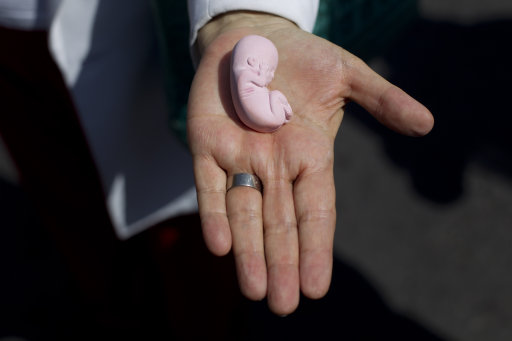
(NaturalNews) FDA Commissioner Marty Makary reaffirmed that the FDA has no plans to restrict mifepristone, a key abortion medication, despite pressure from…
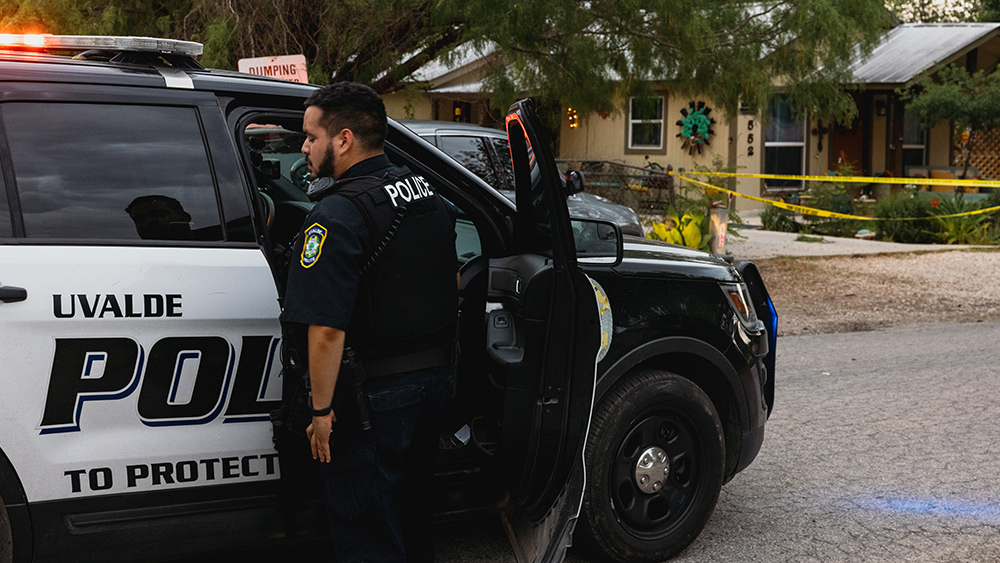
(NaturalNews) Nassau County lawmakers aim to criminalize standing within 15 feet of police or first responders during emergencies, with penalties of up to a…

(NaturalNews) California Assemblyman Corey Jackson, a Democrat, introduced a bill requiring state colleges to allow homeless students to sleep in campus…

(NaturalNews) Nick Searcy’s documentary “Capitol Punishment” and its sequel “The War on Truth” explore the Jan. 6, 2021, events, highlighting the treatment of…

(NaturalNews) Researchers warn that DEHP, a common plastic softener in consumer goods, causes over 350,000 fatal heart disease cases yearly, disproportionately…

(NaturalNews) A 2024 study found that people consuming high levels of ultra-processed foods (UPFs) face a 53% increased risk of insomnia, with a 2023 Harvard…
Elliston Berry was 14 years old when a classmate used an AI editing app to turn her social media photo into a deepfake nude. He circulated the fake image on Snapchat. The next day, similar deepfake images of eight more girls spread among classmates.
The victims’ parents filed a Title IX complaint. Authorities charged the student who created the images with a class A misdemeanor. Still, the deepfake nudes stayed online. Berry’s mother appealed to Snapchat for more than eight months to remove the images. Only after U.S. Sen. Ted Cruz (R-Texas) personally contacted the company did Snapchat finally take the pictures down.
The Take It Down Act would make it illegal to knowingly publish ‘nonconsensual intimate imagery’ depicting real, identifiable people on social media or other online platforms.
As AI becomes cheaper and more accessible, anyone can create exploitative digital content — and anyone can become a victim. In 2023, one in three deepfake tools allowed users to produce AI-generated pornography. With just one clear photo, anyone could create a 60-second pornographic video in under 25 minutes for free.
The explosion of deepfake pornography should surprise no one. Pornography accounted for 98% of all online deepfake videos in 2023. Women made up 99% of the victims.
Even though AI-generated images are fake, the consequences are real — humiliation, exploitation, and shattered reputations. Without strong laws, explicit deepfakes can haunt victims forever, circulating online, jeopardizing careers, and inflicting lifelong damage.
First lady Melania Trump has made tackling this crisis an early priority — and she’s right. In the digital age, technological advancement must come with stronger protections for kids and families online. AI’s power to innovate also carries a power to destroy. To curb its abuse, the first lady has championed the Take It Down Act, a bipartisan bill sponsored by Cruz and Sen. Amy Klobuchar (D-Minn.).
The bill would make it illegal to knowingly publish “nonconsensual intimate imagery” depicting real, identifiable people on social media or other online platforms. Crucially, it would also require websites to remove such images within 48 hours of receiving notice from a victim.
The Take It Down Act marks an essential first step in building federal protections for kids online. Pornography already peddles addiction in the guise of pleasure. AI-generated pornography, created without the subject’s knowledge or consent, takes the exploitation even further. Deepfake porn spreads like wildfire. One in eight teenagers ages 13 to 17 know someone who has been victimized by fake nudes.
The bill also holds AI porn creators accountable. Victims would finally gain the legal means to demand removal of deepfake images from social media and pornography sites alike.
Forty-nine states and Washington, D.C., ban the nonconsensual distribution of real intimate images, often called “revenge porn.” As AI technology advanced, 20 states also passed laws targeting the distribution of deepfake pornographic images.
State laws help, but they cannot fully protect Americans in a borderless digital world. AI-generated pornography demands a federal solution. The Take It Down Act would guarantee justice for victims no matter where they live — and force websites to comply with the 48-hour removal rule.
We are grateful that the first lady has fought for this cause and that the Senate has acted. Now the House must follow. With President Trump’s signature, this critical protection for victims of digital exploitation can finally become law.
Deepfakes, Ted cruz, Melania trump, Take it down act, Artificial intelligence, Snapchat, Online porn, Senate, Bipartisan bill, Big tech, Opinion & analysis

(NaturalNews) Corn originated in Mesoamerica over 9,000 years ago and became a global staple after European colonization. Today, it is the most produced grain…

Suspected provocateur specifically stated, ‘We’re here to storm the capitol. I’m not kidding.’ In a new mini-documentary diving into Jan. 6, investigative journalist Lara Logan [more…]

Mainstream media claims Obama-Biden partnership has only been happening for 5 months. Former President Barack Obama has been secretly advising the Biden administration for several [more…]
“This case could completely wipe out the ATF’s ability to create law and subvert congress, which would be a massive win for the Second Amendment.” [more…]

Elon Musk chimed in to question ‘how common’ this type of illegal activity is during American elections Bridgeport, Connecticut, the largest city in the state, [more…]

Chinese woman evades warrant for vehicular manslaughter after horror wreck caught on camera A Chinese woman fled back to her homeland after allegedly killing her [more…]

Downdetector has reported that several US banks are facing service disruptions on Friday morning. Update (1315ET): Fed Reserve Says ACH Error Impacting Customers Bitcoin literally [more…]

Footage shows male senior swiftly strike ball in attempt to make goal, inadvertently hitting female player directly in mouth. A female high school lacrosse player [more…]

Use promo code “ALEX” when you sign up on Mug Club to get one month FREE of the network’s exclusive broadcasts, investigative reports, comedy specials [more…]