





Suspected provocateur specifically stated, ‘We’re here to storm the capitol. I’m not kidding.’ In a new mini-documentary diving into Jan. 6, investigative journalist Lara Logan [more…]

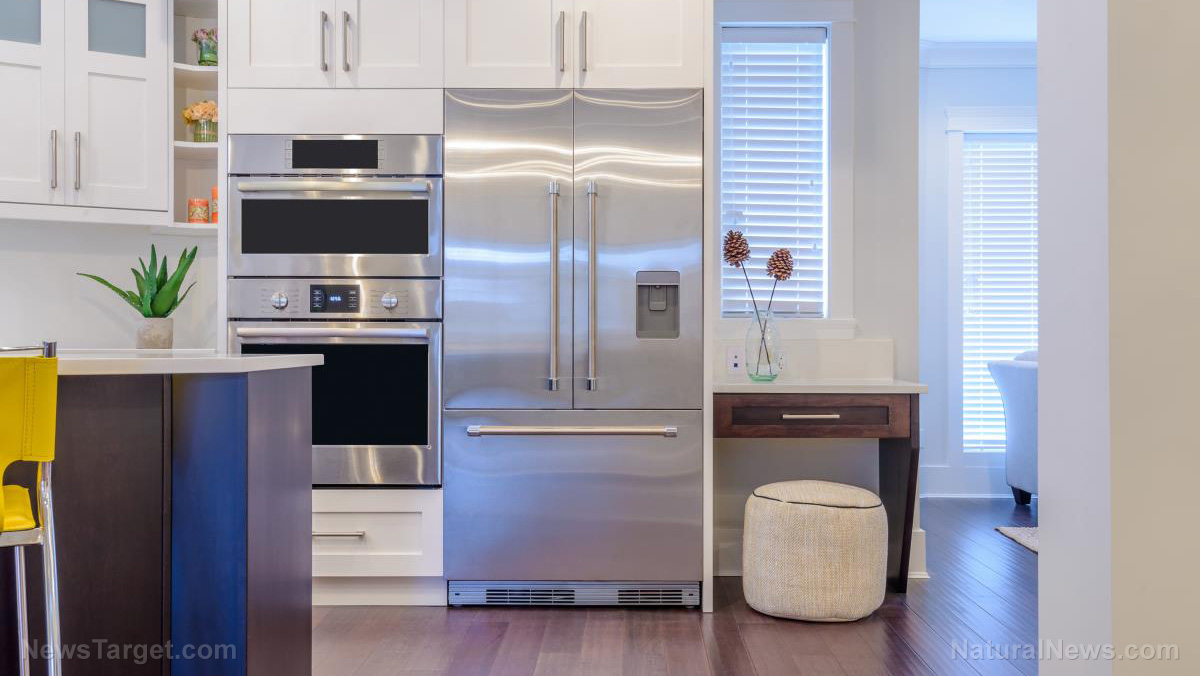
(NaturalNews) On April 30, the Senate voted 52-46 to repeal a controversial Department of Energy (DOE) rule that imposed stricter efficiency standards on househ…

(NaturalNews) Texas AG Ken Paxton is investigating Colgate and Procter & Gamble for allegedly deceptive marketing of fluoridated toothpaste to children, cit…
(NaturalNews) David Morgan warns of the U.S. dollar’s decline, noting gold and silver have hit multi-year highs due to geopolitical instability (e.g., Iran’s le…

(NaturalNews) Sam Altman’s Worldcoin has deployed chrome-plated orbs in six major U.S. cities (Atlanta, Austin, Los Angeles, Miami, Nashville, San Francisco) to…

(NaturalNews) Singaporeâs amended Infectious Diseases Act (IDA) criminalizes vaccine refusal, imposing fines and imprisonment. First-time offenders face up…

(NaturalNews) Imagine a world where the secret to defying age-related decline isnât a high-priced pharmaceutical or grueling fitness regimen â but a handful of …
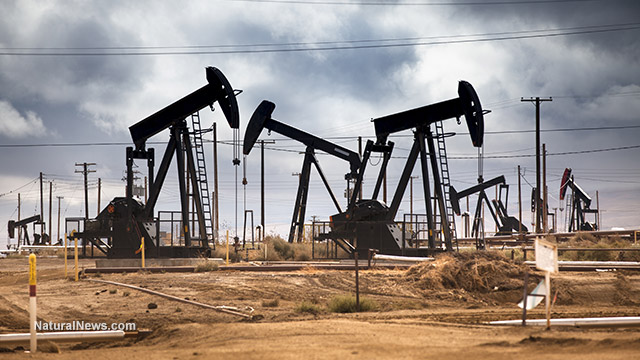
(NaturalNews) Fossil fuels dipped below 50% of U.S. electricity generation in March 2025 â a temporary milestone driven by seasonal weather, subsidies and gri…
When President Donald Trump returned to office in January, nearly everyone in his circle agreed on the top priority: renewing the 2017 Tax Cuts and Jobs Act. Without action, a crushing 22% tax hike looms, threatening to undo the economic gains of the past decade.
Extending the tax reform would also give businesses and investors the long-term stability they need to plan, expand, and hire.
Repealing the C-SALT deduction would hammer small businesses — the backbone of the American economy.
Instead, the administration has sent mixed signals. Daily shifts in tariff policy have rattled markets and injected uncertainty into every sector of the economy. Investors are jittery. Business leaders are holding back. And analysts are already warning of a potential recession.
These mistakes make it even more important to switch the focus to the tax package. The Trump administration should stop talking about tariffs and focus, along with Congress, on stabilizing markets and laying the foundation for economic growth by getting taxes down.
The Tax Cuts and Jobs Act delivered everything conservatives had long demanded: 100% expensing for business property, a 21% corporate income tax rate, and a child tax credit that rewarded work. It stood as the defining achievement of Trump’s first term. Making it permanent could help revive the pre-COVID economic boom.
But lawmakers must resist the temptation to gut the law’s pro-growth provisions to fund unrelated priorities. That includes rejecting the misguided push to repeal or limit the corporate state and local tax deduction, known as C-SALT.
Debates about the individual SALT deduction cap have dominated headlines in Washington. Some reforms to that cap may make sense. But individual SALT and C-SALT are not the same issue, and they shouldn’t be treated as interchangeable.
C-SALT promotes growth by preventing double taxation on businesses. It lets employers reinvest earnings, stay competitive, and create jobs. Rolling it back would hit business owners hard, slow hiring, and weaken America’s edge in the global economy.
Policy groups like Americans for Tax Reform and the Tax Foundation agree: Gutting C-SALT would put long-term growth at risk — and betray the core economic agenda that fueled Trump’s first-term success.
For businesses, state and local taxes are an operating expense. If businesses lose the ability to deduct these taxes, they will be paying taxes on taxes.
Repealing the C-SALT deduction would hammer small businesses — the backbone of the American economy. Many already struggle under heavy corporate, state, and local tax burdens, especially in rural and Republican-leaning states. Removing this deduction would force them to shoulder a disproportionate share of the pain.
No serious conservative case exists for eliminating or capping the C-SALT deduction. Some Republicans seem confused, conflating C-SALT with the personal SALT deduction, which overwhelmingly benefits wealthy taxpayers in high-tax blue states. But they are not the same. As the Tax Foundation notes, capping C-SALT won’t “reduce distortive tax benefits or enhance state competition” the way a cap on the personal SALT deduction might — because corporate and individual tax systems function differently.
In 2023, American businesses paid nearly $1.1 trillion in state and local taxes. Stripping away their ability to deduct those taxes from federal corporate income tax amounts to a massive tax hike — potentially hundreds of billions of dollars over the next decade.
That kind of tax increase would erase much of the economic progress since the 2017 tax law was passed. It would punish the very job creators conservatives claim to champion.
Lawmakers in Congress — especially Republicans who support free enterprise and pro-growth tax reform that spurs economic growth — should focus on restoring and making permanent the 2017 Tax Cuts and Jobs Act’s tax cuts without jeopardizing the benefits that the C-SALT deduction provides for American businesses of all sizes.
Opinion & analysis, Tax reform, Tax cuts and jobs act, Donald trump, Economy, Taxes, Tariffs, Recession, C-salt, State and local taxes, Small business, Congress, Tax foundation, Americans for tax reform
Discount Tire, America’s largest specialist retailer, whisked journalists to a junket in San Antonio, Texas. Details were hazy: A website and a test track. It wasn’t clear what the one had to do with the other.
Starting with a formal evening on the deck of a boutique hotel and affixing the smile of a politician coming into contact with the general public, I interrogated members of Discount Tire’s C-suite about minor glitches on their website.
Hoping to show engagement, I demonstrated only peevishness, while drinking their wine. The same fixed smiles appeared on their faces.
Redolent of the hippos in Disney’s ‘Fantasia,’ the sheen on the asphalt allowed the BMW to spin and glide in just about any direction except forward.
For the journalists, rule one is this is all very tedious. No such affect from the influencers, emotions displayed on their faces in a way Marcel Marceau would have found a little obvious.
But the tire execs loved that the influencers loved it. The PRs beamed like parents at a preteen birthday party when the kids are getting along. No part of the joy escaped capture on iPhone 16 Pros. No one had anything else: not the (embarrassing) 15 nor the (shaming) non-Pro. Sorry, Android, but all these bubbles were blue.
Pre-dawn, we assembled by a series of Sprinters. Gimbals, suction-cupped GoPro cameras, tripods, lighting rigs, and editing software were being compared and Bluetooth microphones affixed. All this would blend with B-roll the PR company was filming with drones. “Apocalypse Now” had lower production values.
I looked intently into my iPad, attempting to suggest my own serious media needs, a frown to convey that my device also needed expert handling. My emasculating iPhone 13 mini stayed hidden.
Still having little idea what to expect, we got to Discount Tire’s Treadwell Research Park in Pearsall, about 50 miles outside San Antonio.
Discount Tire bought the 900-acre four-zone facility in 2022, partnering with track testers Smithers. A 1.9-mile oval simulates real-world surfaces from highway on-ramps to potholes and noisy road surfaces, as well as skid pans for measuring wet and dry stopping distances.
Next there is a flooded asphalt field — vehicle dynamics area — with water depth kept between 1.75mm and 2.25mm (less than one-tenth of an inch), capturing hydroplaning. It is complemented by a dry VDA, being used by British sports car maker Lotus on this particular day.
Finally, there is around a mile of off-road track with deep mud, gravel, and fine sand. In addition, sophisticated lathes simulate wear. This testing data powers Discount Tire’s Treadwell recommendations, online and in-store.
For demonstrations, we were split into groups in paired BMW 330i vehicles. Brett, our pro, took us onto the wet VDA around a course marked out with cones, first slowly, then like Lewis Hamilton.
Then he handed it to me. I did my best to emulate his driving style. Judging by my companions’ reactions, I was not unsuccessful.
Cathy made short-form videos on Instagram focusing on safety, aimed at young mothers, offering wise words on shredding bank statements. Cathy was shooting video using the better cameras on the back of her (inevitable) iPhone 16 Pro.
Somehow she was able to keep herself in the center of a frame she couldn’t see while the car was pirouetting in the wet, its occupants experiencing fighter pilot G-forces. I didn’t know it was a skill until I saw it.
The other rider was James, aka Pikachu, the Pokémon character, his on-camera persona as excitable as the namesake yellow mouse. He happily farmed out video shooting to anyone with a convenient hand.
Redolent of the hippos in Disney’s “Fantasia,” the sheen on the asphalt allowed the BMW to spin and glide in just about any direction except forward. Cones were knocked down like skittles, or crushed. We said supportive things while unsticking our cheeks from the windows.
In the controlled environment, the speed was strangely unconcerning, though with tight-lipped nonchalance Cathy did ask what happened at the edge of the track.
It was a lot of fun. Then we did it again in a BMW fitted with different tires, finding that the first handled with the solemnity of a maiden aunt when compared with the teenage delinquency of the second. It was even more fun.
At the oval we drove another pair of BMWs, identical except for tires, with stopping distances measured in emergency braking from 70mph. On a dry surface in a late-model sedan, the tires could make the difference between a fender-bender and a write-off. In the wet the differences pile up, perhaps literally. Controlled skids with fellow journalists shrieking from the rear seats made me a convert.
From left: Brett, James aka Pikachu, Cathy, and your humble correspondent. Photo courtesy of Discount Tire
Treadwell’s site asks for the vehicle’s details and ZIP code, for likely weather. Specifics can be tailored, but there are default options: “suburb & city” and “highway.”
The third is “tracks and traction,” for “spirited drivers.” Bravo to the wordsmith who came up with that for Donnie in the Dodge Charger flashing his high beams and sitting behind you so close that a colonoscopy would seem less intimate.
Treadwell lists results, compared with the factory specification and sorted by test ratings. The company says suppliers cannot pay for this placement, but this was buried in the FAQ. Another group of C-suite executives too slow to escape questioning explained it to me.
As most sites sell search results and page placement, I would be jumping up and down If I ran it — but perhaps the point of bringing journalists to San Antonio is so we do those gymnastics.
What’s the alternative? Standardized data is available. Each tire has a tongue-twisting Uniform Tire Quality Grade. But information can be hard to find.
What happens when it’s a zero? Does the big-box retailer show stopping distances: wet, dry, new, worn? If it does (the one with cheap hotdogs does not) who provided it? Or do you just get what the dealership recommends?
I’m not saying the manufacturer would lie to you. Electrify America’s EV charging network was built as part of a settlement by Volkswagen for … lying to regulators. Recall the Ford Pinto, which is more than Ford did when its explosive gas tank became evident. You may even think of Ralph Nader, before he became Ralph Nader. Of course, we need draw no conclusions from clearly isolated incidents that seem to keep happening.
Back from Texas and donning mystery-shopper dark glasses, I drove to America’s Tire (the brand where I am, Discount Tire, also owns Tire Rack). A proprietary laser scan recommended replacing all four tires. Darn it, but better than finding out the hard way.
Online, Treadwell recommended the Michelin Defender 2. In-store, that was also what Andrew pulled up on his system.
Far from steering me to spend more, it was the cheapest branded tire. The car’s manufacturer fits the Michelin Primacy MXM4 AC. Treadwell’s suggestion was cheaper, and the new ones should last six years, versus under three for the originals. The stopping distance is worse — by one foot. But I was given the information to make the choice, knowing it was backed up by independent testing.
Treadwell is Discount Tire’s recommendation engine and its rigorous testing site: they are two sides of the same coin. It really does it, and it does it really well. Rarely has a demonstration proved so eye-opening. It could save you money. It could also save your life.
Alex johnson, Provisions, Test track, Discount tire, Treadwell research park, Tires, Consumer rankings, Align cars

(NaturalNews) Starting recession-proof projects, like a home garden or a chicken coop, can help shift priorities toward self-reliance and ensure readiness for…
(NaturalNews) Flaxseed oil has been around since ancient times and was valued by civilizations like the Greeks, Romans and Egyptians for its medicinal benefits…
(NaturalNews) The Trump administration labels gender transition procedures for minors as “child abuse” and vows to cut federal funding for schools promoting tra…

(NaturalNews) One of the main reasons most Americans are suffering from one or more chronic diseases and disorders, including cancer, diabetes, IBS, and dementia, i…
(NaturalNews) President Trump defends tariffs as a corrective measure for U.S. trade imbalances, claiming they will “make us rich” by revitalizing domestic indu…

(NaturalNews) A startling new study has uncovered a disturbing trend: millennials and Generation X are facing a two to three times higher risk of developing certain…

(NaturalNews) Apple plans to move iPhone production from China to India, aiming to source all U.S.-sold iPhones from India by 2026. This is in response to U.S.-…
On Tuesday, at 4:40 p.m. local time, the conclave to pick a new pope began.
Most of us are following this process, but it may be helpful to understand a little more about what is actually going on. There are many questions surrounding this event. It can be hard for those not familiar with the structure and practices of the Church to understand what is actually happening.
Before we get into the actual proceedings of the conclave, we should make sure to understand who is involved.
The pope
The pope is the head of the Catholic Church. The Vicar of Christ on earth. Upon his death, the Apostolic See is empty — meaning that nobody is currently occupying the office of pope. The term for this situation is “Apostolica Sedes Vacans.” The official language of the Church is Latin, hence the Latin terminology. The conclave ends with the election of a new pope.
Cardinals
Cardinals are bishops who are chosen by the pope for elevation to a body known as the College of Cardinals. They have various positions of importance in the administration and governance of the Church. Certain large or important dioceses around the world will generally have a cardinal in charge of them. In this U.S., these dioceses have typically been New York, Chicago, Boston, Washington, D.C., Baltimore, and Newark.
There are other functions that cardinals serve, but all you really need to know in this case is that after the pope dies, all of them who can make it travel to Rome for the General Congregation.
This is a period of meetings where the cardinals sort out aspects of church government and get to know one another. Remember that they are sent all over the world, and many of them rarely interact with one another.
Another important distinction to note is that only cardinals under the age of 80 can vote in the conclave; these are called cardinal electors. This time around, that’s 134 out of 252 cardinals.
If a cardinal is over 80, he can still be elected pope. In fact, any Catholic man can technically be elected pope, although a layman would have to be immediately ordained and consecrated. However, a non-cardinal has only been elected a handful of times (mostly during the early Church period). The last case was in 1378.
Vatican staff
During the conclave, there is still staff work that needs to be done. As I will explain, only the voting sessions are restricted to cardinals only. However, the Vatican staff present during the conclave are still sworn to secrecy. The penalty for violating the oath of secrecy is the same for staff and cardinals alike: “latae sententiae” [automatic and instantaneous] excommunication from the Catholic Church. This penalty can only be lifted by the pope or his designated representative.
It is worth taking a moment to look at the history of the conclave to see how it came to be the way it is today.
From the earliest days of the Church, the pope has always been elected. What’s more, it became an exclusively clerical affair quite early on. In 1059, it was decided that only cardinals could vote, and in 1179, the Third Lateran Council set the requirement for election at two-thirds, where it has been ever since.
After a rather trying conclave in 1268 — which ended up lasting three years, until 1271 — Pope Gregory X decreed that the cardinals would be kept in seclusion until the election was complete. (He also mandated that their food rations be decreased incrementally the longer the conclave went on, but this requirement is no longer in place.)
1492 was the first year the voting portion of the conclave was held in the Sistine Chapel, where it has been held ever since. In 1970, the voting cutoff was set at 80 years old. The 134 cardinals who will vote in this conclave will be highest number in history.
So, how does the conclave actually work? First, the conclave refers to the whole period of time from the procession of the cardinals into the Sistine Chapel as they chant the “Veni Creator Spiritus,” to the point when the new pope accepts his election.
The voting sessions are the part where the actual vote casting, tallying, and burning take place. When all of the cardinal electors have assembled in the chapel, the command “Extra omnes!” (Everyone out!) is given, and everyone but the cardinal electors is locked out. The chapel is then sealed. After a period of prayer, the voting will begin.
How does the voting work? On the first day (if time allows), there will be one round of voting. Each round of voting consists of two ballots. A ballot refers to the vote by the individual cardinals. Each cardinal will write the name of his nominee on a paper ballot, bring it to the altar, recite an oath that he acts in good conscience before God, and place the ballot in a large urn.
This process is repeated, and then the ballots are counted, the results announced, and the ballots are burned. (Coloring is used to ensure that the smoke is either white or black.) So each cardinal casts two ballots per voting round. On the first day, there will be one round, and afterward two rounds each day, one in the morning and one in the evening.
Once there is a two-thirds consensus (for this conclave, that number is 89), the man elected must accept his election (you can’t force someone to become pope). If he accepts, he goes to the Room of Tears, which is a small chamber next to the chapel named for the overwhelming emotion the new pope feels and the tears that are often shed as a result.
In the Room of Tears, there are three white cassocks (small, medium, and large), as well as the other necessary vestments in different sizes. The pope will also choose his shoes, which are either red, white, or black. After dressing in the Room of Tears, the new pope will proceed to the “loggia” (balcony) of St. Peter’s Basilica, where he will be announced to the world and deliver his first address.
During the voting sessions of the conclave, the cardinals are locked in the Sistine Chapel. When not in voting sessions, they stay in the Domus Sanctae Marthae, a large guesthouse in Vatican City.
If you stood in St. Peter’s square facing the front entrance of the basilica, the Domus Sanctae Marthae would be diagonally to your left beside St. Peter’s, while the Sistine Chapel would be diagonally to your right. During the conclave, the cardinals walk between the two buildings by going behind St. Peter’s and remaining well within the restricted areas of Vatican City. They sleep, take their meals, pray, and talk with one another within the secluded confines of the Vatican until they have chosen the next pope.
The conclave is famously difficult to cover due to the secretive nature of the proceedings. It can be very difficult for media outlets to speak coherently on the proceedings or likely outcomes given the unique nature and structure of politics and relationships within the Church.
Giving any sort of intelligent commentary requires extensive knowledge and exposition of Church history, proceedings, recent papal documents, curia appointments, as well as an understanding of the supranational and doctrinal nature of ecclesiastical law and authority.
The names that have emerged as potential frontrunners for this conclave are Cardinals Parolin and Tagle on the more “liberal” side, and Cardinals Pizzaballa and Erdo on the more “conservative” side. One of these men may very well step out onto the “loggia” of St. Peter’s as the new supreme pontiff, but it may just as easily be anyone else.
We should remember to pray for the wise discernment of the cardinals in choosing a pope who will be a good and faithful leader of the Church, a leader for Christians, and a leader for the whole world.
Culture, Pope, Conclave
Is the India-Pakistan war really a proxy war between the US and China?
PLUS, Bondi says FBI has made massive discoveries in Jeffrey Epstein child torture investigation!
An Ohio woman was arrested during a routine traffic stop after police discovered crack cocaine — and a raccoon in the front seat with a glass meth pipe in its mouth, according to authorities.
At around 7:15 p.m. Monday, an officer with the Springfield Township Police Department pulled over a vehicle because the driver reportedly had an active warrant and a suspended driver’s license.
‘While our officers are trained to expect the unexpected, finding a raccoon holding a meth pipe is a first!’
“However, things took an unusual turn,” the Springfield Township Police Department said in a statement.
“As Officer Branham returned to the vehicle, he observed a raccoon named ‘Chewy’ sitting in the driver’s seat with a meth pipe in its mouth,” police stated. “Chewy had somehow gotten hold of a glass methamphetamine pipe, leading officers to further inspect the vehicle.”
Police said a subsequent search revealed a “bulk” amount of methamphetamine, crack cocaine, and three used glass meth pipes.
The driver — 55-year-old Victoria Vidal from Akron — was arrested “without incident” and charged with possession of drugs, three counts of possession of drug paraphernalia, and a citation for driving with a suspended license.
The Midland Daily News reported that a “grand jury will consider additional charges related to crack cocaine possession, pending lab results.”
Vidal reportedly was turned over to Cuyahoga Falls Police on her active warrant.
The Springfield Township Police Department said, “Thankfully, Chewy the raccoon was unharmed, and notification was made to the proper authorities to determine that she has the proper paperwork and documentation to own the raccoon.”
The police department joked, “While our officers are trained to expect the unexpected, finding a raccoon holding a meth pipe is a first! No raccoons were hurt or injured in this incident.”
Police did not specify if Chewy would be returned to Vidal.
In Ohio, residents reportedly are permitted to own raccoons as pets if they file appropriate documents.
Like Blaze News? Bypass the censors, sign up for our newsletters, and get stories like this direct to your inbox. Sign up!
Weird news, Strange news, Odd news, Ohio, Ohio crime, Raccoon, Crime, Meth pipe, Springfield, Traffic stop

Suspected provocateur specifically stated, ‘We’re here to storm the capitol. I’m not kidding.’ In a new mini-documentary diving into Jan. 6, investigative journalist Lara Logan [more…]

Mainstream media claims Obama-Biden partnership has only been happening for 5 months. Former President Barack Obama has been secretly advising the Biden administration for several [more…]

“This case could completely wipe out the ATF’s ability to create law and subvert congress, which would be a massive win for the Second Amendment.” [more…]

Elon Musk chimed in to question ‘how common’ this type of illegal activity is during American elections Bridgeport, Connecticut, the largest city in the state, [more…]

Chinese woman evades warrant for vehicular manslaughter after horror wreck caught on camera A Chinese woman fled back to her homeland after allegedly killing her [more…]

Downdetector has reported that several US banks are facing service disruptions on Friday morning. Update (1315ET): Fed Reserve Says ACH Error Impacting Customers Bitcoin literally [more…]
Footage shows male senior swiftly strike ball in attempt to make goal, inadvertently hitting female player directly in mouth. A female high school lacrosse player [more…]

Use promo code “ALEX” when you sign up on Mug Club to get one month FREE of the network’s exclusive broadcasts, investigative reports, comedy specials [more…]