





Is this just another cycle, or is it the END? Martin Armstrong of Armstrong Economics published an article this week about the so-called Socrates program and how [more…]

The radical running the show at the Smithsonian Institution’s National Museum of American History floundered during a congressional hearing when confronted with the anti-white propaganda pushed on her watch.
The White House’s Domestic Policy Council released a lengthy report on Independence Day exposing the extent to which the NMAH has been captured by radicals and transformed into a vehicle for leftist revisionism and resentment.
‘Is Mickey Mouse racist?’
On Tuesday, the Subcommittee on Delivering on Government Efficiency peeled the rotten onion further in an attempt to find out “how a once-proud American institution fell victim to ideological capture — and how to rescue it,” according to Chairman Tim Burchett (R-Tenn.).
In addition to putting questions to a pair of academics and Heritage Foundation senior fellow Mike Gonzalez — who provided Blaze News with insights last year into the extremism behind the scenes at the Smithsonian — lawmakers grilled NMAH Director Anthea Hartig, a radical who regards history as a “prime tool of social justice,” seeks to “get out of the ‘America First’ mentality” when telling history, and wants to shift attention in the museum away from an “Anglo-centric” focus on the American founding.
While Hartig struggled throughout the hearing, she had an especially difficult time answering the questions posed by Texas Rep. Brandon Gill (R).
Gill kicked things off by referencing the bizarre claims advanced in a document included in the NMAH-endorsed toolkit, which the Domestic Policy Council claimed was discussed at the museum and used to inform the “staff responsible for the development of NMAH’s Interpretive and Collection Plans, educational resources, and exhibits of today.”
The document identified perfectionism, a sense of urgency, the prioritization of quantity over quality, politeness, paternalism, “worship of the written word,” either/or thinking, individualism, objectivity, and other noble traits or actions as “characteristics of white supremacy culture, which show up in our organizations” and are “damaging to both people of color and to white people.”
Screenshot – White House Domestic Policy Council, Saving America’s Story
After having Hartig concede that objectivity is “one of the goals of history,” Gill noted that the document promoted by the NMAH claims that “objectivity is a core and defining aspect of white supremacy culture.”
“Do you think that it’s the goal of the Smithsonian Institution to promote white supremacy culture?” asked Gill.
Hartig sought clarification on which document Gill was referring to, mumbled to herself, then said that the NMAH did not “develop” the toolkit. After frantically jotting down some notes, the propagandist claimed that the museum is “not promoting any ideology.”
The congressman asked Hartig, “Is it important to be polite?”
“Yes, sir,” said Hartig.
“It’s also interesting because the same mass-action toolkit that your organization has been promoting references politeness as a defining characteristic of white supremacy culture,” said Gill. “Ma’am, are you a white supremacist?”
“Hmm, no, sir,” the radical responded, smirking.
During the hearing, Gill also asked Hartig, “Is Mickey Mouse racist?” citing the NMAH’s characterization of the cartoon rodent as representative of “vestiges of longstanding traditions of blackface minstrelsy.”
Hartig said that Walt Disney’s mouse wasn’t racist but told the Texas Republican that Mickey is nevertheless “rooted in minstrelsy” and that blackface minstrelsy had “certain and obvious racial overtones that have been well-documented.”
The NMAH director said in her prepared remarks that the White House Domestic Policy Council’s report “does not fairly characterize the full body of work at this museum. I am familiar with the depth and breadth of our collections, exhibits, and programming. And while I recognize there is always room for improvement, I also know the beauty, inspiration, and expertise that exists in our museum.”
Like Blaze News? Bypass the censors, sign up for our newsletters, and get stories like this direct to your inbox. Sign up here!
Mickey mouse, Brandon gill, Tim burchett, Republican, Smithsonian, Politics
Most of your online accounts are protected by a username and a password. Unfortunately, login credentials are under fire recently with security flaws in popular password managers that leave users exposed with their personal information strewn across the dark web.
What if there was a better way?
There is. You just probably haven’t heard about it yet.
Big Tech actually invented a much more secure solution with passkeys, but many websites and apps still refuse to use them.
Depending on how closely you keep your ear to the internet, you may or may not have heard of passkeys. These are digital credentials attached directly to your user accounts. Passkeys are a replacement for passwords, and they don’t include any letters, numbers, or symbols for users to jot down or remember. They exist simply as encrypted lines of code in your devices that permit access to your accounts on request.
The benefits far outweigh the hassle.
From a user perspective, passkeys are convenient because they don’t require the user to remember their password or even reset it in the event the password is forgotten. Instead, they use the biometric sensor embedded on your device — whether that’s facial recognition or fingerprint authentication — or the lock screen pin to verify your identity and complete the login process for any supported app or service.
From a platform holder perspective, passkeys are more secure than typical login credentials, and they’re much harder to hack. Simply put, passkeys can’t be stolen or leaked like typical passwords. They live on the host device — not in a password database — and require user authentication, meaning that a hacker would need to physically possess the user’s device and know their lock screen pin to access the passkey-protected website.
On the downside, passkeys are a little tricky if you use multiple device platforms. For instance, passkeys saved to Apple Passwords are stuck in Apple’s ecosystem, while keys created for Google Password Manager are saved to Google, and keys for Microsoft Password Manager are saved to Microsoft. Big Tech is supposedly working on an interoperable solution to share keys between platforms, but for now, you’ll need to create multiple passkeys for supported websites on every platform you use.
Passkeys soft-launched across Apple’s, Google’s, and Microsoft’s platforms back in 2022 and 2023.
For our purposes, as you’re very likely to use one or more of those platforms, you should focus your passkey energy there. Each of the big three companies offers a simple walk-through to set up passkeys for your Apple account, Google account, and/or Microsoft account.
However, here in the year 2026, passkeys are not nearly as prevalent across the web as the three companies expected them to be. Web developers, app makers, and service providers have to choose to support them; otherwise user accounts will default back to the usernames and passwords we know all too well. So far, this hasn’t happened.
RELATED: The latest iPhone security threat has a nasty fix
Moor Studio/Getty Images
There’s even a website that explicitly monitors and calls out the top 50 sites online that do and don’t support passkeys. Top names like Google, Apple, Microsoft, Facebook, and Amazon all offer passkey protection, as expected. However, Instagram, Netflix, and Spotify are dubiously missing the feature. As it stands, 36% of the top websites online still don’t have passkey support, and there are countless others outside of this purview that have dragged their feet. The question is why.
There are plenty of theories around why some websites still don’t support passkeys. For starters, it takes development time and money to switch away from legacy login credentials to the passkey system. Second, the lack of interoperability between device platforms is a potential headache for users that website owners may not wish to navigate. Finally, some sites may also believe that switching to passkeys simply isn’t worth the trouble when passwords are effective enough; in other words, if it’s not broken, don’t fix it.
In a word, absolutely! You should definitely use passkeys on every account that supports it. The benefits far outweigh the hassle of limited multi-platform support. Plus, when you consider that password manager hacks, breaches, and leaks are on the rise – like the one Dashlane suffered earlier this year – passkeys are a simple, yet effective way to keep your accounts safer in the age of AI scams and other cybersecurity threats.
Tech, Passkey, Google, Microsoft, Apple
Hanut Abdulle, 23, was arraigned in an Ohio court on Monday over murder charges stemming from the death of Bryce Persang in Sept. 2021.
Persang was found with a gunshot wound in the passenger seat of a silver Honda Fit behind an apartment complex in West Columbus. He was transported to a hospital but later died.
‘We’re not going to quit. You know, these fugitives take days off.’
After an investigation, Abdulle was indicted on numerous charges along with a co-defendant named Tahir Said.
Prosecutors said both Abdulle and Said fled the country after the shooting, but Abdulle was caught in Mogadishu, Somalia, and extradited to the U.S. He was placed into custody of Columbus police on Thursday, according to a Franklin County Sheriff’s Office press release.
Abdulle had been charged in 2023 with one count of aggravated murder, one count of aggravated robbery, and two counts of murder. The four felony counts additionally carried gun charge specifications.
His bond was set at $2 million, and he is subject to GPS monitoring as well as passport surrender if he’s released.
Law enforcement officials indicated that they are continuing to seek Said in Somalia.
“We’re not going to quit. You know, these fugitives take days off. We don’t take days off,” said U.S. Marshal Michael Black of the southern district of Ohio.
Abdulle was apprehended through the cooperation of the U.S. Marshals Service, the U.S. Department of Justice, the Federal Bureau of Investigation, and the Somali Police Force.
“Bryce’s life mattered, and our story is important,” the victim’s mother said in a news video report from WSYX-TV.
Like Blaze News? Bypass the censors, sign up for our newsletters, and get stories like this direct to your inbox. Sign up here!
Murder charges, Cold case, Ohio, Somalia, Crime
On July 16, President Donald Trump delivered a national address on vulnerabilities in our electoral process, including noncitizens on voter rolls and foreign access to election data. Unsurprisingly, CNN, NBC, and ABC declined to carry the speech live on their primary networks.
The blackout reinforced what millions of Americans already believe: Major media outlets protect one party’s preferred narrative. Trump’s fiercest critics had already decided that anything he said must be false and that the nation’s elections require no further scrutiny.
When officials dismiss documented weaknesses as conspiracy theories — or when networks suppress the discussion altogether — they deepen the distrust they claim to deplore.
No available evidence proves that fraud compromised an election so thoroughly that officials should overturn the result. That is not the relevant standard for reform. Documented cases show that noncitizens have registered and voted, foreign governments have obtained sensitive voter data, and hostile actors have tried to influence American elections through cyberattacks and propaganda.
Fraud and foreign interference are designed to escape detection. Verified cases do not prove every sweeping allegation, but neither do they justify complacency. Investigators will never learn the scale of a problem when officials block attempts to examine it.
A preliminary Department of Homeland Security review reportedly flagged as many as 35,152 noncitizens on New Jersey voter rolls. Yet some state Democrats continue trying to make it easier for anyone who lives in New Jersey to vote while calling citizenship and identification safeguards “an attack on democracy nationwide.” The real attack on democratic legitimacy comes from leaving obvious vulnerabilities unresolved.
Claims that China produced fake driver’s licenses to facilitate mail-in voting remain allegations. The documented facts are serious enough: In 2020, U.S. Customs and Border Protection officers in Chicago seized more than 19,000 fraudulent driver’s licenses shipped from China and Hong Kong.
Federal prosecutors have brought a number of cases involving election fraud and ineligible voting. A searchable public database also compiles proven cases from across the country. These cases do not establish that every close election was stolen. They establish that safeguards have work to do.
Homeland Security Secretary Markwayne Mullin noted that a preliminary review found more than 250,000 noncitizens registered in California, New Jersey, Pennsylvania, and Nevada — four states containing roughly 19% of the U.S. population.
RELATED: ‘Software error’ led to 400 noncitizens voting in New Jersey, says Democrat Gov. Mikie Sherrill
Michael M. Santiago/Getty Images
Democrats and much of the press have denounced these findings, but the dispute concerns the reliability and scale of the reported matches, not whether voter rolls can contain ineligible registrants. That distinction calls for transparent audits, not censorship or slogans.
Even before Trump’s speech, only 60% of voters said they were confident votes would be counted accurately nationwide. A self-governing republic cannot settle for 6 in 10 citizens trusting the machinery that selects its leaders.
Foreign governments have not remained idle. They have probed election systems through hacking, purchased publicly available data, and run influence campaigns designed to deepen political division.
Declassified intelligence indicates that Chinese actors acquired roughly 220 million U.S. voter records during the 2020 cycle, including names, addresses, phone numbers, and party preferences. Beijing did not collect that information out of civic curiosity.
China reportedly devoted resources to analyzing and exploiting the data. Its known operations include disinformation, social media influence efforts, and cyber reconnaissance targeting election infrastructure.
China is not alone. In 2021, two Iranian nationals were charged in a cyber-enabled disinformation and threat campaign intended to influence the 2020 presidential election. Russia has also conducted disinformation efforts across multiple election cycles.
Foreign interference becomes easier when voter data lack strong safeguards, identity checks remain inconsistent, mail-in systems use variable verification, and cybersecurity gaps go uncorrected. Every weakness provides another opening for adversaries seeking to manipulate voters or corrode trust in the outcome.
RELATED: Trump should force Congress to pass the SAVE America Act — now
Aaron Schwartz/Bloomberg/Getty Images
Congress can address those vulnerabilities without disenfranchising lawful voters or relitigating past elections. Photo identification, proof of U.S. citizenship at registration, sensible mail-in ballot safeguards, routine voter-roll maintenance, transparent audits, and stronger cybersecurity would raise the cost of both domestic fraud and foreign interference.
Trump’s speech deserved a national audience because election legitimacy depends on public confidence. The SAVE America Act, with photo-ID, citizenship verification, and mail-in ballot provisions, offers a practical place to begin.
Election integrity is not a partisan luxury. It is the foundation of representative government. When officials dismiss documented weaknesses as conspiracy theories — or when networks suppress the discussion altogether — they deepen the distrust they claim to deplore.
Trump was right to force the issue into public view. The media’s refusal to carry his argument did not disprove it. It demonstrated why so many Americans no longer trust the institutions telling them that nothing is wrong.
Election fraud, Foreign interference, President donald trump, Save america act, Us citizenship, Voter registration, Opinion & analysis
Christopher Nolan has done it again. Contrary to what you may have heard, “The Odyssey” is a profoundly conservative film.
Rather than modernize Homer or turn the poem into another sermon about race, gender, or contemporary politics, Nolan has made a movie about the collapse of civilization itself. The central question is not simply whether Odysseus will make it home. It is whether a civilization built on pagan foundations possesses the moral resources to repair the evil it has unleashed.
If the West fears civilizational collapse, it will not find salvation in pagan Greece. It must look to Christ, the light to the gentiles.
Visually, “The Odyssey” delivers everything audiences expect from Nolan: breathtaking cinematography, immense scale, intricate storytelling, and dialogue as dry as dust. His familiar playfulness with time returns, though here it serves a larger question about humanity’s future, much as it did in “Interstellar.”
I watched the film in a packed IMAX theater in Phoenix after management announced that the air conditioning had failed. On a summer day in Arizona, that news did not put me in the mood for a left-wing sermon.
The movie quickly proved worth the suffering.
It transcends easy political labels. Nolan offers neither a DEI lecture nor a simplistic allegory about current events. Some Christians may look for “Jesus the returning king,” as they did in Aragorn in “The Lord of the Rings.” Nolan gives them something more profound.
The film’s organizing principle is what its characters repeatedly call “Zeus’ law.” Strangers must be welcomed with hospitality and given a meal. The suitors who consume Penelope’s estate year after year invoke this law to justify their presence. The principle is summarized this way: Treat others as you would want to be treated if you were a stranger.
After all, the stranger might be a god.
The contemporary resonance is obvious. The endless demands for hospitality recall modern debates over immigration, borders, and suicidal empathy. Yet Nolan’s deeper point is philosophical rather than partisan.
What happens when a civilization’s highest moral principle becomes an instrument of injustice?
RELATED: ‘OD’ SQUAD: Whining, wacko stars can’t keep ‘Odyssey’ from box office glory
Mike Coppola/Getty Images/Universal Pictures
Everyone appeals to Zeus’ law, yet civilization continues to collapse. A command intended to protect strangers becomes a weapon used by scoundrels to exploit their hosts.
The problem lies in the gods themselves.
Odysseus repeatedly remarks that human beings cannot understand them. At one point, he asks a figure he believes to be Athena why the gods refuse to communicate clearly with humanity. She gestures toward the natural world and replies that they already have.
The gods are immanent. They exist within nature.
Here Nolan reminds us what religion we are dealing with. Zeus is not the creator. Poseidon is not the creator. Athena is not the creator. They are powers inside the natural order, not a transcendent source above it.
They are limited, lustful, wrathful, jealous, and consumed by the same quarrels that plague human beings. Their petty rivalries drive the Trojan War. Poseidon even demands that Agamemnon sacrifice his daughter in exchange for favorable weather.
Civilization possesses Zeus’ law, but wicked men manipulate it. The gods remain distant, capricious, and ultimately unknowable. Odysseus cannot appeal to divine justice or mercy. He cannot truly pray for forgiveness. He cannot seek redemption.
He has only his cunning.
Odysseus is a notorious fraud, willing to deceive others even when his schemes bring them harm. Dante later places Ulysses in the eighth circle of hell among those who used fraud rather than virtue.
As Nolan moves between memory, the present, and the future, Odysseus slowly grasps what he and the Greeks became during the Trojan War. They were greedy, lustful, and violent men, made in the image of their gods, who used war as permission to indulge their darkest desires.
Two scenes reveal this with devastating clarity.
Circe explains that she transformed Odysseus’ men into pigs because pigs were what they had already become inwardly. When she restores them to human form, she remarks, “Put back on your disguise.”
Later, during a necromantic ritual to summon the dead, Odysseus learns that the souls below remain consumed by the people who wronged them in life. They still demand justice. He must confront the fact that he sent countless victims to the underworld himself and that those wrongs cannot be undone.
RELATED: Christopher Nolan: Our ‘Odyssey’ avoids ‘cultural prejudices’ to appeal to ‘modern audiences’
Gabe Ginsberg/WireImage
Together, these scenes expose the true consequences of evil.
Sin is not merely a feeling of regret to be processed through therapy. It leaves victims. It destroys families. It creates wounds that remain long after the guilty conscience begins seeking relief.
This prepares the film’s emotional climax.
Disguised as a beggar, Odysseus confesses to Penelope, who sits concealed behind a screen almost like a priest in a confessional, what he and the Greeks did at Troy.
It is the film’s thematic high point.
Yet Nolan quietly asks a question that modern therapeutic culture rarely confronts: What then?
Odysseus can confess everything, but those he harmed remain harmed. The families he destroyed remain destroyed. The dead remain dead.
Confession may relieve the conscience of the guilty. It does nothing for the widow, the orphan, or the murdered.
Justice requires payment and restoration. Odysseus does not even attempt restitution, probably because he understands that nothing he can do would make things right for one family, much less the multitudes he wronged.
Greek cunning cannot solve Greek guilt.
Greek religion offers no means of restoration because its gods are merely parts of nature. Greek philosophy offers little more. Plato gives us the demiurge. Aristotle gives us the impersonal unmoved mover. Neither offers atonement.
Here the film becomes a devastating indictment not only of paganism but of modern therapeutic deism. Confession without atonement may feel emotionally satisfying. It remains morally insufficient.
The gods, preoccupied with lust and petty rivalries, cannot repair what sin has destroyed. Neither can impersonal nature.
In the end, Odysseus must leave his kingdom and sail west, attempting reconciliation by burying the dead he abandoned. Yet the audience knows that this gesture cannot truly repair what he has done.
RELATED: You can’t handle the movies anymore
Art Media/Print Collector/Getty Images
Nothing can restore the lives he destroyed. Nothing can undo Troy.
The pagan world has ended.
It is one of the bleakest endings imaginable because polytheism itself is bleak.
As Odysseus and Penelope sail west, she observes that civilization is collapsing. Odysseus replies that songs will remember those who could write.
That line should strike conservatives and liberals alike.
We too sense the possible end of civilization as strangers invoke hospitality against hosts overcome by suicidal empathy and as every past wrong becomes a permanent political claim. The Greeks sacked Troy, but Troy began the war. Today, Americans recite land acknowledgments while ignoring the brutal conflicts among native tribes before European settlement.
To paraphrase Alfred, Lord Tennyson, who deserves at least one mention in a discussion of “The Odyssey,” human history is written red in tooth and claw.
Memory cannot save civilization. Neither can hospitality. Neither can confession.
Here Nolan’s film points beyond itself.
We live more than 2,000 years after Christ. We live after the apostle Paul stood before the philosophers of Athens and proclaimed the God they did not know: the creator of heaven and earth, who once overlooked their ignorance but now commands all people everywhere to repent because He has appointed a day to judge the world through the man He raised from the dead.
“The Odyssey” leaves us standing where Paul found the Athenians: surrounded by culture, philosophy, religion, and extraordinary achievement, yet still unable to answer humanity’s deepest problem.
That civilization collapsed once. Any civilization built on the same foundation will collapse again.
If the West fears civilizational collapse, it will not find salvation in pagan Greece. It must look to Christ, the light to the gentiles.
Christopher nolan, The odyssey, Pagan, Christianity, Jesus christ, Greek mythology, Movies, Popular culture, Opinion & analysis
Sunny Hostin of “The View” has made a career for herself lecturing the show’s threadbare audience about how privileged white people are compared to black people like her.
If Hostin’s multimillion-dollar net worth and prestigious education and career backgrounds weren’t enough to debunk her oppression narrative, perhaps her latest stunt is.
“Turns out, when push comes to shove, she has no problem using her own personal privilege to get ahead,” Sara Gonzales says.
On a recent episode of “Sara Gonzales Unfiltered,” the BlazeTV host played viral bodycam footage of Hostin intervening after her 24-year-old son, Gabriel Hostin, was detained for trespassing on active Metro-North railroad tracks in New York.
According to reports, Gabriel was detained by police after they spotted him on the railroad right-of-way, violating posted “no trespassing” signs. He told officers he was out for a jog, saw open gates, and went in for what he described as hill training.
During the stop, he was on the phone with his mother.
“Sunny decided to step in and see if she could use that privilege she claims that everyone else has but her to try to convince the police to let him go,” Sara scoffs.
In the video, Hostin can be heard on the phone telling Gabriel, “Tell them your mother is a federal prosecutor.”
She then addressed the officers: “That’s my son. He’s a Harvard graduate. He’s not a criminal. He has no criminal record. No criminal history.”
When police explained to her that Gabriel was guilty of “criminal tresspassing,” Hostin doubled down on her good-boy narrative.
“Officer, is that really necessary? This is a kid that doesn’t do anything. He’s a Harvard graduate and a Yale researcher. He teaches geometry to fourth graders in the Bronx,” she reiterated.
“First of all, all of that sounds like very, very, very, very high privileges. No one in my family is a Harvard graduate and a Yale researcher and all of these very fancy titles, so you’ve already got the privilege that you claim you don’t have, Sunny,” Sara retorts, speculating that Gabriel ignored the “no trespassing” sign because his privilege made him think he’s “better than everyone else.”
When police refused to cave, Hostin took her elite privilege to a new level by showing up in person at the scene.
“Can you give him a warning?” she asked.
When the officer explained that he had to issue something but would lower Gabriel’s charge to a simple violation that would not affect his record, Hostin revisited her career history and the good-boy narrative for a third time.
“I’m a former federal prosecutor. … He’s a Harvard grad who teaches fourth-grade geometry to South Bronx kids. This is not a kid who’s ever in trouble. It’s an innocent mistake,” she said.
But the cops, whom Sara praises, stood firm and issued Gabriel a trespass violation.
“Maybe the silver lining is that they are fans of her show and they just took … her advice,” she laughs, playing an old clip of Hostin arguing on “The View” that “no one is above the law.”
“They must watch your show, Sunny.”
To hear more of Sara’s commentary and see the viral police bodycam footage, watch the episode above.
To enjoy more of Sara’s no-holds-barred takes on news and culture, subscribe to BlazeTV — the largest multi-platform network of voices who love America, defend the Constitution, and live the American dream.
Sara gonzales, The view, Bodycam footage, Sunny hostin, Sara gonzales unfiltered

(NaturalNews) Exercise and Blood Glucose: Key Findings and RecommendationsPhysical activity directly affects blood glucose levels, according to the American Diabe…
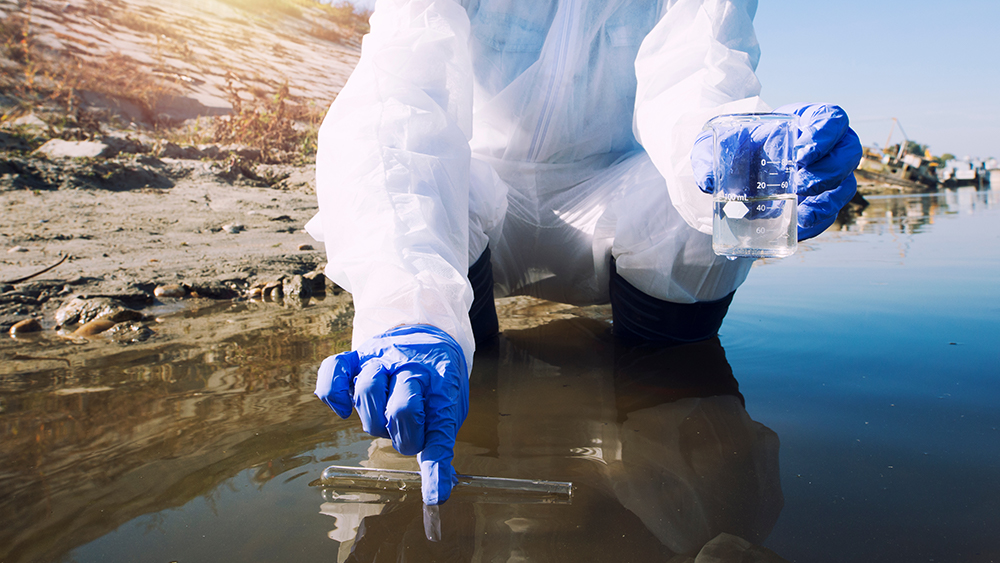
(NaturalNews) Researchers at the Helmholtz-Zentrum Dresden-Rossendorf (HZDR) in Germany are testing two technologies designed to destroy per- and polyfluoroalkyl su…

(NaturalNews) The Trump administration has announced an expanded counterterrorism focus on leftist militant groups, including those involved in pro-Palestine activi…
(NaturalNews) Former White House AI and cryptocurrency czar David Sacks said Friday that the United States is undermining its competitive advantage in artificial in…

(NaturalNews) Creatine, a naturally occurring amino acid compound, enhances muscle performance, fat loss and recovery by aiding ATP energy production. Pairin…
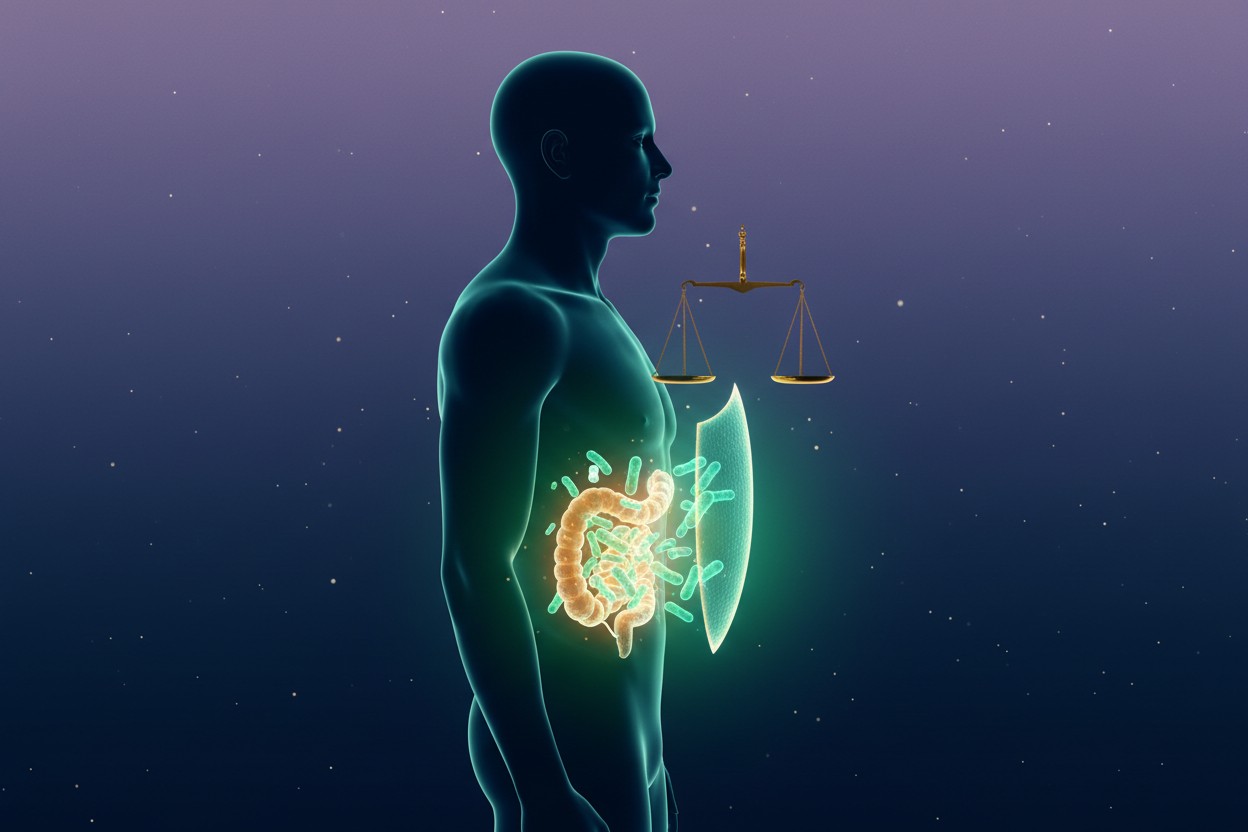
(NaturalNews) A pasteurized gut bacterium, Akkermansia muciniphila MucT, was associated with less weight regain after a low-energy diet, according to a study publis…

(NaturalNews) Introduction: Rejecting the Pill-Pushing ParadigmIn an era where a woman’s health journey is too often hijacked by a predatory pharmaceutical indust…

(NaturalNews) Parsley’s compound apigenin fights cancer by targeting a key protein (VEGF-?) that tumors use to build blood vessels, effectively starving them an…

(NaturalNews) The White House earlier announced the launch of a network of gas stations branded as “Freedom Fuel,” touting a price of $3.47 per gallon â a figure…

(NaturalNews) Goldman Sachs has reduced its global PC shipment forecasts for 2026 through 2028, citing a memory chip shortage and rising component costs. The revise…
(NaturalNews) Former President Donald Trump has proposed granting automatic green cards to foreign graduates of U.S. colleges, a plan he described during an intervi…

(NaturalNews) Dr. Matthew Wielicki replaces the climate assessmentâs former leadership, signaling a shift toward skepticism. The next climate report will f…

(NaturalNews) The world is watching the Middle East spiral into a multi-front conflict, but the real story is not being told in Washingtonâs press briefings. The …
Democratic Minnesota Attorney General Keith Ellison appeared stunned when protesters interrupted his speech for a far-left candidate for one of the state’s seats in the U.S. Senate.
Ellison was trying to encourage Democrats to show up for Peggy Flanagan when protesters interrupted him and demanded that he answer for shutting down a program looking into wrongful convictions.
The contest will likely be seen as another battle between far-left elements of the Democratic Party trying to seize control.
Flanagan is trying to win the primary for the Democratic-Farmer-Labor Party from Rep. Angie Craig, a Democrat who has represented Minnesota since 2019.
Ellison seemed angered and rattled by the protesters, and he quickly finished his comments before rushing offstage.
The protesters were angry about Ellison shutting down the Conviction Review Unit, which he blamed on lack of funding from the Trump administration. In five years, the unit overturned three wrongful convictions.
Prior to getting heckled off the stage, Ellison described the contest between Flanagan and Craig as “truly a fight of the money versus the many.”
He might have been referring to the significant cash advantage Craig has over Flanagan, as divulged in financial reports. Flanagan has only $1.56 million in cash on hand, while Craig has more than three times as much — $5 million, for the period ending June 30.
“We are the many, and we will beat the money, and we will prevail against them,” Ellison said at the rally.
Videos of the interruption were widely circulated on YouTube and the X platform.
Craig was the first openly LGBTQ+ member in Congress from Minnesota and is also the first lesbian mother to serve in Congress.
RELATED: ‘Dishonest garbage’: Keith Ellison NAILED with ridicule after offering defense of socialism
She has been endorsed by establishment Democrats, including former Transportation Secretary Pete Buttigieg and U.S. House Democratic Leader Hakeem Jeffries. The contest will likely be seen as another battle between far-left elements of the Democratic Party trying to seize control.
The primaries for both parties will be conducted Aug. 11.
Like Blaze News? Bypass the censors, sign up for our newsletters, and get stories like this direct to your inbox. Sign up here!
Keith ellison, Minnesota, Us senate, Politics, Democratic farmer labor party

Is this just another cycle, or is it the END? Martin Armstrong of Armstrong Economics published an article this week about the so-called Socrates program and how [more…]

“I assure you all options are open on the southern front. They can be adopted anytime.” Summary recap: Hezbollah Secretary-General Hassan Nasrallah’s speech went for [more…]

Putin orders planeloads of humanitarian aid to be sent to Egypt The Russian Ministry Emergency Situations said on Friday that it would send two aircraft [more…]

It is Tunisia’s duty to stand with the Palestinians, its president has said The Tunisian parliament on Thursday began discussing a bill that would define [more…]

Suspected provocateur specifically stated, ‘We’re here to storm the capitol. I’m not kidding.’ In a new mini-documentary diving into Jan. 6, investigative journalist Lara Logan [more…]

Mainstream media claims Obama-Biden partnership has only been happening for 5 months. Former President Barack Obama has been secretly advising the Biden administration for several [more…]
“This case could completely wipe out the ATF’s ability to create law and subvert congress, which would be a massive win for the Second Amendment.” [more…]

Elon Musk chimed in to question ‘how common’ this type of illegal activity is during American elections Bridgeport, Connecticut, the largest city in the state, [more…]