







Is this just another cycle, or is it the END? Martin Armstrong of Armstrong Economics published an article this week about the so-called Socrates program and how [more…]

Pharmaceutical giant Pfizer may have delayed the announcement of its COVID-19 vaccine to influence the 2020 presidential election, according to evidence provided to a House [more…]
The Food and Drug Administration (FDA) is planning a major overhaul of the way food additives are reviewed for safety
In the modern West, “scientific proof” is considered the gold standard for separating truth from falsehood. The popular belief is that if you don’t have scientific proof of something, then it doesn’t exist or is just a matter of subjective opinion.
This is a viewpoint known as “scientism,” which holds that “science” is the only (or the best) means of discovering truth.
‘The entire universe is balanced on a knife-edge and would be total chaos if any of the natural “constants” were off even slightly.’
But there are many truths about the world that are outside the realm of science. For example:
• Philosophical truths (such as the laws of logic)
• Moral truths (murder is an evil act)
• Historical truths (Columbus set sail in 1492 to discover a sea route to Asia)
• Aesthetic truths (sunsets are beautiful)
So when it comes to providing reasons to believe that God exists, we need not limit ourselves to scientific evidence.
We can appeal, for example, to the existence of objective morality (as C.S. Lewis did in “Mere Christianity”), to religious experience, or to Jesus’ resurrection from the dead.
Nonetheless, there is powerful scientific evidence that points to God’s existence, and we’ll discuss two lines of this evidence below.
One final caveat before we proceed relates to the term “proof.” Merriam-Webster defines proof as evidence that “compels acceptance by the mind of a truth or a fact.” This is the everyday meaning of “proof,” in the sense of demonstrating something beyond any doubt.
It’s important to note, however, that science is unable to provide this level of assurance. As the philosopher Karl Popper famously argued, scientific theories can’t ultimately be proven or confirmed because other theories and observations may arise later that explain a phenomenon better. Thus, most leading scientists today recognize that scientific explanations are always provisional and may be modified or replaced in the future.
This is important to understand because science always deals with probabilities rather than proof. Some piece of scientific evidence can point to God’s existence and make it more probable, but scientific evidence can’t conclusively demonstrate that God exists. It’s simply beyond the purview of science to give us definitive proof about anything.
The evidence we’ll discuss below provides solid reasons to believe that God exists, but it can’t prove beyond any doubt that God exists. Science is incapable of reaching that high bar.
The most widely accepted account of how the universe came into existence is the standard Big Bang model. Based on a number of different scientific observations, physicists have concluded that the universe sprang into existence out of nothing about 14 billion years ago.
The most immediate question that comes to mind in light of this account is: Who or what caused the Big Bang?
Significantly, the standard model holds that all space, matter, energy, and time suddenly came into existence — from nothing — with the Big Bang. This means that whatever brought the Big Bang about is beyond space and time, immaterial, personal (this being made a decision to create), and unbelievably powerful. Of course, this is an excellent description of many of the attributes of God.
Who else but God could have brought a universe into being?
Some scientists have proposed alternative scenarios seemingly designed to avoid an absolute beginning of the universe, but none have proven persuasive enough to replace the standard model. While scientific theories, as we’ve noted, are always subject to change, the Big Bang as currently understood certainly points to the existence of God.
Although the fact that the universe exists at all is remarkable, another fascinating aspect of the universe is that it is fine-tuned for the existence of life.
Some examples include:
The strength of gravity: The strength of gravity is determined by the gravitational constant. If gravity were significantly stronger, stars would burn out much faster, leaving less time for life to develop. On the other hand, if gravity were much weaker, stars might not form at all, preventing the creation of essential elements for life.
The cosmological constant: This constant relates to the expansion speed of the universe. If it were just a little bit larger, the universe would have expanded too rapidly for galaxies and stars to form. Conversely, if it were smaller, the universe might have collapsed back on itself before life had a chance to emerge.
The strong nuclear force: This force holds together the protons and neutrons in an atom’s nucleus. If it were slightly weaker, protons and neutrons wouldn’t stick together, making complex atoms impossible. Without complex atoms, the chemical diversity necessary for life wouldn’t exist. If it were stronger, protons could potentially bind to each other more readily, which could lead to a universe without stable hydrogen, an essential element for life.
The size and distance of the Earth from the sun: Earth’s position in the solar system is in what scientists call the “Goldilocks Zone,” where it’s not too hot and not too cold, allowing for liquid water to exist on its surface. The size of Earth also ensures that it has the right gravity to retain an atmosphere suitable for life without being too strong to inhibit the mobility of organisms.
Those unfamiliar with the evidence for fine-tuning will sometimes claim that it’s a concept held only by Christians or theists. Yet, scientists who claim no religious affiliation or are openly agnostic or atheist acknowledge this fact about the universe.
Fred Hoyle, an eminent physicist and agnostic, stated, “A commonsense interpretation of the facts suggests that a super intellect has monkeyed with physics, as well as chemistry and biology, and that there are no blind forces worth speaking about in nature.” In his book “A Brief History of Time,” the late Stephen Hawking wrote, “The remarkable fact is that the values of these numbers seem to have been very finely adjusted to make possible the development of life.” Physicist P.C.W. Davies, also religiously unaffiliated, insists that “the entire universe is balanced on a knife-edge, and would be total chaos if any of the natural ‘constants’ were off even slightly.”
The existence and fine-tuning of numerous constants and parameters of the universe is unexpected and mysterious if naturalism is true. But it makes perfect sense if Christianity is true, and God desired to create beings He could have a relationship with.
Although acknowledging the provisional nature of science, there are good scientific reasons to believe that God exists, and these reasons seem to grow stronger the more we learn about the universe.
This article is adapted from a post that originally appeared on the Worldview Bulletin Substack.
Science, Big bang theory, God, Christianity, Atheism, Faith
President Donald Trump says he will speak to Russian President Vladimir Putin and Ukrainian President Volodymyr Zelensky on Monday to end the “bloodbath” war between [more…]
Nearly 1000 illegals were either arrested or deported during a week-long series of raids in Houston, Texas by Immigration and Customs Enforcement
The perpetrator of a bombing at a California fertility clinic has been identified as a 25-year-old man who left a manifesto of his “pro-mortalist” beliefs, [more…]
Sorry (not sorry), progressives and liberal media: Pope Leo XIV isn’t here to rewrite the gospel and edit the Bible to fit your agenda.
When Cardinal Robert Prevost became Pope Leo XIV, progressives exhaled in cautious hope. Maybe — just maybe — Leo would accelerate the Catholic Church’s liberal evolution as the heir to Pope Francis’ attitude of inclusion.
They want Christians who are obedient to the progressive, globalist overlords — not Christ.
But that hope is quickly turning to frustration as reality sets in: Pope Leo XIV isn’t going to oblige liberals.
Take, for example, Pope Leo XIV’s views on the LGBTQ agenda. Just hours after Leo became pope, the Guardian raised alarm (i.e., clutched pearls) after finding video of Leo standing against the progressive spirit of the age while endorsing biblical ethics on sexuality and life.
In that video, Pope Leo XIV condemned abortion, euthanasia, and LGBTQ ideology while observing how the mass media push an anti-Christian agenda.
“Western mass media is extraordinarily effective in fostering within the general public enormous sympathy for beliefs and practices that are at odds with the gospel – for example abortion, homosexual lifestyle, euthanasia,” Leo said, before blasting the media for creating “sympathy for anti-Christian lifestyles choices” in such a way that “when people hear the Christian message, it often inevitably seems ideological and emotionally cruel.”
But this is how the Guardian reported it: “Unearthed comments from new pope alarm LGBTQ+ Catholics.”
In other words: A Catholic priest saying Christian things is problematic.
To be fair to progressives and the legacy media, I don’t think they’re personally upset at Pope Leo XIV (yet). After all, no one yet knows how he will lead the Catholic Church.
Instead, they’re upset that Christianity still means something and that faithful Christians refuse to capitulate to their agenda.
They want a church that shifts with the spirit of the age. Christians who bow to cultural pressure. A religion that nods along with whatever the editors at the New York Times or MSNBC decide is morally right in 2025. They want the church to extract itself from its ancient roots. They want Christians who are obedient to the progressive, globalist overlords — not Christ.
Unfortunately for progressives, the Church does not exist to be a mirror of the age. It is a countersign pointing all to King Jesus, who sits at the right hand of the Father. It does not exist to affirm but to transform.
Not only are progressives upset because faithful Christians refuse to conform, but they’re upset because the truth is a light that illuminates their lies.
Pope Leo XIV, then, is exposing the left’s true enemy — God’s truth — and their greatest fear: the disinfectant that wipes away their lies.
Take, for example, Pope Leo XIV’s comments about gender ideology.
“It seeks to create genders that don’t exist, since God created men and women, and trying to confuse the ideas of nature will only harm families and individuals,” he said in 2016. “This campaign, apparently, is going to create a lot of confusion and do a lot of harm. We mustn’t confuse the importance of family and marriage with what others want to create, as if it were a right to do something that isn’t.”
In the era of cancel culture and progressive-enforced speech codes, these comments are not just controversial — they amount to dangerous “hate speech.”
While Pope Leo XIV has not yet faced the full wrath of the progressive mob, his fidelity to traditional Christian ethics is a clear and present threat to the new religion of woke “inclusivity” in which dissension is branded as bigotry and hate.
The great irony, of course, is that as a faithful Christian leader, Pope Leo XIV is neither a bigot nor hate-filled. He preaches the gospel of Jesus Christ, which is rooted in biblical love — the only love that brings peace to our chaotic world.
But to a world that demands affirmation and acceptance of radically anti-Christian ideals, the love of Jesus Christ — which requires obedience and allegiance to his teachings — looks like hate. In this culture, truth sounds like violence and, as Pope Leo XIV himself said, conviction is rebranded as cruelty.
Perhaps, then, this will be Pope Leo XIV’s greatest cultural transgression: He refuses to lie.
He doesn’t pretend that men can become women. He doesn’t endorse the idea that marriage can be anything but a faithful union between one man and one woman. He rejects abortion and the progressive erosion of the family unit. Under Pope Leo XIV’s leadership, the cross will not be replaced with a rainbow flag.
Pope Leo XIV is a shepherd of God’s truth, like it or not.
All Christians should be thankful. Because in an age when so many leaders bend to the whims of the culture wars or equivocate truth, Pope Leo XIV will do something truly countercultural: He’ll stand on God’s word.
Progressives wanted a puppet. Instead, they got a pope.
Pope leo xiv, Christianity, Christians, Left, Progressives, Lgbtq agenda, Lqbtq ideology, Gay marriage, Bible, God’s truth, Jesus christ, Catholic church, Faith
A Mexican navy tall ship on a goodwill visit to New York slammed into Brooklyn Bridge on Saturday evening, destroying the ship’s masts and leaving [more…]
The Catholic Church’s papal transition is set to draw to a celebratory close on Sunday morning in Vatican City. According to Sky News, officials are expecting nearly a quarter of a million people to pack St. Peter’s Square to celebrate the papal inauguration. Millions more are expected to watch across the world.
The holy Mass for the beginning of the pontificate of Pope Leo XIV is set to begin at 10:00 a.m. local time, 4:00 a.m. ET. For those looking to follow along, the Vatican has prepared a booklet for the Mass in pdf form. The American-based Catholic television network EWTN has been broadcasting live from Rome since the death of Pope Francis hours after he was driven through St. Peter’s Square on Easter Sunday. The network is planning to carry the inaugural Mass for Pope Leo live on YouTube, which can be seen below.
Catholic News Agency has prepared a list of the key moments to look for during the celebration. Highlights include a prayer at the tomb of St. Peter, a procession led by deacons holding the signs of papal authority — the pallium, gospels, and fisherman’s ring — an “act of obedience and fidelity of the universal Church to the new pope,” and the rite of initiation of the pontiff, where the new pope will receive his pallium and ring.
Dignitaries from around the world are expected at the celebration, including a delegation from the United States led by Vice President JD Vance and Secretary of State Marco Rubio, both of whom are practicing Catholics.
As the world celebrates the first American pope, many Catholics from the United States are hopeful about what’s to come. Bill Donohue, president and CEO of the Catholic League for Religious and Civil Rights, told Blaze News, “I would like to hear Pope Leo XIV speak about the multiple challenges awaiting his pontificate. This would surely entail speaking about contemporary moral issues and addressing the problems that militant secularism has wrought.”
Donohue continued, “He does not have to lay out a specific agenda, but we need to learn of his vision for the Church and where he wants to take us.”
RELATED: Not Francis 2.0: Why Pope Leo XIV is a problem for the ‘woke’ agenda
Like Blaze News? Bypass the censors, sign up for our newsletters, and get stories like this direct to your inbox. Sign up here!
Catholic church, Holy communion, Jd vance, Marco rubio, Papal mass, Pope leo xiv, Faith
Like transhumanism, artificial intelligence, and nanotechnology, geo-engineering is another one of man’s dangerous attempts to play God.
By manipulating Earth’s climate via scattering particles to block sunlight or sucking carbon from the air, it gambles with nature’s delicate balance, inviting consequences we can’t possibly predict.
Lead researcher and founder of GeoengineeringWatch.org Dane Wigington, however, has dedicated his life to exposing and halting covert climate engineering operations. On a recent episode of “Back to the People,” he told Nicole Shanahan the wild story of how he became one of the world’s most vocal critics of geo-engineering — an insidious threat most know nothing about.
Many years ago, Wigington built an off-grid home powered by solar, wind, and hydro energy in a remote area near Lake Shasta in Northern California. Everything was going great; his home was even featured in a major renewable energy magazine, celebrating his expertise in sustainable living.
But one day, something changed: His solar panels began losing a huge amount of power. Given his professional background in solar energy, Wigington knew that the culprit couldn’t possibly be natural.
After extensive research, he found the answer in his rainwater: It had aluminum in it — toxic levels that rose dramatically over an 18-month period.
Aluminum, Wigington explained, “is abundant in the Earth’s strata; it does not exist in free form naturally — period. If it’s in free form, it’s been mined and refined and dispersed.”
In other words, climate engineering programs, specifically in the field of solar radiation management, were likely spraying aluminum nanoparticles into the atmosphere to reflect sunlight and cool the planet, which is deeply problematic considering “aluminum is toxic to all life forms.”
The rainwater is “killing virtually all soil microbiome. … Our forests are completely imploding, not just in Northern California — the entire North American West Coast and most places around the world, and they blame that on beetles or a pest,” says Wigington, but “that’s a symptom of a sick, dead, dying tree and ecosystem.”
“We have too many agencies trying to protect their paychecks and pensions and not willing to tell the truth.”
And that truth is: Geo-engineering, which is marketed as a means of mitigating climate change, is actually causing it.
“It’s speeding up drying,” even though “the goal is to block out the sun to keep the land from heating,” echoes Nicole.
“That’s exactly what’s happening,” says Wigington. “Climate engineering under the stated goal of mitigating the thermal energy buildup of the planet is actually exacerbating it, making a bad situation worse — pushing us from the frying pan into the fire.”
To hear more of the conversation, including details about Wigington’s documentary “The Dimming” that exposes the dark underbelly of the geo-engineering world, watch the episode above.
To enjoy more of Nicole’s compelling blend of empathy, curiosity, and enlightenment, subscribe to BlazeTV — the largest multi-platform network of voices who love America, defend the Constitution, and live the American dream.
Back to the people, Nicole shanahan, Dane wigington, Geo engineering, Aluminum, Climate change, Solar radiation management, Blazetv, Blaze media, Return
Nineties nostalgia is big these days.
Some are into the music. Distorted guitars and drum sets. Something more human than samples and synths.
People dressed better in the ’90s. Even considering grunge culture, people dressed better. There were no Crocs in 1994.
Some are into the clothes. Old Polo Ralph Lauren on one hand and grungy baggy jeans on another. From time to time, I see young people crossing the street, and those memories of the JNCO years come rushing back.
I’ve been an unrepentant ’90s nostalgist for quite some time now. My argument on behalf of the ’90s predates Zoomer nostalgia. It’s interesting to witness the rise of ’90s nostalgia among young people. It feels like watching others catch up to what I already knew. It’s a rare case of feeling culturally vindicated.
What is happening? People never like what I like.
Of course, it will be short-lived. Trends go as quickly as they come. People are fickle. That’s OK, it’s just the nature of things. But the rise of ’90s nostalgia isn’t just irrational sentimentalism.
Nineties nostalgia makes sense. The ’90s were indeed better.
There are always detractors. There are those who respond, “The ’90s weren’t that great, you know. It wasn’t all perfect. It wasn’t utopia or anything.” That’s true, it wasn’t utopia. There is no utopia. No one is saying it was utopia. The straw man argument can be dismissed.
Yes, there were problems in the ’90s. Urban crime, for one. There was a darkness to the grunge scene. Cubicle culture was as stultifying as ever.
There was an ennui looming somewhere underneath everything in the wake of the Soviet Union collapsing. With our enemy on the other side of the world vanquished, where did that leave us? Who were we without a formidable enemy? The end of history was here.
Yes, these were problems in the ’90s. But here’s the crucial point: None of those problems came close to what we’re dealing with today.
Is the darkness of grunge really worse than the absolute nihilism we see among our young people today? No. There was, actually, some kind of vital rage to grunge. Brain-rot culture of 2025 is some kind of unholy combination of “Idiocracy” and “Brave New World.”
Same for office malaise. Yes, more of us may work from home, but those homes are often as sterile as the buildings they replaced. Slack email jobs for people with no kids, two cats, and Netflix every night. Don’t forget DoorDash, vasectomies at 26, and sleep health. Grim.
Our society today is far more anti-social than the society of the ’90s. People are lonelier. More people avoid marriage or even dating. There are fewer children being born.
There are more suicides. More overdoses. More sexual dysfunction. More mental illness. More prescription drugs. The culture is more disgusting. The music is less human. The clothing is more dehumanizing.
Yes, there were problems in the ’90s, but the problems are worse today.
I remember; I was around in the ’90s. I wasn’t an adult, I was a kid. And, of course, children never know what is really going on, but I do remember what life was like.
I know that there was not one bit of gender destruction going on in school. I know that not a single person in my entire childhood claimed to be a boy when she was actually a girl. I know that no one in 6th grade had unfiltered access to anything resembling the psychotic internet of 2025.
I know that almost no one was on antidepressants in high school. I know what it was like, and it wasn’t like today. I know that with my children, I have to look out for everything my parents had to look out for, plus a bunch of other stuff.
People dressed better in the ’90s. Even considering grunge culture, people dressed better. There were no Crocs in 1994.
People didn’t wear pajama pants everywhere. In high school, pajama day was some weird one-off during spirit week. The lowest of the low was ripped jeans and T-shirts. Girls wore makeup more. Guys shaved more.
There was a general thrust of society that led to girls wanting to look pretty and guys wanting to look handsome. There were more songs about love. The movies were, largely, about adults and life, not super heroes and other banalities. All of this is historical fact.
Nineties nostalgia, for those of us who were alive then, is a little less interesting than ’90s nostalgia found among the Zoomers. For us olds, it’s real in a way it just isn’t for the Zoomers.
They are longing for a world they never knew. They are imagining a place they have only seen in photos and videos. And it’s the aesthetic of those photos and videos they love.
Handheld-recorder aesthetic with date and tracking problems is a vibe. It’s not Super 8 midcentury. It’s Sony camcorder 1997. Something — anything! — less sterile than a straight iPhone photo. That’s the meaning of that aesthetic memory.
Were the ’90s the greatest decade? No. Of course not. There is no greatest decade. Some argue that history has a fixed trajectory and that every decade is worse than the previous one. It’s a compelling argument. I can’t say it’s entirely wrong, though spending too much time thinking about that might lead to depression.
But why the nostalgia for the ’90s and not the ’80s? Or the ’70s? Or the ’50s? Or the ’20s?
Because the ’90s were the end and the closest we can get. The final sputters of the 1900s. The end of the other world. Yes, there have been many ends, but the ’90s were really the final gasp. The last chopper out of Vietnam. That flip from 1999 to 2000 was the final nail in the coffin.
The ’90s feel like an alternative reality. It was modern then. Looking back on 1994 isn’t like looking back at 1924. 1924 feels ancient. We can’t really wrap our heads around living then. But 1994 is near us.
The cars, the houses, the technology, the medical advancement, the people, the language, the way of life. It all feels very familiar. It really feels like yesterday, even for the Zoomers who weren’t there. It feels like we can almost reach out and grab it. It feels like we can almost get there from here.
It feels like today, but better.
Men’s style, The 90s, Nostalgia, Grunge, Culture, Lifestyle, Kurt cobain, The root of the matter

(NaturalNews) Teens with anxiety, depression or PTSD spend nearly an hour more daily on social media than peers and are twice as likely to compare themselves ne…

(NaturalNews) A British study found that American children who eat too little fish (rich in omega-3s) are more likely to struggle with empathy, sharing and coop…

(NaturalNews) An investigation by Consumer Reports found dangerously high lead levels in cassava-based foods, with some products exceeding safety thresholds by …
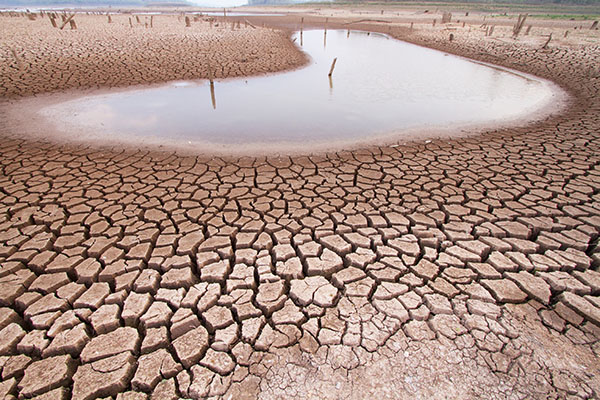
(NaturalNews) Claims by AfricaNews and the Associated Press that climate change is the primary cause of Nigeria’s water shortages are false, arguing instead tha…

(NaturalNews) Foreign B-1 visa truckers from Mexico and Canada are illegally hauling domestic U.S. freight, despite rules prohibiting them from picking up loads…

(NaturalNews) Senate Bill S5609, led by Sen. Julia Salazar, seeks to ban police from using biometric surveillance technologies like facial recognition and gait …
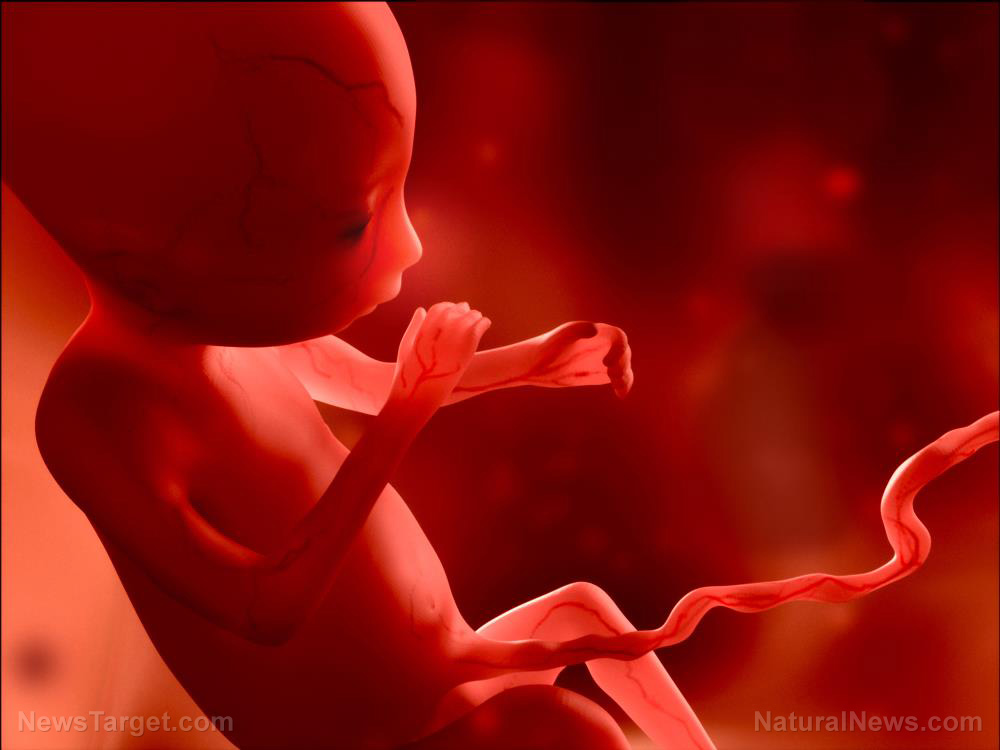
(NaturalNews) The Centers for Disease Control and Prevention (CDC) insists that pregnant women need at least six vaccines, three of which are in a combination vacci…
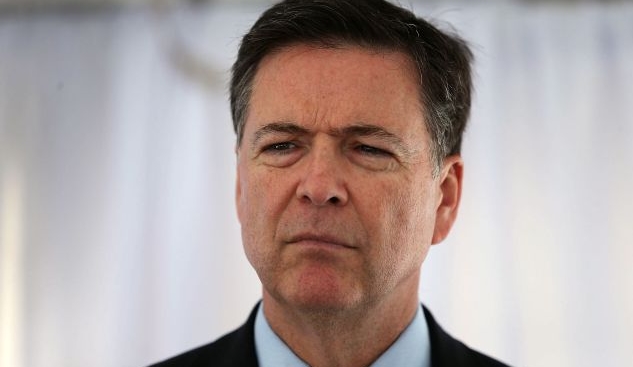
(NaturalNews) James Comey sparked controversy by posting an Instagram image of beach shells arranged as “86 47” (later deleted), which critics interpreted as a …

(NaturalNews) The Los Angeles City Council preliminarily approved a plan to raise wages for hotel and airport workers to $30/hour by 2028, with gradual increase…

Is this just another cycle, or is it the END? Martin Armstrong of Armstrong Economics published an article this week about the so-called Socrates program and how [more…]

“I assure you all options are open on the southern front. They can be adopted anytime.” Summary recap: Hezbollah Secretary-General Hassan Nasrallah’s speech went for [more…]

Putin orders planeloads of humanitarian aid to be sent to Egypt The Russian Ministry Emergency Situations said on Friday that it would send two aircraft [more…]

It is Tunisia’s duty to stand with the Palestinians, its president has said The Tunisian parliament on Thursday began discussing a bill that would define [more…]

Suspected provocateur specifically stated, ‘We’re here to storm the capitol. I’m not kidding.’ In a new mini-documentary diving into Jan. 6, investigative journalist Lara Logan [more…]

Mainstream media claims Obama-Biden partnership has only been happening for 5 months. Former President Barack Obama has been secretly advising the Biden administration for several [more…]

“This case could completely wipe out the ATF’s ability to create law and subvert congress, which would be a massive win for the Second Amendment.” [more…]

Elon Musk chimed in to question ‘how common’ this type of illegal activity is during American elections Bridgeport, Connecticut, the largest city in the state, [more…]