






“This case could completely wipe out the ATF’s ability to create law and subvert congress, which would be a massive win for the Second Amendment.” [more…]

Meta’s revival of AI training stirs another privacy showdown over user consent in the EU.
in this critical report, Alex Jones points out that most people in the independent populous media are wrongly focusing on the democrat / media covering [more…]
Medical experts are saying former President Joe Biden’s cancer diagnosis is “inconceivable”
Poland’s future is on the line: EU obedience or conservative pushback.
The “big, beautiful bill” passed a key vote in the House Budget Committee Sunday night after five spending skeptics initially tanked the bill on Friday.
Rather than derail reconciliation a second time, four Republicans voted “present” to advance the bill in a 17-16 vote on Sunday night. On Friday, Republican Reps. Chip Roy of Texas, Ralph Norman of South Carolina, Andrew Clyde of Georgia, Josh Brecheen of Oklahoma, and Lloyd Smucker of Pennsylvania all voted against the bill, resulting in a 16-21 vote.
This time around, Roy, Norman, Clyde, and Brecheen voted “present” to advance the bill, while Smucker voted in favor of it. Notably, Speaker Mike Johnson (R-La.) also met with Norman, Clyde, and Brecheen Sunday morning before the vote.
‘This bill is a strong step forward. … But we have to do more to deliver for the American people.’
RELATED: The Republicans who could derail reconciliation
Rep. Chip Roy (R-Texas). Photo by Tom Brenner for the Washington Post via Getty Images
“Tonight, after a great deal of work and engagement over the weekend, the Budget Committee advanced a reconciliation bill that lays the foundation for much-needed tax relief, border security, and important spending reductions and reforms,” Roy said in a statement. “Importantly, the bill now will move Medicaid work requirements forward and reduces the availability of future subsidies under the green new scam.”
Reforms to the Medicaid work requirements were initially set to take effect in 2029, which was not nearly aggressive enough for fiscal hawks like Roy. Johnson reportedly offered the holdouts a 2026 implementation date, which may have swayed many of the holdouts to allow the bill to advance.
“But the bill does not yet meet the moment — leaving almost half of the green new scam subsidies continuing,” Roy added. “More, it fails to end the Medicaid money laundering scam and perverse funding structure that provides seven times more federal dollars for each dollar of state spending for the able-bodied relative to the vulnerable.”
“This all ultimately increases the likelihood of continuing deficits and non-Obamacare-expansion states like Texas expanding in the future,” Roy added. “We can and must do better before we pass the final product.”
RELATED: Vance tells Glenn Beck Congress needs to ‘get serious’ about codifying DOGE cuts
Alex Wroblewski/Bloomberg via Getty Images
The bill can be amended only in the Rules Committee, which will hold its hearing on Wednesday at 1:00 a.m. House Republican leadership members have also said they will refrain from sending lawmakers home for Memorial Day, which was their original target.
“As such, I joined with three of my colleagues to vote ‘present’ out of respect for the Republican Conference and the president to move the bill forward,” Roy said. “It gives us the opportunity to work together this week to get the job done in light of the fact our bond rating was dropped yet again due to historic fiscal mismanagement by both parties.”
“This bill is a strong step forward — and I am proud of Chairman Arrington, the speaker, and my colleagues for the work we did to make progress with the White House,” Roy added. “But we have to do more to deliver for the American people.”
Like Blaze News? Bypass the censors, sign up for our newsletters, and get stories like this direct to your inbox. Sign up here!
Mike johnson, Chip roy, Ralph norman, Andrew clyde, Josh brecheen, Lloyd smucker, Reconciliation, Donald trump, Big beautiful bill, No tax on tips, No tax on overtime, Medicaid, Medicaid reform, Doge cuts, Jody arrington, Jason smith, Budget committee, Rules comittee, Ways and means, Fiscal hawk, Fiscal conservative, Government spending, National debt, Federal deficit, White house, Trump administration, Politics
RFK Jr has promised to make tackling microplastic pollution economically viable for industry
Security services are probing links between the arrest and a national security adviser’s resignation over leaked photos on a gay dating app.
A law meant to shield kids now grants the state the power to ID everyone at the gates of the internet.
A clip from 2022 has resurfaced on social media of President Biden saying he had cancer because of pollution in his native Delaware
‘Time to boycott Dove. They clearly hate women,’ said one X user. ‘Didn’t Bud Light teach anybody anything?’ asked another.
The founder of internet messaging app Telegram has accused the French intelligence service of asking him to censor Romanian conservatives ahead of the country’s crucial [more…]
European laws are drafting the rulebook for what Americans can post online.
President Trump’s “Big Beautiful Bill Act” cleared the House Budget Committee on Sunday night, by a vote of 17-16
The resettlement of a million Gazans in Libya is being considered by the Trump administration
In the months leading up to the criminal trial of rapper Sean “Diddy” Combs, the public was anticipating an Epstein-level spectacle. Diddy had been dubbed “the Epstein of the rap industry,” after all, as it is strongly speculated that he was also running a blackmailing/trafficking operation that involved a long list of celebrities and other elites.
However, we’re now several days into the trial, and it’s been pretty lackluster. The case has focused solely on Diddy’s own degeneracy, especially as it relates to ex-girlfriend Casandra “Cassie” Ventura.
Glenn Beck’s biggest question is why is no one going after Diddy’s possible accomplices. What about all the celebrities who went to his infamous parties?
Jason Whitlock, host of “Fearless,” has a terrifying theory.
From what he’s seen so far from the trial, Jason says it’s clear they want people to to think “Diddy’s a really bad person; he’s a sexual degenerate; he turns violent against women that he’s dating, but in terms of racketeering or sex trafficking and all that — none of that is being addressed.”
“I’m not sure if they have an interest in even arguing that case at this point,” he tells Glenn.
“I think they raided Diddy’s home to strip him of his power and leverage and blackmail material, and that all this is really about is taking away Diddy’s leverage and handing it over to the Department of Justice or whoever is responsible for this or stripping him of the most damaging information he had on key people that they don’t want harmed,” Jason theorizes.
“So wait a minute, you’re saying that maybe he was an operative, or if he wasn’t an operative, he was collecting stuff on people, and now the government wants that to either protect those people or to have the power over those people?” Glenn asks, shocked.
“And to strip Diddy of his power,” Jason confirms.
“I think that Diddy, being a bit of an idiot, probably got too full of himself and started threatening the wrong people with the information he had, and someone needed to put him in his place — like ‘no, you’re an operative, you’re a tool, you’re an asset; you’re not some ringleader; you haven’t ascended to a place of power where you can actually use this information to start blackmailing people,”’ he explains.
“They raided this guy like he was Pablo Escobar, and now they’re in court arguing that he’s Hugh Hefner. No — that that’s not what we were promised.”
To hear more details of Jason’s theory, watch the clip above.
To enjoy more of Glenn’s masterful storytelling, thought-provoking analysis, and uncanny ability to make sense of the chaos, subscribe to BlazeTV — the largest multi-platform network of voices who love America, defend the Constitution, and live the American dream.
The glenn beck program, Glenn beck, Jason whitlock, Diddy, Diddy trial, Cassie ventura, Epstein, Diddy epstein, Blazetv, Blaze media
Seventeen centuries ago, bishops from around the known world gathered in Nicaea to affirm and codify the core tenets of the Christian faith. Now, as the anniversary of that defining moment in Christendom approaches, leaders on either side of the Great Schism are preparing to return, drawing East and West closer and renewing hope in the promise of Christian unity.
In the year 325, Emperor Constantine I called over 250 bishops — 318,
according to tradition — to convene during the pontificate of Pope Sylvester I in the Bithynian city of Nicaea, 55 miles southeast of present-day Istanbul. It was the largest gathering of bishops in the church’s history up until that time.
While the council would ultimately address a number of practical and ecclesiastic matters, it prioritized tackling the
Arian heresy, which entailed a rebuke and an affirmation of the divinity of Christ — “God from God, light from light, True God from True God, begotten, not made, of the same substance as the Father, by Whom all things were made” — and setting the date on which to commemorate Jesus’ resurrection.
This dogmatic council was of critical importance both then to the unified church and now to Catholics, Orthodox, Anglicans, and other Protestants, perhaps most notably for its production of the Nicene Creed — a statement of faith, mutually held as authoritative, that predates both the Chalcedonian schism and the Great Schism.
Pope Leo XIV and Ecumenical Patriarch Bartholomew I of Constantinople are making a joint trip to the place where their predecessors met 17 centuries earlier. While various obstacles some figured to be insurmountable still stand in the way of full reunification, the meeting of the Christian leaders on this particular anniversary and the anniversary itself have sparked renewed interest in Christian unity and the ground that the faithful share in common.
Prior to his passing, Pope Francis proposed celebrating the 1,700th anniversary with Orthodox leaders in a Nov. 30
letter to Ecumenical Patriarch Bartholomew I of Constantinople, who previously indicated a joint trip was expected to happen in late May.
Pope Francis noted in his letter to the patriarch that the Catholic Church’s “dialogue with the Orthodox Church has been and continues to be particularly fruitful,” yet acknowledged that the “ultimate goal of dialogue, full communion among all Christians, sharing in the one Eucharistic chalice, has not yet been realized with our Orthodox brother and sisters,” which “is not surprising, for divisions dating back a millennium, cannot be resolved within a few decades.”
‘It is good whenever the pope and the patriarch meet.’
Prior to heading back to Toronto from Rome, where he participated in the conclave that elected the new pope, Archbishop Emeritus Thomas Cardinal Collins told Blaze News, “The 1700th anniversary of the Council of Nicaea is most important for all Christians, because it was there that the bishops clarified the basic Christian faith in the divinity of Christ. The Nicene Creed, from this council and the next one, in Constantinople a few years later, is still the basic expression of our faith in the Trinity.”
RELATED: 2025 will be a landmark year for Christendom — here’s why
First Council of Nicaea. Found in the collection of Saint Sophia Cathedral, Kiev. Photo by Fine Art Images/Heritage Images/Getty Images
“The division of East and West that occurred much later in 1054 is most unfortunate and has impeded the spread of the gospel,” continued Collins. “But the churches of East and West, while having different theological and liturgical styles, recognize one another’s apostolic succession and, with a few issues still in dispute, basically agree on doctrine as well. One thing that divides us is historical memories, but increased cooperation has brought some healing there.”
‘The remembrance of that important event will surely strengthen the bonds that already exist.’
Cardinal Collins noted further that “it is good whenever the pope and the patriarch meet. All Christians, facing so many
external dangers, need to work together. The anniversary of Nicaea, which occurred long before the division of East and West, is a perfect opportunity to deepen our knowledge and love for one another, but especially Jesus. The closer we are to Him, the closer we will be to one another.”
Pope Francis, then evidently of a similar mind, told Patriarch Bartholomew I that the anniversary would be “another opportunity to bear witness to the growing communion that already exists among all who are baptized in the name of the Father and of the Son and of the Holy Spirit.”
“This anniversary will concern not only the ancient Sees that took part actively in the Council, but all Christians who continue to profess their faith in the words of the Nicene-Constantinopolitan Creed,” wrote Pope Francis. “The remembrance of that important event will surely strengthen the bonds that already exist and encourage all Churches to a renewed witness in today’s world.”
The interest in a joint trip was evidently mutual.
During a March address in Harbiye, Turkey, Patriarch Bartholomew underscored his desire for a joint celebration of the anniversary,
reported the Orthodox Times. He also emphasized the importance of the Council of Nicaea.
“The Council of Nicaea stands as a landmark in the formation of the Church’s doctrinal identity and remains the model for addressing doctrinal and canonical challenges on an ecumenical level,” said Patriarch Bartholomew.
RELATED: Triumph of Orthodoxy? Why young men are embracing ancient faith
Photo by Vatican Media via Vatican Pool/Getty Images
Their plans hit a major snag the following month.
Pope Francis died hours after Easter Sunday — the first time the Catholic and Orthodox Churches had celebrated Easter on the same day in eight years.
“He was due to come to our country, and together we would go to Nicaea, where the First Ecumenical Council was convened, to honor the memory of the Holy Fathers and exchange thoughts and wishes for the future of Christianity,” Ecumenical Patriarch Bartholomew
said in the wake of Pope Francis’ passing. “All of this, of course, was canceled — or rather postponed.”
‘We are preparing it.’
“I believe that his successor will come, and we will go together to Nicaea to send a message of unity, love, brotherhood, and shared path toward the future of Christianity,” added the patriarch.
It would not be clear for several days whom the papal conclave would elect as Francis’ successor and whether he would have a similar interest in an East-West convention in Nicaea on the anniversary of the council.
Various leaders in the Christian East welcomed the new bishop of Rome following his May 8 election.
Patriarch Bartholomew of Constantinople, among them, expressed hope that Pope Leo XIV will “be a dear brother and collaborator … for the rapprochement of our churches, for the unity of the whole Christian family, and for the benefit of humankind,”
reported Vatican News.
Days later, Pope Leo XVI
reportedly stated, “The meeting with Ecumenical Patriarch Bartholomew will take place; we are preparing it.”
When asked about the significance of the joint trip, the likelihood of East-West reunification, and Orthodox interest in such reunification, Fr. Barnabas Powell, a parish priest in the Greek Orthodox Archdiocese of America speaking on his own behalf, told Blaze News, “There is simply no way one can be faithful to Christ and not long for the unity of all Christians.”
RELATED: Not Francis 2.0: Why Pope Leo XIV is a problem for the ‘woke’ agenda
Photo (left): Abdulhamid Hosbas/Anadolu via Getty Images; Photo (right): Simone Risoluti – Vatican Media via Vatican Pool/Getty Images
“We Orthodox pray for the unity of the churches in every service. Our Archbishop [Elpidophoros of America] has proven by his prayers and actions that he longs for unity,” said Fr. Powell. “But unity isn’t merely accepting certain propositional proposals. St. Paul said the Church is the bride of Christ, and this profound witness of the identity of the Church is ontologically connected to the mystery of relationship and love. This means we must work to know one another and not merely know about one another.”
“This is hard work in light of the tragic centuries we have been apart. But just because something is difficult doesn’t mean we shouldn’t try,” added Fr. Powell.
The Greek Orthodox priest expressed optimism about the joint trip to Nicaea, noting that as the “first Nicaea showed us that we are to gather together to struggle and dialogue through our challenges, so this is the normal Christian discipline for us today.”
‘I’m not in the odds-making business, but there is certainly justified hope.’
The Greek Orthodox Archdiocese of America
notes on its website that the “anniversary celebration brings together Orthodox, Catholics, and Protestants to reflect on the enduring significance of Nicaea, fostering conciliarity, dialogue, prayer, and a renewed commitment to the pursuit of Christian unity, echoing the spirit of the first ecumenical council.”
Monsignor Roger Landry, national director of the Pontifical Mission Societies in the United States, told Blaze News that over the past six decades, popes and the patriarchs of Constantinople have been regularly “meeting, praying, and slowly working for restored communion, as have the churches they lead.”
Msgr. Landry suggested that “there’s no question” that one of Pope Leo XIV’s top priorities, “as we celebrate the 1700th anniversary of the Council of Nicaea and move toward the 1000th anniversary of the lamentable split between East and West in 1054, will be to take whatever steps, big or small, that will help the church breathe with both lungs again in communion” — a reference to Pope St. John Paul II’s 1995
metaphor of the Western and Eastern churches as two lungs.
Echoing Cardinal Collins and Fr. Powell, Msgr. Landry noted that there remain various obstacles in the way of restoration of full communion — including the date of Easter, the role of the pope, the Filioque controversy, the sacrament of marriage, the respect for the legitimate autonomy of the Eastern churches — but there is nevertheless “a mutual desire for that communion and a mutual humble dependence on God to reveal the path forward.”
“I’m not in the odds-making business, but there is certainly justified hope because the issues that divide us are small in comparison to the faith, sacraments, life, and calling that unite us,” Msgr. Landry told Blaze News. “We are moving together in the right direction.”
In the meantime, he suggested that the ongoing separation “is a scandal that hinders the witness Christians are called to give of God.”
Ecumenical Patriarch Bartholomew’s joint trip to Nicaea with Pope Leo XIV is hardly the only celebration of the anniversary that has brought East and West together.
Earlier this month in Freehold, New Jersey, hierarchs, clergy, seminarians, and faithful from Eastern and Western traditions — including elements of the Ukrainian Orthodox Church of the USA, the Serbian Orthodox Church, the Orthodox Church in America, the Greek Orthodox Metropolis of New Jersey, the Byzantine Catholic Eparchy of Passaic, the St. Thomas Syro-Malabar Eparchy, and the Roman Catholic Diocese of Brooklyn —
participated in an ecumenical prayer service “testifying to the unifying power of the Nicene Creed and the enduring vision of the Council Fathers.”
Similar celebrations have been held
elsewhere across the world.
The Catholic Church’s International Theological Commission stated in a
recent publication concerning the Council of Nicaea and the 1,700th anniversary:
The celebration of the 1,700th anniversary of the Council of Nicaea is a pressing invitation to the Church to rediscover the treasure entrusted to her and to draw from it so as to share it with joy, with a new impetus, indeed in a “new stage of evangelisation.” To proclaim Jesus our Salvation on the basis of the faith expressed at Nicaea, as professed in the Nicene-Constantinople symbol, is first of all to allow ourselves to be amazed by the immensity of Christ, so that all may be amazed, to rekindle the fire of our love for the Lord Jesus, so that all may burn with love for him. Nothing and no one is more beautiful, more life-giving, more necessary than he is.”
Like Blaze News? Bypass the censors, sign up for our newsletters, and get stories like this direct to your inbox. Sign up here!
Faith, Abide, Christianity, Religion, Christian, Orthodox, Catholic, Council of nicaea, Nicaea, Nicene creed, Creed, Prayer, Doctrine, Dogma, Heresy, Arian, Catholicism, Patriarch, Ecumenical, Ecumenicl patriarch bartholomew, Pope francis, Pope leo xiv, Politics

(NaturalNews) The FDA has approved Galdieria blue extract blue (from algae) and butterfly pea flower extract, expanding their use in various food products inclu…

(NaturalNews) Canada’s Chief Public Health Officer Dr. Theresa Tam and 29 senior officials signed a confidentiality agreement preventing disclosure of COVID-19 …
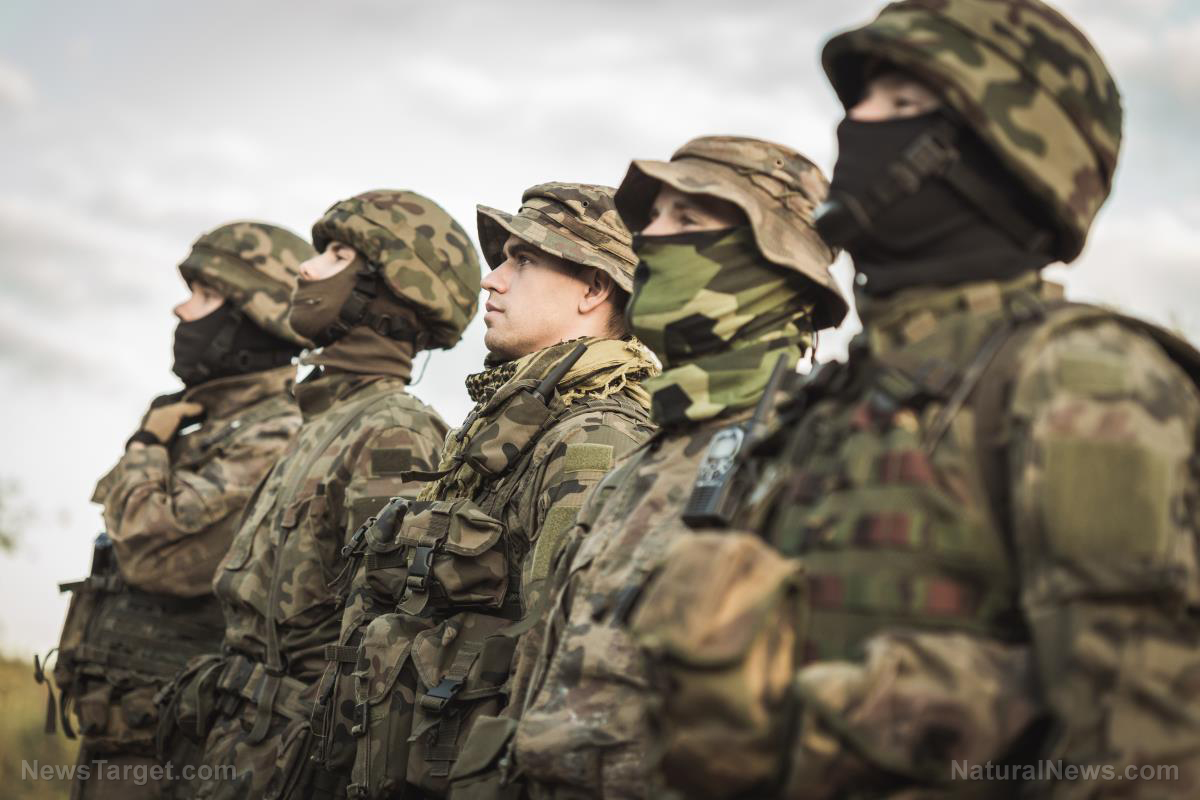
(NaturalNews) A federal judge denied Terry Adirim’s emergency bid to block her CIA termination, ruling she failed to prove her firing was politically motivated …
(NaturalNews) Google agreed to pay $1.375 billion to settle lawsuits filed by Texas, resolving allegations of illegal data collection, including location tracki…

“This case could completely wipe out the ATF’s ability to create law and subvert congress, which would be a massive win for the Second Amendment.” [more…]

Elon Musk chimed in to question ‘how common’ this type of illegal activity is during American elections Bridgeport, Connecticut, the largest city in the state, [more…]

Chinese woman evades warrant for vehicular manslaughter after horror wreck caught on camera A Chinese woman fled back to her homeland after allegedly killing her [more…]

Downdetector has reported that several US banks are facing service disruptions on Friday morning. Update (1315ET): Fed Reserve Says ACH Error Impacting Customers Bitcoin literally [more…]
Footage shows male senior swiftly strike ball in attempt to make goal, inadvertently hitting female player directly in mouth. A female high school lacrosse player [more…]

Use promo code “ALEX” when you sign up on Mug Club to get one month FREE of the network’s exclusive broadcasts, investigative reports, comedy specials [more…]

Suspect in black Lamborghini attempts rob man at Erewhon Market before shooting him in street, police say A man was shot during an attempted robbery [more…]

Watch & share this massive LIVE broadcast to get the latest on America’s border invasion, Mideast war, the NWO depopulation agenda & SO MUCH MORE! [more…]