




Is this just another cycle, or is it the END? Martin Armstrong of Armstrong Economics published an article this week about the so-called Socrates program and how [more…]

If you’ve spent any time on YouTube, you’ve probably seen videos of Chinese electric vehicles loaded with giant touchscreens, premium interiors, advanced driver-assistance systems, and impressive range — all selling overseas for the price of an entry-level compact car.
This week, Washington made sure they’re likely to stay that way.
History suggests consumers usually benefit when new competitors arrive.
The official explanation is national security. But that’s only part of the story.
On July 15, the Senate Commerce Committee advanced the Connected Vehicle Security Act of 2026, bipartisan legislation introduced by Ohio Republican Sen. Bernie Moreno and Michigan Democrat Sen. Elissa Slotkin. The bill would permanently codify and strengthen Commerce Department restrictions on connected vehicles, software, and hardware from China and other designated foreign adversaries. It doesn’t just target cars wearing Chinese badges; it targets the telematics units, cellular modems, GPS modules, and other connected technology that allows modern vehicles to constantly send and receive data.
Supporters argue that’s necessary because today’s vehicles collect enormous amounts of information, including location data, driving behavior, camera feeds, microphones, and wireless communications. Given China’s national security laws, which require companies to cooperate with government intelligence requests, lawmakers say allowing Chinese-connected vehicles onto American roads creates unacceptable risks.
Those concerns deserve to be taken seriously.
But the legislation also blocks what could become the biggest source of price competition the American auto industry has faced in decades.
RELATED: This used-car odometer scam is everywhere — and impossible to detect
CBS Photo Archive/Getty Images
The average new vehicle now sells for close to record prices. Even compact crossovers routinely exceed $35,000, electric vehicles often cost much more before incentives, financing has become more expensive, insurance premiums continue climbing, and used-car prices remain stubbornly high. Americans can watch BYD, Geely, MG, Chery, XPeng, and other Chinese brands selling well-equipped vehicles overseas for thousands less than comparable models available here — sometimes for nearly half the price — and naturally wonder why they can’t buy them.
Washington’s answer is national security.
Fair enough — but if protecting Americans’ data is the goal, why does the conversation stop with China?
Modern vehicles already collect extraordinary amounts of information about their owners. Domestic automakers know where many vehicles travel, how they’re driven, and when they’re serviced, while connected-car data has already found its way to insurers and third-party data brokers. Congress appears highly motivated to prevent China from collecting that information, but it has shown far less urgency about limiting who else can.
There’s also an economic reality. Keeping Chinese competitors out protects existing manufacturers from the kind of price competition they’ve largely avoided. Over the past decade, automakers have steadily abandoned affordable entry-level cars in favor of SUVs and pickups with much higher profit margins. Introducing dozens of lower-priced competitors would put pressure on those margins — which is exactly what competition is supposed to do.
History suggests consumers usually benefit when new competitors arrive. Japanese automakers forced Detroit to improve in the 1970s and 1980s, while Korean manufacturers evolved from budget brands into respected global competitors. Better quality, stronger reliability, and lower prices followed. Whether Chinese manufacturers would have had the same effect is now a question Americans may never get to answer.
Even if finished Chinese vehicles never reach U.S. dealerships, much of the global battery supply chain still runs through China. The country dominates battery mineral processing and many of the components used in electric vehicles assembled around the world, including those built in North America. America is trying to reduce its dependence on China while remaining heavily dependent on Chinese manufacturing for some of the industry’s most important technologies — a contradiction that won’t disappear simply because imported vehicles are banned.
The Connected Vehicle Security Act may ultimately prove to be good national-security policy. But Americans deserve an honest conversation about its economic cost as well.
Restricting Chinese vehicles limits competition, reduces consumer choice, and almost certainly helps keep vehicle prices higher than they otherwise might be. If lawmakers believe those trade-offs are necessary, they should make that case openly, because the people paying the price won’t be members of Congress or auto executives.
They’ll be the families walking into dealerships wondering why their next vehicle costs thousands more than they expected.
National security matters. Consumers deserve the full picture, including what those protections may cost them every time they shop for a new car.
China, National security, Toyota, Electric vehicles, Batteries, Automotive
Undercover reporter James O’Keefe has struck again.
The U.S. Navy has placed a senior Pentagon official on administrative leave after a hidden camera from a “gay” date with O’Keefe on July 6 appeared to catch the official criticizing President Donald Trump and vowing to reverse the administration’s policy changes.
‘Why do the gays in DC spill all the beans to me each and every single time?’
In footage shared to social media by O’Keefe on Wednesday, a disguised O’Keefe is out with an individual he identified as the director of business operations in the Office of the Secretary of the Navy, Brandon Newsom. On the video, Newsom claims to “oversee all corporate ops, so like HR, IT, security.”
Newsom tells O’Keefe that while the Trump administration policies challenge his morals, “I want to stay and stick it out, so that way, when the time comes, I can undo whatever’s been done [by the Trump administration],” video appears to show.
The alternative, he suggests in the video, is risking having someone who supports the administration take over his responsibilities.
When asked what specific policies he would seek to undo, Newsom appears to tell O’Keefe, whose disguise consisted of a blonde dye-job and a “Freddie Mercury” mustache, “I don’t think there should be one specific prayer service.”
The Pentagon’s monthly voluntary worship services have ruffled feathers besides Newsom’s in recent months.
Rachel Laser, the CEO of Americans United for Separation of Church and State, complained in March, “Even if these prayer services are presented as voluntary, there is pressure on federal employees to attend in order to appease their bosses — especially since these services occur amidst the Trump administration’s campaign to punish anyone who doesn’t comply with its Christian Nationalist agenda.”
Newsom, who expressed an openness to holding a prayer service where “all religions are recognized,” is apparently keen also on doing away with the administration’s schedule policy/career reform, which he told O’Keefe directly impacted him.
“I was converted to schedule policy, which means all of my protections as an employee have been stripped away,” Newsom appears to say in the video. “Hopefully that’s the first thing that gets undone.”
Although he acknowledged that he lacked the authority to change policy, Newsom appears to tell the undercover reporter that he has “the influence.”
In addition to apparently divulging his desire to see multiple MAGA policies reversed, Newsom appears to tell O’Keefe that rogue elements have already done their best to hinder implementation.
“There’s a lot of things that they [the Trump administration] tried to do at the very beginning … they’ve still not rolled out because you have certain folks in certain positions who can slow-roll things,” Newsom appears to say in the footage.
Later in the video, O’Keefe’s date appears not only to call Trump a “textbook narcissist” but claims that the Iran war is “completely stupid” and “based on one man’s ego.”
O’Keefe later tweeted, “Why do the gays in DC spill all the beans to me each and every single time?”
When asked for comment, the Pentagon referred Blaze News to the Navy, which did not immediately respond.
Acting Secretary of the Navy Hung Cao did, however, address the undercover report on Wednesday evening, stating, “The Department of the Navy takes the conduct shown in this video extremely seriously.”
“Such statements and apparent intent to leverage a position to undermine the policies and direction set by our elected leaders are inappropriate and incompatible with the standards expected of Department personnel,” continued Cao. “Effective immediately, this individual has been placed on administrative leave while we determine next steps to ensure accountability and protect the integrity of our mission.”
Like Blaze News? Bypass the censors, sign up for our newsletters, and get stories like this direct to your inbox. Sign up here!
James o’keefe, Pentagon, Deep state, Hung cao, Politics
The American EV company Lucid Motors recently brought in restructuring experts AlixPartners to figure out how to stop burning through hundreds of millions of dollars every quarter. Corporate spokespeople immediately sprinted to the microphone to label bankruptcy speculation as completely false. Investors watched the stock price slide anyway, because nobody looking at the sales ledgers can claim business is booming. Deliveries remain a microscopic blip compared to the mountains of cash going out the door.
Lucid is not alone.
The market has spoken, with crystal-clear honesty.
A massive freeze has settled over the entire domestic EV market.
Last month, the number-crunchers at BloombergNEF took a giant eraser to their 2030 U.S. electric vehicle sales forecast. They slashed the expected market share from an absurdly optimistic 48% to a far less revolutionary 17%. That massive drop accounts for millions of battery-powered cars that regular Americans simply refuse to buy. Car lots across the country now look like metallic graveyards for unwanted golf carts. Ford put the brakes on its F-150 Lightning production. General Motors hit pause on major factory lines. An increasing number of hyped-up EV startups are suddenly staring directly into the financial abyss.
The New York Times is far from happy. One of its contributors, Matthew Shaer, recently published a stern lamentation about American automakers backing away from EVs. He pointed out that global adoption is expanding in places like China, arguing that Detroit’s retreat will come back to haunt the nation.
That overly emotional column completely ignores the basic mechanics of a free-market economy. American automakers build what pays the bills today. When showroom floors begin filling with unsold battery-powered cars, executives eventually stop pouring billions into a financial black hole simply to satisfy coastal columnists and climate activists. Yet Shaer appears convinced that he knows more than the people who have spent decades designing, building, and selling automobiles. The sheer hubris is breathtaking.
Market demand drives every industry, including the auto industry. Everyday consumers have weighed the real-world utility of electric commuting and decided they much prefer internal combustion. Range anxiety, broken charging stations, and sky-high sticker prices turned off millions of working families. When federal cash subsidies began to dry up, natural consumer sentiment exposed the total lack of organic demand under the entire enterprise.
And the lack of genuine demand makes complete sense.
Driving in Europe operates on an entirely different geographical planet than life in North America. European commuters navigate tight medieval streets and short distances between nation-states. A tiny battery-powered hatchback works fine for a five-mile trip across a compact French city to buy some overpriced organic cheese.
America is a different beast entirely. It was built on endless interstate highways, vast open deserts, and heavy towing needs. Drivers routinely haul boats, livestock, and heavy camper rigs across hundreds of miles of open road in a single afternoon. A delicate electric jelly bean designed for zipping past European coffee shops will curl up into a fetal position the second you hitch it to a cattle trailer in Oklahoma.
America’s automotive taste has always leaned toward mechanical presence and raw horsepower. Decades of American car culture were forged on the rumble of Ford V8 engines, trail-ready Jeep Wranglers, and heavy-duty Ram pickups. Drivers want machines that roar when they step on the gas pedal, not a glorified rolling iPhone that needs a software update just to back out of the driveway. They want to possess something that possesses them, a vehicle that sparks genuine pride and makes them actively look for reasons to hit the open road.
This has been the case for decades.
RELATED: You can finally buy Palmer Luckey’s favorite ‘flying car’ — there’s just one catch
Jetson ONE
The 1973 Arab Oil Embargo brought America to its knees. Gas stations ran dry. Lines stretched for blocks. Drivers waited for hours to fill their tanks. The country was reminded, in the most humiliating way possible, that its entire way of life depended on fuel flowing freely from somewhere else.
The lesson seemed obvious: America needed smaller cars, greater efficiency, and less dependence on foreign oil. And for a while, Americans adjusted.
Then the fuel started flowing again. The giant engines returned. The SUVs grew larger. The pickup trucks became rolling monuments to torque and the uniquely American belief that a vehicle should be able to transport a family, a boat, a couple of horses, and half a hardware store at the same time.
The EV backlash reflects something too deeply embedded in American culture to be dislodged by an ideological movement. Americans don’t merely want transportation. They want a more profound experience: freedom of movement, the ability to point a vehicle this way or that and drive until the landscape changes. They want to cross 2,000 miles of the country without planning their entire journey around whether the next charging station exists or is occupied by someone whose vehicle has already been sitting there for close to an hour.
The market has spoken, with crystal-clear honesty. American drivers value reliability, independence, and real utility over state-directed tech experiments. Detroit car companies are returning to gas-powered trucks, hybrids, and high-horsepower muscle cars because those vehicles actually clear the lot. The free market dictates the winner every single time. The internal combustion engine, it seems, is here to stay.
Tech
Americans are looking for safety in an increasingly chaotic country. Mass immigration, collapsing social trust, and weakening civic bonds have transformed many communities from places where neighbors knew one another into anonymous zones governed by suspicion.
Technology promises an escape from the consequences of those political and cultural failures. Flock Safety cameras appear to offer law and order at the push of a button. In the hands of the ruling class that manufactured the crisis, however, they are more likely to produce tyranny for citizens.
Today’s stolen-car database can become tomorrow’s political enforcement system.
Municipalities are buying Flock’s automated license plate readers. The company did not invent plate cameras, but its artificial intelligence radically expands their reach.
Flock cameras photograph passing vehicles and record license plates, makes, colors, damage, bumper stickers, and identifiers. A single camera means little. A citywide network collecting thousands of images every day creates something powerful.
The cameras send their information to an AI database in real time. Police and other municipal employees can search for vehicles nearby. They can place cars on “hot lists” and receive alerts whenever those vehicles appear.
The system effectively places a GPS tracker on every moving car. Police ordinarily need a warrant to attach a tracker to your vehicle. Flock can reproduce the same surveillance through a network of cameras, often without probable cause, due process, or meaningful legal restraint.
The benefits are obvious. Perfect information about every vehicle makes suspects easier to find. Police can recover stolen cars, locate fleeing murderers, and respond faster to crimes.
In a high-trust town, every grandmother on the porch once knew which cars belonged and which did not. Flock offers a technological imitation of that lost social awareness.
But imitation carries a price. Grandma knew her neighbors and exercised human judgment. The database knows everyone and answers to government employees.
Flock is not alone in selling technological substitutes for social order. Cities have used gunshot-detection systems. Networks of acoustic sensors identify gunfire and triangulate its location, allowing police to respond faster.
The engineering may be impressive. The governing theory is primitive: If authorities watch and listen to everyone constantly, they can prevent more crimes and solve more cases.
RELATED: We’re winning the fight against Flock — but the surveillance isn’t going away that easily
Andrii Yalanskyi/iStock/Getty Images
A surveillance panopticon may work. People who know they are always being watched behave differently. Americans have resisted that bargain for good reason.
The Fourth Amendment exists because efficient policing is not the highest political good. Government must possess evidence and follow procedures before invading the privacy of citizens. New technology should not erase old constitutional limits.
Britain offers a warning. Closed-circuit television cameras have become ubiquitous across the United Kingdom. Some estimates suggest that the average British resident appears on camera dozens of times each day.
Britain has no written equivalent of the Fourth Amendment, and its political culture places fewer obstacles before constant public surveillance. Yet cameras did not prevent the Rotherham grooming-gang scandal or protect thousands of vulnerable girls from organized abuse.
Officials ignored or concealed the crimes for years because confronting them threatened the ruling class’s multicultural ideology. When public anger finally erupted, the surveillance state proved far more competent at identifying and punishing citizens who protested the cover-up.
That is the anarcho-tyranny trap.
Conservative thinker Samuel Francis used the term to describe a regime that tolerates disorder while imposing suffocating control on peaceful citizens. Authorities fail to punish criminals, then use the chaos created by that failure to justify new powers over everyone else.
Americans have already seen the pattern.
The government possessed enormous amounts of video from the Black Lives Matter riots of 2020. Businesses burned, neighborhoods were looted, and citizens were assaulted. The system showed little appetite for using every available image to identify and prosecute everyone involved.
After January 6, the same government used surveillance footage, facial recognition, financial records, and digital communications to pursue participants with extraordinary intensity. Officials punished many who entered the Capitol and investigated people who merely stood nearby.
RELATED: Flock Safety CEO: It’s ‘terroristic’ to want to know where we put our spy cameras
Antranik Tavitian/Bloomberg/Getty Images
During the pandemic, technology companies yielded to government pressure, censored disfavored speech, and turned over user information. Neither the administrative state nor its corporate partners have earned the benefit of the doubt. They have repeatedly demonstrated that enforcement depends on the target.
I am less hostile to state power than many conservatives. A government that cannot control its borders, remove violent criminals, or maintain public order is not a serious government.
But power must be directed toward the common good. The officials asking for universal surveillance are the same officials who refuse to use ordinary authority against illegal immigration, organized crime, urban disorder, and politically favored mobs.
Giving them a database that tracks every American driver will not correct their priorities. It will magnify them.
Supporters will insist that only criminals need to worry. That argument assumes surveillance will remain limited to serious crime and that government will apply its powers impartially. Recent history destroys both assumptions.
Today’s stolen-car database can become tomorrow’s political enforcement system. A hot list can identify a murder suspect, an immigration protester, a gun owner, a church attendee, or anyone traveling to a disfavored rally.
The danger does not require a secret conspiracy. Bureaucracies naturally expand their missions. Politicians redefine threats. Private vendors seek new contracts. Once the infrastructure exists, every crisis supplies another justification for using it.
America’s disorder has obvious political causes. Elites imported cheap labor, weakened borders, excused criminality, and dissolved the social bonds that once allowed communities to police themselves informally. Citizens now feel like strangers in their own homeland.
Technology cannot repair that betrayal.
The difficult answers remain immigration restriction, deportation, competent policing, equal enforcement, and the restoration of families, neighborhoods, and civic trust. Cameras may assist legitimate police work, but they cannot substitute for political courage.
Flock promises safety without social repair. The bargain is tempting because rebuilding order is difficult.
Americans should refuse it.
Rewarding the people who created the crisis with the power to monitor every movement will not restore a high-trust society. It will lock law-abiding citizens inside an open-air prison while the disorder continues beyond the cameras’ reach.
Anarcho-tyranny, Artificial intelligence, Due process, Flock cameras, Fourth amendment, Gps monitoring, Law and order, License plates, Opinion & analysis, Police, Safety, Surveillance, Technology
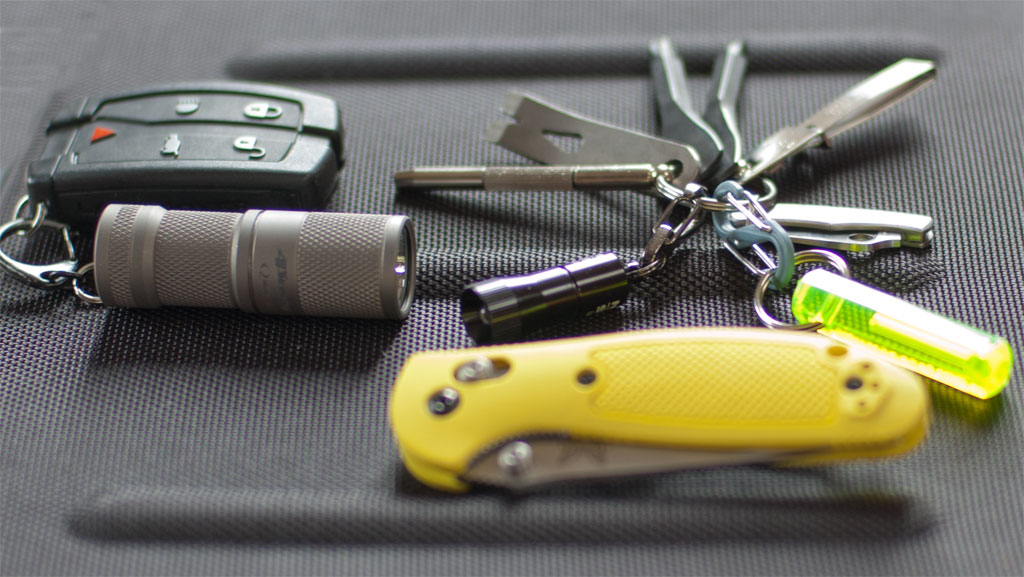
(NaturalNews) Everyday carry (EDC) is about solving ordinary problems, not doomsday scenarios. Most people already have the EDC basics, like their phone, keys a…

(NaturalNews) The Health Ranger Mike Adams, alongside his guests Matt Bracken and Michael Yon, described the current geopolitical situation as a coordinated campai…

(NaturalNews) Episode 3 of “The Human Shutdown” argues that toxins in everyday household items (formaldehyde in carpets, chlorine in water, plastics in food pac…

(NaturalNews) Gut Health and Foodborne Illness: An OverviewA recent Cyclospora outbreak linked to shredded iceberg lettuce from Mexico served at Taco Bell locatio…

(NaturalNews) The Health Ranger Mike Adams and former Navy SEAL Matt Bracken have outlined a scenario they describe as the endgame of global chaos â involving e…
(NaturalNews) “The Silenced Truth: A Stand Against Government Tyranny” recounts how the FBI and Biden administration opened a domestic terrorism list to target …
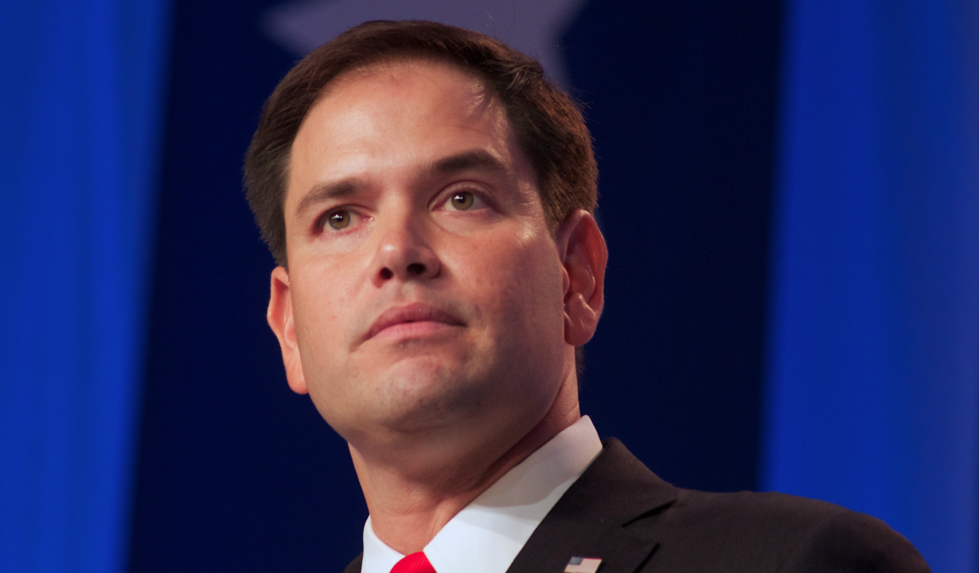
(NaturalNews) As the United States launched its 11th consecutive night of air strikes against Iran, Secretary of State Marco Rubio stood before Southeast Asian fore…

(NaturalNews) The Assumption We All Made Turned Out To be WrongI believed — and you probably did too — that the Strait of Hormuz would eventually reopen and be …

(NaturalNews) The Convergence of WarningsFor years I have been sounding the alarm about an impending global famine — a crisis engineered by supply chain vulnerab…

(NaturalNews) We Are Already Living Through World War EThe term “World War E” was coined by Matt Bracken to describe the global war over energy that connects Ukra…
When liberal podcaster Jennifer Welch mocked Republicans for being afraid of liberal white women, BlazeTV host Sara Gonzales couldn’t help but point out that she’s right — guilty as charged.
“I finally agree with something that Jennifer Welch said,” Gonzales admits on “Sara Gonzales Unfiltered,” though she notes Welch is “one of the most vile people” she’s ever witnessed speak in her life.
Welch was on a “very short-lived Bravo series” called “Sweet Home Oklahoma” before starting her podcast “I’ve Had It.”
“She spews all of her crazy leftist talking points on her podcast. … However, there was something that she said in a much longer rant, but there was a piece of it that I actually agreed with,” Gonzales says, before playing the clip of Welch.
“The Republican Party has perfectly exploited this personality and moral weakness in this sect of people. And that’s why these people live in fear 24/7, 365. They’re scared of the liberal white woman,” Welch said.
“Think about what a bunch of p***ies these grown ass men are that they would be scared,” she continued.
“And they will say it. ‘The white liberal woman is ruining America.’ I’m just like, go put your pacifier in your mouth you titty baby,” she added.
“I mean, listen, she’s disgusting. She’s crass. But she is right. Like I too am terrified of liberal white women. I actually am. I am scared of liberal white women. I would just say that it’s for good reason,” Gonzales comments.
“Let’s start with the fact that you guys are the ones trying to, I don’t know, like groom children at schools, teach our kindergarteners about sex and sexual positions and, you know, masturbation. That’s you. It’s always you guys,” she says.
“You guys are the ones who are on multiple SSRIs, and you have SSRI eyes all the time because you’re mentally unstable. You guys are the ones who are constantly promoting violence,” she adds.
Gonzales notes that you don’t need to take her word for it; liberal white women are statistically “more mentally ill than conservative women.”
“The science says, according to Pew Research, in 2020, has a doctor or health care provider ever told you that you have a mental health condition?” Gonzales begins, explaining that Pew Research “didn’t even have a graph big enough for liberal white women.”
“It just goes off the charts. Like they almost needed to change their scale,” she says.
However, the poll “gets even worse” when it comes to young liberal white women.
“When asked, ‘Has a doctor or health care provider ever told you you have a mental health condition?’ More than half say yes in the 18- to 29-year-old age range,” Gonzales says.
“That’s scary guys,” she says, adding, “Are you understanding why we’re scared of you yet?”
To enjoy more of Sara’s no-holds-barred takes on news and culture, subscribe to BlazeTV — the largest multi-platform network of voices who love America, defend the Constitution, and live the American dream.
Jennifer welch, Pew research, White women, Mental illness, Sara gonzales, Sara gonzales unfiltered
A 20-year-old Briton was savagely attacked last month by multiple black individuals on the streets of Birmingham, England, within view of nearby police officers. A female officer ran into action but rather than help the apparent victim, she manhandled and arrested him while his attackers fled the scene.
Birmingham Police subsequently tried to paint the victim, Cody Harper, as the villain of the story and suppress evidence to the contrary.
‘[WMP] let two thugs from ethnic minority backgrounds off.’
While law enforcement nearly succeeded in ruining the young man’s life, the case against Harper has crumbled in the wake of significant backlash and criticism over two-tier policing in the United Kingdom.
Footage of the June 21 incident shows six black individuals hassling Harper on Birmingham’s Broad Street. One man from the mob dressed in a black jacket launches a sneak attack from the right, knocking Harper to the ground, before another thug sucker-punches him in the back of the head, video shows.
Harper attempts to scramble to his feet, only to have a female police officer pin him against a nearby wall, video shows. Harper is unaware his attacker is an officer and so blindly throws a punch in self-defense, but only brushes off her cap.
Despite Harper’s claims that the mob was “tryin’ to smack me up,” the female officer — who failed to identify herself as police — lunges for Harper’s neck, proceeds to handcuff him, and appears to call him a “dick.”
RELATED: What is anarcho-tyranny? Modern Britain gives a disturbing glimpse of our future.
“You’re under arrest for assault on police,” says the female officer. She and another female officer then march Harper over to a police car, and a male cop throws him in it.
Footage of the incident went viral online, prompting an official response by police.
“We are aware of footage showing the arrest of a man after a disorder on Broad Street at 1.30am on 21 June. Officers found a group of men fighting,” Birmingham Police said July 2. “As the incident was dealt with, an officer was punched. One man was arrested and charged with assaulting a police officer.”
The police department noted further that following a review of the incident, it had “no concerns over the officer’s actions” and was “satisfied that they were reasonable and proportionate in the circumstances.”
The department urged the public not to share footage of the attack.
The public, however, declined to heed Birmingham Police’s request, and the mistreatment of Harper became a major scandal, prompting commentary and criticism, including from lawmakers.
Zia Yusuf, a spokesman for Nigel Farage’s Reform U.K. party, said at the time, “If you are a white person in Britain and you get assaulted by ethnic minority men: The police watch on and wait until you are on the floor before moving in to arrest YOU. The police make no attempt to arrest your assailants, letting them run off without consequence.”
James McMurdock, a Reform U.K. member of Parliament, wrote, “I can’t let this go unchallenged. That young man was, in my opinion and based on the video below, the clear victim of an assault. The video shows, for reasons that are entirely beyond my comprehension, the officer steaming directly into the victim.”
RELATED: Horrific details emerge about international pro-life leader’s assassination
UK MP James McMurdock. Christopher Furlong/Getty Images.
Robert Jenrick, another member of Parliament for Reform U.K., said that “it’s baffling that he was arrested while the two black men who attacked him weren’t.”
Amid the backlash, police slightly changed their tune, acknowledging July 3 that “an assault has taken place” and announcing they were taking steps to “identify those involved.”
Despite the update, Harper was still saddled with the assault charge and due in court on July 23.
The Crown Prosecution Service has since dropped the case against Harper, having concluded that they didn’t have enough evidence to prosecute the young man.
“Following a careful review of all the evidence, including video footage of the incident, we concluded there was insufficient evidence to prosecute the suspect for assaulting a police officer,” said a Crown Prosecution Service spokesman. “We have therefore stopped proceedings and written to both the suspect and the complainant confirming this.”
‘A failure of justice here would have haunted him.’
“We recognize assaults committed against emergency workers are abhorrent crimes, both against the victim and against society as a whole,” added the spokesman.
Yet, West Midlands Police, which encompasses Birmingham Police, isn’t apologizing for its treatment of Harper.
On the contrary, the force told the Telegraph that while it respected the decision to discontinue the case against Harper, his arrest was “lawful and came after a police officer conducting her duties was hit.”
WMP revealed that the two cowards who attacked Harper have been identified — but that neither man has been charged with assault. They were instead given out-of-court disposals, roughly the equivalent of a citation in the U.S.
While happy to see Harper’s charges dropped, Christopher Philp, a Conservative Party member who serves as shadow home secretary, condemned WMP’s decision to treat the attackers with kid gloves, calling it a “blatant example of two-tier policing.”
“[WMP] let two thugs from ethnic minority backgrounds off with a slap on the wrist while attempting to prosecute a third man — who had himself been attacked — who was white,” said Philp. “Only the intervention of the CPS thankfully stopped this from proceeding.”
“Everyone should be treated the same regardless of skin color. But the extremist and misnamed ‘anti-racist’ ideology that some police leaders have signed up to brazenly calls for people to be treated differently based on skin color,” added Philp.
The anti-racism guidance issued by the National Police Chiefs’ Council still explicitly calls for treating people differently on the basis of race.
Like Blaze News? Bypass the censors, sign up for our newsletters, and get stories like this direct to your inbox. Sign up here!
Anti-white, United kingdom, Nigel farage, Reform uk, Politics
A few weeks ago, Americans celebrated the 250th anniversary of the Declaration of Independence — our formal rejection of hereditary rule and political power by birthright.
Now South Carolina Republicans are being asked to embrace precisely that principle in a Senate primary.
South Carolina does not need another half-century of political inheritance. It needs a genuine changing of the guard.
After initially saying Darline Graham Nordone would hold her late brother Lindsey Graham’s U.S. Senate seat only temporarily while the state prepared for a special election, President Trump encouraged her to seek a full six-year term. She agreed.
This candidacy began with a promise that proved disposable. A lie. Nothing about it has improved since.
Nordone’s central qualification is obvious: She is Lindsey Graham’s sister. Her campaign amounts to “birthright senatorship” — an inherited claim on public office dressed up as party unity.
America First voters were promised an assault on the swamp: entrenched power, donor networks, insider dealing, and political advancement based on access rather than merit. They were not promised a new hereditary class with Senate seats passed from one family member to another.
To borrow Graham’s own words from the Brett Kavanaugh confirmation fight, this is a sham, and South Carolinians should see through the charade.
Graham’s speech during that battle was one of his finest moments in the Senate. It may have helped save Kavanaugh’s nomination. It did not create a family title to the office Graham held.
His sister is not entitled to inherit his seat because he died in office.
The proposed Graham dynasty is especially offensive because this seat has already been dominated by two men since 1956: Strom Thurmond and Lindsey Graham. South Carolina does not need another half-century of political inheritance. It needs a genuine changing of the guard.
Most voters cannot leave their children a lucrative career, much less a seat in the United States Senate. Public office is not family property. It belongs to the people, who are supposed to choose among candidates with records, ideas, and qualifications of their own.
Nordone has no meaningful public record in politics or policy that would justify elevation to one of the nation’s most powerful offices. What fills that void instead is support for diversity, equity, and inclusion programs; a career inside federally subsidized state bureaucracy; and an endorsement from Rep. Jim Clyburn, the South Carolina Democrat whose support revived Joe Biden’s 2020 presidential campaign.
RELATED: The internet makes monsters and saints before the body is cold
Blaze Media Illustration
None of that recommends her to voters who were told they were dismantling the old order.
For years, South Carolina politics has been dominated by the Haley-Graham cocktail circuit: polished Republicans who chased dragons abroad while much of their state declined beyond the comfortable enclaves of Charleston and Columbia.
Graham’s death was tragic. His foreign-policy views were often badly out of step with America First voters, but no decent person wished for his sudden passing. He deserves mourning and respect.
His sister does not deserve a coronation.
The Republican Party should be especially wary of this arrangement because its voters have spent a decade rebelling against political dynasties. They rejected the Bushes, resisted the Clintons, and rallied behind Trump in part because he attacked a system in which the right surname, donor list, or social circle mattered more than accountability.
A Truth Social post should not be enough to transform blood relation into political legitimacy. Neither should the swift organization of party officials, donors, and consultants eager to preserve their access.
If Nordone wants the seat, she should earn it on the strength of her own record and convictions. So far, she has offered neither. Her campaign asks voters to treat kinship as qualification and temporary appointment as entitlement.
That is the political world America First was supposed to destroy.
South Carolina Republicans should refuse to build a Graham dynasty in the name of draining the swamp. They should reject birthright senatorship and choose a senator rather than accept an heir.
Declaration of independence, Lindsey graham, President trump, Special election, Senate primary, Darline nordone, America first, South carolina, Opinion & analysis
A Washington state grandfather was recently launched roughly eight feet in the air by a charging bison at Yellowstone National Park. The man survived the terrifying ordeal and is now telling his harrowing story from a hospital bed after suffering a brutal injury.
Carl Isom-McDaniel, 65, was walking with his 13-year-old grandson just after dinner on July 10 at Bridge Bay Campground near Yellowstone Lake in Wyoming. The pair stopped to take photos of a bull bison resting near a campsite.
‘He just kept coming, and he was more aggressive.’
Mike MacLeod is a professional photographer who witnessed the attack and captured it on video.
MacLeod told NewsNation’s Jesse Weber that the bison charged at a couple and some boys before the animal appeared to settle down, but that calm was short-lived.
“Carl and his grandson started walking along the road, and the bison saw them,” MacLeod recalled. “And for whatever reason, he got up and charged.”
MacLeod said the grandfather saved the boy’s life by distracting the bison.
“Carl told his grandson to run along the road and go back to the place where they had just come from while he lured the bison away,” MacLeod stated. “So he saved his grandson’s life.”
MacLeod also attempted to get the bison’s attention once it charged at the grandfather.
“Someone just needed to distract that bison. So I started yelling for other campers … running, jumping up as high as I could, and screaming at the top of my lungs, and ran at it to distract,” said MacLeod, who has a master’s degree in wildlife biology.
A viral video caught the moment the bison charged at Isom-McDaniel and hurled him several feet into the air.
MacLeod told Fox News, “Once I saw the victim in the air, I stopped filming and ran with some other men to haze the bison away and to render aid.”
MacLeod informed KIVI-TV, “He said it wasn’t the horn, it was his head. It was actually soft. All the damage came when he hit the ground and broke his femur.”
MacLeod recalled that the first thing Isom-McDaniel asked after the brutal attack was: “How is my grandson?” Fox News reported.
“He was in severe pain,” MacLeod remembered, but added, “People came to help comfort him. And he started making jokes.”
According to the Seattle Times, Bozeman Health emergency department Dr. Eric Lowe said Isom-McDaniel broke his femur in four places.
In a Facebook video shared by the Bozeman Health Deaconess Regional Medical Center, Isom-McDaniel gave an update on his health and how the nightmarish scenario unfolded.
The grandpa said of the bison, “He wasn’t showing aggression or anything like that until it picked a target. That target happened to be me.”
Isom-McDaniel instructed his grandson to get out of the area.
He then told his grandson, “I will deal with this down here.”
Isom-McDaniel said of the wild animal, “They move faster than you could ever imagine.”
“He just kept coming, and he was more aggressive,” the grandfather recalled. “And as soon as he got off that tree, he launched me in the air.”
The grandfather added, “Even though I was on the ground, he could have stomped me, he could have gored me, he could have done anything.”
Isom-McDaniel noted, “I didn’t get bruises from him launching me in the air. It was the landing that [caused] the problem.”
Yellowstone National Park officials confirmed that the bison involved in the attack was not euthanized.
Bison are known to be aggressive toward humans, especially during the summer mating season — which is known as the rut.
Wildlife expert and Zoo Miami Foundation conservation liaison Ron Magill told ABC News that male bison can be particularly dangerous in the summer.
“We’re at the peak of what’s called the bison rut. This is where the males are just raging in hormones because they’re fighting for territories and they’re fighting for females,” Magill explained.
Magill suggested, “The key thing to do is to move away slowly, do not run, do not make any fast types of movements.”
On June 26, a 12-year-old visitor was injured by a bison at Yellowstone National Park.
Yellowstone Park officials said of that incident, “The visitor sustained injuries, and emergency medical personnel transported them to a nearby hospital.”
Officials noted that bison have injured more people at Yellowstone Park than any other animal.
“They are unpredictable, can run three times faster than humans, and will defend their space when threatened,” Yellowstone officials said.
Officials warned, “Wild animals can be aggressive when people do not respect their space.”
The statement read, “Visitors are responsible for staying at least 25 yards away from all large animals, including bison, elk, bighorn sheep, deer, moose, and coyotes, and at least 100 yards away from bears, wolves, and cougars.”
“If wildlife approach you, move away to maintain the required distance,” the statement read. “Never approach, touch, feed, or crowd wildlife, even if an animal appears calm.”
The Yellowstone National Park website points out that male bison are the largest land-dwelling mammal in North America and can weigh as much as a ton and reach speeds of up to 35 mph.
Like Blaze News? Bypass the censors, sign up for our newsletters, and get stories like this direct to your inbox. Sign up here!
Yellowstone national park, Wyoming, Politics, Bison
Cop-cam videos are one of my favorite guilty pleasures. Seeing the badly behaved and the thuggish get what’s coming to them is a rare treat in an America that has abandoned personal responsibility and consequences for bad behavior.
But the pleasure turns to frustration too often. In most of these videos, the police waste minutes to an hour repeating their orders to a struggling suspect who has no intention of obeying.
Any parent of a toddler knows that you don’t negotiate with terrorists.
Take the latest viral example: a blue-haired college kid of indeterminate gender demanding that the cop “use my pronouns” before “consenting” to being arrested (yes, they do think they have a choice).
What should have been a simple arrest turns into an eight-minute installment of absurdist theater. It is truly something to behold.
Before we get to that, consider the general cultural context of such videos. Anyone in their 40s or older knows that standards of public behavior in America ain’t what they used to be. Manners are a thing of the past. People walk their carts up the middle of aisles, oblivious to anyone needing to get by. They sail through doors you hold without acknowledgment.
And that’s just on foot. Rules of the road? Forget it. Everyone at a four-way stop is either trying to jump the right-of-way line or they’ve forgotten the rule altogether. Or they don’t care.
The other day I ran across an honest-to-God telephone booth preserved as part of a nostalgia display at an amusement park. These were built for a world with manners. People were motivated to build booths for phones because they assumed the caller wanted privacy and that the caller didn’t want to inflict his conversation on passersby. Quaint, no?
We’re living through a nationwide experiment in abandoning broken-windows policing. It’s just plain old common sense: When authorities let the “little” things slide — graffiti, vandalism, public disorder, petty lawbreaking — they teach people that the rules don’t matter. Bigger offenses inevitably follow. New York City learned that lesson the hard way before Rudy Giuliani and Police Commissioner William Bratton restored order in the 1990s by cracking down on so-called “quality of life” crimes.
It’s obviously true. But Democrats, leftists, and communists don’t like law and order. What they like is pretending that having rules for civil society is oppression. What they like even more is getting cities to defund their police departments so that criminals have a rules-free playground at everyone else’s expense. They do this by whining that mean, bad, Republican “fascists” like Giuliani were hurting “people of color” and “unhoused people” with these awful rules and laws.
You can see it in this essay on the blog Common Justice. Author “Cade T.,” who styles himself a “community organizer,” says cracking down on law and order is targeting those oppressed brown people again.
“Ultimately, the fear is that crime will become contagious and endemic in the urban environment,” he writes. “Under Giuliani, the NYPD identified neighborhoods in which to crack down on minor crimes. Not only did broken windows policing fail to reduce crime, but it also provided cover for a deliberate targeting of Black and brown communities.”
This is simply not true. Giuliani’s policy resulted in a dramatic decrease in violent crime. It stands to reason. When people see police take a hands-off approach — especially toward groups the political class considers “protected” — they naturally become bolder. We see it every time hundreds of black teens riot through city streets while news anchors timidly describe the violence as nothing more than a “teen takeover.”
A large number of Americans — especially younger ones — neither fear nor respect the police. Why would they? As Forbes reported in 2020, at least 13 major American cities cut police funding or staffing in response to the BLM movement, while many smaller jurisdictions created such a hostile political climate that officers no longer felt confident their own departments would support them for simply doing their jobs. Small cities like Montpelier, Vermont, now struggle to recruit and retain enough officers.
The video below shows what hands-off policing looks like in the 2020s. Even when cops are willing to try to do their job, they’re strangely timid about effecting an arrest in a way I don’t remember police acting when I was a young man.
RELATED: How a McDonald’s men’s room perfectly captures blue-state decline
Paul Harris/Getty Images
Our protagonist is a young man I’ll call a “gender special.” He’s obese, his hair is dyed blue, and he simpers as he gesticulates, using a falsely high voice. It’s eight minutes long. If you’re pressed for time, just watch the first two minutes, and then the last two minutes. The whole thing is worth watching, though: The young man screams “JUST SAY SHE” repeatedly at the cops, jumping up and down like Rumpelstiltskin when his true name was spoken.
The encounter takes place on a Florida college campus. The cops were there to deal with a car theft. The blue-haired person begins screaming at the cops; it’s not clear why. The cops tell the shrieking man to lower his voice and stop freaking out or he’s going to be cuffed and taken for a psychiatric hold. So far, so good.
And then all hell breaks loose, and the cops waste almost seven minutes shouting repeated orders at the increasingly aggressive blue-hair. The trouble is, they don’t make good on those threats immediately. The tantrum-thrower escalates; he claims to be “scared”; he screams at the cops to stop harassing him (they’re not); and he pitches a fit at being referred to as “sir.”
He even threatens the cop with “f**king try it” when the cop warns him he’ll be handcuffed.
Any parent of a toddler knows that you don’t negotiate with terrorists. You give them one warning, and if they keep fussing, you bodily control them and remove them from the scene. Otherwise, the tantrum gets worse.
That’s the mistake the cops made. I watched the video and counted the number of verbal warnings and commands the cops gave before finally making good on the threat to take him down in cuffs: 14.
The blue-hair’s resistance didn’t stop there. Even after he was in custody, cops had to tase him twice before he finally stopped kicking and fighting.
Policing needs to go back to the way it used to be. Before recent years, we never saw cops who were afraid to arrest a disorderly suspect. Why do they keep giving orders repeatedly while their subject escalates? Don’t they see that failing to follow through on promised consequences teaches the suspect and onlookers that people can, in fact, break the law and the cops won’t do anything about it?
Yes. It does teach that lesson. And that’s part of why we now see behavior every day on the street that only used to happen in mental hospitals.
But the police are not the problem. The governments, municipalities, and mayors’ offices are the problem. Cops are working in hostile territory. They know their civilian superiors not only do not support them, but are often working to target their own police force for false complaints of racism and brutality that can cost a cop his career.
If we want the boys in blue to have our backs, we have to make sure someone has theirs.
Crime, Defund police, Law and order, Police funding, Violent crime, Policing, Black lives matter, Defund the police, Intervention, Culture
A Connecticut police officer shot and killed a man who was brutally beating his father with a baseball bat on Sunday, according to residents in the neighborhood.
Meriden police said they were called to the residence on Sagamore Road at about 10 a.m. on Sunday over reports of a domestic violence situation.
An autopsy found that the victim died from blunt force head injuries and listed his cause of death as homicide.
The shocking body camera footage shows a man beating a victim with a bat as the officer arrives.
The officer yells at the man to stop, but he continues attacking the man. Seconds later, the officer shoots at the man, who falls down.
The alleged attacker was identified as 38-year-old Robert Lee Jenkins III, who was treated for gunshot wounds and hospitalized before he was declared dead at about 11:30 p.m.
His victim was also declared dead at the scene.
WVIT-TV reported that numerous neighbors in the area confirmed the victim to be the father of Jenkins, but Connecticut law prevents the identification of victims of certain crimes.
The Connecticut Office of the Inspector General said the cause of death for Jenkins was determined by the chief medical examiner to be multiple gunshot wounds to the torso.
An autopsy found that the victim died from blunt force head injuries and listed his cause of death as homicide.
Some reports indicate that the officer fired nearly 20 times at Jenkins.
The Office of the Inspector General released the body camera footage from the harrowing incident.
The New Haven Judicial District State’s Attorney’s Office is investigating the incident along with the Connecticut State Police Central District Major Crime Squad and the Meriden Police Department.
Like Blaze News? Bypass the censors, sign up for our newsletters, and get stories like this direct to your inbox. Sign up here!
Body camera footage, Brutal beating, Connecticut, Police shooting, Crime

Is this just another cycle, or is it the END? Martin Armstrong of Armstrong Economics published an article this week about the so-called Socrates program and how [more…]

“I assure you all options are open on the southern front. They can be adopted anytime.” Summary recap: Hezbollah Secretary-General Hassan Nasrallah’s speech went for [more…]

Putin orders planeloads of humanitarian aid to be sent to Egypt The Russian Ministry Emergency Situations said on Friday that it would send two aircraft [more…]

It is Tunisia’s duty to stand with the Palestinians, its president has said The Tunisian parliament on Thursday began discussing a bill that would define [more…]

Suspected provocateur specifically stated, ‘We’re here to storm the capitol. I’m not kidding.’ In a new mini-documentary diving into Jan. 6, investigative journalist Lara Logan [more…]

Mainstream media claims Obama-Biden partnership has only been happening for 5 months. Former President Barack Obama has been secretly advising the Biden administration for several [more…]
“This case could completely wipe out the ATF’s ability to create law and subvert congress, which would be a massive win for the Second Amendment.” [more…]

Elon Musk chimed in to question ‘how common’ this type of illegal activity is during American elections Bridgeport, Connecticut, the largest city in the state, [more…]