





Is this just another cycle, or is it the END? Martin Armstrong of Armstrong Economics published an article this week about the so-called Socrates program and how [more…]

(NaturalNews) President Donald Trump turned down a $15 million settlement offer from Paramount Global, demanding over $25 million and a public apology from CBS …

(NaturalNews) A Chinese government-backed nonprofit, the Chinese-American Planning Council (CPC), is advocating for New Yorkâs $75 billion climate superfund l…
NATO may turn to bloody staged events.
Why did Trump not know Ukraine will attack nuclear bombers?
Backed into a corner, Tusk may be preparing to completely violate the rule of law and usher in a dictatorship in Poland, warn a number [more…]
The Supreme Court disappointed Christians when it deadlocked in Oklahoma Statewide Charter School Board v. Drummond.
The justices’ 4-4 split keeps in place the ruling of the Oklahoma Supreme Court that St. Isidore of Seville Virtual School may not operate as a charter school in the state — for now, anyway.
Denying American families access to the winning combination of a Catholic charter school is not only unconstitutional but also unconscionable.
The court’s “non-decision decision” came about, in part, because Justice Amy Coney Barrett recused herself from the case. Barrett did not explain her reasons, but her close ties to Notre Dame’s Religious Liberty Clinic and her friendship with a chief adviser to the school likely played a role.
In the face of progressive accusations of unethical behavior, the justices recently agreed to a code of conduct that represents “a codification of principles” governing their conduct. Importantly, a justice is “presumed impartial” and “has an obligation to sit unless disqualified.” The code adds, presciently, that “the absence of one Justice risks the affirmance of a lower court decision by an evenly divided Court — potentially preventing the Court from providing a uniform national rule of decision on an important issue.”
Back in 2003, Justice Antonin Scalia, for whom Barrett once served as a law clerk, denied a motion for his recusal based on his friendship with then-Vice President Dick Cheney, who was a named party in a case before the Court.
“The people must have confidence in the integrity of the Justices, and that cannot exist in a system that assumes them to be corruptible by the slightest friendship or favor, and in an atmosphere where the press will be eager to find foot-faults,” Scalia wrote.
In any event, what is done is done. And more importantly, Barrett’s recusal is not binding for future cases.
Secularists and opponents of school choice have been celebrating the outcome, even though split decisions do not constitute binding legal precedent.
As Notre Dame Law Professor and Supreme Court scholar Richard Garnett observed, “The do-nothing denouement in this particular round of litigation does not preclude other courts, in other cases, from vindicating the no-discrimination rule and permitting religious schools to participate in charter-school programs.”
Garnett is right. The twin religion clauses of the First Amendment — the Free Exercise Clause and the Establishment Clause — permit certification of religious schools like St. Isidore’s as charter schools.
Take, for example, the court’s recent decisions involving the Free Exercise guarantee and school choice initiatives. When the court struck down the “No-Aid” provision in Montana’s state constitution that excluded religious schools and families from a publicly funded scholarship program for students attending private schools, Chief Justice John Roberts reaffirmed the Free Exercise Clause’s demand for fairness.
“A state need not subsidize private education,” he observed. “But once a State decides to do so, it cannot disqualify some private schools solely because they are religious.”
Similarly, in Carson v. Makin, the court found that Maine violated the Constitution when it excluded religious schools from participating in a voucher program for rural students. Roberts, again writing for the court, explained that “the State pays tuition for certain students at private schools — so long as the schools are not religious. That is discrimination against religion.”
Allowing religious schools such as St. Isidore’s to participate in a state’s charter school program is merely a natural application of this principle of fairness. But what about the Establishment Clause?
Oklahoma Attorney General Gentner Drummond argued that certifying St. Isidore’s as a charter school would violate the Establishment Clause.
His argument has some appeal, particularly for secularists who want public schools to have a virtual monopoly over America’s educational system. Granted, the Supreme Court has repeatedly held that the Establishment Clause prohibits public schools from providing religious instruction. Private schools, by contrast, are free to do so. Charter schools receive public funding, but they are privately established and controlled schools with minimal regulatory oversight by the government.
Consequently, charter schools are not state actors. And because they are not state actors, a charter school’s endorsement of any particular religion does not constitute a violation of the Establishment Clause.
Charter schools currently exist in 45 states and the District of Columbia. A recent study reveals that charter-school students “show greater academic gains than their peers in traditional public schools.” The study also found that “charter students in poverty had stronger growth, equal to seventeen additional days of learning in math and twenty-three additional days of learning in reading, than their [traditional public school] peers in poverty.”
As for the benefits of a Catholic education, Catholic school students “continue to outpace public schools in math and reading, while public school student achievement has not returned to pre-pandemic levels and reading scores continue to decline following a sobering trend last reported in 2022.”
Denying American families access to the winning combination of a Catholic charter school, then, is not only unconstitutional but also unconscionable.
The split decision affirming the Oklahoma Supreme Court means that families in the Sooner State cannot yet benefit from the stellar Catholic education offered by St. Isidore’s as a charter school.
Still, it needs repeating: The order does not set precedent. The question of whether the Constitution allows a state to exclude religious schools from its charter program is not settled.
A call for clarification will likely be before the court soon and, with a full bench, we should expect that principles of fairness and religious freedom will prevail.
Supreme court, Amy coney barrett, Religious liberty, Oklahoma, Christians, Catholic education, St. isidore of seville virtual school, Charter schools, Opinion & analysis
Merz still holds all the cards, and he has harshly rejected an AfD ban, but the dream is far from dead.
Generally, this shot is for the boomers – as it’s recommended for those 65 and older, but also 12 to 64-year-olds who have underlying health [more…]
The overwhelmed and poorly trained staff leave the field open to recruiters of all kinds, such as preachers close to the Muslim Brotherhood.
Dragged from his home by baton-wielding officers, a pensioner’s tweet turned into a £20,000 lesson in overreach.
Back in August 2024, we reported that the right-to-repair movement had made gains in Oregon, passing legal measures to ban “parts pairing” and slow the further slide into corporate planned obsolescence. Since then, the movement has really picked up some inertia, with wins at the state, federal, and international levels.
As a reminder, right-to-repair refers broadly to the rather American idea that consumers, end users, and owner/operators of all sorts should be able to modify, adjust, and repair their automobiles, computers, electronics, guitar amplifiers, etc., and they should not be subject to manufacturer efforts to specifically make such efforts difficult or impossible.
The trend toward planned obsolescence lines corporate pockets, demoralizes citizenry by robbing them of generational skills and knowledge, weakens national readiness, hollows out the middle class, and does so while lying about cost savings or security. This is accomplished by forcing repairs into authorized dealers, restricting availability of tools, repackaging certain component parts, and generally rerouting what should be basic maintenance into circular money-fleecing ops.
The movement to radically slow planned obsolescence and make repairs straightforward again has made serious strides in 2025.
At this point, all 50 U.S. states have introduced some form of this legislation. Six states have passed laws. Canada and Australia are making moves toward right-to-repair. Class-action suits brought by U.S. farmers against John Deere are ongoing, accusing the corporate tractor giant of deploying software that, in effect, moves repair work away from owner/operators or local shops and forces farmers to patronize John Deere authorized dealers.
On May 21, Rep. Marie Gluesenkamp Perez (D-Wash.) went before the House Armed Services Committee advocating the inclusion of the Servicemember Right-to-Repair legislation with the fiscal year 2026 National Defense Authorization Act.
Gluesenkamp Perez’s act has as its main objective to “require contractors to provide the Department of Defense with parts, tools, and information needed for servicemembers to repair equipment, matching the access given to authorized repair providers.” Additional goals include improving repair autonomy, cost savings, fewer delays, promotion of accountability, and the enhancement of military readiness.
For citizens, right-to-repair makes sense as a property rights issue. We buy a product and expect that (a) it is designed and built to last and (b) in the event the product fails to function, we have the option to repair it ourselves or take it to a local, reasonable service center. Planned obsolescence, of course, has other designs — that mostly pertain to taking more of your money and giving you less product.
Similarly, but one step up the chain of abstraction, when American tax dollars are “sent to Washington” for allocation to the areas of critical government functions, we should not expect to pay hyper-premiums for the outsourcing of these functions and services. Nonetheless, this has been the case for a very long time, and lately, the rapine of the citizenry made possible through the corrupt convergence of politicians and government contractors is absurd. Criminal, even.
While Gluesenkamp Perez’s Servicemember Right-to-Repair Act didn’t make the cut for NDAA, the citizenry can be pleased that in April of this year, Secretary of Defense Pete Hegseth authored an official memo directing the Army to prioritize “right-to-repair” provisions in both new and existing defense contracts.
RELATED: The fight against costly planned obsolescence deals Big Tech another blow
imaginima/Getty Images
The Hegseth memo isn’t a fix-all, but it does send a message. Perhaps it is one that given the ongoing momentum, will be followed up with actual legislation soon. The memo opens up avenues for the Army to perform equipment repair and maintenance “in house,” saving serious money and time. Informally, there is talk already of deploying 3D printers on bases. In fact, within Special Operations, a segment of the DOD with immense funding and a greater degree of autonomy than the general service branches, has for some time been performing many of its own repairs and even building its own weapons and equipment when desirable.
Pushback from the usual suspects — Boeing, Lockheed, etc. — is to be expected in this arena. Nonetheless, the movement to radically slow planned obsolescence and make repairs straightforward again has made serious strides in 2025. Washington state just became the sixth state to enact similar laws ensuring Americans’ opportunity to repair, specifically, their electronics.
Speaking to the House Armed Services Committee about service members today, Gluesenkamp Perez said: “When they have to fly authorized contractors out to work on their equipment, it’s not just costly and demoralizing; candidly, to the technician[s], it also deprives them of the skill to go out into the workforce and build that asset nationally. This is a long- term cost, not just to our military readiness but to our embodied skill set in this nation.”
Tech, Politics
Facial recognition slips past the turnstile of convenience, reshaping consent one gate at a time.
Maritime rescue services are overwhelmed on the last day of spring as ‘small boat’ numbers soar higher than ever.

(NaturalNews) In November of 2024, the Trump administration nominated a new Surgeon GeneralâFox News contributor Dr. Janette Nesheiwat. Trump and RFK Jr.âs …

(NaturalNews) Amid rising antibiotic resistance and distrust of synthetic medications, people (especially preppers) are turning to natural wound-care solutions …

(NaturalNews) Over 1,300 Israeli academics signed an open letter on May 27 demanding an immediate end to the war in Gaza, accusing the state of war crimes and w…
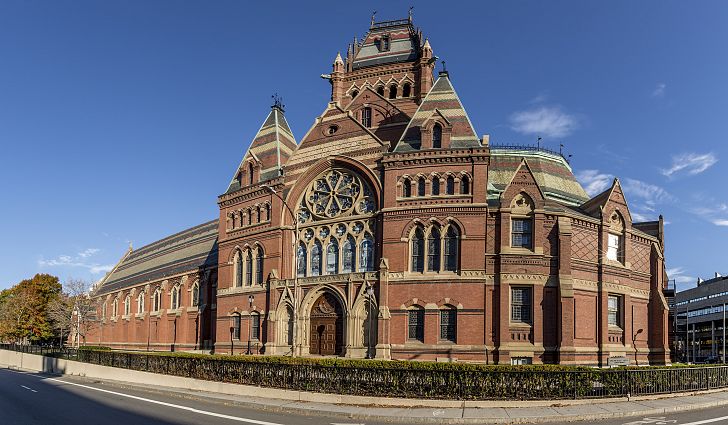
(NaturalNews) President Donald Trump claims Harvard misuses U.S. taxpayer funds by subsidizing foreign students (31 percent of enrollment) from “unfriendly” cou…

(NaturalNews) Over 74 cases of cryptosporidium linked to Wales farm; 20% of Americans face environmentally induced illness. Parasites like toxoplasmosis and …
(NaturalNews) Fifth Circuit blocks unauthorized government access to Dropbox files, upholding Fourth Amendment digital privacy rights. Case finds state offic…

(NaturalNews) Anthropic CEO Dario Amodei warns AI could eliminate half of entry-level white-collar jobs, spiking U.S. unemployment to 10-20% within five years.
…

Is this just another cycle, or is it the END? Martin Armstrong of Armstrong Economics published an article this week about the so-called Socrates program and how [more…]

“I assure you all options are open on the southern front. They can be adopted anytime.” Summary recap: Hezbollah Secretary-General Hassan Nasrallah’s speech went for [more…]

Putin orders planeloads of humanitarian aid to be sent to Egypt The Russian Ministry Emergency Situations said on Friday that it would send two aircraft [more…]

It is Tunisia’s duty to stand with the Palestinians, its president has said The Tunisian parliament on Thursday began discussing a bill that would define [more…]
Suspected provocateur specifically stated, ‘We’re here to storm the capitol. I’m not kidding.’ In a new mini-documentary diving into Jan. 6, investigative journalist Lara Logan [more…]

Mainstream media claims Obama-Biden partnership has only been happening for 5 months. Former President Barack Obama has been secretly advising the Biden administration for several [more…]

“This case could completely wipe out the ATF’s ability to create law and subvert congress, which would be a massive win for the Second Amendment.” [more…]

Elon Musk chimed in to question ‘how common’ this type of illegal activity is during American elections Bridgeport, Connecticut, the largest city in the state, [more…]