






“This case could completely wipe out the ATF’s ability to create law and subvert congress, which would be a massive win for the Second Amendment.” [more…]


(NaturalNews) John Roy of Dawson Knives and the Health Ranger Mike Adams discussed their collaboration on high-performance, American-made knives and machetes, f…
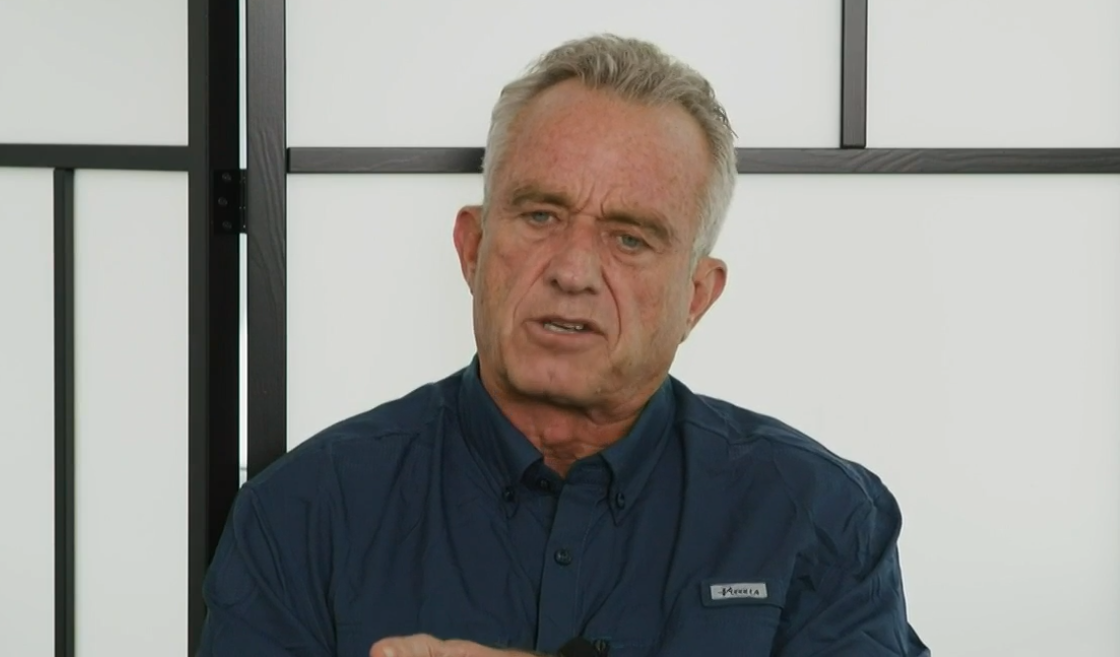
(NaturalNews) U.S. Health Secretary Robert F. Kennedy Jr. ousted all 17 members of the CDCâs Advisory Committee on Immunization Practices (ACIP), citing syste…

(NaturalNews) The U.S. Supreme Court unanimously dismissed Mexico’s $10 billion lawsuit against major American gun makers, ruling the companies are protected by…

(NaturalNews) RFK Jr. appoints controversial David Geier to recover âlostâ vaccine safety data from CDCâs VSD system amid transparency push. Critics bl…
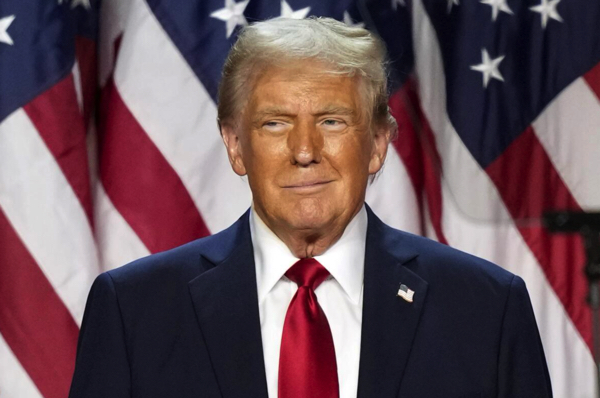
(NaturalNews) The U.S. Department of Education’s proposed budget would be reduced by 15.3 percent, dropping to $66.7 billion for fiscal year 2026. The maximu…

(NaturalNews) Salmonella outbreak linked to eggs affects seven states, with 79 reported ill and 21 hospitalized; no deaths reported. About 1.7 million eggs r…
America is on fire — again. But this time, it’s not just cities burning — it’s our identity.
In Los Angeles, mobs of masked agitators — many waving the Mexican flag, others clutching Palestinian flags, and some burning the American flag — have taken to the streets, firing guns into the air, hurling rocks at ICE vehicles, blocking traffic, and setting fires.
America doesn’t need a savior. It needs a reckoning.
Where is the outrage from the media? Where are the helicopters? The FBI raids? The solitary confinement cells? When a handful of peaceful Americans entered the Capitol on January 6, 2021, a great many politely walking between velvet ropes, they were branded “insurrectionists.” Grandmothers were hunted down. Veterans were jailed without bail. But in Los Angeles, when foreign nationals tear through city streets waving foreign flags, they’re “demonstrators.”
Give me a break.
What we saw in California over the weekend was the result of an illegal invasion. And it isn’t new. These aren’t “immigrants.” A great many are illegal aliens — a term defined by law — who have broken federal immigration law, ignored due process, and poured over our borders with the help of a regime that has openly defied the Constitution.
I personally know families who have tried for years to bring a spouse or child to America the legal way. They wait. They pay. They follow the rules. But if you’re an educated Christian refugee from Africa or a skilled engineer from India, you’re told to stand in line. Meanwhile, if you’re a cartel mule from Honduras or a “gotaway” with a gang affiliation, you get flown around the country on the taxpayers’ dime.
We’ve abandoned every principle that once defined American immigration: Learn English. Pledge allegiance. Assimilate. Respect the flag.
Instead, we have mobs chanting slogans that would have triggered national security alerts a decade ago. Now they trigger hashtags. And while President Trump is calling out the National Guard, California’s “leaders” stall, the courts shrug, and citizens remain unprotected.
This isn’t incompetence. It’s sabotage.
And the most dangerous part? We’ve been living under a kind of soft martial law for decades.
Since 1938, the Federal Rules of Civil Procedure quietly restructured the judiciary under a corporate framework that operates outside the Constitution. These rules merged law and equity courts, nullifying constitutional guarantees and opening the door for administrative tyranny in family courts, juvenile courts, and beyond.
Don’t believe me? Try asserting your First, Fourth, or Fifth Amendment rights in a family court. You’ll be laughed out of the room — if your children haven’t already been taken based on an anonymous tip and a judge’s rubber stamp.
If martial law is officially declared, the Constitution is suspended. That’s not conjecture — that’s legal doctrine. Read Ex parte Milligan (1866), in which the Supreme Court ruled that martial law cannot be imposed where civilian courts are open. Guess what? They’re not “open” any more — they’re rigged, corrupt, and run by private bar guilds with no accountability to the people.
RELATED: The culture war isn’t a distraction — it’s the main front
Photo by Kyle Grillot/Bloomberg via Getty Images
It’s an old tactic. In 1933, Adolf Hitler used the Reichstag fire to suspend civil liberties and pass the Enabling Act. In 1992, Peru’s President Alberto Fujimori used a wave of urban chaos and domestic terrorism to declare martial law and dissolve the legislature. In post-9/11 America, we got the Patriot Act, a surveillance dragnet sold to us under the guise of “security.” Now we’re watching the same script play out again — engineered chaos followed by calls for federalized control and, eventually, constitutional suspension under the banner of “safety.”
Welcome to the final phase of the coup.
While MAGA people wait for Trump to ride in on a white horse, they miss the point: He’s not going to save us. He can’t. No one man can reverse decades of infiltration, judicial fraud, and corporatist collusion.
And note to MAGA: Trump gave immunity to the creators of the COVID-19 vaccine, and his “one big, beautiful bill” is fraught with overspending and a government AI takeover, in which all participants have been granted immunity for wrongdoing for a decade.
America doesn’t need a savior. It needs a reckoning.
It needs state nullification, legal rebellion, and mass resistance.
If waving a Mexican or Palestinian flag while burning the Stars and Stripes makes you feel at home, then I’ve got a simple solution: Go home.
Because this isn’t your country. You didn’t build it. You’re not assimilating. You’re here to take, not contribute.
And to my liberal neighbors still crying about how “un-American” it is not to allow these criminals to stay: What’s un-American is letting our Constitution be shredded. What’s un-American is flooding our cities with criminals while veterans sleep under bridges.
What’s un-American is weaponizing immigration to collapse a sovereign nation.
We’re not xenophobes. We’re patriots, and we’re done being silent.
Opinion & analysis, Illegal immigration, Mass deportations, Immigration and customs enforcement, Ice, Los angeles, Riots, Gavin newsom, Karen bass, American flag, Mexico, Palestine, Leftists, January 6, Prison, Due process, Constitution, The courts, Resistance, One big beautiful bill, Liberals, Democrats, Law and order
While California Army National Guard troops handle lawless protests sparked by legal immigration enforcement, the California Air National Guard faces a far more dangerous vulnerability — one that demands immediate attention from Defense Secretary Pete Hegseth.
It’s time to remember January 12, 1981. That day, Puerto Rican independence militants breached Muñoz Marin International Airport in Carolina, cut through the fence, and destroyed nearly $50 million worth of A-7 Corsair and F-104 Starfighter jets. Adjusted for inflation, that’s $162 million. Boom! Gone just like that.
Security forces could stop ground-based attacks, sure. But drones? Not a chance.
Jump ahead four decades to Los Angeles, where supposedly “spontaneous” mass protests feature factory-made signs in English and Spanish, freshly printed six-foot Mexican flags, and crowds of anonymous demonstrators. No IDs. No accountability.
Where does the funding for these instant flash mobs originate? According to a dynamite report by Jennifer Van Laar at Red State, much of the money appears to come from our own tax dollars! But let’s not rule out the Mexican cartels whose trafficking and smuggling operations Trump’s policies have severely disrupted. If so, what’s to stop them — or their proxies — from lashing out at the National Guard next?
What’s to prevent a replay of the Macheteros’ sabotage in 1981 — or something far worse?
Consider Moffett Field near Palo Alto. One side of its perimeter sits flush against Highway 101. Any outsider with a drone and a grudge has a clear shot.
Air Guard security might intercept intruders with enough warning. But drones don’t need to sneak past a gate. They can launch from a public park and cross 200 yards in seconds. For $500 and a payload of cheap explosives, a first-person-view drone could obliterate a $77 million HC-130J.
No active defense exists for drone attacks in densely populated urban areas. The U.S. Air Force knows this. Just ask about the 17-day drone overflight in 2023 — uninterrupted, unchallenged, and deeply embarrassing.
Federal law restricts counter-drone actions except over designated “sensitive” areas. But what happens if a missile interception sends debris raining onto adjacent neighborhoods? What if an electromagnetic pulse knocks out every pacemaker, microwave, and computer within a mile?
At the Air National Guard base in Fresno, things look just as bad. F-15s sit beneath open-sided shelters only 75 yards from the highway.
Security forces could stop ground-based attacks, sure. But drones? Not a chance. The only current defense is a few warning signs nailed to perimeter fences. That’s not security — that’s wishful thinking.
What’s the Air Guard’s plan to intercept drones without endangering civilians across the street? Paintball guns? Slingshots? Hula hoops?
The solution isn’t to ban drones or launch missiles over neighborhoods. It’s to rethink how to disrupt their precision.
RELATED: Dark thoughts about the New Jersey drones
Photo by SERGEI SUPINSKY/AFP via Getty Images
Drones don’t rely on brute force. They rely on pinpoint accuracy — what the military calls “circular error probable.” In World War II, a B-17 had a CEP of 1,200 feet. Today’s FPV drones, guided by first-person cameras, hit tank hatches with a CEP of just one foot.
That’s the bad news.
The good news? You don’t need to shoot down a drone to neutralize it. You just need to disrupt its accuracy.
Drones are fragile. A baseball bat will shatter one. Their video cameras bloom under bright light. Their inertial sensors lose calibration under unpredictable aerodynamic stress. Their rotors must stay perfectly balanced, or else guidance systems wobble and fail.
By attacking the CEP instead of the drone itself, the Air Guard can protect its assets without risking civilian casualties.
Practical countermeasures exist — right now, off the shelf. Iso-luminescent light sources. Targeted atmospheric aerosols. Forced inertial failures. Even decoys.
These aren’t billion-dollar Pentagon programs. They’re cheap insurance policies against an increasingly likely airborne threat.
If protest organizers or cartel affiliates can rent drones and buy fireworks, what’s stopping them from mounting small explosive charges? Nothing — unless the Air Guard rethinks its strategy.
Failing to prepare for the next wave of attacks is no longer an option. If the military won’t defend its own runways, someone else will take the shot.
Opinion & analysis, Terrorism, California air national guard, National guard, National security, Drone attack, Pete hegseth, Puerto rico, Militants, Explosives, Los angeles, Illegal immigration, Ice, Immigration and customs enforcement, Mass deportations, Riots, Soft targets, Missiles, Decoys
Germany’s first chancellor Otto von Bismarck famously said, “Laws are like sausages. It is best not to see them being made.” That description fits President Trump’s One Big Beautiful Bill Act — with one major exception.
Unlike most legislation, the OBBB deserves a close look. But the media would rather focus on headline fodder like the SALT deduction fight and proposed Medicaid work requirements. What the media has mostly ignored is far more significant: the dismantling of the so-called Inflation Reduction Act’s climate spending, or what Trump rightly calls the “Green New Scam.”
The OBBB isn’t perfect — but it’s the best shot conservatives have to kill the Green New Scam, lock in Trump’s tax cuts, and put America’s fiscal house on firmer ground.
Rep. Brett Guthrie (R-Ky.) recently claimed in a Wall Street Journal op-ed that the OBBB rolls back “the most reckless parts of the engorged climate spending,” reclaiming $6.5 billion in unspent funds. But that figure barely scratches the surface.
Goldman Sachs estimated the total value of the Inflation Reduction Act’s climate spending at a whopping $1.2 trillion. According to Grok, X’s artificial intelligence tool, the initial OBBB version would have left most of it intact.
Roughly $140 billion of that $1.2 trillion had already been spent in 2024 — much of it used to grease the palms of red-state politicians, as I’ve discussed elsewhere. Another $140 billion has been committed but not yet disbursed. The Trump administration is currently fighting in court to block that money from being spent.
But here’s the kicker: Grok’s analysis projected that between $700 billion and $900 billion of the Green New Scam funds would remain untouched under the original OBBB draft. That’s not a rounding error. That’s two orders of magnitude away from Guthrie’s $6.5 billion figure.
Fortunately, the House Freedom Caucus didn’t back down.
Led by Rep. Chip Roy (R-Texas), the caucus demanded a bill that honored Trump’s campaign pledge to kill the Green New Scam. Roy wrote on X, “Rather than just subsidizing $350B for states with high taxes — we should pass a OBBB that FULLY terminates the Green New Scam and FULLY ends the Medicaid money laundering scam abused to hurt the vulnerable.”
He followed with this: “Writing a deficit-backed blank check (SALT) is easier than cutting spending (DOGE, Green New Scam, Post-COVID spending). Congress/swamp will always choose the easy route, but we can’t afford it.”
Roy was right. And though not completely successful, the Freedom Caucus scored a major win.
The House passed the OBBB on May 22 by a single vote, 215-214. Thanks to the Freedom Caucus, the bill cuts about $500 billion in wasteful Green New Scam spending. Half of the unspent funds have now been stripped out. The bill is now with the Senate, where its fate remains unclear.
RELATED: The Senate’s Romney-Ryan tax ideas collide with a Trump-Vance world
Photo by Alex Wong/Getty Images
One strategic advantage of the OBBB lies in how it’s being passed. Like the Inflation Reduction Act before it, the OBBB uses budget reconciliation — a tool that bypasses the filibuster and requires only a simple majority. In this case, what was once a Democrat-only spending spree may now be repealed with a Republican-only rollback.
Call it poetic justice. Call it the only viable option. Either way, reconciliation makes this repeal possible — despite the fondness many subsidy-happy Republicans still have for the Green New Scam.
But the most important part of the OBBB isn’t about repealing waste. It’s about preserving growth.
The bill makes Trump’s 2017 tax cuts permanent. That alone carries a projected value of $4 trillion over the next decade and prevents a $1,700 annual tax hike on the average American family.
Republicans who block the OBBB over narrow interests risk handing Democrats a tax increase — and possibly their own walking papers in the 2026 midterms. That includes swing-district moderates who demand Green New Scam subsidies and fiscal hawks who balk at anything short of a full repeal.
The key difference? The pro-subsidy Republicans didn’t vote for those climate programs in the first place. Yet, now they’re willing to tank the whole bill to preserve them.
One Freedom Caucus member told me he remains hopeful the Senate can claw back more of the Green New Scam funds. Maybe so. But I wouldn’t bet on it.
Which brings us back to Bismarck. Lawmaking may resemble sausage-making, but at least sausages leave a good taste behind. When done right, so can legislation.
The OBBB isn’t perfect — but it’s the best shot conservatives have to kill the Green New Scam, lock in Trump’s tax cuts, and put America’s fiscal house on firmer ground.
Opinion & analysis, Congress, Big beautiful bill, One big beautiful bill, Green new deal, Green new scam, Chip roy, Donald trump, Inflation reduction act, Freedom caucus, Doge, Tax cuts and jobs act, Otto von bismarck

(NaturalNews) A compound in licorice root, glycyrrhizin, shows promise in fighting breast cancer by targeting key genes linked to tumor growth. Multiple stud…

(NaturalNews) An IDF officer accused of ordering troops to shoot unarmed Palestinians waving a white flag (a surrender symbol) was promoted to battalion command…
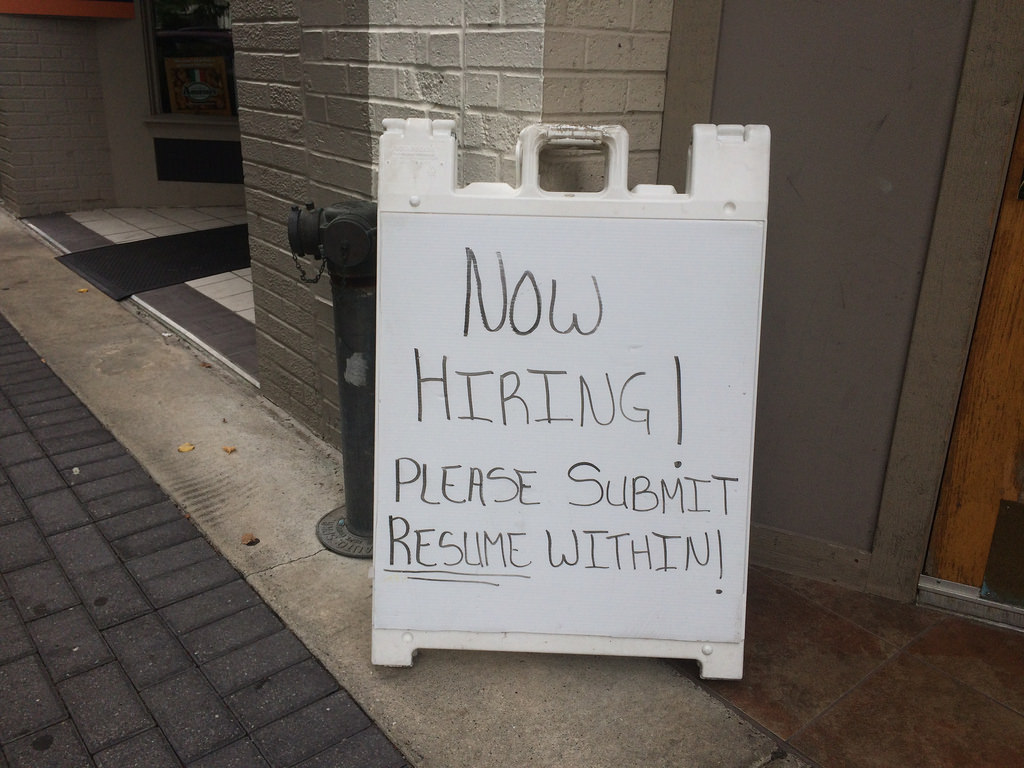
(NaturalNews) The U.S. economy added 139,000 jobs in May, beating expectations with private sector hiring leading the growth, despite losses in manufacturing an…

(NaturalNews) Russia has accused Ukraine of refusing to accept the remains of thousands of its soldiers, escalating tensions after a failed exchange attempt and…

(NaturalNews) UK lawyers were warned by the High Court after submitting AI-generated legal arguments with fake case citations, risking justice system integrity….

(NaturalNews) U.S. EV adoption confidence plummets to 16% in 2025, hitting a 2019-era low due to cost, infrastructure concerns. 63% of drivers now reject EVs…

(NaturalNews) Taxpayer-funded CHIRLA and PSL groups incited riots against ICE raids in LA, backed by $34M in government grants. Protests turned violent, spar…

(NaturalNews) Beneficial State Bank, backed by liberal billionaire Tom Steyer, offers $25M+ in auto loans to undocumented immigrants via ITINs (tax IDs), bypass…
Fifteen years ago, Sen. Dick Durbin (D-Ill.) slipped an amendment into law that handed a $90 billion windfall to mega-retailers like Walmart and Target — while forcing everyday Americans to foot the bill.
Now he’s trying to do it again. This time, he’s recruited Republican help.
President Trump has made his priorities clear. He wants America to dominate in financial tech — not hand the future to China.
As a former chairman of the House Financial Services Subcommittee on Capital Markets and Government Sponsored Enterprises — and as a proud Trump ally — I’m alarmed that Sen. Roger Marshall (R-Kan.) has teamed up with Durbin to hijack one of the most important bills of the year: the Genius Act.
This legislation, backed by President Trump, would establish the first federal framework for stablecoins — digital dollars backed by U.S. currency and issued by trusted financial institutions. It’s the cornerstone of America’s entry into 21st-century digital payments and a key to ensuring that we — not China — lead the future of global finance.
President Trump and Vice President JD Vance have made the bill a top priority. “We’re optimistic that the Senate is able to move quickly on passing a clean Genius Act and for the House to follow up and do the same,” Vance told attendees at the Bitcoin 2025 Conference in Nashville.
But that momentum will vanish if Marshall and Durbin succeed in attaching their so-called Credit Card Competition Act. This isn’t reform — it’s the Durbin Amendment 2.0, and we’ve already seen how that story ends.
In 2010, despite widespread opposition, Durbin passed his original amendment, shifting the cost of payment processing from big-box retailers onto credit card companies. He promised that consumers would benefit when retailers passed along those savings.
They didn’t.
A Federal Reserve-backed study later found that only 1% of merchants passed savings on to customers. Meanwhile, 22% raised prices. Card companies — forced to absorb the new costs — cut back on free checking accounts and slashed debit card rewards programs. The number of cardholders earning rewards dropped 30%.
Main Street lost. Big box stores cashed in. Even the left-leaning Progressive Policy Institute now admits the amendment failed and has urged Congress to “rethink” the policy.
The Credit Card Competition Act would repeat the mistake, but with credit cards. It would force every credit card to operate on at least two payment networks, letting mega-retailers route transactions through the cheapest — and often least secure — option. They’d pocket the savings. Consumers wouldn’t see a dime.
RELATED: Trump’s Bitcoin masterstroke puts America ahead in digital assets
Photo by IAN MAULE/AFP via Getty Images
Under the current system, consumers choose the networks by picking the cards they want to carry. Merchants choose which cards to accept. That’s the free market. The CCCA would dismantle that system and take away the rewards — cash back, airline miles, travel perks — that millions of Americans rely on.
Amazon, Walmart, and Target would benefit. Rural consumers, community banks, and small businesses would lose.
If this poison-pill amendment gets attached to the Genius Act, the bill’s broad bipartisan support will vanish. Sen. Thom Tillis (R-N.C.) has already warned he’ll withdraw support if Durbin 2.0 gets jammed into the final package.
Congress must not let backroom deals or crony carve-outs derail this legislation. The Genius Act should be an easy win for consumers, tech innovation, and U.S. leadership in digital finance.
President Trump has made his priorities clear. He wants America to dominate in financial technology — not hand the future to China. His administration supports clear, commonsense rules that unlock innovation, protect consumers, and safeguard the dollar’s global status.
The Genius Act achieves all of that — if lawmakers pass it clean.
Republicans can’t claim to support Trump’s economic agenda while carrying water for woke corporations and their favorite Democrat senator. They need to decide: Stand with Main Street or sell out to K Street. Back American innovation or stick with the same tired crony playbook.
The country doesn’t need another Durbin amendment. It needs leadership.
Opinion & analysis, Donald trump, Cryptocurrency, Stablecoins, Bitcoin, Congress, Genius act, Dick durbin, Credit card, Consumers, Durbin amendment, Jd vance, China
Ghost stories are all fun and games until they’re not.
Years ago, when Calvin “Speedy” Wilburn, Rick Burgess’ longtime co-host and producer, traveled around the country visiting haunted sites for a popular October series on the now-retired “Rick and Bubba Show,” he had no idea he’d encounter actual demons.
Dubbed “13 Days of Horror,” the well-intentioned Halloween series was supposed to be a lighthearted way to enjoy October festivities. Rick describes it as a “Scooby-Doo … Ghostbusters kind of thing.”
But it wasn’t long before the crew discovered that there’s no such thing as lighthearted horror.
On this episode of “Strange Encounters,” Speedy shares the harrowing story of a demonic encounter that shook him so deeply, the team shut down the series forever.
“13 Days of Horror” focused primarily on visiting purportedly haunted historical landmarks. Speedy and the camera crew often teamed up with paranormal groups armed with infrared cameras and EMF meters to venture into the country’s dark corners.
However, one “very cold Alabama night,” the team broke with tradition when, instead of visiting another landmark, they met up with a lady and her young daughter at their house, which they claimed was haunted.
The crew immediately knew they were dealing with something different when the child showed them bloody scratches on her body where a demon had allegedly attacked her in her sleep. The mother told bone-chilling stories of her daughter waking up with braids in her hair that weren’t there before she went to sleep and candles being blown out en masse around the house.
Speedy recounts how upon entering the home, he could feel that “the vibe was different.” There was a “heaviness” and a “darkness” that “weighted on [his] shoulders.”
The paranormal hunters they were with then began “asking questions for the spirit to appear.” They even had the young girl, who was “horrified,” ask her spiritual tormentor questions about why it was attacking her.
That’s when Speedy and the team shut it down and left the house, knowing that what they were involved with was no laughing matter.
On the car ride back, one of the staff members who had been taking pictures in the home pulled out his camera to look over the images.
The photos he had taken were completely black except for numerous “orbs” hovering everywhere.
That’s when the crew knew for certain that what they had experienced was “not a spooky, funny, let’s go have a good time, Mystery Machine, Scooby-Doo, bring back a funny bit for the show” situation.
“This was a demonic heaviness, a serious situation we were in, and looking back on it and knowing what we were doing and what we were asking, you just feel so foolish,” Speedy tells Rick.
While that experience shut down the series permanently, there had already been other experiences that had made the crew wary about their “13 Days of Horror” segment. There was another time when the crew was left quaking in their boots after visiting the children’s wing of an abandoned mental institution.
Speedy also shares wild stories from his dad’s days of going door-to-door sharing the gospel that will make your blood run cold. From a woman who “roared like a lion” at the sound of Jesus’ name to a sick patient who spoke in a voice that was not her own, these moments confronted Speedy with a spiritual reality far beyond the playful scares the crew had set out to chase.
To hear the details of each harrowing demonic encounter and Rick’s biblical response, watch the episode above.
To enjoy more bold talk and big laughs, subscribe to BlazeTV — the largest multi-platform network of voices who love America, defend the Constitution, and live the American dream.
Rick burgess, Calvin speedy wilburn, Demonic, Demons, Demonic encounters, Blazetv, Blaze media, Haunted house, Horror, Halloween, The rick burgess show

(NaturalNews) Underground gardening addresses food insecurity, supply chain disruptions and rising costs by leveraging age-old techniques for modern needs. …

“This case could completely wipe out the ATF’s ability to create law and subvert congress, which would be a massive win for the Second Amendment.” [more…]

Elon Musk chimed in to question ‘how common’ this type of illegal activity is during American elections Bridgeport, Connecticut, the largest city in the state, [more…]

Chinese woman evades warrant for vehicular manslaughter after horror wreck caught on camera A Chinese woman fled back to her homeland after allegedly killing her [more…]

Downdetector has reported that several US banks are facing service disruptions on Friday morning. Update (1315ET): Fed Reserve Says ACH Error Impacting Customers Bitcoin literally [more…]
Footage shows male senior swiftly strike ball in attempt to make goal, inadvertently hitting female player directly in mouth. A female high school lacrosse player [more…]

Use promo code “ALEX” when you sign up on Mug Club to get one month FREE of the network’s exclusive broadcasts, investigative reports, comedy specials [more…]

Suspect in black Lamborghini attempts rob man at Erewhon Market before shooting him in street, police say A man was shot during an attempted robbery [more…]

Watch & share this massive LIVE broadcast to get the latest on America’s border invasion, Mideast war, the NWO depopulation agenda & SO MUCH MORE! [more…]