






“This case could completely wipe out the ATF’s ability to create law and subvert congress, which would be a massive win for the Second Amendment.” [more…]

Back in the 1990s, not too long after my college days were over, I often made the couple-hour drive to the Texas coast to do some bay fishing. Sometimes I went with friends, and other times I went alone. The Copano Bay State Fishing Pier was my favorite destination — a former highway bridge spanning the mouth of Copano Bay. Any fish swimming in or out of Copano Bay swam beneath that pier.
On this particular trip, I went by myself. I set up my poles and chair under a light and had a successful night of fishing for speckled sea trout. In the wee hours, I returned to my car, pointed it east, reclined the driver’s seat for a few hours of sleep, and with the rising sun, I returned to the pier for a little more fishing before heading home.
‘If I hadn’t gone to prison, I might even be dead now. Who knows.’
The fish were no longer biting, so I kept moving farther out on the now-empty pier until settling in at the end. Lost in thought, I was surprised by a big strike on the line. While reeling in, I realized I now had company. A weathered man of indeterminable age was watching me.
The fish turned out to be a hardhead catfish, a junk fish that steals bait and is armed with a wicked dorsal fin. I removed the hook and threw the fish back into the bay.
“Why’d you throw it back?” the stranger asked.
“Just a hardhead,” I replied.
“What’s wrong with a hardhead?”
“Lousy eating.”
“Ever ate one?
“No.”
“Then, how can you know? Shouldn’t you try one first?”
I laughed and told him I probably should try one someday, but for now, I’d keep pursuing trout and flounder. Still serious, he asked me, “Ever gone hungry?”
“No,” I replied, to which he didn’t respond.
He then returned to his poles, which were leaning against the rails behind me and a little way down the pier. Not too long after, I hooked another hardhead. The stranger was watching me. I was not going to keep this fish, but it seemed that offering a hardhead catfish to him was a pathetic form of charity. I’d rather have caught a respectable fish or just given him a trout from the cooler in my car.
“Want it?” I asked. He took it and thanked me as he dropped it in his bucket.
“One more, and my dad and I will have enough for supper.”
“Here with your dad, are you?” I asked.
“Yeah.”
“Left the women behind?” I tried to joke.
“Not exactly. Mom’s dead, and my ex left me a long time ago.”
“Where are you staying?” I followed, trying to make light conversation.
“We got us a trailer in Fulton. Dad’s sleeping in.”
About then, I caught another hardhead and again offered it to the stranger. He took it and then asked if he could throw his line on my side of the pier. I was happy to oblige, since catching hardheads wasn’t providing me any satisfaction.
“Where’re you from?” he asked.
“Austin,” I answered. “How about you?”
“All over, I guess. Huntsville for most of my adult life.” (Huntsville is home to the Texas State Penitentiary.)
“Work at the prison?” I asked.
“No. I was incarcerated there.”
RELATED: Vibe shift: Christians must seize this cultural moment
Photo by Heritage Art/Heritage Images via Getty Images
At that moment, I realized it would not only be tacky to pursue the line of conversation (“So what were you in for?”), but I also did not want to discuss a criminal’s record — alone at the end of a long, empty pier. Not knowing whether he was a car thief or a murderer, I could assume the best, quickly concede that the trout just weren’t biting, pack up, and go. It suddenly felt unsettling to recall I’d slept alone in my car at the pier.
The quiet was a little awkward, so he spoke. “You’re from Austin. You a Longhorn fan?”
“I am. I went to UT a couple years ago,” I replied. He made an expression of acknowledgement but didn’t respond.
“Don’t hold it against me,” I joked.
He now responded, “Hell, you were smart to get an education. The third time they sent me to Huntsville, I didn’t know if I was ever coming back out. I decided to use their library. Either I’d die in prison a smart, old man, or I’d learn enough to get by on the outside if I was ever released.”
“I suppose there’s plenty of time for reading.” (“Third time?!” I was thinking.)
“Time for lots of stuff if you put your mind to it. That last time, I decided to set some goals for myself while I was there.”
“Goals for life after prison?”
“Yeah. And in prison.”
“Like what?”
“I didn’t want to be just another drug dealer staring at TV.”
(“Just another drug dealer,” I thought. Whew.)
“What were your goals, then?” I asked.
“Learn the law. Learn who helps the guys who want to stay clean after prison. Help those guys avoid coming back. Keep myself away from the gangs and the really bad guys. Make friends with guys who’d look out for me. Guys who study do OK in prison. I got by OK.”
I was no longer afraid of him, and he was comfortable talking about prison, so I was now curious to learn a little more about him. “So you thought you might not get out this last time?”
“Three drug convictions was a life sentence in the ’70s. All I sold was marijuana.”
“How’d you get caught?”
“Bein’ stupid.” He felt no need to elaborate beyond that.
I thought about how devastating it would be to be locked up for so many years of early adulthood. “Does it make you bitter?” I asked.
“Sometimes I want to, but you can’t let it. It’ll eat at you like a cancer. And you know what, the law was clear back then, and I broke the law. I may not have agreed with it, but I understood the consequences. If I hadn’t gone to prison, I might even be dead now. Who knows.”
“What do you do now?” I asked.
“I mow lawns, some handyman jobs, but mainly, I just look out for my dad. We can live pretty cheap.”
He went back to fishing and caught himself a hardhead. He threw it in his bucket, then started packing up to leave the pier.
“You know,” he said, “my biggest regret isn’t those lost years. It’s how it hurt my folks. They had to always try to avoid talking about family. They stopped going out much. It hurts to have to say, ‘My boy is in prison in Huntsville.’ Mom died while I was in prison, and I missed her funeral. I’ve paid my debt to society. I think I’ve overpaid. By looking out for dad, I can try to repay a more important debt.”
As he started to walk back toward land, he smiled at me and said, “If you’re ever hungry, you oughtta try a hardhead.”
I’ve caught a lot of hardhead catfish since then, and I’ve thrown every one back. But catching a hardhead always recalls the gentle ex-convict whose path in life briefly intersected with mine one morning on a South Texas pier.
Opinion & analysis, July 4, Independence day, Fourth of july, Fish, Hardhead catfish, Ex-convict, Prison, Redemption, Poverty, Hunger, Wisdom, Marijuana, Huntsville, Texas, Austin, America

(NaturalNews) Yogurt dates back over 5,000 years to Central Asia and Mesopotamia, with early uses by Turkish and Mongolian cultures. It gained Western scientifi…

(NaturalNews) Health experts (Team AGES) joined Mike Adams to critique Big Pharma’s profit-driven medical tyranny, condemning conventional cancer treatments (ch…

(NaturalNews) Americans’ average attention span on computer tasks has dropped from 2.5 minutes to just 47 seconds over the past two decades â a 69 percent dec…

(NaturalNews) Del Monte Foods has filed for Chapter 11 bankruptcy in New Jersey as part of a strategic restructuring, aiming to pursue a court-supervised sale o…

(NaturalNews) The U.S. halted shipments of Patriot missiles, artillery shells and other critical weapons to Ukraine due to dwindling American military stockpile…
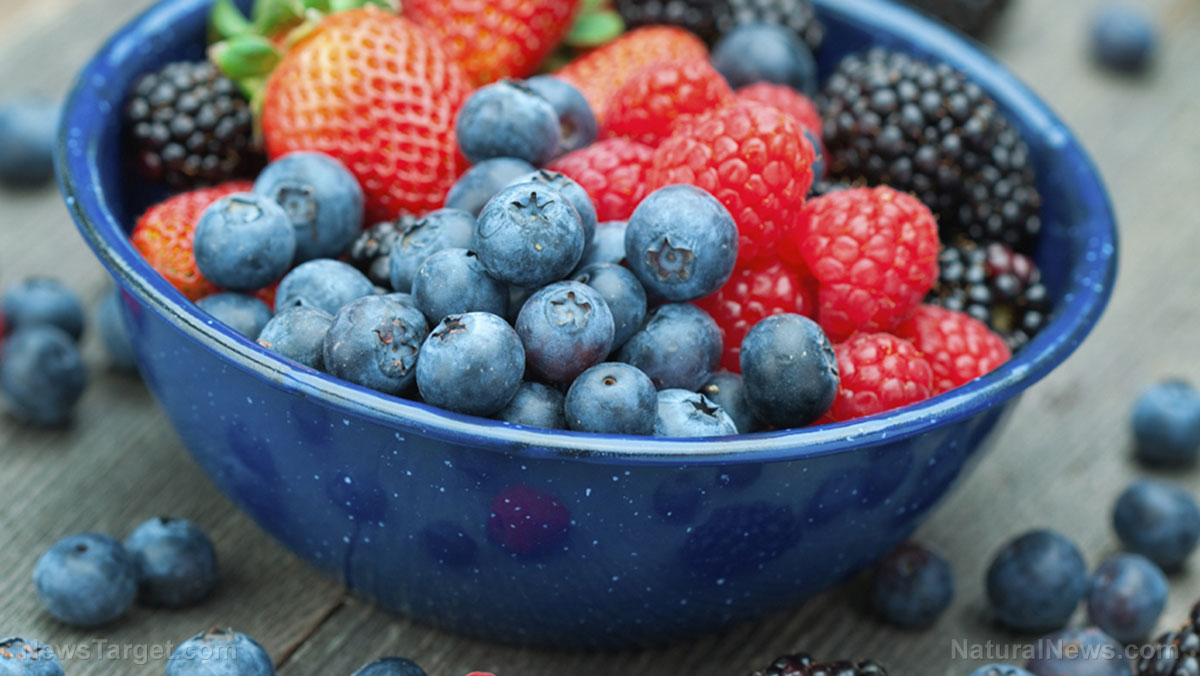
(NaturalNews) In “Successful Berry Growing,” Gene Logsdon writes that berries offer unmatched flavor, beauty and financial rewards with minimal effort. Homegrow…
(NaturalNews) Neurotransmitters like dopamine and serotonin regulate appetite, mood and metabolismâa balanced diet stabilizes them. Protein-rich meals (e.g…

(NaturalNews) The world is teetering on the edge of disasterâwars are escalating, alliances are shifting, and nuclear powers are flexing their arsenals. While gov…

(NaturalNews) Federal disaster loan approval sparks new partisan clash between California and Washington. LA businesses eligible for up to 2M loans after 1 b…
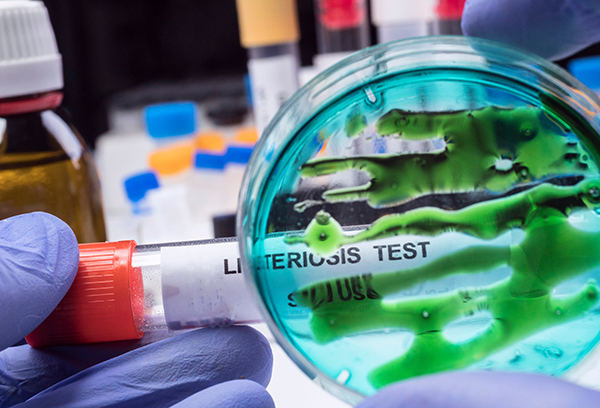
(NaturalNews) Scientists used AI to predict which Listeria strains would survive disinfectants, revealing genetic adaptations that make standard cleaning protoc…
If you rewatch “The Jetsons,” it’s clear that robots were initially designed to help humanity.
The show features a robot named “Rosie,” who serves as the family’s maid, dusting in hard-to-reach places and vacuuming under the rug. For a long time, gadgets like Roombas seemed harmlessly novel, alleviating the burden of small, unwanted jobs. But our relationship with robots as quirky helpers has changed significantly with the proliferation of technology and artificial intelligence.
It’s a cheat code for a faster, more efficient life — but a life that is safe, sanitized, and numb.
The rise of AI, for example, has transformed machines from helpers of humanity into its surrogate thinkers.
Educators are sounding the alarm. They claim the widespread availability of AI has severely impacted the education process — and for good reason. Tech companies and academic institutions have argued that AI can allow for “equitable” education that provides immediate, adaptive feedback. It is an expanse of knowledge, distilled into a chatbot or webpage.
But for a technological advancement that sounds so liberating, its implications are actually quite confining.
In the past, students were encouraged to think critically and to collaborate with their classmates, whether through coloring together in kindergarten or having a lab partner in high school. But now students are bypassing their classmates — and their own cognitive abilities — through AI, using machines to formulate “their” ideas.
One recent study showed that only 16% of students said they preferred to brainstorm ideas without the help of AI programs. Another study found that students preferred to collaborate with AI rather than a human partner because it felt less judgmental.
The data is clear: Students are now learning to self-isolate.
This new form of “companionship” extends outside of the classroom.
The COVID-19 pandemic hastened not only a shift from office to remote work but a movement from in-person learning to online schooling. In 2019, approximately 5.7% of Americans worked from home. In 2025, that number has hit nearly 20%, meaning the number has almost quadrupled in less than a decade. This means that people who were previously accustomed to office culture and frequent human interaction have now had many of their personal relationships relegated to Zoom calls and email chains. Couple that with the fact that most Americans consider themselves lonely, and you have the perfect recipe for robotic disaster.
RELATED: If AI isn’t built for freedom, it will be programmed for control
Laurence Dutton/Getty Images Plus
Recently, fears over people forming close relationships turned from a joke into reality. People who have struggled to find human partners have rejoiced in their ability to use AI to engage in emotional relationships. Some have even begun to consider AI personalities their spouses, using chatbots as substitutes for other people who can be fully customized to their desires.
Empathy, kindness, and something that looks like love can all be generated without any of the work required for interpersonal relationships.
The extremes of AI have launched a thousand think pieces, stirring criticism independent of political affiliations. The technology is most commonly used to solve questions, generate images, or summarize long essays. It makes life a little bit easier because we can spend less time researching, designing, or reading.
But our dependence on AI is growing at an alarming rate. Employees use it to correct the grammar in work emails or comb through valuable data in a white paper. Middle schoolers use it to solve math homework, college kids use it to form a thesis, and your boss uses it to put together an earnings report. It seeps into daily life in innocuous ways, and it slowly — but steadily — becomes normalized.
AI is supposed to be a little helper, just like the Jetsons’ “Rosie” robot. But the reality is far more sinister.
New analysis shows that frequent use of chatbots can result in decreasing brain activity and lowered cognitive function. Neurological, linguistic, and behavioral skills are drastically impaired after extensive AI use.
It’s becoming clear: AI is eating away at peoples’ brains.
RELATED: Your job, your future, your humanity: AI just crossed the line we can never undo
Schools and companies worldwide have been promoting AI as the new wave in human excellence. They claim AI will make education more accessible and argue that it will fast-track human progress. But it erodes the human experience. Children isolate themselves, adults destroy their relationships, and everyone’s analytical skills deteriorate.
It’s a cheat code for a faster, more efficient life — but a life that is safe, sanitized, and numb.
Human creativity is actionable. It builds cathedrals, epic poems, and timeless operas. From ballet to Botticelli, the creative spirit has expressed itself throughout history as a testament to mankind. The result of experience and struggle is beauty. AI removes these things because they aren’t part of a streamlined system. The technology is built to view the pedantic parts of life as barricades to productivity. It’s a machine, and humanity will always be just a little bit broken.
In the early 16th century, Michelangelo was commissioned to paint the ceiling of the Sistine Chapel. For four years, he laid on his back, matching colors, mixing paints, and grunting through brutally hot Italian summers. He had to carefully consider each small detail that would represent the awesomeness of God. When he finished, small mistakes were overlooked, and every pain was worthwhile because he had produced something new.
AI can’t do this. It can repeat patterns, but it lacks the capacity for the painful lows and rewarding highs of creation. AI generates “new” ideas instantly. It removes the need for individuals to muscle through problems. But it also removes the ability to create anything outside of its preprogrammed database.
AI is trying to kill creativity, and it’s our job to shut off its takeover.
Artificial intelligence, Ai, Jetsons, Machines, Human creativity, Technology
The hot dog is much, much more than a backyard barbecue staple — it is a quintessential American icon that has become a symbol of American patriotism.
The humble handheld repast is a beloved food that brings people together. Hot dogs have been embraced by baseball fans at ballparks across the country, Americans celebrating with backyard cookouts, prestigious presidents, and competitive eaters on the Fourth of July.
‘A hot dog at the game beats roast beef at the Ritz.’
The term “hot dog” may have been coined in April 1901 at the New York Polo Grounds because of their dachshund-like shape, according to some historians. However, the hot dog has many names, including weenie, wiener, glizzy, snappy boy, Coney, dirty water dog, and frank. No matter what you call a hot dog, it is always a delicious bite of pure Americana.
German immigrants brought their beloved “frankfurters” — named after Frankfurt, Germany — to the United States in the 1800s, introducing Americans to the sausage-style snack that would soon become a national favorite.
Whether topped with mustard, ketchup, relish, sauerkraut, chili, or Chicago-style with onions, tomatoes, pickles, and a dash of celery salt, the hot dog adapts to regional tastes while staying true to its all-American roots: iconic, irresistible, and endlessly reinventable.
Hot Dog VendorImage Source: Bettmann Archive/Getty Images
The simple hot dog, once a humble street snack, skyrocketed to fame thanks to Nathan’s Famous in Coney Island, New York.
In 1916, Polish immigrant Nathan Handwerker launched a hot dog stand on Coney Island, selling dogs for just 5 cents. Handwerker was able to start his hot dog business thanks to a $300 loan from friends and a secret spice blend from his wife.
The first official and recorded Nathan’s Hot Dog Eating Contest took place in Coney Island on July 4, 1972.
Now, roughly 40,000 people attend the Nathan’s Hot Dog Eating Contest, while hundreds of thousands of Americans watch the annual contest every July 4 on ESPN.
Joey Chestnut — the king of the Nathan’s Hot Dog Eating Contest — has won the competitive eating contest a record 16 times. Chestnut holds the record for most hot dogs eaten during the competitive eating contest, with 76 hot dogs consumed in 2021.
Hot dogs are also the iconic food of America’s pastime — baseball. Hot dogs perfectly encapsulate the spirit of the game and its fans.
MLB fans chowed down on an estimated 20 million hot dogs at stadiums across the country during the 2024 baseball season, which breaks down to approximately 8,000 hot dogs per game.
Actor Humphrey Bogart once famously said, “A hot dog at the game beats roast beef at the Ritz.”
Photo by Michael Brochstein/SOPA Images/LightRocket via Getty Images
Hot dogs are widely regarded as one of America’s most patriotic foods, famously enjoyed by politicians and presidents alike.
On June 11, 1939, President Franklin D. Roosevelt hosted King George VI and Queen Elizabeth during a picnic at his Hyde Park estate in New York. FDR served the royal couple hot dogs, which was reportedly the first time that King George VI ate a hot dog.
Since then, numerous American presidents have made hot dogs part of their patriotic branding, including former President Ronald Reagan.
Hot dogs have transformed from a simple food to a symbol of American identity that is woven into the fabric of U.S. history, politics, and patriotism. Plus, hot dogs are seen as an accessible food that is treasured by Americans of all social classes.
American politicians are often seen eating hot dogs as a prop in their patriotic photo-ops.
Image Source: Bettmann Archive/Getty Images
Fire up the grill and pass the mustard, because no food sizzles at patriotic celebrations quite like the cherished hot dog.
No food completes a Fourth of July cookout or a Memorial Day picnic quite like the hot dog.
Hot dogs take center stage during many red, white, and blue bashes since the tasty treat is the undisputed champ of patriotic snacking.
According to the National Hot Dog and Sausage Council, Americans devour an estimated 150 million hot dogs on Independence Day alone — enough to stretch from Washington, D.C., to Los Angeles more than five times over.
Photo by Robert R. McElroy/Getty Images
So when you are grilling hot dogs this Fourth of July, remember that you are not just eating a snack — you’re biting into a piece of American history.
The hot dog has transcended from immigrant dreams to presidential picnics.
This unapologetically American cuisine doesn’t just feed our bodies — it feeds our souls with patriotism, nostalgia, and the simple joy of coming together to celebrate what it means to be part of this country.
Like Blaze News? Bypass the censors, sign up for our newsletters, and get stories like this direct to your inbox. Sign up here!
American hot dog, American patriotism, American traditions, Fdr hot dog, Fdr hot dog picnic, Fourth of july food, Hot dog history, Hot dogs and politics, Nathan’s famous, Nathan’s famous contest, Patriotic foods, Political food symbolism, Presidential foods, Presidential hot dog, Summer cookout ideas, Align, Patriotic recipes, Summer cookout classics
LOS ANGELES, Calif. — Tensions are still high in southern California as immigration enforcement operations continue in the aftermath of the anti-Immigration and Customs Enforcement riots last month.
The Department of Homeland Security has deployed additional resources to the region to carry out President Donald Trump’s directive to arrest illegal immigrants despite local resistance.
The unlawful assembly declaration angered the crowd; they claimed it was police who made it unlawful by pushing them into the street.
That resistance did not take a break this Independence Day.
Multiple far-left groups organized protests around Los Angeles County, with protesters mainly focusing on city hall and the federal building nearby. Waving Mexican flags and upside down American flags, the anti-ICE and anti-Trump crowd spread out to the front and the back of the federal building where U.S. Marines, National Guardsmen, and DHS agents were stationed to protect the facility.
Many in the crowd berated the service members for protecting the building that rioters had targeted barely a month ago. One agitator threatened to “knock” their teeth in because he did not care about going to jail.
Toward Friday evening protesters gathered behind the federal building to prevent federal vehicles from going in and out of the complex. This forced DHS agents and military members to come out to clear a path for the vehicles, which the crowd sometimes attacked.
RELATED: Border Patrol arrest at Home Depot punches hole in Democrats’ narrative
Image source: Julio Rosas/Blaze Media
An unlawful assembly was declared after agents briefly clashed with the crowd and rioters threw bottles at the police line. With help from Los Angeles Police officers, DHS agents and military members pushed the dwindling crowd away from federal building. The unlawful assembly declaration angered the crowd; they claimed it was police who made it unlawful by pushing them into the street.
While the protest was supposed to last until midnight, the upset crowd was forced away from the federal building by 8 p.m. Blaze Media did not observe any arrests during the course of the day.
Democrat Los Angeles Mayor Karen Bass used Independence Day to call for an end to the federal immigration enforcement operations.
“This July 4th, let’s remember what patriotism really means: defending our values, our people, and our Constitution. Send the troops home. Stop the raids. Stand for freedom,” she said on X.
Once Trump signed the Big Beautiful Bill, the mayor again voiced her frustration with the federal government enforcing immigration laws.
“Instead of investing in housing, jobs, or health care, they’re funding fear — tearing families apart in our neighborhoods. These raids must end,” she added.
Like Blaze News? Bypass the censors, sign up for our newsletters, and get stories like this direct to your inbox. Sign up here!
Politics, Los angeles riots, Anti-ice protests, Dhs, Department of homeland security, Donald trump, Karen bass, Los angeles police, Unlawful assembly, Independence day, Us military, Mexican flags
The left’s side of the abortion debate is evil enough as it is, but a woman on TikTok decided to take it a step further and add her pit bull — a breed well known to attack children — into the mix.
“As many of you saw, I had an abor-bor earlier this year, not only because I don’t want children right now, but you want to know the real reason? I already have a baby, it’s this one right here,” the woman said proudly as she panned her camera to the pit bull behind her.
“He cost me a lot of time and energy and money, and if I had to choose between a human baby’s needs and this one, I’m choosing this one every time,” she continued.
“That’s why this fall, there’s only one candidate protecting our reproductive freedoms, and if she doesn’t win — don’t make me choose between a human baby and this one — because this one wins every freaking time,” she added.
“My political ideology is whatever makes that illegal,” BlazeTV host Allie Beth Stuckey comments. “Every part of that, actually. There’s so many things in that clip that I think should be illegal; having an abortion and owning a pit bull.”
“This really just goes to show disordered priorities and disordered desires just put your whole life out of whack,” she says. “That’s really what’s happening here. When you worship the creature rather than the creator, who is blessed forever, amen, as Romans 1 tells us, then everything gets distorted and disordered.”
“Like, if you cannot see how absolutely depraved and backwards and dark that is, this is, like, a spiritual issue, a demonic problem here, then you need to be reading your Bible and praying a lot more,” she adds.
To enjoy more of Allie’s upbeat and in-depth coverage of culture, news, and theology from a Christian, conservative perspective, subscribe to BlazeTV — the largest multi-platform network of voices who love America, defend the Constitution, and live the American dream.
Camera phone, Video phone, Sharing, Upload, Free, Video, Youtube.com, Relatable with allie beth stuckey, Relatable, Allie beth stuckey, The blaze, Blazetv, Blaze news, Blaze podcasts, Blaze podcast network, Blaze media, Blaze online, Blaze originals, Reproductive freedom, Abortion, Reproductive rights, Womens rights, Christianity, Pro-life, Pro-choice, Pitbull, Pitbulls, Pitbull attacks
A New Jersey man was arrested for attacking another passenger on a Frontier Airlines flight just before the plane landed in Florida earlier this week, authorities said.
Flight 1203 was en route Monday from Philadelphia to Miami when a fight erupted on the plane.
‘At that moment, it was, you know, the fight or flight responses kicked in.’
The victim — identified as Keanu Evans — told WSVN-TV that a passenger seated near him began uttering strange, unsettling phrases during the flight.
“He was doing some, like, dark laugh like, ‘Ha ha ha ha ha.’ And he was saying things like, ‘You, you puny mortal man, if you challenge me, it will result in your death,'” Evans told the station.
Evans reportedly said he left his seat to use the restroom — and to notify the flight crew of the bizarre behavior of the passenger, later identified as 21-year-old Ishaan Sharma of Newark, New Jersey. A flight attendant advised Evans to push the call button if the passenger continued to exhibit concerning conduct.
Evans returned to his assigned seat, but the situation reportedly escalated.
Photo by AaronP/Bauer-Griffin/GC Images
“He kept threatening me with death,” Evans added to WSVN. “That’s what made me get up and press the button above me, and I just turned around, and I looked at him, and I responded to him. A lot was going on, and immediately he just got up, and he put his forehead on my forehead like he was challenging me.”
Evans explained, “You know, he’s looking at me very angrily, and we’re looking eye to eye, forehead to forehead, and then he just grabs me by the throat and just starts choking me. At that moment, it was, you know, the fight or flight responses kicked in.”
Evans noted that he was forced to defend himself because he was locked in a “tight, confined space on an aircraft.”
Another passenger recorded video of the fight between the two men; it shows the pair grappling and shoving each other into the wall of the commercial airliner.
Passengers and the flight crew told the men to stop fighting, but the melee continued. The mid-flight brawl eventually was broken up after the men were separated.
ABC News reported that Evans suffered only “superficial” injuries. However, a bloodied and battered Sharma suffered a “visible laceration to his left eyebrow which required medical assistance,” according to the affidavit ABC News obtained. Sharma’s mugshot shows him with a large shiner over his left eye.
Miami-Dade Sheriff’s Office deputies arrested Sharma, transported him to Jackson West Hospital, and then to the Turner Guilford Knight Correctional Center.
Sharma was charged with battery and jailed on a $500 bond, according to jail records.
An attorney for Sharma claimed her client was “meditating” before the fight broke out.
“My client is from a religion where he was meditating,” defense attorney Renee Gordon said, according to the Daily Mail. “Unfortunately, the passenger behind him did not like that.”
Evans stressed that he is a “good person,” and that the video doesn’t “capture what started the whole thing.”
“It makes me feel bad because I don’t want people to get the wrong idea about who I am as a person. I’m a good person. You know, I recently got baptized,” Evans told WSVN. “The biggest drawback for me, what I wish that I could have done better was just not go back to my seat and been more adamant like, ‘Hey, keep me away from this guy.'”
Like Blaze News? Bypass the censors, sign up for our newsletters, and get stories like this direct to your inbox. Sign up here!
Air travel, Arrest, Crime, Fight video, Fights, Flight fight, Frontier airlines, Plane fight, Viral video, Battery charge

(NaturalNews) Moringa oleifera, native to the Himalayas, is a superfood packed with vitamins (A, C, E), minerals (calcium, potassium) and protein, making it a v…
(NaturalNews) The FDA has ordered Pfizer and Moderna to update their COVID-19 vaccine labels with clearer warnings about heart inflammation risks (myocarditis a…
(NaturalNews) Nearly one in three Americans has downgraded or canceled insurance coverage due to rising living costs, stagnant wages and economic instability, w…
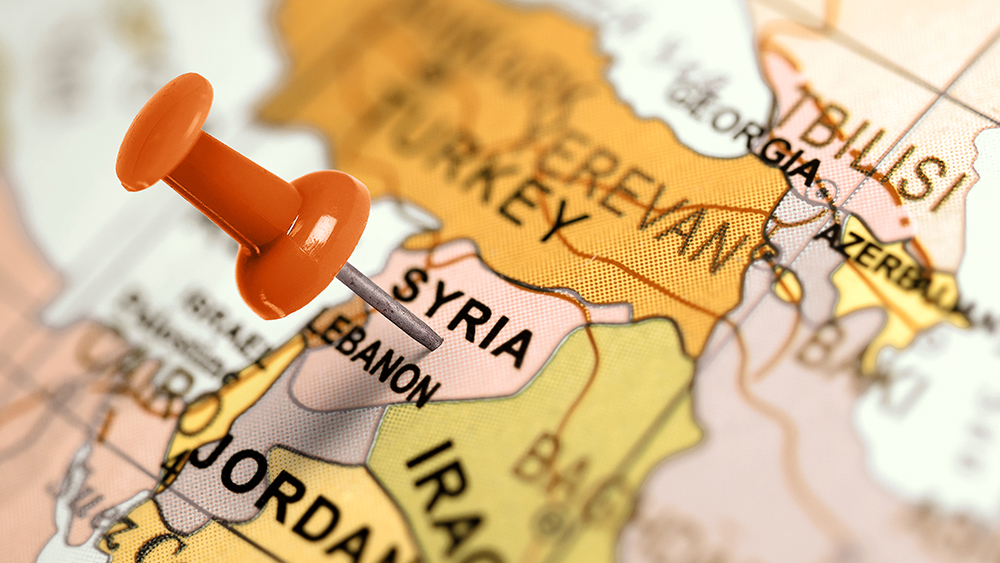
(NaturalNews) President Donald Trump signed an executive order on June 30 lifting broad U.S. sanctions on Syria, fulfilling a pledge made in May to support Syri…

“This case could completely wipe out the ATF’s ability to create law and subvert congress, which would be a massive win for the Second Amendment.” [more…]

Elon Musk chimed in to question ‘how common’ this type of illegal activity is during American elections Bridgeport, Connecticut, the largest city in the state, [more…]

Chinese woman evades warrant for vehicular manslaughter after horror wreck caught on camera A Chinese woman fled back to her homeland after allegedly killing her [more…]

Downdetector has reported that several US banks are facing service disruptions on Friday morning. Update (1315ET): Fed Reserve Says ACH Error Impacting Customers Bitcoin literally [more…]
Footage shows male senior swiftly strike ball in attempt to make goal, inadvertently hitting female player directly in mouth. A female high school lacrosse player [more…]

Use promo code “ALEX” when you sign up on Mug Club to get one month FREE of the network’s exclusive broadcasts, investigative reports, comedy specials [more…]

Suspect in black Lamborghini attempts rob man at Erewhon Market before shooting him in street, police say A man was shot during an attempted robbery [more…]

Watch & share this massive LIVE broadcast to get the latest on America’s border invasion, Mideast war, the NWO depopulation agenda & SO MUCH MORE! [more…]