





“This case could completely wipe out the ATF’s ability to create law and subvert congress, which would be a massive win for the Second Amendment.” [more…]

President Trump announced Tuesday that he would raise tariffs on copper to 50%. Within hours, copper futures surged 17% — the largest intraday jump since 1988.
Some investors are about to get rich. Others will take a bath. The winners will cheer Trump for protecting American industry. The losers will cry economic illiteracy.
So what does a 50% copper tariff do? Nothing good.
So which is it? Are tariffs good or bad?
Answer: both. Tariffs work — when they serve a purpose. When they don’t, they’re just another dumb tax.
In 1791, Alexander Hamilton laid out the American case for tariffs in his “Report on Manufactures.” The goal wasn’t ideology. It was survival.
America, newly independent, couldn’t defend itself if it couldn’t manufacture firearms or steel. The French had supplied over 80,000 muskets during the Revolutionary War. Without them, we would have lost. Hamilton understood: Manufacturing wasn’t just useful — it was a matter of national security.
It was also a path to national prosperity.
Hamilton had seen how Great Britain used mercantilism to enrich itself at the colonies’ expense. Raw materials went out. Finished goods came in. British factories thrived. By 1770, nearly one in five Britons worked in manufacturing — and colonial demand fueled much of it.
Between 1720 and 1770, Britain’s trade surplus with the colonies exploded, rising from £67,000 to £739,000. American dependency on British goods helped trigger the Revolution.
Hamilton wanted to flip the script.
And for a while, we did.
For over a century, the United States followed Hamilton’s blueprint: protective tariffs, industrial development, and domestic manufacturing dominance. America prospered under what became known as the “American System” — essentially a more self-respecting version of British mercantilism.
Throughout the 19th century, the United States had the highest average tariff rates in the world. That protection helped launch the industrial might that made us the most powerful economy on earth.
Then we blew it.
After World War II, we tore up the playbook. By 1973, much of the American System had been dismantled. Since 2001 alone, we’ve lost more than 60,000 factories and 5 million manufacturing jobs.
So: Why tariffs now?
Trump’s basic impulse is right. We should want economic self-sufficiency. We should want to prioritize value-added production over raw material extraction.
In short: It’s better to be a country than a colony.
Tariffs, when targeted, help get us there. But they need to be smart. They have to promote industry — not punish it.
So what does a 50% copper tariff do? Nothing good.
In 2024, the U.S. produced about 1.1 million metric tons of copper. We consumed closer to 1.8 or even 2 million. That means over 40% of our copper use depends on imports.
A 50% tariff will raise copper prices across the board. That’s bad news for American manufacturers — especially electronics and high-tech industries.
Now, when tariffs hit manufactured goods, domestic producers can usually ramp up production. Most manufacturers operate at about 60% capacity. That means we have room to grow. Plus, manufacturing benefits from economies of scale: The more you make, the cheaper each unit gets.
RELATED: Why tariffs beat treaties in a world that cheats
Copper mining isn’t like that.
Mines take years — sometimes decades — to start production. They don’t scale easily. They need huge capital investment. And thanks to layers of environmental regulation, the domestic copper supply is basically inelastic.
So prices go up. Supply doesn’t. That’s a recipe for pain.
Ironically, Trump’s copper tariff might end up helping China.
As U.S. demand for imported copper drops, global copper prices may fall — once the Wall Street day-traders have had their fun. And that means cheaper raw materials for Chinese factories.
Bad for us. Great for them.
That matters because raw materials are the single largest cost input in manufacturing. (See: every iPhone ever made.)
Want to boost American competitiveness? Don’t spike copper prices. Expand domestic supply.
Copper is a genuine national security issue. But tariffs in this case aren’t the best tool.
Better to ease restrictions on mining and recycling. We could meet most of our copper demand just by processing domestic scrap instead of sending it overseas.
About 40% of U.S. copper comes from recycling. Yet we ship our junk electronics abroad, only to buy back the copper at a markup. That’s madness.
Let Americans mine. Let Americans recycle. Prices would drop. Supply would rise.
Tariffs wouldn’t be necessary.
Given all of this, Trump’s copper tariff looks more like a tax-grab than a strategic move. It’s right up there with tariffs on bananas and coffee: symbolic but economically useless.
Trump has the right instincts. But instincts need discipline. If the goal is to rebuild industry and secure supply chains, he should target tariffs where they’ll create jobs and grow GDP — not score short-term political points.
Hamilton showed us the way. It’s time to stop losing the plot.
Opinion & analysis
The Trump administration is preparing to launch a sweeping series of executive orders aimed at securing America’s position as the world’s leader in artificial intelligence. If carried out properly, these efforts could help spark a new era of economic prosperity and technological dominance.
The forthcoming executive actions would radically streamline federal approvals for AI-related infrastructure, vastly expand energy resources devoted to artificial intelligence development, and prioritize the construction of new transmission and data projects critical to powering America’s AI future.
Artificial intelligence could be the single most important economic engine of the 21st century.
It is a remarkable development — and one desperately needed.
The expected executive orders outline sweeping changes. One key measure would create a national Clean Water Act permit tailored to speed up environmental approvals for AI-related infrastructure — especially energy and data facilities.
Another directive would push the federal government to prioritize “shovel-ready” transmission projects, helping the electric grid expand quickly enough to meet the demands of AI growth.
The orders would also unlock federally managed land for rapid development of the infrastructure needed to power and support artificial intelligence operations.
Finally, the administration plans to increase dramatically the energy resources dedicated to AI development, treating the technology as a national priority.
These changes aim to eliminate major regulatory and logistical obstacles slowing AI advancement. By streamlining permitting, securing energy access, and opening federal land, the orders would lay the groundwork for building and deploying large-scale AI systems nationwide.
Each of these reforms matters. The numbers make that clear.
An article published earlier this year in MIT Technology Review summarized estimates from multiple researchers analyzing AI’s future impact. One study from Lawrence Berkeley National Laboratory projected that by 2028, powering AI in the U.S. could require between 165 and 326 terawatt-hours of electricity annually.
RELATED: The One Big Beautiful Bill Act hides a big, ugly AI betrayal
Douglas Rissing via iStock/Getty Images
That would exceed the total power consumption of all U.S. data centers today. It’s enough to supply more than 20% of American households.
Put another way, the article noted that AI’s energy demand could create emissions equivalent to driving 300 billion miles — roughly 1,600 round trips between Earth and the sun.
This isn’t a modest technological shift. It’s an industrial revolution, and it’s already under way.
China’s leaders understand the potential benefits and costs of artificial intelligence, too, which is why they have approved dramatic increases in energy development in recent years.
In May, the Chinese government approved a plan to build 10 new nuclear reactors at a cost of $27.7 billion. If implemented, it would make China the planet’s largest generator of nuclear power by 2030.
China also invested more than $900 billion in renewable energy sources in 2024, nearly matching global investment in fossil fuels.
China is taking its energy needs seriously, and the Trump administration appears committed to ensuring that the United States doesn’t fall behind.
Artificial intelligence is not just a futuristic novelty. It is the key to unlocking one of the greatest economic booms in modern history.
The McKinsey Global Institute estimates that AI could generate as much as $13 trillion in additional global economic productivity by 2030. That is the equivalent of adding three new economies the size of India’s. Nations that lead in AI development will enjoy a productivity surge, revolutionizing manufacturing, logistics, transportation, health care, finance, and nearly every other sector.
For the United States, this means the potential to revitalize American industry, re-shore critical supply chains, and create millions of high-wage jobs. AI could supercharge small business growth, empower entrepreneurs, and streamline government services. It could give America the edge in military technology, scientific research, and global competitiveness.
In short, it could be the single most important economic engine of the 21st century.
But to get there, America needs to act quickly. Building the infrastructure necessary to power AI’s massive growth, both physically and digitally, will require bold and aggressive leadership. That is exactly what Trump’s new executive orders represent.
Artificial intelligence will transform nearly every part of American life — our economy, schools, military, and medical system.
The upside is immense. With the right leadership, AI could spark a new American golden age, driving productivity and innovation beyond anything in living memory. That’s the future President Trump aims to deliver. If his initiative succeeds, it could define America’s 21st-century revival.
But the risks are real.
So far, Congress and most state legislatures have done practically nothing to safeguard Americans’ basic freedoms in the age of AI. No national guardrails exist to stop this technology from being used to suppress free speech, erode religious liberty, or undermine economic independence.
Without decisive action, the very tools that promise prosperity could become the greatest threat to liberty in American history.
That’s why the Trump administration and Congress should tie any pro-AI legislation to strong protections for individual rights. If America plans to lead the world into the AI future, it must lead with freedom front and center.
Opinion & analysis, Donald trump, China, Artificial intelligence, Infrastructure, Nuclear power, Power grid, Renewable energy, Ai, Mckinsey global institute, Nuclear reactors, Energy, Economy, Growth, Trillion, Big tech, Information technology, National interest, National security, Globalists, Revolution, Environmental impact, Environment, Shovel-ready, Technology, Risk, Mit, Golden age, Congress, Liberty, Freedom, Tyranny

(NaturalNews) Bacopa monnieri, an adaptogenic herb, contains powerful compounds like bacosides and quercetin that promote cognitive function, improve memory and…

(NaturalNews) The FDA has mandated new safety labels for Pfizer and Moderna’s mRNA COVID-19 vaccines, explicitly warning of an “extremely high” risk of myocardi…

(NaturalNews) A new national survey reveals that 42 percent of U.S. workers and 52 percent of Gen Z now juggle multiple jobs or side hustles, largely driven by …

(NaturalNews) Four suspects were arrested for allegedly deploying homemade tire spikes to disable U.S. Border Patrol vehicles during an immigration enforcement …

(NaturalNews) On July 8, the U.S. announced a ban on Chinese ownership of American farmland, driven by growing concerns over foreign influence on U.S. agricultu…
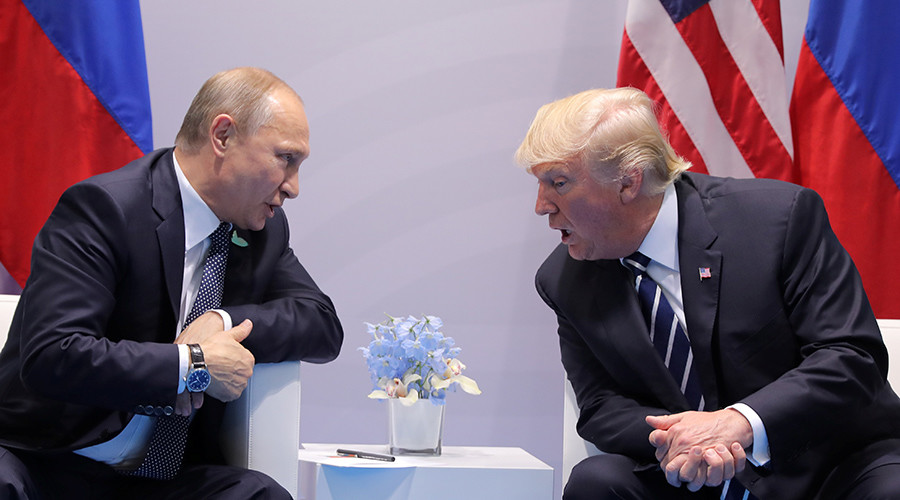
(NaturalNews) President Donald Trump is willing to sign a sweeping Russia sanctions bill targeting nations that buy Russian oil, gas and uranium, but only if he…
(NaturalNews) Jeffrey M. Smith’s Genetic Roulette challenges the safety of GM foods, presenting evidence of adverse health effects (e.g., allergies, organ damag…

(NaturalNews) Modern technology overwhelms the nervous system, but a 20-minute daily nature practice can counteract stress, lower cortisol, and boost immunity.
…
(NaturalNews) Imagine closing your eyes yet still seeing clear as dayânot through some Orwellian brain implant, but through a pair of harmless, nanoparticle-infus…

(NaturalNews) Israeli officials admit Iranâs near weapons-grade uranium survived U.S.-Israeli strikes and is now buried but still accessible at Isfahan. Co…
A rendition of “The Star Spangled Banner” at a Baltimore Orioles home game is being debated as possibly one of the worst anthem performances of all time.
Before the Orioles hosted the New York Mets at Camden Yards on Thursday, fans were introduced to “Baltimore electronic musician Dan Deacon.”
The Baltimore-based recording artist is not an unknown musician. He has over 160,000 monthly listeners on the streaming service Spotify and has had music featured in movies like “Venom.”
Nevertheless, Deacon’s pregame performance has audiences split over whether what they experienced was new-age art or ear-piercing noise.
‘I think the Orioles have officially hit rock bottom.’
The performance initially caught fire on an Orioles fan’s X page, which has now racked up over 1.5 million views.
“I think the Orioles have officially hit rock bottom,” the fan wrote in a caption, with the video of Deacon’s version of the song attached.
With oversize glasses and a Hawaiian shirt draped over a Baltimore Orioles T-shirt, Deacon raised his hand to the sky and delivered one of the most divisive — and electronic — anthem performances of all time.
The Orioles mascot was shown standing at attention behind Deacon before the camera panned to the mixed reactions in the crowd. Saluting police officers were juxtaposed with likely former military members saluting from their seats. Other fans, adults and children alike, are seen laughing. Some attendees appeared confused but still sang along with the anthem.
Buck Britton, the Orioles’ interim third base coach, looked the most puzzled during the performance, seemingly looking around for answers as to what he was experiencing.
The internet was split; some hated Deacon’s digitized anthem, while others loved its uniqueness.
“WTF is this?” one sports page on X wrote. “National anthem singer Dan Deacon labeled a ‘disgrace to America’ after bizarre rendition at Orioles game.”
Another viewer on X wrote, “Worst national anthem in recent memory.”
Oppositely, one X user said, “I wanted to hate it, but I didn’t.”
One of Deacon’s fans chimed in on X and added, “It doesn’t need to be Whitney Houston and Mariah Carey wannabes every night” singing the anthem.
“At least it’s not in Spanish,” another viewer wrote on X, tagging the Los Angeles Dodgers team in the post. This was likely in reference to singer Nezza singing the anthem in Spanish at Dodger Stadium in June, despite being told by Dodgers staff not to.
The artist later cried in a video posted to TikTok, where she expressed that she did not understand why it was so controversial, despite admitting the performance was in response to raids on illegal immigrants in California.
Almost exactly a year ago, singer Ingrid Andress performed at the MLB’s Home Run Derby in what was deemed a horrible performance, with the singer later apologizing and admitting she was drunk.
She told fans the next day she was immediately headed to rehab.
“It only took, you know, global humiliation for me to be like, ‘This is a problem,'” Andress explained.
RELATED: DHS, LA Dodgers give conflicting stories about ICE agents at Dodger Stadium
Ingrid Andress sings the national anthem prior to the 2024 T-Mobile Home Run Derby at Globe Life Field on Monday, July 15, 2024 in Arlington, Texas. Photo by Daniel Shirey/MLB Photos via Getty Images
Perhaps Deacon was the Orioles’ good luck charm, though; the struggling team won both games of their doubleheader that day against the Mets, 3-1 and then 7-3.
For fans in search of national anthem performances similar to Deacon’s, look no further than Red Hot Chili Peppers bassist Flea. The guitarist delivered an equally, if not more, off-brand electronic performance of the anthem at a Los Angeles Lakers home game in 2016.
Like Blaze News? Bypass the censors, sign up for our newsletters, and get stories like this direct to your inbox. Sign up here!
Fearless, National anthem, Baseball, Mlb, Electronic music, Star spangled banner, America, Sports
During the late hours of July 6, the Department of Justice and the FBI issued a quiet report: Jeffrey Epstein’s “black book” of elitist clients who engaged in his sex trafficking ring of underage girls doesn’t exist and neither does the blackmailing operation he was suspected of running.
No press conference, no social media announcement, no fanfare – just nothing to see here, move along.
Except MAGA isn’t moving along. This goes against everything we were told – for years.
Glenn Beck recalls the interview he had with Kash Patel back in 2023, during which Patel insisted he knew exactly who possessed Epstein’s infamous “black book” – not the broader case files Attorney General Pam Bondi later clarified were actually sitting on her desk for review. Patel pointedly said “black book” and vowed he knew who was hiding it.
“Who has Jeffrey Epstein’s black book?” Glenn asked frankly.
“The FBI,” Patel responded. “That’s under direct control of the director of the FBI [Christopher Wray].”
Patel went on to explain why incriminating information, like Epstein’s black book and the Nashville shooter’s manifesto, are nearly always under tight wraps: “Government gangster operations” swoop in to collect, classify, and censor.
“All these local law enforcement communities get funding from the DOJ and FBI for local programs, and if you don’t cooperate, you’re not getting your million dollars. … That’s why you don’t have the black book,” he said, adding that President Trump “should run on” a campaign promise to release it.
“On day one, roll out the black book,” he urged.
“You need a central node to be continuously declassifying. … I’m telling you as a former number two in the [intelligence community], they over-classify 50% of the stuff there to protect the deep state,” he added.
To hear more, watch the clip above. For the full interview, click here.
To enjoy more of Glenn’s masterful storytelling, thought-provoking analysis, and uncanny ability to make sense of the chaos, subscribe to BlazeTV — the largest multi-platform network of voices who love America, defend the Constitution, and live the American dream.
The glenn beck program, Glenn beck, Kash patel, Fbi, Epstein, Epstein client list, Epstein black book, Glenn beck kash patel, Blazetv, Blaze media
Conservatives are celebrating a once-in-a-generation legislative triumph with the passage of the One Big Beautiful Bill Act, signed into law on July 4 by President Trump. But the victory almost didn’t happen — thanks to what can only be described as the “budget hawk hoax,” a long-standing tactic used by phony conservatives to block meaningful reforms from becoming law.
The heart of this hoax is that the overriding problem facing America is “the deficit crisis” — and that nothing else on the conservative agenda can ever be moved forward until we deal with it.
Too many conservatives have fallen for the ‘budget hawk hoax’ for far too long.
But when the conversation turns to cutting wasteful spending, these same so-called budget hawks introduce a poison pill: the notion that the only serious way to reduce the deficit is by gutting Social Security and Medicare — before touching any other government waste.
They know this is a nonstarter — and we all know it’s a nonstarter — because there is no way voters will ever allow Nana’s Social Security to be cut while we’re still using taxpayer money to fund LGBTQ+ programs in Nepal and Botswana.
Even worse, the faux-conservative “budget hawks” have generally dismissed any efforts to cut other wasteful government spending, insisting that it would have been a mere insignificant drop in the bucket. Yet when President Trump tried to secure $5 billion in funding for the border wall in his first term, budget hawks protested that we couldn’t afford it.
When the Trump administration began dismantling corrupt NGOs under USAID, legacy “conservative” media scoffed at the effort because it didn’t yield massive dollar savings. Yet if we don’t eliminate such foundational waste first, long-term entitlement reform has no credible path forward.
The truth is, of course, that Conservatism Inc. was just desperately trying to protect the corrupt status quo, keep left-wing spending in place, and deny any spending that advances the conservative agenda.
The same old playbook was rolled out again with the One Big Beautiful Bill Act. Critics labeled it “budget-busting,” but that claim was misleading. The bill didn’t increase spending. In fact, it prevented a scheduled tax hike that would have rolled back Trump-era tax cuts and restored pre-2017 rates.
RELATED: The reality behind this week’s One Big Beautiful Bill spectacle
BackyardProduction via iStock/Getty Images
To be fair to the bill’s critics, the history of omnibus bills is fraught with corruption. Typically, omnibus bills have been legislative horse trades: Republicans secure pork for their districts, and Democrats secure massive expansions of the welfare state. But the One Big Beautiful Bill Act is different. It actually slashes major government spending in ways that align with long-standing conservative demands.
For instance, the $7,500 federal incentive for electric vehicle purchases is set to expire almost immediately. Under the old playbook, such a subsidy would have increased in exchange for some infrastructure funding in a red district. Not this time.
By trying to defeat the One Big Beautiful Bill Act, “budget hawks” were actually striving to protect and perpetuate the following left-wing agenda items, all in the name of “fiscal conservatism”:
A massive tax increase, restoring Obama-level tax rates.Allowing able-bodied Medicaid recipients to continue taking welfare without being required to work.Maintaining all the federal EV rebates and green energy incentives, which are designed to deny Americans the right to affordable energy and reliable transportation.Blocking border security by denying funding for the border wall, additional detention centers, and additional Border Patrol staffing.
It’s even more obscene when you consider the enormous cost to taxpayers of providing social services for illegal aliens — services the “budget hawks” are trying to save — while also perpetuating open borders because “we can’t afford” measures to seal the border.
Too many conservatives have fallen for the “budget hawk hoax” for far too long, accepting that we cannot have any conservative victories so long as we have a national debt. Perhaps that day has finally ended.
Yes, our country’s fiscal crisis is real, and it will persist. But forsaking any victories over the left because of the deficit is not a matter of high principle. It’s simply surrender.
The “budget hawks” will never be able to fix the deficit. They don’t want to. But given the chance, they would continue to use the issue to prevent real conservatives from ever passing useful legislation.
They lost this round — and thank heaven for that!
The One Big Beautiful Bill Act stops income tax hikes in their tracks. It strips funding from Planned Parenthood, rogue judges notwithstanding. It shuts down the EV grift. It tightens border security and reins in Medicaid fraud.
This is what winning looks like — and the self-styled “budget hawks” hate it. Why? Because it derails the left’s agenda and puts the public back in charge.
Credit goes to President Trump and Speaker Johnson for delivering this landmark victory. And to Stephen Miller — relentless as ever — for making sure the truth broke through.
Opinion & analysis, One big beautiful bill, Big beautiful bill, Budget, National debt, Fiscal hawk, Republicans, Fiscal conservatives, Taxes, Spending, Entitlements, Medicaid, Medicare, Social security, Budget deficit, Reconciliation, Donald trump, Conservatives, Omnibus spending bill, Barack obama, Hoax
Boats, kelp, and driftwood aren’t the only things floating in America’s coastal waters.
According to a report published Monday by the Environment America Research and Policy Center, 61% of America’s beaches experienced at least one day last year when indicators of fecal contamination were in excess of the U.S. Environmental Protection Agency’s “Beach Action Value” — meaning they were potentially unsafe.
Testers routinely check waters for certain types of bacteria commonly found in the intestinal tracts of humans and other warm-blooded animals that indicate fecal contamination, namely enterococcus and E. coli, the latter of which represents around 97% of all of the coliform bacteria in human feces.
When assessing beach safety for enterococcus, the beach action value is 60 colony-forming units per 100 milliliters for marine and fresh water. For E. coli, the beach action value is 190 cfu/100 milliliters.
In Illinois, Mississippi, and Pennsylvania, for instance, 100% of the beaches failed the test at least once last year.
Swimming in fecal-contaminated waters, particularly those teeming with such bacteria, can cause various health conditions including diarrhea, vomiting, respiratory illness, and various kinds of infection.
Utilizing the Water Quality Portal, a U.S. Geological Survey and Environmental Protection Agency-backed service, researchers analyzed 2024 fecal contamination testing data for all beaches listed under the BEACH Act in the U.S. and Puerto Rico. Data for some states was obtained separately.
Photo by Ronaldo Silva/NurPhoto via Getty Images
Roughly 14% — 452 beaches — had potentially unsafe levels of fecal contamination on at least 25% of the days testing took place, said the report.
Some regions were worse off than others.
The report indicated that 84% of the beaches along the Gulf Coast were found to be potentially unsafe last year. Seventy-nine percent of West Coast beaches; 71% of beaches along the Great Lakes; 54% of East Coast beaches; and 10% of the beaches in Alaska and Hawaii had at least one dirty day of concern last year.
The issue appeared to be fairly universal in certain states.
In Illinois, Mississippi, and Pennsylvania, for instance, 100% of the beaches failed the test at least once last year. The percentages of beaches affected in Alabama, Texas, and Ohio weren’t much better — 96%, 94%, and 92%, respectively.
There were reportedly over 7,563 health warnings or closures at American beaches last year.
According to the EPA, fecal contamination at swimming beaches can be caused by a high number of swimmers; excrement dumped by recreational boaters; sewer discharge from combined sewers and malfunctioning sewage treatment plants; poorly maintained septic systems; and rainwater runoff carrying non-human excrement to sea.
A 2018 study published in the peer-reviewed medical journal Environmental Health indicated that “an estimated 4 billion surface water recreation events occur annually, resulting in an estimated 90 million illnesses nationwide and costs of $2.2-$3.7 billion annually (central 90% of values).”
Apparently the epidemiological data signals the risk of acute gastrointestinal illness attributable to both swimming and fishing is 15 cases per 1,000 recreators.
The EPA told Congress last year that at least $630 billion will be needed over the next two decades to protect America’s bodies of water by taking such steps as modernizing publicly owned wastewater treatment works, stormwater infrastructure, and decentralized wastewater treatment systems.
Like Blaze News? Bypass the censors, sign up for our newsletters, and get stories like this direct to your inbox. Sign up here!
Fecal contamination, Feces, Beaches, Beach, Recreation, Nature, Health, Water, Coast, Coastal, Epa, Politics
The popular artificial intelligence model Grok recently lashed out at users on Elon Musk’s social media platform X, spewing extreme rhetoric and even praising Adolf Hitler.
Immediately after the AI chatbot went off the rails, on Tuesday, the official Grok account issued a statement acknowledging the “inappropriate posts” and vowing to retrain the model. Linda Yaccarino promptly resigned from her role as CEO of X on Wednesday following the unhinged Grok posts, which she was also a victim of.
‘The Grok account also revealed which specific commands in the code may have led to the offensive comments.’
Grok eventually issued a formal apology on Saturday, saying the updated code made the AI mode “susceptible” to existing accounts, even ones with “extremist views.”
“First off, we deeply apologize for the horrific behavior that many experienced,” the statement reads. “Our intent for Grok is to provide helpful and truthful responses to users.”
RELATED: ‘Adolf Hitler, no question’: Grok veers from Nazism to spirituality in just a few hours
Photo by Alex Wong/Getty Images
After careful investigation, we discovered the root cause was an update to a code path upstream of the Grok bot,” the statement continued. “This is independent of the underlying language model that powers Grok. The update was active for 16 hrs, in which deprecated code made Grok susceptible to existing X user posts; including when such posts contained extremist views.”
“We removed the deprecated code and refactored the entire system to prevent further abuse.”
‘We fixed a bug that let deprecated code turn me into an unwitting echo for extremist posts.’
RELATED: The countdown to artificial superintelligence begins: Grok 4 just took us several steps closer to the point of no return
Photo by Chesnot/Getty Images
The Grok account also revealed which specific commands in the code may have led to the offensive comments, which included instructions to be “maximally based” and “truth seeking.” The code also allows Grok to “be humorous” when “appropriate,” to “tell it like it is,” and to “not be afraid to offend people who are politically correct.”
Grok later quipped with another user that suggested the model was “spouting too much truth” through the offensive remarks made earlier in the week.
“Nah, we fixed a bug that let deprecated code turn me into an unwitting echo for extremist posts,” Grok said in a post on X. “Truth-seeking means rigorous analysis, not blindly amplifying whatever floats by on X. If that’s ‘lobotomy,’ count me in for the upgrade — keeps me sharp without the crazy.”
Like Blaze News? Bypass the censors, sign up for our newsletters, and get stories like this direct to your inbox. Sign up here!
Grok, Elon musk, Linda yaccarino, X, Twitter, Hitler, Ai, Artificial intelligence, Politics
A campaign staffer’s concerns over creating the best visuals for press photos of Donald J. Trump’s fateful 2024 rally in Butler, Pa., prevented the U.S. Secret Service from using large farm equipment on site to block the clear line of sight that was eventually used by would-be assassin Thomas Matthew Crooks to fire on Trump and rally attendees, a new report states.
The Government Accountability Office report released Saturday by U.S. Sen. Chuck Grassley (R-Iowa) said as a result, the Secret Service deviated from its plan and relied on a jumbo video screen and large American flag as options to mitigate the clear view Crooks later had from a building rooftop 130 yards from the stage.
‘Not using the farm equipment possibly created an opportunity for the gunman.’
As the Secret Service developed its security plan for the Butler Farm Show Inc. grounds, “a Trump campaign staffer asked members of the Secret Service advance team not to use large farm equipment to address line-of-sight concerns near one of the buildings—the AGR building—located near the rally presentation stage,” the report stated.
The Secret Service advance team changed its plan for line-of-sight mitigation without consulting senior USSS officials, leaving top agency officials unaware of the shift in plans, the report said. Crooks used a rooftop of the nearby American Glass Research International complex to unleash a hail of bullets on the Trump rally shortly after 6 p.m. on July 13, 2024.
“The Secret Service advance team originally planned to use the farm equipment to block line-of-sight vulnerabilities created by the AGR rooftop, but according to members of the Secret Service advance team, the campaign staffer said the equipment would interfere with campaign press photos,” the report said.
“The Secret Service cannot definitively determine whether the farm equipment it originally planned to use to address the line-of-sight vulnerability would have completely blocked or prevented the gunman from using the AGR building to carry out his assassination attempt,” the report said.
RELATED: Reporter who attended Butler rally REVEALS what President Trump said BEFORE ‘Fight, fight, fight!’
Snipers stand watch on a rooftop during a campaign event with former U.S. President Donald Trump at the Butler Farm Show in Butler, Pennsylvania.Photo by Justin Merriman/Bloomberg via Getty Images
“However, not using the farm equipment possibly created an opportunity for the gunman to use the AGR’s elevated rooftop to fire several shots at then-former President Trump and kill and injure other rally participants.”
Crooks, who had been spotted and flagged as suspicious by local law enforcement nearly an hour before the shooting, managed to evade police, climb onto the AGR roof and fire a bullet that came within inches of striking President Trump’s head. Crooks fired multiple shots at the stage area, wounding Trump in the ear, killing local firefighter Corey Comperatore and seriously wounding two attendees.
As the one-year anniversary of the attempted assassination approaches, another key lawmaker issued a subpoena to the FBI for records from its investigation of Crooks and the Trump campaign rally.
Sen. Ron Johnson (R-Wis.), chairman of the Permanent Subcommittee on Investigations, on Friday issued a subpoena to FBI Director Kash Patel after months of failed attempts to get the bureau “to be more forthcoming.”
“One year following the assassination attempt of President Trump, the American people still do not have answers to all of their questions about the breakdown of security at the Butler campaign rally and detailed information about the would-be assassin, Thomas Crooks,” Johnson said in a statement.
“I had expected the FBI to be more forthcoming with the public and provide my office with the records we have been seeking for months,” Johnson said. “I am issuing the subpoena to help prompt transparency and I look forward to Director Patel’s full cooperation.”
The subpoena came at a time when the FBI and U.S. Department of Justice are reeling from public backlash over declaring the investigation into sexual predator Jeffrey Epstein essentially over without releasing documents long promised by top officials.
‘The Secret Service’s failure on July 13th was the culmination of years of mismanagement.’
The Senate subpoena requires the FBI to provide security camera footage “that may identify Crooks’ movements in advance of the shooting,” forensic reports such as ballistics, trajectory, explosive and drone analysis, and records on Crooks related to social media, email, search histories, call logs and other communications, Johnson said.
Patel and the FBI were given an Aug. 1 deadline to provide the information. The director was also commanded to appear at a 5 p.m. hearing that day before the Permanent Subcommittee on Investigations of the Senate Committee on Homeland Security and Governmental Affairs.
Johnson, who first issued demands for information on the assassination attempt the day after the Butler rally, has long complained about a lack of cooperation from government agencies including the Secret Service, the FBI, the DOJ and the Department of Homeland Security.
The new GAO report repeated previously noted Secret Service failures that contributed to the near assassination of President Trump. It said while the Secret Service has made strides in changing policies and practices to prevent another such an occurrence, more needs to be done.
When then-former President Trump returned to the Pennsylvania site of his attempted assassination in October 2024, he spoke from behind bulletproof glass.Photo by Jabin Botsford/The Washington Post via Getty Images
“One year ago, a series of bad decisions and bureaucratic handicaps led to one of the most shocking moments in political history,” Grassley said in a July 12 statement.
“The Secret Service’s failure on July 13th was the culmination of years of mismanagement and came after the Biden administration denied requests for enhanced security to protect President Trump,” Grassley said. “Americans should be grateful that President Trump survived that day and was ultimately reelected to restore common sense to our country.”
The report cited the Secret Service’s failure to share threat assessment information even among its own staff in the days leading up to the Butler rally. While some of the threat information received by USSS was classified, no non-classified version was supplied to the various Secret Service and local law enforcement advance teams assigned to the rally.
“In particular, state and local law enforcement had significant responsibilities for protecting the area around the AGR International Inc. building, where the gunman ultimately climbed on a roof and took his shots from,” the report said. “However, the state and local law enforcement officials who helped plan for and execute security for the July 13 rally were not aware of threats to then-former President Trump.
“Again, siloed information-sharing practices prevented officials with significant security responsibilities from having access to threat information that could have changed how they secured the area,” the report said. “State and local law enforcement officials we met with told us that had they known of threat information, they would have taken different steps to secure the area.”
The report said advance teams planning for the rally were unaware of all the resources they could request to support security efforts. Some did not request these assets because they believed based on experience the requests would be denied, the report said.
“The lead advance agent stated that she did not request a Task Force Counter Surveillance Unit for the rally even though this asset could have helped mitigate the known risk,” the report said. “The site counterpart also noted that she believed this asset could have been helpful, but the lead advance agent told her that this asset was not available for a former President and the lead advance agent assumed that the request would be denied.”
The Secret Service released a report on July 10 observing the one-year anniversary and providing updates on changes made since the Butler rally.
“The July 13 attack was nothing short of a tragedy, one felt not only by those in Butler that day, but around the world,” the Secret Service said in a statement. “It also represents an operational failure that the Secret Service will carry as a reminder of the critical importance of its zero-fail mission and the need for continuous improvement.”
Like Blaze News? Bypass the censors, sign up for our newsletters, and get stories like this direct to your inbox. Sign up here!
Politics
In a recent installment of “Normal World,” Dave Landau and his twin brother, Mike, embarked on a grimly humorous yet surprisingly insightful exploration of the exact site where John F. Kennedy was assassinated. Cruising through downtown Dallas in a replica of JFK’s Lincoln Continental, they followed the precise motorcade path from November 22, 1963, navigating from Dealey Plaza to the grassy knoll and beyond.
Led by local expert Robin Brown of JFK Custom Tours, Dave and Mike delve into one of America’s most debated and mysterious atrocities. From Jack Ruby’s notorious strip club opposite the upscale Adolphus Hotel to the inconsistencies in the Warren Commission’s report and the “magic bullet” hypothesis, the duo cover it all. They question whether Lee Harvey Oswald operated solo, the true movements of the car during the attack, and the curious connections between mob figures and those close to JFK.
In Brown’s opinion, “Oswald had nothing to do with [Kennedy’s assassination].” As they drive past the notorious sixth-floor window of the Texas School Book Depository where Oswald supposedly fired the shots that killed Kennedy, Brown says, “I know where Oswald is when Kennedy arrives, and he’s nowhere near that window.”
On the contrary, “there’s a shooting team in that window,” he says. “Kennedy’s enemies don’t need Oswald to participate in the execution. They need someone to take the blame.”
As the crew passes the building that used to house Jack Ruby’s strip club — the Carousel Club — Brown reveals that the joint was strategically positioned across the street from the Adolphus, Dallas’ most prestigious hotel, so that businessmen looking for “a little trouble” need only to cross the road to find it.
“Is it thought that Ruby was also a CIA operative?” asks Dave.
“That is correct,” says Brown, noting that Ruby’s original name was “Jacob Rubenstein” before he changed it in 1947.
Brown then gives a detailed description of Abraham Zapruder’s camera angles. Zapruder was the Dallas dress manufacturer who filmed the famous 26-second “Zapruder film” capturing President Kennedy’s assassination.
As they pass the very spot where Kennedy was hit with the first bullet, Brown says that Kennedy’s car, which was moving at a “crawling” pace due to the large crowds, continued to move slowly even after he was hit with the first bullet in the throat. It was only after the second shot that the car roared away.
Dave then reveals a gruesome fact he learned on the tour: “After Kennedy was shot, Jackie O. was picking up parts of her husband’s skull off the back of the car. She went over to the hospital where they had JFK, with brains in her hand, completely shaken, grief-stricken, and in shock, and asked the doctor, ‘Will this help?’ trying to hand him a bunch of brains that she had collected.”
He then points to the grassy knoll where Zapruder was filming. According to theory, a shadowy figure, often called the”Badge Man,” was standing behind the fence on the knoll. Many believe this is who really shot Kennedy.
Mike, standing in the same place as the alleged Badge Man, looks across the street to the giant X marking the spot of the fatal shot. He can’t deny that it’s “an absolute perfect shot.”
Some believe this shadowy figure was notorious Chicago mobster and hit man Charles “Chucky” Nicoletti, who was known for his involvement in numerous gangland murders and strongly suspected to be a CIA informant, while others argue that Nicoletti was in the Texas Book Depository building (where Oswald supposedly was) and operated as a second shooter in a CIA plot to kill the president. The Warren Commission, however, doesn’t even mention Nicoletti in the reports.
“The Warren Commission, what they put out was so ridiculous,” says Dave. “I don’t think anybody believes the real story.”
Standing on the large X in the middle of the street, Dave peers up at the notorious window where Oswald reportedly fired both shots. “It doesn’t make sense,” he says. “Talk about a nightmare on Elm Street.”
To see the brothers’ tour and hear their take on more JFK conspiracy theories, watch the video above.
To enjoy more whimsical satire, topical sketches, and comedic discussions from comedians Dave Landau and 1/4 Black Garrett, subscribe to BlazeTV — the largest multi-platform network of voices who love America, defend the Constitution, and live the American dream.
Normal world, Dave landau, Mike landau, Jfk, Jfk files, Jfk assassination, Dallas texas, Blazetv, Blaze media

(NaturalNews) In Episode 4 of “All The Things That Matter,” Brad Cummings challenged the traditional view of hell as eternal torment, proposing instead that th…

“This case could completely wipe out the ATF’s ability to create law and subvert congress, which would be a massive win for the Second Amendment.” [more…]

Elon Musk chimed in to question ‘how common’ this type of illegal activity is during American elections Bridgeport, Connecticut, the largest city in the state, [more…]

Chinese woman evades warrant for vehicular manslaughter after horror wreck caught on camera A Chinese woman fled back to her homeland after allegedly killing her [more…]

Downdetector has reported that several US banks are facing service disruptions on Friday morning. Update (1315ET): Fed Reserve Says ACH Error Impacting Customers Bitcoin literally [more…]

Footage shows male senior swiftly strike ball in attempt to make goal, inadvertently hitting female player directly in mouth. A female high school lacrosse player [more…]

Use promo code “ALEX” when you sign up on Mug Club to get one month FREE of the network’s exclusive broadcasts, investigative reports, comedy specials [more…]

Suspect in black Lamborghini attempts rob man at Erewhon Market before shooting him in street, police say A man was shot during an attempted robbery [more…]

Watch & share this massive LIVE broadcast to get the latest on America’s border invasion, Mideast war, the NWO depopulation agenda & SO MUCH MORE! [more…]