






Is this just another cycle, or is it the END? Martin Armstrong of Armstrong Economics published an article this week about the so-called Socrates program and how [more…]

Democrats were virtually salivating as they unanimously voted against Donald Trump’s One Big Beautiful Bill Act ahead of the Independence Day holiday, which certainly should give pause to Republicans as they prepare for the midterms and the 2028 elections beyond.
What gives the Democrats hope that they can campaign effectively against Trump’s mega-bill? Is it the fact that Republicans were able to make permanent the 2017 tax cuts? Are they planning to campaign against the “no tax on tips” provision that even Kamala Harris supported? Will they claim that funding border security and mass deportation of illegal aliens is somehow bad for the country?
Remember, the One Big Beautiful Bill Act is the codification of the agenda that President Trump ran on in 2024. It’s not tricky. It’s not nefarious.
No, no, and no. Democrats are not idiots. They know that they have the short straw on all of those 80-20 issues. So they are going back to the same issue they have demagogued since 2008 — health care. By tugging on the heartstrings of the American public, they know they can use fear to win votes.
During debate in both the House and Senate, Democrats relied on questionable forward-looking interpretations of the impact of the mega-bill on Medicaid to claim that nearly 12 million low-income people would lose health coverage if the bill passed, as it ultimately did.
The left-leaning Congressional Budget Office supplied some of that data, and by the time the vote was finalized on July 3, various other groups were adding fuel to the fire. KFF, formerly the Kaiser Family Foundation, added the 12 million people who would allegedly lose Medicaid to the five million who KFF claimed would lose coverage in the Affordable Care Act marketplace, concluding that at least 17 million would be at risk. Then, there was the claim that Trump’s budget would deny food stamps to hungry children and pregnant women.
But not so fast. Despite the bleak picture painted by Democrats and weak-kneed RINOs that Trump wanted poor people to just die and be done with it, there were reasonable explanations for all the budget changes that had nothing to do with genocide.
Reductions in Obamacare premium subsidies are just an acknowledgment that the COVID crisis is over, and those boosted premiums are no longer necessary. Likewise, food stamps are still going to be provided to the disabled, families with young children, and the impoverished elderly, even if Democrats want to pretend otherwise.
And pretend they will, so if Republicans want to prevail in future elections, they had better fully understand the truth about the One Big Beautiful Bill Act, because otherwise, they will be painted as heartless elitists who want their fellow Americans to die by the millions.
Fortunately, the road map is already clear on how to respond to the demagoguery of the Democrats, and it was modeled by two members of the Trump administration on the Sunday morning talk shows over the long holiday weekend.
Treasury Secretary Scott Bessent and Kevin Hassett, director of the National Economic Council, faced down their hostile questioners on CNN’s “State of the Union” and CBS’ “Face the Nation” respectively.
Bessent, who by all accounts is the most competent member of Trump’s Cabinet, immediately pushed back on Dana Bash’s supposition that the bill would cut benefit programs like Medicaid:
Only in D.C. is a 20% hike over 10 years a cut. Medicaid funding will go up 20% over the next 10 years. The people who Medicaid was designed for — the pregnant women, the disabled, and families with children under 14 — will be refocused. The able-bodied Americans are not vulnerable Americans, so a work requirement or a community service requirement, that’s very popular with the public.
Bessent then struck a blow against the argument that millions of Americans will lose their Medicaid coverage because they didn’t remember to reapply for benefits under the new rules.
“It is a group of Democrats who unfortunately seem to think that poor people are stupid,” he said. “I don’t think poor people are stupid. I think they have agency, and I think to have them register twice a year for these benefits is not a burden. But these people who want to infantilize the poor and those who need these Medicaid benefits are alarmist.”
RELATED: The budget hoax that nearly sank Trump’s biggest win (so far)
Photo by Tom Brenner For the Washington Post via Getty Images
Over on “Face the Nation,” Hassett was interviewed by Weijia Jiang, senior White House correspondent for CBS. She dutifully recited the claim that 12 million people would lose their Medicaid coverage, but Hassett struck back hard:
Let’s unbundle that a little bit. What we are actually doing is asking for a work requirement, but the work requirement is that you need to be looking for work or even doing volunteer work, and you don’t need to do it until your kids are 14 or older, so the idea that that’s going to cause a massive hemorrhaging in availability of insurance doesn’t make a lot of sense. And if you look at the CBO numbers, if you look at the numbers they say are going to lose insurance, about five million of those are people who have other insurance. … If they lose one, they’re still insured.
Hassett also explained that the best way to get insurance is to get a job, and so if the Trump economy stimulates growth, it will help people to happily leave Medicaid after they gain employment.
On another question, about whether the One Big Beautiful Bill Act is harmful because it grows the national debt by between $3 trillion and $5 trillion over the next 10 years, Hassett responded by reminding the reporter that the Congressional Budget Office is underestimating growth in the economy compared to what happened in the first Trump term pre-COVID. Based on that historical record, Hassett expects the debt to actually shrink by $1.5 trillion in the next decade.
What Hassett didn’t say, but which should be on the lips of every Republican defending their votes for the One Big Beautiful Bill Act, is that over the 10 years from 2014 to 2024, the federal debt increased by more than $17.5 trillion. Admittedly, Trump’s first term played a role in that thanks to COVID, but only Trump and Republicans are making any effort today to shrink the debt. If left up to Democrats, every social program in the budget would see increased funding, deficit be damned.
To summarize, here are the talking points that every Republican candidate for Congress must master if they hope to beat back Democrat distortions:
Republicans voted to increase Medicaid spending over the next 10 years by 20%.Republicans voted to preserve Medicaid for the needy by making sure that everyone using the program’s valuable resources is truly needy — and eligible.Republicans voted to create an economy where more people can get jobs that provide high-quality health insurance. Emphasize this: Jobs are good.Republicans treat Medicaid recipients with dignity, asking them to follow simple rules to qualify for the benefit, rather than treating them as helpless wards of the state.Republicans are bending the curve downward on the national debt. Even if the CBO is right that the debt will increase by $3.5 trillion over the next 10 years, that increase is only 20% of what it was over the previous 10 years. And the Trump tax cuts are expected to stimulate the economy, so the national debt should actually decrease.
Those will do for a start. Remember, the One Big Beautiful Bill Act is the codification of the agenda that President Trump ran on in 2024. It’s not tricky. It’s not nefarious. And if it is unpopular, that’s only because Democrats have been lying about it.
Now, it’s up to Republicans to fight back against the big Medicaid lie, or else pay the price for their silence.
Editor’s note: This article was originally published by RealClearPolitics and made available via RealClearWire.
Opinion & analysis, Donald trump, Democrats, One big beautiful bill, Big beautiful bill, Medicaid, Cuts, Expansion, Spending, National debt, Budget reconciliation, Budget deficit, Mike johnson, Chuck schumer, Face the nation, State of the union, Media bias, Dana bash, Scott bessent, Weijia jiang, Cnn, Cbs news, Lies, 2026 midterms, Congressional budget office
In June, Texas Patriot, a prominent anonymous account supportive of President Donald Trump, announced during the height of tensions with Iran:
F**k it. If Trump takes us to war, I’m done with him and his administration.
I voted for:
NO WARS
No taxes
Cheap gas
Cheap groceries
MAHA.
What of these things has actually happened?
I’m pissed.
This message from a popular pro-Trump account seemed significant. Was Trump’s populist base turning on him?
In our current world, however, where plausible fake engagement can be created at an almost limitless scale, true anons will lose a great deal of their power.
But shortly thereafter, Right Angle News, another popular anonymous account, asserted that Texas Patriot was actually based in Pakistan. Yet another popular anon account contested this, saying that Texas Patriot is really an American originally from Texas who now lives in Georgia. Notably, most other major accounts weighing in on the controversy, from Proud Elephant to Evil Texan, are themselves anonymous, adding further to the hall of mirrors.
Either way, Texas Patriot deleted its own account shortly thereafter, perhaps suggesting that he or she had something to hide — or at least didn’t want the scrutiny.
The question of whether Texas Patriot is, in fact, a patriot from Texas or a bad actor in Islamabad is ultimately beside the point. As Newsweek wrote of the incident:
Social media has proved useful for galvanizing the MAGA movement, with popular accounts often reacting to political developments from Trump’s feud with X owner Elon Musk to Trump’s policy agenda. If it emerged that an account alleged to be American was actually based in another country, it would impact users’ trust.
And such trust is rapidly eroding, which will accelerate as ever more sophisticated fake accounts and bot farms are exposed.
The incident was just one of many in which major social media accounts were discovered — or at least suggested — to be run by someone far different from who they were purported to be. And it previews a shift that is just now beginning, which will fundamentally change how we interact with social media content.
When it comes to who will rule social media, the age of the anon is ending. The age of radical transparency is beginning — and yet, if designed well, radical transparency can still include a substantial and valuable space for a large degree of online anonymity.
Several reasons explain the shift. Increasingly sophisticated artificial intelligence models and bots generate outputs that, in many cases, are already almost indistinguishable from humans. For most users, they will soon become fully indistinguishable (a fact confirmed by multiple studies that have shown that most people have a poor ability to tell the difference between the two). And almost certainly, bots guided with even a minimum of human interaction will become indistinguishable from actual humans.
Many of my best friends have had anon accounts. A few are still prominent anons. It’s also noteworthy that almost every prominent ex-anon I know personally, whether doxxed or self-outed, dramatically improved their profile and professional opportunities once they were no longer anonymous.
I am not anti-anon, however. I understand why some people, especially those expressing opinions well outside of the mainstream, need to be anonymous. I also acknowledge that anonymity has been a crucial part of the American political tradition since the revolutionary era. An internet that banned anons would be an internet that is much poorer. This is why the biggest current anon accounts will be grandfathered into the coming system of radical transparency, as they have actual operators who are known to enough people that they are recognized as genuine.
I know several big anon accounts like this. I don’t know who is running them, but I have multiple offline friends I trust who do know the account holders and vouch for them. Accounts of this kind, with credible, real-world validation, will continue to have influence. But increasingly, new big anon accounts will be ignored, even if they amass a large number of followers (many of whom are fake).
As these ersatz accounts become increasingly sophisticated every day, engaging with the truly real becomes ever more important. Fake videos and photos proliferating on social media merely add to the potential for deception.
Even accounts run by real people will not be immune to the age of radical transparency. Some are partially or wholly automated — a way for a “content creator” to maintain a cheap 24-hour revenue stream. In the future, if you want to have influence, mechanisms will be in place to prove not only that it is you who are posting but that you are posting content that is authentic, with a proven real-world point of origin. Some have even suggested using the blockchain as a method of validation.
There should be a simple way of blocking the worst AI slop accounts, foreign bad actors who post highly packaged clickbait, or those who shamelessly steal content made by others. Most Americans would probably prefer not to engage with unverified foreign accounts when discussing U.S. politics. Certainly, I would be willing to pay for a feed that only showed me real, verified accounts from America, along with a limited list of paid, verified, and non-anonymous accounts from other parts of the world.
I am interested in having discussions with real people about real content and the real opinions they have. I want accounts mercilessly downrated if they produce inauthentic content presented as real. I want accounts downrated that regularly retweet unverified slop. If X, or any other online platform, can’t consistently provide that, I’ll look elsewhere — and so will many others.
My desire for authenticity is not a left-wing attempt to police “disinformation” — that is, whatever the left doesn’t want said. It’s far more serious. It’s not about getting “true” facts but a feed that is filled with actual people producing their own content representing their own views — with clear links to the sources for their claims.
Anonymity has, naturally, always been accompanied by a slew of problems: It can lead to echo chambers or aggressive exchanges, as users feel less pressure to engage rationally.
The lack of personal stakes can escalate conflict, which is amplified by AI. Modern AI can generate thousands of unique, human-like posts in seconds, overwhelming feeds with propaganda or fake news. The increasing influence of state actors in this fake news ecosystem makes it even riskier.
RELATED: Slop and spam, bots and scams: Can personalized algorithms fix the internet?
Vertigo3d via iStock/Getty Images
Anonymity also emboldens individuals to act without fear of repercussions, which often has downsides. The online disinhibition effect, a psychological phenomenon first described by psychologist John Suler in 2004, suggests that anonymity reduces social inhibitions, leading to behaviors individuals might avoid in face-to-face settings.
Everyone has met the toxic anon online personality who turns out to be quite meek and agreeable in person. One friend of mine who had an edgy online persona eventually closed her anon account (with tens of thousands of followers) and recreated her online presence from scratch as a “face” account. Her tweets are no longer as fun or spicy as they had been, but her persona is real — and presents who she really is. And she eventually landed a great public-facing job, partly based on the quality of her tweets.
Anons could play a leading role in the old social media world where bots were mostly obvious, and meaningful provocations were, in large part, created by real people through anonymous accounts. In our current world, however, where plausible fake engagement can be created on an almost limitless scale, true anons will lose a great deal of their power. They will be replaced as top influencers by those who are willing to be radically transparent.
Truly transparent identities should include verifiable information, such as email addresses, phone numbers, or government-issued IDs for account creation. While such information does not need to be publicly shared, it should be given to the social media company connected to the account.
Raising the barrier for AI-driven impersonation, while not foolproof, deters malicious actors, who must invest significant resources to create credible fake identities.
For anons unwilling to trust their private information to one of the major online platforms, third-party identity verifiers dedicated to protecting user privacy could carefully validate their identities while keeping them anonymous from social media companies. Such third-party brokers themselves would have their prestige checked by the accuracy of their verification procedures. This method would still allow for a high degree of public anonymity, bolstered by a backend that guarantees authenticity.
In the future, pure online anonymity will not be banned — nor should it be. But in the coming age of radical transparency, a truly anonymous account — one whose owner’s real-world identity is neither known within i own trusted circles nor verified by a reliable third party — will have little to no value.
The next internet age will value not just what you say, but more importantly, that others know you are the one who is saying it.
Editor’s note: A version of this article appeared originally in The American Mind.
Opinion & analysis, Donald trump, Anonymous, Social media, Censorship, Freedom of speech, Free speech, Online outrage, Trolls, Bots, Artificial intelligence, Ai, Disinformation, Misinformation, Deception, Foreign influence, Elections, Lies, Iran, Foreign policy, Jeffrey epstein, Anonymity, Anon, X, Twitter, Verification, Truth, Internet
Dana Free is the author of “What Every Christian Needs to Know About Spiritual Warfare” – a practical, biblical approach to combatting demonic forces.
But like many accomplishments, this book was born through the fire. On a recent episode of “Strange Encounters,” Rick Burgess interviewed Dana about the wild circumstances that led her to author such a book.
Dana was raised with a “full gospel understanding of the power of the Holy Spirit” outlined in Acts and 1 Corinthians, but when she got married, she didn’t realize the journey ahead of her would require her to step into the spiritual gifts in ways she never imagined.
Her husband became a meth addict, but because Dana viewed marriage as “covenant, not contract,” she stayed and asked the Lord for guidance. He faithfully led her to “the right places, the right people, the right books, [and] the right sermons” that taught her how to “fight back spiritually.”
She realized that her husband’s drug problem was a spiritual problem. Substance abuse at its root, she explains, is really about “abandonment or rejection or depression.” “The enemy just uses the drugs to keep [people] bound and destroy their life.”
But once she started fighting back with spiritual weapons, the opposition got stronger. “The enemy did not like what I was doing to stand and fight against generations of these problems where they had had a good foothold … so they threw everything they could at me to try to get me to leave him and write him off,” she tells Rick. “I saw almost everything that can come against a marriage happen.”
“When you were dealing with these demons, did they ever present themselves to you?” Rick asks.
While Dana never saw a physical manifestation of a demon, she was physically assaulted by one. Once, when someone was performing witchcraft against her and her husband, a spirit attacked her in her home.
“I did have that spirit come in my room and press me down in the bed and try to choke me where I couldn’t say the name of the Lord Jesus,” she recounts, but “once I said his name, it lifted and then I tore into it.” When she told her husband, he thought she was crazy, but shortly after, the spirit returned and did the same to him.
Many Christians mistakenly believe that spells, brews, and incantations that have been so absorbed into mainstream witch lore are just fictional. But they’re not. The forces of darkness have real power, just as God’s forces have real power.
“[Christians] have this power of the Spirit and that gets counterfeited by the enemy and the occult into witchcraft,” says Dana, noting that the witch behind the spirit who attacked her and her husband was “reading tarot cards,” which is “divination.”
“The New Age and the white witchcraft,” which involves “crystals … the third eye, yoga, meditation — all these things that people really don’t understand” — are luring people, but especially “the youth,” into darkness, she warns. “The enemy doesn’t care. He will take whatever open door he can get.”
This seemingly benign witchcraft is extremely successful at snaring the secular, who are “drawn to the supernature,” but it’s also snaring Christians who either mistakenly write it off as silly, or become drawn to it themselves because “they’re not seeing [the power of the Spirit] in church,” Dana says.
“What do you think is the biggest mistake that people of faith are making when it comes to spiritual warfare?” Rick asks.
“Ignorance” is Dana’s answer.
“That’s why I wrote the book,” she says, “because when I talk to your average Christian, they’re clueless.”
To hear more about Dana’s book and the story behind her husband’s hard-won deliverance, watch the episode above.
To enjoy more bold talk and big laughs, subscribe to BlazeTV — the largest multi-platform network of voices who love America, defend the Constitution, and live the American dream.
Strange encounters, Rick burgess, Blazetv, Spiritual warfare, Angels, Demons, Blaze media, Dana free, Demonic attack, Spiritual gifts

(NaturalNews) The mid-20th century saw Detroit’s Big Three (GM, Ford, Chrysler) redefine American life through mass auto production, but their unchecked growth …

(NaturalNews) Bank of America, Citigroup, Morgan Stanley and JPMorgan Chase are exploring stablecoin launches amid regulatory changes. President Trumpâs cr…

(NaturalNews) As millions of Americans gear up for summer travelâjostling through crowded airports, cramming into cramped train seats, or enduring endless highway…

(NaturalNews) Governments around the world are funding scientists to create the next deadly plandemic and nobody is trying to stop them. This is ludicrous. Itâs c…

(NaturalNews) A 7.3-magnitude earthquake struck near Sand Point, Alaska, prompting tsunami warnings across coastal regions. Minimal flooding (0.2 feet in San…

(NaturalNews) Texas Power Grid Under Strain: Trumpâs $1 trillion AI data center push risks overwhelming Texasâ grid, already strained by extreme weather and…

(NaturalNews) U.S.-Israel talks intensify as Netanyahu presents Gaza depopulation plan, facing global condemnation. BRICS nations denounce U.S.-backed milita…

(NaturalNews) Stablecoins as a Gateway to CBDCs: The Genius Act allows private banks to issue government-regulated stablecoins, but critics warn itâs a backdo…

(NaturalNews) Bilberries (Vaccinium myrtillus) are a nutrient-rich superfruit native to Eurasian forests, often confused with blueberries but distinct in their …

(NaturalNews) Ten people in Fresno County, California, were hospitalized after consuming a salad made with improperly preserved nopales (cactus pads). The pres…

(NaturalNews) Douglas Rushkoff’s “Open Source Democracy” argues that collaboration, transparency and collective intelligence â key aspects of open-source soft…
(NaturalNews) Social media platform Bluesky will soon require U.K. users to verify their age using Epic Games’ Kid Web Services (KWS), in compliance with the U….
(NaturalNews) Mike Adams criticized OpenAI as monopolistic and “closed,” contrary to its name, supporting Elon Musk’s critiques of its lack of transparency. …
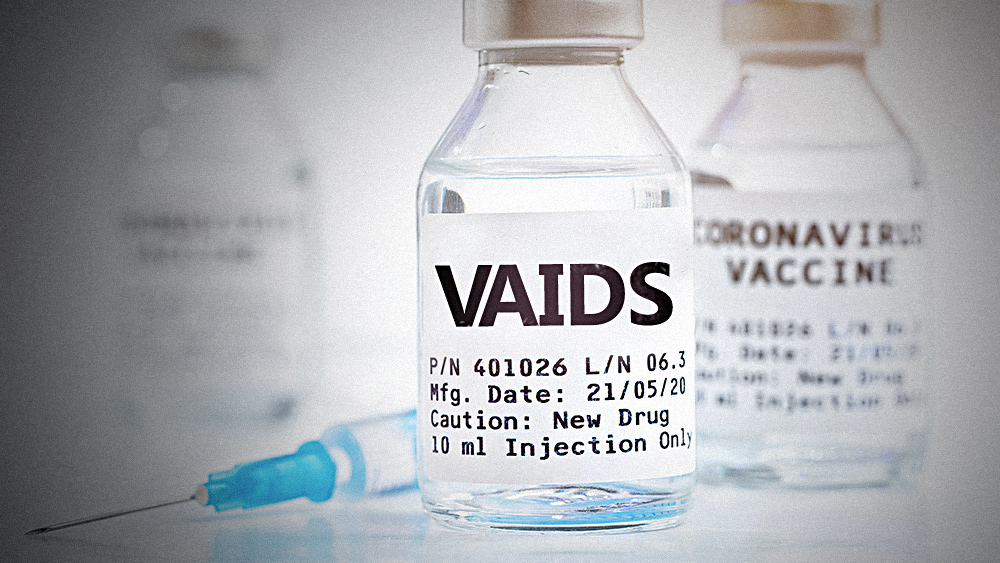
(NaturalNews) Like no other product on the planet, vaccines can be made to be deadly and nobody can sue the manufacturers or promoters for damage. Nobody. Never. Im…

(NaturalNews) For centuries, fermented cabbage has been a humble staple in kitchens worldwide, from German sauerkraut to Korean kimchi. But new research reveals thi…
The president of the iconic California hamburger company In-N-Out has announced for the first time that California’s policies have driven her family to move to a red state.
Lynsi Snyder made the comments to Allie Beth Stuckey on the Blaze Media podcast “Relatable,” which was published Friday. The company had previously announced that they were expanding into Tennessee, but Snyder went on to explain that her entire family had decided to move from California.
‘Raising a family is not easy here. Doing business is not easy here.’
“We’re building an office in Franklin, so I’m actually moving out there,” Snyder said.
“How do you feel about that?” Stuckey asked. “You’re a California girl through and through, right?”
“Yeah. I really loved living in Northern California, and I am so thankful that I grew up there because I think it changed a lot of who I am today,” Snyder replied. “I think I would be different if I had been raised in Southern California.”
She went on to say that there were a lot of great things about California but that the state’s policies had driven her out.
“Raising a family is not easy here. Doing business is not easy here,” she explained. “Now, the bulk of our stores are still going to be here in California, but it will be wonderful having an office out there, growing out there, and being able to have the family and other people’s families out there.”
RELATED: In-N-Out Burger donates $25,000 to California GOP, and leftists are not happy, call for boycott
Snyder said the company would give her employees a “longer runway” to make it easier to plan the move out by 2030.
Stuckey asked if she was still tied to the line of demarcation she had set against growing into the East Coast, and Snyder suggested that line was softening.
“Florida has begged us, and we’re still saying no. The East Coast states, we’re still saying no,” Snyder said.
Snyder, who is the granddaughter of the founders of In-N-Out, also talked about her path of developing her Christian faith. She said that keeping the high standards for the company was a part of her showing her faith in God and respect for her parents and grandparents.
RELATED: In-N-Out Burger reportedly takes new bold stance about employees wearing face masks
“Lynsi shares the untold story of In-n-Out’s early years and the hardship she went through before becoming the successful business leader she is,” Stuckey said about the interview.
“She has an incredible testimony and is so passionate about serving God and glorifying Him in everything she and the company does,” Stuckey said. “Her journey to Jesus is raw and redemptive. You will be so encouraged.”
Like Blaze News? Bypass the censors, sign up for our newsletters, and get stories like this direct to your inbox. Sign up here!
In-n-out president snyder, In-n-out leaves california, In-n-out burger, Leaving california, Politics
Is this just another cycle, or is it the END? Martin Armstrong of Armstrong Economics published an article this week about the so-called Socrates program and how [more…]

“I assure you all options are open on the southern front. They can be adopted anytime.” Summary recap: Hezbollah Secretary-General Hassan Nasrallah’s speech went for [more…]

Putin orders planeloads of humanitarian aid to be sent to Egypt The Russian Ministry Emergency Situations said on Friday that it would send two aircraft [more…]

It is Tunisia’s duty to stand with the Palestinians, its president has said The Tunisian parliament on Thursday began discussing a bill that would define [more…]

Suspected provocateur specifically stated, ‘We’re here to storm the capitol. I’m not kidding.’ In a new mini-documentary diving into Jan. 6, investigative journalist Lara Logan [more…]

Mainstream media claims Obama-Biden partnership has only been happening for 5 months. Former President Barack Obama has been secretly advising the Biden administration for several [more…]

“This case could completely wipe out the ATF’s ability to create law and subvert congress, which would be a massive win for the Second Amendment.” [more…]

Elon Musk chimed in to question ‘how common’ this type of illegal activity is during American elections Bridgeport, Connecticut, the largest city in the state, [more…]