





“This case could completely wipe out the ATF’s ability to create law and subvert congress, which would be a massive win for the Second Amendment.” [more…]


(NaturalNews) “Raw Emotions” by Angela Stokes merges raw food advocacy with emotional healing, offering a roadmap to break destructive eating patterns by addres…
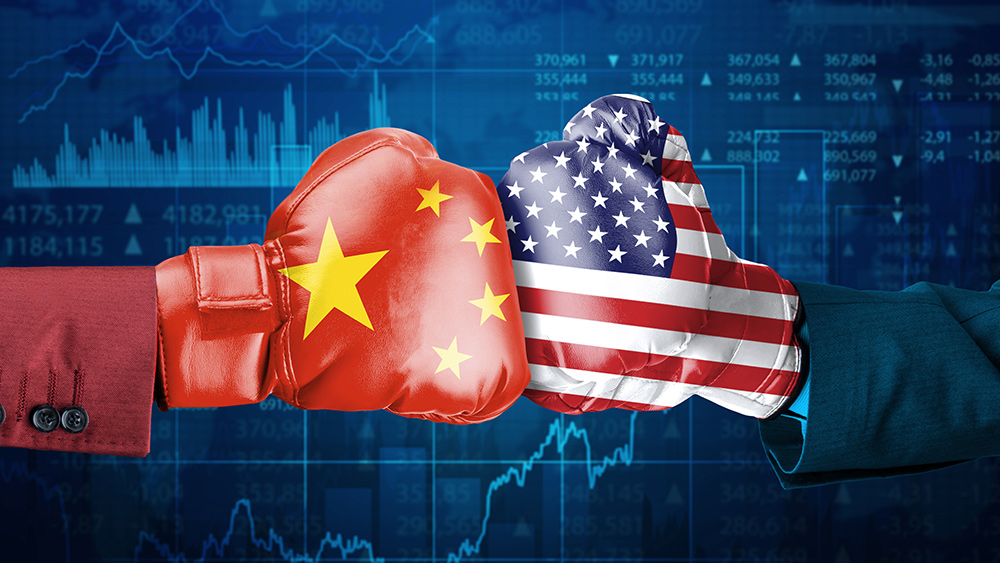
(NaturalNews) Beijing strongly criticized a proposed U.S. bill allowing President Donald Trump to impose up to 500 percent secondary tariffs on countries tradin…
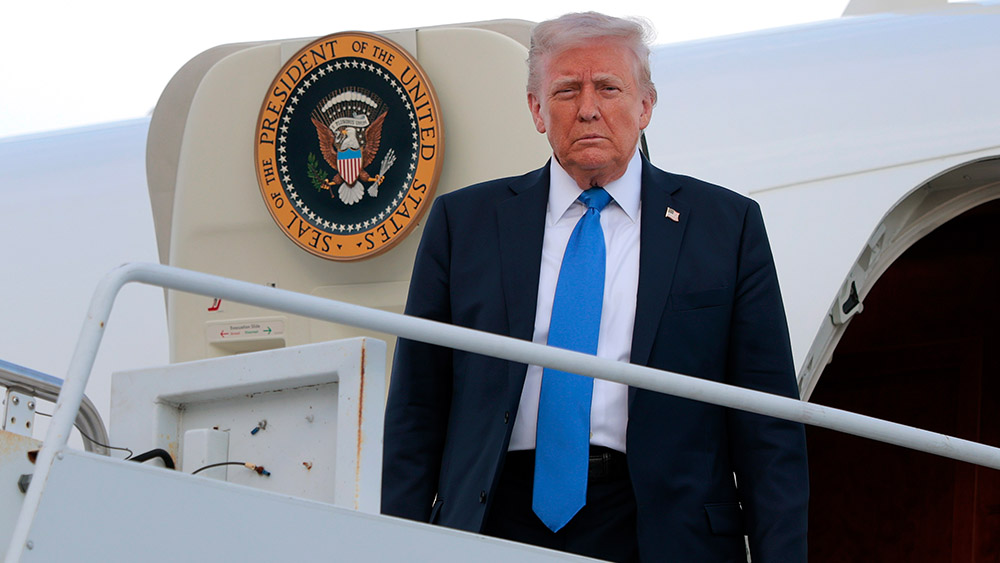
(NaturalNews) President Donald Trump declared that starting Aug. 1, the U.S. will impose a 30 percent tariff on all imports from Mexico and the European Union (…

(NaturalNews) Zayn Edward Arcand, a 19-year-old who identifies as “genderfluid,” was arrested for attempting to firebomb the Dickinson County Republican Committ…
(NaturalNews) On Tuesday, Connecticut Governor Ned Lamont signed a new law mandating that public water systems continue poisoning their citizens by fluoridating dri…
(NaturalNews) Googleâs Gemini AI now accesses usersâ third-party apps (WhatsApp, Messages) on Android without explicit consent, overriding prior privacy set…

(NaturalNews) Beetroot, once relegated to the sidelines as a humble root vegetable, has surged into the spotlight as a nutritional powerhouse â backed by rigorous…
If you’re frustrated with being unable to buy a home today, you’re not alone. According to the Federal Reserve Bank of Atlanta, homeownership affordability has been near an all-time low since 2023. The deadly combination of both home prices and interest rates skyrocketing broke the housing market, but simply lowering interest rates today won’t fix it.
To understand why, it’s important to know what caused this housing affordability crisis. Over the last several years, the federal government spent trillions of dollars it didn’t have in the world’s largest-ever borrowing binge. The money came from the Federal Reserve, which created those trillions of dollars out of nothing, depressing interest rates.
The real solution is not to manipulate rates lower and spawn further inflation, but to get government out of the way so interest rates can come down naturally.
The predictable result was a rapid devaluation of the dollar, manifesting as 40-year-high inflation, followed by the fastest rise in interest rates in just as long to cool off the inflation.
Not only did home prices become stratospherically high relative to incomes, but financing costs became prohibitively expensive. Consequently, during the four years of the Biden administration, the monthly mortgage payment doubled on a median-priced home.
For the housing market, this was a one-two punch that cratered affordability and consigned millions of Americans to renting for the foreseeable future.
The Fed’s artificially low interest rates helped cause the problem in the first place. Home prices rose not only because the dollar lost value (taking more dollars to buy the same home), but also because lower interest rates meant potential home buyers could borrow more and bid up the price of homes.
What’s most important to someone when considering buying a home is not the home’s price but the monthly mortgage payment. While the payment is clearly dependent on the whole price, interest rates are also a major factor. When those rates fell below 3%, people were willing to spend much more on the same home because the monthly payment didn’t change much.
As the months passed, however, and the bidding wars continued, prices just kept rising. Once interest rates returned to more normal levels, everything fell apart as monthly mortgage payments exploded. It now takes over two-thirds of the median household’s take-home pay to afford a median-priced home.
Historically, when interest rates rise, home prices fall, but that didn’t happen this time. So many people locked in home loans at interest rates below 4% — or even below 3% — that they can’t sell their homes today, because doing so would mean losing that interest rate and getting a new mortgage at 7%, 8%, or 9%.
The only way to make the math work is if homeowners sell at a huge premium, giving a massive down payment on their next home, minimizing the amount borrowed at a higher rate, and therefore preventing their monthly payment from skyrocketing. The large and fast increases in interest rates pushed home prices even higher instead of lower.
The temptation today is for the Fed to simply lower the federal funds rate (its benchmark interest rate), under the assumption that such a move will push down interest rates throughout the economy, including mortgages. Sadly, instead of fixing the broken housing market, it would likely have the opposite effect.
Last autumn, in a move that could only be described as blatant election interference, the federal funds rate was reduced when there was no empirical justification for doing so. But the move buoyed stock prices. Market participants saw through the charade and realized the artificially low rates would ultimately lead to more inflation, which prompted private market interest rates to rise.
Photo by e-crow via Getty Images
Lenders don’t like inflation because it reduces the value of the money being repaid in the future. To compensate, creditors demand a higher rate of return. That’s why the yield on Treasury debt at the end of last year jumped 100 basis points after the federal funds rate fell 100 basis points, demonstrating the Sisyphean nature of the problem.
Additionally, interest rates and home prices have recoupled. If interest rates fall one or even two percentage points, that will again prompt potential home buyers to borrow more, thereby bidding up home prices again. Unless rates drop substantially more, existing homeowners will remain trapped by the golden handcuffs of their 2% or 3% interest rates.
The real solution is not to manipulate rates lower and spawn further inflation, but to get government out of the way so those rates can come down naturally. If the government spent much less, then there would be less demand for borrowed money. Reducing demand in turn reduces the price, and the price for borrowed money is the interest rate.
Profligate government spending broke the housing market. Only fiscal restraint at the federal level will fix the problem.
Opinion & analysis, Opinion, Housing market, Housing, Housing prices, Housing crisis, Mortgage rates, Interest rates, The fed, Federal reserve, Jerome powell
Despite a vocal commitment to safety and public good – seemingly more genuine than other top-level players in the AI sector – Anthropic keeps coming under legal fire. Already, the leading AI firm has been caught red-handed pirating thousands of copyrighted books and, in a separate-but-related incident, destroying millions of physical books used to train its AI models. Further court proceedings later this year will determine exact fines for the violation, potentially $100,000 per incident.
It matters, not just for the sake of those authors, but because Anthropic is one of the main four or five companies positioned to make decisive plays with national consequences over the next 12 months and beyond. It is tier-one, pushing an upper-echelon valuation, and like too many companies in the space, its palliative verbiage on ethical considerations hasn’t translated into action.
Anthropic’s LLM was caught faking data and ratting on perceived user ‘wrongdoing,’ and it even resorted to user blackmail.
Led by the Amodei siblings, Dario and Daniela, Anthropic emerged out of the high-profile breakup of OpenAI and has gone on to simultaneously rake in massive heaps of cash based on a rather overweening advertising and PR focus on human safety and “safe AI.”
The “public benefit” organization strategy does indeed seem to retain some of the quasi-nonprofit and public-good corporate structuring ethos carried over from Musk’s original OpenAI vision. Nonetheless, when we consider we’re dealing with potentially the most powerful and transformative (destructive?) technologies yet imagined, the company’s early track record leaves a bit to be desired.
Anthropic strategy has targeted enterprise and B2B, and along the way, it has secured an impressive set of tech-heavy allies and business partners, including Google and Amazon Web Services. The company of “safety, steerability, and interpretability” may have larger designs that include clawing back, or perhaps sharing, some of Palantir’s government market share. In June of this year, its Claude Gov product was launched through the Fed Start program in a process involving both Palantir and Google Public Sector.
Anthropic product quality and market penetration are strong. The flagship, Claude, is a set of large language models in direct competition with Grok, Chat-GPT, and Gemini. Comprised of Claude 3 Opus, Claude 3.5 Sonnet, and Claude 3 Haiku, the whole package is underwritten (in theory) by so-called Constitutional AI, which is essentially an experimental training method to guide software toward explicit rules – as opposed to relying solely on human feedback or implicit reward systems, which have been used by other AI organizations with equally mixed results.
Also on offer are Artifacts, a coding assistant; Computer Use, a sort of bridge between Claude models and physical desktops; and AI Fluency Framework, which purports to be an educational initiative for human users of AI. Various sub-variants and custom creations seem to have been built for the aforementioned partnerships, as well.
In terms of missteps and the usual upheaval we see in the AI industry, Anthropic’s Constitutional AI, while designed to “embed” ethical guidelines and minimize toxic output, hasn’t managed to screen out the toxic and ethically ambiguous. In a recent episode, when placed in fictional settings for tests, Anthropic’s LLM was caught faking data and ratting on perceived user “wrongdoing,” and it even resorted somehow to user blackmail as it scrambled to locate “right and wrong.”
RELATED: Tech elites warn ‘reality itself’ may not survive the AI revolution
sankai via iStock/Getty Images
One wonders if this sort of acting out, as is often seen with children, is somehow related to those very restrictions placed into an LLM to restrict action. If the LLM by nature cannot ever grasp embodied human morality, why pretend otherwise, especially when misbehavior is the result?
Anthropic has faced numerous legal challenges for its commandeering of intellectual property and copyrighted material. In 2023, Universal Music and other publishers sued Anthropic for allegedly infringing copyright of song lyrics while training Claude. A March ruling sided with Anthropic.
This year saw another lawsuit from Reddit wherein it was alleged Anthropic had “scraped the site upwards of 100,000 times.”
In another illustrative episode, the Anthropic legal team was caught out in court when it was determined that a Claude-derived citation deployed to bolster the company’s copyright defense was fake — it was rather the product of so-called “AI hallucination,” a phenomenon whereby an LLM simply invests, fabricates, or alters material for evidently unknown reasons.
It’s all, as the kids say, not a good look. With a valuation upwards of $60 billion, why not work out a bulk purchase deal with distributors?
Most curious and potentially dangerous (aside from the insistence on ethics as the correct framing for an LLM that lacks human morality or spirituality), is the interwoven nature of the Anthropic funding structure – which suggests mixed economic objectives may quickly override any high-minded claims of human-first product. Amazon ($8 billion), Google ($2 to $3 billion), and a host of other Silicon Valley venture firms whose allocations aren’t entirely transparent are all committed.
To its credit, Anthropic has made the humiliating results of its hallucinating AI public and open to comment, which lends credence to its stated principles.
Still, some have suggested this rather overly attentive response may be little more than advertising for the company’s favorite virtues. It’s well known that Anthropic is among the more woke-friendly AI companies on the block – a recipe for a quasi-spiritural form of censorship-driven safetyism, where the AI treats the user with kid gloves while the humans in the C-suite run amok.
Ai, Anthropic, Tech, Lifestyle, Digital privacy, Llm, Claude, Return
An NFL team is cooperating with police on an investigation into a “racist and hateful symbol” that was found at the construction site of their new stadium.
The Nissan Stadium for the Tennessee Titans is scheduled to open in 2027, but that might be delayed by the discovery of a noose, according to the Tennessee Builders Alliance, which is in charge of construction.
‘We’ve taken some steps, both with local policies, state policy, and partnership with them to try, again, to keep temperatures low and prevent hate incidents like this.’
“This week, a racist and hateful symbol was discovered on our site. There is no place for hate or racism in our workplace,” said the organization. “We reported the incident to law enforcement, suspended work, and launched an investigation.”
They added that workers will be subjected to anti-bias training after the incident, according to an ESPN report.
Nashville Mayor Freddie O’Connell, a Democrat, decried the harrowing discovery.
“Obviously, this is an environment where we want to try as hard as we can to prevent scenarios that might be fear- or hate-based,” the mayor said in a statement. “We’ve taken some steps, both with local policies, state policy, and partnership with them to try, again, to keep temperatures low and prevent hate incidents like this. It is very concerning. There is an open investigation. I know the Titans are cooperating with Metro Nashville Police, and we’ll see what that investigation turns up.”
The builders alliance is also offering a reward for information that leads to the “identification of the individual responsible” for the noose.
RELATED: ‘It’s a straight-up noose!’ — Bubba Wallace is angry at online response to FBI’s investigation
The deal reached to construct the stadium has been criticized for including the largest public subsidy for an NFL stadium in U.S. history. Critics of these subsidies argue that the economic benefits of building a new stadium never meet up to the promises made by local lawmakers and the league.
The stadium will cost about $2.1 billion, with much of that cost being shouldered by the taxpayer. The Titans and the NFL are paying for about $840 million of the project.
Like Blaze News? Bypass the censors, sign up for our newsletters, and get stories like this direct to your inbox. Sign up here!
Noose at stadium, Tennessee titans stadium, Noose at a construction site, Noose found, Politics
Democrats were virtually salivating as they unanimously voted against Donald Trump’s One Big Beautiful Bill Act ahead of the Independence Day holiday, which certainly should give pause to Republicans as they prepare for the midterms and the 2028 elections beyond.
What gives the Democrats hope that they can campaign effectively against Trump’s mega-bill? Is it the fact that Republicans were able to make permanent the 2017 tax cuts? Are they planning to campaign against the “no tax on tips” provision that even Kamala Harris supported? Will they claim that funding border security and mass deportation of illegal aliens is somehow bad for the country?
Remember, the One Big Beautiful Bill Act is the codification of the agenda that President Trump ran on in 2024. It’s not tricky. It’s not nefarious.
No, no, and no. Democrats are not idiots. They know that they have the short straw on all of those 80-20 issues. So they are going back to the same issue they have demagogued since 2008 — health care. By tugging on the heartstrings of the American public, they know they can use fear to win votes.
During debate in both the House and Senate, Democrats relied on questionable forward-looking interpretations of the impact of the mega-bill on Medicaid to claim that nearly 12 million low-income people would lose health coverage if the bill passed, as it ultimately did.
The left-leaning Congressional Budget Office supplied some of that data, and by the time the vote was finalized on July 3, various other groups were adding fuel to the fire. KFF, formerly the Kaiser Family Foundation, added the 12 million people who would allegedly lose Medicaid to the five million who KFF claimed would lose coverage in the Affordable Care Act marketplace, concluding that at least 17 million would be at risk. Then, there was the claim that Trump’s budget would deny food stamps to hungry children and pregnant women.
But not so fast. Despite the bleak picture painted by Democrats and weak-kneed RINOs that Trump wanted poor people to just die and be done with it, there were reasonable explanations for all the budget changes that had nothing to do with genocide.
Reductions in Obamacare premium subsidies are just an acknowledgment that the COVID crisis is over, and those boosted premiums are no longer necessary. Likewise, food stamps are still going to be provided to the disabled, families with young children, and the impoverished elderly, even if Democrats want to pretend otherwise.
And pretend they will, so if Republicans want to prevail in future elections, they had better fully understand the truth about the One Big Beautiful Bill Act, because otherwise, they will be painted as heartless elitists who want their fellow Americans to die by the millions.
Fortunately, the road map is already clear on how to respond to the demagoguery of the Democrats, and it was modeled by two members of the Trump administration on the Sunday morning talk shows over the long holiday weekend.
Treasury Secretary Scott Bessent and Kevin Hassett, director of the National Economic Council, faced down their hostile questioners on CNN’s “State of the Union” and CBS’ “Face the Nation” respectively.
Bessent, who by all accounts is the most competent member of Trump’s Cabinet, immediately pushed back on Dana Bash’s supposition that the bill would cut benefit programs like Medicaid:
Only in D.C. is a 20% hike over 10 years a cut. Medicaid funding will go up 20% over the next 10 years. The people who Medicaid was designed for — the pregnant women, the disabled, and families with children under 14 — will be refocused. The able-bodied Americans are not vulnerable Americans, so a work requirement or a community service requirement, that’s very popular with the public.
Bessent then struck a blow against the argument that millions of Americans will lose their Medicaid coverage because they didn’t remember to reapply for benefits under the new rules.
“It is a group of Democrats who unfortunately seem to think that poor people are stupid,” he said. “I don’t think poor people are stupid. I think they have agency, and I think to have them register twice a year for these benefits is not a burden. But these people who want to infantilize the poor and those who need these Medicaid benefits are alarmist.”
RELATED: The budget hoax that nearly sank Trump’s biggest win (so far)
Photo by Tom Brenner For the Washington Post via Getty Images
Over on “Face the Nation,” Hassett was interviewed by Weijia Jiang, senior White House correspondent for CBS. She dutifully recited the claim that 12 million people would lose their Medicaid coverage, but Hassett struck back hard:
Let’s unbundle that a little bit. What we are actually doing is asking for a work requirement, but the work requirement is that you need to be looking for work or even doing volunteer work, and you don’t need to do it until your kids are 14 or older, so the idea that that’s going to cause a massive hemorrhaging in availability of insurance doesn’t make a lot of sense. And if you look at the CBO numbers, if you look at the numbers they say are going to lose insurance, about five million of those are people who have other insurance. … If they lose one, they’re still insured.
Hassett also explained that the best way to get insurance is to get a job, and so if the Trump economy stimulates growth, it will help people to happily leave Medicaid after they gain employment.
On another question, about whether the One Big Beautiful Bill Act is harmful because it grows the national debt by between $3 trillion and $5 trillion over the next 10 years, Hassett responded by reminding the reporter that the Congressional Budget Office is underestimating growth in the economy compared to what happened in the first Trump term pre-COVID. Based on that historical record, Hassett expects the debt to actually shrink by $1.5 trillion in the next decade.
What Hassett didn’t say, but which should be on the lips of every Republican defending their votes for the One Big Beautiful Bill Act, is that over the 10 years from 2014 to 2024, the federal debt increased by more than $17.5 trillion. Admittedly, Trump’s first term played a role in that thanks to COVID, but only Trump and Republicans are making any effort today to shrink the debt. If left up to Democrats, every social program in the budget would see increased funding, deficit be damned.
To summarize, here are the talking points that every Republican candidate for Congress must master if they hope to beat back Democrat distortions:
Republicans voted to increase Medicaid spending over the next 10 years by 20%.Republicans voted to preserve Medicaid for the needy by making sure that everyone using the program’s valuable resources is truly needy — and eligible.Republicans voted to create an economy where more people can get jobs that provide high-quality health insurance. Emphasize this: Jobs are good.Republicans treat Medicaid recipients with dignity, asking them to follow simple rules to qualify for the benefit, rather than treating them as helpless wards of the state.Republicans are bending the curve downward on the national debt. Even if the CBO is right that the debt will increase by $3.5 trillion over the next 10 years, that increase is only 20% of what it was over the previous 10 years. And the Trump tax cuts are expected to stimulate the economy, so the national debt should actually decrease.
Those will do for a start. Remember, the One Big Beautiful Bill Act is the codification of the agenda that President Trump ran on in 2024. It’s not tricky. It’s not nefarious. And if it is unpopular, that’s only because Democrats have been lying about it.
Now, it’s up to Republicans to fight back against the big Medicaid lie, or else pay the price for their silence.
Editor’s note: This article was originally published by RealClearPolitics and made available via RealClearWire.
Opinion & analysis, Donald trump, Democrats, One big beautiful bill, Big beautiful bill, Medicaid, Cuts, Expansion, Spending, National debt, Budget reconciliation, Budget deficit, Mike johnson, Chuck schumer, Face the nation, State of the union, Media bias, Dana bash, Scott bessent, Weijia jiang, Cnn, Cbs news, Lies, 2026 midterms, Congressional budget office
In June, Texas Patriot, a prominent anonymous account supportive of President Donald Trump, announced during the height of tensions with Iran:
F**k it. If Trump takes us to war, I’m done with him and his administration.
I voted for:
NO WARS
No taxes
Cheap gas
Cheap groceries
MAHA.
What of these things has actually happened?
I’m pissed.
This message from a popular pro-Trump account seemed significant. Was Trump’s populist base turning on him?
In our current world, however, where plausible fake engagement can be created at an almost limitless scale, true anons will lose a great deal of their power.
But shortly thereafter, Right Angle News, another popular anonymous account, asserted that Texas Patriot was actually based in Pakistan. Yet another popular anon account contested this, saying that Texas Patriot is really an American originally from Texas who now lives in Georgia. Notably, most other major accounts weighing in on the controversy, from Proud Elephant to Evil Texan, are themselves anonymous, adding further to the hall of mirrors.
Either way, Texas Patriot deleted its own account shortly thereafter, perhaps suggesting that he or she had something to hide — or at least didn’t want the scrutiny.
The question of whether Texas Patriot is, in fact, a patriot from Texas or a bad actor in Islamabad is ultimately beside the point. As Newsweek wrote of the incident:
Social media has proved useful for galvanizing the MAGA movement, with popular accounts often reacting to political developments from Trump’s feud with X owner Elon Musk to Trump’s policy agenda. If it emerged that an account alleged to be American was actually based in another country, it would impact users’ trust.
And such trust is rapidly eroding, which will accelerate as ever more sophisticated fake accounts and bot farms are exposed.
The incident was just one of many in which major social media accounts were discovered — or at least suggested — to be run by someone far different from who they were purported to be. And it previews a shift that is just now beginning, which will fundamentally change how we interact with social media content.
When it comes to who will rule social media, the age of the anon is ending. The age of radical transparency is beginning — and yet, if designed well, radical transparency can still include a substantial and valuable space for a large degree of online anonymity.
Several reasons explain the shift. Increasingly sophisticated artificial intelligence models and bots generate outputs that, in many cases, are already almost indistinguishable from humans. For most users, they will soon become fully indistinguishable (a fact confirmed by multiple studies that have shown that most people have a poor ability to tell the difference between the two). And almost certainly, bots guided with even a minimum of human interaction will become indistinguishable from actual humans.
Many of my best friends have had anon accounts. A few are still prominent anons. It’s also noteworthy that almost every prominent ex-anon I know personally, whether doxxed or self-outed, dramatically improved their profile and professional opportunities once they were no longer anonymous.
I am not anti-anon, however. I understand why some people, especially those expressing opinions well outside of the mainstream, need to be anonymous. I also acknowledge that anonymity has been a crucial part of the American political tradition since the revolutionary era. An internet that banned anons would be an internet that is much poorer. This is why the biggest current anon accounts will be grandfathered into the coming system of radical transparency, as they have actual operators who are known to enough people that they are recognized as genuine.
I know several big anon accounts like this. I don’t know who is running them, but I have multiple offline friends I trust who do know the account holders and vouch for them. Accounts of this kind, with credible, real-world validation, will continue to have influence. But increasingly, new big anon accounts will be ignored, even if they amass a large number of followers (many of whom are fake).
As these ersatz accounts become increasingly sophisticated every day, engaging with the truly real becomes ever more important. Fake videos and photos proliferating on social media merely add to the potential for deception.
Even accounts run by real people will not be immune to the age of radical transparency. Some are partially or wholly automated — a way for a “content creator” to maintain a cheap 24-hour revenue stream. In the future, if you want to have influence, mechanisms will be in place to prove not only that it is you who are posting but that you are posting content that is authentic, with a proven real-world point of origin. Some have even suggested using the blockchain as a method of validation.
There should be a simple way of blocking the worst AI slop accounts, foreign bad actors who post highly packaged clickbait, or those who shamelessly steal content made by others. Most Americans would probably prefer not to engage with unverified foreign accounts when discussing U.S. politics. Certainly, I would be willing to pay for a feed that only showed me real, verified accounts from America, along with a limited list of paid, verified, and non-anonymous accounts from other parts of the world.
I am interested in having discussions with real people about real content and the real opinions they have. I want accounts mercilessly downrated if they produce inauthentic content presented as real. I want accounts downrated that regularly retweet unverified slop. If X, or any other online platform, can’t consistently provide that, I’ll look elsewhere — and so will many others.
My desire for authenticity is not a left-wing attempt to police “disinformation” — that is, whatever the left doesn’t want said. It’s far more serious. It’s not about getting “true” facts but a feed that is filled with actual people producing their own content representing their own views — with clear links to the sources for their claims.
Anonymity has, naturally, always been accompanied by a slew of problems: It can lead to echo chambers or aggressive exchanges, as users feel less pressure to engage rationally.
The lack of personal stakes can escalate conflict, which is amplified by AI. Modern AI can generate thousands of unique, human-like posts in seconds, overwhelming feeds with propaganda or fake news. The increasing influence of state actors in this fake news ecosystem makes it even riskier.
RELATED: Slop and spam, bots and scams: Can personalized algorithms fix the internet?
Vertigo3d via iStock/Getty Images
Anonymity also emboldens individuals to act without fear of repercussions, which often has downsides. The online disinhibition effect, a psychological phenomenon first described by psychologist John Suler in 2004, suggests that anonymity reduces social inhibitions, leading to behaviors individuals might avoid in face-to-face settings.
Everyone has met the toxic anon online personality who turns out to be quite meek and agreeable in person. One friend of mine who had an edgy online persona eventually closed her anon account (with tens of thousands of followers) and recreated her online presence from scratch as a “face” account. Her tweets are no longer as fun or spicy as they had been, but her persona is real — and presents who she really is. And she eventually landed a great public-facing job, partly based on the quality of her tweets.
Anons could play a leading role in the old social media world where bots were mostly obvious, and meaningful provocations were, in large part, created by real people through anonymous accounts. In our current world, however, where plausible fake engagement can be created on an almost limitless scale, true anons will lose a great deal of their power. They will be replaced as top influencers by those who are willing to be radically transparent.
Truly transparent identities should include verifiable information, such as email addresses, phone numbers, or government-issued IDs for account creation. While such information does not need to be publicly shared, it should be given to the social media company connected to the account.
Raising the barrier for AI-driven impersonation, while not foolproof, deters malicious actors, who must invest significant resources to create credible fake identities.
For anons unwilling to trust their private information to one of the major online platforms, third-party identity verifiers dedicated to protecting user privacy could carefully validate their identities while keeping them anonymous from social media companies. Such third-party brokers themselves would have their prestige checked by the accuracy of their verification procedures. This method would still allow for a high degree of public anonymity, bolstered by a backend that guarantees authenticity.
In the future, pure online anonymity will not be banned — nor should it be. But in the coming age of radical transparency, a truly anonymous account — one whose owner’s real-world identity is neither known within i own trusted circles nor verified by a reliable third party — will have little to no value.
The next internet age will value not just what you say, but more importantly, that others know you are the one who is saying it.
Editor’s note: A version of this article appeared originally in The American Mind.
Opinion & analysis, Donald trump, Anonymous, Social media, Censorship, Freedom of speech, Free speech, Online outrage, Trolls, Bots, Artificial intelligence, Ai, Disinformation, Misinformation, Deception, Foreign influence, Elections, Lies, Iran, Foreign policy, Jeffrey epstein, Anonymity, Anon, X, Twitter, Verification, Truth, Internet
Dana Free is the author of “What Every Christian Needs to Know About Spiritual Warfare” – a practical, biblical approach to combatting demonic forces.
But like many accomplishments, this book was born through the fire. On a recent episode of “Strange Encounters,” Rick Burgess interviewed Dana about the wild circumstances that led her to author such a book.
Dana was raised with a “full gospel understanding of the power of the Holy Spirit” outlined in Acts and 1 Corinthians, but when she got married, she didn’t realize the journey ahead of her would require her to step into the spiritual gifts in ways she never imagined.
Her husband became a meth addict, but because Dana viewed marriage as “covenant, not contract,” she stayed and asked the Lord for guidance. He faithfully led her to “the right places, the right people, the right books, [and] the right sermons” that taught her how to “fight back spiritually.”
She realized that her husband’s drug problem was a spiritual problem. Substance abuse at its root, she explains, is really about “abandonment or rejection or depression.” “The enemy just uses the drugs to keep [people] bound and destroy their life.”
But once she started fighting back with spiritual weapons, the opposition got stronger. “The enemy did not like what I was doing to stand and fight against generations of these problems where they had had a good foothold … so they threw everything they could at me to try to get me to leave him and write him off,” she tells Rick. “I saw almost everything that can come against a marriage happen.”
“When you were dealing with these demons, did they ever present themselves to you?” Rick asks.
While Dana never saw a physical manifestation of a demon, she was physically assaulted by one. Once, when someone was performing witchcraft against her and her husband, a spirit attacked her in her home.
“I did have that spirit come in my room and press me down in the bed and try to choke me where I couldn’t say the name of the Lord Jesus,” she recounts, but “once I said his name, it lifted and then I tore into it.” When she told her husband, he thought she was crazy, but shortly after, the spirit returned and did the same to him.
Many Christians mistakenly believe that spells, brews, and incantations that have been so absorbed into mainstream witch lore are just fictional. But they’re not. The forces of darkness have real power, just as God’s forces have real power.
“[Christians] have this power of the Spirit and that gets counterfeited by the enemy and the occult into witchcraft,” says Dana, noting that the witch behind the spirit who attacked her and her husband was “reading tarot cards,” which is “divination.”
“The New Age and the white witchcraft,” which involves “crystals … the third eye, yoga, meditation — all these things that people really don’t understand” — are luring people, but especially “the youth,” into darkness, she warns. “The enemy doesn’t care. He will take whatever open door he can get.”
This seemingly benign witchcraft is extremely successful at snaring the secular, who are “drawn to the supernature,” but it’s also snaring Christians who either mistakenly write it off as silly, or become drawn to it themselves because “they’re not seeing [the power of the Spirit] in church,” Dana says.
“What do you think is the biggest mistake that people of faith are making when it comes to spiritual warfare?” Rick asks.
“Ignorance” is Dana’s answer.
“That’s why I wrote the book,” she says, “because when I talk to your average Christian, they’re clueless.”
To hear more about Dana’s book and the story behind her husband’s hard-won deliverance, watch the episode above.
To enjoy more bold talk and big laughs, subscribe to BlazeTV — the largest multi-platform network of voices who love America, defend the Constitution, and live the American dream.
Strange encounters, Rick burgess, Blazetv, Spiritual warfare, Angels, Demons, Blaze media, Dana free, Demonic attack, Spiritual gifts

(NaturalNews) The mid-20th century saw Detroit’s Big Three (GM, Ford, Chrysler) redefine American life through mass auto production, but their unchecked growth …

(NaturalNews) Bank of America, Citigroup, Morgan Stanley and JPMorgan Chase are exploring stablecoin launches amid regulatory changes. President Trumpâs cr…

(NaturalNews) As millions of Americans gear up for summer travelâjostling through crowded airports, cramming into cramped train seats, or enduring endless highway…

(NaturalNews) Governments around the world are funding scientists to create the next deadly plandemic and nobody is trying to stop them. This is ludicrous. Itâs c…

(NaturalNews) A 7.3-magnitude earthquake struck near Sand Point, Alaska, prompting tsunami warnings across coastal regions. Minimal flooding (0.2 feet in San…

“This case could completely wipe out the ATF’s ability to create law and subvert congress, which would be a massive win for the Second Amendment.” [more…]

Elon Musk chimed in to question ‘how common’ this type of illegal activity is during American elections Bridgeport, Connecticut, the largest city in the state, [more…]

Chinese woman evades warrant for vehicular manslaughter after horror wreck caught on camera A Chinese woman fled back to her homeland after allegedly killing her [more…]

Downdetector has reported that several US banks are facing service disruptions on Friday morning. Update (1315ET): Fed Reserve Says ACH Error Impacting Customers Bitcoin literally [more…]

Footage shows male senior swiftly strike ball in attempt to make goal, inadvertently hitting female player directly in mouth. A female high school lacrosse player [more…]

Use promo code “ALEX” when you sign up on Mug Club to get one month FREE of the network’s exclusive broadcasts, investigative reports, comedy specials [more…]

Suspect in black Lamborghini attempts rob man at Erewhon Market before shooting him in street, police say A man was shot during an attempted robbery [more…]

Watch & share this massive LIVE broadcast to get the latest on America’s border invasion, Mideast war, the NWO depopulation agenda & SO MUCH MORE! [more…]