





“This case could completely wipe out the ATF’s ability to create law and subvert congress, which would be a massive win for the Second Amendment.” [more…]

Democratic Rep. Eric Swalwell of California is facing an onslaught of mockery after first posting videos of himself bench pressing and then challenging Greg Gutfeld to a competition.
Swalwell was trying to criticize Republicans for ending a congressional session early before a vote could be taken to release information related to Jeffrey Epstein, when many ridiculed his bench press limit.
‘With a bench press like that, no one will mind if you use the women’s locker room.’
“I should be working right now. I should be at the Capitol. I should be in a suit. Instead, Republicans sent us home because they would rather stand up for Donald Trump than release the Epstein files and stand up for victims,” he said in a video posted to social media showing him on the bench press.
“I should be working right now. But Republicans shut down Congress. So instead, I’m pumping iron at the gym,” he wrote on the post.
The video was widely mocked by his critics.
“You need to slap two more 45s on each side of that bar if you’re going to post a video bench pressing. Embarrassing. My wife does more than you, Swalwell,” writer Jack Windsor responded.
“Apparently @ericswalwell thinks that benching less than my 14 year old son is a flex,” attorney Haytham Kenway replied.
“You might not get shredded at the gym, Eric, but you are definitely getting shredded in the replies,” another critic said.
Gutfeld covered the post on his late-night show, where he also mocked Swalwell.
“With a bench press like that, no one will mind if you use the women’s locker room,” he joked.
Swalwell then fired off his challenge to Gutfeld.
“Here’s a deal for @Gutfeldfox. (Never heard of him til he spent 8 mins criticizing what I bench press),” he wrote on social media. “*The deal: if tough guy benches more than me for 10 reps I’ll leave Congress. If not, he leaves Fox News. I’ll give Greg 48 hrs to accept, then I’m calling him GUTLESSfeld.”
That challenge was similarly ridiculed.
“So thirsty …,” actor Dean Cain replied.
“This is such a cringe move, congressman. Very weird. He was joking, obviously, so challenging him to a weightlifting competition seems … unnecessary. Also, it’s psychotic,” Blaze News contributor Justin Haskins responded.
RELATED: Gavin Newsom threatens to redistrict California after Texas GOP drops new district map proposal
“Don’t act tough when you get winded benching half your body weight,” another response reads.
Some pointed out that the challenge was tilted in Swalwell’s favor because he is 44 years old, while Gutfeld is 60 years old.
The Hill reported reaching out to Fox News for comment.
Like Blaze News? Bypass the censors, sign up for our newsletters, and get stories like this direct to your inbox. Sign up here!
Eric swalwell mocked, Swalwell bench press, Bench press challenge, Politics, Swalwell vs gutfeld
Alex Jones has been warning of the dark post-human world the depopulation globalists are establishing.
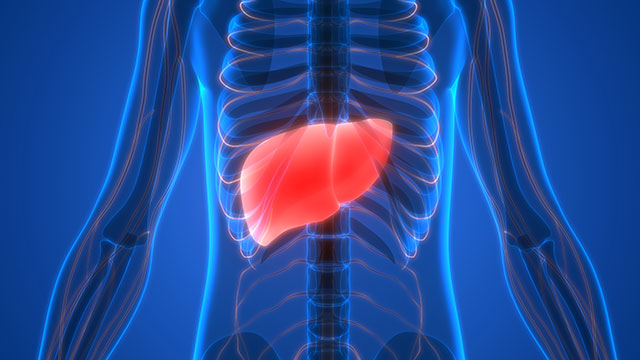
(NaturalNews) Global liver cancer cases are projected to nearly double from 870,000 in 2022 to 1.52 million by 2050, highlighting a critical and largely prevent…

(NaturalNews) Slovak PM Robert Fico claims Ukraine and its allies are provoking Russia because they are “tired and bored of peace,” criticizing Western policies…
(NaturalNews) Ultraprocessed foods (UPFs) make up half of the average U.S. diet and cause people to unknowingly consume 500 extra calories daily, leading to wei…
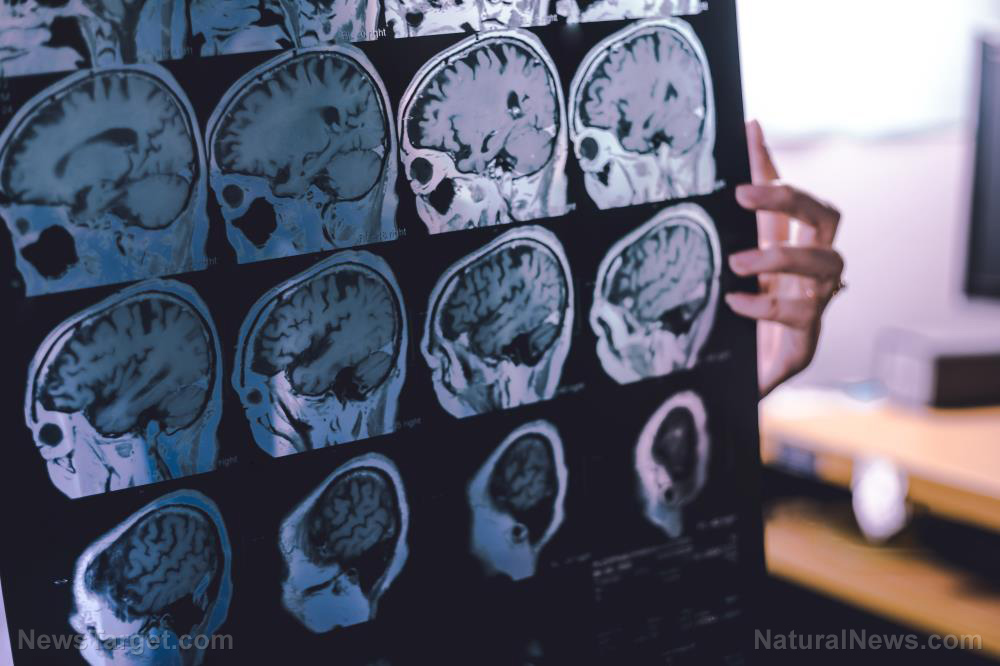
(NaturalNews) Imagine stepping into your golden years with clarity, vitality, and a sharp mindâdespite what your genes might suggest. Dementia, once viewed as an …

(NaturalNews) Modern science confirms traditional heat therapies like saunas and hot baths trigger cardiovascular and immune responses similar to mild exercise….

(NaturalNews) Lidocaine, a widely used anesthetic, has seen poisoning deaths nearly triple in a decade, now accounting for 82% of local anesthetic fatalities….

(NaturalNews) Iran plans to replace GPS with Chinaâs BeiDou due to suspected U.S.-Israel GPS disruptions targeting its military and leaders. Critical secto…
Actor Ebon Moss-Bachrach could not help himself when answering a fan question at a recent press junket.
The cast of yet another movie rendition of “The Fantastic Four” sat down for an interview with IMDB, where he was asked a series of fan questions ranging from silly to thought-provoking.
While fans are likely familiar with wildly progressive public comments from star Pedro Pascal, who plays Mister Fantastic, Moss-Bachrach, who plays The Thing, may have surprised fans with the way he chose to answer one of their questions.
‘There’s a handful of fascists that I would just throw into outer space.’
The cast were prompted with the question: “If you could borrow your character’s powers for one day, what’s the first thing you would do?”
First, Pascal said that he would love to borrow the Invisible Woman’s powers so that he could go swimming and not have sharks attack him. Joseph Quinn, who plays the Human Torch, said he would go on holiday and cook his co-stars a barbecued meal “with my own fire.”
Moss-Bachrach, meanwhile, did not hesitate to give a political answer when it was his turn to respond.
“I would — there’s a handful of fascists that I would just throw into outer space. That’s what I would do.”
Pascal chuckled, then reached out his hand, and the two high-fived.
“F**king A,” Pascal immediately replied.
RELATED: All in the family: Hollywood golden boy Pedro Pascal’s loony leftist pedigree
Before “The Fantastic Four: First Steps,” Moss-Bachrach starred alongside Jon Bernthal in the obviously right-wing series “The Punisher,” so the actor’s remark may come as a surprise given he rarely makes public political comments. However, he was part of a group that called for a ceasefire between Palestine and Israel in 2024, specifically stating that it stands with Palestinians.
Pascal, on the other hand, has consistently gone above and beyond to include political messaging in public interviews, and he has also provided unprovoked public commentary on cultural issues.
For example, Pascal slammed President Donald Trump over his immigration policy while in Cannes, France, in May.
The Chilean actor also lashed out at author J.K. Rowling when she celebrated the U.K. Supreme Court’s decision that the definition of a woman should only include actual women.
Pascal called her celebration “awful disgusting s**t” indicative of “heinous loser behavior.”
RELATED: What Pedro Pascal’s stardom reveals about Hollywood — and its war on real men
Cast of ‘Fantastic Four’ July 24, 2025. Photo by Jeff Neira/American Broadcasting Companies, Inc. via Getty Images
Pascal, whose brother who began presenting himself as a woman at age 29 in 2021, comes from a family of devout communists who were forced to flee Chile in the 1970s after harboring the leader of the Revolutionary Left Movement, a Marxist-Leninist group.
His real name is José Pedro Balmaceda Pascal. The Balmaceda family is deeply rooted in Chilean political history, with about a dozen politicians in the family, including former Chilean President José Manuel Balmaceda (1886-1891).
Like Blaze News? Bypass the censors, sign up for our newsletters, and get stories like this direct to your inbox. Sign up here!
Thing, Fantastic 4, Marvel, Align, Fascists, Communists, Woke, Entertainment, Fantastic four
A Democratic Rhode Island state representative appeared to threaten to confront federal immigration agents after he referred to them as the “Nazi Gestapo.”
State Rep. Enrique Sanchez made the comments on his social media account after Immigration and Customs Enforcement agents completed an operation in Providence on July 13.
‘It will be soon the day that I confront these Nazi ICE thugs in person for terrorizing our communities.’
“The Nazi Gestapo ICE thugs kidnapped another of our neighbor in Providence this morning,” Sanchez wrote on social media. “This time on Alverson st. The ICE thugs damaged a couple cars that belonged to residents as well. They think they are above the law. I strongly condemn this act of terror and will be demanding answers and seeking action tomorrow. I am tired of this s**t. Providence doesn’t want ICE thugs in our city.”
However, the “neighbor” that ICE was supposedly terrorizing was an admitted member of the violent MS-13 gang, according to ICE sources who spoke to Fox News. They also said that the cars were damaged because the gang member attempted to flee and struck several ICE vehicles.
When confronted by WJAR-TV about the man’s alleged criminal past, Sanchez said that he was willing to admit his mistake about that case but continued to defend his comparison to Nazi Germany.
On Wednesday, Sanchez doubled down on this rhetoric against ICE.
“It will be soon the day that I confront these Nazi ICE thugs in person for terrorizing our communities. It will be a day of reckoning and no going back,” he wrote in a second post.
“I hope the people of Providence and Rhode Island have our back. They will try to end our work and put down our struggle,” he added.
Blaze News reached out to Sanchez for clarification about his comments, and he did not respond via email but posted a response on social media.
“Clarify what comments?” he posted, with laughing emojis. “Also, can this administration condemn the actions and violence that ICE thugs impose on individuals seeking a better life?”
Like Blaze News? Bypass the censors, sign up for our newsletters, and get stories like this direct to your inbox. Sign up here!
Rhode island rep. enrique sanchez, Enrique sanchez threat, Dems vs ice, Ice compared to gestapo, Politics
A married NYPD police officer and three civilians were shot and killed by a gunman who stormed the NFL headquarters in NYC early Monday evening, before he turned the gun on himself.
Video footage captured Las Vegas resident Shane Tamura carrying a rifle on the NYC street. The footage also happened to capture the color of his skin, which revealed that he was likely black. Now, Tamura is confirmed to be black, but Democrats and the mainstream media had initially been having a really hard time admitting it.
“If you are one of like five people who are still watching CNN, I mean, it’s getting to be very dangerous out there, the type of information they are giving you in real time as these sort of tragic events are happening,” BlazeTV host Sara Gonzales comments.
On a CNN segment covering the attack, their chief law enforcement and intelligence analyst, John Miller, claimed that the attacker was “possibly white.”
“This guy actually had a really impressive law enforcement career. In the early 2000s, he was deputy assistant director of national intelligence for analysis. He led the team that produced the president’s daily intelligence briefing,” Gonzales explains.
“2003 to 2005, he was the LAPD bureau chief for counterterrorism and criminal intelligence. 2013 to 2022, he was the NYPD deputy commissioner of intelligence and counterterrorism,” she says, “So, this guy admittedly boasts like a very impressive record on paper and went out and was like, ‘So, here’s what we know: He has a mustache, he is armed, he is possibly white.’”
“And after he said that, he went on to explain with absolutely no self-awareness whatsoever why it’s so important for law enforcement to have the correct description with suspects,” she adds.
Miller went on to explain that the photo of the suspect had been distributed to all NYPD officers and that this is important so that if the suspect was hiding among civilians, they’d be better able to find him.
“Well, thank God. … You would want to make sure that you don’t let anyone who is ‘possibly white’ leave the scene because they, too, could be a suspect, and you can never be too careful,” Gonzales says.
Miller wasn’t alone in his wildly wrong assessment, as CNN anchor Erin Burnett also called the shooter “possibly white.”
Gonzales is shocked that so many Democrats came to the same conclusion.
“That, in fact, does not look at all ‘possibly white,’” she says, looking at the initial photo of the killer.
“I mean,” she adds, “he could be ‘possibly white’ if you weren’t looking at his skin color, or his mustache, or the texture of his hair.”
To enjoy more of Sara’s no-holds-barred take to news and culture, subscribe to BlazeTV — the largest multi-platform network of voices who love America, defend the Constitution, and live the American dream.
Camera phone, Free, Video, Video phone, Upload, Sharing, Youtube.com, Sara gonzales unfiltered, Sara gonzales, The blaze, Blazetv, Blaze news, Blaze podcasts, Blaze podcast network, Blaze media, Blaze online, Blaze originals, Nyc shooter, Nyc nfl shooting, Nyc blackstone shooting, Possibly white, Cnn anchors, John miller, Erin burnett
Failed presidential candidate Kamala Harris has resurfaced from the shadows to announce that she has written a new book likely to hit the bargain bins very soon after release.
Harris’ “107 Days” is the story about the events between her elevation to the top of the Democratic presidential ticket and her historical failure at the hands of President Donald Trump.
‘You lost because you have the gravitas of a distracted toddler.’
“What the world saw on the campaign trail was only part of the story,” she wrote on social media. “My new book is a behind-the-scenes look at my experience leading the shortest presidential campaign in modern history.”
Not surprisingly, the jokesters on social media had a lot to say about Harris authoring a book about her role in the Democratic Party losing on Election Day.
“I can’t wait to hear the inside story about how you burned $1.5B in 107 days and accomplished absolutely nothing,” author Jim Hanson replied.
“How are you not embarrassed to have run one of the worst presidential campaigns in history? You literally had rappers twerking at your events,” responded Savanah Hernandez of Turning Point USA.
“I can’t wait for you to read your book, either. Bet it’ll be full of surprises!” replied Roxanne Hoge, the chair of the GOP for Los Angeles County.
“We don’t need to read your book to know why you lost to Trump,” another response reads. “You lost because you have the gravitas of a distracted toddler, the charisma of an actuary and the laugh of a madwoman. (And the ability of a DEI hire.) You are a ridiculous person.”
“I love when people like Kamala Harris grandstand on pretending to write a book (that her staffers wrote) about her sad experience of wasting $1.5 billion dollars (most ever) on the shortest presidential campaign ever,” another critic said. “And they’re seriously considering running her again in 2028.”
Harris just recently announced that she is not running for governor of California, which boosted suspicion that she may run again for president in 2028.
The Harris book will be released on September 23 before beginning a likely brief trip to the 99-cent bin.
Like Blaze News? Bypass the censors, sign up for our newsletters, and get stories like this direct to your inbox. Sign up here!
Kamala harris book, Responses to kamala, Kamala vs social media, 2024 election, Politics
The document revealed a deep conspiracy between politicians, non-government organizations and the intelligence community to usurp free and fair elections.
‘You cannot stay in business if you’re not giving pretty close to the CDC [vaccine] schedule,’ says former pediatrician.
Former Democrat House Speaker’s reaction comes in response to GOP PELOSI Act banning congressional stock trading.
Every day, roughly 30 Americans die awaiting organ transplants, while an estimated 28,000 available organs annually are never transplanted due to inefficiencies in the donor system. Compounding this tragedy, some reports indicate that grieving families, expecting to save lives, can be misled into donating their loved ones’ tissues for use in research and cosmetic surgeries — a multibillion-dollar industry.
With over 100,000 patients on the organ waiting list, the nation’s 55 organ procurement organizations are tasked with contacting the families of the dying and recently deceased to inquire about lifesaving organ donations. Yet behind this noble mission lies a shadowy process that raises serious questions about transparency and consent practices.
‘Families believe their consent allows for transplant of their loved [ones’] organs, which, if the death has occurred, cannot happen.’
Issues within the organ procurement and transplantation industry have persisted for decades, according to studies and reports.
In 2001, the federal Department of Health and Human Services Office of Inspector General advised tissue banks to provide families with written material detailing how donated tissue may be used.
However, several surveys from 2010 to 2015 consistently found that most families were unaware that tissue could be sold for profit or used for cosmetic purposes. One study found that out of 1,000 families surveyed, only three received written materials explaining the donation process. Another study reported that 70% of families polled stated they would object to their loved ones’ tissues going to for-profit businesses, yet fewer than 20% knew this could happen.
Dr. Laura Siminoff, a professor at Temple University’s College of Public Health, has conducted several studies over the years concerning organ and tissue donation, including the two previously mentioned.
Siminoff told Blaze News, “The complexity emerges from the highly emotional and stressful environment in which these conversations take place. Patients are in an intensive care setting, which is often noisy and confusing. OPO staff who are charged with having complex donation discussions with families need to bring a high level of emotional sensitivity and the ability to convey complicated information so that families can make informed and authentic decisions.”
A Department of Health and Human Services report noted that “families are asked to give their consent at a point in time when they are extremely vulnerable,” adding that they are often asked to provide consent over the phone instead of in person.
Francine Orr/Los Angeles Times via Getty Images
When an individual passes away in a health care institution that receives Medicare or Medicaid funding, the care facility is required to notify its local OPO.
Each OPO acts as a federal contractor responsible for procuring organs in its designated area. OPOs operate effectively as monopolies because they do not face competition from other organizations.
Even if the patient was not registered as an organ donor, the patient’s next of kin can still authorize donation on his or her behalf.
In addition to organs, the OPO may also pursue consent for tissue donation, which includes cornea, skin, bone, veins, connective tissue, and other materials.
If approved, the OPO will harvest the tissue and give it to a tissue bank. Tissue banks, which can be for-profit businesses, may then sell that material back to biomedical researchers, pharmaceutical companies, research centers, and even plastic surgeons.
While organ transplants are nearly always lifesaving, tissue transplants can be used for elective life-enhancing, research, or cosmetic purposes.
While OPOs are intended to facilitate lifesaving organ donations, their practices have raised ethical concerns about transparency and profiteering.
The Indiana Funeral Directors Association provided a document to Congress to inform lawmakers about oversight and regulation gaps within OPO processes.
The association, which is openly supportive of organ and tissue donations, explained that “families are often caught off guard or surprised by the barrage of phone calls from donor networks just moments after their loved ones die seeking approval for tissue donation.”
‘It’s misleading. OPOs hide the realities of what is really happening — and who is making money — off the backs of vulnerable donor patients.’
Most disturbingly, the IFDA stated that families are misled to believe the donation will save lives because OPOs neglect to distinguish between organ transplants and tissue donations.
“In order for organs to be transplanted, the person dying must be kept alive. Tissue donation is done after the death occurs,” the IFDA explained. “Families believe their consent allows for transplant of their loved [ones’] organs, which, if the death has occurred, cannot happen.”
The Association of Organ Procurement Organizations confirmed that for organ donation viability, a donor “patient must die in a hospital while on a ventilator” and meet other “specific medical criteria.”
Andy Clayton, the executive director of the IFDA, told Blaze News that “families have articulated to us they don’t understand it.”
“They’re thinking [they donated] organs, when in fact, all it was was tissue. And that tissue was harvested, then sold,” Clayton said. “The ones that have talked to me, and I share with them the facts, are very alarmed that that wasn’t disclosed to them.”
“We are not against donation,” Clayton continued. “We would certainly applaud a family that decides to donate organs or tissue, as long as they’re informed and they know the truth.”
Further, the IFDA’s one-pager to lawmakers emphasized the “lucrative business” of tissue procurement, highlighting the 2023 revenue for several locally operating OPOs, with one exceeding $100 million.
Some assessments indicate that tissue can be priced up to $500 per gram. With an estimated 2.5 million tissue grafts performed each year, the global tissue banking market is projected to reach $5.17 billion by 2030.
The AOPO argued that there are circumstances in which tissue donation can be lifesaving or life-transforming, including “skin grafts to treat burn victims, heart valves to save infants born with heart defects, and musculoskeletal tissues to restore mobility for injured patients.”
“A single tissue donor has the potential to heal or improve the lives of up to 75 people,” the association noted.
“Dealing with the passing of a loved one is tragic,” Rep. Marlin Stutzman (R-Ind.) told Blaze News. “While organ procurement organizations are well-intentioned, fielding calls from them about relinquishing parts of your loved one’s body within days after death can feel off-putting or even predatory. Despite the difficulty in subject matter, more transparency is needed for families going through a loss when it comes to tissues and organs being removed from a loved one at the end of life.”
RELATED: Organ donation overhaul promises to save lives
Francine Orr/Los Angeles Times via Getty Images
HHS’ Food and Drug Administration, Centers for Medicare and Medicaid Services, and Health Resources and Services Administration provide broad oversight of OPOs, including the safety and quality of tissue used in transplantation, as well as the performance standards to qualify for taxpayer reimbursement funding.
While federal law, § 486.342, requires OPOs to have a written protocol to inform donor families about the donation process, including a list of the organs and tissues that will be recovered and the “most likely uses” for those donations, some argue that families still lack informed consent.
‘It’s just a corrupt industry overseeing itself, which is to say, covering up patient harms and backroom deals.’
Greg Segal, the founder and CEO of Organize, told Blaze News that donor families are unaware of how often tissue donations are used for cosmetic testing by for-profit businesses or other purposes that are not explicitly disclosed to them.
“It’s misleading. OPOs hide the realities of what is really happening — and who is making money — off the backs of vulnerable donor patients,” he stated.
Organ transplant information must be reported to the Organ Procurement and Transplantation Network, which is operated under contract with HHS, and the United Network for Organ Sharing, a nonprofit organization, has historically managed this contract. Yet there is no similar mandatory universal tracking system for tissue, only a voluntary accreditation through the American Association of Tissue Banks.
Segal explained that the AATB has been allowed to act as a “quasi-regulator” for the tissue industry.
“It’s just a corrupt industry overseeing itself, which is to say, covering up patient harms and backroom deals,” he explained. “Why would the American Association of Tissue Banks, populated and funded by tissue banks and taxpayer-funded organ contractors, be doing real investigations into who is misleading families and then hold themselves accountable?”
Furthermore, UNOS provides OPOs with a framework that determines who on the donation list will be provided with the next available organ, based on need and other factors. Yet no similar framework exists for tissue operations, allowing OPOs to use their discretion to determine who receives donations.
“If I’m running an OPO and I’m recovering $25 million worth of tissue this year, and there is no transparency, there’s no accountability, and there’s no algorithmic framework for where I’m supposed to give it, I can decide where I want to give it. OPO executives basically just ask themselves, ‘Who’s going to offer me a really nice consulting deal? Which tissue bank is going to put me on the board and then pay me for my board service?'” Segal explained.
The lack of mandatory oversight has led to concerns about conflicts of interest within the tissue industry. For instance, some OPO executives sit on the boards of the AATB and the OPTN, as well as the boards of tissue processing companies.
Segal stated that some OPOs have “massive investments in the tissue banks.”
“Executives don’t have to disclose to the government or to the public if they have personal financial interests, whether that be equity or stock or so-called ‘consulting agreements,'” Segal continued. “There’s a lot of money that changes hands, which is why both the Senate Finance Committee and the Energy and Commerce Committee are investigating self-dealing.”
Even the AATB admits that while it follows “U.S. antitrust laws closely,” its role “focuses exclusively on quality and safety rather than business practices.”
“AATB works to promote the safety, quality, and availability of donated human tissue, not to oversee business operations or financial models,” the nonprofit told Blaze News.
Though it is a lucrative industry, the AOPO insisted that OPOs do not sell tissue. However, it noted that they can receive “reimbursements” for procuring tissues.
The AOPO told Blaze News, “It is important to understand that OPOs do not sell tissues. Instead, specialized organizations that prepare donated tissues into grafts for clinical use may reimburse OPOs for the recovery services provided, similar to how hospitals are reimbursed for providing care. These reimbursements support donation-related operations.”
When asked how OPOs profit from tissue harvesting, Segal explained, “OPOs harvest tissue from dead people — many of whom had no idea what they were really consenting to — and then the OPOs give that tissue to a processor, which, in return, gives them money. You can decide what you want to call it, but I’d say it’s a sale.”
The profitability of tissue sales has reportedly exacerbated issues within the lifesaving organ donation system, prompting some OPOs to run their own tissue bank businesses.
Some critics claim that the current system effectively incentivizes OPOs to prioritize staffing their tissue recovery operations over their organ transplant teams. A 2020 report from the Bridgespan Group found that “OPOs have greater financial incentives to focus more on tissue recovery compared to their incentives to recover lifesaving organs.”
To improve the metrics of organs procured per donor, some OPOs may opt not to obtain organs from single-organ donors. This decision further worsens the shortage of available organs, according to a 2020 letter from the House Subcommittee on Economic and Consumer Policy.
‘There’s never been any accountability for OPOs. More than 95% of Americans support organ donation; that actually polls higher than puppies and ice cream.’
In 2013, even the AOPO admitted that the “current system has created a disincentive for OPOs to pursue organ recovery when there may be a lower yield of organs transplanted per donor.”
The AOPO told the White House Office of Management and Budget, “If an OPO is in jeopardy of decertification … the OPO is incentivized (for fear of being decertified) to not pursue or even evaluate the potential for donation of these types of donors,” referring to “marginal organ donors that generally yield fewer organs (or no organs).”
“This practice results in fewer organs being transplanted and more lives lost,” the AOPO wrote at the time.
in 2019, HHS proposed a rule it believed would result in an additional 5,000 to 10,000 lifesaving transplants each year by pushing all OPOs to reach compliance with the minimum performance standards
During a September congressional hearing, Segal contended that there should be enough available organs — with the exception of kidneys — for every individual in need of a transplant but that inefficiencies in procurement have prevented this.
OPOs are not required to meet donation and transplantation target rates to remain on hospitals’ mandatory notification lists. Remaining on those lists also helps an OPO fuel its potential tissue procurement business, since it is already the hospital’s first point of contact for organ recovery.
RELATED: HHS surmounts obstacles set by Democrat-appointed judges, gives thousands of bureaucrats the boot
Francine Orr/Los Angeles Times via Getty Images
The House Energy and Commerce Subcommittee on Oversight and Investigations held a hearing in September in which several witnesses — Dr. Seth Karp, surgeon in chief of the Vanderbilt University Medical Center; Dr. Robert Cannon, associate professor of surgery and surgical director for liver transplant at the University of Alabama at Birmingham; Dr. Jesse Roach, senior vice president of government relations for the National Kidney Foundation; and Segal — testified that OPOs lack enforceable regulations.
Segal exposed “widespread abuse” allegations within the organ donation industry, which he argued have hindered the exposure of corruption and inefficiencies.
Segal stated, “There’s never been any accountability for OPOs. More than 95% of Americans support organ donation; that actually polls higher than puppies and ice cream. And yet the OPTN’s own research has found that OPOs only recover organs from one out of five potential donors. They are monopolies, and they’ve never had any enforceable regulations, and their performance has greatly suffered.”
Some of Segal’s concerns were far more troubling than donor family consent issues. Segal stated that he was aware of allegations of “harvesting of organs from patients who whistleblowers believe would otherwise have survived” and “unsafe patient care, including the hastening of death with fentanyl and the falsification of medical records.”
Cannon corroborated many of Segal’s assertions.
Cannon told lawmakers, “OPOs also lack sufficient oversight and accountability with regard to organ allocation, sometimes resulting in actions that are abusive and harmful to patients.”
“I have had an OPO administrator recommend I proceed with organ procurement in the face of concerns a donor may still be alive,” he continued. “I have seen a 21-year-old patient dying from liver failure have an ideal donor organ taken away from her by an OPO that was unwilling to provide one additional hour for a plane to be mobilized. Our complaint in this instance went unanswered. Unfortunately, stories such as these are not isolated instances.”
To fix the broken organ procurement and donation system, Cannon told lawmakers to “tear it down to the studs and rebuild it.”
‘At least 28 patients may not have been deceased at the time organ procurement was initiated — raising serious ethical and legal questions.’
The witnesses advocated for terminating the current cost-reimbursement structure of OPOs, which allow the organizations to be fully reimbursed for all expenses related to organ donations. The federal government largely moved away from this model within the health care system because it has been proven to produce poor outcomes and is vulnerable to potential abuses.
The Organ Donation and Transplantation Alliance’s website warns that cost-based reimbursement comes with a “financial risk” of “over-reporting as well as under-reporting organ acquisition costs claimed for Medicare reimbursement.”
“Prior Office of Inspector General (OIG) audits noted that transplant centers stated they lacked awareness and understanding of Medicare requirements or had inadvertently claimed non-allowable costs on the Medicare Cost Report,” the alliance noted.
Segal claimed that OPOs are not just combining organ and tissue donation when seeking consent from donor families, but they also label various expenses as “organ and tissue”-related items to receive CMS reimbursements, which should cover only organ operations. This allows OPOs to “subsidize all the costs related to tissue,” he said.
The AOPO, which represents 47 federally designated nonprofit OPOs, insisted that organ and tissue donation are “entirely separate clinical processes” that “never compete with each other,” adding that “accusations that they do contradict yearly government data, which demonstrates a 14-year increase in organ donation and transplantation rates. OPOs strive to save lives by recovering every viable organ, irrespective of financial models.”
The House Committee on Energy and Commerce held another hearing on July 22 regarding the organ procurement and transplant system, during which lawmakers questioned witnesses from HRSA, UNOS, and the OPTN. Lawmakers also heard from Barry Massa, the chief executive officer of the Network of Hope, an OPO.
The hearing mainly focused on a disturbing incident that took place in 2021 involving a Kentucky man named Anthony Thomas Hoover. He was set to undergo surgery for organ retrieval when the surgeon discovered that he was still alive, despite having been previously declared dead. The OPO assigned to the case, which later merged with the Network of Hope, faced accusations of attempting to proceed with the organ procurement process despite clear signs of life.
The surgery to remove Hoover’s organs was terminated, and he survived. NPR reported in 2024 that he was still alive three years after the incident.
Massa maintained that the correct process was followed in the Hoover case, though he admitted that there were “a lot of unique things that could have been done better.”
Trump’s HHS has signaled that it plans to hold OPOs responsible. On July 21, the agency stated HHS Secretary Robert F. Kennedy, Jr. has threatened to shut down “deficient” OPOs.
HHS reported that HRSA examined 351 cases in which organ donation was authorized but not performed, noting that nearly 30% “showed concerning features, including 73 patients with neurological signs incompatible with organ donation.”
“At least 28 patients may not have been deceased at the time organ procurement was initiated — raising serious ethical and legal questions,” HHS wrote.
HRSA also instructed the OPTN to reopen the Hoover case, which was closed without any action under the former Biden administration.
‘I’m kind of thinking, “Well, we need to publicize it, but we kind of don’t want to publicize it because then we’d hurt the number of people that are actually going to donate their organs.” So this is a problem.’
During July’s committee hearing, Raymond Lynch with HRSA, who noted no OPO has ever previously lost its certification, confirmed that the agency has additional open investigations into the industry.
Blaze News asked HHS how it will ensure that OPOs provide clear information to donor families.
An HHS spokesperson stated that the department “is committed to ensuring that organ procurement organizations provide grieving families with clear, compassionate information while prioritizing lifesaving organ donation.”
“Through HRSA-led reforms, including standardized communication training, outcome-based performance metrics, transparent public reporting, and stronger oversight, HHS is holding OPOs accountable to uphold the highest standards of ethics, transparency, and patient-centered care,” HHS stated. “Through the Organ Transplantation Affinity Group, HHS supports standardized communication training — emphasizing trauma-informed care, cultural sensitivity, and family experience — backed by national experts.”
The agency also stated that recent CMS and HRSA reforms will evaluate OPOs “based on actual organ donation and transplant rates (not organizational activity or self-reported data), with benchmarks and underperformance triggering reevaluation or decertification.”
RELATED: Trump’s DOJ unleashes largest health care fraud bust ever, protecting taxpayer dollars
Photo by Kayla Bartkowski/Getty Images
When asked for comment, the AOPO and AATB expressed concerns that reporting these allegations, which they insisted were false, could have life-and-death consequences by deterring people from donating organs.
The AOPO claimed that the IFDA’s letter to Congress contained “demonstrably false statements” and dismissed the cited studies as “over a decade old.” The AATB similarly claimed that the studies were “not only outdated but also inaccurate.”
“Today, thousands of people are removing themselves from U.S. organ donation registries, and that is directly tied to the spread of myths and accusations like the ones in the IFDA letter. This has a human cost: Less donors means that more patients who need lifesaving transplants must continue to wait and possibly die in the interim,” the AOPO told Blaze News.
Both the AOPO and the AATB insisted that donor families are encouraged to ask questions about the donation process and place limits on their loved ones’ donations.
During September’s congressional hearing, then-Rep. Debbie Lesko (R-Ariz.) summed it up this way after listening to the witnesses’ troubling concerns about the organ and tissue procurement industry: “I’m kind of thinking, ‘Well, we need to publicize it, but we kind of don’t want to publicize it because then we’d hurt the number of people that are actually going to donate their organs.’ So this is a problem.”
Critics of the existing organ donation framework make it clear that they endorse donation and are not aiming to discourage Americans from registering as donors. However, they argue that the fear among the industry that negative publicity might shrink the donor pool does not excuse organizations from necessary oversight. Instead, heightened scrutiny and transparency could optimize procurement processes, ultimately fostering greater efficiency and saving more lives by breaking free from the inefficiencies of the current monopolistic, self-policing structure.
Like Blaze News? Bypass the censors, sign up for our newsletters, and get stories like this direct to your inbox. Sign up here!
News, Organ procurement organizations, Opos, Organ donation, Organs, Organ procurement, Tissue donations, Organ and tissue donations, Department of health and human services, Hhs, Robert f kennedy jr, Rfk jr, Medicare, Medicaid, Indiana funeral directors association, Congress, Association of organ procurement organizations, Aopo, Marlin stutzman, Food and drug administration, Fda, Centers for medicare and medicaid services, Cms, Health resources and services administration, Hrsa, Greg segal, Organize, Andy clayton, United network for organ sharing, American association of tissue banks, Unos, Aatb, Bridgespan group, Seth karp, Robert cannon, Jesse roach, Organ donation and transplantation alliance, Office of inspector general, House committee on energy and commerce, House committee, Barry massa, Network of hope, Anthony thomas hoover, Politics
While the Senate worked through several key resolutions to block arms sales to Israel, Democrat Sen. Elissa Slotkin of Michigan apparently skipped out to tape her appearance on Stephen Colbert’s show.
The Senate voted on two resolutions to block additional military aid to Israel Thursday night, both of which failed. Although Democrats had unprecedented support to bar Israel from receiving additional aid, Slotkin spent her afternoon alongside a talk show host.
‘I’m not going to cut off a blanket next sale on a defensive weapon that comes through.’
Photo by Scott Kowalchyk/CBS via Getty Images
The resolutions, which were spearheaded by independent Sen. Bernie Sanders of Vermont, both failed in the Senate in 70-27 and 72-24 votes. Both votes were dead on arrival with or without Slotkin’s support, but this is not the first time the freshman senator has been scrutinized for her position on Israel.
In an interview on “Breaking Points” on Tuesday, co-hosts Saagar Enjeti and Krystal Ball grilled Slotkin, who said she was open to blocking arms sales for “offensive” weapons to Israel.
“There is a difference between a weapon to protect a country from incoming missiles versus other types,” Slotkin said. “Offensive and defensive weapons are different.”
Enjeti pressed Slotkin, asking if she would be in favor of banning “offensive” weapons to Israel, which she seemed open to.
RELATED: Kamala Harris reveals the next step for her political comeback: ‘Devout public servant’
“That certainly, to me, would be a place to look,” Slotkin said. “But I’m not going to cut off a blanket next sale on a defensive weapon that comes through.”
Like Blaze News? Bypass the censors, sign up for our newsletters, and get stories like this direct to your inbox. Sign up here!
Elissa slotkin, Stephen colbert, Israel, Breaking points, Saagar enjeti, Krystal ball, Israel aid, Cia, The late show with stephen colbert, Senate, Senate democrats, Senate republicans, Bernie sanders, Politics
Allegations that COVID-19 was the result of a lab leak were strongly and swiftly denied by the former Biden administration and some prominent health officials, despite dissenting opinions within the medical field, including from Jay Bhattacharya, who now serves as President Donald Trump’s National Institutes of Health director.
‘I’m convinced that research agenda led to this pandemic through a lab leak in China, in Wuhan.’
A page on the NIH’s website, last reviewed by the agency on March 16, 2022, has not yet been updated by the new administration, still claiming that the leak theory is “misleading and false.”
The NIH webpage reads:
Unfortunately, because the origins of the SARS-CoV-2 have not yet been identified, misleading and false allegations have been made about NIAID-supported research on naturally occurring bat coronaviruses. Specifically, these allegations have targeted research conducted at the Wuhan Institute of Virology in Wuhan, China, funded through a subaward from NIAID grantee EcoHealth Alliance. The naturally occurring bat coronaviruses studied through this subaward were significantly, genetically different from SARS-CoV-2 and, therefore, could not have caused the COVID-19 pandemic.
Bhattacharya was one of the voices amid the COVID-era insisting that there was a cover-up of the virus’ origins.
In a May interview with Politico, Bhattacharya stated that he believes the U.S. should do more to reveal the origins of the virus, but noted that China has not been cooperating with those investigations.
“There’s enough evidence that I’ve seen from the outside that suggests that there was at the very least a cover-up of dangerous experiments that were done in China with — by the way — the help of the U.S. and also Germany and the U.K.,” Bhattacharya told the news outlet.
RELATED: NIH staffers storm out as Bhattacharya delivers reality bombshell about COVID origin
Photo by STR/AFP via Getty Images
He referred to the experiments as “a very, very dangerous kind of utopian research agenda.”
“I’m convinced that research agenda led to this pandemic through a lab leak in China, in Wuhan,” Bhattacharya continued. “But that was a global effort.”
RELATED: How a ‘lovers’ spat’ nearly sparked a second pandemic in Biden-era high-security virus lab
Photo by ALLISON BAILEY/Middle East Images/AFP via Getty Images
He called it “absolutely striking” that then-Director of the National Institute of Allergy and Infectious Diseases Anthony Fauci and other leaders would invest so much effort into suppressing the theory and “denigrating scientists who very legitimately raised this possibility.”
Blaze News contacted the NIH to determine whether it is aware of the webpage dismissing lab leak claims and if it plans to update its website. The agency did not immediately respond to a request for comment.
Like Blaze News? Bypass the censors, sign up for our newsletters, and get stories like this direct to your inbox. Sign up here!
News, Covid-19, Covid, Coronavirus, Lab leak, Lab leak theory, Jay bhattacharya, Donald trump, Trump, Trump administration, Biden, Joe biden, Biden administration, Biden admin, Trump admin, China, Wuhan china, Wuhan, National institutes of health, Nih, National institute of allergy and infectious diseases, Niaid, Anthony fauci, Politics
The Republican Party has enjoyed massive gains among young Americans over the span of about 21 months, according to recent polling conducted by Pew Research.
According to surveys of registered voters in August 2023, men and women in categories ranging from 18 years old all the way up to 49 years old favored Democrats.
In fact, the only two categories that leaned Republican at that time were 50-to-64-year-old males (57%) and over-65-year-old males (59%).
As of June 2025, however, young American adults have swung in the other direction en masse.
‘Interesting to see the “you get more conservative as you get older” trope dying.’
The 2025 polling by Pew Research of U.S. adults, which cited the 2023 data directly below it, showed massive gains for the Republican Party, specifically among younger demographics.
For example, males ages 18-29 went from 62% in favor of Democrats to 52% in favor of Republicans.
For women of that same age group, seven more percentage points went to the Republicans, whose support rose from 30% in 2023 to 37% in 2025.
Democrats did widen a gap when it comes to women ages 30-49, though, but not through their own doing. Support for Republicans in that category dropped from 42% in 2023 to 39% in 2025.
RELATED: Democrat offers bizarre spin on imploding support for his party — and he’s getting amazing backlash
An interesting figure included in the polling is the percentage of respondents who said they had no political leanings or refused to answer.
For the youngest demographic, that number was 13%. The other demographics averaged between 7% and 8%.
Looking at party affiliation categorized by the decade in which Americans were born, those born between 1940 and 1980 have remained in a near 50-50 split of support for Democrats and Republicans from 2021 to 2025.
For those born after 1980, the changes have been significant.
In 2021, while 57% of those born in the 1980s identified as Democrats, that number is now 47% in 2025.
For those born in the 1990s, 59% identified as Democrat in 2021, but that number is now down to 46%.
RELATED: No country for angry young men
Photo by Probal Rashid/LightRocket via Getty Images
In response to the data, users on X shared interesting perspectives, like, “Interesting to see the ‘you get more conservative as you get older’ trope dying.”
Another account posted, “18-29 year old men are more right wing than male Boomers[.] Did NOT expect to see that.”
A tech and financial account with over 40,000 followers added that he felt it was “sad” that a younger generation is being relied on to “clean things up” after the Boomer generation “completely destroyed their birthright.”
Popular conservative commentator John Doyle offered a unique explanation as to why young Americans have shifted away from Democratic politics.
Doyle told Blaze News, “We just wanted to play our video games. This is for raping the Joker and killing Hulk Hogan.”
Like Blaze News? Bypass the censors, sign up for our newsletters, and get stories like this direct to your inbox. Sign up here!
News, Polling, Democrats, Republicans, Young voters, 2020, 2024, 2025, Politics

“This case could completely wipe out the ATF’s ability to create law and subvert congress, which would be a massive win for the Second Amendment.” [more…]

Elon Musk chimed in to question ‘how common’ this type of illegal activity is during American elections Bridgeport, Connecticut, the largest city in the state, [more…]

Chinese woman evades warrant for vehicular manslaughter after horror wreck caught on camera A Chinese woman fled back to her homeland after allegedly killing her [more…]

Downdetector has reported that several US banks are facing service disruptions on Friday morning. Update (1315ET): Fed Reserve Says ACH Error Impacting Customers Bitcoin literally [more…]

Footage shows male senior swiftly strike ball in attempt to make goal, inadvertently hitting female player directly in mouth. A female high school lacrosse player [more…]

Use promo code “ALEX” when you sign up on Mug Club to get one month FREE of the network’s exclusive broadcasts, investigative reports, comedy specials [more…]

Suspect in black Lamborghini attempts rob man at Erewhon Market before shooting him in street, police say A man was shot during an attempted robbery [more…]

Watch & share this massive LIVE broadcast to get the latest on America’s border invasion, Mideast war, the NWO depopulation agenda & SO MUCH MORE! [more…]