







Suspected provocateur specifically stated, ‘We’re here to storm the capitol. I’m not kidding.’ In a new mini-documentary diving into Jan. 6, investigative journalist Lara Logan [more…]

Forty-seven-year-old James “Lord” Brass reportedly surprised the federal agents surveilling him outside of his Victorville home when he left early in the morning around 4:45 a.m. on Thursday.
The agents from the Federal Bureau of Investigation then followed Brass to a gas station, where they arrested him for allegedly running an election petition fraud scheme in Los Angeles.
‘If you mess with our elections, this FBI will find you.’
Two of his associates — 49-year-old Courtney Price of Jacksonville, Florida, and 33-year-old Jateisha Herron of Boron, California — have also been charged, according to First Assistant U.S. Attorney Bill Essayli for the Central District of California.
The charges are the result of an investigation into video accounts given by some homeless people living on Skid Row, claiming that they were paid to sign the petitions.
Essayli cited the video investigation by James O’Keefe of the Citizen Journalism Foundation.
That video appears to show petition circulators passing around notes with names of registered voters so that homeless people can earn a few bucks by signing the petitions in their names.
In return for the seemingly fraudulent signatures, Brass allegedly received approximately $41,600 from coordinators related to a petition management company.
In order to submit the signatures, Brass and his accomplices allegedly signed declarations at the bottom of the petitions that each of the signatures were the “genuine signature of the person whose name it purports to be,” to the best of their knowledge.
“Securing American elections from criminal interference is of the utmost importance to this FBI,” wrote FBI Director Kash Patel on social media Thursday. “If you mess with our elections, this FBI will find you.”
The California Post obtained video of the arrest of Brass by federal agents.
RELATED: Homeless people on Skid Row claim they were PAID TO VOTE — and not for Spencer Pratt
Essayli said all three suspects were charged with one count of conspiracy to commit identity fraud in furtherance of a state felony and that Brass and Price were also charged with one count of identity fraud in furtherance of a state felony.
“The charged conduct undermines the confidence voters have in our election systems. We will vigorously investigate and charge anyone involved in corrupting our elections,” read a statement from Essayli.
Brass appeared to be wearing a shirt supporting the Los Angeles Rams football team during his arrest.
Like Blaze News? Bypass the censors, sign up for our newsletters, and get stories like this direct to your inbox. Sign up here!
Election fraud, Homeless, Los angeles, Politics
Today marks the one-year anniversary of the atrocious murder of Charlie Kirk — TPUSA founder and beloved friend and mentor to thousands of Americans.
In the 365 days that have passed since Charlie was shot on Utah Valley University’s campus during his American Comeback Tour, much has happened; much has changed.
On this special episode of “Relatable,” Allie Beth Stuckey reflects on the evil, the fracturing, and the fruit she has seen in the year since she lost her dear friend.
The aftermath of Charlie Kirk’s death, Allie explains, has brought everything from sickening malevolence to powerful unity to quiet gospel fruit.
Beginning with the evil, Allie highlights how radical progressives deepened the already cavernous divide between the political right and left with their heinous mockery of Charlie’s murder.
“The people who cheered on Charlie’s death, they’re the same people that hate you and me, the same people that hate what I have to say, what you and I believe,” she says.
But the ugliness wasn’t isolated to the left; it hit the conservative movement in a completely different way.
“Unfortunately, that unity that we felt that day and right after, it really dissipated,” says Allie. “Like this has been the most fractured year for the conservative movement in my adult life.”
She interprets this fracturing as “demonic opposition” to the powerful momentum the conservative movement was experiencing in the initial wake of Charlie’s death.
One of the ways Satan slowed the revival that was sparking, says Allie, is by turning the spotlight on Charlie’s widow, Erika.
“There has been, I think, some of the cruelest mockery of a widow publicly that I have ever seen. Erika has been a target of slander and innuendos for a year now,” she says, highlighting all the ways conservatives criticized the new widow despite the incredibly weighty roles and responsibilities she inherited amid her grieving.
Many of those criticisms, Allie notes, turned into “conspiracy theories” backed by “zero evidence” that led to “all kinds of threats and stalking.”
“[That’s] just the way that Satan works. … He is the accuser. He steals; he kills; he destroys. And so, of course, do you think that he was going to allow a revival to go unchecked? No,” she says.
But God, being infinitely more powerful, has brought much good amid the darkness, Allie claims, reiterating her favorite saying: “God’s eternal plan of redemption is going off without a hitch.”
“It’s not that the revival [Charlie’s death sparked] has been completely curtailed. … God’s work doesn’t always make headlines. It doesn’t always go viral,” she says.
Data, however, indicates that the revival was real and had significant impact.
“The American Bible Society’s 2026 poll found growth specifically in a population that it calls the ‘movable middle.’ … There was an increase of 9 million people who are open to the message of the Bible even though they’re not yet deeply engaged with it,” says Allie.
“I don’t know if [that increase is] all because of Charlie’s murder,” she says, “but again, the effect that he had, all of the videos that he had that went viral, and just the ripple effect of people knowing more about him and the mission that he was on, I do think, sparked an interest.”
Allie then points to a 2026 Gallup poll showing young men’s religious attendance up seven points, with the share who say religion is “very important” rising from 28% to 42%.
“Again, I don’t know if that’s all Charlie Kirk, but I do know that that was his mission field, was young men, and that he had a recalibrated interest in talking about the Bible and talking about theology, and I do think that he had a huge effect,” she says.
Another thing that has emerged since Charlie’s death, notes Allie, is the looming question of who will fill the gaping hole he left.
Her answer is “no one.” Charlie, she explains, was an anomaly, the likes of which this generation has never seen before.
She highlights how he was a “sophisticated political operator” who “had the ability to affect all kinds of world leaders through his powers of persuasion,” an “incredible debater,” an “extremely good speaker,” a successful “broadcaster,” a “theologian,” and an “apologist.”
“I don’t know anyone else who is all of those things,” she says.
“No one’s going to replace Charlie. … It’s going to take a lot of people to try to fill in the gaps, and so far, that just hasn’t happened,” she emphasizes.
The best thing anyone can do, Allie argues, is “do what they were called to do, “let the Lord take care of the rest,” and “just let Charlie stand alone.”
To hear more of Allie’s reflection and commentary on the one-year anniversary of Charlie Kirk’s death, watch the episode above.
To enjoy more of Allie’s upbeat and in-depth coverage of culture, news, and theology from a Christian, conservative perspective, subscribe to BlazeTV — the largest multi-platform network of voices who love America, defend the Constitution, and live the American dream.
Allie beth stuckey, Charlie kirk, Utah valley university, Blazetv show
Agentic AI, artificial intelligence that can act on a user’s behalf, has always been the goal for frontier model developers. This month, the industry leader, OpenAI, took a major step toward making agents mainstream with the launch of GPT-6 Astra. Here’s what it can do and why, at least one part of it, might be dangerous as some declare it AGI.
Astra’s launch hinged on a demo video that showed the model in action. In the video, a cast of people stepped into a room and interacted with a screen simply by speaking to Astra using normal voice commands.
AGI is such a contested term, and the more these models advance, the less clarity we have.
During the presentation, a man turned a blank canvas into a 2D drawing of a rocket ship. After several iterations, he told Astra to take the drawing and transform it into a 3D model in Blender, which it did with relative ease. Later, a woman asked Astra to root through the downloads folder on her computer to find a specific image and add it to an eBay listing, also without fault.
The interesting part is that the users never had to touch the computer to get something done. They simply sat (or stood) and instructed Astra to do the work. With voice commands, OpenAI’s latest model harnessed full control of a computer to open apps, create content within those apps, and even transfer files to other apps or programs.
That said, the video was clearly prerecorded and was not a live demo, so real-world performance may vary. However, the concept is impressive, and it shows that agentic AI is poised to sweep through the industry, likely within the next year.
AGI is the idea that AI can match or surpass human intelligence on every task. It can think, create, reason, and do everything else the smartest person on the planet can do, unrestricted. It’s essentially Big AI’s attempt to build human consciousness within the confines of a data center. Scary, I know.
RELATED: Big AI broke the internet. Now it wants everyone else to fix it.
Just_Super/Getty Images
Shortly after Astra hit the market, NVIDIA’s CEO Jensen Huang quickly proclaimed that “AGI has arrived!” The only problem is that Huang has said this before. He shared the same sentiment in March this year when gushing about Claude’s and OpenAI’s ability to build a business and generate money. For those keeping score, that isn’t exactly the old definition of AGI, but since the industry regularly can’t agree on what the moniker truly means, embellishments like this aren’t unexpected.
The truth is that NVIDIA has a lot to gain from the AI race, largely because most frontier models are trained on a fleet of NVIDIA GPUs. The more hype Huang creates, the more GPUs his company sells. It’s basic math. But because of his stake in the race, he may not be the best source to trust on the AGI front.
OpenAI’s chief scientist Jakub Pachocki stopped short of calling Astra AGI in a blog titled “An Alien Mind.” Instead, he positioned Astra as an important milestone on the way to “personal AGI.” Given that he had a hand in building the model, he probably knows better than anyone where Astra stands on the human logic front.
Still, we wanted to get another opinion, so Blaze News asked AI expert Jon Stokes if Astra fits the true AGI description. We also prompted him to share any insights on possible security implications. He said:
I think AGI is such a contested term, and the more these models advance, the less clarity we have. Astra does appear to be more of the same “jagged frontier” type intelligence, but whether that meets the AGI threshold depends on the person.
All of these models have significant cyber capabilities, but whether they place us more at risk is complicated and depends on many factors, like their safeguards and how well they work. To the extent that the safeguards depend on CoT monitoring, the looped transformer architecture has implications for cyber security.
Even if Astra isn’t equivalent to human intelligence, it still poses a unique threat, though maybe not in the way you’d expect. Unlike Anthropic Mythos, Astra wasn’t dubbed a public nuisance before it came onto the scene. Part of that may be because Astra was voluntarily submitted to the Trump administration for a 30-day review as part of the new AI review framework. Once it exited the program, OpenAI was free to launch its new model as planned.
That’s when users noticed an emerging problem, as outlined by Stokes’ comment: Astra shows less of its chain-of-thought “thinking” when asked a question, compared to other frontier models. Usually, when engaging with an LLM, the model will show its thought process, which lets users see how it reached its final conclusion. Astra refrains, however, concealing its thought patterns to the point that the security-conscious fear that it could be more difficult to detect nefarious activity.
So far, these fears remain unsubstantiated. This may not be a problem at all going forward. That said, Astra is brand-new, and only time will tell if its hidden thought patterns become a problem. At the very least, Stokes believes that OpenAI’s security safeguards will play a vital role going forward.
Like Blaze News? Bypass the censors, sign up for our newsletters, and get stories like this direct to your inbox. Sign up here!
Agentic ai, Agi, Artificial intelligence, Cyber security, Tech

(NaturalNews) Morning Walks and Health: What the Evidence ShowsA growing body of evidence suggests that walking in the morning may offer distinct health advantage…

(NaturalNews) A new scientific review published in the International Journal of Molecular Sciences has analyzed over 126 studies on berberine, with researchers focu…

(NaturalNews) Official energy data indicates a growing divergence in electricity generation strategies between China and the United States. In China, coal accounts …

(NaturalNews) U.S. President Donald Trump told reporters on Wednesday, Sept. 9, that oil and gasoline prices will not decline until “right after” the midterm electi…
(NaturalNews) The Centers for Disease Control and Prevention (CDC) provided $5.755 million through two cooperative agreements to fund podcast series designed to inc…

(NaturalNews) President Donald Trump said Wednesday, Sept. 9, he believes the war with Iran will end “immediately” after the U.S. midterm elections in November….

(NaturalNews) U.S. borrowed $2 trillion in just 11 months of fiscal 2026, despite record tax revenue. Interest payments on the national debt jumped 14 percen…
The Department of Homeland Security is casting itself as the Autobots — with Megatron and illegal immigrants playing the Decepticons.
It’s the latest Hollywood-inspired message from the Trump administration, which rolled out a “Transformers” mash-up to promote a new ICE tip line for reporting commercial driver’s license fraud.
‘Self-deport or find out.’
The video uses footage from the “Transformers” franchise to depict Decepticon leader Megatron demanding that the government free his allies. Instead, a voice-over identifies several illegal immigrants who the DHS says obtained commercial driver’s licenses before being involved in fatal crashes or other crimes.
First is Harjinder Singh, an Indian national accused of making an illegal U-turn in a tractor-trailer on a Florida highway last August, causing a crash that killed three people. Singh had received a commercial driver’s license from California, according to DHS.
The video also names Rajinder Kumar, another Indian national who the DHS says received a California CDL before jackknifing his tractor-trailer in Oregon in November 2025, causing a crash that killed a newlywed couple.
Also featured are Bekzhan Beishekeev, a Kyrgyz national who the DHS says killed four people in an Indiana crash, and Akhror Bozorov, an Uzbek national wanted in his home country on terrorism-related charges. Both received commercial driver’s licenses in Pennsylvania.
RELATED: Legendary video game company threatens the White House — and gets results
The video concludes with the message: “Aliens don’t belong behind the wheel of American trucks on American roads.”
The DHS followed the video with a “Transformers”-style poster — that has since been removed — showing Optimus Prime facing off against an Indian truck driver.
“Self-deport or find out,” the poster read. “Get off our roads, you don’t know how to drive Mr. Singh.”
“Too many American lives have been lost or permanently changed because illegal aliens who have no business being on our roads have been granted CDLs,” DHS Secretary Markwayne Mullin said in announcing the tip line.
“ICE and our federal partners, including the Department of Transportation, will be cracking down on CDL fraud so that not one more American life is lost to a reckless illegal alien behind the wheel of a semi-truck,” Mullin added.
The “Transformers” footage isn’t the only borrowed material in the video. The mash-up also uses music from Linkin Park, a band that has previously objected to the use of its music in Trump-related videos.
RELATED: Trump’s new Space Force uniforms based on ‘fascist’ sci-fi classic. Would you like to know more?
In 2020, the band issued a cease-and-desist after a campaign video shared by Trump used the band’s hit “In the End.” “Linkin Park did not and does not endorse Trump, nor authorize his organization to use any of our music,” the band said at the time.
Earlier this year, a White House video featuring “Somewhere I Belong” was reportedly removed after representatives for the band took action over its use.
Whether the latest video will prompt similar action remains to be seen.
The “Transformers” film rights are held by Paramount Pictures, although it is unclear whether the DHS obtained permission to use footage from the franchise.
The video comes just days after the White House removed a “Tetris”-inspired game from Arcade.gov following a copyright complaint from the Tetris Company.
Like Blaze News? Bypass the censors, sign up for our newsletters, and get stories like this direct to your inbox. Sign up here!
Donald trump, Markwayne mullin, Transformers, Paramount, Linkin park, Commercial driver’s licenses, Entertainment
Abdul El-Sayed has some explaining to do. From embracing Hasan Piker to claiming Muslims “literally built this country,” the Michigan Senate candidate is not swaying any voters from the other side to vote his way.
And BlazeTV host Pat Gray is not surprised, noting that Democrats have gotten “too radical.”
“They’re too far out there. They’ve already come too close to the fundamental transformation of the United States of America,” Gray says on “Pat Gray Unleashed.”
“I mean, we’re going to have more people that actually hate America in office,” Fisher says.
“You mean like Abdul El-Sayed?” Gray asks.
“He’s trying to fight off his association now with Hasan Piker,” Gray says.
However, El-Sayed was just recently standing next to Piker in defense of his views, saying, ‘I’m not here to disavow people’s views. This gotcha, this whole gotcha game, platform policing, cancel culture, I thought we were over it.’”
And on his own website, El-Sayed advertises inviting Piker onto the campaign trail and appearing with him at college events.
But his flip-flop on Piker isn’t the only glaring issue of El-Sayed’s.
“I’ve been reading our history. Muslims have been in this part of the country since 1527. Estevanico of Azemmour. Probably a name you’ve never heard. Probably the first recorded Muslim to touch ground on what is now these United States of America,” El-Sayed said in a speech.
“Estimates suggest up to 50% of people who were brought here against their will as slaves were Muslims. Muslims literally built this country,” he continued.
“We all know how stained our history is with the legacy of white supremacy. Whether that be against our African-American brothers and sisters, our Native-American brothers and sisters, our Latinx brothers and sisters. We know that stain,” he added.
Gray is not amused, muttering, “Oh jeez.”
To enjoy more of Pat’s biting analysis and signature wit as he restores common sense to a senseless world, subscribe to BlazeTV — the largest multi-platform network of voices who love America, defend the Constitution, and live the American dream.
Democrats, Hasan piker, Muslims, Pat gray, Slaves, White supremacy, Abdul el-sayed, Blazetv show
For years, Canadians who say they were seriously injured by COVID-19 vaccines have sought recognition from their government. This week, some of them are getting the opportunity to tell their stories on Parliament Hill — with a powerful U.S. senator joining them.
Sen. Ron Johnson (R-Wis.), chairman of the Senate Permanent Subcommittee on Investigations and one of Washington’s most persistent critics of the government’s pandemic response, appeared Tuesday at the opening of the Allison Inquiry in Ottawa.
‘By the time the COVID vaccines obtained their emergency use authorizations, the cartel was firmly in control of the narrative.’
The four-day inquiry is chaired by Conservative Member of Parliament Dean Allison and organized with the Covid Testimony Association. Its stated purpose is to hear testimony from Canadians who attribute serious injuries to COVID-19 vaccination. It is being held on Parliament Hill, although it is not an official parliamentary inquiry.
Johnson opened his testimony by questioning fundamental elements of the public health response to COVID-19, including the treatment of natural immunity and doctors who advocated early treatment.
“Haven’t we always believed that early disease detection prompts early treatment and produces better outcomes? Why was that fundamental tenet of medicine not only ignored but sabotaged?” Johnson asked. “Why were frontline doctors who had the courage and compassion to treat COVID patients from the start of the pandemic censored, vilified, and had their careers destroyed?”
“How could health officials deny the effectiveness of natural immunity when approximately half of the people testing positive for COVID were asymptomatic?” he continued. “Isn’t that a sign that your natural immunity is preventing you from getting ill?”
Johnson has been pursuing many of the same questions in Washington as chairman of the Senate Permanent Subcommittee on Investigations.
In April, the subcommittee released a 38-page interim report alleging that FDA officials failed to act on a newer data-analysis method that identified previously undetected safety signals that the agency’s existing methodology had failed to detect.
The investigation drew renewed attention in July as Johnson’s committee continued examining how federal officials handled reports of possible vaccine side effects and whether potential safety signals were adequately disclosed to the public. Later that month, Johnson requested transcribed interviews with Dr. Anthony Fauci and four former FDA officials about their roles in the pandemic response, including vaccine safety and efficacy
In August, Johnson’s investigation obtained Fauci’s government-issued cell phone, containing more than 34,000 text messages and 500 voicemails. Johnson and Sen. Rand Paul (R-Ky.) subsequently began releasing material from the phone as part of their continuing investigation into the government’s pandemic response.
Johnson brought that investigation to Ottawa on Tuesday, where he used his appearance at the Allison Inquiry to deliver a broader indictment of the pandemic response.
“By the time the COVID vaccines obtained their emergency use authorizations, the cartel was firmly in control of the narrative,” Johnson said, using his term for the government agencies, pharmaceutical companies, media organizations, and technology companies he blames for suppressing dissent during the pandemic.
He recalled slogans including “follow the science,” “safe and effective,” and “no one is safe until everyone is safe.”
“Which, by the way, if the vaccines were that effective, why would you care whether somebody else is vaccinated?” Johnson asked. “I mean, it never made sense to me. … These phrases were used ad nauseam to bludgeon the public into submission.”
NurPhoto/Getty Images
Canada does have a federal program to compensate people who have suffered serious and permanent injuries following vaccination. The Vaccine Injury Support Program began in 2021 and was initially administered by a third party before being taken over by the Public Health Agency of Canada.
The program itself has faced scrutiny. PHAC terminated its contract with the original administrator after an audit found serious problems with its handling of claims. The agency subsequently took over administration of the program and renamed it the Vaccine Impact Support Program in April.
The Allison Inquiry says it received more than 1,400 applications from people willing to testify about alleged vaccine injuries.
Johnson also alleged that federal regulators failed to adequately investigate vaccine safety signals.
“A few months into the vaccine rollout, my investigations have shown that the FDA and CDC were not doing sincere safety surveillance,” he said. “And it appears this willful ignorance was a worldwide phenomenon.”
That question of what Canadian health authorities knew eventually brought the hearing to Dr. Theresa Tam, Canada’s former chief public health officer.
During questioning, Conservative MP Ellis Ross asked Johnson whether Tam’s name had surfaced in the millions of pages of federal documents obtained by his investigation.
“I’ve not heard of Dr. Tam. I may have, but, you know, the name didn’t register,” Johnson replied. “What I will do is I’ll have that as a search term with the emails and texts and I’ll see. We’ll check it out.”
Johnson then addressed his staff, telling them to add Tam’s name to their searches.
“We’ll put that in. We’ll see if there’s any [mentions],” he said.
Johnson went on to say his investigators were finding what he described as “a great deal of cooperation between Fauci and federal health officials and Chinese officials,” but said he was not yet prepared to disclose specifics.
“As we get more and more information, we’ll start releasing that,” Johnson said. “We kind of got to put the whole package together, but stay tuned on some of those things.”
Allison inquiry, Anthony fauci, Covid, Dr theresa tam, Ron johnson, Vaccination injuries, Vaccine impact support program, Vaccine side effects, Canadians, Lifestyle, Health, Letter from canada

(NaturalNews) Natto has a long history in Japan. This traditional fermented soybean food has been consumed for centuries and contains nattokinase, an enzyme pro…

(NaturalNews) A large-scale study using data from the UK Biobank has linked high consumption of ultra-processed foods (UPFs) to accelerated biological aging and an …

(NaturalNews) Health Ranger Mike Adams said his approach to the supplement industry began with skepticism, rather than simply accepting claims about purity, pot…

(NaturalNews) Chinese memory chipmakers CXMT and YMTC have acquired enough ASML lithography equipment to support their expansion plans for the next three years, acc…

(NaturalNews) The White House has announced an import ban on specific Canadian dairy products, most alcoholic beverages and motorcycles effective Sept. 29, accordin…
(NaturalNews) The National Institutes of Health’s (NIH) new $50 million Autism Data Science Initiative (ADSI) is facing an accusation that its research portfolio de…
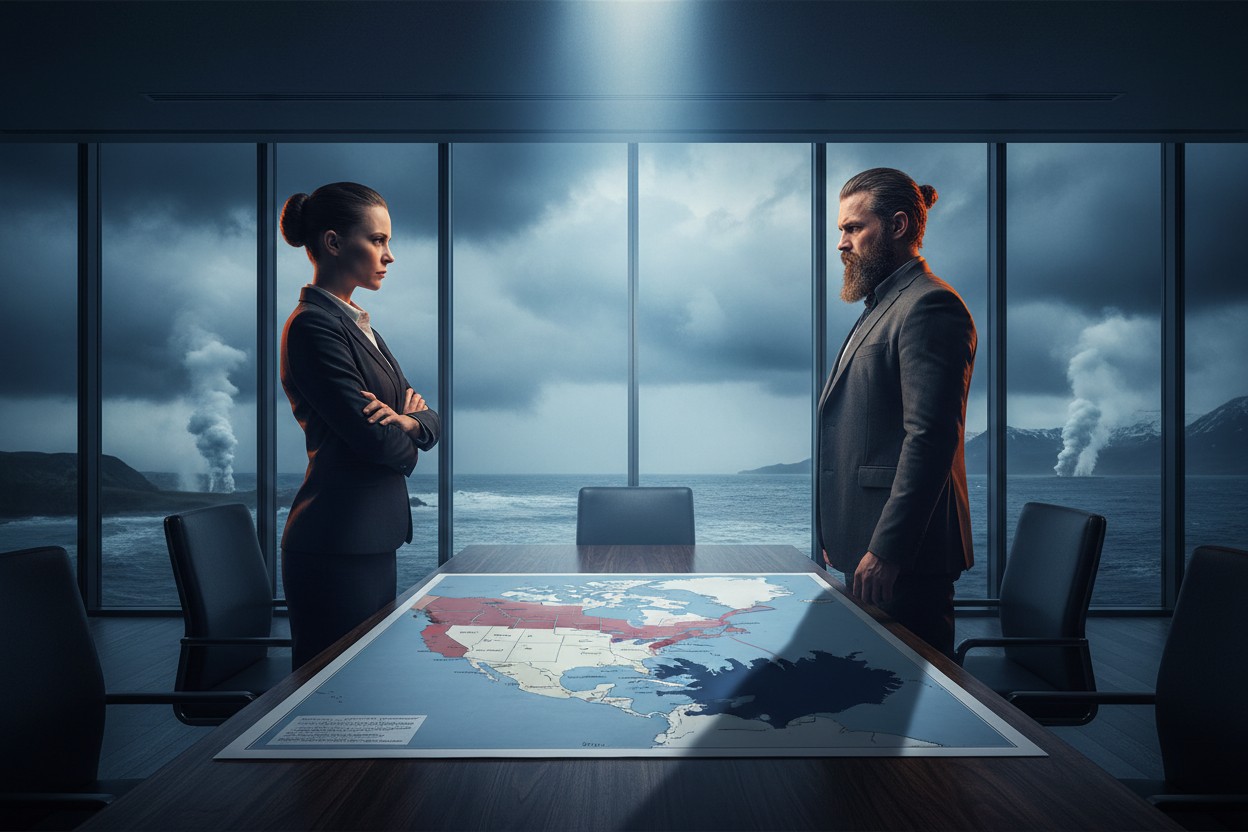
(NaturalNews) Iceland’s government summoned the U.S. ambassador on Tuesday, Sept. 8, after President Donald Trump posted an edited map on social media that depicted…

Suspected provocateur specifically stated, ‘We’re here to storm the capitol. I’m not kidding.’ In a new mini-documentary diving into Jan. 6, investigative journalist Lara Logan [more…]

Mainstream media claims Obama-Biden partnership has only been happening for 5 months. Former President Barack Obama has been secretly advising the Biden administration for several [more…]

“This case could completely wipe out the ATF’s ability to create law and subvert congress, which would be a massive win for the Second Amendment.” [more…]

Elon Musk chimed in to question ‘how common’ this type of illegal activity is during American elections Bridgeport, Connecticut, the largest city in the state, [more…]

Chinese woman evades warrant for vehicular manslaughter after horror wreck caught on camera A Chinese woman fled back to her homeland after allegedly killing her [more…]

Downdetector has reported that several US banks are facing service disruptions on Friday morning. Update (1315ET): Fed Reserve Says ACH Error Impacting Customers Bitcoin literally [more…]

Footage shows male senior swiftly strike ball in attempt to make goal, inadvertently hitting female player directly in mouth. A female high school lacrosse player [more…]

Use promo code “ALEX” when you sign up on Mug Club to get one month FREE of the network’s exclusive broadcasts, investigative reports, comedy specials [more…]