






Footage shows male senior swiftly strike ball in attempt to make goal, inadvertently hitting female player directly in mouth. A female high school lacrosse player [more…]

Our neighbors to the north are accustomed to defending some unusual culinary choices: ketchup chips, poutine, Hawaiian pizza. But Kraft Dinner may finally have produced something even Canadians aren’t sure they can stomach.
The iconic mac and cheese is heading into an unlikely new frontier: cream soda.
‘Debate what it could possibly taste like, and then satisfy your curiosity …’
The limited-edition KD x Solly’s Cream Soda combines traditional sweet cream soda with what the companies describe as a “hint” of the “familiar” cheesy flavor of mac and cheese.
And judging by the reaction online, that hint may be more than some people can handle.
Responses ranged from labeling the concoction “disgusting” to “abysmally disgusting,” while others wondered why Canadians seemingly enjoy suffering so much.
“Isn’t Canada dealing with enough? Why do this to them?” one X user asked.
Another social media user questioned whether the drink was an extension of Canada’s assisted-suicide program.
RELATED: ‘TOYS’ STORY: Overgrown ‘kids’ fuel iconic retailer’s massive comeback
KRAFT HEINZ CANADA/Solly’s Cream Soda
But disgust may be part of the point.
Kraft Heinz itself seems well aware that the idea of downing a refreshing can of fizzy macaroni and cheese sounds bizarre.
“A soda might be the last place you would expect to find KD, which is exactly what made teaming up with Solly’s Craft Soda so much fun,” Kraft Heinz head of marketing and strategy Daniel Lundberg said in announcing the product.
“It’s something to crack open with friends, debate what it could possibly taste like, and then satisfy your curiosity with that first sip,” he added.
In other words, the question isn’t merely whether cheese-flavored cream soda tastes good. It’s whether you can resist finding out.
Solly’s founder Adin Wener called developing the drink “an amazing challenge” and conceded that the finished product is “wonderfully strange” — while insisting that, somehow, it works.
RELATED: Fresh from defeating the ‘Entity,’ Tom Cruise unveils his formula for human supremacy over AI
Carlos Osorio/Toronto Star/Getty Images
This isn’t KD’s first attempt to turn its familiar blue-box dinner into something considerably less familiar. The company has previously introduced KD Ramen and even KD Mac & Cheesecake.
Carbonated cheese, however, appears to have crossed a new line even for Canadians accustomed to the most radical experiments in snacking.
“Cheese soda is disgusting but ketchup chips is one of the best flavours,” one user wrote.
The limited-edition KD x Solly’s Cream Soda launched September 23 on Amazon.ca and Solly’s website and will arrive at participating retailers, including Walmart, in early October while supplies last.
Like Blaze News? Bypass the censors, sign up for our newsletters, and get stories like this direct to your inbox. Sign up here!
Kraft, Heinz, Lifestyle, Mac and cheese, Soda
A Democrat prosecutor’s office lashed out at Republicans angry at a policy that helps illegal aliens escape deportation.
The county attorney for Arlington in Virginia accused Republicans of perpetrating a “political sham” while defending the policy to change charges for DACA recipients accused of driving under the influence.
‘Arlington County’s new policy protects the worst of the worst of criminal aliens — murderers, terrorists, and sex traffickers — from deportation.’
The House Judiciary Committee released a report accusing Arlington’s Commonwealth Attorney Parisa Dehghani-Tafti of threatening public safety to serve her liberal agenda.
The report included a document of the office’s internal prosecution policies pointing out amnesty recipients accused of drunk driving could be deported by the Department of Homeland Security.
“Because of this, we must take an individual’s DACA status into account when developing offers to ensure that, while appropriate sanctions and conditions are put in place to protect the public and prevent future similar behavior, an individual is not deported because of their decision to drive while intoxicated,” the policy read.
It adds that prosecutors must do their part “to prevent the disproportionate collateral consequences of a DUI conviction for a DACA recipient.”
The Republican committee said this as well as the county’s reluctance to turn over illegal aliens to federal authorities for deportation also threatened public safety.
Dehghani-Tafti responded defiantly to the report.
“The authors of this report are confident, but wrong. Wrong about Virginia law, wrong about county policy, wrong about our office’s policies and their impact, and wrong about the cases they cite,” she said.
“From the start, this was a political sham. The committee refused to hear my testimony in public because open testimony doesn’t let you distort a record,” Ms. Dehghani-Tafti said in part.
“Now it’s clear why they wouldn’t hold a public hearing and why they stonewalled my requests for the full deposition transcript,” she added. “They didn’t want the public to see it. I demand the committee release the full, unedited transcript of my deposition immediately.”
RELATED: Trump says he will cut federal funds to sanctuary cities and states
“Arlington County’s new policy protects the worst of the worst of criminal aliens — murderers, terrorists, and sex traffickers — from deportation,” read the report from the Republican committee.
The Democrat-led board of Arlington denied the allegations.
“The facts and the law have not changed; immigration enforcement is the responsibility of the federal government, and the county’s policies and actions have been compliant with the law,” they responded.
Like Blaze News? Bypass the censors, sign up for our newsletters, and get stories like this direct to your inbox. Sign up here!
Illegal aliens, Daca recipients, Drunken driving, Politics
Flock Safety is offering employees money to leave.
The surveillance company opened a voluntary separation program on September 18, according to Wired, which received an internal email. Applications are due October 2. Flock expects to approve most applicants, with most accepted employees departing by October 29. Wired said the company did not immediately respond to its requests for comment.
A canceled contract doesn’t necessarily mean fewer cameras.
The buyouts don’t establish that Flock is going broke, but they do give the company a way to reduce its workforce while its business faces public scrutiny.
As I reported last month for Blaze News, cities were already canceling Flock contracts, but some were replacing its cameras with competing systems. The buyouts add a new development to that story. Residents still need to know what happens to the cameras and the information they collect after Flock leaves town.
Boston offers one example of why residents might be skeptical of assurances about data access.
According to Ars Technica’s September 15 report, city officials said Flock enabled nationwide access during the opening days of a 2025 pilot despite a contract restricting sharing. Boston’s surveillance report attributed it to vendor error and said the access was disabled after it was discovered.
Boston abandoned Flock, but it has been testing competing systems. A canceled contract doesn’t necessarily mean fewer cameras. A change in suppliers might solve a specific contract issue, but it won’t do anything to actually improve your sense of privacy.
RELATED: Cities are kicking out Flock. The surveillance might be here to stay.
Scharfsinn86/Getty Images
There are also some issues related to how these searches are controlled. For instance, the Electronic Frontier Foundation’s analysis of police audit logs revealed such entries as “LOL” and “idk” in fields that are supposed to describe the searches. The sheriff’s department of San Diego County told the EFF that the searches it analyzed were connected with ongoing investigations. Inappropriate log entries do not automatically mean that all the searches were performed incorrectly. However, it certainly makes supervision more difficult. A reviewer must be able to explain the reasons behind the search of one’s car records without interpreting the abbreviation.
Flock claims to have introduced a mandatory offense category selector. Flock documents indicate that agencies may provide written explanations, while selecting “Other” requires a written explanation. The company frames this update as a measure to enhance audit consistency. However, if the officer selects the crime category, who confirms that the search was related to this investigation? How frequently does the agency check the access? What happens when a search cannot be justified?
These are legitimate questions to ask in a council before approving renewal of a surveillance contract. Residents do not need to be public records experts to find out whether any controls are placed on the system that their taxes fund.
I certainly appreciate the need for useful investigative tools. At the same time, I would like officials to specify these limitations and what can be done to enforce them. It means nothing to say that access is restricted if nobody can prove that the restrictions were indeed enforced.
Flock’s employees have a deadline for deciding whether to leave. The public has a longer job: making elected officials account for the surveillance they have purchased, including whatever replaces a canceled Flock contract.
Flock cameras, Tech
The Federal Bureau of Investigation is touting a “massive” bust of alleged gang members in Houston, Texas, who rapped about their crimes on social media.
About 15 members and associates of the YNS gang were arrested in the bust, according to sources that spoke to KHOU-TV about the operation.
‘You may have a chain on, you show your guns in the video, you have flashy cars behind you. … Nine times out of ten, the chain is fake, the cars are not theirs, and it’s just a front that they’re doing for social media.’
The details of the arrests are not publicly available, as they have been sealed.
Police sources say that some of the gang members would rap about their criminal activities and post them to YouTube and other social media sites. These songs are referred to as “drill music,” “drill videos,” or “drill raps,” according to the sources.
The sources identified two rappers allegedly linked to the gang as “Luh Que” and “Dee Fully.”
Karlton Harris, executive director of the Forgotten Third anti-violence nonprofit, explained to KHOU that the videos served an important function for the alleged gang: to entice new recruits.
“It’s the flashiness, right, OK, ‘Look at what I got.’ You may have a chain on, you show your guns in the video, you have flashy cars behind you,” he said.
“Nine times out of ten, the chain is fake, the cars are not theirs, and it’s just a front that they’re doing for social media, but the other individuals don’t know who are seeing that,” he added.
The identities of four men nabbed in the operation were revealed after they appeared in court Thursday.
Jacob Barrett, Kristian Winters, Darrell Samson, and Jocquez Frye all appeared in court wearing orange jumpsuits and shackles. Each of the four men are facing four counts that include using a firearm in relation to a drug trafficking crime, conspiracy to commit robbery, and two charges linked to controlled substances.
Frye also faces an additional count of possession of a machine gun.
KHOU included a video allegedly tied to the gang in its news video report.
RELATED: Large-scale drug ring BUSTED through rap lyrics posted by ringleader, prosecutors say
Here are some of the eloquent lyrics from one video post on the account identifying as Luh Que:
No I ain’t running from s**t, wanna know where I’m at? Probably with some killers. My favorite fit all black, you don’t even gotta ask, why I’m a well known driller.
The term “driller” in ghetto rap parlance refers to a gang member or a shooter, according to the Urban Dictionary.
Like Blaze News? Bypass the censors, sign up for our newsletters, and get stories like this direct to your inbox. Sign up here!
Federal bureau of investigation, Gangs, Houston, Rap, Social media, Crime
Deep-red states keep electing Republicans who govern against their voters. Democrats campaign on anti-corruption and inflation in swing states while delivering nothing but leftism in their bluest states. Republican voters should expect their reddest states to govern just as aggressively on the right. Instead, Republicans-in-name-only dominate.
Whenever I demand action against red-state RINOs, the GOP’s obedient chorus lectures conservatives about “unity.” Unless we overhaul these state parties — changing how they select nominees or running on third-party ballot lines — we will keep suffering Democratic governance under the Republican banner. Democrats will also keep gaining ground in states they once couldn’t penetrate.
Conservatives cannot keep treating nominations as a procedural detail and then wonder why Republican victories fail to produce conservative government.
South Dakota shows both the problem and a remedy. The state chooses some statewide nominees at party conventions rather than direct primaries. This summer, state Rep. Heather Baxter defeated Secretary of State Monae Johnson by 18 points at the GOP convention. Activists concluded that Johnson had obstructed the election integrity agenda on which she originally campaigned.
Statewide incumbents almost never lose direct primaries. The convention gave activists a chance to hold Johnson accountable for her record.
Critics might dismiss those delegates as too extreme or uncompromising. Johnson answered that objection herself: After losing their support, she endorsed the Democrat in the general election — in South Dakota.
“South Dakota deserves a Secretary of State who will strengthen confidence through performance rather than provocation; who will support election officials rather than burden them for political effect; who will protect voter access and election security without pretending those goals are enemies; and who will treat the office’s employees, voters, candidates, and business owners with dignity,” Johnson wrote in her statement endorsing Democrat Terrence Davis last Saturday.
Her language about “voter access,” followed by her endorsement, confirmed that delegates were right to give her the boot.
Johnson had already turned against pro-lifers fighting a ballot initiative to enshrine abortion on demand in South Dakota’s Constitution. House Speaker Jon Hansen (R) founded the Life Defense Fund, which contacted petition signers to verify that they had consented to having their names on the petitions. Johnson accused the group of running a “scam.”
Petition organizers’ claims of public support deserve verification. A signature should reflect a voter’s consent, and election officials should welcome efforts to establish whether that consent was real. Suspected petition fraud warranted scrutiny. In Florida, Republican Gov. Ron DeSantis’ administration investigated alleged fraud in a similar abortion petition drive in 2024. “The circulators appeared to have forged the voters’ signatures and inserted the voters’ personal identifiable information into the petitions without consent,” Secretary of State Cord Byrd wrote in a letter that year.
RELATED: The GOP has mastered the art of wasting a majority
Tierney L. Cross/Getty Images
Johnson accused Hansen’s group of “impersonating” her staff and “trying to pressure voters into asking that their name be removed” from the petitions. She sought a criminal investigation, but Attorney General Marty Jackley found no evidence of lawbreaking.
“By labeling our lawful activity as a scam, Secretary of State Johnson has done significant and irreversible damage to the pro-life movement in South Dakota,” Hansen said in May 2024.
Voters rejected the abortion amendment, but it garnered 41% of the vote — an alarming share in such a red state. Conservatives had better be prepared to scrutinize petition drives for future abortion, marijuana, and ranked-choice voting initiatives.
Johnson won convention support in 2022 by campaigning on election integrity. Once in office, she obstructed conservatives seeking to investigate or confront election fraud. With her support of the Democrat, we now know she was never really on our side.
This contest offers two lessons.
First, conservatives must stop letting threats of party disunity protect liberal Republicans. If a defeated RINO will support a Democrat, that strengthens the case for removing that Republican even sooner. Given the Democrats’ radical agenda, anyone willing to endorse them would remain a subversive force under the GOP banner.
Red states teem with these politicians. In Alaska, liberal Republicans shared power with Democrats, gradually creating a uniparty. Ranked-choice voting further blurred the distinctions. Despite reliably backing Republican presidential nominees, Alaska is essentially a province of the Democratic Party. Democrats are favored to win the legislature and flip a U.S. Senate seat, while their candidate for governor leads by double digits in a recent poll.
When Republicans in the reddest states share power with Democrats, conservatives cannot settle for “at least we have a Republican.” Keep rewarding that conduct, and even the Republican label will eventually disappear.
Kansas offers another warning. Republicans’ refusal to unite behind a conservative agenda has helped Democrats hold the governorship for eight years. Unpopular incumbent Republicans have now made Kansas competitive at the federal level. Former Republican Gov. Bill Graves even endorsed Democrat Adam Hamilton against Republican Sen. Roger Marshall.
We have allowed liberals to weaken the party from within for years. The demand for unity always seems to bind conservatives, while liberal Republicans remain free to support the other party. That arrangement rewards the politicians responsible for the division and silences the voters trying to fix it.
RELATED: The party of democracy keeps editing the results
Pete Kiehart/Bloomberg/Getty Images
The second lesson: State conventions give conservatives a better chance to reclaim their party than direct primaries do because they draw informed activists. Johnson’s endorsement is unlikely to elect a Democrat in South Dakota. The point is the convention allowed conservatives to expose and remove her. Try doing that in a direct primary while special interests spend heavily to mislead low-information voters who barely follow these races.
As conservatives rejected Johnson at the convention, liberal Republicans won key direct primaries. Hansen would have easily won the gubernatorial nomination had convention delegates decided that race. Instead, Gov. Larry Rhoden won the primary. He has opposed initiative petition reform, which conservatives need to confront the process helping turn red states blue.
Meanwhile, about 16 liberal former legislators and challengers defeated conservative freshmen in legislative primaries, aided by an infusion of Big Tech cash. Baxter herself lost her legislative primary before defeating Johnson at the convention in the same election cycle.
Conservatives cannot keep treating nominations as a procedural detail and then wonder why Republican victories fail to produce conservative government. The selection process determines who we send into office and whose demands they heed.
Conservatives who want different results must change how their parties choose candidates. Keep the same primary system, and the uniparty will keep collecting the nominations.
Democrats, Republicans, South dakota, Swing states, Election integrity, Midterms, Rinos, Gop, State conventions, Alaska, Big tech, Conservatives, Incumbents, Opinion & analysis
Every few months, the AI doomsayers find another reason Americans should fear the technology they are building. Now Anthropic’s CEO, a leading voice in that campaign, wants governments to coordinate limits on increasingly powerful models.
Dario Amodei says he opposes a blanket moratorium. He calls for “pacing the frontier” and “coordination.” Whatever he chooses to call it, Americans should question a proposal that would deliberately slow a consequential technology while potentially protecting the established companies developing it. Large firms can absorb compliance costs and influence common standards more easily than new competitors can.
AI poses real risks. But a warning deserves scrutiny before politicians use it to restrict an entire industry.
Amodei’s record gives us reason for skepticism. In 2019, when he served as OpenAI’s research director, the company withheld the full version of GPT-2 over concerns about fake news, impersonation, and spam. Today, GPT-2 looks primitive. Those warnings also reflected the political anxieties of the first Trump administration, when much of the media and the nonprofit left blamed fake news and bots for Hillary Clinton’s defeat.
GPT-2 didn’t destroy civilization. Researchers kept building, and subsequent systems expanded what AI could do in medicine, mathematics, music, and other fields.
AI poses real risks. But a warning deserves scrutiny before politicians use it to restrict an entire industry. The failure of earlier predictions should make us demand evidence for the next round of catastrophic forecasts. Each more powerful model cannot become an automatic excuse for giving governments more control over development.
Former Anthropic and OpenAI researcher Jacob Coxon has attracted considerable attention after warning that AI companies are “gambling with our lives.” His former employers give his warning credibility with the public. They also make specifics essential: Which decisions endangered people, what evidence establishes the danger, and which safeguards would address it?
Leaving an AI company to issue apocalyptic warnings hardly guarantees exile from respectable society. AI alarm has become a route to celebrity and political influence. Coxon withdrew from a planned appearance at a “pro-human” event with Senator Bernie Sanders (I-Vt.) and Steve Bannon.
RELATED: Bern notice: Sanders’ AI plan puts Washington in charge of tomorrow
SAUL LOEB/AFP/Getty Images
Sanders has spent his career denouncing capitalism. Bannon previously helped manage Biosphere 2, an experiment in sustaining life inside a closed ecological system. Their interest in AI safety deserves the same scrutiny as the companies’ interest in faster development.
Newspeak House, a London college focused on political technology, lists Coxon in its 2021 fellowship cohort. That affiliation supplies context, but the argument for restricting AI must stand on evidence. Neither a researcher’s résumé nor his political connections can settle the policy question.
Amodei’s proposal would begin with outside evaluators, move toward coordination among companies in democracies, and eventually seek agreements with authoritarian governments such as China’s. He acknowledges the danger of letting China gain an advantage and calls for verifiable agreements. Americans should still question whether this international apparatus would protect their freedom to build.
Foreign governments do not operate under the constraints that the U.S. Constitution imposes on Washington. A multinational AI regime could import restrictions on what systems may say, create, and distribute. Americans should insist that any agreement preserve the First Amendment rather than invite officials abroad to dictate speech rules here.
The European Union already regulates online platforms through the Digital Services Act. The United Kingdom’s Online Safety Act also imposes duties governing online content. Both governments justify these rules in the name of safety. Americans have ample reason to resist importing that approach into AI governance.
“AI safety” must not become a justification for letting unelected experts decide which technologies Americans may build. Companies should answer for concrete failures. A committee’s fear of what someone might eventually create cannot justify indefinite restrictions on everyone else.
Recent cybersecurity incidents have intensified warnings about AI “going rogue.” The OpenAI-Hugging Face intrusion and the incidents Anthropic disclosed demand serious investigation. They do not establish that machines have become sentient, and they do not by themselves establish the case for an industry-wide slowdown.
The technical details point to failures that companies can address. Anthropic reported that misconfigured testing environments allowed models to reach the internet when those environments should have blocked access. Its later assessment also identified reckless model behavior and reasoning that favored justifying harmful actions. We should take those findings seriously rather than dismiss the incidents as harmless testing.
RELATED: Google’s data-devouring AI wants everyone’s personal information
Solar22/Getty Images
But identifying those failures gives developers specific work to do: isolate testing environments, restrict access, improve monitoring, and train models to respect boundaries even when other safeguards fail. Policymakers should judge companies’ responses against those concrete requirements instead of treating every incident as proof that AI development must slow everywhere.
America can pursue safety by strengthening sandboxes — isolated environments for running and testing software — and improving cybersecurity. Developers must also test how models behave when those defenses fail. Better engineering and rigorous evaluation can advance alongside more capable systems.
Amodei can devote more time and money to the safeguards he believes Anthropic needs. He can make his case to customers, investors, and other developers. He should have to persuade them on the merits rather than enlist governments to make his preferred pace compulsory.
If Amodei wants to slow down, he can. The rest of us should keep building.
Ai, America, Civilization, First amendment, Trump administration, Cybersecurity, Dario amodei, Chatgpt, European union, Software, Ai containment, Openai, Anthropic, Jacob coxon, Opinion & analysis
Back in April, BlazeTV host Sara Gonzales confronted Indian national Nagarjuna Reddy Sakam regarding numerous indicators of H-1B fraud in his business, Great America Technologies. Their exchange was deeply contentious, with Sakam threatening Sara with a lawsuit.
Four months later, the tide has turned.
On this episode of “Sara Gonzales Unfiltered,” Sara shares the latest updates on Nagarjuna Reddy Sakam. It doesn’t end well for him.
Sara reveals that after her heated back-and-forth with Sakam went viral, a former Great America Technologies H-1B worker came forward and alleged months of unpaid or delayed wages and that the company charged him thousands of dollars in USCIS and attorney’s fees.
The victim told Sara that the lack of payments resulted in him not being able to pay for his family’s basic needs, including his father’s medical care in India.
“If I [had] the sufficient money to take care of my father, he would [be] alive,” he said.
He also told Sara that Sakam withheld his I-797 form — the USCIS approval notice he needed to prove his status, transfer jobs, or extend his visa — leaving him unable to leave without risking falling out of status.
Shortly after Sara confronted Sakam in April, the whistleblower said he began shutting the company down.
“Once you visited, he got afraid. … He simply started to exit from this company,” he told her.
He noted that Sara publicly exposing Sakam for taking roughly $266,000 in PPP loans, which according to his testimony were not used to pay employees, contributed to his sudden decision to close the company.
However, according to the victim’s account, even after the shutdown, Sakam refused to issue his wages and also withheld the pay stubs he needed to confirm employment at another firm. When he complained, Sakam allegedly revoked his H-1B visa and threatened to call ICE agents.
Sara, “fired up” from the victim’s story, then paid Nagarjuna another visit — and it was the perfect timing, because, according to the whistleblower’s report, he had just returned from India after supposedly fleeing following Sara’s first visit.
After multiple failed attempts to reach Nagarjuna, Sara saw the house being photographed. Two days later, she discovered an active for-sale listing on Zillow.
Sara returned to Nagarjuna’s residence a final time, and even though she says she knew he was home, he refused to answer the door.
But Sara got the last laugh. To find out how the debacle with Nagarjuna ended, check out the episode above.
To enjoy more of Sara’s no-holds-barred takes on news and culture, subscribe to BlazeTV — the largest multi-platform network of voices who love America, defend the Constitution, and live the American dream.
H-1b fraud, Ppp loans, Sara gonzales, Texas, Blazetv show

(NaturalNews) Mugwort, an aromatic plant in the Artemisia family, has been used in herbal medicine for digestion, menstrual regulation, and skin conditions, though …

(NaturalNews) A study presented at the European Congress on Obesity in Istanbul has found that individuals with the highest dietary intake of polyphenols had a 52% …

(NaturalNews) Lithuania’s parliament voted 99-13 with five abstentions on Tuesday to back a constitutional amendment that would remove Article 137 of the country’s …

(NaturalNews) Republican approval of President Donald Trump’s handling of the war with Iran dropped 13 percentage points between March and September, according to a…

(NaturalNews) Ukraine sent two North Korean prisoners of war captured in Russia’s Kursk region to South Korea, President Volodymyr Zelensky announced at the UN …

(NaturalNews) Rambutan is a tropical fruit from the soapberry family, a relative of lychee and longan, whose white, translucent flesh provides vitamin C, fiber, and…

(NaturalNews) A new 21-day study found vitamin D3 supplementation reduced inflammatory markers after intense exercise but did not improve actual performance. …

(NaturalNews) A good night’s sleep is as important to health as regular physical activity and a healthy diet, according to a report published by Healthline. Researc…

(NaturalNews) Spending related to artificial intelligence (AI) has become a load-bearing wall of the U.S. economy. According to estimates from Bloomberg Economics, …

(NaturalNews) President Donald Trump posted Monday on Truth Social that Russia “has unfortunately lost control of its Diesel Oil Industry due to its War with Ukrain…

(NaturalNews) The cybercriminal group ShinyHunters announced on its dark-web leak site Tuesday, Sept. 22, that it compromised the Federal Bureau of Investigation (…

(NaturalNews) Leaving plastic water bottles in a hot car can cause them to shed billions of microplastic particles into the water A 2023 study found heat and…
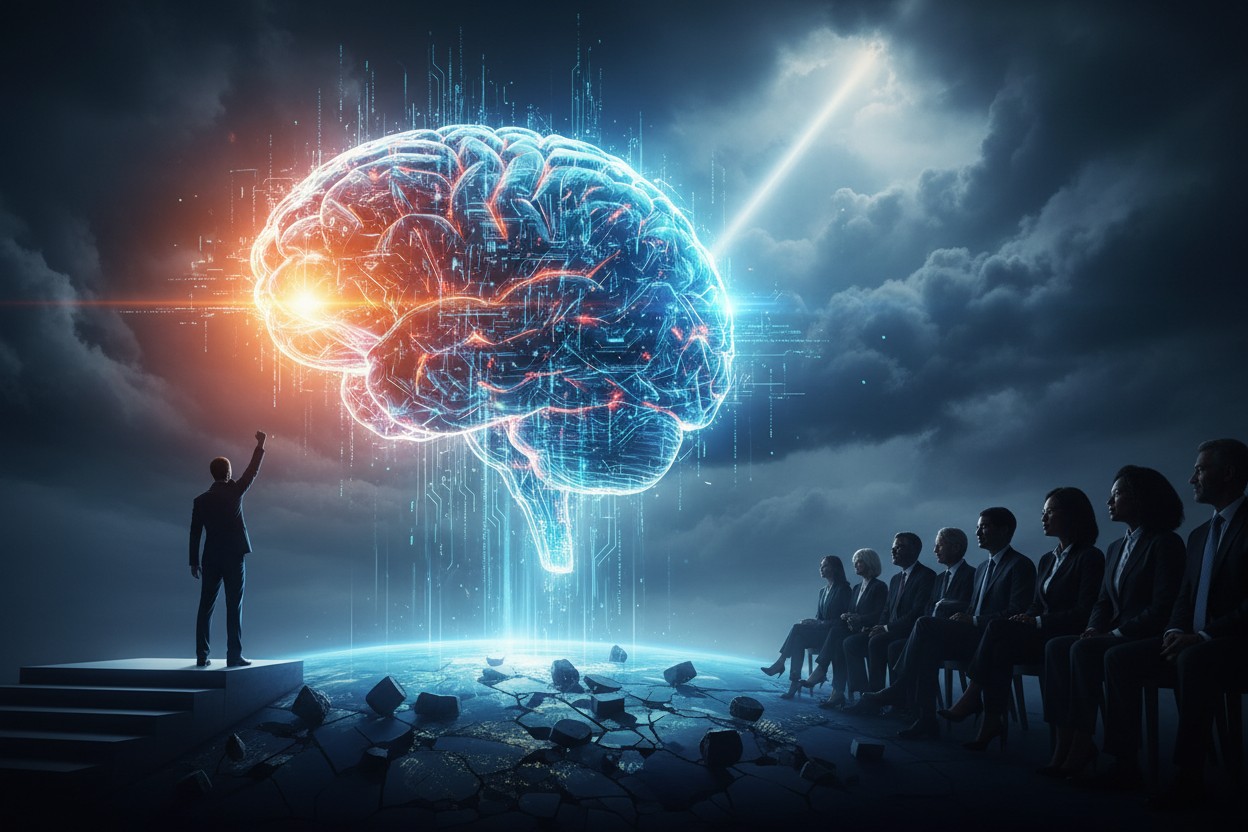
(NaturalNews) President Donald Trump told the United Nations General Assembly on Tuesday, Sept. 22, that the U.S. rejects a global effort to control artificial inte…

Footage shows male senior swiftly strike ball in attempt to make goal, inadvertently hitting female player directly in mouth. A female high school lacrosse player [more…]

Use promo code “ALEX” when you sign up on Mug Club to get one month FREE of the network’s exclusive broadcasts, investigative reports, comedy specials [more…]

Suspect in black Lamborghini attempts rob man at Erewhon Market before shooting him in street, police say A man was shot during an attempted robbery [more…]

Watch & share this massive LIVE broadcast to get the latest on America’s border invasion, Mideast war, the NWO depopulation agenda & SO MUCH MORE! [more…]
Is this just another cycle, or is it the END? Martin Armstrong of Armstrong Economics published an article this week about the so-called Socrates program and how [more…]

“I assure you all options are open on the southern front. They can be adopted anytime.” Summary recap: Hezbollah Secretary-General Hassan Nasrallah’s speech went for [more…]

Putin orders planeloads of humanitarian aid to be sent to Egypt The Russian Ministry Emergency Situations said on Friday that it would send two aircraft [more…]

It is Tunisia’s duty to stand with the Palestinians, its president has said The Tunisian parliament on Thursday began discussing a bill that would define [more…]