





Footage shows male senior swiftly strike ball in attempt to make goal, inadvertently hitting female player directly in mouth. A female high school lacrosse player [more…]

New York City voters last week elected socialist Zohran Mamdani as their next mayor. It wasn’t an isolated win. Across the country, progressives dominated key races, including the gubernatorial contests in New Jersey and Virginia.
In race after race, conservative, moderate, and establishment Democrats were swept aside by aggressive, hard-left challengers. The message could not be clearer: Conservative messaging — and in some cases, conservative policy — is failing to connect with ordinary voters.
Socialists like Mamdani promise utopia through government control. Conservatives cannot counter that with spreadsheets and slogans.
Mamdani and his progressive allies succeeded because they campaigned on issues that hit home for millions of Americans: the cost of housing, food, personal debt, and the lack of good jobs.
Ironically, those were the very same issues that powered Donald Trump’s 2024 victory and brought working-class voters back to the Republican fold. Now those same voters are drifting back toward socialism, and the reason is painfully simple: It’s still the economy, stupid.
Conservatives have not convinced enough Americans — especially voters under 40 — that their policies will improve daily life. Consumer prices remain high, grocery bills keep climbing, and inflation continues to outpace wage growth.
Housing costs are near record levels. The average home now costs seven times the median income, compared to roughly 5.5 times during Trump’s first term. Total household debt has topped $18 trillion for three consecutive quarters — another all-time high.
Millions of Americans feel trapped. And when voters are desperate, they make disastrous choices — like putting a socialist in charge of the nation’s largest city.
The Trump administration has taken important steps to fight rising costs. Promoting affordable, domestic energy — especially natural gas — has reduced reliance on foreign suppliers. Cutting regulations has also delivered real savings.
In January, Trump ordered federal agencies to repeal 10 rules for every new one adopted. The White House estimates that his deregulation push avoided more than $180 billion in costs in 2025 alone.
He has also pledged to ease housing regulations to increase the supply of affordable homes, while Republicans in Congress have fought to preserve the 2017 tax cuts — a major victory for middle-class taxpayers.
These are important wins. But they lack the sweeping vision that socialists like Mamdani are offering to voters who want transformation, not tinkering.
Mamdani’s platform reads like a socialist wish list: 200,000 city-built apartments, a citywide rent freeze, universal childcare, and even government-run grocery stores. It’s a fantasy financed by taxpayers and destined to collapse under its own weight — but it sounds big. It sounds bold.
Conservatives, by comparison, often sound procedural. Deregulation is important but abstract. Tax cuts matter but feel distant. To compete, conservatives must present a clear, moral vision — one that shows how free markets can improve life for working families faster and more permanently than socialism ever could.
So what can conservatives do to counter socialism’s siren song? Here’s a start.
1) Make housing affordable again
Congress should require states and cities to open up millions of lots for homebuilding as a condition of receiving federal funds. Vast stretches of usable land sit idle while housing prices explode. Opening that land to development would lower prices without touching national parks or sensitive ecosystems.
2) Reinvent higher education
The cost of college has soared because of government-backed student loans that inflate tuition and trap young people in debt. Washington should phase out federal lending and restore market discipline to higher education.
In the meantime, Congress can lower loan caps, expand skilled-trade training in high schools, and require public universities that receive federal loan funds to offer extremely low-cost online degrees. That would give students a path to higher education without lifelong debt.
3. Cut taxes — and waste
Lowering sales, gas, and business taxes would immediately ease the cost of living. But real fiscal discipline requires cutting government waste, not inflating the money supply.
The Biden administration admits the federal government has lost $2.4 trillion over the past two decades through payment errors alone. That’s not “spending” — it’s hemorrhaging. Conservatives should treat it as proof that vast savings can be achieved without touching vital programs.
RELATED: Explaining Mamdani’s appeal to the young, with polling
Photo by Andrew Lichtenstein/Corbis via Getty Images
Socialists like Mamdani promise utopia through government control. Conservatives cannot counter that with spreadsheets and slogans. They must meet grand promises with grander purpose — rooted in freedom, self-reliance, and opportunity.
America needs a new conservative economic agenda that speaks to the anxieties of working families, not just to Wall Street or Washington. Deregulation and tax reform are essential, but they must serve a larger story: rebuilding an economy that rewards work, expands ownership, and restores faith in the American dream.
Until conservatives reclaim that moral high ground, voters will keep turning to the false hope of socialism.
Opinion & analysis, Elections, Socialists, Zohran mamdani, New jersey, Virginia, Leftism, Housing costs, Grocery prices, Debt, Affordability crisis, Republicans, Democrats, Tax cuts, Polls, Rent freeze, Fiscal discipline, Regulations, Higher education, Student loan debt, Home build
Germany’s new wave of police laws turns surveillance training into a state-sanctioned data experiment where privacy becomes optional.
These ‘comedians’ blame them & Republicans for the massive healthcare scam that was created under Obama to enrich Big Pharma / health insurance companies.
Canadian Armed Forces veteran Kelsi Sheren told members of the House of Commons that he has proof of veterans being offered assisted suicide.
Ninety-six million Americans now call themselves bird-watchers.
That’s nearly one in three people. What was once the domain of retired dentists with too much time and too many thermoses has become a national pastime.
‘You don’t need equipment to go birding,’ he says. ‘Just walk outside and look or listen for birds. It’s like a treasure hunt — where can I find a new or different one?’
Or, as the bureaucrats insist, a “sport.” (Blame linguistic inflation, but that’s beside the point.) Bird-watching has gone mainstream, and America has fallen head over talons for it.
Growing up in Ireland, I used to hunt pheasants with my father. But I also bird-watched with him. He had the patience of a saint and the binoculars of a spy. He could spot a kestrel from what felt like another county. I, on the other hand, had the attention span of a jackdaw. Yet even then, there was something strangely meditative about standing still, waiting for wings to appear.
Bird-watching wasn’t about chasing or conquering. It was about listening, noticing, and finding a kind of peace that didn’t need words. Maybe that’s why it’s booming in America now — a country exhausted by noise and nonsense.
The modern American lives in a blizzard of screens, sound bites, and sirens. Every scroll and ping pulls the mind farther from the present moment. Bird-watching is the perfect rebellion against that chaos. It rewards stillness. It teaches patience. It’s meditation with feathers. You can’t doomscroll while trying to spot a warbler. And unlike most modern hobbies, it doesn’t demand equipment that costs more than your car. A decent pair of binoculars and a curious soul will do.
It also helps that bird-watching is wonderfully democratic. You can do it anywhere — city park, back yard, Walmart parking lot, even your ex’s front yard if you’re brave enough. Birds don’t discriminate by zip code. From Brooklyn to Baton Rouge, the same act of quiet wonder unites people who otherwise wouldn’t share a word. A cardinal on a branch can silence even the loudest partisan. Or can it?
Who better to ask than Robert DeCandido, Ph.D., more commonly known as “Birding Bob.” Bronx-born and proud of it, he’s been leading bird walks for the best part of 40 years, charming tourists and occasionally scolding squirrels. He’s studied owls in Central Park, falcons on skyscrapers, and raptors in Nepal — because, apparently, the city’s pigeons weren’t exotic enough. With his encyclopedic knowledge, laser pointer, and unflappable enthusiasm, the Bob has turned Manhattan into one big aviary.
When asked why bird-watching has suddenly become the new yoga, Bob doesn’t entertain the hype. “To me, this has been building since the late 1990s,” he says. “It seems to track the use of the internet in people’s lives. I’ve been leading bird walks since the late 1980s, so I’ve watched the growth.” In his eyes, birding is less a sudden craze than a steady cultural migration decades in the making.
As for the pandemic’s supposed role in reviving our hunger for slow living, Bob’s answer is brisk. “No,” he says. “I think birding was one of the few activities you could do early on in the pandemic — especially with others.”
When the world shut down, birding stayed open. “If you had a park in your neighborhood, you could just walk over. No need for mass transit or being in close proximity indoors.” For Bob, that’s when many realized bird-watching was accessible, social, and a way to stay sane in those rather insane times.
RELATED: Happy Trails: Ten national parks to explore with your family this summer
Image Courtesy of the National Park Service
And about that “retired dentist with binoculars” stereotype? Bob laughs it off. “Where or how did you come up with this idea? It was never, ever that.” His tours are proof. They draw everyone from teenagers to tech workers, stay-at-home moms to deadbeat dads. If anything, birding has become one of the few spaces in New York where social class often dissolves into shared curiosity.
Gen Z’s growing interest doesn’t surprise him either. “It’s cheap,” he says flatly. “People like nature. And the media’s pushing birding now, so different folks are giving it a go.”
It sounds simple, but it explains a lot. Birding offers something both primal and portable in an age hooked on algorithms and AI-fed sludge. It’s a dopamine hit that doesn’t come from Silicon Valley — though plenty of apps now let users flaunt their feathered finds. There’s Merlin Bird ID, which can identify a species from a photo or song; eBird, where users log sightings and climb leaderboards; and Birda, the “Strava of birding,” complete with challenges and badges.
Bob’s Bronx bluntness resurfaces when asked if birding could unite left and right.
“No. Americans will find a way to fight no matter what,” he says, half-joking. “Most birders are moderate to left, so the infighting has been mild so far. But it’s there.” He doesn’t hide where he stands — he lets his politics show — but never in a preachy or polarizing way. It’s more observational than ideological, the way a field biologist might note the plumage of a particularly noisy species.
Then, almost as if to re-center the conversation, he lands on what really matters. “You don’t need equipment to go birding,” he says. “Just walk outside and look or listen for birds. It’s like a treasure hunt — where can I find a new or different one? No need to make lists or find rare ones. Just go out and look. Have fun. Learn about your local environment.”
That, in the end, might explain why bird-watching has taken flight across the nation. In a culture obsessed with competition, Birding Bob reminds us that not everything needs to be a race. You don’t win at bird-watching. You simply show up, look up, and listen. It’s the most affordable form of mindfulness on the market. In an era powered by progress bars, birding is gloriously buffering. No feeds, no frenzy, just feathers in flight — and the occasional pigeon dropping on your $200 North Face jacket.
Birdwatching, Birding bob, Hobbies, Family activities, Sports, Birding, Lifestyle
Remember, the Democrats pushed a 43-day ongoing shutdown in the name of preserving Obamacare- claiming it saved Americans money- when in fact, it increased health [more…]
The wife of a man killed in Angola has been convicted for orchestrating his murder during a mission trip with their family, according to a statement from their church.
44-year-old Beau Shroyer was found stabbed to death inside a vehicle on Oct. 25, 2024, in the town of Thienjo. His family had been sent to Africa on a mission trip in 2021 by the Lakes Area Vineyard Church in Detroit Lake, Minnesota.
Law enforcement had ‘strong suspicions of a romantic relationship between the person who ordered the crime and her accomplice, the guard at the couple’s residence.’
Shroyer had stopped to help people who were pretending to have vehicle issues in a remote area. They stabbed him to death and fled in the rental car, as previously reported by Blaze News.
Local authorities eventually arrested the man’s wife, 44-year-old Jackie Shroyer, and accused her of being the “mastermind” behind the slaying of her husband.
Angola official Manuel Halaiwa said that law enforcement had “strong suspicions of a romantic relationship between the person who ordered the crime and her accomplice, the guard at the couple’s residence.”
They also arrested two people they said were her accomplices, identified as Bernardino Isaac Elias and Isalino Musselenga Kayoo “Vin Diesel.” A third alleged accomplice identified as Gelson Guerreiro Ramos is still on the run.
Authorities said Jackie Shroyer paid Kayoo $50,000 to commit the crime.
“Though this news is shocking and extremely difficult to comprehend, it’s important for you to know that this verdict follows a very thorough investigation and trial process that was monitored closely, conducted fairly, and carried out with integrity,” said the church’s pastor, Troy Easton, in a statement.
The couple’s five children were brought back the U.S. after their mother’s arrest to be with family.
Jackie Shroyer will serve her sentence in Angola, according to the church.
The church did not say what her sentence was.
The victim’s cousin Bret Shroyer told KSTP-TV that his death hit their family hard.
“Beau was a rock, just a really strong member of the family, he was doing good, all of the time,” he said. “He was supportive; he was always looking for ways to help somebody else out.”
Like Blaze News? Bypass the censors, sign up for our newsletters, and get stories like this direct to your inbox. Sign up here!
Angola missionary trip, Beau shroyer death, Wife kills husband, Shroyer murder plot, Crime

(NaturalNews) Potassium metabisulfite is a synthetic preservative used to extend shelf life, prevent spoilage and maintain the appearance of processed foods and…

(NaturalNews) While 75 percent of dietary salt comes from processed foods and meals eaten outside the home, added salt at home contributes significantly. Many a…

(NaturalNews) Researchers at the University of New Hampshire used artificial intelligence to analyze thousands of scientific papers and discover new magnetic ma…

(NaturalNews) The U.S. has partially reopened the former jungle warfare training site in Panama. Abandoned in 1999, Fort Sherman’s “Jungle School” is now hostin…

(NaturalNews) Five major Indian refinersâincluding Bharat Petroleum, Hindustan Petroleum and Reliance Industriesâhave skipped Russian crude orders for Decem…
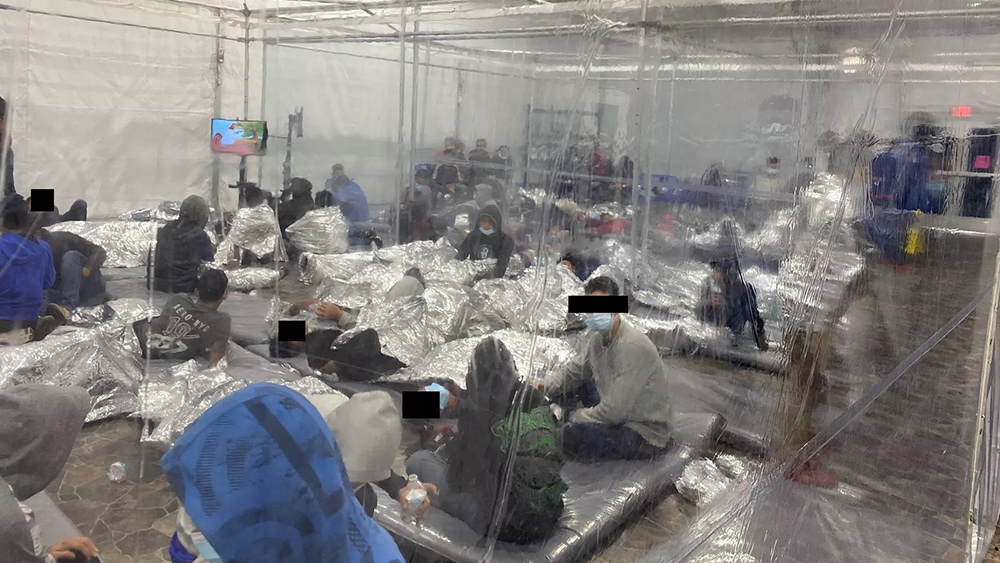
(NaturalNews) The Trump administration plans to convert large, vacant warehouses â some originally built for corporations like Amazon â into “mega detention…

(NaturalNews) For generations, the narrative of aging has been one of inevitable decline, a slow-motion retreat of memory and motor function. The medical arsenal ag…

(NaturalNews) A family-owned ostrich farm in British Columbia has been destroyed after government agents shot and killed its entire flock of over 300 birds. …
In a recent interview, President Trump defended his earlier claim that bringing 600,000 Chinese college students into the United States would be good for the country. When the interviewer questioned how that aligned with an America First agenda, Trump replied that without those students, “Half the colleges in America would go out of business.”
To most Trump supporters, that sounds like a win-win — fewer foreign students and fewer left-wing universities to subsidize. But Trump seemed to view the issue as a business transaction: Closing locations is bad, losing revenue is bad, and the substance of those “economic units” doesn’t really matter.
Why should we play Russian roulette with our national security to pad universities’ bottom lines?
His comments revealed a deeper confusion about what America First really means.
America’s relationship with China has long been incoherent. Every Republican politician insists China is our chief geopolitical rival — a totalitarian power bent on unseating the United States as global hegemon. Yet few make any effort to restrict Chinese immigration, investment, or influence. At some point, it becomes difficult to take any of the rhetoric seriously.
The problem is obvious: China has too many people and too much money. The country’s strength lies in what America abandoned: manufacturing. While American corporations chased financial gimmicks and “service economies,” China focused on making tangible goods at scale. That discipline built a vast middle class and positioned Beijing at the center of global production. Now nearly every Western industry — film, retail, education — depends on access to China’s markets.
The result: American institutions bend over backward to please a government they claim to fear. Chinese nationals can buy land, start companies, and enroll by the hundreds of thousands in U.S. universities. It would be funny if it weren’t so corrupt.
Trump knows mass immigration hurts Americans, but he struggles to say no when big money is involved. Foreign students pour billions into universities, and administrators have built their entire business models around them. But counting up dollars isn’t the same as serving the national interest.
Universities are publicly subsidized and supposedly dedicated to educating Americans first and foremost. Instead, they’ve turned into pipelines credentialing foreign elites — and sometimes, spies. Every seat filled by a Chinese student is one less for an American, and every dollar that props up a hostile regime’s protégés deepens our dependence on that regime.
The Department of Justice has charged three Chinese nationals at the University of Michigan for smuggling research materials and stealing technology. Eric Weinstein has even suggested that theoretical physics is being throttled for fear of espionage. Yet the universities — and now, apparently, Trump — seem unfazed.
Propping up higher education with Chinese cash isn’t just shortsighted — it’s insane. Colleges and universities have become leftist seminaries, charging astronomical tuition for courses that teach Americans to despise their parents and their nation. They already receive lavish government subsidies and still demand more.
Trump’s claim that “half the colleges” would collapse without Chinese money is dubious, but if it were true, those institutions deserve to fail. Let them. Destroying the patronage networks that produce radical activists was once a Trumpian goal. Reviving them with foreign money would be an act of political masochism. Why should we play Russian roulette with our national security to pad their bottom line?
RELATED: The ‘China class’ sold out America. Now Trump is calling out the sellouts.
Stefani Reynolds/Bloomberg via Getty Images
Chinese money poisons more than academia. Nationals and shell companies routinely buy American land — including, alarmingly, property near military bases. One recent purchase of an RV park in Missouri by a Chinese couple just happened to place them next to Whiteman Air Force Base, home of the B-2 stealth bomber fleet. Similar shadowy transactions dot the map.
The pandemic exposed the madness of this dependence. The same regime that unleashed a virus on the world also controlled the supply chains for the medicine and protective gear we needed to fight it. Yet America’s political class still refuses to sever the tie. They are too addicted to Chinese money — and too invested in pretending that dependency equals diplomacy.
If the GOP is serious about confronting China, it must start by cutting every cord of reliance. Banning Chinese students from U.S. universities would be a simple, symbolic first step — and it would strike directly at the heart of the progressive academic machine.
Opinion & analysis, China, Exchange students, Chinese students, Colleges and universities, Chinese money, Chinese communist party, Espionage, Eric weinstein, Physics, Research, Markets, Manufacturing, Left-wing colleges, Progressives, Ideology, Elites, Exports, Imports, Trade war
China’s bridge propaganda has fallen flat on its communist face.
The shutdown began when Democrats demanded radical left provisions in a spending bill back in September. Those provisions were far too extreme for Trump, who [more…]
President Donald Trump officially ended the Democrats’ record-breaking shutdown after House Republicans passed the funding bill Wednesday night.
Trump signed the GOP’s continuing resolution into law after the House passed the bill in a 222-209 vote, bringing the 43-day shutdown to a close. The House vote largely fell on party lines, with 216 Republicans voting in favor and 207 Democrats voting against the funding bill. Notably, two Republicans voted against the bill and six Democrats voted in favor of it.
‘Don’t forget what they’ve done to our country.’
“People were hurt so badly,” Trump said from the Oval Office Wednesday night. “Nobody’s ever seen anything like this one. This was a no-brainer. This was an easy extension. But they didn’t want to do it the easy way. They had to do it the hard way.”
“They look very bad, the Democrats do,” Trump added.
Photo by BRENDAN SMIALOWSKI/AFP via Getty Images
Trump urged Americans across the country to remember the pain inflicted by the Democrat shutdown when the 2026 midterms come around.
“I just want to tell the American people: You should not forget this,” Trump said. “When we come up to midterms and other things, don’t forget what they’ve done to our country.”
Democrats initiated the government shutdown after blocking the GOP’s clean continuing resolution from passing in the Senate before the September 30 funding deadline.
After prolonging the shutdown for over 40 days, eight Senate Democrats caved and passed the funding bill in the Senate, sparking intraparty outrage for agreeing to a “pathetic” political deal.
The only concession Democrats managed to secure was a reversal of reduction-in-force notices implemented during the shutdown and the prevention of any more RIFs through January 30, the day the new funding deal expires. This affects only about 4,200 of the roughly 150,000 federal layoffs that have taken place during President Donald Trump’s second term.
RELATED: Democrat senator makes stunning admission about Obamacare failures
Photo by SAUL LOEB/AFP via Getty Images
The main reason Democrats shut the government down in the first place was to renegotiate Affordable Care Act subsidies that are set to expire at the end of the year. Rather than securing any commitments from Republicans to negotiate or amend any health-care-related policies, Democrats walked away with a promise from Senate Majority Leader John Thune (R-S.D.) to hold a vote on extending the subsidies.
This is the same deal that was on the table since day one of the government shutdown.
Like Blaze News? Bypass the censors, sign up for our newsletters, and get stories like this direct to your inbox. Sign up here!
Donald trump, Mike johnson, John thune, Hakeem jeffries, Chuck schumer, Reduction in force, Rifs, Schumer shutdown, Democrat shutdown, Government shutdown, Federal layoffs, Affordable care act, Obamacare, Aca subsidies, Continuing resolution, Funding bill, House republicans, Senate republicans, Senate democrats, Politics

(NaturalNews) NASA’s Cassini mission revealed that Enceladus, Saturn’s icy moon, is leaking heat from both poles, not just its active south pole. This suggests…
Footage shows male senior swiftly strike ball in attempt to make goal, inadvertently hitting female player directly in mouth. A female high school lacrosse player [more…]

Use promo code “ALEX” when you sign up on Mug Club to get one month FREE of the network’s exclusive broadcasts, investigative reports, comedy specials [more…]

Suspect in black Lamborghini attempts rob man at Erewhon Market before shooting him in street, police say A man was shot during an attempted robbery [more…]

Watch & share this massive LIVE broadcast to get the latest on America’s border invasion, Mideast war, the NWO depopulation agenda & SO MUCH MORE! [more…]

Is this just another cycle, or is it the END? Martin Armstrong of Armstrong Economics published an article this week about the so-called Socrates program and how [more…]

“I assure you all options are open on the southern front. They can be adopted anytime.” Summary recap: Hezbollah Secretary-General Hassan Nasrallah’s speech went for [more…]

Putin orders planeloads of humanitarian aid to be sent to Egypt The Russian Ministry Emergency Situations said on Friday that it would send two aircraft [more…]

It is Tunisia’s duty to stand with the Palestinians, its president has said The Tunisian parliament on Thursday began discussing a bill that would define [more…]