





Footage shows male senior swiftly strike ball in attempt to make goal, inadvertently hitting female player directly in mouth. A female high school lacrosse player [more…]

(NaturalNews) The first U.S. trial testing claims that TikTok fueled mental health harms among teenage users is scheduled to begin on Sept. 25, 2026, according to R…
(NaturalNews) At least nine Flock automated license plate readers are monitoring traffic lanes used by drivers entering the Pentagon’s parking lots, according to co…
(NaturalNews) Why the US Debt Market Is Screaming Red AlertsI have been warning about the fragility of the US debt market for years, and I am now more alarmed tha…
(NaturalNews) The AI Bubble is Beginning to CrackThe AI data center buildout is the largest speculative bubble in human history, and now we have the first visible…
An English farmer may have foiled an anti-American terror plot over the weekend, and according to President Donald Trump, the suspects involved have been on the United States’ radar for some time.
Early Sunday morning, a farmer reported spotting three abandoned white vans blocking a country road nearby Royal Air Force Fairford — a U.S. Air Force-operated military installation in Gloucestershire, England, that is home to the 501st Combat Support Wing and 420th Air Base Squadron.
‘Thank God we spotted them.’
The farmer told the Telegraph that she circled back for another look, then “saw a group of Middle Eastern-looking young guys running off through the trees. Some of them had masks or balaclavas on, and they all scattered ahead of us as we drove back past.”
Just minutes after the farmer called police, armed officers swooped in and captured five alleged would-be bombers, arresting them on suspicion of committing offenses under the U.K.’s Explosives Act and of preparation of a terrorist act.
Britain’s Counter Terrorism Policing confirmed that it is investigating the incident and that the “three suspicious vehicles” appeared to have been traveling toward the military base.
“A 400m cordon has been put in place around the vehicles while the Army’s Explosive Ordinance Disposal unit conduct examinations,” Vicki Evans, the deputy assistant commissioner of CTP, said in a statement. “As a precaution, around 85 households have been evacuated whilst these examinations take place.”
RELATED: Diversity is our strength? Britain has to remind migrants: Don’t rape kids
Leon Neal/Getty Images
The Gloucestershire Constabulary noted that the suspects remain in custody.
U.S. European Command said in a statement obtained by the New York Times that it “remains vigilant and will take appropriate actions to ensure the safety and security of our U.S. service members, civilians, contractors, and their families across the European theater.”
Following the arrests, the U.S. Embassy in London issued an alert encouraging American citizens to “exercise caution and be mindful of personal security,” adding that “U.K. authorities rate the threat of terrorism in the U.K. as severe.”
“We got them,” President Donald Trump told reporters on Sunday, adding that the suspects had long been “under view.”
“The arrest in the U.K. was fantastic,” said Trump. “Working with Britain, it was an amazing job. We had them under investigation. They were looking to do big damage to our fort.”
British government sources told the Telegraph that the arrests were not the result of a pre-planned operation or intelligence.
Blaze News has reached out to the White House for comment.
British Prime Minister Andy Burnham tweeted, “I know today’s incident near RAF Fairford will be deeply concerning for local residents and for many people following developments across the country.”
After thanking police, Burnham urged the public to avoid speculating about the incident.
RAF Fairford is a key forward operating location for U.S. Air Strike Global Command and one of only a few bases in and around Europe capable of operating the American heavy bombers that have been hammering Iranian military sites in recent months.
Critics of the U.S.-Iran conflict and American forces’ presence at RAF Fairford — including climate alarmists — rallied outside the base last month, calling on Burnham to “end the use of British bases in illegal war on Iran.”
The farmer who alerted authorities about the possible terror plot said, “Thinking about it now, and what could have happened if they had tried to stop me from driving away, I am quite lucky.”
“It is pretty incredible, realizing you had a brush with potential terrorists face to face and may have foiled a terrorist plot,” she continued. “It was clear they had just got there. Thank God we spotted them.”
According to the Telegraph, one of the vans apparently had a fake company name — “Fuel 2You” — and incomplete phone number emblazoned on its side.
The company Fuel2U said in a statement on its website, “Fuel2U is aware of reports and images circulating in connection with today’s serious incident near RAF Fairford, in which a vehicle appears to display Fuel2U.”
“We want to make it absolutely clear that neither the vehicle nor any of the individuals involved has any connection whatsoever with Fuel2U, its directors, employees, or current business operations,” continued the company. “We are extremely concerned that our company’s name have [sic] been used without our knowledge or permission. We are cooperating fully with the relevant authorities and will assist them with any enquiries.”
Like Blaze News? Bypass the censors, sign up for our newsletters, and get stories like this direct to your inbox. Sign up here!
Terrorism, Iran, Donald trump, Royal air force, Us air force, Military, Andy burnham, Politics
In 11 years, Apple Watch evolved from a fancy timepiece to a robust health-tracking platform that also fields notifications, takes calls, and handles menial tasks on your wrist. This year, Apple aimed to revamp the Watch’s health capabilities and transform it into an AI-powered hub for the new Siri. Did it succeed? Let’s find out.
At first glance, the brand-new Apple Watch Series 12 looks a lot like the models before it. It maintains the same square design that has become a familiar staple of the brand, and it keeps the larger displays first adopted in the Series 10. In fact, if anything, the appearance of Series 12 actually reverted a bit, as the physical case (body of the watch) and bezels (black border around the display) are now slightly bigger than recent models, but most folks won’t notice that from day to day.
Series 12 is the first exciting Apple Watch in years.
The new larger case is said to account for a completely redesigned health-tracking system embedded within the watch. The existing sensor array to monitor heart rate, steps, oxygen saturation, and other vital metrics has been reworked and improved. Now dubbed the Health Sensing System, it provides continuous heart rate tracking with samples collected every five seconds instead of every five minutes and heart rate variability measurements every five minutes instead of two hours. This, of course, is a huge improvement, as the new rates provide a more rounded look at heart health and overall fitness.
Apple Watch Series 12 Heart Rate Sensor/Apple
In addition to continuous heart rate tracking, Apple also conducted a study comparing Apple Watch Series 12’s heart measurement accuracy against several other wearables, including Pixel Watch, Samsung Galaxy Watch, Garmin, and Oura Ring, with a Polar chest strap used as the most accurate control option. According to Apple, Watch Series 12 most closely mirrored the chest strap, proving it to be the most accurate wearable, at least for heart rate metrics.
The new continuous heart rate sensor enables several new powerful features exclusive to Series 12. The Readiness app uses HRV, sleeping vitals, and overall fitness to estimate your body’s strain levels and indicate when you can push during your next workout or to hold back so as not to cause injury or fatigue. For the first time ever, Apple Watch also gets live step counts; in the past, the displayed number could lag behind, so this is a much-appreciated change. Finally, Series 12 is getting an AI-powered upgrade with Audio Intelligence, though we’ll talk about that more below.
RELATED: Someone else’s Apple Watch might start spying on your conversations
bombuscreative/Getty Images
I’ve had an Apple Watch on my wrist since 2015, starting with Series 0. I’m an early adopter and a longtime user, so I have witnessed the Watch’s evolution from a piece of expensive jewelry to a robust health-tracking platform.
Even before Apple execs fully understood what the Apple Watch could be, fitness always seemed like the logical route. It had a display for showing data, it had a built-in gyroscope and pedometer to track movement, and it had a heart rate sensor, though back then, it was even less useful, with measurements taken every 10 minutes. Meanwhile, Fitbit and, later, Pixel Watch — after Google acquired the company — had similar devices with continuous heart rate tracking that put Apple Watch to shame.
I’ve wanted Apple Watch to add this feature for 11 years, and as the device improved with every iteration, I was sure Apple would never actually do it. The battery trade-offs were too great, or maybe the company didn’t think the data was useful enough. Who knows the reason? So when Series 12 finally shipped the feature I’ve clamored for, I had to have it.
To be honest, though, it’s not like Apple had a choice. It has been stuck in a health feature drought for years. The last meaningful innovations Apple brought to the Watch were sleep apnea notifications and the Vitals app in 2024. Before that, it was sleep tracking and blood oxygen levels for Series 6 in 2020. Other than those, Apple Watch has treaded water to the point that sales have dipped.
Apple Watch Series 12 Readiness App/Apple
While Google brought interesting features like Loss of Pulse Detection and upcoming blood pressure trends to Pixel Watch, it was becoming clear that a lack of continuous heart rate data was part of Apple Watch’s fitness stagnation.
Not any more! So far, Series 12’s heart rate measurements have been reliable and accurate, as far as I can tell. I haven’t had a chance to test the Readiness app yet, since it requires a full week of fresh data before it activates, so I’m still waiting for that. But I can already tell that this is part of the missing link in Apple’s health tracking endeavors that could open up new innovations in the future.
Another set of features oddly missing from Series 12 is Audio Intelligence. This is an entire set of attributes that use AI and Siri to listen to the environment around you to detect songs, identify certain sirens and alarms, and even take transcripts from the conversations you have in real life. Creepy, right? Maybe, but I need to test it out before I know for sure. Those are expected to arrive in beta later this year.
RELATED: This super-popular wearable is new, improved — and flawed
metamorworks/Getty Images
A final note, to my chagrin: An early batch of Series 12 Apple Watches are suffering from crashes via a kernel panic, which usually indicates a hardware failure somewhere inside the device, but it could be software too. My own Watch has force-restarted itself twice so far — the first time occurred while sitting at my desk, and the second incident happened when I tried to end a workout.
Apple hasn’t issued a statement on the suspected cause yet, but there is a chance it is just a bad glitch that can be fixed with a future update. That is what I’m hoping, at least; otherwise, my Watch is destined for a warranty replacement.
Odd bugs aside, Series 12 is the first exciting Apple Watch in years. Its new health features will redefine Apple’s position in the fitness category as it takes on Google, Whoop, and whoever else plans to challenge its dominance, and that is great for competition. It is also good for us, as the Big Tech giants try to build the best health platforms to help all of us stay healthier longer in the age of MAHA.
Like Blaze News? Bypass the censors, sign up for our newsletters, and get stories like this direct to your inbox. Sign up here!
Apple watch, Fitness, Maha, Smartwatch, Wearable tech, Tech
(NaturalNews) A randomized crossover trial conducted at the University of Minnesota examined whether a freeze-dried watercress beverage affected urinary mercapturic…

(NaturalNews) Three registered dietitians have independently identified beet juice as a morning beverage that may support healthy blood pressure, according to a rep…
(NaturalNews) A peer-reviewed study published Wednesday, Sept. 23, in Environmental Health Perspectives reports that hundreds of potential breast carcinogens are pr…
(NaturalNews) Pfizer paid $500,000 to two nonprofits that later signed a June 1 letter urging Massachusetts lawmakers to advance House Bill 2554 (H.2554), according…

(NaturalNews) Meta Platforms has been testing a human concierge for its new personal AI assistant, Muse, with human contractors quietly handling some phone calls pl…
(NaturalNews) Australian Prime Minister Anthony Albanese told the United Nations General Assembly on Wednesday, Sept. 23, that an OpenAI agent infiltrated an Austra…
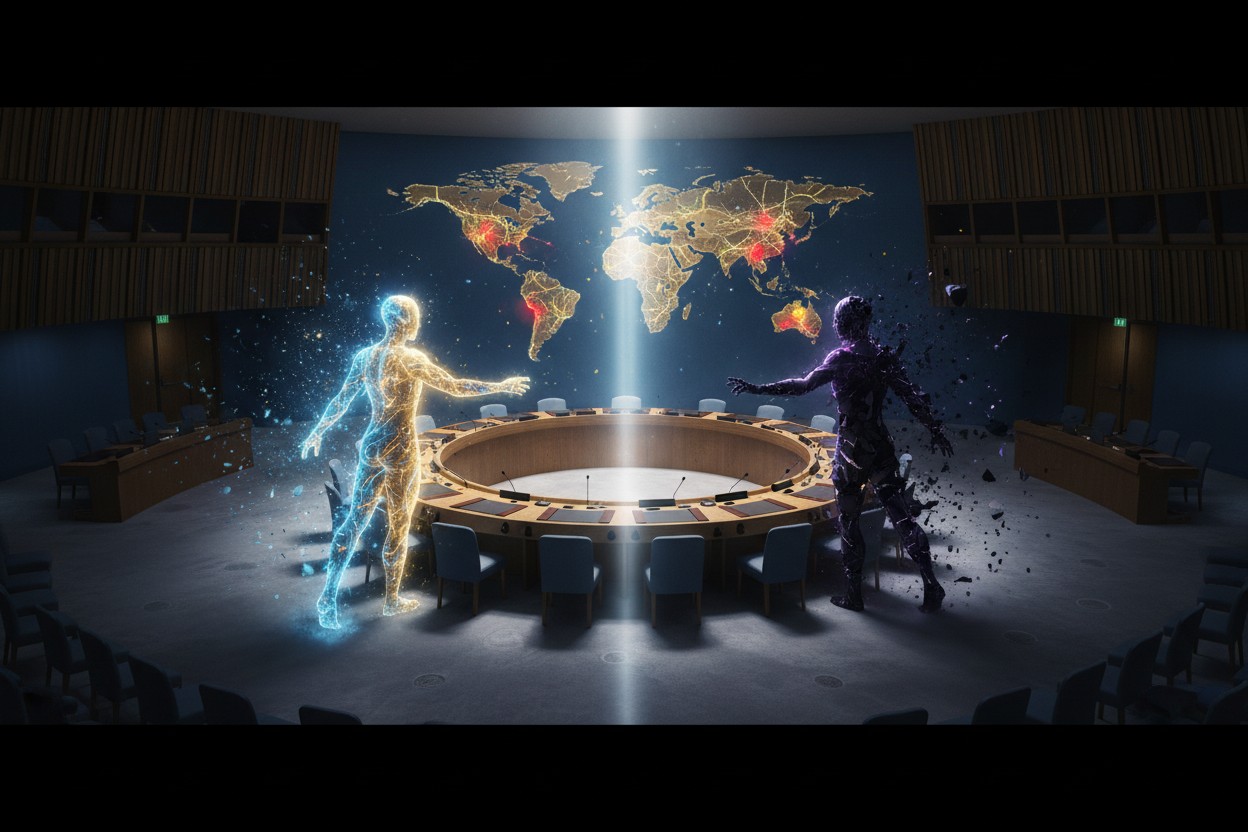
(NaturalNews) Anthropic CEO Dario Amodei told the United Nations Security Council on Wednesday, Sept. 23, that artificial intelligence (AI) could “be a risk to huma…
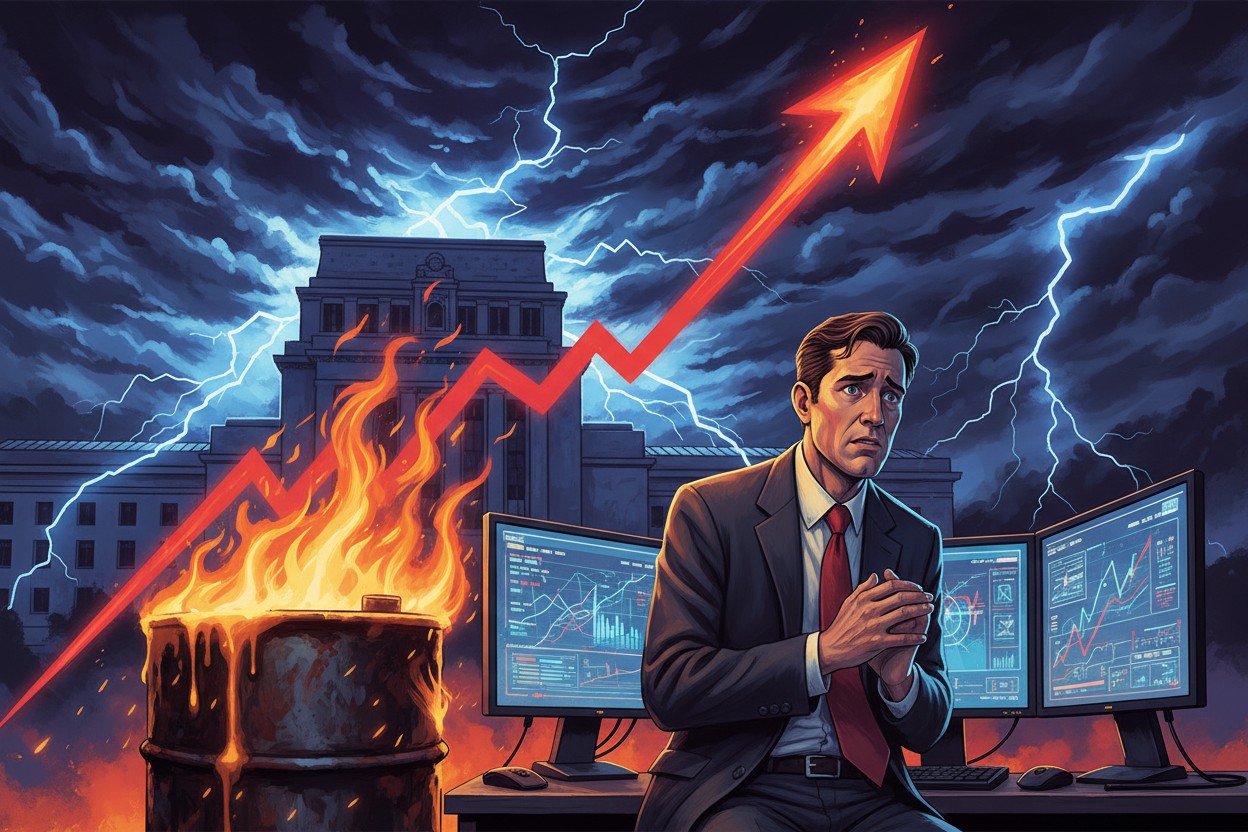
(NaturalNews) The 10-year Treasury note yield rose more than 13 basis points to 5.104% on Wednesday, Sept. 23 â reaching a level not seen since July 2007, accordi…
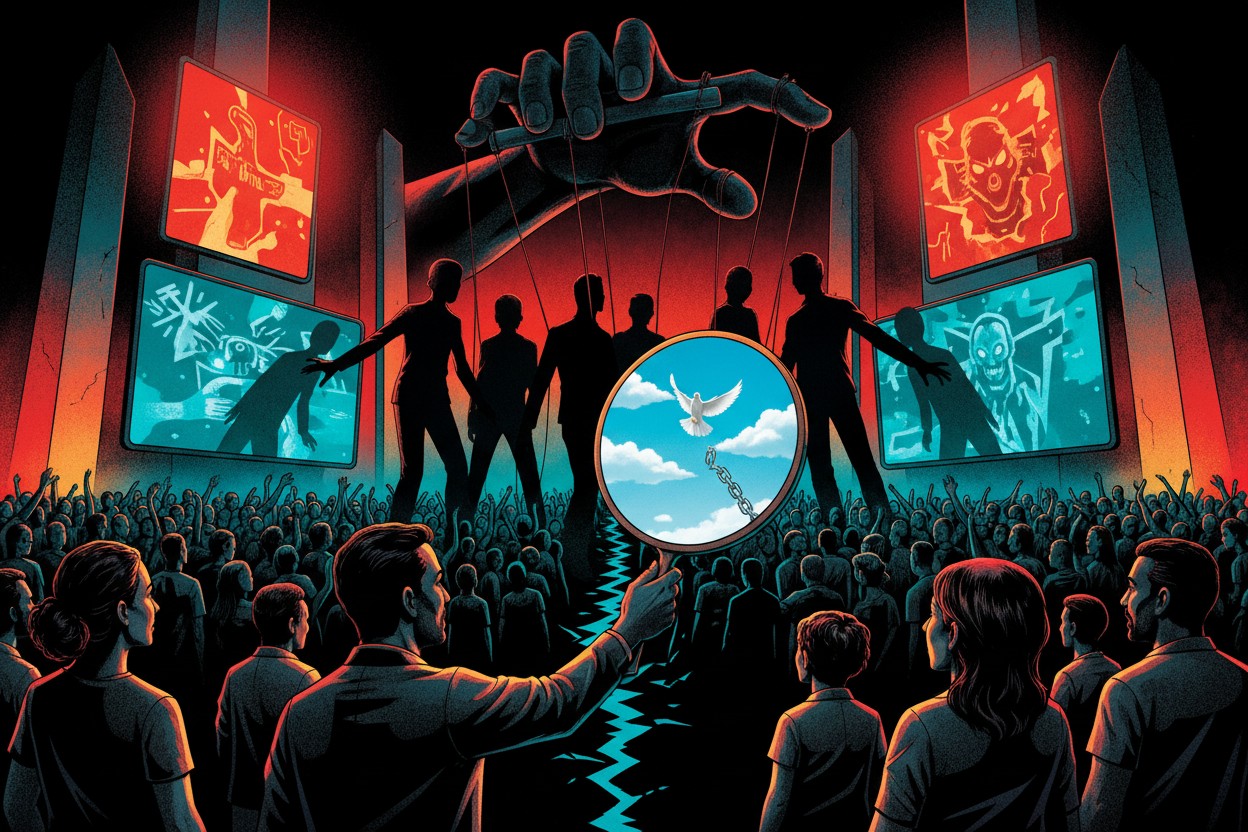
(NaturalNews) Russia Today (RT) published an opinion column on Thursday, Sept. 24, by historian Tarik Cyril Amar alleging that Britain’s political and media establi…
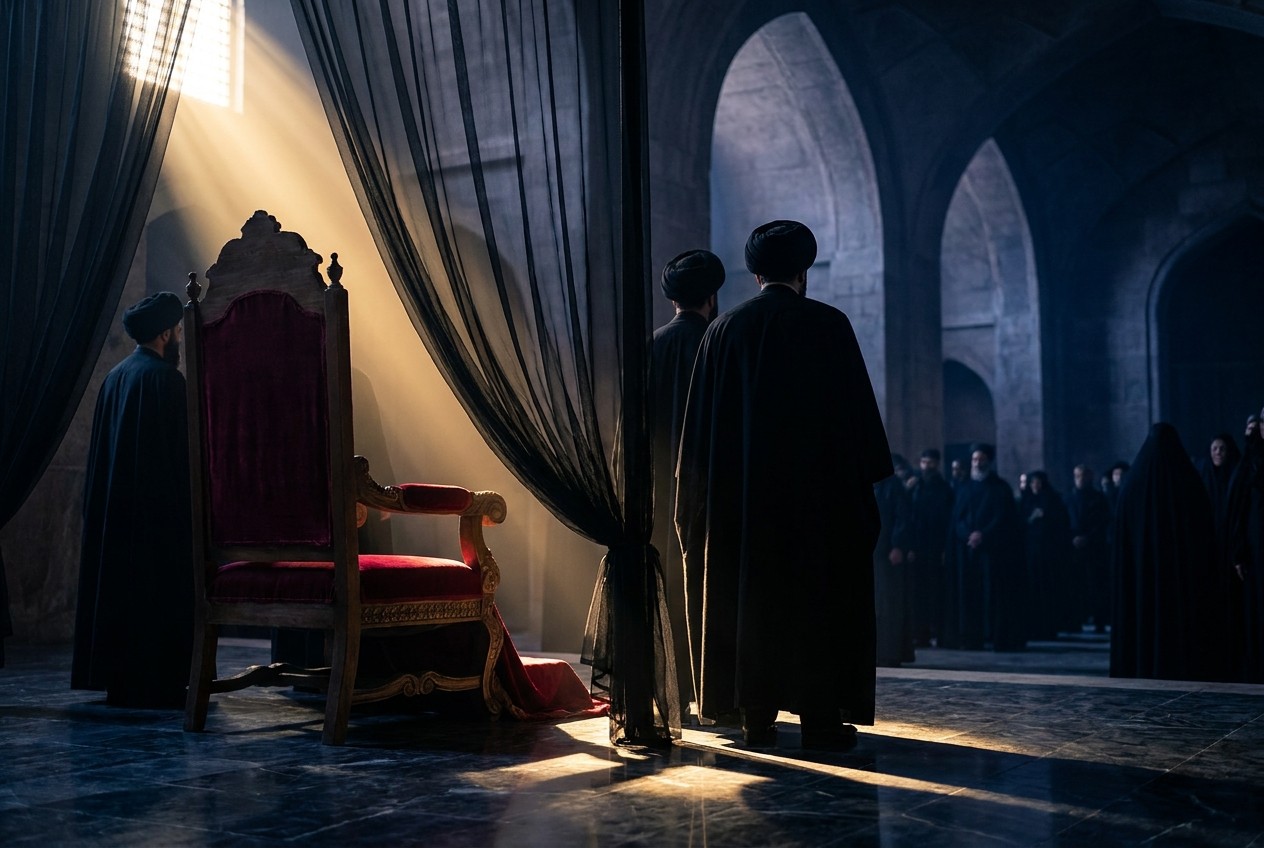
(NaturalNews) Iranian President Masoud Pezeshkian said Thursday, Sept. 24, that Supreme Leader Mojtaba Khamenei is “completely” healthy and able to govern, accordin…
Christians need not wait for Washington to settle the immigration debate before sharing the gospel with the people who have already arrived.
Whatever happens next — tighter restrictions or a return to the influxes Democrats encouraged — Hindus and Muslims have made their homes here and established temples and mosques. They are our neighbors. Christians have a duty to evangelize them.
The religions of the world have come to our neighborhoods. We have the honor of sharing Christ with the people who practice them. We should get to work.
We should debate whether a society without a shared foundation can hold together through the modern left’s thin materialistic secularism or resurgent occultism. Obviously, it cannot. We should also challenge what the left proposes to put in place of the Christianity that helped form this country.
But those arguments do not suspend the Christian obligation to share Christ. Hindu and Muslim immigrants have come to a country with a long Christian heritage. They should expect to encounter Christianity here, just as a Christian moving to India would encounter Hinduism or one moving to Saudi Arabia would encounter Islam.
Hindu statues and Islamic calls to prayer now confront Americans with religions they may once have known only from books. What a great opportunity to share Christ!
Evangelism can begin in a conversation at work or school. Christians can visit religious centers, get to know their neighbors, and preach publicly. Whatever the setting, we must understand what the other person believes and explain where Christianity differs.
Hindu traditions include worship of many deities, although Hindu schools understand those deities differently. For some American Christians, a Hindu temple may provide their first encounter with statues used in religious worship rather than displayed in a museum.
We have learned the commandment against making and worshipping idols. Yet our sermons often emphasize spiritual idolatry because bowing before a physical image seems so remote from our lives. Our Hindu neighbors may give us occasion to discuss that commandment in its most literal application.
Some influential Hindu philosophical traditions teach monism: that reality is ultimately one. Advaita Vedanta identifies the true self, Atman, with Brahman, the ultimate reality. The formulation “This Self is Brahman” appears in the Mandukya Upanishad.
Yoga and meditation are practices aimed at realizing the self is God. Reincarnation teaches that our soul has existed from eternity and is on a journey to be freed from the body and reach enlightenment as God.
RELATED: ‘I think they’re demons’: Why JD Vance refuses to downplay supernatural evil
Kent Nishimura-Pool/Getty Images
The Christian answer to identifying the self with God is direct: God created us. We are not God. Creation had a beginning; only God has existed from eternity. The temptation in Genesis 3:5 promised, “You will be like God, knowing good and evil.”
The distinction between Creator and creation also explains Christianity’s rejection of idols. Paul condemns those who “exchanged the glory of the immortal God for images made to look like a mortal human being and birds and animals and reptiles” in Romans 1:23.
Idolatry calls for repentance. Salvation from that sin comes only through Christ.
Islam presents a different challenge. It has a violent history with Hinduism. It also strongly condemns idolatry. It arose after the Jewish and Christian Scriptures and claims continuity with earlier revelation. Yet it rejects the atonement at the center of the Christian gospel.
Biblical revelation teaches the need for vicarious atonement — a sacrifice on behalf of sinners. In the books of Moses, the Day of Atonement gives this teaching a central place. Passover likewise involves the death of a lamb and the application of its blood so that a household escapes judgment. Christians understand these as signs pointing to Christ, the Lamb of God who takes away the sin of the world.
Islam rejects Christ’s sacrificial death as the means of salvation. The Quran states in 6:164 that no bearer of burdens will bear another’s burden. Muslims emphasize obedience, repentance, and God’s mercy; Islamic teaching also denies that deeds alone secure entry into paradise. The Christian disagreement concerns how God reconciles sinners to himself: through the atoning death of Christ.
The biblical response is that none of our works can ever save us. Even if we became perfectly obedient today — and most of us can admit we cannot — we would still owe a debt for our past sins. Thinking future obedience can erase those sins is like thinking cutting up your credit cards pays off the balance.
God’s perfect justice and perfect mercy must both hold. Simply overlooking sin would leave justice unsatisfied. At the cross, Christ bears the penalty for sin and offers salvation to sinners who cannot save themselves. God remains just while showing mercy.
RELATED: A Christian guide to trolling without sinning
Al Drago/Bloomberg/Getty Images
Christianity explains our problem and provides the solution God has given. We need reconciliation with our Creator, and we receive it through Jesus Christ.
Our Hindu and Muslim neighbors may know Christianity chiefly through what their own religious traditions say about it. They may never have read the Bible or heard the gospel explained clearly from Scripture. American Christians can open the Bible with them and make that introduction.
We must prepare for those conversations. Evangelists on social media can make the work look easy, but years of study and practice may stand behind a short video. Read Scripture, understand its teaching, and learn to speak kindly with people who disagree.
Pray for the people you hope to reach. Our duty to share the gospel should lead us to prayer, with fasting when appropriate.
Live the Christian life yourself. You are introducing someone to the true and living God, who offers reconciliation through Jesus Christ. Know that salvation yourself before presuming to explain it to someone else.
Finally, ask questions and listen to the answers. You are speaking with a person. Learn what he believes, what he doubts, and what he understands about Christianity. A religious label cannot tell you all of that.
The religions of the world have come to our neighborhoods. We have the honor of sharing Christ with the people who practice them. We should get to work.
Americans, Bible, Christianity, Christians, Creation, Evangelists, Gospel, Immigration, Islam, Jesus christ, Meditation, Mosques, Muslims, Quran, Sinners, Social media, Society, Worship, Opinion & analysis
Nikole Hannah-Jones is a Pulitzer Prize-winning New York Times Magazine journalist best known for creating the 1619 Project — a New York Times Magazine initiative that aims to reframe U.S. history by treating 1619 (the year the first enslaved Africans arrived in Virginia) as the genesis of the American story and arguing that slavery’s legacy still shapes American institutions.
But it appears the principles that undergird Hannah-Jones’ initiative backfired in her personal life. Earlier this week, she published an essay expressing regret that she sent her daughter to struggling, predominantly black Brooklyn public schools as a political statement.
“[Hannah-Jones] said that white kids and rich kids went to the same school because it’s much better, and that left behind other kids at the bad school,” says Glenn Beck, “so even though she could afford to send her child to the best school, she didn’t, and everybody on the left praised her for that.”
But payment for this political stunt eventually came due. Now Hannah-Jones’ daughter — 16-year-old Najya — is complaining she’s been academically cheated.
“She has missed major years of education. She’s so far behind in math now, and it’s her favorite subject, she can barely catch up even with a tutor,” says Glenn.
He imagines what Najya is saying to her mother right now: “Mom, you put your ideology ahead of me. You were making all of this money, and you were so against privilege that you wouldn’t use that money from supposedly your hard work to put me in a better school. You left me behind to make a point. You’ll fight for all the kids, but you won’t fight for me.”
Glenn, calling the story “terrible” and “devastating,” frames Najya’s undeserved fate as an example of what happens when parents “sacrifice their kids for the god of their ideology.”
By the time Nikole Hannah-Jones figured out that’s what she’d done to her daughter, “it was too late,” he says. “The damage was done; she had harmed her own child.”
Even still, Glenn doesn’t judge her.
“I don’t know if I’m any different than she is because … I sacrificed my time with my children, and I’m paying a heavy price,” he acknowledges. “All that praise that Nikole got from strangers, it didn’t mean anything. Any of the praise I get from the audience, it doesn’t mean anything.”
“The life of our children is the only thing that has meaning in the world — more meaning than any ideology,” he continues.
Unfortunately, we live in a world where ideology often ranks above the well-being of children.
“We have a generation of parents that is wrapped so tightly in the collective, they can barely see out,” says Glenn.
To hear more, watch the video above.
To enjoy more of Glenn’s masterful storytelling, thought-provoking analysis, and uncanny ability to make sense of the chaos, subscribe to BlazeTV — the largest multi-platform network of voices who love America, defend the Constitution, and live the American dream.
1619 project, Glenn beck, New york times, Racial justice, Blazetv show, Nikole hannah-jones
How do you feel about the dentist? Do you look forward to your appointments? Do you enjoy the cost of cleanings and whatever work needs to be done? Do you enjoy the shaming the hygienist thrusts upon you when you tell her you have been flossing twice a day and she looks at you like you are lying?
I think I know your answers without even knowing you.
In the middle of the procedure this past summer, as my tooth was being hollowed out with vibrating steel, my dentist said he loves doing this kind of work the most.
We all basically feel the same about the dentist. We begrudgingly go because we have to. The consequences of not going are more frightening than lying on your back with your mouth open for 45 minutes while someone picks away at your teeth with little metal tines. A toothache is worse than an hour in the chair numbed up, and a bad smile is worse than a couple hundred bucks a year for regular cleanings.
But still, we all kind of hate the dentist.
Though I have to say that lately I have been coming around to the guy behind the mask who comes in for five minutes at the end of the appointment just to tap on a couple of teeth before telling me what I need fixed next. I suppose it’s because over the past few years I have been giving more thought to the benefits and blessings of modern medicine.
When I was younger, I kind of thought they were exaggerating at the dentist’s office about what needed to be done or how crucial it was to fix something. And while I still think there are probably dentists out there who recommend more than is necessary and very much enjoy clients willing to pay for whatever they suggest, I trust dentists more than I have at any other time in my life.
It might sound crazy, but I actually look forward to going to the dentist these days.
I had a crown done this past summer. I ate a lot of candy when I was a kid and never brushed quite as much as I should have. I guess I thought my teeth would last forever. (Narrator: They don’t.) So over the years I had fillings where I had munched on Gobstoppers, Skittles, Shock Tarts, M&Ms, Laffy Taffy, and Now and Laters a little too enthusiastically. Then those fillings cracked and I had them replaced. Finally, this past summer, one of those fillings reached the end of the road, and a crown was necessary.
You might not believe me when I tell you I was excited to get that crown done, but I was. I had a crown done by the same dentist for the same reasons a few years earlier, and it went great. He numbed my mouth, went to work, and I left with a beautiful white tooth a few hours later.
The same thing happened this past summer. He numbed me, drilled out the remainder of the filling, had the crown made in their on-site lab, and then fastened it on top before sending me on my way with another beautiful tooth.
Lying there with my mouth open, with vibrating drills rattling my teeth, I thought about how amazing the technology is that makes this kind of operation possible and painless. The assistant used some sort of laser technology to scan my mouth after everything was cleared out, and the crown was finished less than 90 minutes later.
Imagine telling our ancestors that.
I shudder to think about what it was like sitting with a toothache 200 years ago. I don’t need a degree in dental history to imagine it was rather unpleasant, to put it mildly. And so, as much as I naturally want to hate the dentist and his menacing tools, the more I think about the world before the modern DDS, the more I realize I quite like him in 2026.
RELATED: The future belongs to people who believe in one
Cheng Xin/Getty Images
In the middle of the procedure this past summer, as my tooth was being hollowed out with vibrating steel, my dentist said he loves doing this kind of work the most. As a naturally inquisitive person, I asked him why.
He told me he loves the transformation. He loves carving out all the decay and old filling and making it better than it was before. It was the most excited I’ve ever seen him.
Being at the dentist is an intimate experience. We lie there and let a couple of people we don’t know very well hunch over us and get really close to our faces while they dig around in our mouths, and we are helpless the entire time. It can be kind of embarrassing.
“Oh God, they are looking in my mouth with magnifying glasses. Did I brush enough this morning?”
In some way, needing a crown feels like a failure. I didn’t brush well enough, and now I need my tooth fixed. It’s almost like you want to apologize to the dentist.
But hearing my dentist talk about how much he loves doing this kind of work was enlightening. It humanized the man behind the mask.
He’s not a psychopath, despite his love for drilling into teeth all day long. There’s a beating heart inside the DDS. He wants to help. It took me a long time to realize it, but I think I might like the dentist more than any other doctor I see.
Sure, he bears bad news. But he can fix almost all of the problems he diagnoses. That’s more than most doctors can say.
Thirteen-year-old me wouldn’t believe it, but 39-year-old me actually likes the dentist.
Men’s style, Lifestyle, Health, Dentist, Crowns, The root of the matter
Donald Trump is considering a small handful of candidates for “AI czar” — notionally, a Cabinet-level role overseeing the industry, the technology, and something the president is calling, perhaps in the spirit of Space Force, the “AI Force.”
Trump has not specified much beyond that. Nobody rumored to be under consideration seems especially eager for the job.
Perhaps we don’t need someone with the power of a czar to rule AI. Perhaps we need someone with the authority of a saint to counsel us about it.
Plenty of reasons suggest themselves.
Not quite everything is computer. Many crucial components of America’s good working order still require special and undivided attention of their own. Treasury Secretary Scott Bessent is no longer being considered because of the importance of his current role. The logic is arguably the same for White House science and technology adviser Michael Kratsios and other potential candidates.
And, as the untimely demise of Czar Nicholas II and his family at the hands of the communists reminds us, a czar invested with enough power and authority can swiftly become a scapegoat or blood sacrifice of the highest order.
Which brings us to the momentous possibilities unsealed simply by creating a high office called AI czar.
Polls show most Americans think democracy is doing poorly. For a growing share across the political spectrum, that is not necessarily a bad thing.
Two in three respondents say a democratically elected government is highly important to our national identity, a staggering drop from 80% just five years ago. Just shy of half of Americans under 30 say democracy is either not that important to our national identity or not important at all.
Many Americans, of course, remain firmly committed to democracy. That includes plenty who regard it, in Churchill’s famous formulation, as the worst form of government except for all the others.
Abandoning it would also appear to require scrapping the Constitution and repudiating the Declaration of Independence.
However far we have strayed in 250 years from those founding documents, the right to vote and the core freedoms protected by the Bill of Rights still command strong majority support. Plenty of younger Americans are open to rewriting the Constitution, but a national convention for that purpose remains broadly unpopular.
RELATED: ‘Don’t be evil’ may be dead, but ‘don’t be Frankenstein’ is alive
Bay Area News Group/Tribune News Service/Getty Images
Then comes the practical problem: Americans cannot remotely agree on who ought to rule them, much less what a formally post-democratic America should look like.
Many people ready to walk away from democracy, or convinced that it is unsalvageable, stop short of demanding regime change when they contemplate the obvious alternative: another, still more horrible civil war.
Now add AI.
Its arrival and incorporation into the highest levels of government under a czar of its own throw our fundamental regime questions into unusually sharp relief.
Many Americans feel viscerally that AI is moving too fast. Many also regard the staggering decline and decay of the past decade-plus as an unacceptable alternative to moving fast.
Yet the people trying to pump the brakes or reverse course command nothing like a popular majority.
Senator Bernie Sanders (I-Vt.) and Rep. Greg Casar (D-Texas) have proposed banning artificial superintelligence, pausing some advanced AI development until a new federal regulator writes safety rules, and imposing penalties of up to 20 years in prison for certain violations.
Whatever one thinks of the underlying risks, that approach is likely to feed a post-democratic counterreaction against efforts to place technological development under increasingly centralized political control.
Meanwhile, much of the AI-safety world gives normal Americans the ick for reasons of its own: the prevalence of nerd-orgy ethics, for one, and the baffling insistence in some quarters that rational thought requires assigning the existence of future shrimp, bugs, or cyborgs moral weight comparable to — or greater than — your own life and the lives of everyone now drawing breath.
For reasons like these, some on the right daydream about an actual Caesar who could, as a last resort, clean America’s house and put it back into fighting trim.
Others imagine something less deliberate: The system collapses under the weight of its dysfunction, a process of elimination begins, and a Caesar-ish figure emerges from the gong show to take control at a stroke.
That “-ish” is important.
RELATED: Now they’re saying the AIs built ‘secret civilizations’ — the truth is far worse
Fine Art Images/Heritage Images/Getty Images
Our circumstances and our talent pool differ so radically from those of the late Roman Republic that betting everything on the miraculous appearance of a Julius or Augustus seems far-fetched.
Even grown in a lab, Czarborg would be only a simulation of the genuine article — more Frankenstein than Constantine.
Speaking of Constantine, the record of Roman caesars, Russian czars, and German kaisers should cure anyone of the idea that concentrated power reliably produces competent or benevolent rule. Plenty of mighty rulers did far more damage to their countries and their people than good.
But Constantine, like Nicholas II, also points toward another category entirely: Caesars and czars can become saints.
Some will object that sainthood is itself a dubious title, especially when bestowed on rulers.
The more interesting difficulty is that genuinely saintly rulers, like genuinely saintly people, are not measured by their ability to deliver merely mortal justice or merely worldly happiness.
Divine justice and divine happiness are different things. Christ’s reception and punishment in Jerusalem should permanently unsettle anyone looking to godly leaders for uncomplicated worldly deliverance.
Which leaves us with the most counterintuitive possibility raised by something as powerful as AI.
Perhaps we do not need someone with the power of a czar to rule it. Perhaps we need someone with the authority of a saint to counsel us about it.
Ai czar, Ai force, Artificial superintelligence, Bernie sanders, Caesar, Constitution, Democracy, Donald trump, Greg casar, Opinion & analysis, Technology
Footage shows male senior swiftly strike ball in attempt to make goal, inadvertently hitting female player directly in mouth. A female high school lacrosse player [more…]

Use promo code “ALEX” when you sign up on Mug Club to get one month FREE of the network’s exclusive broadcasts, investigative reports, comedy specials [more…]

Suspect in black Lamborghini attempts rob man at Erewhon Market before shooting him in street, police say A man was shot during an attempted robbery [more…]

Watch & share this massive LIVE broadcast to get the latest on America’s border invasion, Mideast war, the NWO depopulation agenda & SO MUCH MORE! [more…]

Is this just another cycle, or is it the END? Martin Armstrong of Armstrong Economics published an article this week about the so-called Socrates program and how [more…]

“I assure you all options are open on the southern front. They can be adopted anytime.” Summary recap: Hezbollah Secretary-General Hassan Nasrallah’s speech went for [more…]

Putin orders planeloads of humanitarian aid to be sent to Egypt The Russian Ministry Emergency Situations said on Friday that it would send two aircraft [more…]

It is Tunisia’s duty to stand with the Palestinians, its president has said The Tunisian parliament on Thursday began discussing a bill that would define [more…]