



Is this just another cycle, or is it the END? Martin Armstrong of Armstrong Economics published an article this week about the so-called Socrates program and how [more…]


(NaturalNews) A Purdue University study shows that lean red meat, consumed as part of a balanced diet, can improve gut microbiota and cardiovascular health….

(NaturalNews) A surge in gold deliveries to the U.S., driven by fears of potential tariffs under Trump, has caused a shortage in London, the worldâs largest…

(NaturalNews) Salwan Momika, an Iraqi refugee known for burning the Quran, was shot dead in his apartment in Sweden during a TikTok livestream. The killing…

(NaturalNews) Nearly five years after the COVID-19 scandal emerged, a declassified CIA report has reignited the debate over the origins of SARS-CoV-2. The report,…
For a while now, I’ve been paying attention to how Christian leaders play word games to obscure certain views on hot-button issues.
My favorite word for this is “sophistry.” Sophistry is one of the devil’s go-to strategies of deception because it relies on an appearance of truth to smuggle in error.
Christians can learn to detect the use of sophistry by paying attention to the manipulation of words to obscure truth, especially regarding homosexuality. As a growing number of churches have begun affirming it, faithful Christians want to know up front what the church teaches about it.
Thus, a church’s beliefs and practice about homosexuality have become a “litmus test” for Christians considering a new church. Bible-believing Christians want assurance that they’ll be taught proper doctrine. But church leaders don’t always want to say openly what they believe.
At best, they sincerely want to reach people with the gospel. They don’t want to turn anyone off with a harsh stance on sexuality. At worst, they are more interested in growing a church than in being faithful to God’s word. All too often, it’s hard to tell because they send mixed messages.
A friend recently sent me a screenshot of a Facebook message from another church about that church’s teaching on sexuality. This message was a self-contradictory, double-tongued word salad that needed some skillful discernment to untangle. After reading this message, I was struck by how vulnerable so many Christians are to slick messaging that tricks people into thinking a church is doctrinally solid when it isn’t.
I care about these things because in this age of confusion, God’s people need clear truth, not evasion.
That’s why I wrote this post. I wrote this to show the subtleties of the sophistry deployed to lure Christians into doctrinally compromised churches.
Here’s the message:
Hi… Our church holds to the historic position — one man, one woman, in marriage, for life. However, love and welcome EVERY person regardless of race, age socio-economic class, or sexual orientation. We believe that God has a plan and purpose for every person. In fact, our mission as a church is that we exist to reach and teach ALL people to have a relationship with God that gets better and better. We do not exclude any person attended our church, attending our groups, or even attending our church. Our goal is that our church is a safe space for people to ask hard questions and that we prioritize love for Jesus over theological agreement.
The message begins with Bible bait: “Our church holds to the historic position of sexuality — one man, one woman, in marriage, for life.”
Sounds solid, right? Well, it isn’t. It’s bait that is meant to build trust. It offers reassurance that this church is trustworthy because they uphold the “historic position on sexuality.”
There’s two problems with this. First, the historic position described here is too narrow. Biblical sexuality is not limited to a definition of marriage. Their narrow definition leaves the door open for lots of theological novelties in areas that aren’t directly related to marriage, such as accepting “sexual orientation” as legitimate (More on that in a moment).
Second, the rest of the message negates the first sentence. Their actual practice is the opposite of the “historic position.”
How do we know?
Just look at the second sentence. It says, “However, we love and welcome EVERY person regardless of race, age, socioeconomic class, or sexual orientation.”
The “however” at the beginning of that sentence is massive. It signals a pivot from their supposedly historical position to an unbiblical practice. The way they actually do things as a church sounds more like a DEI training than scripture. Notice how they mix together four different categories of personhood: race, age, class, and sexual orientation.
What do you notice about them?
One of them is not like the others. Race, age, and class are not moral categories. There is nothing moral about one’s ethnicity, age, or class. “Sexual orientation,” however, is a moral category (although the Bible does not speak that way about homosexuality).
“Sexual orientation” is a modern invention to justify immoral behavior. It is certainly not the “historic position” of the Christian faith.
That sentence also says the church is eager to “love and welcome” all the people mentioned above. What does that mean?
It means someone’s gayness will not matter any more than someone’s ethnicity, age, or class. Even though the Bible condemns sexual immorality, this church gives “sexual orientation” protected status. Hello, my name is “Gay Christian.”
This is standard DEI language used by HR departments all the time. By listing moral categories of personhood along with non-moral categories, all of them now appear morally neutral. Thus, calling someone to repent of their homosexuality would be like calling someone to repent of their ethnicity.
As a result, the church makes contradictory statements. On the one hand, it claims to believe the historic position on sexuality. On the other hand, it promises never to act like it believes it. No one will be called to repent of homosexuality.
As the message continues, this fact becomes even more explicit.
The last sentence says, “Our goal is that our church is a safe space for people to ask hard questions and that we prioritize love for Jesus over theological agreement.”
“Safe space” is a euphemism for “no repentance needed.” In all likelihood, this commitment to providing safe spaces indicates people will receive special treatment and attain victim status for homosexual sin. In fact, those who confront homosexual sin are making their church less “safe,” so they are more likely to be corrected for doing so.
Further, notice that “love for Jesus” is set against “theological agreement,” as if theology is the enemy of love. Modern Christians too often reduce “love” to nothing more than sentimental well-wishing, devoid of any real obligation to seek the highest good of others.
But how do we know what it means to love people apart from what God’s word says? And how can we know what God’s word says without reading it and studying it? That’s theology. If we do not define love biblically and theologically, pop culture and Disney movies will define it for us.
In other words, theology is necessary to define love. According to Jesus, we love him by obeying him. Jesus said, “If you love me, you will keep my commandments” (John 14:15).
That last sentence also says the message authors want their church to be safe for people to “ask hard questions.” Church leaders use this “ask hard questions” language all the time, and it doesn’t mean what it sounds like it means.
If I didn’t know better, I’d think “ask hard questions” means they have people who can provide biblical, theological guidance through deep questions of our faith, like the problem of evil or the Trinity.
I assure you, that’s not what that means here.
In this context, “hard questions” means grievances against God and the church. It’s a mindset of seeing God and his church as mean and judgy and seeing ourselves as victims. In other words, unrepentant people get to slander and judge the bride of Christ. The church, of course, will not ask any hard questions. After all, the church has now become a “safe space.” The church’s job is to just “love” and send out the good vibes.
When you see churches or pastors speak this way, we need to realize that this is a marketing schtick to pander to unbelievers while convincing solid Christians they’re just a faithful church “on mission.”
Don’t fall for it.
This essay was adapted from an article originally published at Michael Clary’s Substack.
Christianity, Christian, God, Bible, Lgbtq agenda, Progressive christianity, Faith
Over the past few years, many of us have been totally mystified by positions that are growing in popularity that would have been unthinkable just a few years ago.
The list is long, but three quick examples include: giving puberty blockers to children, the movement to defund the police, and the claim that not voicing your agreement with certain brand-new ideologies is the same as committing physical violence. I don’t want to talk about the arguments for or against these positions, because so many of these conversations serve to hide the real root of the problem.
‘We shape our buildings; thereafter they shape us.’
And that root is really simple to understand.
First, it’s important to note that the root of the problem is not individual radicals. In every age, there are tiny minorities that have radical opinions, and that will never change. That is not why these ideologies are growing in their popularity with a larger segment of society. There are many smaller causes that all contribute to this change, but I want to put forth the single cause that I feel is most responsible for why these movements grow, and this thesis will also help predict what other ideologies will grow and spread in the future.
Here’s my take in three words: premature institutional success.
Premature institutional success happens when a movement funded and led by a group of institutions is growing in momentum but achieves its original goals too quickly. What do the leaders of these institutions do? They have two choices.
They can declare success and encourage the donors and supporters to move on to other worthy causes.
They can find smaller agent causes to direct their ever-growing power toward in order to keep the movement going.
Which one do you think they choose?
Which would you choose if you dedicated your life to a movement?
A perfect example of this happened during the movement to legalize same-sex marriage. This issue resonated deeply not only with those personally impacted by it but with a much wider group of supporters. The result was that huge, well-funded organizations with talented activists emerged and prepared for a pitched multi-decade, state-by-state series of legal and legislative battles. And then it happened almost overnight. Right as the movement was hitting its peak financial and popular support, state after state legalized same-sex marriage. The Supreme Court issued a ruling, the Republican Party removed its opposition from its platform, and victory was achieved.
So what do these institutions and activists do at the peak of their power? In order to survive, they must find new issues to funnel their finances and energy toward, and they found that issue in this little-known area called “trans rights.”
This pattern is playing out over and over again. Because of social media, it’s becoming far less expensive and much easier for activist institutions and individuals to get their message out and sway public opinion, so they keep achieving this problem of premature success, which forces them to focus on smaller and smaller issues.
The need for LGBT+ institutions to find systemic examples of homophobic and transphobic incidents is far outstripping the supply. The need for anti-racist organizations to find examples of systemic racism is outstripping the supply. These organizations need to find more victims, and most importantly, they need to identify more and bigger oppressors.
If they can’t find them, then they’ll have to make them.
Activists activate. They don’t deactivate. And deactivation is often what is needed in the face of premature success.
The first time I remember this happening was when the manager at a Starbucks with outspoken leftist views decided to call the cops on two black men who wouldn’t buy a drink in order to stay at their table. The image of the police handcuffing two black men and escorting them out of a Starbucks was all that was needed for every anti-racist organization to declare this manager a racist.
I found this so confusing at the time because it seemed common sense to investigate whether this woman had a history of racism or whether it was just circumstantial that these men were black and whether she would have done the same if they were white.
But the supply of racism was at an all-time low at the time, and powerful organizations were on high alert to find examples of racism. They had been prematurely successful, and their very survival depended on increasing the supply.
Since then, I could list hundreds of more recent examples of this, which is why I’m searching for the root, and I believe this is perhaps the most important element to understand.
This same pattern plays out in every institution.
In the government, the Department of Education cannot get behind educational endeavors that make the department less significant. That’s why effective decentralized educational strategies will be ignored and sometimes even opposed. That’s how something called the Department of Education can actually oppose education. Institutional survival comes before the mission.
This is easy for me to relate to because I’ve seen this play out in Christian institutions that I’m familiar with. A founder of one of these organizations once told me the organization had achieved its original mission, but right as it crossed the finish line, the organization had more donors than ever lining up to support it, so leaders had to find another mission to keep going.
This is a perfectly understandable pattern, but its impact on a culture when you have activist organizations with millions of dollars and nothing meaningful to do is tearing us apart.
Let me end with one glimmer of hope.
There’s a Christian organization called Wycliffe Bible Translators that started in the 1940s, and I once heard that it was written into the organization’s original charter that once it had translated the Bible into every language in the world, leaders would would shut down the organization. I love this idea. I can’t find any evidence of this self-destruct clause online, but ever since hearing it, I wondered if there might be a way for a mission to have an organization rather than the other way around.
Churchill once said, “We shape our buildings; thereafter they shape us,” and I think the same can be said of activist institutions.
This essay was adapted from an article originally published at Jeremy Pryor’s Substack.
Woke, Lgbt, Racism, Lgbtq agenda, Christians, Faith

(NaturalNews) Derived from reptiles like the Gila monster, venom peptides are increasingly used in weight-loss drugs (e.g., Ozempic, Wegovy) and anti-aging…

(NaturalNews) Russia plans to launch a comprehensive facial recognition payment network this year, led by Sberbank and the National Payment Card System…
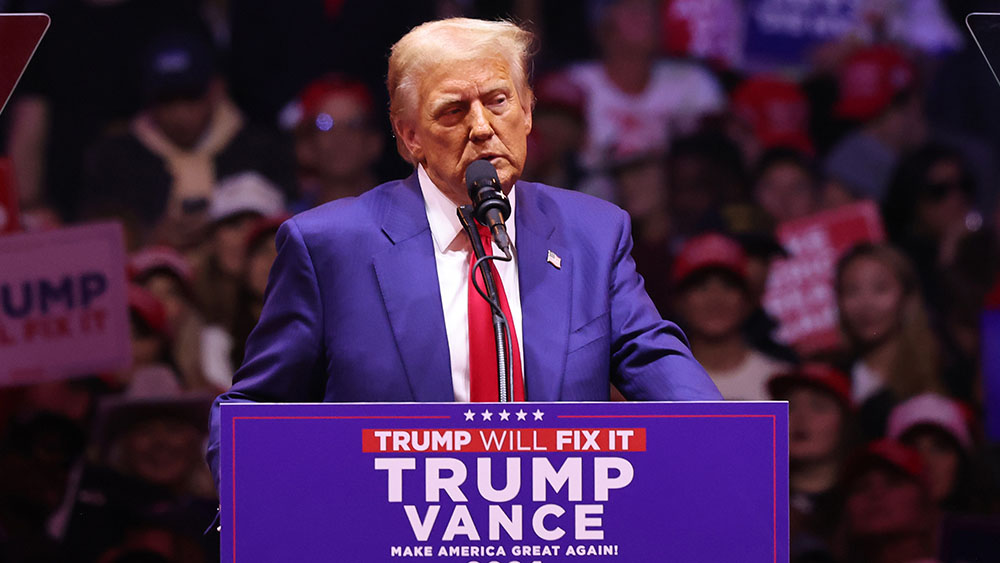
(NaturalNews) President Donald Trump signed an executive order on Jan. 26 to reinstate more than 8,000 service members who were discharged or left the military…

(NaturalNews) Sen. Rand Paul asserts that the COVID-19 pandemic originated from a lab leak in Wuhan, China, and accuses the Chinese Communist Party of covering…

(NaturalNews) The White House, under Press Secretary Karoline Leavitt, has introduced new rules to increase access for independent journalists and smaller…

(NaturalNews) A Sapien Labs study links early smartphone use in teens to increased aggression, hallucinations, and detachment from reality. 37% of…

(NaturalNews) Bank of America (BofA) faces allegations of political discrimination against conservatives, despite denying such claims. High-profile figures…

(NaturalNews) Robert F. Kennedy Jr. faced a contentious confirmation hearing for leading HHS, clashing with senators over industry ties. Kennedy proposes…

(NaturalNews) President Donald Trump plans to impose a 25% tariff on imports from Canada and Mexico, effective March 1, using the International Emergency…
Mark Zuckerberg is a name synonymous with that self-righteousness that defines Silicon Valley. However, in recent times, he has undergone a rather unexpected metamorphosis. The 40-year-old now rocks a chain, a full head of curly hair replacing his signature Caesar cut, and a deep tan. To top it off, he’s even wearing a smile. Finally, it seems like someone toggled his humanity settings.
Maybe all those hours in the dojo have served as a metaphorical punch.
Once the poster boy for woke paternalism, dictating our digital morality with the precision of a helicopter parent tracking a rebellious teen, Zuckerberg now positions himself as a champion of free speech and common sense. His recent shifts leave us with an important question: Is this transformation genuine or just a calculated act of self-preservation?
Take, for example, his budding bromance with Dana White. Adding White — a no-nonsense symbol of rugged masculinity and bare-knuckle capitalism — to Meta’s board feels like either a masterstroke of authenticity or a painfully transparent PR stunt. Around the same time he shook hands with White, Zuckerberg dismantled Meta’s fact-checking services in favor of a community-driven model similar to X and scaled back several DEI initiatives. These shifts have left critics across the political spectrum baffled, though for vastly different reasons. The left is asking whether he’s lost his mind, while the right is wondering if he’s finally found it.
The confusion is understandable. For nearly two decades, Zuckerberg positioned himself as the self-styled arbiter of truth and master of centralized control. Now, he’s rebranding as a proponent of decentralization, shifting from policing the people to letting the people police themselves.
Zuckerberg’s recent 2.5-hour discussion with Joe Rogan showcased a new persona — one that lamented the dearth of “masculine energy” in American workplaces. But what does this even mean?
Again, important questions need to be asked.
Is it a rallying cry for a return to hard-nosed, stoic pragmatism or merely a desperate attempt to curry favor with Rogan’s sprawling libertarian audience?
While it may seem otherwise, Zuckerberg’s transformation isn’t without context. His pivot toward jiu-jitsu — and the martial arts culture that prizes perseverance, meritocracy, and humility over virtue-signaling — marks a symbolic departure from his earlier ethos. Zuck has waxed lyrical about his newfound passion, and it seems genuine; he even clinched a win in a legitimate competition. In 2023, he took home the gold in the Nogi Master 1 White Belt Featherweight Division and claimed silver in the Gi Master 2 White Belt Featherweight Division.
Rogan’s post-interview commentary on Theo Von’s podcast was particularly telling. In short, Rogan argued that nothing transforms a soft, sniveling snowflake into a rational libertarian quite like jiu-jitsu. He has a point. In the unforgiving world of combat sports, there’s no space for curated narratives or performative outrage — only the raw reality of outworking your opponent or getting choked out. It’s Darwinism distilled: predator or prey, eat or be eaten.
Having spent years in boxing and Muay Thai gyms, I can vouch for the brutal clarity that comes with physical confrontation. A punch to the face has a funny way of shattering illusions, forcing you to confront reality head-on. Maybe, just maybe, all those hours in the dojo have served as a metaphorical punch — a wake-up call for Zuckerberg. If so, it’s a long-overdue reckoning with the fallout of his policies and the ideological echo chambers his company helped create.
But let’s not hand Zuckerberg a black belt in authenticity just yet. Skepticism is warranted. In fact, it’s essential.
His recent statements — from defending free speech to decrying ideological conformity — might signal a genuine shift. Or they might just be the calculated moves of a CEO seeing which way the political winds are blowing (right, so very right). With figures like Elon Musk charming both Wall Street and Main Street, Zuckerberg’s pivot seems like a calculated attempt to curry favor with the new administration. The tech bro is many things, but he’s certainly not stupid.
There are, however, reasons for cautious optimism. If Zuckerberg’s jiu-jitsu journey has truly instilled a respect for merit and hard work, this could herald a long-overdue recalibration of Meta’s priorities. Imagine a future in which the company genuinely champions free expression and fosters a marketplace of ideas instead of reflexively bowing to the demands of vocal activist groups. It’s a tantalizing prospect, but one that requires more than a few podcast sound bites to actualize.
Moreover, Zuckerberg’s recent shift aligns with broader societal currents. People are fed up. There’s a growing backlash against the overreach of woke ideologies, particularly in corporate environments where diversity initiatives often devolve into box-ticking exercises. By championing skill and competency, Zuck could frame himself as a leader ready to challenge the status quo. It’s pathetic, I know. But that’s how low the bar has fallen.
Another factor to consider is Zuckerberg’s relationship with public perception. For years, he’s been seen as a robotic overlord, an archetype of the out-of-touch tech elite. Remember the infamous clip of Zuckerberg awkwardly declaring, “I like to smoke meats”? It cemented his title as tech’s king of cringe. Meant to humanize him, his alien-like delivery only fueled memes and highlighted his inability to connect with real people. Now, with his dojo sessions and sudden embrace of masculinity, Zuck seems to be crafting a more relatable image — and surprisingly, it’s working.
But can we really trust him?
That depends on the consistency of his actions. If Zuckerberg’s transformation is genuine, we should see real changes in how Meta operates — perhaps a platform less eager to censor dissent and more open to fostering true dialogue. If it’s merely performative, a fleeting nod to the cultural zeitgeist, it won’t be long before his carefully crafted image begins to crack.
Tech, Mark zuckerberg, Meta, Joe rogan, Joe rogan experience, Maga, Theo von
Donald Trump’s recent political comeback was like something out of a Hollywood movie — if Hollywood still made fun, action-packed, patriotic crowd-pleasers, that is.
It’s no secret that our once-proud film industry is on the verge of collapse. In order to make the multiplex great again, Trump has assembled a dream team of A-list veterans: Mel Gibson, Sylvester Stallone, and Jon Voight.
This isn’t just about the future of comic-book movies — it’s about the continued survival of Hollywood itself.
But they’re not going to usher in a golden age of American cinema on their own. They’ve got some high-powered help on their side: namely, Superman.
Yes, the Man of Steel — one of the most beloved fictional characters in all of cinema and the definitive superhero, instilling the values of hope and kindness with his never-ending fight for “truth, justice, and the American way.”
Like the Trump of four years ago, Superman is an American icon who’s seen better days. That could change when he mounts a comeback of his own with writer/director James Gunn’s upcoming fresh take on the legend.
The “Guardians of the Galaxy” auteur and DC Studios co-head has promised to get back to Superman’s roots, with a portrayal (by David Corenswet, who takes the baton from Henry Cavill) focusing on a hero who is “kindness in a world that thinks that kindness is old-fashioned.”
So far so good. But then came Gunn’s recent comments on the film’s teaser trailer, which some fans say are a sign that we’re in for something “political.”
Here’s what Gunn said:
We do have a battered Superman in the beginning [of the teaser trailer]. That is our country. I believe in the goodness of human beings, and I believe that most people in this country, despite their ideological beliefs, their politics, are doing their best to get by and be good people — despite what it may seem like to the other side, no matter what that other side might be. This movie is about that. It’s about the basic kindness of human beings and that it can be seen as uncool and under siege [by] some of the darker voices and some of the louder voices.
Controversial? Hardly.
Refreshing? Absolutely.
Gunn has been vocal in the past about his political leaning and his disapproval of Donald Trump. But this premise shows that he, like many others, is far more interested in unity than division, creating a Superman story that focuses on the fact that we are all flawed human beings trying to do our best, even if it doesn’t always seem like it.
This hints that Superman might, out of kindness, do something that will shake the confidence of the people of Metropolis in him and force him to potentially butt heads with other superheroes featured in the film, such as Green Lantern Guy Gardner (Nathan Fillion), Hawkgirl (Isabela Merced), and Mr. Terrific (Edi Gathegi).
It promises a sincere tone that has more in common with Richard Donner’s “Superman: The Movie” than with Zack Snyder’s “Man of Steel”; even going so far as to use a “rock and roll” version of the Donner film’s classic John Williams theme.
“Superman” will also feature the live-action film debut of Krypto the Superdog alongside Superman regulars Lois Lane (Rachel Brosnahan), Jimmy Olsen (Skyler Gisondo), Jonathan Kent (Pruitt Taylor Vince), and archenemy Lex Luthor (Nicholas Hoult).
If anyone could be expected to harbor some resentment toward the right, it’s Gunn. After all, it was a conservative campaign that resurfaced the tasteless tweets that led Disney to fire Gunn. Of course, Gunn landed on his feet, getting picked up by Warner Bros. to direct “The Suicide Squad” for DC. This in turn led to his rehiring by Disney (after he apologized for the tweets) to direct “Guardians of the Galaxy Vol. 3.”
Now he’s returned to DC as co-CEO alongside Peter Safran to create a rebooted DC Comics cinematic universe.
That universe will launch with the premiere of “Superman” on July 11.
It seems that after all that’s happened to him, Gunn, like most Americans, has had enough vitriol and partisan sniping.
Left or right, if you’re in the movie biz, you’re on the same sinking ship. Which is why everybody has their hopes set on Superman. This isn’t just about the future of comic-book movies — it’s about the continued survival of Hollywood itself.
Gunn seems to recognize this, determined to make a Superman movie not just for comic-book fans but for all mankind.
While most superhero media over the past several years has been an exercise in retaining brand rights, Gunn’s “Superman” seems to have far grander ambitions: to inspire hope and remind us of what unites us, rather than what divides us. In year one of America’s new golden age, it’s only fitting that our greatest, most enduring hero lead the way.
Superman, Dc, Movies, James gunn, Dc universe, Donald trump, Make america great again, Sylvester stallone, Jon voight, Mel gibson, Hollywood, Culture
The U.S. Department of Justice acknowledged in court filings that Oath Keeper Jeremy Brown’s Florida weapons-possession case was directly related to Jan. 6, leaving bewilderment among his supporters as to why he remains behind bars even after a Jan. 6 presidential pardon.
Carolyn Stewart, Brown’s attorney, said these court filings are ample evidence to prove that the DOJ, Brown’s defense team, and a U.S. district judge all agreed that the Florida case that sent Brown to prison for more than seven years was a Jan. 6 case.
“Done. Fully baked,” Stewart told Blaze News. “Yet DOJ has prevented Jeremy’s release under President Trump’s pardon.”
‘This isn’t rocket science.’
Stewart called on the acting U.S. attorney general to order Brown’s release from U.S. Bureau of Prisons custody.
“President Trump’s order for release of those incarcerated for J6-related charges was blocked by shadowy D.C. actors on Jan. 20th,” Stewart said. “These unidentified actors decided outside legal discourse to keep Jeremy incarcerated and move him to Kentucky and now BOP in FCI Atlanta.”
If the U.S. attorney in Tampa won’t “do the right thing,” Stewart said, “then the acting U.S. attorney general or his deputy must order the BOP to release Jeremy Brown. The BOP is under DOJ. DOJ is under the U.S. attorney general. This isn’t rocket science.”
A U.S. Department of Justice court filing from January 2024 shows the DOJ considers the Florida weapons case against Jeremy Brown to be a Jan. 6 case.U.S. Court of Appeals for the 11th Circuit
The July 2022 and January 2024 court filings mean the Florida case is covered by President Donald J. Trump’s Jan. 6 pardon proclamation and Brown should be freed immediately, Stewart said.
After President Trump announced more than 1,500 Jan. 6 pardons hours after being sworn in as the 47th president of the United States, Brown fully expected to be released from the District of Columbia jail.
He was preparing to leave and meet his mother and girlfriend, who waited outside. Jail staff reversed course and told him he would not be released after all due to the Florida conviction, Brown said in a statement.
Brown was taken from D.C. by U.S. Marshals and deposited at the Grayson County Detention Center in Leitchfield, Ky. Brown told his girlfriend, Tylene Aldridge, that he was in a room with 15 other men and had to sleep on a mat next to the toilet. After a few days, Brown was moved again, this time to FCI Atlanta, a low-security federal prison in northern Georgia.
A July 2022 court filing by the U.S. Department of Justice shows the search warrant that spawned a weapons case against Jeremy Brown was directly related to Jan. 6. Defense attorneys say this means President Donald Trump’s Jan. 20 pardon covers all of Brown’s cases.U.S. District Court for the Middle District of Florida
Stewart pointed the finger at Roger Handberg, U.S. attorney for the Middle District of Florida, a Biden appointee who assumed the position in September 2022.
“DOJ has to clean its laundry: the fed U.S. attorney (Biden appointee who persecuted Jeremy) for the FL Middle Distr. is ignoring the J6 pardon,” Stewart posted on X Jan. 24.
Blaze News asked the U.S. Attorney’s Office in Tampa if it had made a legal determination that Brown must be kept in custody because the Florida case was not a Jan. 6 case.
“No further information regarding the Middle District of Florida case is available at this time,” replied William Daniels, public affairs officer, in an email to Blaze News.
A court filing by the U.S. Department of Justice in the Florida criminal case against Jeremy Brown shows that the judge concluded the search warrant application for Brown’s property that spawned the case was related to Jan. 6 at the U.S. Capitol. U.S. Court of Appeals for the 11th Circuit
The new U.S. attorney for the District of Columbia, Edward Martin Jr., filed a motion to dismiss the D.C. case with prejudice.
The D.C. and Tampa criminal cases lodged against Brown both sprang from an FBI search of his home, an RV and a trailer parked on his property in Tampa.
On April 7, 2023, Brown was sentenced to 87 months in prison by Senior U.S. District Judge Susan Bucklew on six criminal counts that included possessing a short-barrel rifle and shotgun, possession of explosive grenades, improper storage of explosive grenades, and willful retention of a national defense document. Brown was acquitted of four other counts. Bucklew was appointed to the bench in 1993 by President Bill Clinton.
Brown’s supporters see the government’s refusal to release Brown as ongoing persecution because he refused to spy on the Oath Keepers as an informant and blew the whistle on efforts by the FBI’s Joint Terrorism Task Force to recruit him during a December 11, 2020, meeting in Ybor City, Fla. Brown recorded the meeting with the agents’ permission, he said.
In a July 11, 2022, response to Brown’s motion to suppress evidence in his Florida case, federal prosecutors stated: “The search warrant related to the defendant’s involvement in the January 6, 2021, events at the U.S. Capitol Building.”
On Jan. 16, 2024, the DOJ made a very similar claim in a response to Brown’s appeal to the U.S. Court of Appeals for the 11th Circuit.
Jeremy Brown, a former U.S. Army Green Beret, watches as Metropolitan Police Department officers push crowds off the Upper Terrace at the U.S. Capitol on Jan. 6, 2021.Metropolitan Police Department bodycam
Stewart said the search warrant for Brown’s Tampa property should not survive appeals court scrutiny.
“The search warrant was illegal,” Stewart told Blaze News in a statement. “… The court should have excluded the fruits (govt. planted) of the poisonous tree that would have forced case dismissal. Now some form of pardon must ensure release and vindication.”
The search warrant was signed by D.C. Magistrate Judge Zia Faruqui. Judge Faruqui was able to sign a warrant for a judicial district so far away because the DOJ claimed Brown’s presence at the Capitol on Jan. 6 was related to domestic terrorism.
Brown was charged with four trespass-related misdemeanors in the D.C. case, not terrorism. On a motion from the new U.S. attorney in D.C., U.S. District Judge Amit Mehta ordered the D.C. case against Brown dismissed with prejudice, meaning the charges cannot be filed again.
‘They turned off the cameras first thing, just like at Mar-a-Lago.’
Stewart and Brown’s appellate attorney, Michael Ufferman, argue that the search warrant was “facially defective” because it did not specify what agents were seeking. The warrant application references “Attachment A” and “Attachment B,” which are simply photographs showing Brown’s residence, an RV parked in the driveway and a black covered trailer.
In their reply to Brown’s appeal, prosecutors claim it was a “typographical error” that mistakenly referenced Attachment B instead of Attachment E, a detailed list of items that Stewart said was not present during the search of Brown’s residence.
Stewart Rhodes, founder of the Oath Keepers who has been lobbying for Brown’s release, compared Brown’s situation and that faced by President Trump.
“It’s a direct parallel to what they did to President Trump,” Rhodes told Blaze News in an interview. “They filed a case against him in D.C., and while they were at it, they filed a case against him where he lived in Florida. Same thing with Jeremy, and it’s the same pattern of behavior. When they came in his house, they turned off the cameras first thing, just like at Mar-a-Lago.”
Oath Keepers founder Elmer Stewart Rhodes III speaks to reporters at the Longworth House Office Building on Capitol Hill on Jan. 22, 2025, after visiting with lawmakers about the case of Jeremy Brown. Photo by Kent Nishimura/Getty Images
When FBI agents descended on Brown’s residence on Sept. 30, 2021, they disabled all of the security cameras. Agents found two firearms with short barrels during the search. Stewart called the guns “heirlooms” that had belonged to Brown’s father and his late brother, who took his own life.
When agents searched the RV, they said they found two M67 fragmentation grenades in the pockets of a vest. Brown said the explosives were not his and he had never seen them before.
Extensive FBI lab testing on the grenades found no evidence that linked the explosives to Brown or his RV. This included comparison analysis of a dog hair found underneath one of the grenades to Brown’s dogs. There was no match.
“They cut out fibers from the RV. They vacuum to get fibers,” defense attorney Ufferman wrote in Brown’s appeal. “The expert then has to compare the fiber that was found underneath the grenade to his fibers. Guess whose fibers were excluded? Mr. Brown’s.”
A list of documents the DOJ said were classified were found on a data compact disc in Brown’s briefcase. Brown said the CD was not his.
“Mr. Brown would have had to have gone through the desert in Kuwait, in Afghanistan, brought into the country, held through the 17 years,” Brown’s appeals brief said. “You’ll see without a scratch on that CD, without a discoloration on that CD, with a sticker that if he wanted to conceal, because he knew they were coming to visit him that day, could have just peeled off.”
Oral arguments in Brown’s appeal are scheduled for March 6 in Jacksonville, Fla.
Like Blaze News? Bypass the censors, sign up for our newsletters, and get stories like this direct to your inbox. Sign up here!
Jeremy brown, January 6, J6, Jan. 6, Oath keepers, Donald trump, J6 pardons, Politics
When the Indiana Fever’s Caitlin Clark — “the biggest star in American sports” — was asked to compete against Steph Curry in the NBA’s All-Star three-point contest, she declined.
The invitation was an attempt to revive the NBA’s All-Star weekend “that has lost virtually all of its appeal,” says Jason Whitlock, who thinks Clark’s decision was wise.
“Clark and her handlers smartly realized she shouldn’t attach her brand to trying to resuscitate the NBA, which has turned into the Fyre Festival of basketball during the LeBron James-Adam Silver era,” he says.
Jason gives a recap of the NBA’s decline.
After a successful eight-year stint with the Cleveland Cavaliers, James, he argues, proved he was “turning toxic when he took his talents to the Miami Heat as a shortcut to win championships, [ushering] in the player empowerment movement.” The succession of Adam Silver as commissioner of the league coupled with James’ self-serving mentality created “a match made in basketball hell,” as Silver’s “weak leadership allowed the players to seize total control of the league.”
This combination normalized “jumping from team to team in search of championships,” “[popularized] load management and skipping games,” and encouraged a lukewarm approach to the All-Star Game.
Add to that the facts that James involved himself in left-wing politics and that many of the league’s best players are now foreigners, and it’s no surprise that the NBA has become “a shell of what it was during the Jordan-Magic-Bird-David Stern era,” says Jason.
“Adam Silver wants to give up on the American market and chase foreign relevance and television contracts; the NBA wants to be a streaming service league,” he opines. Inviting Clark to participate in the All-Star weekend, which is essentially “a traveling three-day Lollapalooza for rappers, weed smokers, and sex workers,” was “a desperate attempt to appease American sports fans.”
Some may argue that because the NBA has financed the “money-losing WNBA for nearly 30 years,” Clark owes the league. But Jason says rejection is exactly what Silver deserves after “financing feminism.”
“You created Frankenstein. The WNBA and its players feel zero obligation to help the NBA. Feminists are not builders; they’re not providers; they feel no obligation to help men,” he says. “Why would Clark feel obligated to help a league or a bunch of men who destroyed themselves by empowering the matriarchy?”
To hear more of Jason’s commentary, watch the clip above.
To enjoy more fearless conversations at the crossroads of culture, faith, sports, and comedy with Jason Whitlock, subscribe to BlazeTV — the largest multi-platform network of voices who love America, defend the Constitution, and live the American dream.
Fearless, Fearless with jason whitlock, Jason whitlock, Blazetv, Blaze media, Caitlin clark, Wnba, Steph curry, Nba, Adam silver, Lebron james
President Donald Trump opened his second inaugural address by declaring, “The golden age of America begins right now.” His new term promises a transformational four years. While foreign policy, economic concerns, and political divisiveness will dominate headlines, a quieter yet far-reaching revolution is underway. Massive technological innovation coincides with Trump’s presidency, setting the stage for societal changes that will shape the coming decades. These advancements offer progress but also demand vigilance as the nation navigates their ethical and societal challenges.
By the time Trump leaves office in January 2029, artificial intelligence, automation, self-driving cars, quantum computing, and other emerging technologies will have reached unprecedented levels. Their evolution and impact on society will likely shape the future more profoundly than the political battles of today.
The next few years will hinge on how society embraces innovation while protecting freedoms, privacy, and stability.
OpenAI, Tesla, and IBM are driving technological advancements, investing billions in research and development to turn science fiction into reality. The AI startup sector alone secured more than $100 billion in global investments last year. Companies pursuing quantum computing, including Google and IBM, are racing toward quantum supremacy, aiming for breakthroughs that could transform entire industries. Tesla and Waymo are investing billions in self-driving cars, positioning themselves to revolutionize transportation.
This surge in investment and innovation highlights the transformative power of these technologies. At the same time, it raises concerns about how society will navigate their rapid evolution. As these breakthroughs accelerate during Trump’s presidency, the stakes remain high — not only for harnessing their potential but also for mitigating their risks
Artificial intelligence has advanced rapidly in recent years, evolving from narrow, task-specific algorithms to sophisticated systems capable of natural language understanding, image recognition, and even creative tasks like generating art and music. OpenAI’s ChatGPT and Google’s DeepMind have become household names, demonstrating AI’s expanding role in everyday life and business.
By 2029, industry experts expect AI to grow more advanced and deeply integrated into society, influencing everything from health care to legal systems. Breakthroughs in generative AI could enable machines to produce realistic virtual experiences, transforming education, entertainment, and training. AI-driven research is also poised to accelerate discoveries in medicine and climate science, with algorithms identifying solutions beyond human capabilities.
These advancements promise significant benefits. AI could revolutionize medicine by personalizing treatments, reducing errors, and improving access to care. Businesses may see substantial productivity gains, driving economic growth and innovation. Everyday conveniences, from personal assistants to smart infrastructure, could enhance quality of life, relieving people from mundane tasks and fostering greater creativity and leisure.
The rapid integration of AI raises serious concerns. As AI systems collect and analyze vast amounts of data, issues of surveillance, privacy, and consent demand attention. There are automated decision-making risks that could displace workers, worsen economic inequality, and foster new forms of dependency. Misuse — whether through biased algorithms, manipulative propaganda, or authoritarian control — heightens the need for vigilance. Protecting individual liberty and ensuring AI serves society, rather than undermining it, remains crucial.
Advanced robotics and automation are rapidly transforming traditional industries. Robots already handle complex tasks in manufacturing, agriculture, and logistics, but improvements in dexterity and AI-driven decision-making could make them essential across nearly every sector by the decade’s end.
Several companies are racing to develop increasingly advanced robots. Tesla’s Optimus and Agility Robotics’ Digit are humanoid models designed to perform tasks once exclusive to humans. As Agility Robotics strengthens its partnership with Amazon, Elon Musk predicts robots will outnumber people within 20 years.
While automation boosts efficiency and productivity, it also threatens jobs. Millions of workers risk displacement, creating economic and social challenges that demand thoughtful solutions. The Trump administration will likely face mounting pressure to balance innovation with protecting livelihoods.
Self-driving vehicle technology has long been anticipated, with Elon Musk initially predicting its emergence by 2019. While that timeline proved optimistic, autonomous vehicle technology has advanced significantly in recent years. What began as experimental prototypes has evolved into semi-autonomous systems operating in commercial fleets. By 2029, fully autonomous vehicles could become widespread, transforming transportation, urban planning, and logistics.
Despite these advancements, controversies remain. Questions about safety, liability, and infrastructure lack clear answers. Additionally, concerns about centralized control over transportation systems raise fears of surveillance and government overreach. The Trump administration will play a crucial role in shaping regulations that safeguard freedom while fostering innovation.
Quantum computing, once limited to theoretical physics, is rapidly becoming a practical reality. IBM and Google have led advancements in this technology, with Google recently unveiling Willow, a state-of-the-art quantum computer chip. According to Google, Willow completed a complex computation in minutes — one that would have taken the world’s most advanced supercomputers 10 septillion years. That’s more than 700 quintillion times older than the estimated age of our universe.
With the ability to solve problems at speeds unimaginable for classical computers, quantum computing could transform industries like cryptography, drug development, and economic modeling.
This technology also presents serious risks to privacy and security. Quantum computing’s ability to break traditional encryption methods could expose sensitive data worldwide. As the field advances, policymakers must develop strong regulations to protect privacy and ensure fair access to this powerful technology.
These technological advancements could drive extraordinary breakthroughs, including drug discoveries, disease cures, and an era of abundance. But they also pose significant risks. Concerns over data collection, job displacement, surveillance, and coercion are not hypothetical — they are real challenges that will require attention during Trump’s term.
The next few years will hinge on how society embraces innovation while protecting freedoms, privacy, and stability. Trump’s role in this technological revolution may not dominate headlines, but it will likely leave the most lasting impact.
Donald trump, Golden age, Ai, Artificial intelligence, Big tech, Chatgpt, China, Tesla, Elon musk, Self-driving vehicle, Automation, Medicine, Robots, Amazon, Algorithm bias, Quantum computing, Internet, Privacy, Centralization, Opinion & analysis
Is this just another cycle, or is it the END? Martin Armstrong of Armstrong Economics published an article this week about the so-called Socrates program and how [more…]

“I assure you all options are open on the southern front. They can be adopted anytime.” Summary recap: Hezbollah Secretary-General Hassan Nasrallah’s speech went for [more…]

Putin orders planeloads of humanitarian aid to be sent to Egypt The Russian Ministry Emergency Situations said on Friday that it would send two aircraft [more…]

It is Tunisia’s duty to stand with the Palestinians, its president has said The Tunisian parliament on Thursday began discussing a bill that would define [more…]

Suspected provocateur specifically stated, ‘We’re here to storm the capitol. I’m not kidding.’ In a new mini-documentary diving into Jan. 6, investigative journalist Lara Logan [more…]

Mainstream media claims Obama-Biden partnership has only been happening for 5 months. Former President Barack Obama has been secretly advising the Biden administration for several [more…]

“This case could completely wipe out the ATF’s ability to create law and subvert congress, which would be a massive win for the Second Amendment.” [more…]

Elon Musk chimed in to question ‘how common’ this type of illegal activity is during American elections Bridgeport, Connecticut, the largest city in the state, [more…]