



Is this just another cycle, or is it the END? Martin Armstrong of Armstrong Economics published an article this week about the so-called Socrates program and how [more…]

ESPN broadcaster Stephen A. Smith has been making the rounds on political podcasts, and now, a 2028 Democratic primary poll has put him in the running for the presidential nomination.
Jason Whitlock of “Fearless” isn’t surprised.
“When I read Stephen A. Smith’s book,” he begins, “the first thing I did was come on this show and say, ‘Hey man, this dude is planning to run for president. That’s the only reason why you write a book like this.’”
While others thought Whitlock was crazy and that Smith would never get the votes for it, he reasons that if someone like Kamala Harris could end up in the running for president, then anyone can.
“Kamala Harris, who got her start in politics as Willie Brown’s side piece and who puts together word salads — incomprehensible word salads is like her signature — and her cackling. No qualifications for the job, and you think they couldn’t run Stephen A. Smith for president? Are you kidding me?” Whitlock says.
“Don’t think they couldn’t install Stephen A. Smith as president. You think Stephen A. Smith is running from political show to political show to political show just for, ‘Hey, he likes being on TV’? There’s a purpose involved,” he continues. “This is what they do when they want to install someone as president.
Some might combat Whitlock’s prediction with the belief that America is not stupid enough to vote in an ESPN broadcaster, but again, he disagrees.
“Yes, we are,” he says, citing Obama’s presidency as proof. “Newsweek put him on the cover and called him the first gay president because he put the ‘Q’ in pride month, or the trans in pride month. He put the transgenderism thing on the agenda. He normalized and mainstreamed same-sex marriage, and black people worship him.”
“The delusion and the worship, the racial idolatry is so strong with the left that no one can deal with the truth of what Barack Obama was and what he did and what he represented,” he continues. “And you think Disney, Bob Iger, the people backing Stephen A. Smith, think they can’t get you to worship Stephen A. Smith? Are you kidding me?”
To enjoy more fearless conversations at the crossroads of culture, faith, sports, and comedy with Jason Whitlock, subscribe to BlazeTV — the largest multi-platform network of voices who love America, defend the Constitution, and live the American dream.
Video phone, Free, Upload, Camera phone, Video, Sharing, Youtube.com, Fearless, Jason whitlock, Fearless with jason whitlock, The blaze, Blazetv, Blaze news, Blaze podcasts, Blaze podcast network, Blaze media, Stephen a smith, Kamala harris, Barack obama, President of the united states, 2028 election
(NaturalNews) That old saying about killing two birds with one stone feels pretty spot-on hereâbut even more so, itâs starting to feel like the infamous…

(NaturalNews) Nicotine’s structure closely resembles vitamin B3 (niacin), a nutrient vital for skin health, digestion, and cognitive function. This similarity…
(NaturalNews) The Russia-Ukraine war has entered its third year, with negotiations hindered by both sides’ entrenched positions. Ukrainian President…
(NaturalNews) U.S. President Donald Trump is reportedly planning to withdraw thousands of American troops from Syria, a move that has not been officially…
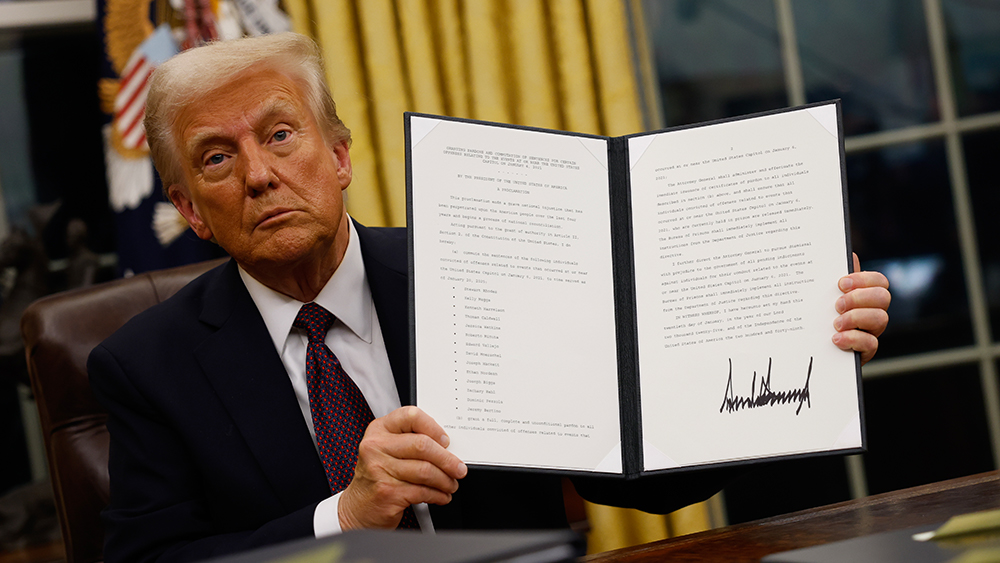
(NaturalNews) President Donald Trump signed the Laken Riley Act into law on Jan. 29, enhancing public safety measures for illegal aliens involved in criminal…

(NaturalNews) Episode 9 of “Off Grid Survival Skills,” airing on Feb. 9, features former geothermal research manager Dave Glowka, who shares his innovative…

(NaturalNews) Singer Avery reveals on Instagram that Ozempic, a popular weight-loss drug, has caused her to develop osteoporosis. Averyâs journey with…

(NaturalNews) President Trump signed an executive order to reinstate military personnel discharged for refusing the COVID-19 vaccine. DHS Secretary Kristi…

(NaturalNews) Following Donald Trump’s reelection, the entertainment industry is experiencing a moment of profound self-reflection, realizing its political…
(NaturalNews) Leonard Leo, a prominent conservative legal activist, is spearheading an effort to block Robert F. Kennedy Jr.’s nomination to head the…

(NaturalNews) The Trump administration has set aggressive daily arrest quotas for ICE, targeting illegal immigrants with criminal records in major sanctuary…
Today is Feb. 3, 2025, and the Senate has confirmed eight of President Donald Trump’s nominees. That means he’s running ahead of Joe Biden, who by the end of Feb. 3, 2021, still only had seven Cabinet members confirmed.
But one key difference is the level of Democrat resistance. Republicans may often be painted with the “obstructionist brush,” but of Biden’s seven confirmations through Feb. 3, only two Republicans voted against them all. When you compare that with Trump’s, excepting former Sen. Marco Rubio, 12 Democrats have voted no (or skipped) every single nominee. By contrast, the only two Republicans who voted against all seven of Biden’s nominees through Feb. 3 were Sens. Ted Cruz of Texas and Josh Hawley of Missouri.
This new level of obstruction puts Trump nominees Tulsi Gabbard and Robert F. Kennedy Jr. at particular risk and empowers Republican Senate opposition to the president.
Twelve isn’t a small number in the U.S. Senate. Just three Republicans — Cruz, Rand Paul of Kentucky, and Mike Lee of Utah — earned the nickname “wacko birds” for holding up President Barack Obama’s second-term Senate agenda. Before them, senators such as Jim DeMint (R-S.C.), Jesse Helms (R-N.C.), and Robert Byrd (D-W.V.) earned reputations for jamming up the Senate, though the ability of small groups of senators to hold up major nominations lessened after then-Senate Majority Leader Harry Reid (D-Nev.) abolished the filibuster for most nominations in November 2013.
While remaining Senate decorum meant they confirmed their own colleague, Rubio, these 12 voted against (or skipped the votes for) Scott Bessent for the Department of the Treasury, Pete Hegseth for the Department of Defense, former Gov. Doug Burgum for the Department of the Interior, former Rep. Sean Duffy for the Department of Transportation, former Gov. Kristi Noem for the Department of Homeland Security, former Rep. Lee Zeldin for the Environmental Protection Agency, and John Ratcliffe for the Central Intelligence Agency.
Those 12 Democrats are Sens. Tammy Duckworth (Ill.), Mazie Hirono (Hawaii), Ed Markey (Mass.), Jeff Merkley (Ore.), Chris Murphy (Conn.), Patty Murray (Wash.), Jon Ossoff (Ga.), Jack Reed (R.I.), Chris Van Hollen (Md.), Elizabeth Warren (Mass.), Ron Wyden (Ore.), and “independent” (except when running for president) Bernie Sanders (Vt.).
That’s no group of backbenchers or rabble-rousers. When Cruz and Hawley were pelting Biden’s nominees, neither had yet held a chairmanship or ranking-member position. By contrast, Markey is the top Democrat on the Small Business and Entrepreneurship Committee, Merkley for Budget, Murray for Appropriations, Reed for Armed Services, Warren for Banking, Wyden for Finance, and Sanders for Health, Education, Labor and Pensions.
The obstructionists hold key posts and are trusted by Minority Leader Chuck Schumer (N.Y.). Thus far, it hasn’t stopped any nominee, though last week, the Democrats’ obstruction forced the vice president to break a tie on a confirmation for only the second time in history.
This new level of obstruction puts Trump nominees Tulsi Gabbard and Robert F. Kennedy Jr. at particular risk and empowers Republican Senate opposition to the president. It virtually guarantees whisper campaigns and parlor games, as the White House and its allies try to determine which Republicans they can count on and which will join Democrats in holding up the president’s agenda.
Partisan blocks have grown worse in recent years in general, but these Democrats have taken it to a new level. By Feb. 3, 2009, Barack Obama had seen 13 votes through and had 14 Senate-confirmed Cabinet-level positions filled (when you include Secretary of Defense Robert Gates, a holdover from President George W. Bush’s presidency). Of those 14, only two garnered noteworthy resistance in the Senate: Secretary of the Treasury Tim Geithner (34 nays) and Attorney General Eric Holder (21 nays).
Far from noteworthy resistance, three of Obama’s nominees were confirmed by unanimous consent (a quick procedure that can be derailed by a single objection), and four were confirmed by a voice vote (meaning they didn’t even bother to write it down), including U.N. Ambassador Susan Rice. In keeping with Senate niceties, former Sen. Hillary Clinton (D-N.Y.) was confirmed 94-2, with only Sens. Jim DeMint and David Vitter (R-La.) opposing.
It’s a new era of obstruction by Democrats and members of the president’s own party. It’s not easy to shake things up in Washington. But it does paint a clearer picture of what the White House is up against in the upper legislative chamber. Next time you see Sanders yelling about onesies, hear Warren banging the war drum, or are subjected to Wyden’s lispy interrogation, remember: This guy’s a no vote no matter what the answer is. It might put a few things in perspective.
Blaze News: Tulsi Gabbard’s confirmation hangs in the balance
Blaze News: GOP senators advance Trump’s OMB pick despite Democrat boycott
Blaze News: Dem senators try to tank RFK Jr. despite seeing eye to eye on Big Pharma
Blaze News: House Dems almost unanimously vote against bill protecting babies who survive abortion
Sign up for Bedford’s newsletter
Sign up to get Blaze Media senior politics editor Christopher Bedford’s newsletter.
Opinion & analysis, Politics
Flanked by some of the Big Tech executives whose companies had suppressed the views of his supporters throughout his predecessor’s term, President Trump on Jan. 20 declared the days of such speech policing over.
Hours later, the president put action behind his words, signing an executive order prohibiting the federal government from engaging in, facilitating, or funding “any conduct that would unconstitutionally abridge the free speech of any American citizen.”
‘Americans are free people, and we do not take infringements upon our liberties lightly. The time has come for resistance and to reclaim our God-given right to free expression.’
The move was celebrated by those who see it as a blow against the censorship industrial complex. Others cast the executive order as giving dangerous license to “misinformation” and “disinformation.”
What is clear is that this is just the latest salvo in an ongoing war over the digital public square, pitting the Trump administration and like-minded Republican congressional allies against not only domestic opponents but the global counter-disinformation ecosystem.
The global speech-policing effort is looking like an early target. Trump himself seemed to convey that when he touted his order in a remote address on January 23 to the World Economic Forum in Davos. The elite global conclave had recently declared “misinformation and disinformation” the leading short-term risk to the globe for the second-straight year, “underlining their persistent threat to societal cohesion and governance by eroding trust and exacerbating divisions within and between nations.”
Two days after his inauguration, Trump’s secretary of state, Marco Rubio, released the “Priorities and Mission of the Second Trump Administration’s Department of State.” The short document included the charge that Foggy Bottom “must stop censorship and suppression of information.” Rubio continued:
The State Department’s efforts to combat malign propaganda have expanded and fundamentally changed since the Cold War era and we must reprioritize truth. The State Department I lead will support and defend Americans’ rights to free speech, terminating any programs that in any way lead to censoring the American people.
It is not yet known whether and to what extent Rubio’s approach will affect the reorganized successor to the State Department’s recently shuttered Global Engagement Center, whose efforts defenders had called essential to combating foreign propaganda. Critics have dismissed the reorganization — of an office that funded entities targeting disfavored domestic speech — as an effort to simply rebrand and persist.
The State Department did not respond to RealClearInvestigation’s inquiries in connection with this story.
The global “counter-disinformation” ecosystem encompasses research centers at top academic institutions and think tanks, fact-checkers, news raters, and like-minded for-profits — often funded or promoted by government agencies and powerful foundations, and operating and seeking to influence governments both stateside and across the Atlantic.
RealClearInvestigations, which recently previewed the censorship fight, emailed questions to other United States agencies and departments believed to be involved, directly or indirectly, in speech suppression on social media or otherwise likely to have a role in implementing the order.
These included the Department of Justice and the FBI; the Department of Homeland Security and its Cybersecurity and Infrastructure Security sub-agency; Departments of Defense and Health and Human Services; National Science Foundation; and Office of Management and Budget.
“The Department of Defense will fully execute and implement all directives outlined in the executive orders issued by the president, ensuring that they are carried out with utmost professionalism, efficiency, and in alignment with national security objectives,” a Pentagon official told RCI. The department has previously come under fire for providing funding to news rating entities like NewsGuard seen by critics as biased against conservative and independent outlets.
A National Science Foundation spokesman told RCI that the agency was “reviewing all the executive orders carefully and implementing them accordingly.” In a December 2024 report, the House Judiciary Committee asserted that the foundation had “poured millions of taxpayer-funded grant dollars into the development of AI-powered tools to mass monitor and censor online content.”
Several departments did not respond to RCI’s inquiries. Others referred questions to the White House. It did not respond.
Even as the new administration seeks to end government and government-supported censorship efforts, the more controversial part of Trump’s executive order may be its directive to identify those who quelled speech in the past.
The directive calls on the attorney general and other executive department and agency heads to probe federal government activities violative of the order that took place during the Biden years, whereby the administration “trampled free speech rights by censoring Americans’ speech on online platforms” and to prepare a report for President Trump “with recommendations for appropriate remedial actions.” It is not clear if such remedial actions will include prosecutions.
Columbia University law professor Philip Hamburger, founder and CEO of the New Civil Liberties Alliance, which represented several plaintiffs in the Supreme Court case Murthy v. Missouri — a case that exposed federal collusion with social media companies to suppress disfavored speech — told RCI that Trump’s action did not go far enough.
“The executive order, although very welcome, would have been even more valuable if it had waived qualified immunity for officials at CISA, the FBI, and other relevant agencies for purposes of free speech violations.”
Alex Abdo, litigation director of the Knight First Amendment Institute, also at Columbia University, offered an opposing view. Abdo wrote in Just Security that any probe of the Biden administration’s actions would be in bad faith, since the order prejudges the prior administration to have engaged in illicit conduct.
“Worse, the report may very well serve as an outlet for the Trump administration’s own censorial desires,” Abdo wrote. “If, for example, the report further targets researchers engaged in First Amendment protected research, then the administration will be doing exactly what it has accused the Biden administration of doing.”
The House Judiciary Committee is poised to undertake a complementary effort this session. A spokesman told RCI the panel “will continue its oversight work of the Department of Justice and the FBI, in addition to investigating the threat foreign censorship laws pose to American speech.”
Trump has previously called for enacting “new laws laying out clear criminal penalties for federal bureaucrats who partner with private entities to do an end-run around the Constitution and deprive Americans of their First, Fourth, and Fifth Amendment rights.”
To that end, the Judiciary Committee spokesperson told RCI that the panel would “move quickly to reintroduce legislation that will protect Americans’ First Amendment rights, such as the Censorship Accountability Act and the No Censors on our Shores Act.” The former would provide a right of action against federal employees for First Amendment violations. The latter would render any foreign official who engages in censorship of American speech inadmissible and deportable.
In the Senate, two days after the release of President Trump’s order, Kentucky Republican Rand Paul reintroduced the “Free Speech Protection Act.”
Consistent with the executive order, the legislation aims to bar federal employees from directing platforms to censor protected speech and prohibit grants “relating to programming on misinformation or disinformation.” It also imposes penalties on those who violate the law, including disciplinary action, a civil penalty of not less than $10,000, ineligibility for retirement benefits, and permanent revocation of any applicable security clearance. The bill would also allow those who believe their rights have been violated to bring a civil action against the allegedly offending agency and employee who committed the violation.
“Americans are free people, and we do not take infringements upon our liberties lightly. The time has come for resistance and to reclaim our God-given right to free expression,” Sen. Paul wrote in reintroducing the bill.
Editor’s note: This article was originally published by RealClearInvestigations and made available via RealClearWire.
Donald trump, Disinformation, Censorship, Online, Meta, Facebook censorship, Mark zuckerberg, First amendment, Davos, Executive orders, State department, Marco rubio, Censorship industrial complex, Rand paul, Free speech protection act, Department of justice, Weaponization, Fbi, Opinion & analysis
Few organizations embody the darker side of technological advancement like DARPA, the U.S. Department of Defense’s research arm. From stealth aircraft to the foundation of the internet, its innovations have reshaped warfare and infiltrated daily life. As anyone familiar with government agencies might expect, DARPA routinely crosses ethical lines, fueling serious concerns about privacy and control. Its relentless pursuit of cutting-edge technology has turned it into a force for domestic surveillance and behavioral manipulation. The agency operates with near-impunity, seamlessly shifting its battlefield innovations into the lives of ordinary Americans.
This precrime framework carries Orwellian implications.
One of DARPA’s most unsettling ventures is its development of an algorithmic Theory of Mind, a technology designed to predict and manipulate human behavior by mimicking an adversary’s situational awareness. Simply put, this isn’t just spying; it’s a road map for controlling behavior. While it’s framed as a military tool, the implications for civilian life are alarming. By harvesting massive amounts of behavioral data, DARPA aims to build algorithms that can predict decisions, emotions, and actions with unnerving precision. Imagine a world where such insights are weaponized to sway public opinion, deepen divides, or silence dissent before it even begins. Some might say we’re already there. Perhaps we are — but it can always get worse. Presented as a matter of national security, this kind of psychological manipulation poses a direct threat to free will and informed consent.
We live in a time when major agencies have shifted their focus inward. Domestic terrorism has become their new obsession. And in this climate, all Americans are fair game. The same surveillance and control mechanisms once reserved for foreign threats are now being quietly repurposed for monitoring, influencing, and manipulating the very people they claim to protect.
Equally alarming is DARPA’s Anticipatory and Adaptive Anti-Money Laundering program. Using artificial intelligence to predict illicit financial activities before they occur may sound like a noble pursuit, but this precrime framework carries Orwellian implications. A3ML casts an expansive surveillance net over ordinary citizens, scrutinizing their financial transactions for signs of wrongdoing. And as we all know, algorithms are far from infallible. They’re prone to bias, misinterpretation, and outright error, leaving individuals vulnerable to misidentification and false accusations. Consider the unsettling idea of being labeled a financial criminal because an algorithm misreads your spending habits. Soon, this won’t just be a hypothetical — it will be a reality.
Things are already bad enough.
Marc Andreessen, in a recent interview with Joe Rogan, highlighted the growing scourge of de-banking in America, where individuals sympathetic to Trump are unfairly targeted. This troubling trend underscores a larger issue: Algorithms, while often portrayed as impartial, are far from it. They’re engineered by humans, and in Silicon Valley, most of those humans lean left. Politically, the tide may be turning, but Silicon Valley remains dangerously blue, shaping systems that reflect its own ideological biases.
Without transparency and accountability, these systems risk evolving into even more potent tools of financial oppression, punishing innocent people and chipping away at the last shreds of trust in public institutions. Even worse, we could end up in a society where every purchase, every transaction, is treated like a potential red flag. In other words, a system eerily similar to China’s is looming — and it’s closer than most of us want to admit.
These two programs align disturbingly well with DARPA’s history of domestic surveillance, most famously represented by the Total Information Awareness program. Launched after 9/11, TIA aimed to aggregate and analyze personal data on a massive scale, using everything from phone records to social media activity to predict potential terrorist threats. The program’s invasive methods sparked public outrage, leading to its official termination — though many believe its core technologies were quietly repurposed. This raises a critical question: How often do DARPA’s military-grade tools slip into civilian use, bypassing constitutional safeguards?
Too often, I suggest.
The implications of DARPA’s programs cannot be overstated. Operating under a dangerous degree of secrecy, the agency remains largely shielded from public scrutiny. This lack of transparency, combined with its sweeping technological ambitions, makes it nearly impossible to gauge the true extent of its activities or the safeguards — if any exist to prevent abuse.
We must ask how DARPA’s tools could be turned against the citizens they claim to protect. What mechanisms ensure that these technologies aren’t abused? Who holds DARPA accountable? Without strong oversight and clear ethical guidelines, the line between protecting the public and controlling it continues to blur.
Let’s hope someone in Donald Trump’s inner circle is paying attention — because the stakes couldn’t be higher.
DARPA is out of control.
Tech, Marc andreessen, Surveillance state, Censorship, Department of defense – dod, Government overreach, A3ml, Total information awareness program

(NaturalNews) President Donald Trump now has a second opportunity to free the U.S. energy industry from unnecessary and expensive regulations, including…
(NaturalNews) At least 78 miners died while 246 were rescued from an illegal gold mine near Stilfontein, South Africa. The miners, many undocumented…

(NaturalNews) Nazak Nikakhtar, a former Department of Commerce official, warned about the U.S.’s heavy reliance on China for industrial diamonds, emphasizing…
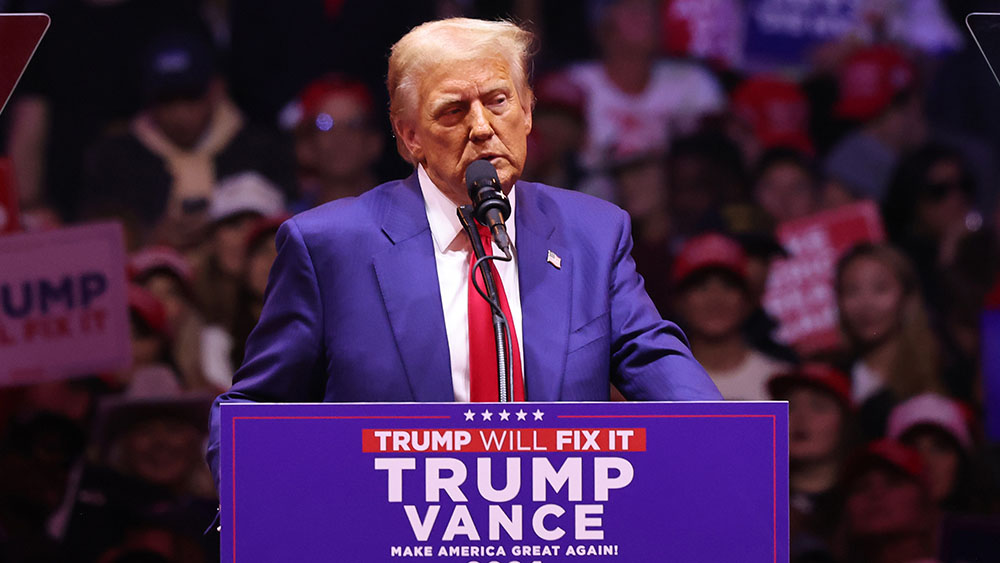
(NaturalNews) President Donald Trump signed an executive order suspending the physical entry of migrants at the U.S.-Mexico border, citing the federal…

(NaturalNews) White House Press Secretary Karoline Leavitt declared that all illegal immigrants are criminals due to their violation of U.S. immigration laws,…
Is this just another cycle, or is it the END? Martin Armstrong of Armstrong Economics published an article this week about the so-called Socrates program and how [more…]

“I assure you all options are open on the southern front. They can be adopted anytime.” Summary recap: Hezbollah Secretary-General Hassan Nasrallah’s speech went for [more…]

Putin orders planeloads of humanitarian aid to be sent to Egypt The Russian Ministry Emergency Situations said on Friday that it would send two aircraft [more…]

It is Tunisia’s duty to stand with the Palestinians, its president has said The Tunisian parliament on Thursday began discussing a bill that would define [more…]

Suspected provocateur specifically stated, ‘We’re here to storm the capitol. I’m not kidding.’ In a new mini-documentary diving into Jan. 6, investigative journalist Lara Logan [more…]

Mainstream media claims Obama-Biden partnership has only been happening for 5 months. Former President Barack Obama has been secretly advising the Biden administration for several [more…]

“This case could completely wipe out the ATF’s ability to create law and subvert congress, which would be a massive win for the Second Amendment.” [more…]

Elon Musk chimed in to question ‘how common’ this type of illegal activity is during American elections Bridgeport, Connecticut, the largest city in the state, [more…]