



Is this just another cycle, or is it the END? Martin Armstrong of Armstrong Economics published an article this week about the so-called Socrates program and how [more…]

Covid was not a surprise to some.
Animal lovers beware: Some of the biggest charities in the biz are more than happy to bite the hand that feeds them.
At least, that’s the contention of one Washington, D.C.-based watchdog.
‘While these groups sit in Manhattan and Washington collecting a combined $550 million a year, they only throw scraps to local shelters.’
If you’ve ever worried about where your charitable dollars go, you’re not alone. The holidays are the busiest giving season of the year, with Americans donating roughly $3.1 billion in 2023. About 30% of all annual giving happens in December, with the Tuesday after Thanksgiving now known nationwide as “Giving Tuesday.”
Yet Americans’ growing distrust of institutions is starting to affect their willingness to give. A recent study found that 57% of Americans have high trust in nonprofit organizations — more than in government or the media. Still, that leaves nearly half at least somewhat skeptical about how their money is being spent.
And when it comes to some of the major animal charities, the Center for the Environment and Welfare argues that the skepticism is justified.
On September 25, the Center for the Environment and Welfare began airing a national television campaign targeting Humane World for Animals — the organization known as the Humane Society until a name change earlier this year.
The ad marks CEW’s latest effort in its ongoing criticism of the spending practices of both HWA and rival large-animal welfare charity the American Society for the Prevention of Cruelty to Animals.
CEW claims that these organizations donate as little as 1% to 2% of their budgets to local shelters while paying hundreds of staff six-figure salaries. CEW also alleges that the CEOs of the two groups earn $650,000 and $1.2 million, respectively.
The ads, which will run throughout the holiday season, encourage viewers to donate directly to local shelters rather than national organizations. CEW says it’s considering expanding the campaign to other major television networks.
“The public donates hundreds of millions of dollars to these two groups because, when you see their ads and names, you assume they’re helping local shelters,” CEW executive director Jack Hubbard told Align. “The reality is the total opposite.”
He added that the response to the campaign has been strong.
“We’ve heard from people who are shocked and upset. But the most satisfying part is when donors say they’ve started doing their homework and are now supporting local shelters instead of national mega-charities.”
Hubbard argued that despite enormous revenues, hundreds of thousands of cats and dogs are still euthanized each year because local shelters remain underfunded.
Former ASPCA CEO Ed Sayres echoed that criticism.
“While these groups sit in Manhattan and Washington collecting a combined $550 million a year, they only throw scraps to local shelters,” Sayres told Align. “If you want to help homeless cats and dogs, donate to your local shelter or rescue.”
It’s a message that bears repeating, according to CEW. The group cites polling indicating that 81% of Americans don’t realize the ASPCA has little to no connection with local shelters.
Representatives from both the HWA and the ASPCA strongly dispute CEW’s claims, denouncing CEW as a “Berman and Company-backed PR front” that manufactures controversies against advocacy groups.
As HWA media relations director Anna West argues, CEW’s vision for helping animals is too narrow.
Our mission is not to fund shelters. We provide a lot of support for shelters, not in the form of checks but in training and education. We’re teaching shelter employees the best way to do their job in the most effective [way], creating support systems to help each other, and mentorship programs. And our programs are reducing the number of animals going into those facilities through access to spaying and neutering in those communities.
Every time a dog or cat is spayed or neutered, that means less animals going into the shelter system. We also work on policies related to pets and housing, which means less people choose to rent an apartment or get rid of a dog. It’s misleading to boil it down into this black-and-white issue of supporting shelters.
HWA also collaborates with law enforcement to fight animal abuse, works to reduce the use of animals as lab-test subjects, campaigns to abolish puppy mills, operates sanctuaries for large animals such as tigers, and rescues animals beyond just cats and dogs.
According to HWA’s 2023 tax filings, the group reported $202.8 million in gross receipts, $174.9 million in revenue, and $454.7 million in assets. Its major spending categories included:
$58.5 million for “care for animals in crisis”;$53.6 million toward building an “animal protection movement”;$20.9 million combating “the cruelest practices.”
That amounts to a program-expense ratio of roughly 70% — a figure HWA says demonstrates a strong focus on lobbying, activism, and educational efforts that are intended to reduce the need for animal welfare activism.
But CEW argues that this number was achieved through “joint cost accounting,” in which fundraising campaign efforts are counted as program spending. CEW spokesperson Kate McDermott emailed Align a screenshot of a November 2024 CharityWatch report (behind a paywall) that claims the true number is closer to 56%:
CharityWatch
West disputed that characterization, arguing that CharityWatch’s spending metrics are idiosyncratic and outside the mainstream consensus of other watchdogs, such as Charity Navigator, that approve of HWA’s financials. She added that most major evaluators permit direct mail, telemarketing, and solicitation costs as legitimate program expenses.
As for having 157 staffers with six-figure incomes and a CEO with a $650,000 salary, HWA’s website publicly declares that it provides competitive salaries and benefits to “pay a living wage so our staff can focus on ending animal cruelty without unnecessary financial stress.” According to Ziprecruiter, it is not unusual for nonprofit CEOs to earn more than $100,000-$200,000, depending on the size of the organization.
ASPCA spokesperson Rebecca Goldrick also responded to CEW’s claims in a statement to Align, arguing that its larger mission is to address the “root causes” of animal suffering.
Based on our most recent tax filings, 75 cents of every dollar spent by the ASPCA goes toward programmatic services that directly advance our lifesaving mission, with the majority of that funding supporting shelters and rescues across the country, including our animal relocation program — the largest in the country — where we move tens of thousands of homeless pets each year from overcrowded shelters to areas of the country where they can be adopted into loving homes.
… Every year, our hands-on work — in addition to our partnerships with hundreds of local shelters and rescues — directly impacts hundreds of thousands of animals, with our lasting solutions benefiting millions more that we cannot serve through local partnerships and grant funding alone.
In a populist era, Americans are increasingly drawn to local over national institutions. Large organizations — whether in Washington, Wall Street, or Silicon Valley — can feel remote, bureaucratic, and unaccountable. That sentiment now extends to the nonprofit world.
“These charities make donors skeptical about giving, which is a shame,” says Hubbard. “The solution, like so many others in this country, is local support, local governance, and local charity.”
JIMI CELESTE/Patrick McMullan via Getty Images
It is worth considering, though, the role that large institutions play in a properly functioning society. Large-animal charities, like the ASPCA and HWA, have certainly faced scrutiny in the past (here, here, here, here), but they are complicated organizations that publicly share their mission statements, tax documents, and financial priorities. The dollar you donate to them may not entirely be devoted to an immediate priority, but it could still help if you’re aligned with their values.
CEW insists that even so, overhead-heavy spending is wasteful when so many shelters are struggling. And because many local shelters share similar names — often “SPCA” or “Humane Society” — donors can easily assume affiliation that doesn’t exist.
“Many donors are shocked to learn their money funds lobbying and PR campaigns,” Hubbard says. “That disconnect is why barely half of Americans say they trust nonprofits. Donors deserve transparency, and shelter pets deserve better.”
For potential donors, the takeaway is clear: Do your homework.
Local organizations make a visible difference in their communities. National groups can drive lasting change through advocacy, research, and education. The key is to be informed about each organization’s priorities and financial practices.
As the Better Business Bureau argues, this means ignoring emotional appeals and vague mission statements in favor of verified financial data and independent accreditation.
HWA, says West, is all for such transparency. “We would encourage anyone who is considering supporting us to look at our Form 990s,” she says, adding:
We do a pretty extensive annual report that outlines what our supporters’ donations have made possible. We’re very active in communicating what we’re working on. Anyone who subscribes to our social media, emails, or blog will know. We have a robust volunteer program that allows people to work side by side and see where their donations support. Our YouTube channel shows our staffers in action. Those are good first steps for members of the public trying to make an informed decision about what organizations to support.
Both HWA and the ASPCA meet all 20 of the BBB’s accountability standards.
And while CharityWatch has given both HWA (see above screenshot) and the ASPCA low marks for financial efficiency, Charity Navigator currently awards both organizations four-star ratings, with scores of 99% for the ASPCA and 98% for HWA.
Aspca, Humane society, Humane world for animals, Center for the environment and welfare, Charitywatch, Charity navigator, Lifestyle, Caveat emptor, Animal welfare, Investigation
The days of being guaranteed a jury are over.
Parts of America, like Portland and Chicago, now resemble occupied territory. Progressive city governments have surrendered control to street militias, leaving citizens, journalists, and even federal officers to face violent anarchists without protection.
Take Portland, where Antifa has terrorized the city for more than 100 consecutive nights. Federal officers trying to keep order face nightly assaults while local officials do nothing. Independent journalists, such as Nick Sortor, have even been arrested for documenting the chaos. Sortor and Blaze News reporter Julio Rosas later testified at the White House about Antifa’s violence — testimony that corporate media outlets buried.
Antifa is organized, funded, and emboldened.
Chicago offers the same grim picture. Federal agents have been stalked, ambushed, and denied backup from local police while under siege from mobs. Calls for help went unanswered, putting lives in danger. This is more than disorder; it is open defiance of federal authority and a violation of the Constitution’s Supremacy Clause.
For years, the legacy media and left-wing think tanks have portrayed Antifa as “decentralized” and “leaderless.” The opposite is true. Antifa is organized, disciplined, and well-funded. Groups like Rose City Antifa in Oregon, the Elm Fork John Brown Gun Club in Texas, and Jane’s Revenge operate as coordinated street militias. Legal fronts such as the National Lawyers Guild provide protection, while crowdfunding networks and international supporters funnel money directly to the movement.
The claim that Antifa lacks structure is a convenient myth — one that’s cost Americans dearly.
History reminds us what happens when mobs go unchecked. The French Revolution, Weimar Germany, Mao’s Red Guards — every one began with chaos on the streets. But it wasn’t random. Today’s radicals follow the same playbook: Exploit disorder, intimidate opponents, and seize moral power while the state looks away.
The Trump administration’s decision to designate Antifa a domestic terrorist organization was long overdue. The label finally acknowledged what citizens already knew: Antifa functions as a militant enterprise, recruiting and radicalizing youth for coordinated violence nationwide.
But naming the threat isn’t enough. The movement’s financiers, organizers, and enablers must also face justice. Every dollar that funds Antifa’s destruction should be traced, seized, and exposed.
RELATED: Inside the Portland ICE facility under siege by Antifa extremists
Photo by NATALIE BEHRING/AFP via Getty Images
This fight transcends party lines. It’s not about left versus right; it’s about civilization versus anarchy. When politicians and judges excuse or ignore mob violence, they imperil the republic itself. Americans must reject silence and cowardice while street militias operate with impunity.
Antifa is organized, funded, and emboldened. The violence in Portland and Chicago is deliberate, not spontaneous. If America fails to confront it decisively, the price won’t just be broken cities — it will be the erosion of the republic itself.
Want more from Glenn Beck? Get Glenn’s FREE email newsletter with his latest insights, top stories, show prep, and more delivered to your inbox.
Opinion & analysis, Opinion, Antifa, Antifascist, Anti fascist, Leftism, Left wing violence, Left wing extremism, Extremism, Portland, Chicago, Law and order, Political violence, Coward, Ice, Immigration and customs enforcement, Mao, French revolution, Domestic terrorism
Residents of a Milwaukee neighborhood are haunted by the death of an elderly woman in her backyard allegedly at the hands of her mentally ill daughter.
Carrie Zettel, 64, called police at about 2 p.m. Sunday to report that her daughter was being violent, according to a search warrant. When police arrived, they found Zettel dead.
‘The girl should have been stopped years ago, and I don’t understand why. And that angers me.’
“It happened in the backyard, and she beat her mother to death with a rock,” said a family friend named Susan Henderson-Hoffmann.
A criminal complaint said that police found a rock weighing about 4 pounds and stained with blood near the body. Her body had been covered with a blanket.
The search warranted identified the suspect as 29-year-old Lauren Spors, the daughter of Zettel.
The mother obtained a restraining order against Spors in 2018 after saying she was fearful of her daughter and her mental issues. Spors then allegedly violated the order four times but was found incompetent each time and was not prosecuted.
The fourth time, she allegedly violated the order by throwing a rock through Zettel’s double-paned window. She was sent to a county mental health facility, but public records did not indicate how long she was held.
“I cannot believe Carrie is gone, but you want to know something? I’m not surprised,” Henderson-Hoffmann said. “The girl should have been stopped years ago, and I don’t understand why. And that angers me.”
The restraining order expired in 2022.
Spors was charged with first-degree intentional homicide.
“I am really having a hard time dealing with this. I am not going to lie to you guys. I knew her my whole life,” Henderson-Hoffmann added.
Like Blaze News? Bypass the censors, sign up for our newsletters, and get stories like this direct to your inbox. Sign up here!
Lauren spors, Milwaukee murder, Daughter kills mother, Crime, Carrie zettel death
“We have blown through just in the past 6 months, rules & laws that were put in place to ensure that nobody is above the [more…]

(NaturalNews) Chromium is widely marketed for blood sugar control, weight loss and athletic performance, but researchers remain divided on whether it provides r…

(NaturalNews) The NIH funded the creation of a genetically modified “Frankenstein” bird flu virus in Europe, which was then sent to a high?security lab in Alaba…

(NaturalNews) President Donald Trump has reassigned Sergio Gor, the head of the White House Presidential Personnel Office (PPO), to become the Ambassador to Ind…

(NaturalNews) The Senate passed the FY2026 NDAA with $924.7 billion in defense authorization, marking a continued expansion of military budgets despite econom…

(NaturalNews) U.S. armored vehicles and troops have been photographed unloading near Rafah, positioning themselves conspicuously to deter Israeli airstrikes. Th…

(NaturalNews) President Trump brokered a historic ceasefire between Israel and Hamas, securing the release of all remaining living Israeli hostages in exchange …

(NaturalNews) For the millions who navigate the private, often frustrating reality of chronic constipation, the advice has long been a familiar, if unhelpful, refra…

(NaturalNews) Silver prices hit a historic high of $52.31 per ounce, surpassing the previous 1980 peak. Gold also reached a record $4,100 per ounce, reinforc…

(NaturalNews) Yale researchers found that children with higher BMI show cortical thinning and white matter damage, indicating impaired cognitive development. …

(NaturalNews) A strong immune system relies on a balanced mix of nutrients (vitamins C, D, A, zinc, iron, magnesium, selenium), not a single “superfood.” Abo…

(NaturalNews) Ukraine is facing a severe and unprecedented energy crisis with its infrastructure decimated by Russian strikes, leaving the country ill-prepared …

(NaturalNews) The Philippine Coast Guard (PCG) reported that Chinese ships executed “dangerous maneuvers” and fired water cannons at the BRP Datu Pagbuaya, caus…
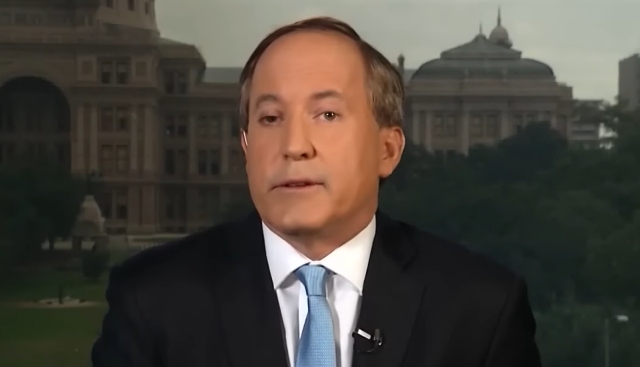
(NaturalNews) Texas Attorney General Ken Paxton has launched a new undercover initiative to dismantle what he calls “leftist terror cells” operating within Texa…

(NaturalNews) Burnout is a recognized occupational phenomenon characterized by exhaustion, cynicism, and reduced professional efficacy, with recovery often bein…
Is this just another cycle, or is it the END? Martin Armstrong of Armstrong Economics published an article this week about the so-called Socrates program and how [more…]

“I assure you all options are open on the southern front. They can be adopted anytime.” Summary recap: Hezbollah Secretary-General Hassan Nasrallah’s speech went for [more…]

Putin orders planeloads of humanitarian aid to be sent to Egypt The Russian Ministry Emergency Situations said on Friday that it would send two aircraft [more…]

It is Tunisia’s duty to stand with the Palestinians, its president has said The Tunisian parliament on Thursday began discussing a bill that would define [more…]

Suspected provocateur specifically stated, ‘We’re here to storm the capitol. I’m not kidding.’ In a new mini-documentary diving into Jan. 6, investigative journalist Lara Logan [more…]

Mainstream media claims Obama-Biden partnership has only been happening for 5 months. Former President Barack Obama has been secretly advising the Biden administration for several [more…]

“This case could completely wipe out the ATF’s ability to create law and subvert congress, which would be a massive win for the Second Amendment.” [more…]

Elon Musk chimed in to question ‘how common’ this type of illegal activity is during American elections Bridgeport, Connecticut, the largest city in the state, [more…]